The Thank-You Page: Where Conversion Ends and Retention Begins

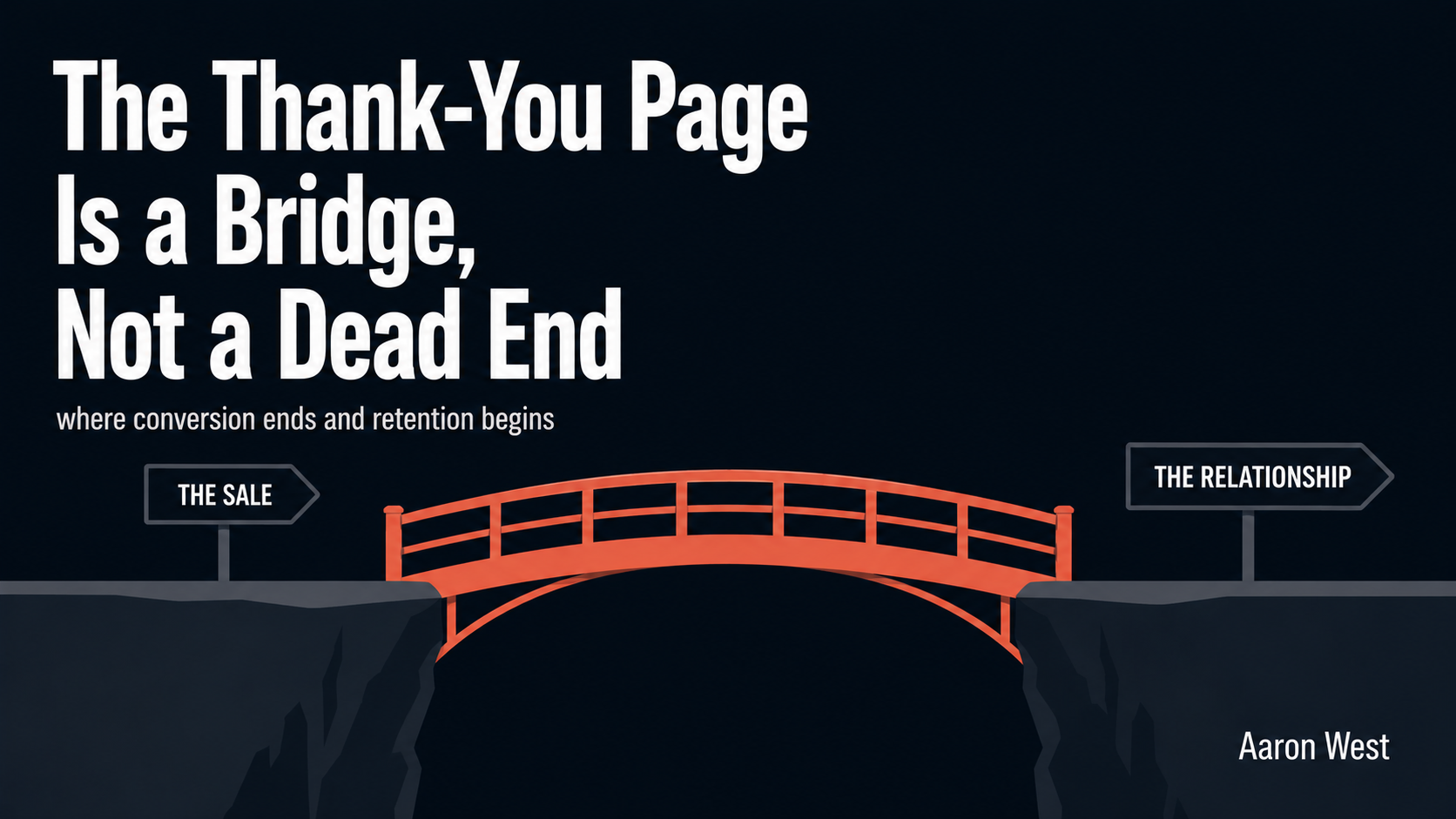
Table of Contents
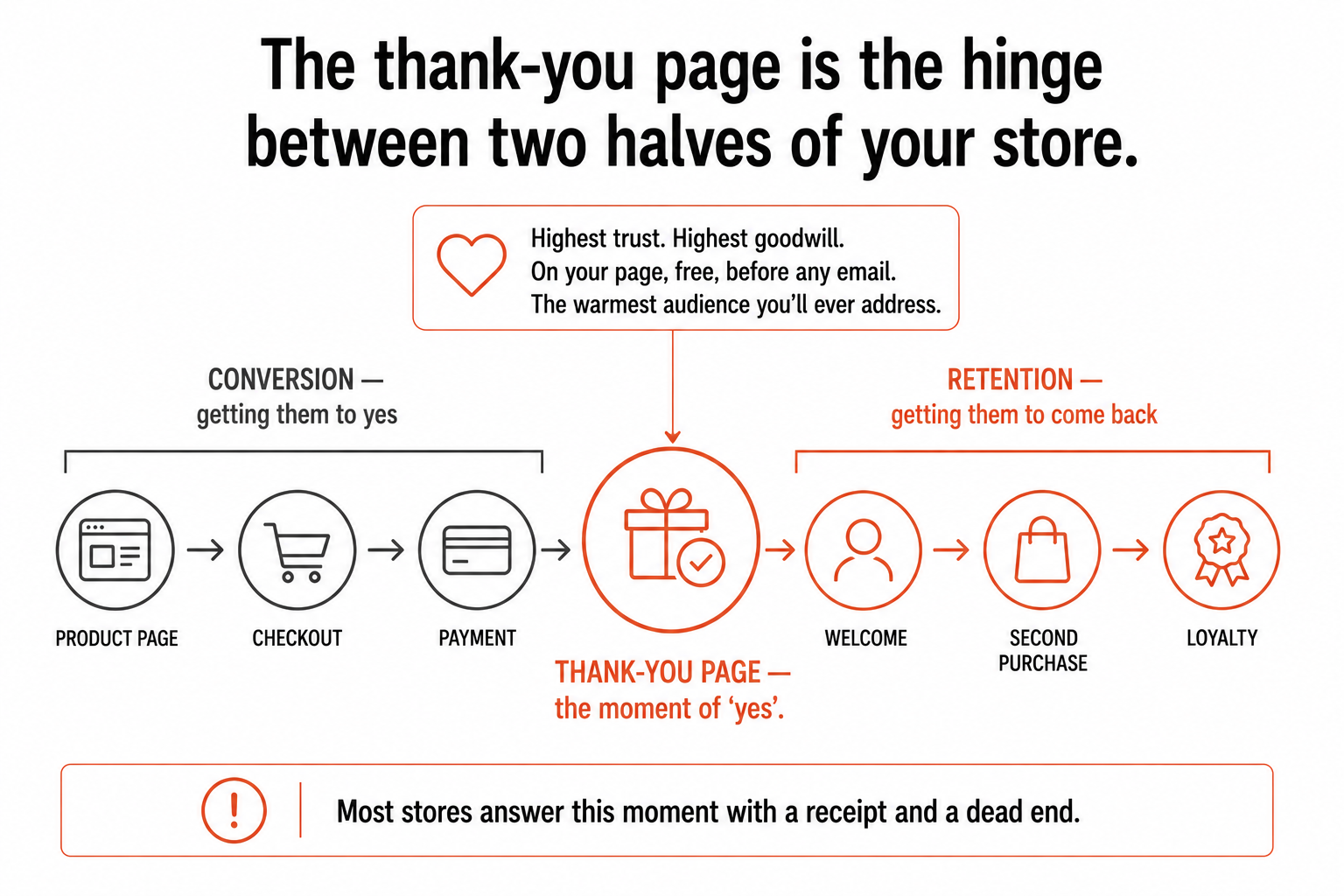
The moment right after someone buys from you is the single highest-trust, highest-goodwill moment you will ever get with that person. They have just said yes. They have handed over their card, their email, their address. Their guard is down and their momentum is forward. And most stores answer that moment with a receipt and a dead end: "Thanks for your order." Then nothing. The page just sits there, an administrative artifact, while the warmest customer you will ever address quietly closes the tab and leaves.
That page is the exact hinge between the two halves of running a store. Everything that got the customer to buy, the whole conversion effort, just ended. Everything that decides whether they ever come back, the whole discipline of retention, just began. The thank-you page is the bridge between those two halves, the one screen where a converted sale becomes (or fails to become) a relationship. And most stores burn it. This piece is about why that moment matters so much, and the discipline that turns it from a dead end into a bridge without abusing the goodwill that makes it valuable in the first place.
Why this is the warmest audience you will ever address
Think about the state the customer is in at this exact moment. They have just made a decision, committed money, and demonstrated real trust in your brand. There is no colder version of this person and no warmer one ever again: not a prospect you are trying to convince, not a lapsed customer you are trying to win back, but someone who, right now, in this second, has just chosen you. Their intent is not in question. They already converted. That makes the thank-you page the single most receptive audience on your entire site.
And the moment has three properties nothing else in your stack has at once. It is on your page, in your control, not at the mercy of an inbox or a spam filter. It is free, costing you nothing per impression. And it reaches the customer before any email even has to do its job, at the peak of the goodwill, not hours later when the excitement has cooled. This is why the work that brands often save for an email sequence, recruiting a loyalty member, prompting an account, asking for a referral, consistently lands better here than almost anywhere else. You are catching the customer at the top of the curve. The thank-you page is not the end of the funnel. It is the start of the relationship, and it is the highest-leverage real estate most stores completely waste.
But the first job is not to sell. It is to reassure.
Here is where most advice on this topic goes greedy and gets it wrong, and where the discipline matters. The very goodwill that makes this moment so valuable is exactly the goodwill you destroy if you immediately hit the customer with a wall of upsells, popups, and "buy more now" before they have even processed that their order went through. The highest-trust moment is also the easiest to abuse, and abusing it is how you turn a warm customer cold in a single screen.
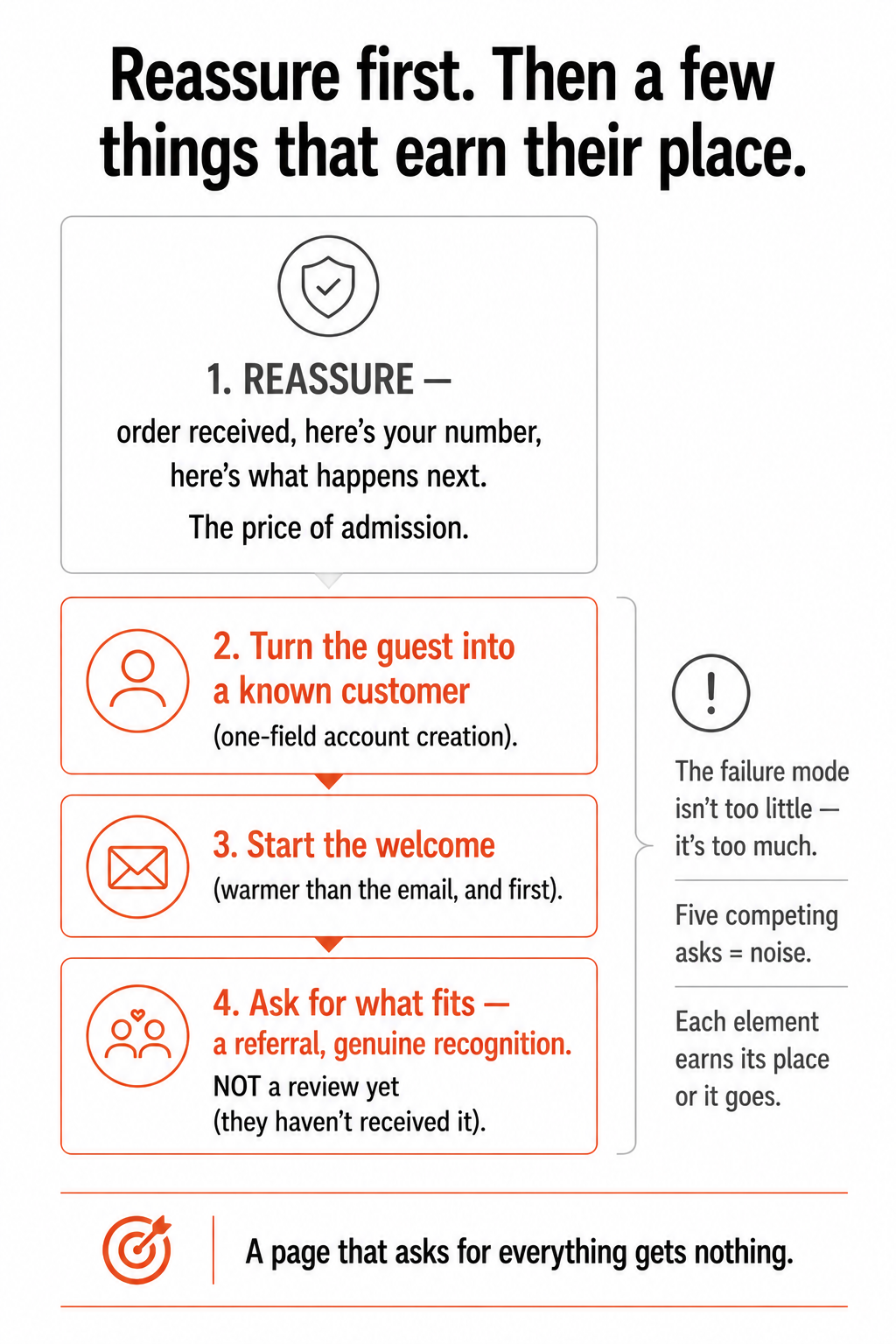
So the page has one non-negotiable job before anything else: reassure. A customer who has just paid is, for a few seconds, faintly anxious, did the payment actually go through, did the order register, when will it arrive, did I just get scammed? Answer that, immediately and clearly, before you ask for a single thing. Confirm the order was received, show the order number and a summary, and tell them plainly what happens next: a confirmation email is on its way, then a shipping notification, then delivery. That reassurance is the price of admission. It is the customer-service core of the page, and only once you have paid it, only once the customer feels safe and informed, do you earn the right to use the moment for anything else. A page that skips straight to selling, before it has told an anxious buyer their order is safe, has misread the moment entirely. Calm them first. Everything else comes after.
What the moment can do, once you have earned it
Now, and only now, the highest-intent moment on your site can do real work, with one rule governing all of it: each element has to earn its place. This is the same restraint that protects the inbox, applied to a page. The failure mode here is not doing too little, it is doing too much, stacking five competing asks until the page is noise and the goodwill curdles. Pick the few moves that genuinely fit the moment, give each a distinct job, and stop. In rough order of value:
- Turn the guest into a known customer. This is the cheapest, highest-value move on the page, and it is the bridge made literal. A guest who just checked out has already given you their email, name, and address, everything except a password. So "set a password to track your order and check out faster next time" is a single-field ask, benefit-framed, at the exact moment they are most willing to say yes. An anonymous one-time buyer becomes a customer you can actually build a relationship with. This is also, not coincidentally, the right place to ask for the account, after the sale, when it costs the customer almost nothing, rather than before it, where forcing it costs you conversions.
- Start the relationship, not just confirm a transaction. A genuine welcome, what to expect, how to reach you if something is wrong, belongs here. This is the on-page beginning of the welcome motion your lifecycle automates: the page does the same job the welcome email does, but first, and warmer, because the customer is right there at peak goodwill.
- Ask for what this specific moment is uniquely good at. A referral lands well at a high-excitement moment like this one. An invitation into a genuine recognition relationship can too. But notice what does not belong here: a review request. The customer has not received the product yet, so asking them to review it now is asking for an opinion they cannot honestly have. The review ask waits until a week or two after delivery, once they have actually experienced what they bought.
- A restrained, relevant cross-sell is legitimate, as an offer, not an ambush. The customer is warm, and a genuinely relevant complementary suggestion is a real basket-building lever. The discipline is that it comes after the reassurance, it is relevant rather than random, and it is one clear offer rather than a desperate grid of everything you sell.
The unifying principle is restraint with intent. One clear reassurance, then at most a couple of genuinely valuable, relevant next steps, each with a distinct job. A page that asks for everything gets nothing, because a customer faced with five competing demands does none of them and just leaves, taking the goodwill with them.
Conversion got them to yes. The next ten seconds decide the rest.
Pull it together and the thank-you page stops being a receipt and becomes what it actually is: the place where the two halves of your store meet. It is the last act of conversion and the first act of retention, on a single screen, at the warmest moment you will ever share with a customer. Treated as an administrative dead end, it quietly hands a hard-won, high-trust customer back to the void, all that acquisition cost and all that conversion work spent to reach "yes," and then nothing done with it. Treated as a bridge, it is where a converted sale becomes a relationship: reassure first, turn the stranger into a known customer, start the welcome, and ask only for what the moment is genuinely good for.
There is a version of this moment that belongs to your automated email flows too, and they matter. But the page comes first, and it is warmer, and it is entirely in your hands. The whole conversion side of your store exists to get the customer to say yes. What you do in the ten seconds after they say it decides whether they ever say it again. Do not answer the most valuable moment in the relationship with a shrug and a receipt.
A few common questions
What should an ecommerce thank-you / order confirmation page do? Its first and non-negotiable job is to reassure: confirm the order was received, show the order number and summary, and tell the customer plainly what happens next (confirmation email, then shipping, then delivery). A just-paid customer is briefly anxious about whether it worked, so calm them before you ask for anything. Only once that's done should the page do relationship work, and even then with restraint: turn the guest into a known customer with one-field account creation, start the welcome, and ask for what the moment genuinely fits (a referral, a recognition relationship). Not a wall of upsells, the goodwill that makes the moment valuable is exactly what an immediate hard sell destroys.
Why is the thank-you page so important? Because it's the single highest-trust, highest-goodwill moment you'll ever get with a customer, and it's the hinge between conversion and retention. The person has just said yes, handed over their card, and demonstrated real trust, there's no warmer audience on your entire site. And the moment has three properties nothing else has at once: it's on your page and in your control, it's free per impression, and it reaches the customer before any email has to do its job, at the peak of goodwill rather than hours later. Most stores waste it as a dead-end receipt, handing a hard-won, high-trust customer straight back to the void.
Should I put upsells on the thank-you page? A restrained, relevant cross-sell is legitimate, but as an offer, not an ambush, and only after the page has done its first job of reassuring the customer. The customer is warm and a genuinely relevant complementary suggestion is a real basket-building lever. The mistake is leading with selling before you've confirmed the order went through, or stacking five competing asks until the page is noise. Each element has to earn its place: one clear reassurance, then at most a couple of genuinely valuable, relevant next steps, each with a distinct job. A page that asks for everything gets nothing.
Should I ask for a review on the thank-you page? No. The customer hasn't received the product yet, so asking them to review it now is asking for an opinion they can't honestly have. The review request should wait until a week or two after delivery, once they've actually experienced what they bought. The thank-you page is the right moment for things that fit a just-completed purchase, reassurance, account creation, a welcome, a referral, but the review ask belongs later in the post-purchase sequence, when there's something real to review.
You should also read:
Site Speed Is a Conversion Tax You Pay at Every Stage
Site speed is not a separate conversion problem you can deal with later. It is a tax applied to every stage of your funnel at once, quietly shrinking the result of all the other work you do. A slow site loses people at discovery before…
Continue reading...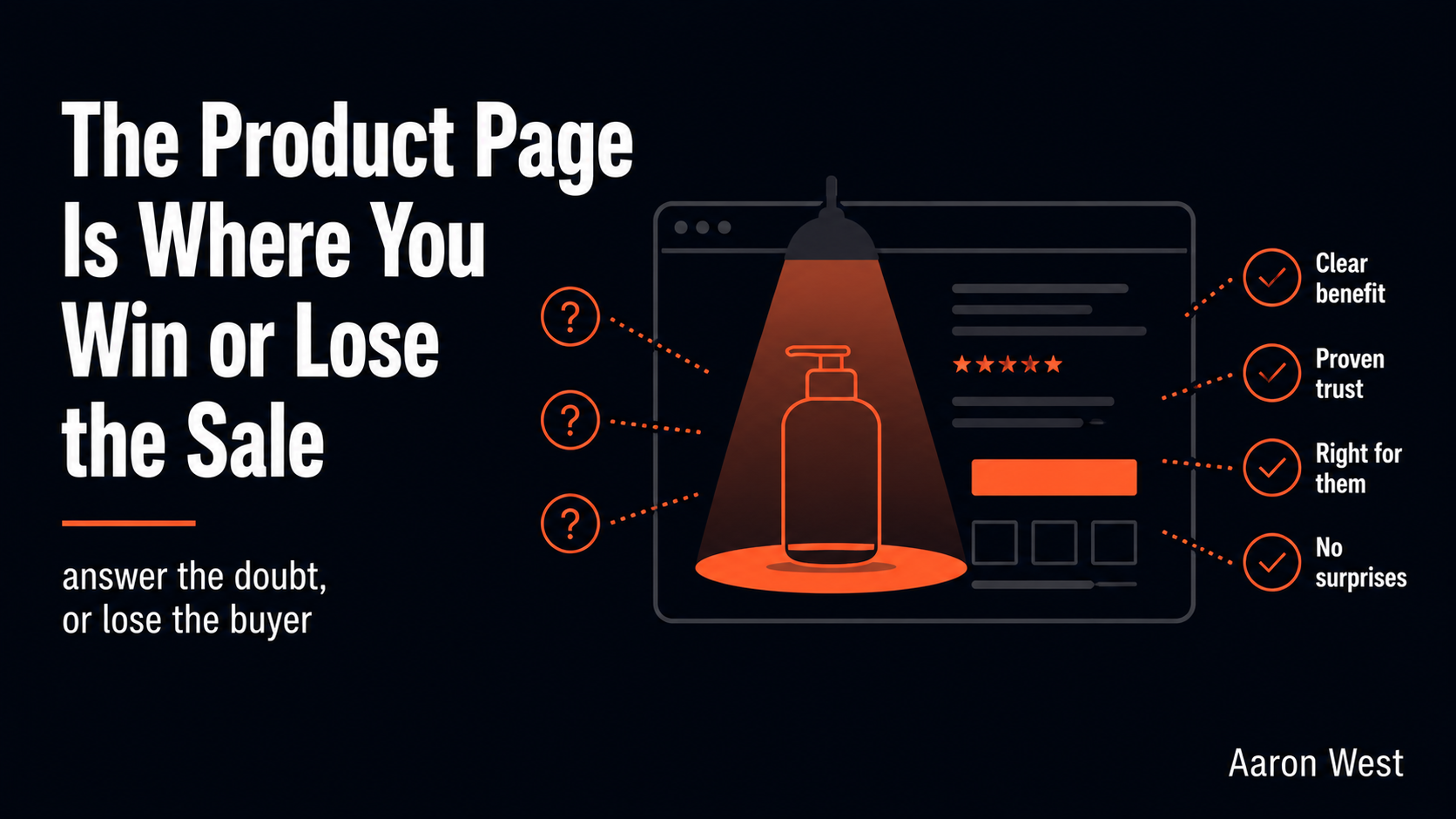
The Product Page Is Where You Win or Lose the Sale
The product page is where the buying decision actually gets made, which makes it the most important page on your store, and the one most stores treat as an afterthought. Everything before it, the ads, the homepage, the category listings, only does one job: deliver…
Continue reading...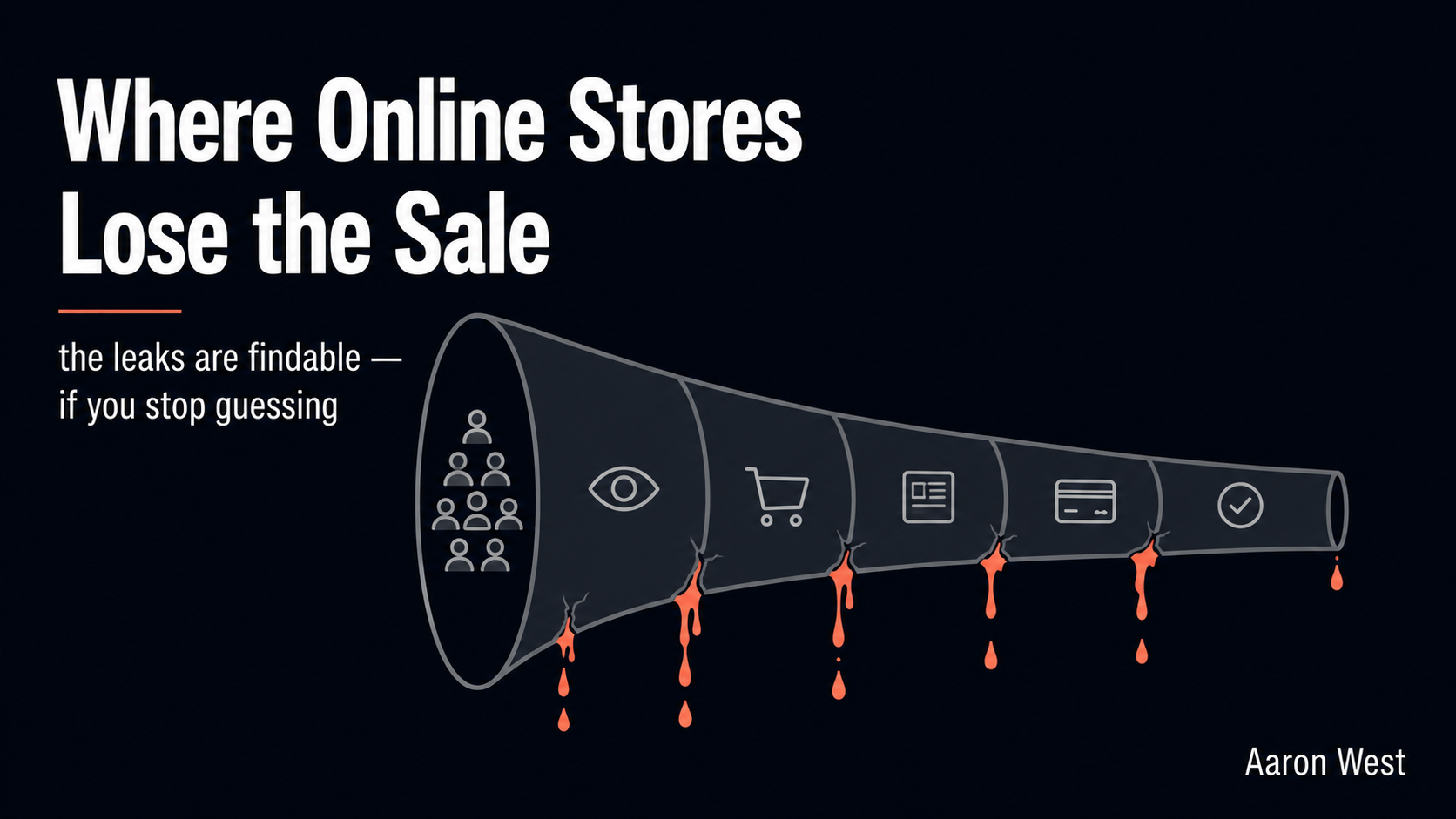
Where Online Stores Lose the Sale
Most online stores spend almost all their energy trying to get more people to show up, and almost none on the fact that the overwhelming majority of the people who already showed up leave without buying. This is backwards. You have, sitting in your analytics…
Continue reading...