Guest Checkout and the Tyranny of the Extra Field

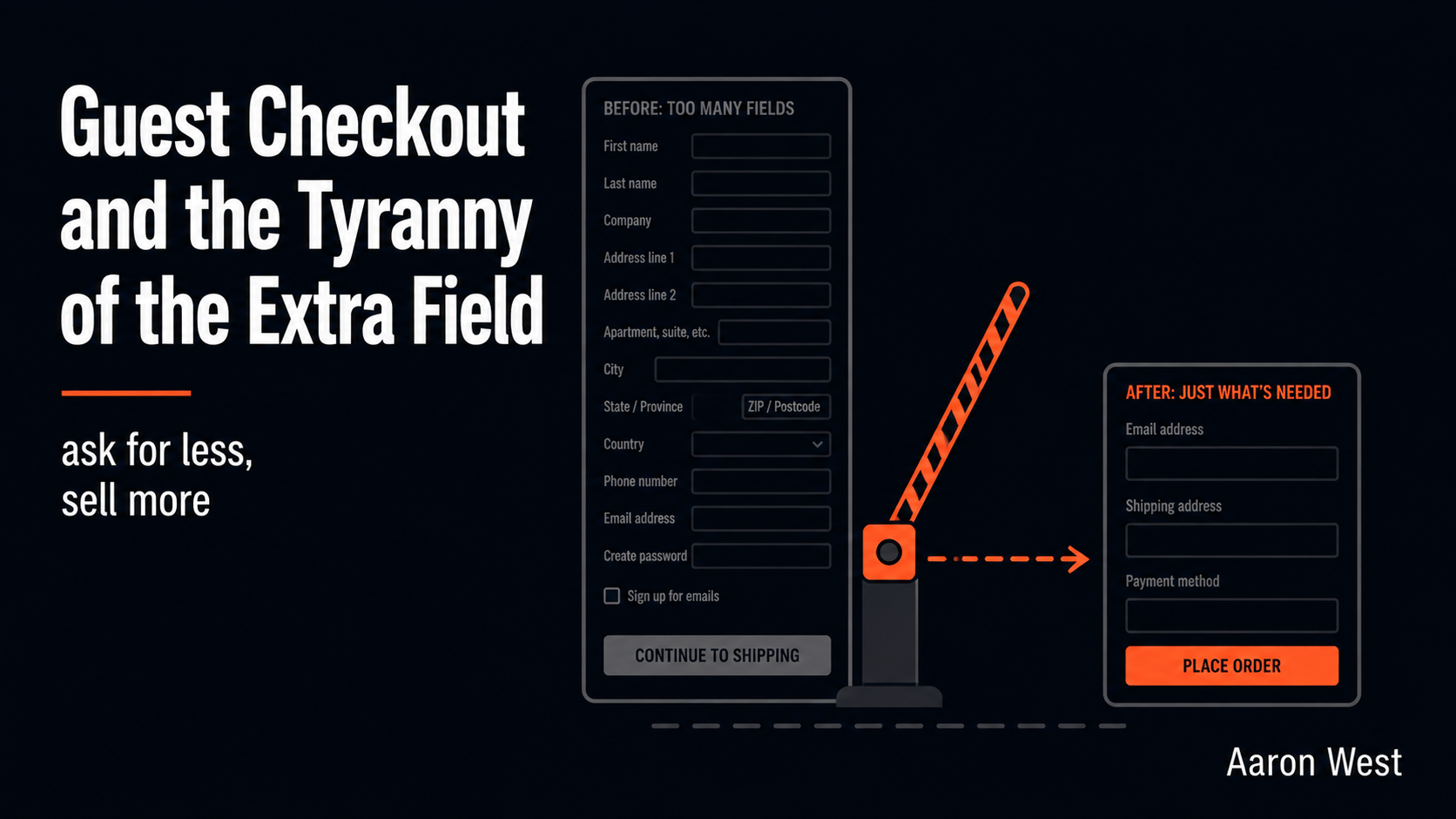
Table of Contents
Two of the most damaging things you can do at checkout are entirely self-inflicted, and they come from the same mistake: putting your convenience ahead of the customer's. The first is forcing people to create an account before they can buy. The second is making them fill in more fields than the purchase actually requires. Both feel reasonable from the inside, you want the account so you can market to them later, you want the extra data because it might be useful, and both quietly cost you sales from people who had already decided to buy. The good news is that they are also two of the easiest leaks to fix, often in an afternoon, and fixing them tends to pay back faster than almost anything else in conversion work.
This drills into two specific reasons from my piece on why carts get abandoned at checkout: forced account creation and overloaded forms. They sit under the cornerstone on where stores lose the sale, and they share a single root cause worth naming up front: the store asking for things it wants instead of giving the customer the fastest path to the thing they want. Fixing them is mostly a matter of restraint, deciding to ask for less. Plain language, with the reasoning behind each fix so you can apply it to your own checkout.
The account wall: stop gating the sale behind a sign-up
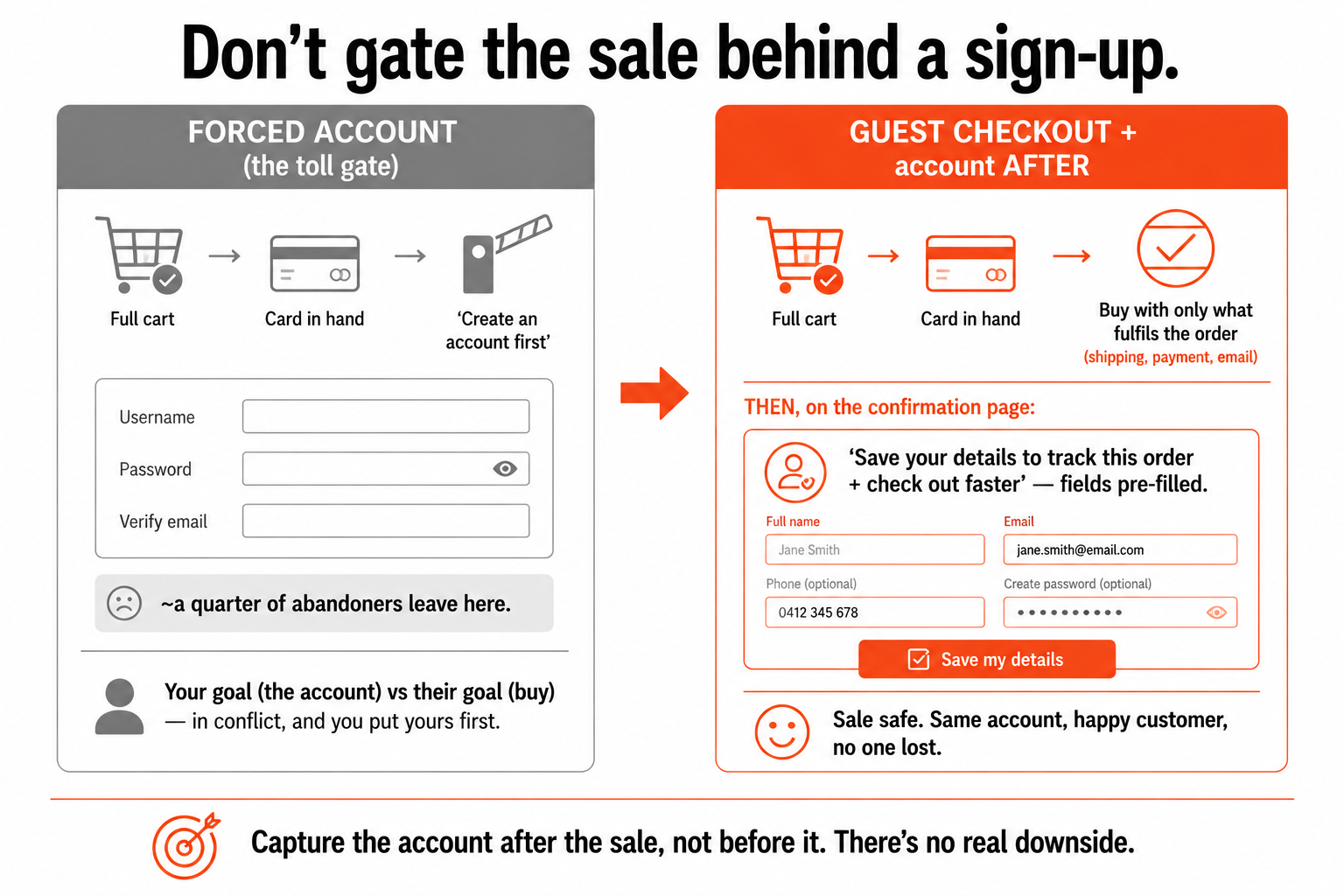
Forcing account creation before purchase is one of the most studied conversion killers in e-commerce, and the data is brutally consistent: roughly a quarter of people who abandon a checkout do so specifically because the site made them create an account first. Think about what that means. These are people with a full cart, card more or less in hand, and you stopped them at the door to demand they invent a username, choose a password, and maybe go check their email for a verification link, all before you would take their money. A meaningful fraction of them, reasonably, decide it is not worth it and leave.
The reason this happens is almost never malice, it is the store wanting the account for its own purposes, future marketing, a tidy customer database, repeat-purchase convenience, and deciding to collect it at the moment of maximum leverage, when the customer wants to check out. But that moment is exactly the wrong time, because the customer's goal (buy the thing) and your goal (capture the account) are in direct conflict, and you have put your goal first. The fix is simple and well established: offer guest checkout, prominently, as the default path, and let people buy without an account at all. You ask only for what you genuinely need to fulfil the order, the shipping details, the payment, an email for the receipt and updates, and you let them complete the purchase.
Here is the part that makes this painless rather than a sacrifice: you can still get the account, just after the sale instead of before it. Once the order is placed and the customer's goal is met, the confirmation page is the perfect, low-pressure moment to invite them to save their details: "create an account to track this order and check out faster next time," with the fields pre-filled from the order they just completed. Now there is no conflict, the sale is safe, and you are offering a genuine convenience rather than erecting a toll gate. You capture the same account you wanted, from a happy customer who just bought, without losing the quarter of buyers who would have walked rather than register first. There is no real downside, which is why guest-checkout-with-optional-account-after is simply the right pattern for almost every store. The only stores that can reasonably require an account are ones where the account is genuinely part of the product (subscriptions, services you log into), and even then, the lighter you make it, the better.
The form: every field is a small tax, so justify each one
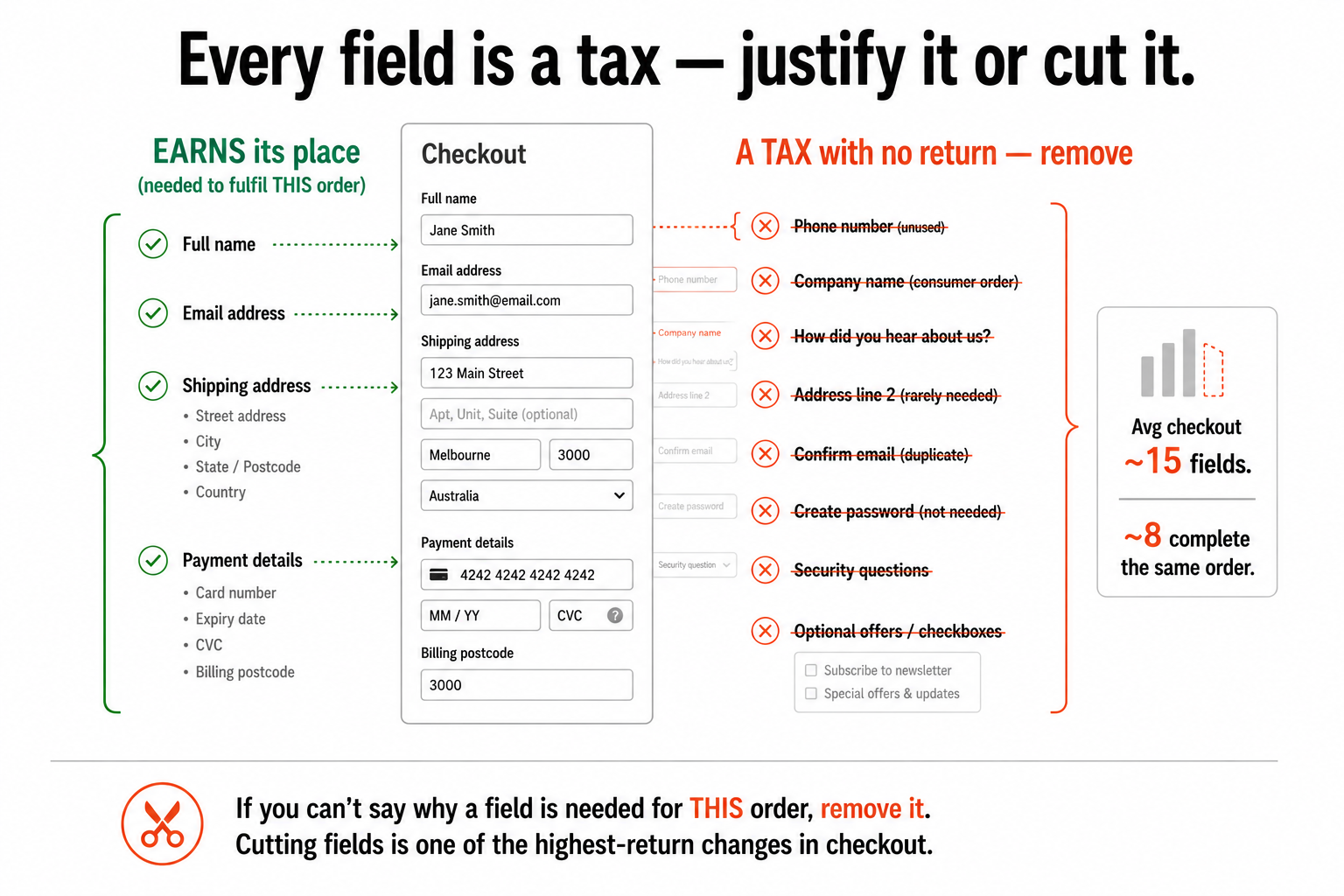
The second self-inflicted leak is the overloaded form. Checkouts accumulate fields the way garages accumulate clutter, nobody decided to make it big, it just grew, and the result is that a typical checkout asks for far more than the purchase needs. Industry teardowns repeatedly find the average checkout carrying around fifteen fields when roughly eight would complete the same order. That gap is pure friction: every extra field is a small tax on the willingness of someone who already decided to buy, a moment more of typing, a chance to make a mistake, a tiny reason to give up, especially on a phone where typing is genuinely painful.
The discipline is the same one I apply to the whole checkout: every field must justify its existence, and the default answer is to cut it. Go through your checkout field by field and ask, of each one, "is this genuinely required to complete and fulfil this order?" Name, email, shipping address, payment, those earn their place. But a phone number you will never use, a company-name field for a consumer purchase, a "how did you hear about us" dropdown, a second address line that is rarely needed, each of these is a tax you are charging a willing buyer for no return. If you cannot state a concrete reason a field is necessary for this order, remove it. Reducing a checkout from fifteen fields to ten is one of the highest-return single changes available, and it costs nothing but the discipline to let go of data you did not really need.
A few specific offenders are worth calling out because they are so common and so needless. Asking people to type the same thing twice, a "confirm your email" or "confirm your password" field, doubles the effort and is better solved by letting people see what they typed (a show-password toggle) than by demanding they type it again. Address fields can often be collapsed with a lookup that fills the rest from a postcode. And the pile of optional checkboxes, newsletter opt-ins, "I agree to receive offers," account-creation tick-boxes, each one is a small decision and a potential exit point dropped right in the path of someone trying to pay. Which leads to the principle underneath all of it.
Checkout is not the place for permission marketing
Here is the principle that ties both leaks together, and it is worth saying bluntly because so many stores get it exactly backwards: checkout has one job, completing the transaction, and anything that serves a different goal does not belong there. The account you want, the marketing consent you want, the customer-research question you want answered, the extra data point that might be useful someday, all of these serve your goals, not the customer's, and every one of them inserted into the checkout flow is a small obstacle between a willing buyer and the purchase they came to make. The forced account and the bloated form are just the two most common forms of the same error: treating checkout as an opportunity to extract things from the customer, when its only purpose is to let the customer give you money as smoothly as possible.
This does not mean you never get the account or the email opt-in or the insight. It means you get them at the right time, which is after the sale, not during it. Capture the purchase first, with the leanest possible flow, and then, once the customer's goal is met and yours is safe, ask for the rest: invite the account on the confirmation page, request the marketing opt-in in a welcome email, learn how they found you in a post-purchase survey. The customer is far more willing to give you these things once they have what they came for, and crucially, asking later costs you nothing in conversion, while asking during checkout costs you a slice of every sale. The whole philosophy of good checkout, and of good conversion work generally, comes down to this: protect the path to purchase ruthlessly, and do everything else somewhere else. Get out of the customer's way while they are buying, and ask for what you want once they are done. That ordering, sale first, everything else after, is the entire trick, and it is the one almost nobody follows.
A few common questions
Should I require customers to create an account to check out? No, for almost every store. Forcing account creation before purchase is one of the most consistently documented conversion killers, roughly a quarter of people who abandon checkout do so specifically because a site made them register first. Offer guest checkout prominently as the default, asking only for what's needed to fulfil the order, and invite account creation after the sale on the confirmation page (with fields pre-filled from the completed order). You capture the same account from a happy customer without losing the buyers who'd rather walk than register. Only stores where the account is genuinely part of the product (subscriptions, log-in services) have a real case for requiring it.
How many fields should a checkout have? As few as genuinely complete and fulfil the order, usually far fewer than a checkout accumulates on its own. Industry teardowns repeatedly find the average checkout carrying around fifteen fields when roughly eight will do. The discipline: go through every field and ask "is this required to complete this order?" Name, email, shipping address, and payment earn their place; an unused phone number, a company-name field on a consumer order, or a "how did you hear about us" dropdown do not. If you can't state a concrete reason a field is necessary, remove it, cutting fields is one of the highest-return single changes in checkout.
What are the worst checkout form mistakes? Asking people to type the same thing twice (confirm-email or confirm-password fields, better solved with a show-password toggle), collecting data you'll never use, and dropping a pile of optional checkboxes, newsletter opt-ins, consent boxes, account ticks, right in the path of someone trying to pay. Each checkbox is a small decision and a potential exit point. The underlying mistake is treating checkout as a chance to extract things from the customer rather than to complete their purchase as smoothly as possible.
When should I ask customers to sign up or opt into marketing? After the sale, never during it. Checkout has one job, completing the transaction, and the account, the marketing consent, and the research question all serve your goals, not the customer's, so they belong after the purchase, not in the path of it. Capture the sale with the leanest possible flow, then invite the account on the confirmation page, request the marketing opt-in in a welcome email, and ask how they found you in a post-purchase survey. Customers are far more willing once they have what they came for, and asking later costs nothing in conversion while asking during checkout costs a slice of every sale.
You should also read:
Trust Is Not a Badge You Add to Your Checkout
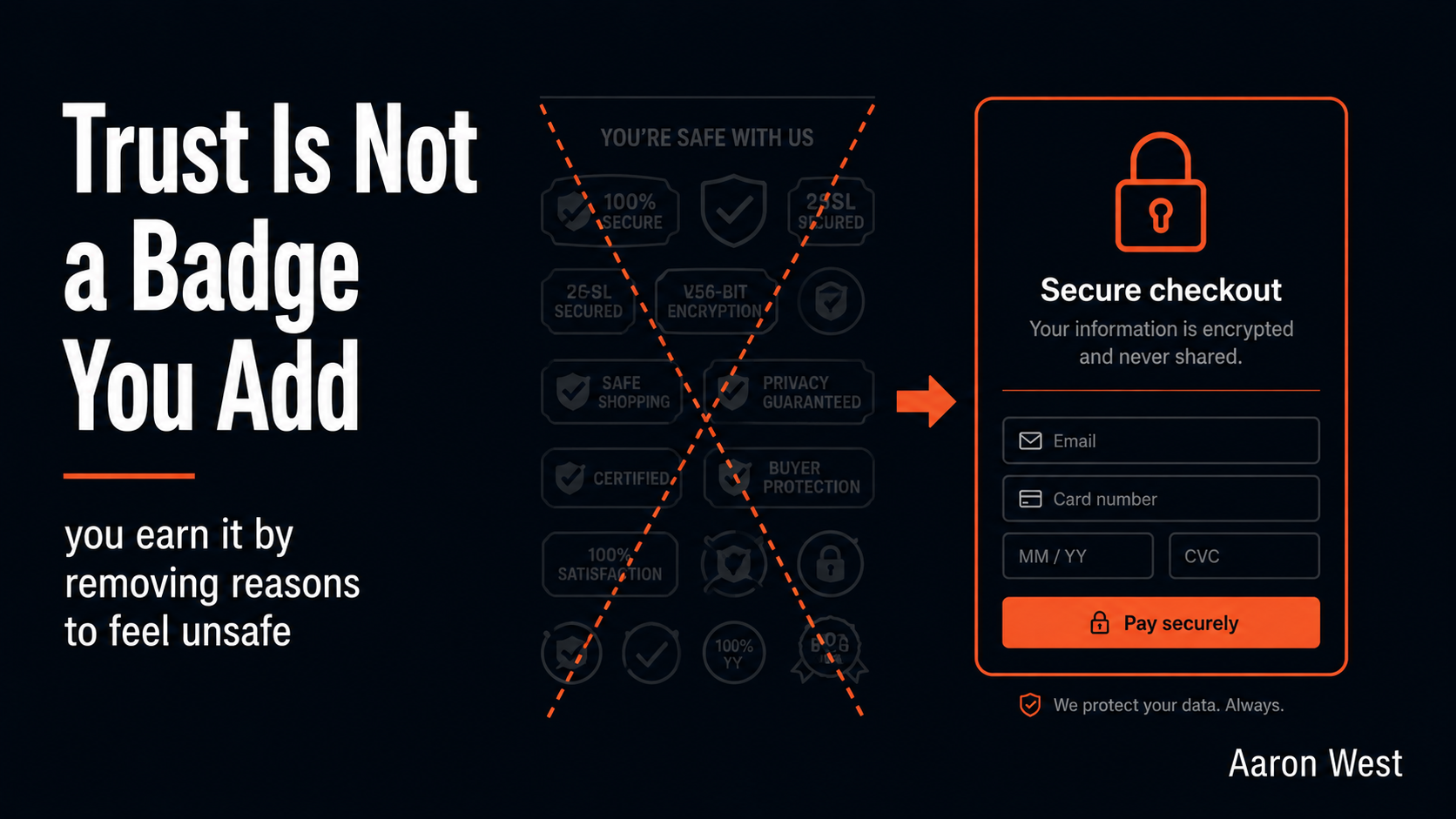
The moment a customer is about to type in their card number is the most anxious moment in the entire buying journey, and it is where a surprising number of otherwise-willing buyers quietly back out. Around a fifth of shoppers have abandoned a purchase specifically…
Continue reading...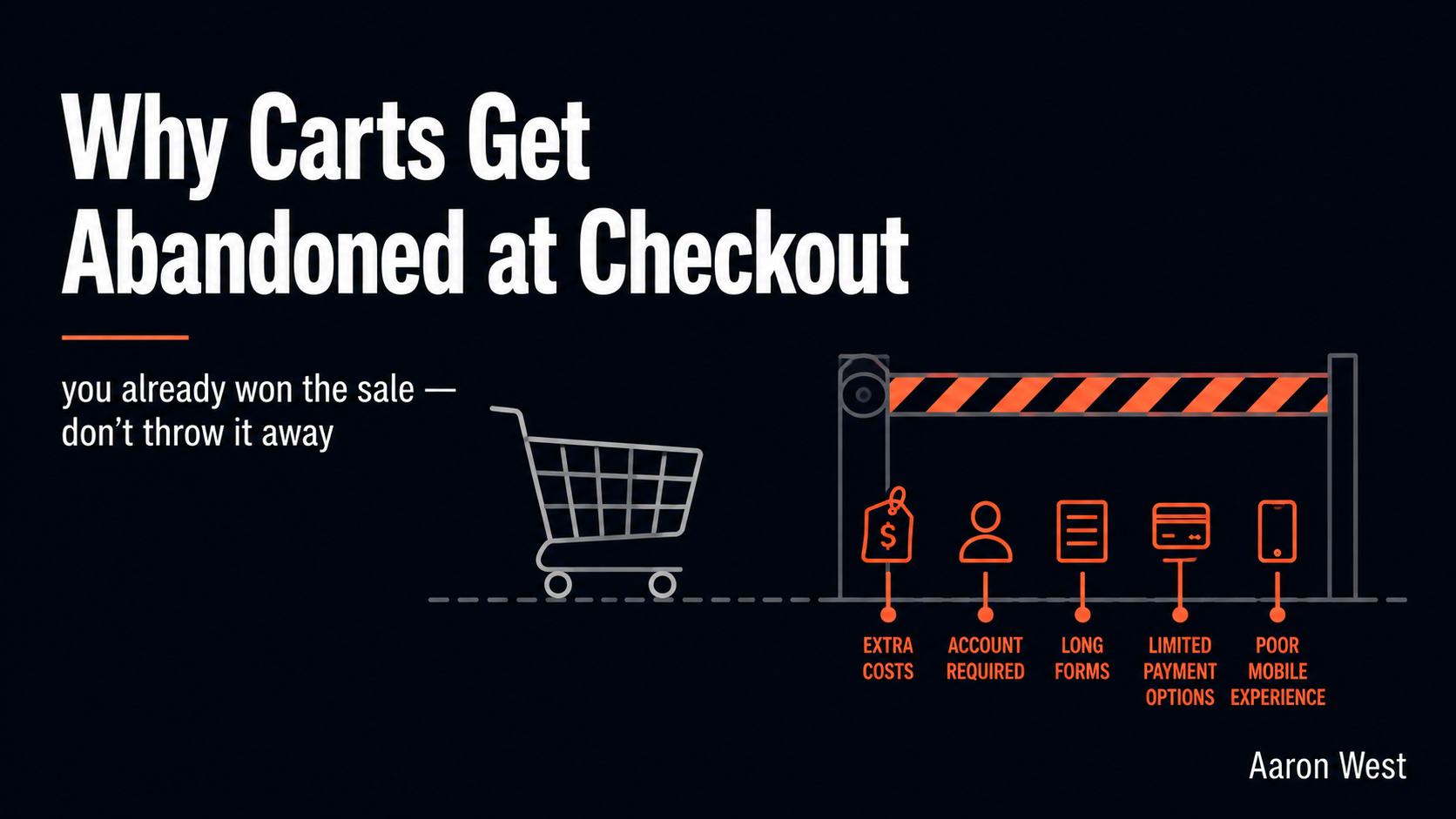
Why Carts Get Abandoned at Checkout (and How to Win Them Back)
The customers you lose at checkout are the most expensive customers you will ever lose, because they are the ones who already decided to buy. They wanted your product. They picked it, added it to the cart, and walked all the way to the payment…
Continue reading...