Mobile Payments and One-Tap Checkout

Table of Contents
On mobile, the payment step is where conversion is most often won or lost, because entering card details by hand on a phone is the single most painful moment in the entire purchase, and one-tap digital wallets are the fix. The mobile checkout problem is fundamentally a typing-and-trust problem, and wallets solve both at once: they remove the typing entirely and carry their own familiar trust. Which is why offering the wallets your customers already use is the highest-leverage mobile conversion move there is.
This closes the Mobile & App Commerce pillar, under the cornerstone that mobile is the majority but designed for desktop. The UX piece named the form as the enemy of mobile conversion. This is the form at its most expensive: the one where the customer pays.
Where mobile conversion dies
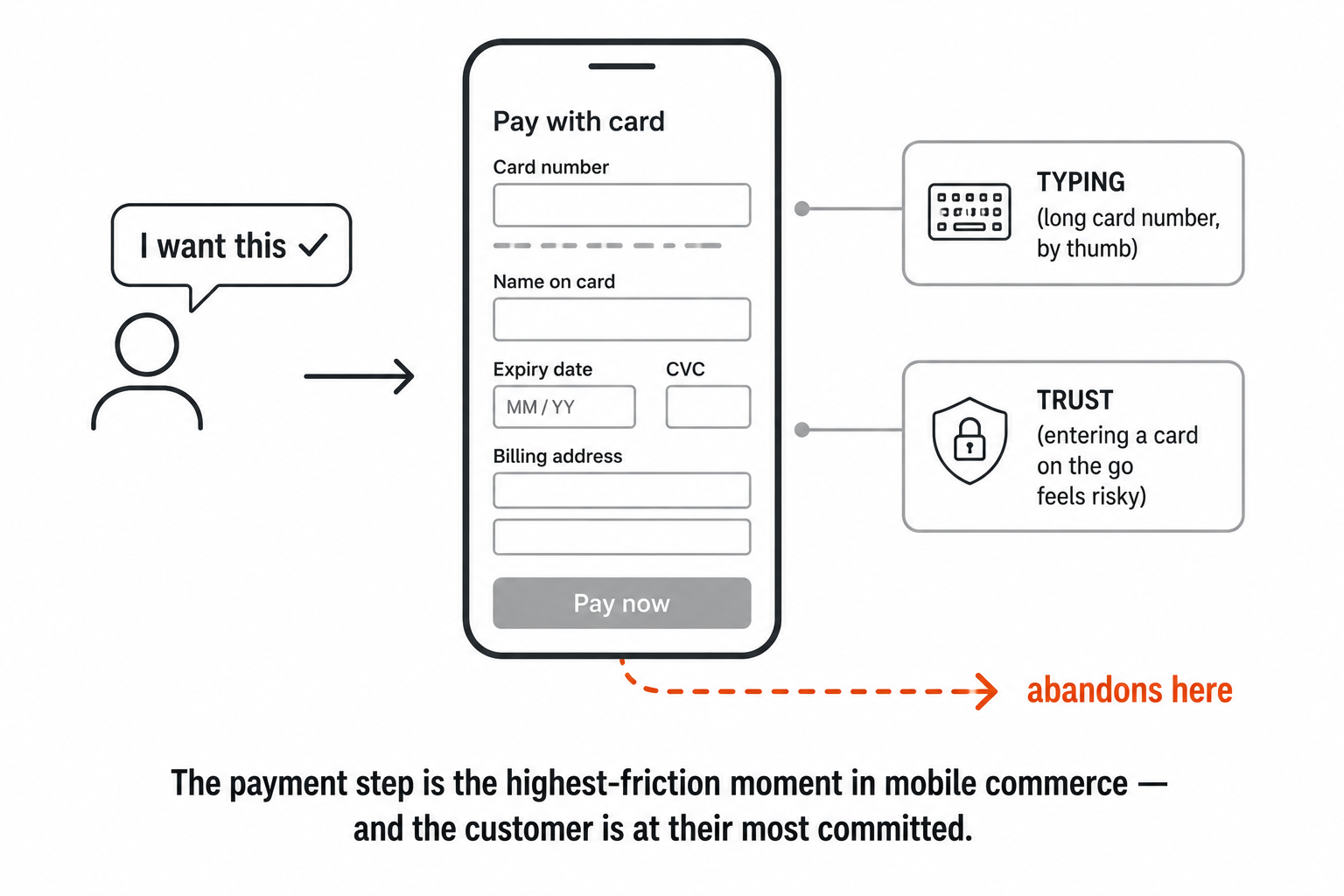
Picture the moment. The customer has done the hard part, they've found the product, decided they want it, and chosen to buy. Then they hit the payment form, and on a phone that means typing a long card number, an expiry date, a security code, a name, and a billing address, with a thumb, often one-handed, often on the move. It is the highest-friction moment in mobile commerce, and it arrives at the exact instant the customer is most committed and therefore most expensive to lose.
A lot of decided buyers abandon right there, not because they changed their mind about the product, but because the act of paying was too much effort on a phone. You paid to acquire them, you earned the decision to buy, and you lose them at the last form. That's what makes the mobile payment step the most consequential screen in the whole experience.
Two problems, peaking at the worst moment
There are really two problems stacked on top of each other at the mobile payment step, and both peak exactly when the customer is closest to buying:
- Typing. Entering card and address details by thumb is slow and error-prone, the form-is-the-enemy problem at its sharpest, and every digit is a chance to mistype, sigh, and give up.
- Trust. Entering a card on a phone, often on the go, on a connection and a context that feels less secure than a desk, takes more trust than it does on desktop, which ties straight to the trust-signals work. Doubt at the payment moment is fatal.
Most mobile checkouts attack neither, or attack only the typing while ignoring the trust. The breakthrough is that one mechanism handles both.
Wallets solve both at once
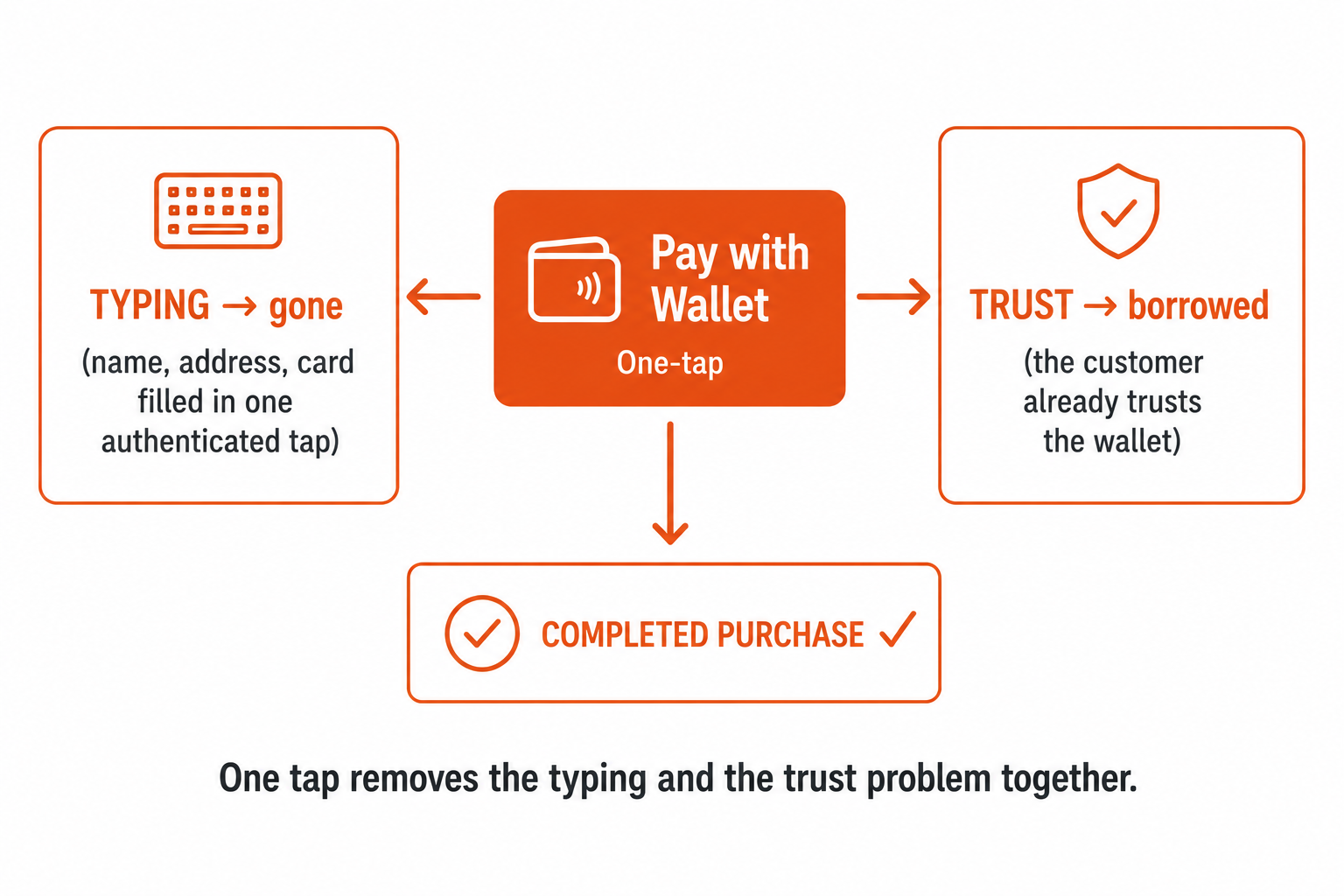
A digital wallet, the device and platform wallets and account-based payment methods customers already have, fills the name, address, and payment details in a single authenticated tap. No typing. And because the customer already trusts the wallet, that trust transfers to your checkout: they're not entering a card into your form and hoping, they're authorising a payment through something they already use and trust elsewhere.
That's why wallets are disproportionately powerful on mobile specifically. They don't fix one of the two problems; they dissolve both in the same action. The typing problem disappears because there's nothing to type. The trust problem shrinks because the trust is borrowed from a wallet the customer already extends it to. One tap, two problems gone, at the exact moment that decides whether the sale completes.
The highest-leverage move on mobile
Here's the strategic conclusion, and it's blunt: offering the wallets your customers already use is not a nice-to-have on mobile. It's the single highest-leverage conversion move available, because it removes the exact friction that kills mobile checkouts at the exact moment they're most likely to die. Stores spend heavily at the top of the funnel, ads, landing pages, product pages, and then lose the customers they paid for at a card form. A wallet is the cheapest, highest-return fix for that specific, expensive leak.
The detail that matters: offer the wallets common among your customers, in your market. Payment preferences vary by market, and the locally trusted, low-typing method is the lever in every market, which is exactly where this connects to the internationalisation work, the right method is local, but the principle (let the customer pay without typing) is universal.
And the rest of the checkout still matters
Wallets are the headline, but the checkout principles apply even harder on mobile for anyone who doesn't use one:
- Guest checkout, so you never force account creation, more typing, onto a customer who just wants to buy.
- Express checkout buttons surfaced early, so a wallet user can skip the entire form rather than scroll to the bottom to find the fast path.
- Minimal fields for anyone who does type, because every field removed is mobile conversion kept.
- Trust cues that fit the small screen at the payment moment, present and legible, not crammed off-screen, so even a card-typing customer feels safe enring their details.
The combination, a trusted wallet plus visible security cues plus a short path, is what gets a thumb to finish a purchase on a train.
What this comes down to
The mobile payment step is the moment your hardest-won customer is most likely to leave, and the reason is almost always the same: you asked a thumb to type a card number and trust a form. Wallets remove both problems in a single tap, which is why offering the ones your customers already use is the highest-leverage mobile conversion move there is, more valuable than another round of ad spend pouring customers into a checkout that loses them.
Get a decided buyer from intent to done without making them type, and you stop losing the customers you already paid to bring all the way to the payment screen. On mobile, the best payment form is the one the customer never has to fill in.
A few common questions
Why is the payment step so critical on mobile? Because it's the highest-friction moment in mobile commerce and it hits when the customer is most committed and most expensive to lose. By the payment screen they've found the product, decided to buy, and then they're asked to type a long card number, expiry, security code, name, and address with a thumb, often on the move. Many decided buyers abandon right there, not because they changed their mind, but because paying was too much effort. You earned the sale and lose it at the last form.
How do digital wallets improve mobile conversion? They solve the two problems of the mobile payment step at once. A wallet fills name, address, and payment in a single authenticated tap, so the typing problem disappears, and because the customer already trusts the wallet, that trust transfers to your checkout, so the trust problem shrinks. One mechanism dissolves both the friction and the doubt at the exact moment that decides whether the sale completes, which is why wallets are disproportionately powerful on mobile.
What's the single highest-leverage mobile conversion fix? Offering the wallets your customers already use. It's not a nice-to-have, it removes the exact friction (typing and trust) that kills mobile checkouts at the moment they're most likely to die. Stores spend heavily at the top of the funnel and then lose the customers they paid for at a card form; a wallet is the cheapest, highest-return fix for that leak. Offer the wallets common among your customers in your market, since payment preferences vary by region.
Besides wallets, what else helps a mobile checkout? The standard checkout principles apply even harder on mobile for anyone not using a wallet: guest checkout (never force account creation and more typing), express checkout buttons surfaced early (so a wallet user can skip the whole form), minimal fields for anyone who does type, and trust cues that are present and legible on a small screen at the payment moment. The combination of a trusted wallet, a short path, and visible security cues is what gets a thumb to finish a purchase on the go.
You should also read:
App vs Mobile Web: When an App Is Actually Worth It
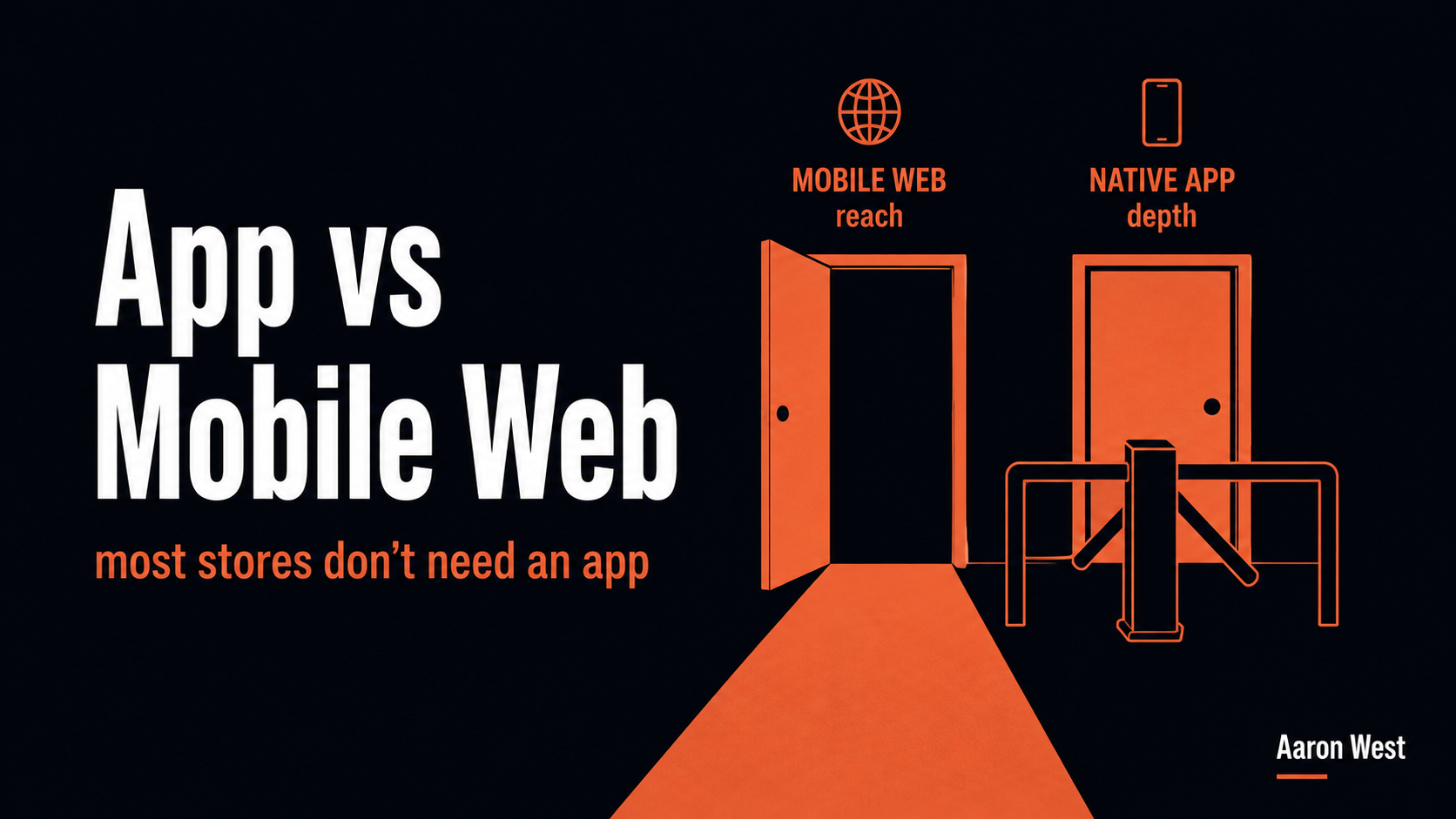
Most e-commerce stores don't need a native app, and building one is one of the most expensive mistakes in mobile commerce, because an app isn't "mobile done properly." It's a separate product, with a separate build, permanent maintenance, and a brutal install barrier. The real…
Continue reading...
Mobile UX: The Patterns That Convert on a Small Screen
Mobile UX is not desktop design shrunk to fit. It's a distinct set of patterns built around the thumb, the small screen, and a distracted, on-the-go customer. The patterns that convert all share one logic: reduce the effort, especially typing and tapping, required to get…
Continue reading...
Mobile Is Most of Your Traffic, and You're Still Designing for Desktop
For most e-commerce, mobile is now the majority of traffic, and yet most stores are still designed, reviewed, and decided on desktop by teams sitting at large screens. That gap, the experience most customers actually have being the one the business looks at least, is…
Continue reading...