App vs Mobile Web: When an App Is Actually Worth It

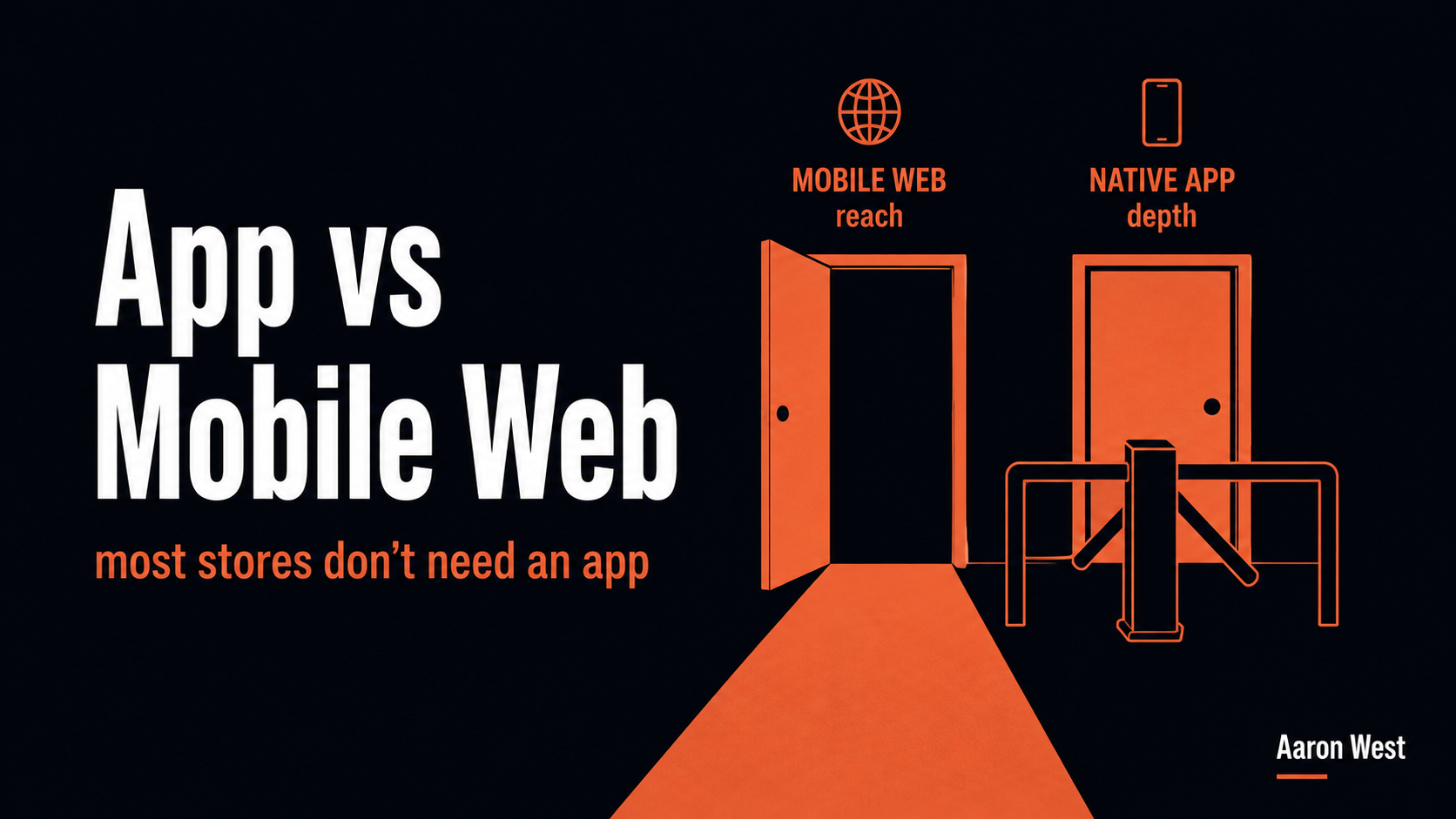
Table of Contents
Most e-commerce stores don't need a native app, and building one is one of the most expensive mistakes in mobile commerce, because an app isn't "mobile done properly." It's a separate product, with a separate build, permanent maintenance, and a brutal install barrier. The real question is never "should we have an app" but "is there a reason a customer would install one and keep using it instead of just using a good mobile site", and for most stores, the honest answer is no.
This is a core of the Mobile & App Commerce pillar, under the cornerstone that mobile is the majority but designed for desktop. The cornerstone was about the mobile web most customers use. This piece is about the app most stores shouldn't build.
The misconception that drives the spending
Teams tend to treat a native app as the serious, grown-up version of mobile, the step up from a mere mobile site. That framing is the root of the mistake, because an app isn't a step up from mobile web; it's a different, far more expensive product aimed at a different job. A mobile site and a native app aren't two qualities of the same thing. They're two different tools, and most stores reach for the costly one to do a job the cheap one does better.
The real cost of an app
Be honest about what an app actually costs, because the brochure version leaves out the expensive parts:
- You build it twice. A real native app means building and maintaining for two platforms, with all the ongoing development that implies.
- You maintain it forever. Operating-system updates, app-store review processes, bug fixes, and continuous upkeep, an app is a permanent commitment, not a project that ends.
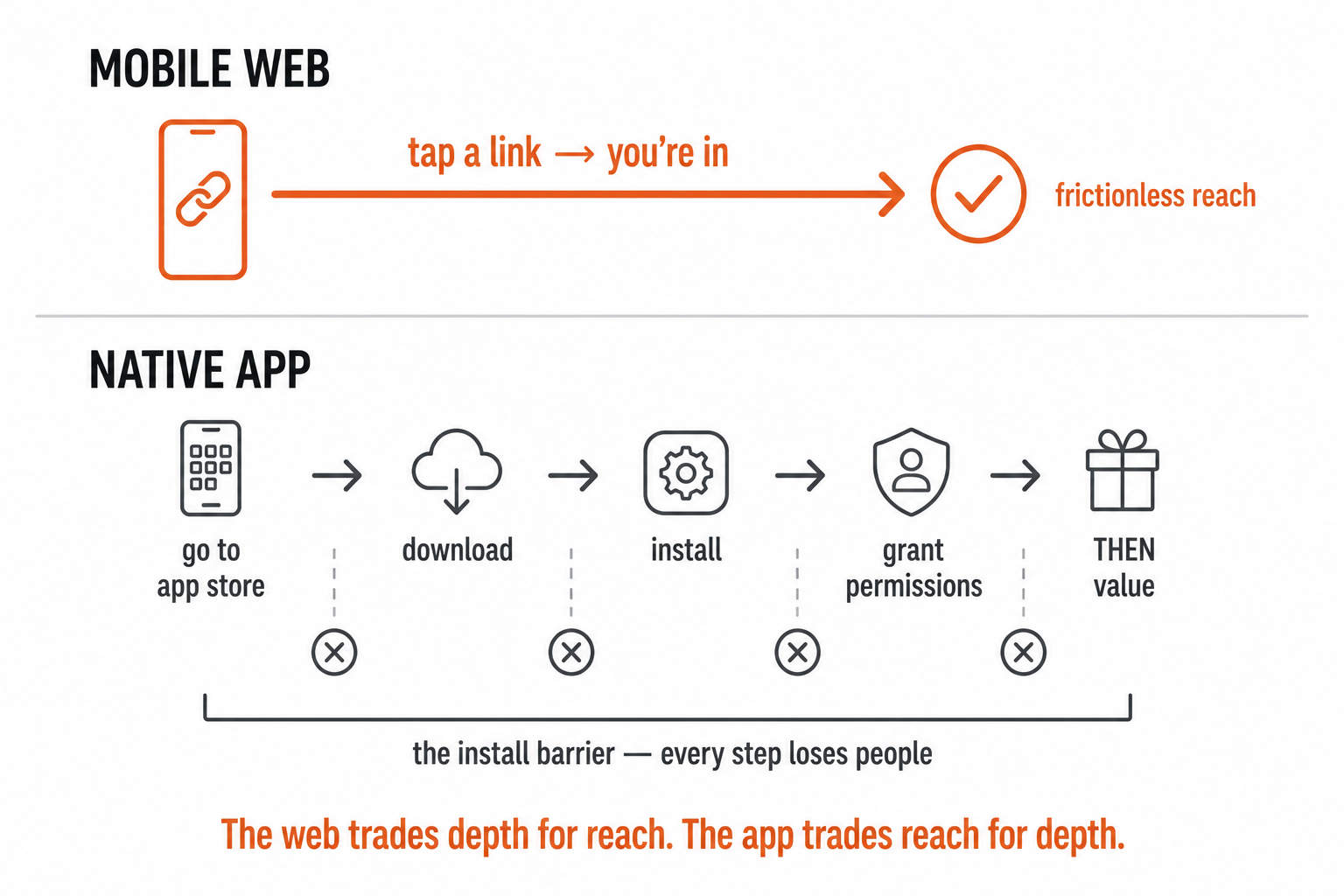
- And the killer: the install barrier. A mobile site is one tap from a search result, an ad, or a shared link, the customer is in, instantly, with zero commitment. An app demands the customer go to an app store, download it, install it, and grant permissions before they get any value at all. Every one of those steps loses people, and most visitors will never take the first one for a store they don't already love.
That install barrier alone disqualifies an app for most use cases, because it sits directly in front of the value, asking for commitment before the customer has any reason to give it.
What you're actually trading
That contrast is the whole decision in one line. The web's superpower is frictionless reach, anyone with a link is in, no commitment, no barrier. An app gives that up in exchange for depth: a richer, faster, more engaged experience for people who've already committed by installing it. So you only want to make that trade when depth, not reach, is the thing you actually need. Trading reach for depth is exactly the wrong move when most of your customers buy occasionally and would never install anything; it's the right move only when you have customers engaged enough that the depth pays for the lost reach.
When an app actually wins
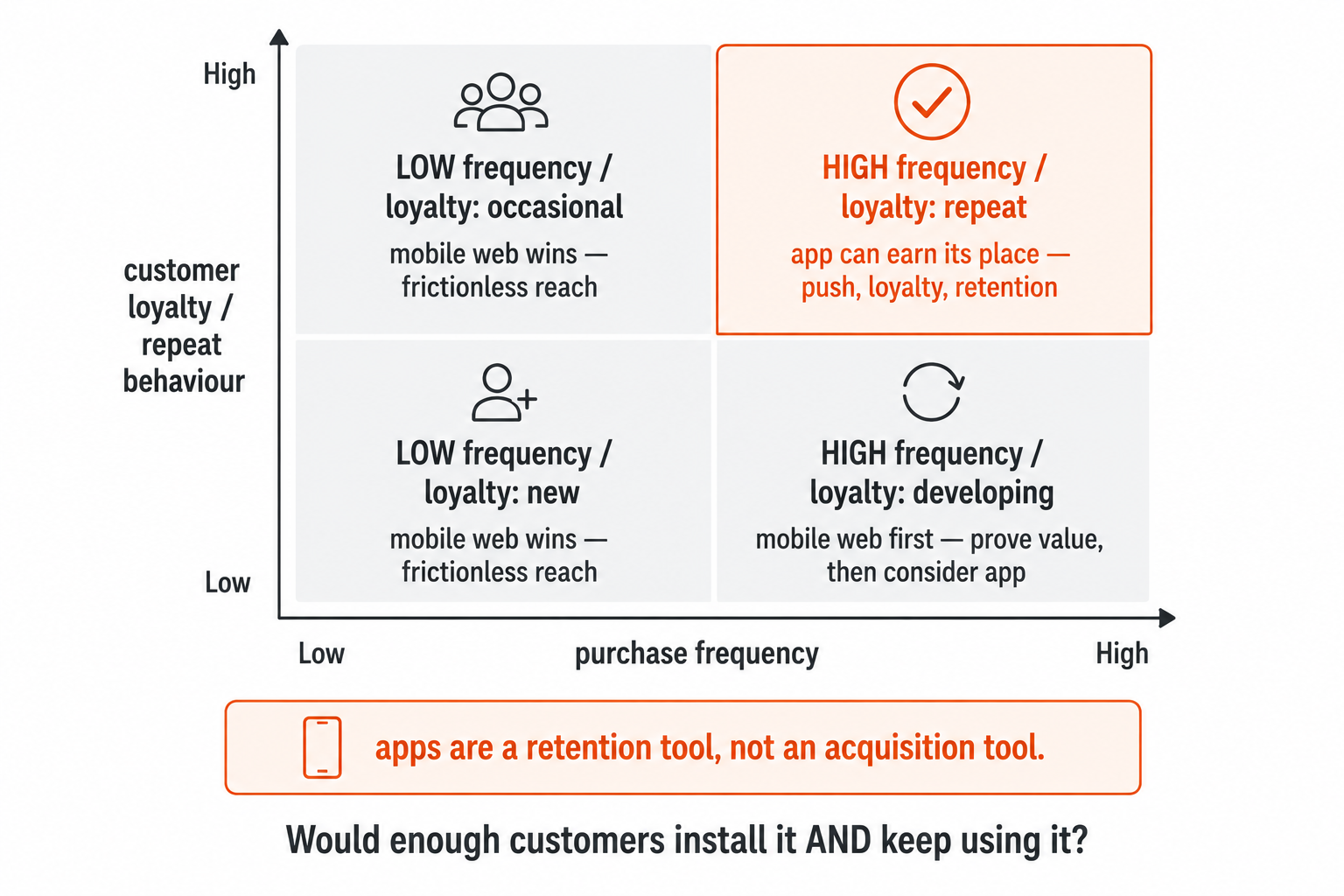
There is a clear case where an app earns its cost, and it's a specific one: high-frequency, repeat, loyal relationships. If a meaningful base of customers interacts with you often, not occasionally, an app can be worth it, because the things an app does well are all about engaging people who come back:
- Push notifications, which are the real reason most worthwhile apps exist: a direct re-engagement channel you own, more immediate than email, that lets you bring a frequent customer back. It's an owned channel, which is its own strategic value.
- Loyalty and saved state, a faster returning experience for someone who uses you regularly.
- Speed and device features, for an audience that's in the app often enough to feel the benefit.
The common thread: an app is a retention and engagement tool for your most frequent customers, not an acquisition tool. It rewards loyalty you already have; it doesn't create loyalty you don't.
When an app is a waste
The mirror image is just as clear. An app is a waste of money when:
- Purchases are occasional or infrequent. Nobody installs an app to buy something once or twice a year, and an app nobody opens is pure cost.
- You're hoping it drives acquisition. Acquisition lives on the frictionless web, not behind an install barrier. An app is the worst possible acquisition channel because the barrier comes before the value.
- You're using it to escape a bad mobile site. An app won't save a poor mobile experience; you'll just have two experiences to maintain, one of them still bad, and a bigger bill. Fix the web first.
For most stores, purchase frequency is low enough that the honest answer is simply: no app.
Web first, app maybe, later
The sequence follows from the cornerstone: nail the mobile web first, because that's where the majority of customers already are and where the frictionless reach lives. Only then consider an app, and only if two things are both true: the mobile web is genuinely good, and you have a high-frequency, loyal base whose engagement an app's tools (push, loyalty) would genuinely serve. An app is a late-game retention investment for a store that has earned a loyal repeat audience, not an early-stage mobile strategy and never a substitute for the web.
It's worth knowing the choice isn't strictly binary, either, web technologies can now deliver some app-like features (installability, push on some platforms) without a full native build, so there's a middle ground worth understanding. But the strategic question doesn't change whichever point on the spectrum you pick: is there enough frequency and enough reason for a customer to want the deeper, committed experience?
What this comes down to
An app isn't the grown-up version of mobile. It's a separate, expensive product that trades the web's frictionless reach for depth with your most frequent customers, and most stores don't have the purchase frequency to justify the install barrier. They'd get far more return from a genuinely good mobile web than from an app most people download once and delete.
So ask the only question that matters: would enough of your customers install it and keep using it, not delete it after one use? Build the app when your best customers would genuinely miss it, not because a competitor has one or because it looks like seriousness in a board deck. And if the honest answer is no, which for most stores it is, put the effort where your customers already are, one frictionless tap away, on the web.
A few common questions
Does my e-commerce store need a native app? Probably not. An app isn't "mobile done properly", it's a separate product with a separate build, permanent maintenance, and a brutal install barrier that sits in front of any value (go to a store, download, install, grant permissions). For most stores, purchase frequency is too low to justify that barrier, and a genuinely good mobile web serves the same customers better. Build an app only if you have a high-frequency, loyal base whose engagement it would genuinely serve.
When is a native app actually worth building? When you have high-frequency, repeat, loyal customers, because the things an app does well, push notifications (a direct owned re-engagement channel), loyalty and saved state, a fast returning experience, are all about engaging people who come back often. An app is a retention and engagement tool for your most frequent customers, not an acquisition tool. It rewards loyalty you already have; it doesn't create loyalty you don't.
Why is an app bad for acquisition? Because acquisition depends on frictionless reach, and an app puts a barrier in front of the value: the customer has to find, download, install, and grant permissions before they get anything. A mobile site is one tap from a link or a search result. Nobody installs an app to buy something once, so using an app to acquire new customers is fighting your own funnel, the barrier comes before the value, which is exactly backwards.
Should I build an app to fix a bad mobile experience? No. An app won't rescue a poor mobile site, you'll just have two experiences to maintain, one of them still bad, and a higher bill. The right sequence is to nail the mobile web first (that's where the majority of customers already are), and only then consider an app, and only if the mobile web is genuinely good and you have a loyal, high-frequency base whose engagement an app would serve. An app is a late-game retention investment, not a patch for the web.
You should also read:
Mobile Payments and One-Tap Checkout
On mobile, the payment step is where conversion is most often won or lost, because entering card details by hand on a phone is the single most painful moment in the entire purchase, and one-tap digital wallets are the fix. The mobile checkout problem is…
Continue reading...
Mobile UX: The Patterns That Convert on a Small Screen
Mobile UX is not desktop design shrunk to fit. It's a distinct set of patterns built around the thumb, the small screen, and a distracted, on-the-go customer. The patterns that convert all share one logic: reduce the effort, especially typing and tapping, required to get…
Continue reading...
Mobile Is Most of Your Traffic, and You're Still Designing for Desktop
For most e-commerce, mobile is now the majority of traffic, and yet most stores are still designed, reviewed, and decided on desktop by teams sitting at large screens. That gap, the experience most customers actually have being the one the business looks at least, is…
Continue reading...