Content Marketing for E-Commerce That Isn't a Blog Nobody Reads

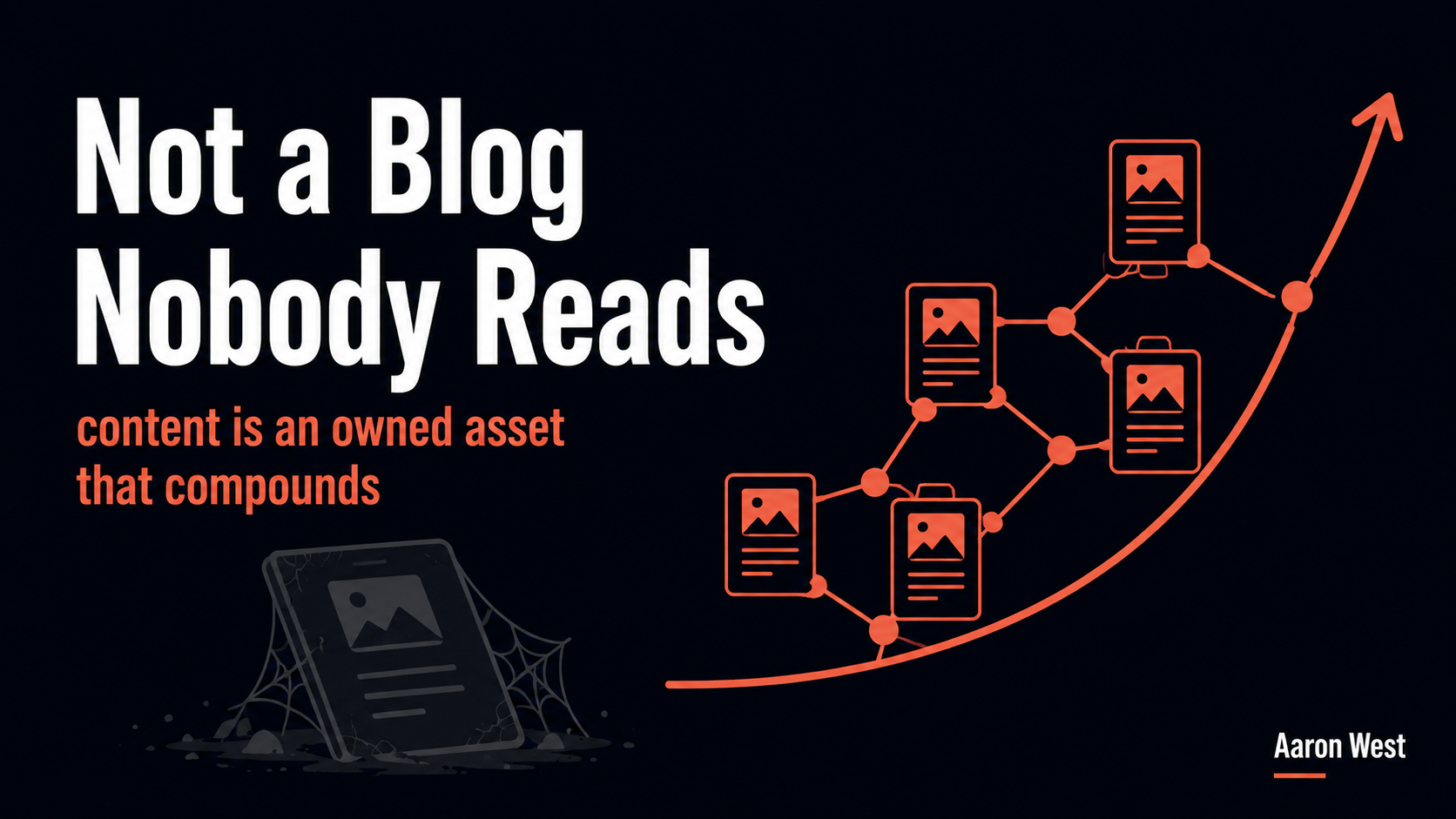
Table of Contents
Most e-commerce content marketing fails for one reason: it's a blog nobody reads. Content produced because "we should have a blog," disconnected from the business, ranking for nothing and selling nothing. Content marketing isn't producing content; it's building an owned audience and an authority asset that compounds over years, which requires every piece to have a job, a distribution plan so it's actually seen, and the patience to let it compound. And in 2026 that job has changed: content now has to earn citations and build branded authority, not just chase the blue-link rankings AI search is busy eating.
This opens the Content & Organic Marketing pillar, and it's the cornerstone the cluster links up to: building topical authority with clusters, video and UGC, and organic social with realistic expectations. It also happens to be the thing this entire site is an experiment in, which makes it the one piece here written from inside the work rather than about it.
The blog nobody reads
You've seen this blog. A store decides content marketing is "a thing you're supposed to do," starts a blog, and begins publishing generic posts, "5 tips for choosing X," "the ultimate guide to Y", written for no one in particular. Nobody reads them. They rank for nothing because a hundred identical posts already exist. They sell nothing because they were never connected to anything the business does. After a while, the cadence slips, the last post is dated eighteen months ago, and the blog sits there as a monument to effort that compounded into nothing.
That's not an unlucky outcome. It's the default outcome, and it's what most "content marketing" actually is in practice. Understanding why it fails is the whole of getting it right, because every failure mode points at a thing the working version does instead.
Why it fails
The dead blog fails for reasons that are depressingly consistent:
- No job. The content isn't trying to accomplish anything specific, so it accomplishes nothing.
- No audience. It's written for a search engine, or for no one, rather than for a real person with a real question.
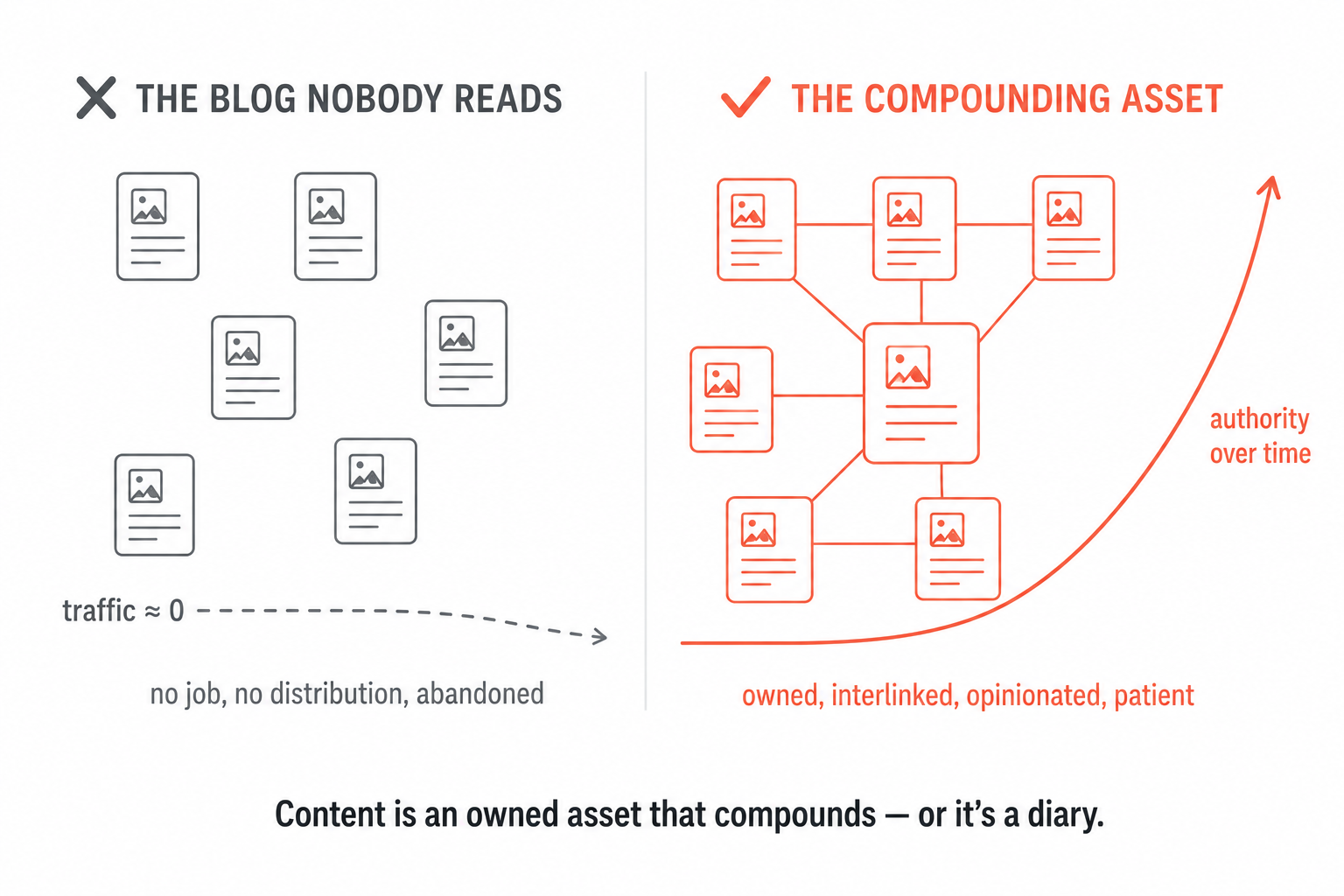
- No distribution. It's published and forgotten, on the assumption that publishing is the work. Content nobody sees isn't marketing; it's a diary.
- No patience. It's judged on next month's traffic and killed before it could compound, which is like digging up a seed to check if it's growing.
- No connection to the business. Even when it gets traffic, the traffic never becomes anything, because nothing links the reading to the buying.
Fix those five and you have the working version. Which starts with a different idea of what content even is.
Content is an owned asset that compounds
Here's the reframe that changes everything: content marketing isn't producing content; it's building an owned asset that compounds. This is the opposite of paid advertising. With ads, you pay and you get traffic, and the moment you stop paying, it stops, every time, forever. Content is the reverse: slow to start, often discouragingly so, and then compounding, as pieces earn discovery, build trust, link to each other, and keep working for years after you wrote them, with no further spend.
That difference dictates the whole strategy, and especially the temperament. Content is a channel you own outright, not rented from a platform that can change the rules or the price, which is its great strategic advantage. But owning an asset that compounds means the patience is the strategy. The stores that win at content are the ones that kept going through the slow part, because that's where almost everyone quits, and quitting is what turns a potential asset into a dead blog.
Every piece needs a job
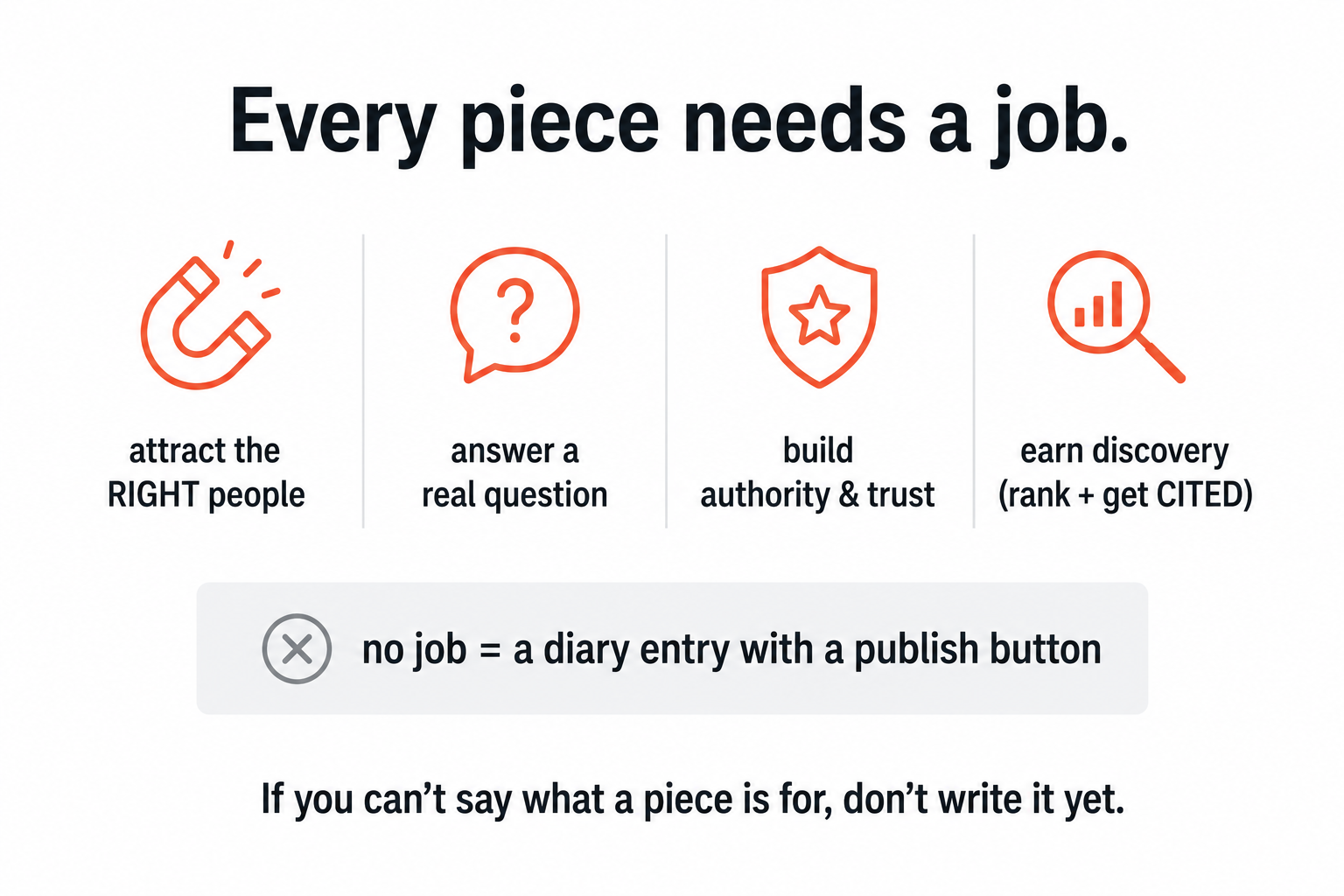
The cure for the no-job failure is simple to state and rare to practice: every single piece must have a job before you write it. The jobs are concrete. Attract the right people, not traffic for its own sake, but the people who might actually become customers. Answer a real question a real customer actually has, in their words, not a keyword a tool suggested. Build authority and trust by demonstrating you genuinely know the thing. And earn discovery, by ranking, by being cited, or both.
A piece that does one or more of those has a reason to exist. A piece that does none of them, however polished, is a diary entry with a publish button, and a blog full of diary entries is the thing nobody reads. Before writing anything, the question is "what is this piece for", and if you can't answer it, don't write it yet.
Distribution is half the work
The single most-skipped truth in content marketing: producing the content is only half the job, and getting it in front of people is the other half. Most teams spend ninety percent of their effort on production and almost none on distribution, then wonder why good work goes unseen. Content nobody sees isn't marketing, no matter how good it is.
Distribution has three layers worth building deliberately. Owned distribution, your email list and the mirror onto a platform like LinkedIn, is the part you control and should lean on hardest. Earned distribution, citations, shares, references, is what good content attracts when it's genuinely useful. And the slow compounding of search and AI discovery is the long game that pays off if the piece had a real job and you had the patience. Budget as much thought for how a piece will be seen as for what it says, because a brilliant piece with no distribution plan is just a better-written diary.
The 2026 shift: content's job changed
There's a layer the dead-blog era didn't have to reckon with, and it's the one that ties this pillar to the discoverability work. Classic blue-link SEO is being hollowed out by AI search, and the hardest-hit category is exactly the generic content the dead blog was made of: "what is X" pieces are now answered directly by AI, with no click coming back. Writing more of that in 2026 is feeding the machines content they give away for free.
So content's job has shifted. It now wins by being two things the machines can't flatten. First, the cited, authoritative source, the piece an AI engine quotes and names, which means being clear, quotable, opinionated, and backed by genuine experience rather than generic and interchangeable. Second, branded authority, being known, named, and trusted, which is resilient in a way that anonymous ranking is not. Opinionated, experience-backed, genuinely expert content is what survives the shift. Generic content is what gets summarised away. The dead blog was always a waste; now it's a waste the machines actively erase.
What this comes down to
Content marketing isn't a blog you keep because you feel you should. It's an owned authority asset that compounds for years, or it's nothing. The working version gives every piece a job, spends as much effort getting it seen as making it, writes to be the cited, opinionated authority rather than the generic filler the machines now give away, and has the patience to let the asset compound through the slow part where everyone else quits.
I'll be honest that this whole site is the argument made in practice: not a blog of disconnected tips, but clusters of deep, interlinked, opinionated pieces built to compound into authority, which is exactly what the topical-authority piece will eventually document from this hub's own results. Done as a checkbox, content is the most common waste in e-commerce marketing. Done as an asset, it's the most durable marketing you can build, the one channel you own outright that keeps paying after you've stopped working on it. And in the AI era, being the cited authority is the version of it that's left standing.
A few common questions
Why do most e-commerce blogs fail? Because they're started as a checkbox, "we should have a blog," rather than built as an asset. They fail for five consistent reasons: no job (the content isn't trying to do anything specific), no audience (written for a search engine or for no one), no distribution (published and forgotten), no patience (killed before it could compound), and no connection to the business (traffic that never becomes anything). Fix those five and you have the working version; leave them and you get a monument to effort that compounded into nothing.
How is content marketing different from advertising? It's the opposite shape. With ads, you pay and get traffic, and the moment you stop paying it stops. Content is slow to start and then compounds, pieces earn discovery, build trust, link to each other, and keep working for years with no further spend, and it's a channel you own rather than rent. The catch is that owning a compounding asset means the patience is the strategy: the slow early part is where almost everyone quits, and quitting is what turns a potential asset into a dead blog.
What makes a piece of content actually worth publishing? A job. Before you write it, it should be clear that the piece will attract the right people (not just traffic), answer a real question a real customer has, build authority by demonstrating genuine expertise, or earn discovery by ranking or being cited, ideally several of those. A piece that does none of them, however polished, is a diary entry with a publish button. If you can't say what a piece is for, don't write it yet.
How has AI search changed content marketing? It's hollowed out generic content. Blue-link SEO is being eaten by AI answers, and the hardest-hit category is exactly the "what is X" content most dead blogs were made of, now answered directly with no click back. So content's job has shifted to two things machines can't flatten: being the cited, authoritative source (clear, quotable, opinionated, experience-backed) and building branded authority (known, named, trusted). Opinionated, expert content survives; generic content gets summarised away, which means the dead blog isn't just a waste now, it's a waste the machines actively erase.
You should also read:
Organic Social for E-Commerce: Realistic Expectations
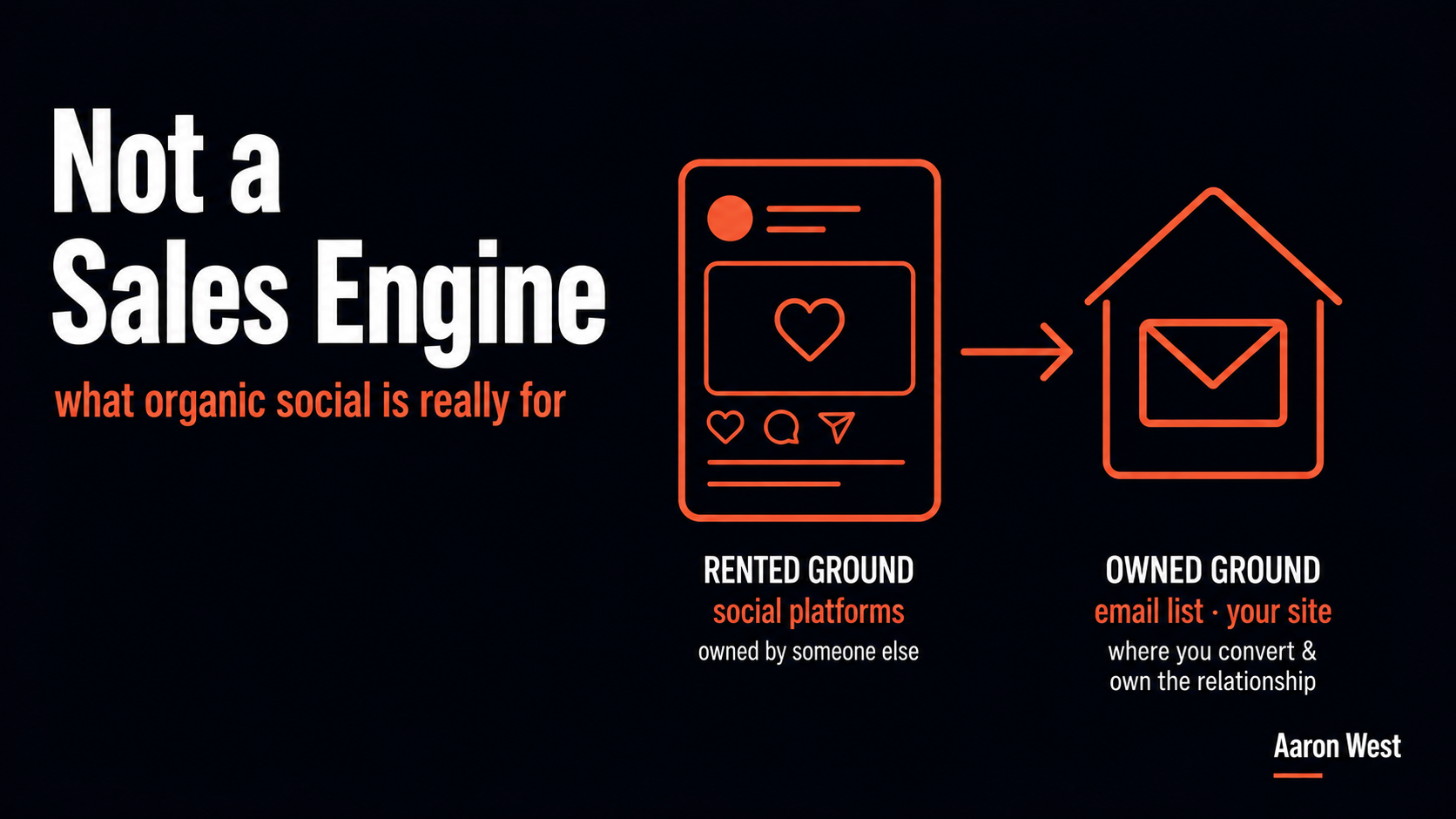
Organic social media is mostly oversold as an e-commerce sales channel, and treating it as one is how teams end up frustrated and burned out. Platform reach is throttled, organic posts rarely drive meaningful direct sales, and the channel's real value is elsewhere: brand presence,…
Continue reading...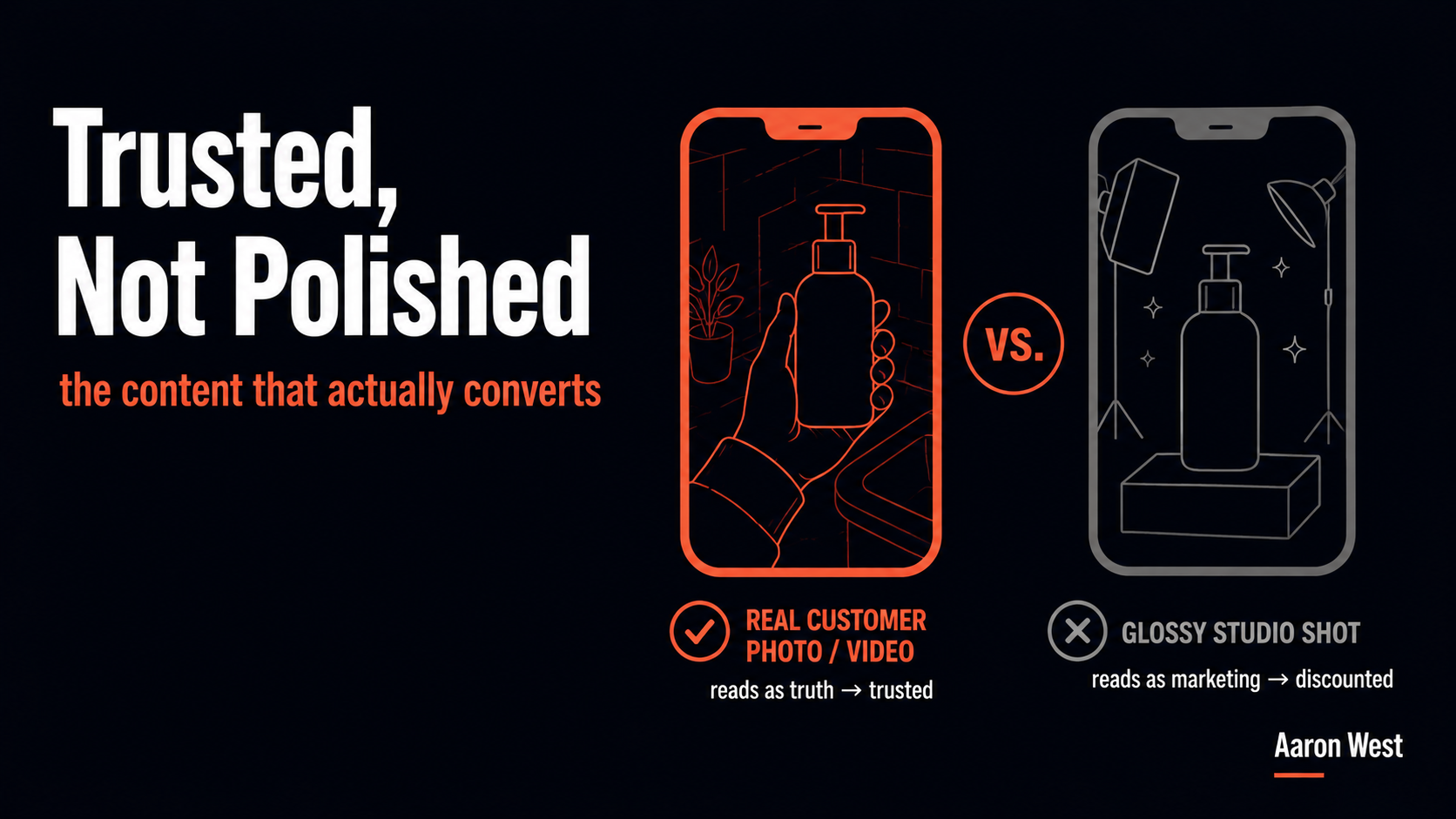
Video and UGC: The Content That Actually Converts
Video and user-generated content convert better than polished brand content for one reason: they carry a trust and concreteness your own marketing can't manufacture. Customers believe other customers, and believe seeing a product in real use, far more than they believe a brand describing itself.
Continue reading...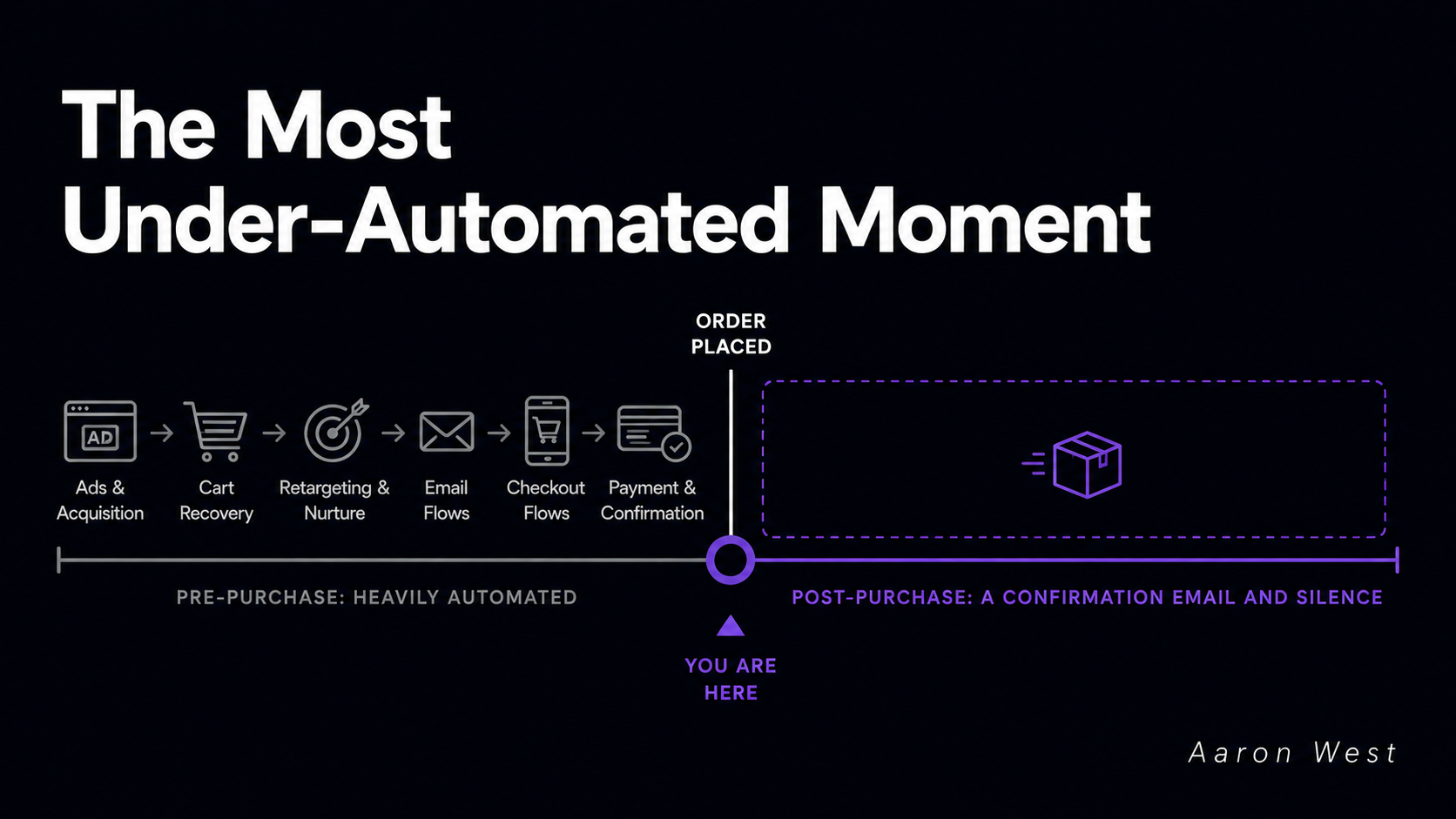
Post-Purchase Is the Most Under-Automated Moment in E-Commerce
Almost every store pours its automation budget into the moment before the sale and abandons the customer the moment after it. Cart recovery, retargeting, checkout nudges, all heavily automated. Then the order goes through, and the experience falls off a cliff into a generic "thanks…
Continue reading...