Building Topical Authority With Clusters: A Real Example

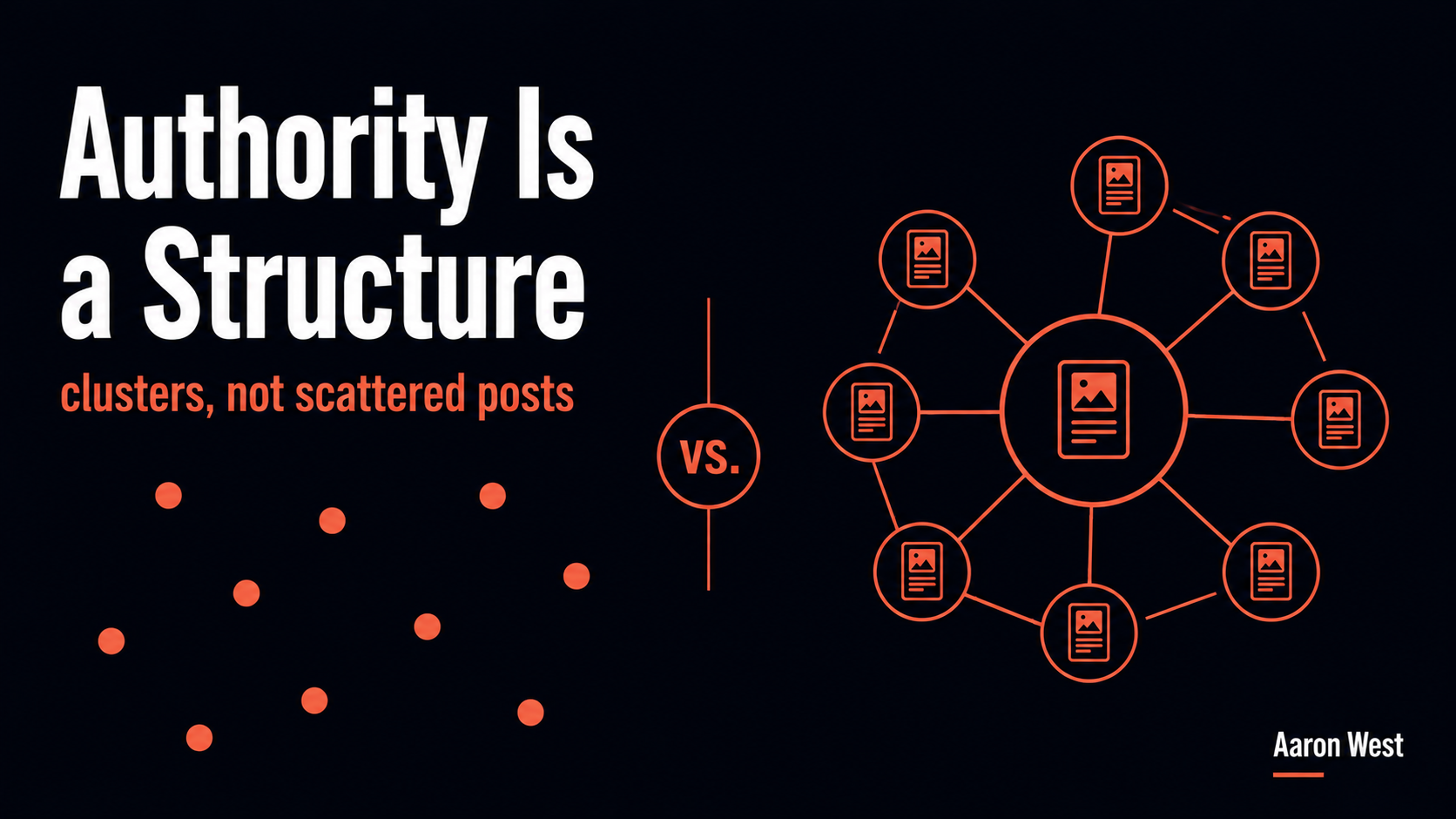
Table of Contents
Topical authority is built by clusters, not by scattered posts. A deep cornerstone piece, surrounded by a dense, interlinked web of supporting pieces, all on one subject, is what search engines and AI answer engines read as "this site is the authority here," in a way no single brilliant article ever can. Authority is earned per cluster, not per article. And the most honest way to explain it is to show you the one I'm building: this hub.
This is the capstone of the Content & Organic Marketing pillar, under the cornerstone that content is an owned asset, not a blog nobody reads. The cornerstone argued content has to compound. This piece is the structure that makes it compound into authority.
Authority is earned per cluster, not per article
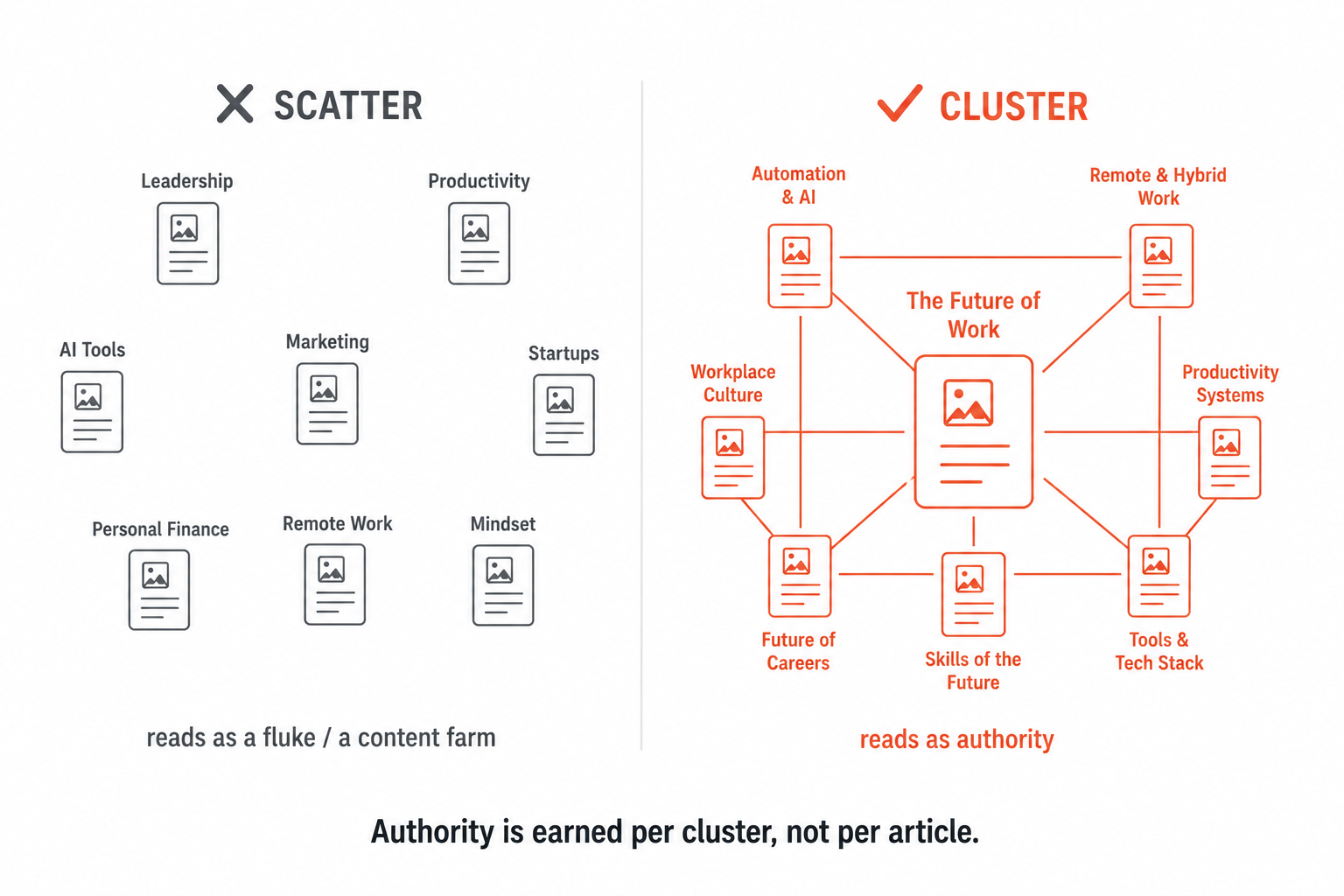
Here's the misconception worth clearing first. People think authority is earned one great article at a time, write enough good posts and you'll be seen as the expert. It doesn't work that way. One excellent post on a topic, surrounded by nothing, reads as a fluke: a lucky hit, not evidence of expertise. A search engine, or an AI engine choosing whom to cite, has no reason to read a lone good post as authority.
What reads as authority is depth and breadth on one subject, tied together. A cornerstone plus fifteen interlinked supporting pieces, each going deep on a different facet of the same topic, signals something a single post never can: these people have clearly covered this subject comprehensively and know it cold. The unit of authority isn't the article. It's the cluster. Which is exactly why scattering the same effort across a dozen unrelated topics signals nothing, you produce twelve shallow puddles instead of one deep well, and depth is what gets read as expertise.
What a cluster actually is
A cluster is a specific, concrete structure, not a vague theme:
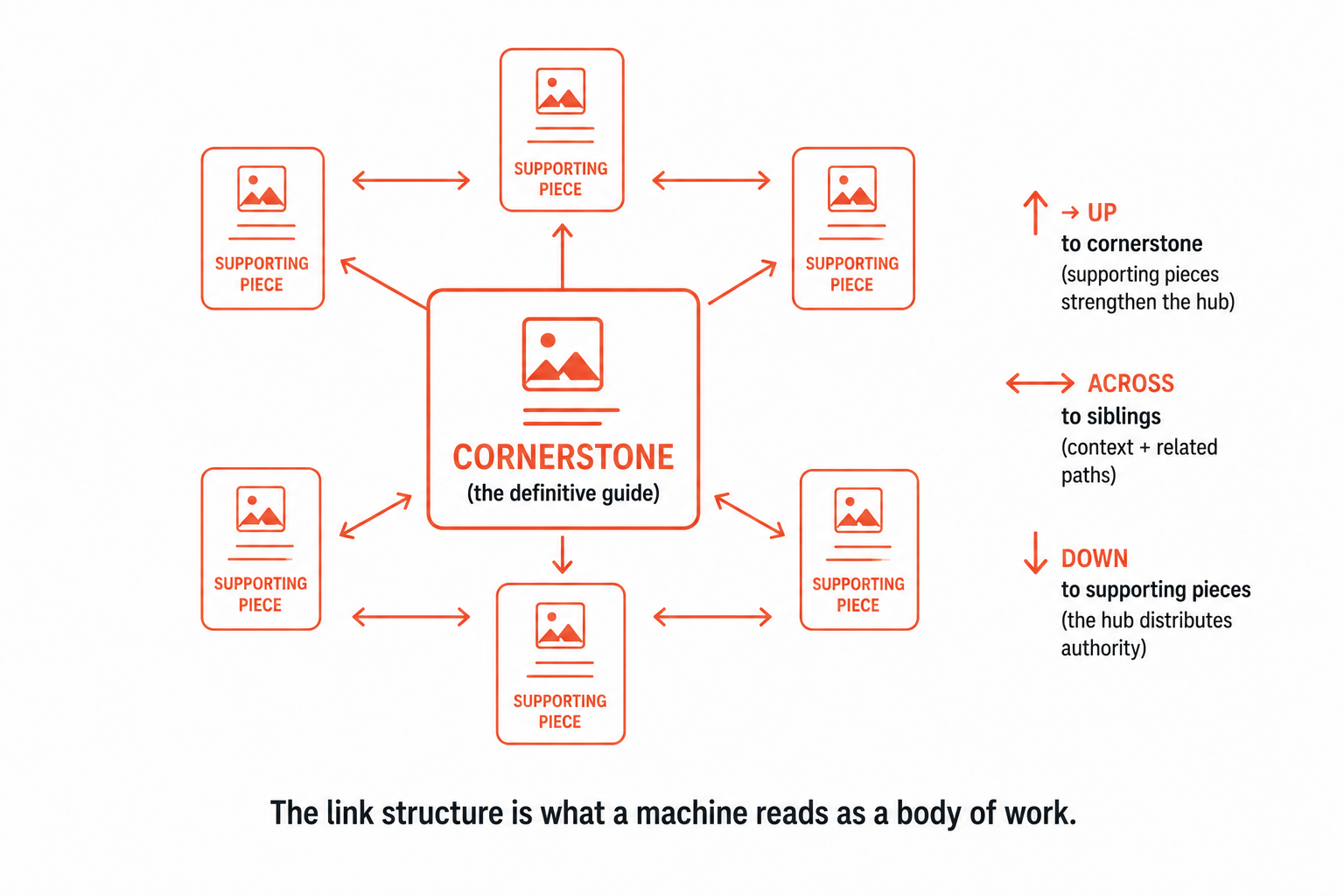
- A cornerstone: the deep, definitive anchor piece on the subject, the page everything else points to.
- Supporting pieces: each going deep on one facet of the cornerstone's topic, the breadth that proves the depth isn't a one-off.
- Interlinking: every supporting piece links up to the cornerstone and across to its siblings, and the cornerstone links down to the supporting pieces. That link structure is the part most people skip, and it's the part that matters most.
The links are what turn a pile of articles into a body of work. Without them you have a folder of related posts; with them you have a mapped, navigable structure that a machine can follow and read as "this is comprehensive, this is organised, this is authoritative." The interlinking isn't housekeeping. It's the thing that makes the cluster legible as a cluster.
Why it works for search and for AI engines
The cluster pays off twice, with both kinds of reader.
Search engines read the interlinked depth as topical authority: you've covered a subject comprehensively, with a clear internal structure that signals organisation and completeness, so you're a strong answer for queries across that whole topic, not just one. And AI answer engines, which are looking for the most authoritative source to quote, find a site that has visibly gone deep on exactly the subject of the query, with a cornerstone that states the definitive view and supporting pieces that back it. Both reward the cluster. Neither rewards the scatter. This is the same logic the discoverability work lays out, applied to how you structure a whole body of content rather than a single page.
The discipline: finish a cluster before opening the next
The hardest part isn't understanding clusters; it's the discipline they demand. The temptation is always to dabble, a post here on this topic, a post there on that one, because dabbling feels like covering more ground. The authority-building move is the opposite: take one subject to real depth, cornerstone plus its core supporting pieces, densely interlinked, before you open the next.
A finished cluster reads as authority. A dozen half-finished clusters read as a content farm that started a lot of things and mastered none. So the rule is unglamorous and decisive: depth on less ground beats breadth across more. Pick a subject, finish it properly, then move on. The patience the cornerstone called the real strategy shows up here as the discipline to not scatter.
The real example: this hub
The best explanation of a method is the method working, so I'll be concrete about the one in front of you. This site is built exactly this way, on purpose. Each pillar opens with a cornerstone, the definitive anchor on its subject. Each pillar is then taken to real depth, the cornerstone plus its core supporting pieces, before the next pillar is opened, rather than dabbling across all of them at once. And every piece links up to its cornerstone and across to its siblings, so each cluster is a navigable, mapped body of work rather than a heap of related posts. Automation, conversational AI, affiliate, performance marketing, conversion, mobile, and the rest are each a cluster, not a scattering.
That's the method shown in practice, not described in the abstract, which is the whole point of putting it here as the capstone. You can see the structure by clicking around: the cornerstones, the supporting pieces, the links between them. The architecture is real and demonstrable right now.
The honest caveat
Now the part most "build topical authority" advice quietly skips, because it's inconvenient: the structure is the cause, and authority is the effect, and the effect lags. Building the cluster is something you can do today; being read as the authority and earning the citations is something that arrives later, as the structure does its slow work and the engines and readers catch up. Authority compounds the way the cornerstone said content does: slowly, then noticeably.
So this is the method demonstrated in practice, with the full results case, which clusters earn the most citations, how branded authority builds, to be written from real data as it accumulates. That honesty is the point, not a hedge: a topical-authority claim should be structurally sound now and provable over time, not asserted with borrowed statistics. The structure is here today. The proof is compounding, and I'd rather show you the architecture and report the results as they land than claim an outcome the work hasn't yet earned.
What this comes down to
Topical authority isn't a trick or a hack; it's a structure, a cornerstone, a dense cluster of interlinked supporting pieces, one subject taken to real depth before the next is opened. That structure is how a pile of articles becomes a body of work that search engines and AI answer engines both read as expertise, and it's the thing scattering can never produce no matter how good the individual posts are.
This hub is the worked example, built cluster by cluster, on purpose, with the links and the discipline that the method actually requires. The architecture you can see today; the authority it's designed to earn compounds the only way authority ever does, slowly, and then all at once. The structure is the part you control. Build it right, be patient, and the rest follows.
A few common questions
What is topical authority and how is it built? Topical authority is being read, by search engines and AI answer engines, as a comprehensive expert on a subject. It's built with clusters, not scattered posts: a deep cornerstone piece on the subject plus a web of supporting pieces each covering one facet, all interlinked. Depth and breadth on one subject, tied together by links, is what reads as expertise. Authority is earned per cluster, not per article, which is why a single great post surrounded by nothing reads as a fluke rather than authority.
What exactly is a content cluster? A specific structure: a cornerstone (the deep, definitive anchor piece on the subject), supporting pieces (each going deep on one facet of it), and interlinking (every supporting piece links up to the cornerstone and across to its siblings, and the cornerstone links down to them). The links are the part most people skip and the part that matters most, they turn a pile of related articles into a mapped, navigable body of work that a machine can follow and read as comprehensive and organised.
Why finish one cluster before starting another? Because a finished cluster reads as authority, while a dozen half-finished clusters read as a content farm that started a lot and mastered nothing. The temptation is to dabble across topics because it feels like covering more ground, but depth on less ground is what gets read as expertise. The discipline of taking one subject to real depth, cornerstone plus its core supporting pieces, densely interlinked, before opening the next is what actually builds authority.
How long does topical authority take to build? Longer than people want, because the structure is the cause and authority is the effect, and the effect lags. You can build a cluster today, but being read as the authority and earning citations arrives later as the structure does its slow work. Authority compounds the way good content does, slowly, then noticeably, which is why the honest way to make a topical-authority claim is to show the structure now and report the results as the data accumulates, rather than asserting an outcome the work hasn't yet earned.
You should also read:

Organic Social for E-Commerce: Realistic Expectations
Organic social media is mostly oversold as an e-commerce sales channel, and treating it as one is how teams end up frustrated and burned out. Platform reach is throttled, organic posts rarely drive meaningful direct sales, and the channel's real value is elsewhere: brand presence,…
Continue reading...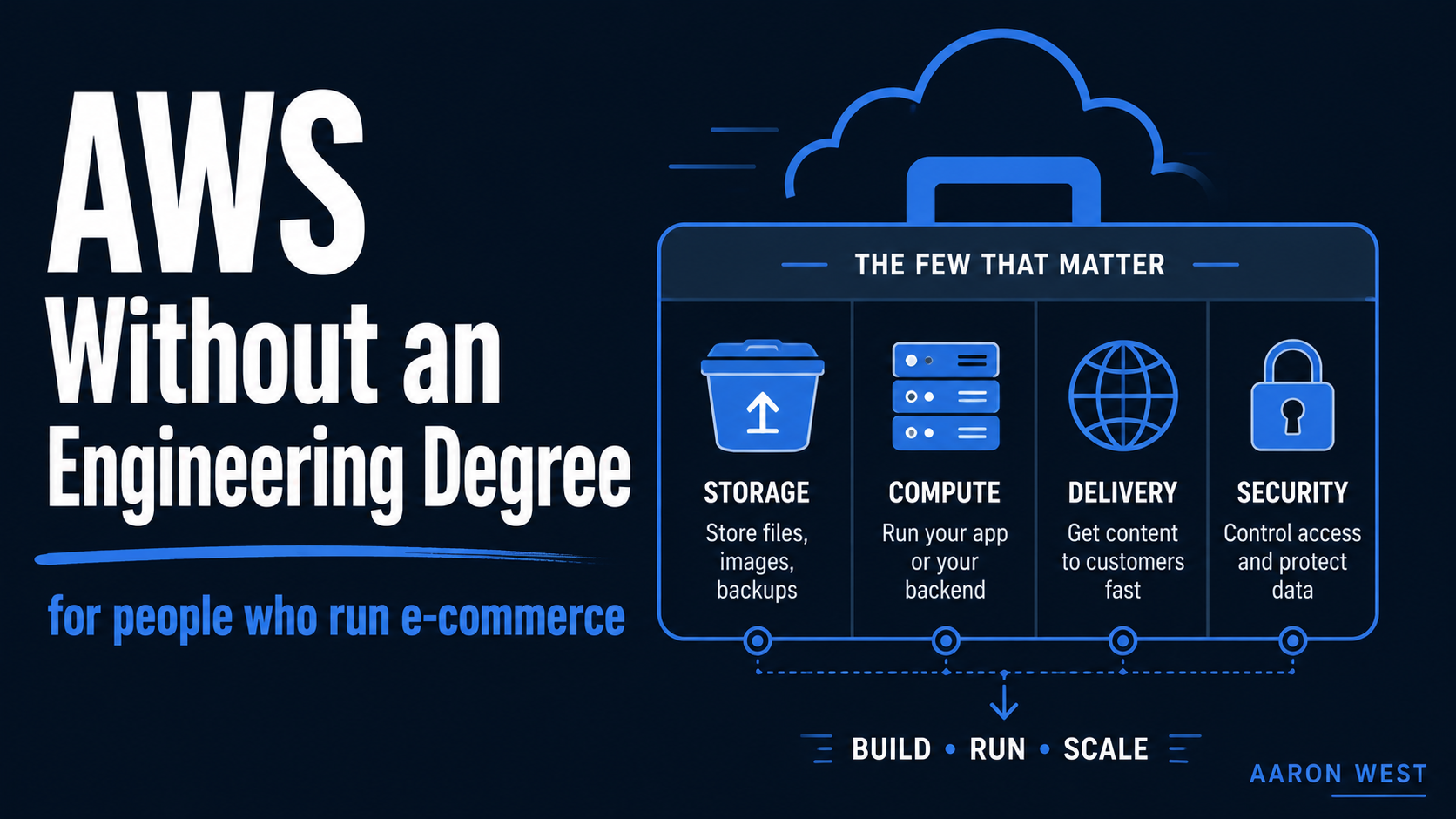
The E-Commerce Manager's Guide to AWS Without an Engineering Degree
You do not need to understand all of AWS. You need to understand maybe six services and one mental model, and that is enough to make good decisions, ask the right questions, and stop nodding along blankly when your developers or a vendor start talking…
Continue reading...
What Is Conversational AI, Really, and What It Still Can't Do
Conversational AI is the umbrella term for any technology that lets a machine understand, process, and respond to human language in something close to a natural conversation, by text or by voice. That is the whole definition. It is not one product or one technique.
Continue reading...