Organic Social for E-Commerce: Realistic Expectations

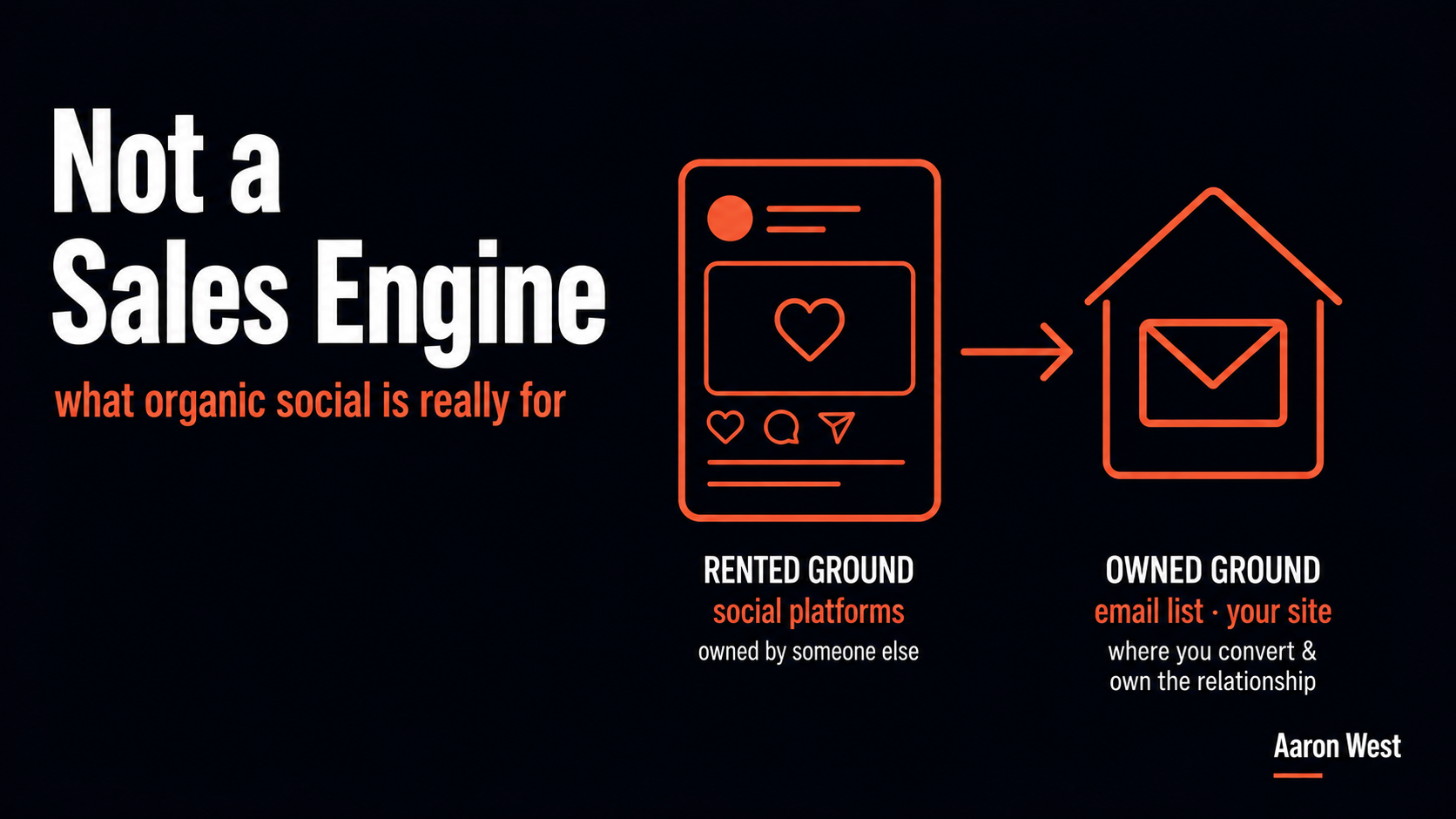
Table of Contents
Organic social media is mostly oversold as an e-commerce sales channel, and treating it as one is how teams end up frustrated and burned out. Platform reach is throttled, organic posts rarely drive meaningful direct sales, and the channel's real value is elsewhere: brand presence, distributing the content you own, building trust, and feeding the owned channels that actually convert. Set that expectation correctly and organic social earns its place. Expect it to be a sales engine and it's a time-sink that disappoints.
This closes the Content & Organic Marketing pillar, under the cornerstone that content is an owned asset. It's the honest counterweight to the rest of the pillar: not every organic channel deserves the effort the hype assigns it, and knowing what organic social is genuinely for is what keeps it useful instead of exhausting.
The oversell
Organic social is sold as a must-have sales channel: post consistently, build a following, and the sales will come. For most e-commerce stores, they mostly won't, and it's worth being blunt about why before you pour years of effort into the expectation.
Reach is deliberately throttled, the platforms have every incentive to make you pay for visibility, so an organic post reaches only a fraction of even the followers you already have. The audience is in browse-and-scroll mode, not buy mode. Attribution from organic social to actual sales is murky at best. And the platform's whole business model is to convert your reach into ad spend. None of that is your failure as a marketer; it's the nature of the channel. The mistake isn't the effort. It's the expectation that the effort should produce direct sales.
What organic social is actually for
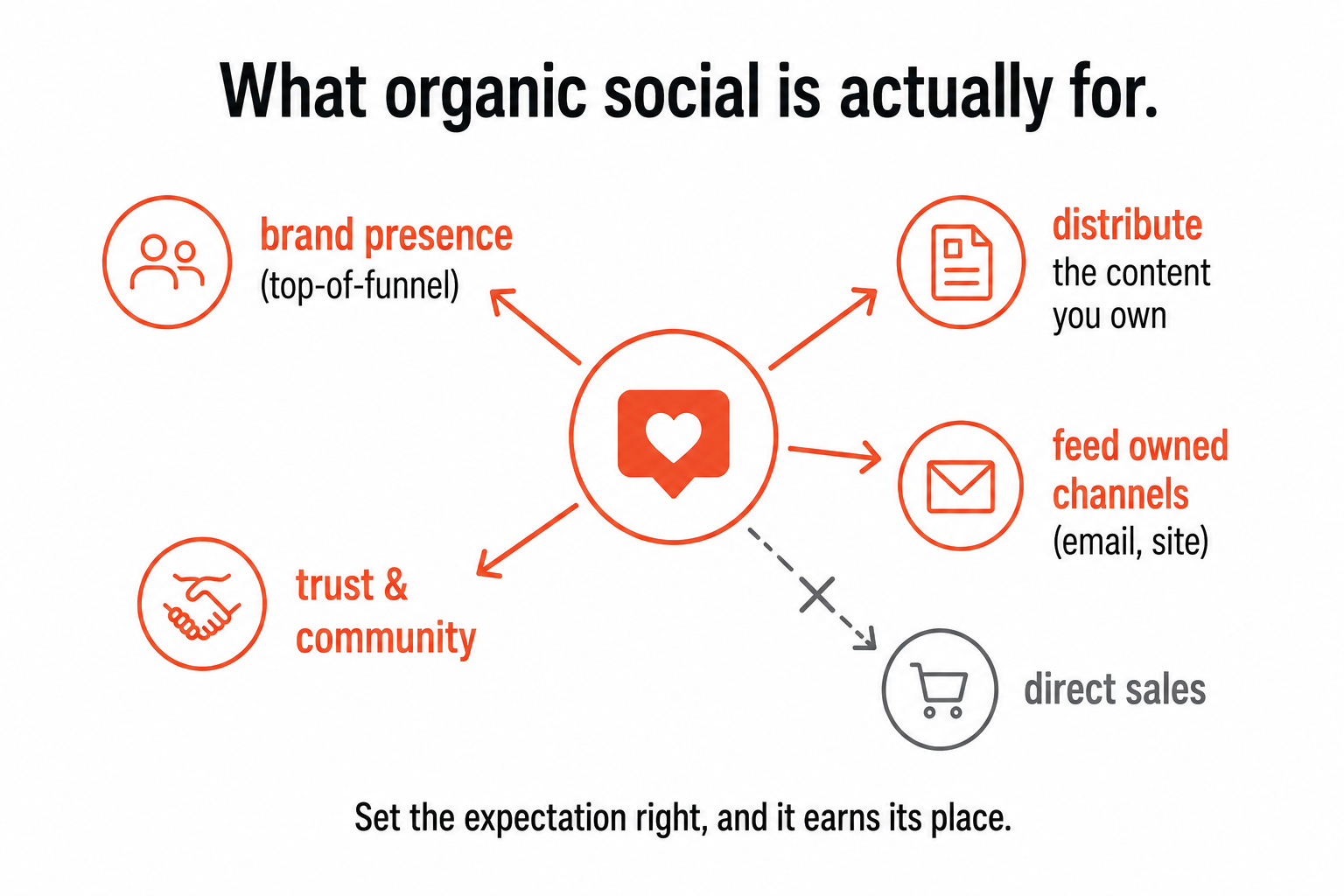
Reframe it away from sales and organic social has four real jobs, none of which is direct conversion, and all of which are genuinely valuable:
- Brand presence and top-of-funnel. Being visible where people spend their attention, so you're known and familiar before the buying moment arrives elsewhere. Presence isn't a sale, but it makes later sales easier.
- Distribution of the content you own. This is where it ties back to the cornerstone: social is a distribution channel for the real content you own, it points people toward your hub and site, it doesn't replace them. The distribution-is-half-the-work principle, in action.
- Trust and community. Humanising the brand, responding to people, showing the authentic content that builds credibility over time.
- Feeding the owned channels that convert. The strategic job: moving people off rented social ground and onto ground you own, your email list, your site, where you actually convert and own the relationship.
Judge organic social against those jobs and it's a useful, sustainable channel. Judge it against direct sales and you'll conclude it's failing at something it was never built to do.
The rented-land caution
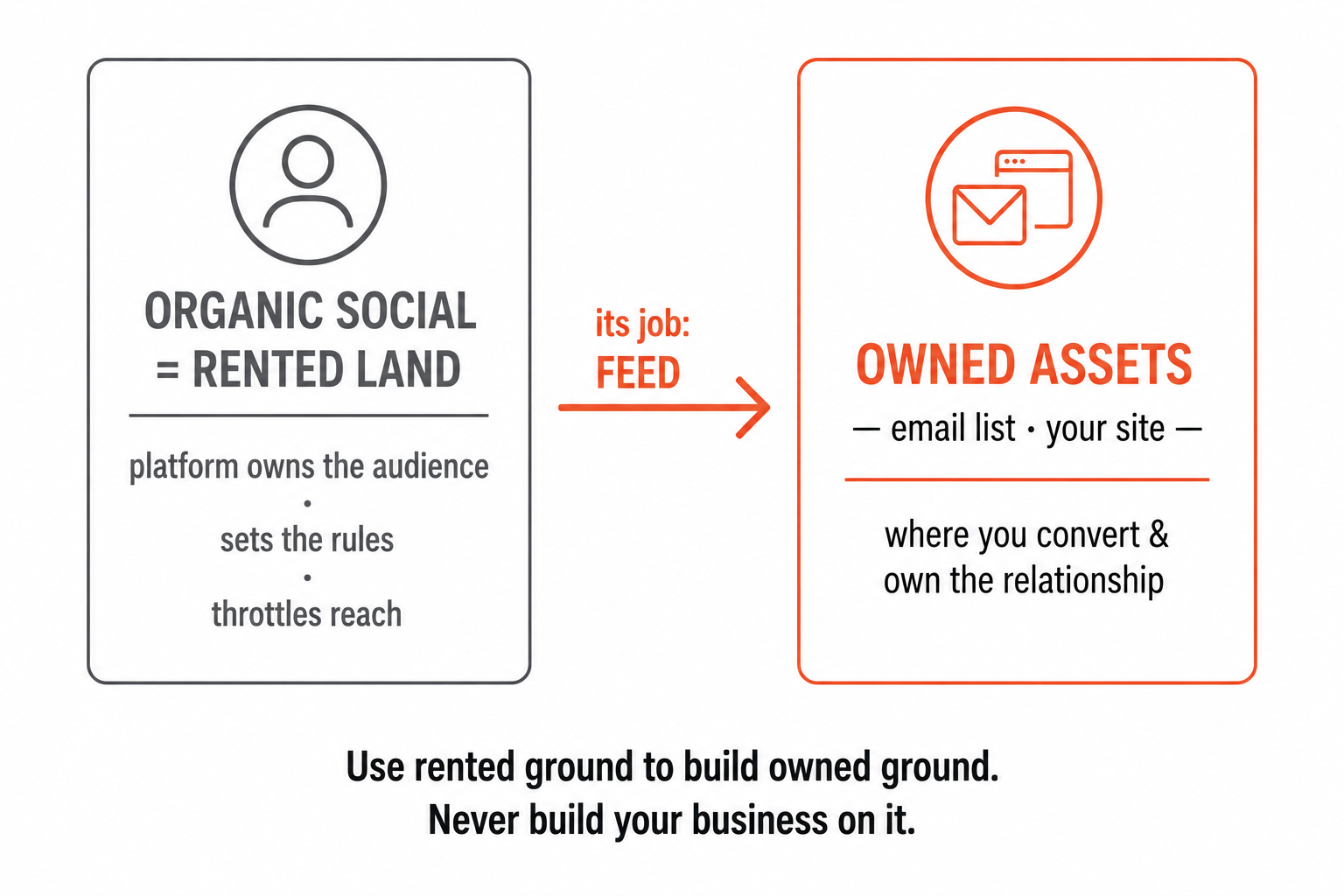
The single most important strategic point about organic social is that it's rented land. The platform owns the audience, sets the rules, changes the algorithm, and throttles your reach whenever it likes, and it can all change overnight without your say. This is the same own-the-channel logic that runs through the wider content and CRM thinking.
So the strategic move follows directly: use organic social to build assets you own, an email list, a site audience, a direct relationship, and never build your business on the social platform itself. Pouring your best, most original effort into an audience you don't own and can't control is building on someone else's land, and it's exactly the trap the platforms are happy for you to fall into. Use the rented ground to drive people onto owned ground. That's the job.
Measure it for what it's for
Most of the disappointment with organic social comes from measuring it as a performance channel. Don't. Judging it on direct, attributable sales both undervalues what it actually does and pushes you to quit something genuinely useful because it's "failing" at a job that was never its own.
Measure it instead on the jobs it has: reach and presence, traffic sent to your owned properties, email-list growth, the engagement that builds trust over time. Those are real outcomes, and they're the ones organic social can actually deliver. Hold it to a sales number it was never going to hit and you'll either burn out chasing the number or kill a channel that was quietly doing useful work.
And don't confuse it with paid
One clarification that resolves a lot of the confusion: when social genuinely does drive direct sales at scale, that's almost always paid social, which is a performance channel and belongs with the paid-media work, not organic. The two get lumped together as "social," and they're different tools with different jobs. Organic social is for presence and distribution; paid social is for performance. Expecting organic to do paid's job is a category error, and it's the root of most "our social isn't working" complaints.
So the realistic plan for organic social is a sustainable presence that distributes the content you own, builds trust, and feeds your owned channels, sized for what it can actually return, not a burnout content treadmill chasing a sales figure. Consistency over volume, distribution over production.
What this comes down to
Organic social isn't a sales engine, and the teams that expect it to be spend years frustrated by a channel doing exactly what it was always going to do. Its real jobs are presence, distributing the content you own, building trust, and feeding the owned channels that convert, and it's good at those. Use it for them, measure it for them, and never build your business on rented ground you don't control.
Done with the right expectations, organic social supports the hub: it gets your owned content seen and moves people toward the channels where you actually convert. Mistaken for the hub itself, it's a time-sink with good production values. The difference between the two is nothing but the expectation you bring to it.
A few common questions
Does organic social media drive e-commerce sales? Rarely in any direct, meaningful way, and expecting it to is the core mistake. Platform reach is deliberately throttled, the audience is in browse mode not buy mode, attribution is murky, and the platform's incentive is to make you pay for reach. That's the nature of the channel, not a failure of your marketing. When social does drive direct sales at scale, that's usually paid social (a performance channel), not organic.
What is organic social actually good for? Four jobs, none of them direct conversion: brand presence and top-of-funnel visibility (so you're known before the buying moment), distribution of the content you own (pointing people to your hub and site), trust and community, and feeding the owned channels that actually convert (your email list, your site). Judge it against those and it's a useful, sustainable channel; judge it against direct sales and it looks like it's failing at something it was never built to do.
Why is organic social "rented land"? Because the platform owns the audience, sets the rules, changes the algorithm, and throttles your reach whenever it likes, all without your say. You're building on ground you don't control and could lose overnight. The strategic implication is to use organic social to build assets you own, an email list, a site audience, a direct relationship, and never build your business on the platform itself. Use the rented ground to drive people onto owned ground.
How should I measure organic social? On the jobs it actually has, not on direct sales. Track reach and presence, traffic sent to your owned properties, email-list growth, and the engagement that builds trust over time. Measuring it as a performance channel both undervalues what it does and pushes you to quit something useful for "failing" at a job that was never its own. If you want social that's measured on direct sales, that's paid social, a different tool with a different purpose.
You should also read:
Shipping Strategy: Speed, Cost, and the Expectations You Set
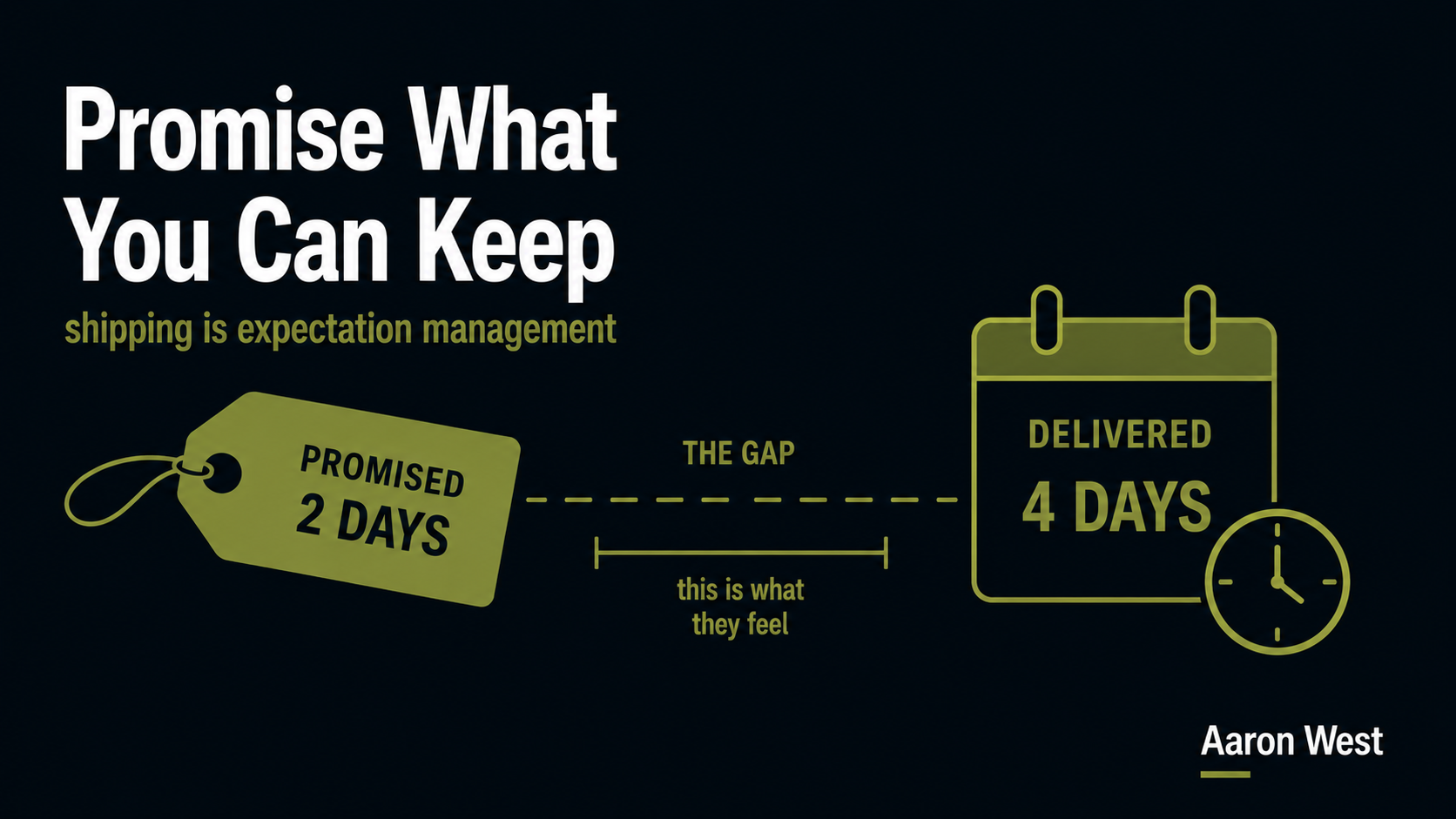
Shipping strategy is not just how the parcel gets there. It's the deliberate balance of speed, cost, and the expectations you set, and the last one matters most. What customers actually judge isn't your shipping speed in the abstract; it's the gap between what you…
Continue reading...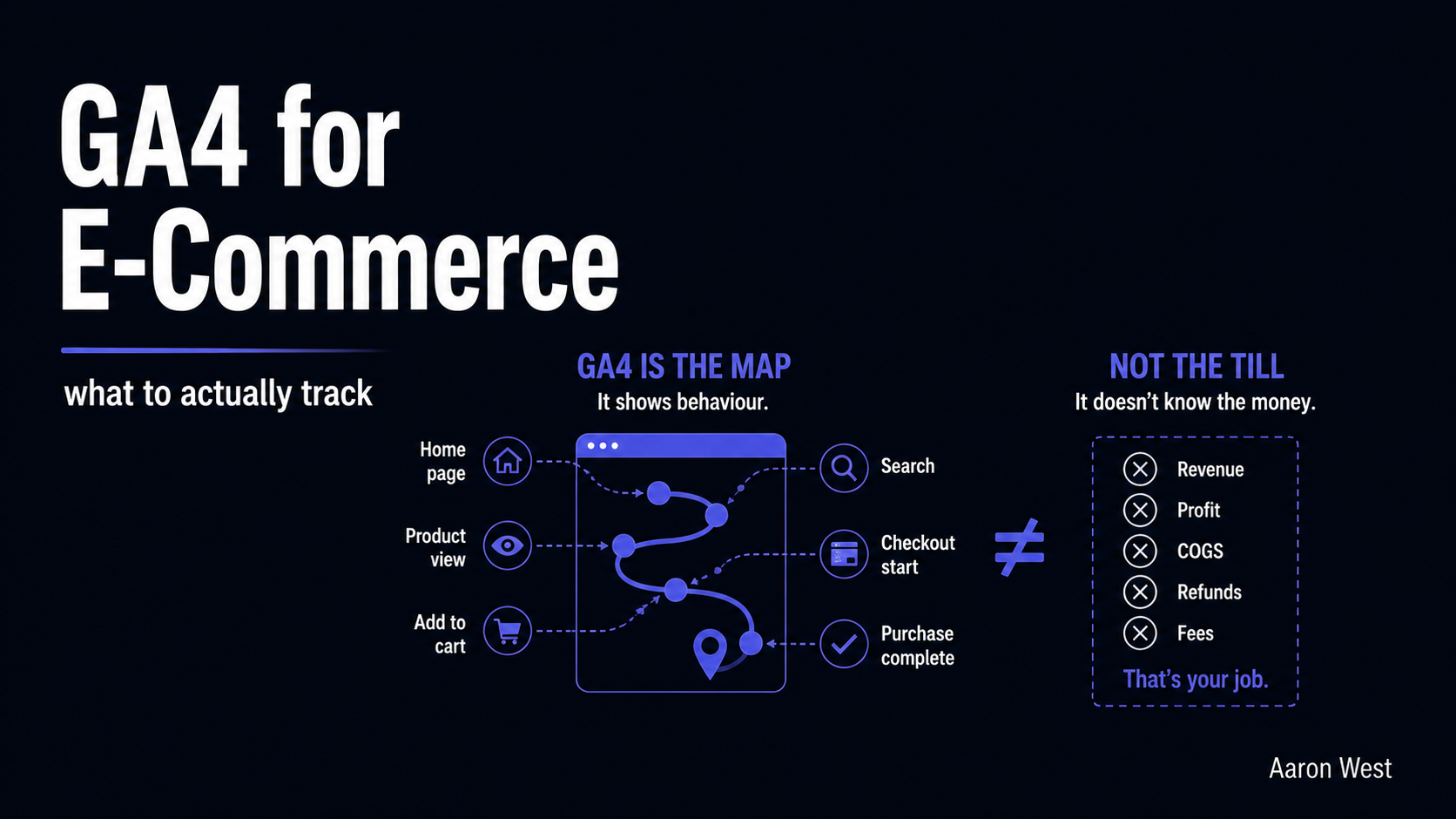
Google Analytics (GA4) for E-Commerce: What to Actually Track
The most important thing to understand about GA4 for e-commerce is also the thing almost nobody is told up front: it is not your sales report, and using it as one will mislead you every time. GA4 is a behaviour tool. It tells you how…
Continue reading...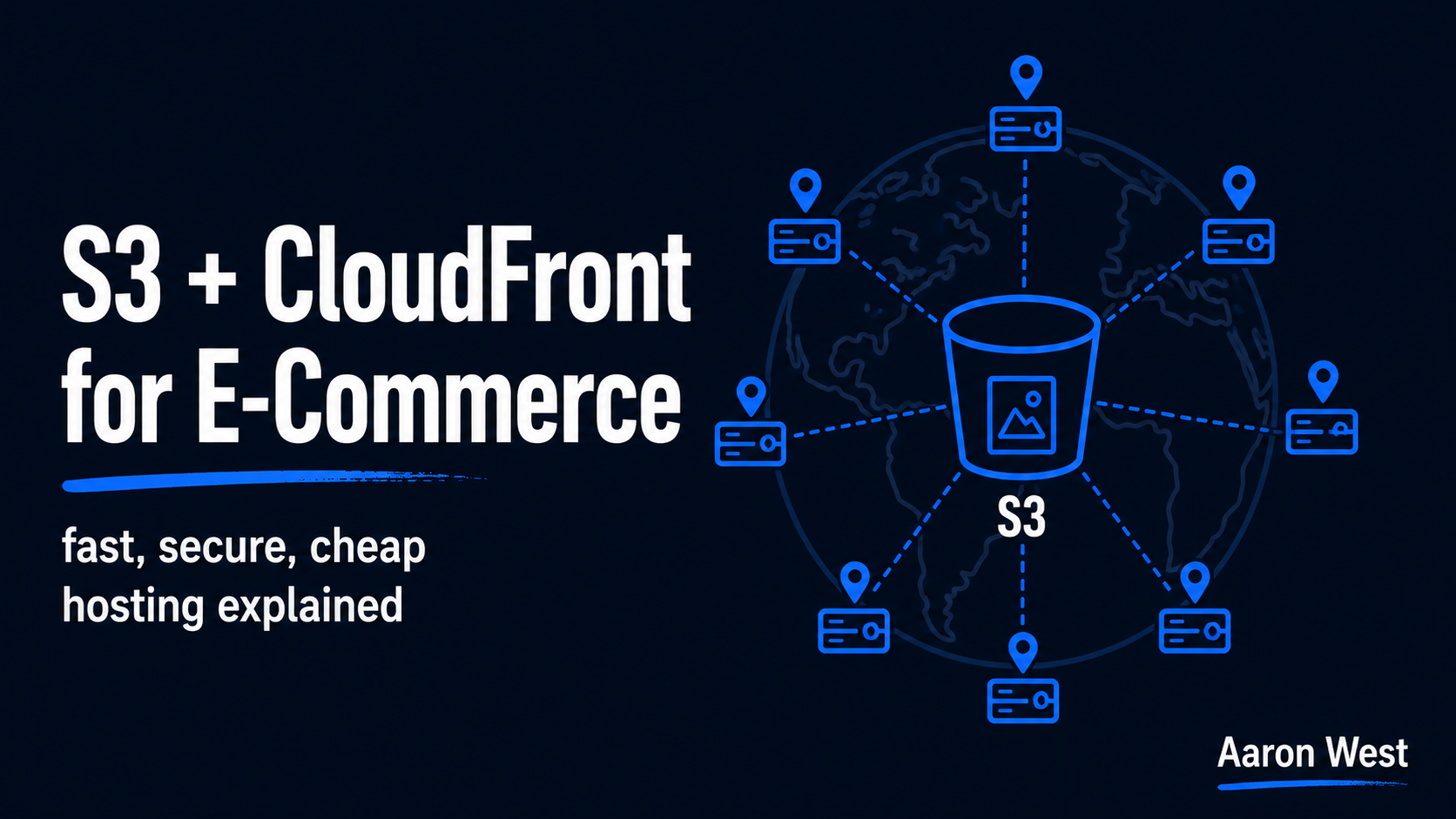
S3 + CloudFront for E-Commerce: A Non-Technical Introduction
If you want a fast, cheap, reliable way to serve your website's files, images, pages, assets, to customers anywhere in the world, the combination of two AWS services does almost all of the work: S3 stores the files, and CloudFront delivers them fast to every…
Continue reading...