Shipping Strategy: Speed, Cost, and the Expectations You Set

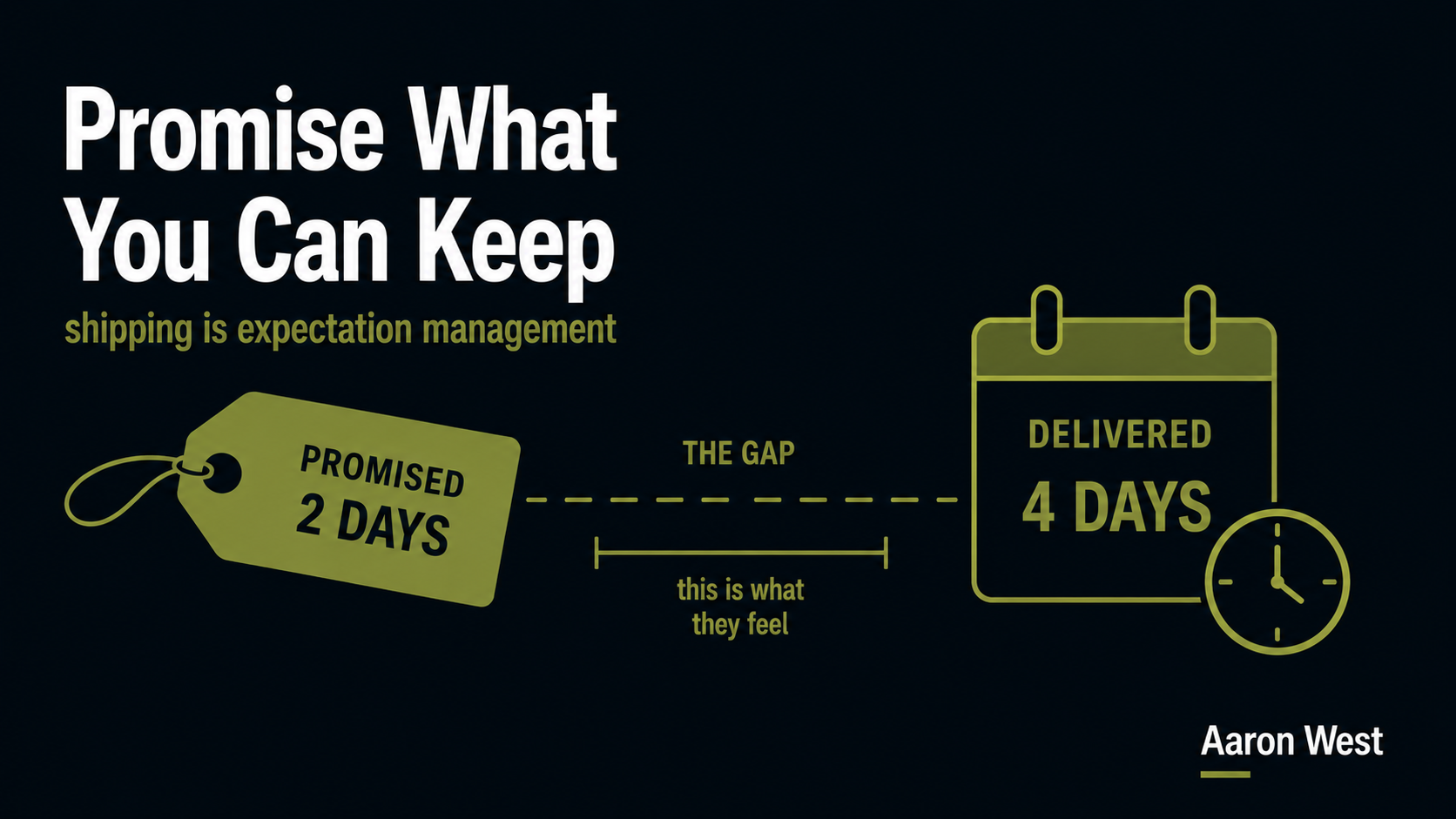
Table of Contents
Shipping strategy is not just how the parcel gets there. It's the deliberate balance of speed, cost, and the expectations you set, and the last one matters most. What customers actually judge isn't your shipping speed in the abstract; it's the gap between what you promised and what you delivered, which means the most damaging shipping mistake is over-promising a speed you can't reliably keep, not being slightly slower than a competitor.
This is a core of the Logistics pillar, under the cornerstone that fulfilment decides the promise you can make and whether you keep it. Shipping is where that promise gets made out loud to the customer, which makes it less a logistics question than an expectation-management one.
The three variables, and why you can't max them all
Every shipping decision trades three things against each other: speed (how fast it arrives), cost (who pays, you or the customer, and how much), and reliability (whether the promise actually gets kept). You can't maximise all three cheaply. Fast and free and reliable, all at once, for everyone, is the fantasy that wrecks margins; the real work is deciding which to prioritise, for which customers, on which orders.
Most stores instinctively compete on the first two, advertised speed and "free shipping" headlines, and quietly neglect the third, which is backwards, because reliability is the one customers actually judge you on.
Shipping is expectation management
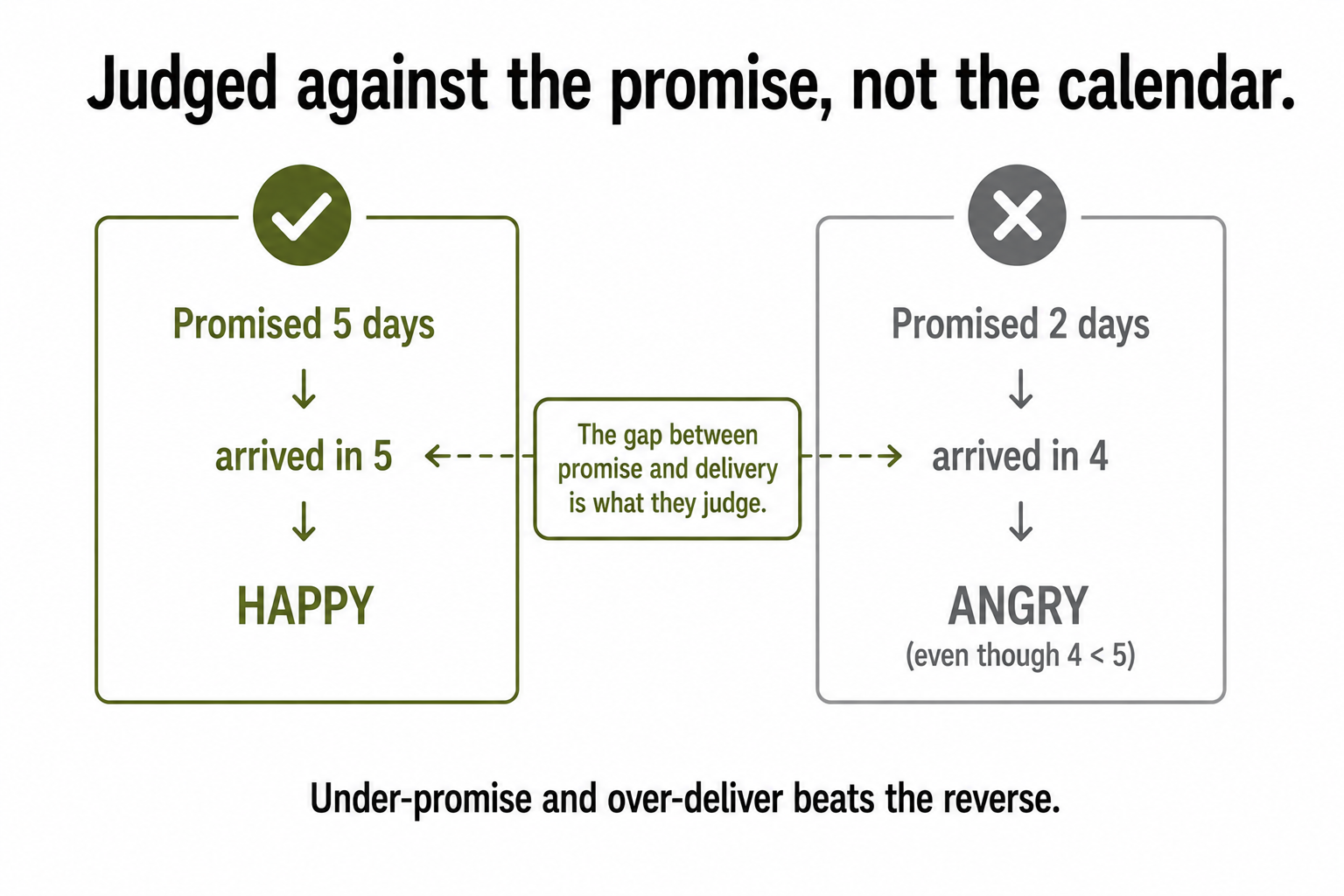
Here's the reframe that changes how you set a shipping strategy. A customer told "5 days" who receives the order in 5 days is happy. A customer told "2 days" who receives it in 4 is angry, even though four days is faster than five. The promise sets the bar; the delivery is judged against the promise, not against the calendar. Speed in the abstract barely matters. The gap between what you said and what you did is everything.
That single fact flips the usual instinct. The temptation is to advertise the fastest speed you can imagine hitting, because it looks good at checkout. But if you can't hit it reliably, every miss generates a disappointed customer, a support ticket, maybe a refund or a return, and a worse impression than if you'd promised something slower and nailed it. Under-promise and over-deliver genuinely beats the reverse here, because the kept promise builds trust and the broken one, even at a faster absolute speed, destroys it. The brand that says "4 days" and always delivers in 4 beats the one that says "2 days" and sometimes takes 5.
The conversion side: clarity early beats surprise late
Shipping isn't only a post-purchase promise; it's a conversion factor before the sale. The speed and cost shown at checkout influence whether the customer completes, and one mistake dominates here: the unexpected shipping cost that appears at checkout after the customer has mentally committed. A shipping charge sprung at the last step is one of the most reliable ways to lose a sale, because it feels like a nasty surprise at the worst moment, the same payment-step friction the conversion work warns about.
The fix is clarity early. Show shipping cost and speed before the final step, ideally on the product page, so the customer never gets ambushed. A higher shipping cost shown early loses fewer sales than a lower one sprung late, because the damage isn't only the cost, it's the surprise.
"Free shipping" is never free
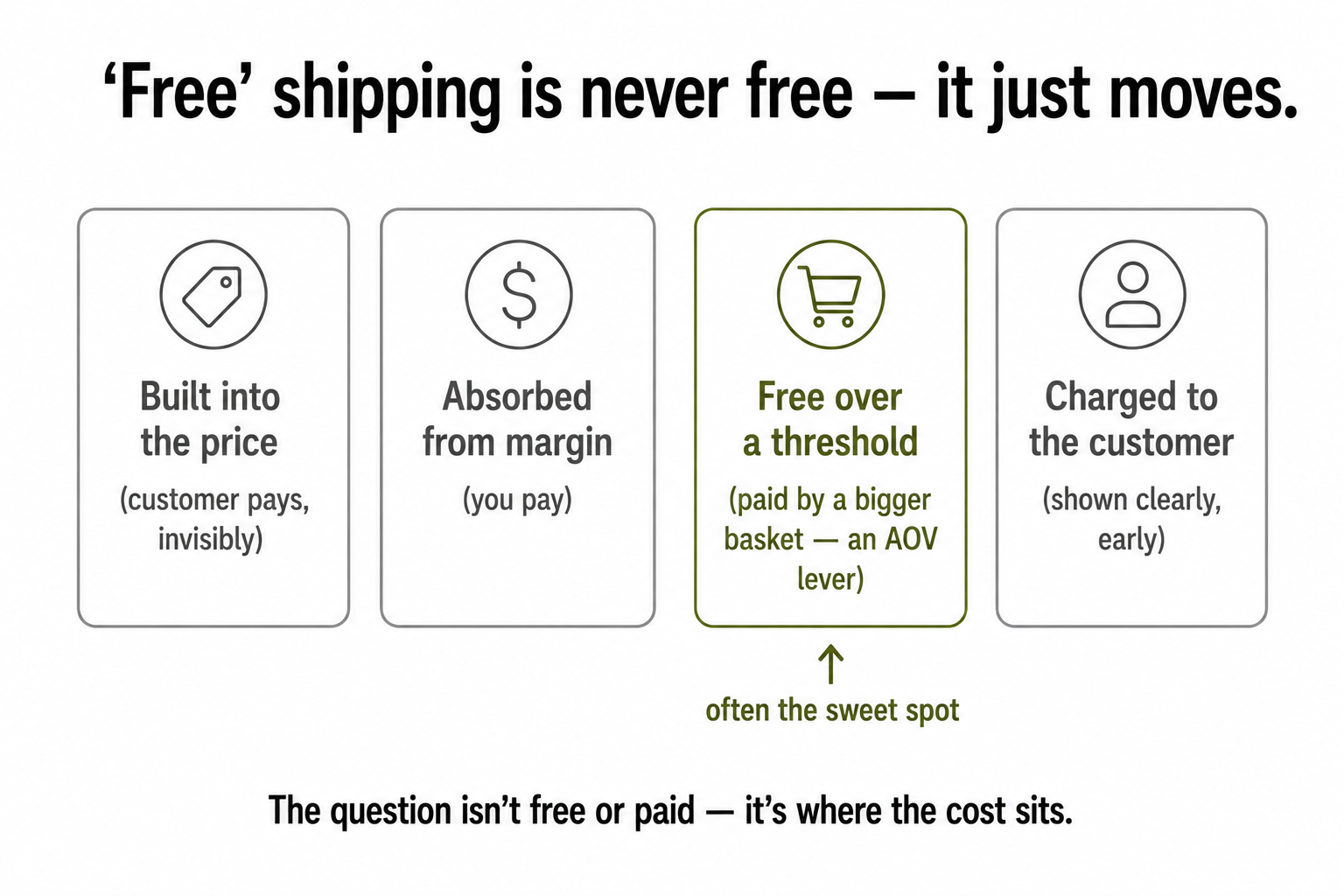
"Free shipping" is a headline, not an economic reality. Someone always pays for the parcel to move; the only question is where that cost lives. You can build it into the product price (the customer pays it, just invisibly), absorb it from your margin (you pay it), or set a free-shipping threshold (the customer gets it free above a basket size, which doubles as an average-order-value lever).
So the strategic question isn't "free or paid"; it's "where does the shipping cost sit, and what does the customer perceive." Free-with-threshold is often the sweet spot, set just above your average order value, it feels free to the customer, nudges baskets upward, and is paid for by the larger order, the threshold psychology covered in the pricing pillar. The mistake is treating "free shipping" as a cost-free marketing decision rather than the margin decision it actually is.
Offer tiers, and don't promise what the operation can't deliver
Two practical principles close the strategy out.
First, offer shipping tiers. A standard option and a faster paid option let customers self-select: the ones who value speed pay for it, and you don't eat the cost of fast delivery for everyone who'd have happily waited. Tiers turn speed from a margin problem into a customer choice.
Second, reliability is downstream of your operation. None of the promises mean anything if you can't keep them, and whether you can keep them depends on your fulfilment capability and your inventory accuracy, you can't ship fast what you can't pick fast, and you can't ship at all what you don't actually have. So shipping strategy isn't set in a vacuum; it's set against what the operation can genuinely deliver, every time, not on its best day. Promise to your reliable floor, not your occasional ceiling.
What this comes down to
Shipping strategy is expectation management wearing a logistics hat. Decide what you can reliably deliver, promise exactly that and not a day faster, be clear about the cost early instead of springing it at checkout, and let customers pay for speed if they value it. The goal was never to be the fastest or the cheapest; both of those are traps if you can't sustain them. The goal is to make a promise you keep, every single time.
Because the kept promise is what customers remember, and what brings them back. A reliable "it'll be there Thursday, and it always is" beats an exciting "it'll be there tomorrow" that turns into Friday, every time.
A few common questions
What makes a good shipping strategy? Balancing speed, cost, and reliability, with reliability prioritised, because customers judge the gap between what you promised and what you delivered, not raw speed. A customer told 5 days and getting 5 is happy; one told 2 days and getting 4 is angry, even though 4 is faster. So the strategy is: decide what you can reliably deliver, promise that and not a day faster, show cost and speed clearly before checkout, and offer a faster paid tier for those who value it.
What's the most damaging shipping mistake? Over-promising a speed you can't reliably keep. Every miss on an over-ambitious promise generates a disappointed customer, support tickets, possible refunds and returns, and a worse impression than a slower promise you actually hit would have. Under-promising and over-delivering beats the reverse, because the kept promise builds trust while the broken one destroys it, even at a faster absolute speed.
Is free shipping worth it? "Free shipping" is never actually free, someone always pays to move the parcel; the only question is where the cost lives: built into the price, absorbed from margin, or unlocked by a free-shipping threshold. The threshold option is often the sweet spot, set just above your average order value, it feels free, nudges baskets up, and is paid for by the larger order. The mistake is treating free shipping as a cost-free marketing choice rather than the margin decision it is.
How do I stop losing sales to shipping costs at checkout? Show shipping cost and speed early, ideally on the product page, so it's never a surprise at the final step. An unexpected shipping charge sprung at checkout is one of the most reliable ways to lose a sale, because the damage isn't only the cost, it's the ambush at the moment of commitment. A higher cost shown early loses fewer sales than a lower one revealed late.
You should also read:
Organic Social for E-Commerce: Realistic Expectations
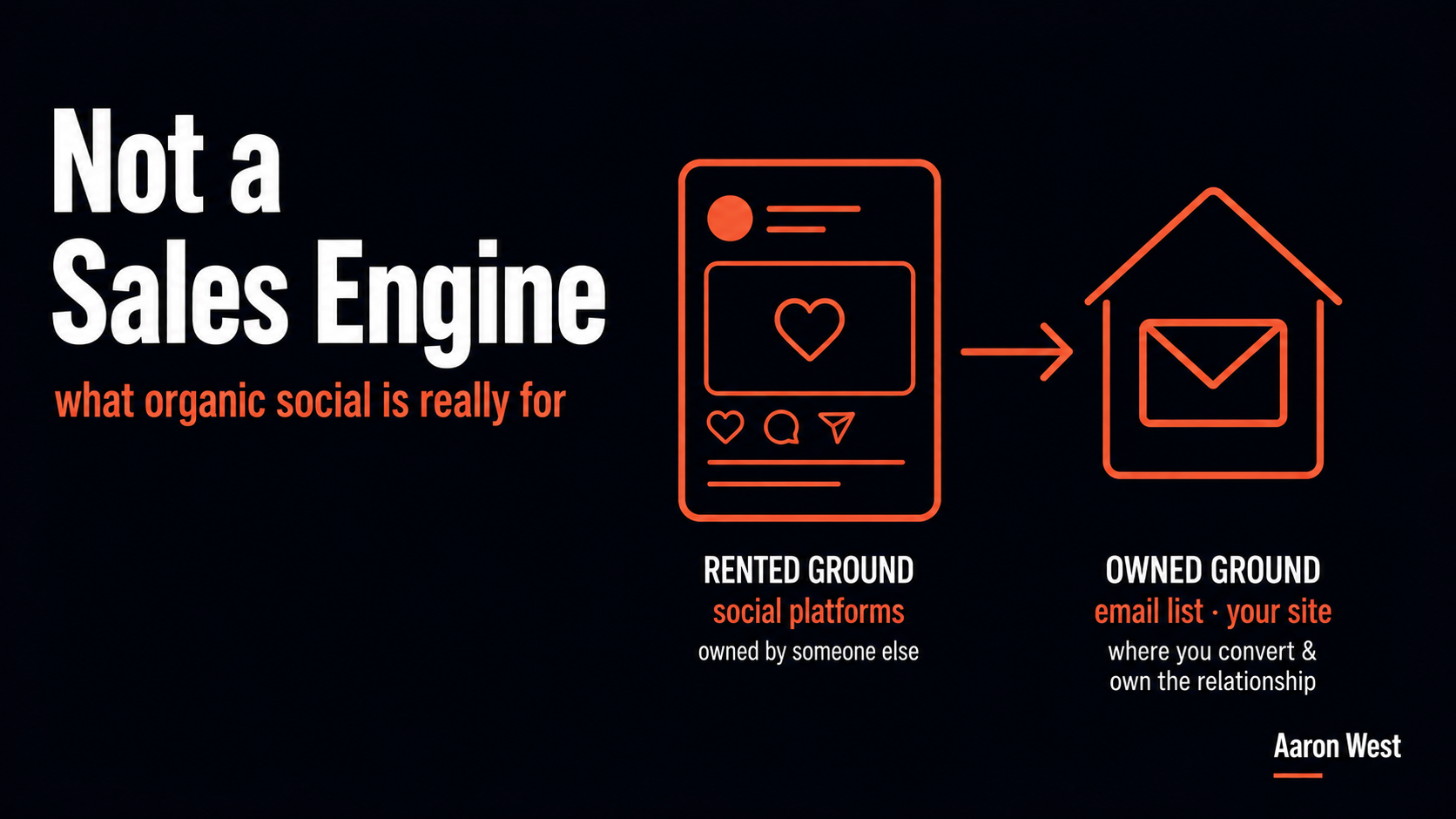
Organic social media is mostly oversold as an e-commerce sales channel, and treating it as one is how teams end up frustrated and burned out. Platform reach is throttled, organic posts rarely drive meaningful direct sales, and the channel's real value is elsewhere: brand presence,…
Continue reading...
Buy Now, Pay Later: The Upside, the Cost, and Who It's Actually For
Buy now, pay later, the option to split a purchase into installments or defer it at checkout, is sold as a pure conversion win, and it genuinely can lift both conversion and average order value, especially on higher-ticket purchases and with younger shoppers who increasingly…
Continue reading...
The Free-Shipping Threshold: Psychology Meets Margin Maths
A free-shipping threshold, "free delivery over €50," is one of the most effective levers in e-commerce, because customers dislike paying for shipping out of all proportion to what it actually costs. The prospect of "free" delivery reliably nudges a shopper to add another item to…
Continue reading...