Inventory Management: The Discipline That Prevents the Two Worst Days in Retail

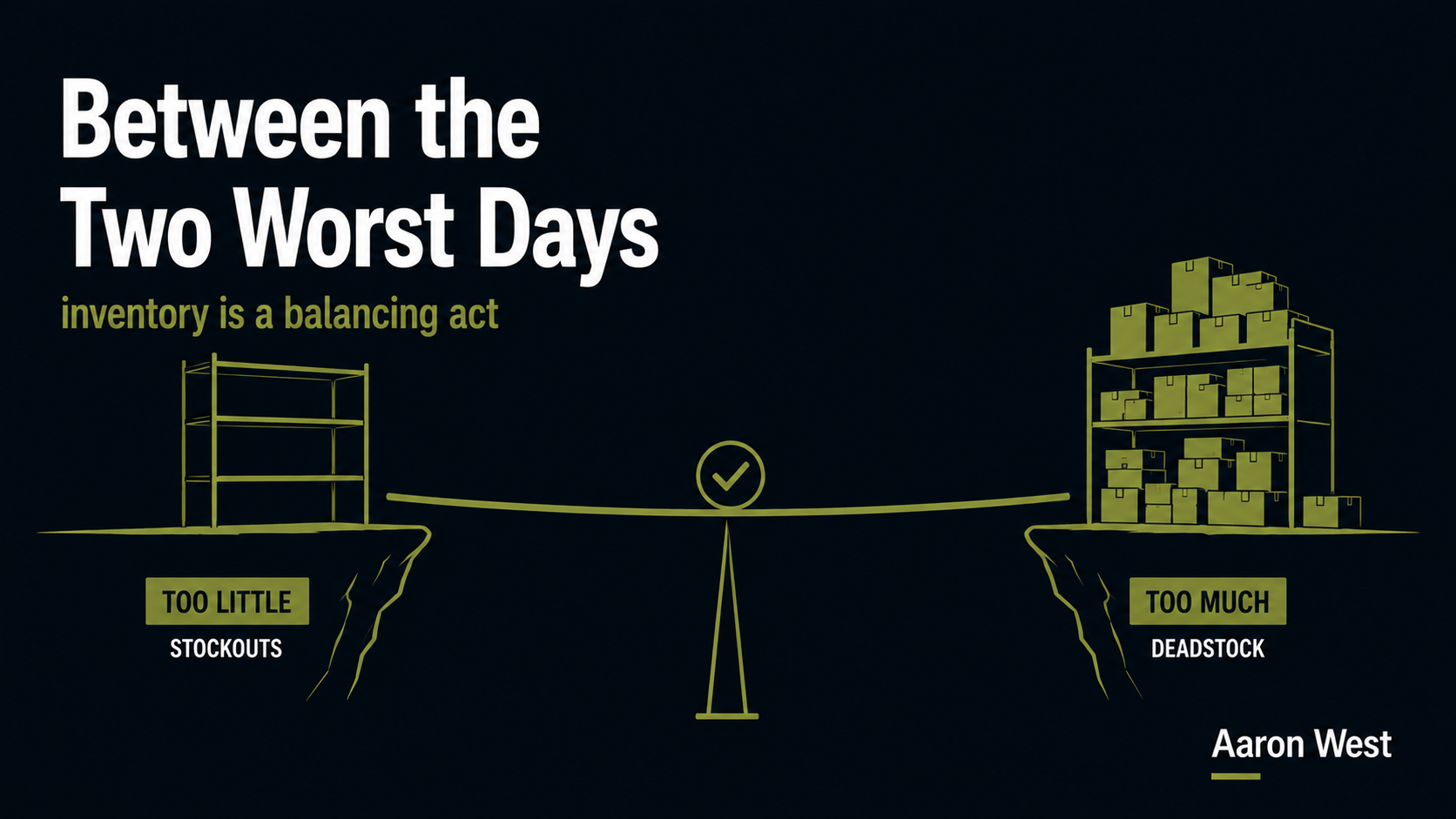
Table of Contents
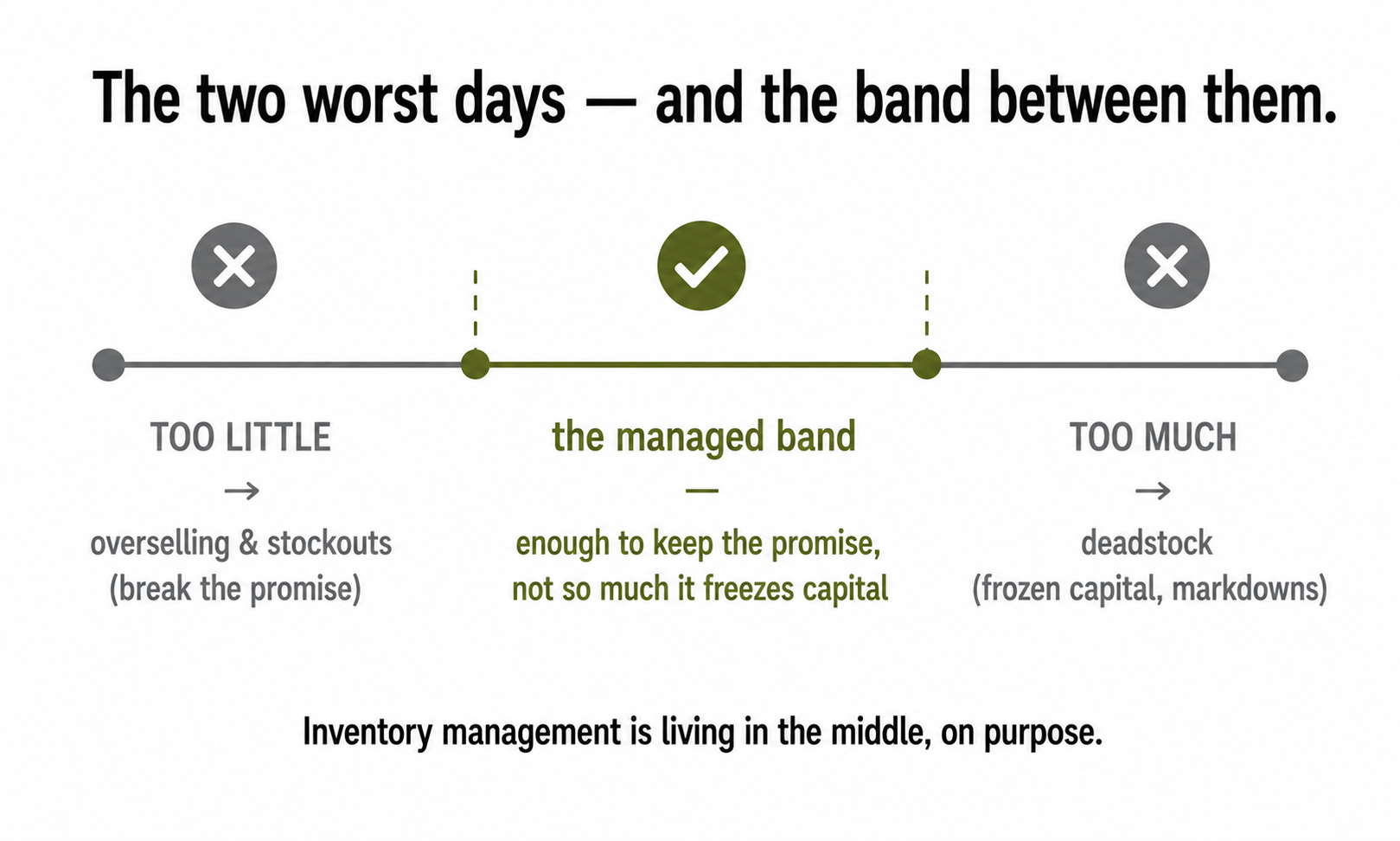
Inventory management is the discipline of staying in the narrow band between the two worst days in retail: overselling, where you sell stock you don't actually have and must break the promise by cancelling the order, and deadstock, where capital sits frozen in product that won't sell. Both are failures of the same thing, knowing precisely what you have and how fast it moves, and the whole job is balancing the cost of too little against the cost of too much.
This is a core of the Logistics pillar, under the cornerstone that fulfilment is a customer-experience decision, not a back-office one. Inventory is the least glamorous part of that, and the part most quietly determines whether you can keep the delivery promise at all, because you cannot fulfil what you don't actually have.
The two worst days
Picture the two ways inventory goes wrong, because the whole discipline is avoiding both at once.
Overselling. You sold the last unit twice, because your stock count said you had it when you didn't. Now you have to go back to a customer who was excited about their order and cancel it. That's worse than never having offered the product, because you've taken someone from "I bought it" to "actually, no", which is the exact post-purchase let-down that breaks the fulfilment promise the cornerstone is about. A cancelled order is a broken promise at the most concrete moment.
Deadstock. The opposite failure. Stock that won't move, sitting in the warehouse, capital frozen inside it, space consumed, slowly heading for a markdown or a write-off. It's the silent margin killer, because nothing dramatic happens, the money just quietly stops being available for stock that would have sold.
These are opposite failures, which is what makes inventory hard: over-correct for overselling by holding tons of buffer stock and you create deadstock; over-correct for deadstock by holding too little and you start overselling. The discipline is the band in the middle, and staying in it deliberately.
You can't manage what you can't see
Everything starts with accuracy. You cannot manage inventory you can't measure, so the base requirement is an accurate, real-time count of what you actually have, and that gets dramatically harder the moment you sell in more than one place. If the same stock is offered on your store and a marketplace, and the counts don't update the instant something sells, you'll sell the last unit in two places at once, the classic oversell.
This is exactly why inventory synchronisation is the textbook first thing to automate: it's high-frequency, it's pure rules with no judgment, and the downside when it's wrong is expensive. It also has to be event-driven, not scheduled, an order should decrement the count the instant it happens, not in tonight's sync, because "slightly out of date" is precisely how you oversell your last unit this afternoon. The accurate, real-time count is the foundation the whole discipline stands on; without it, everything below is guesswork.
The concepts, in plain words
Underneath the accuracy, a handful of durable concepts do the actual managing:
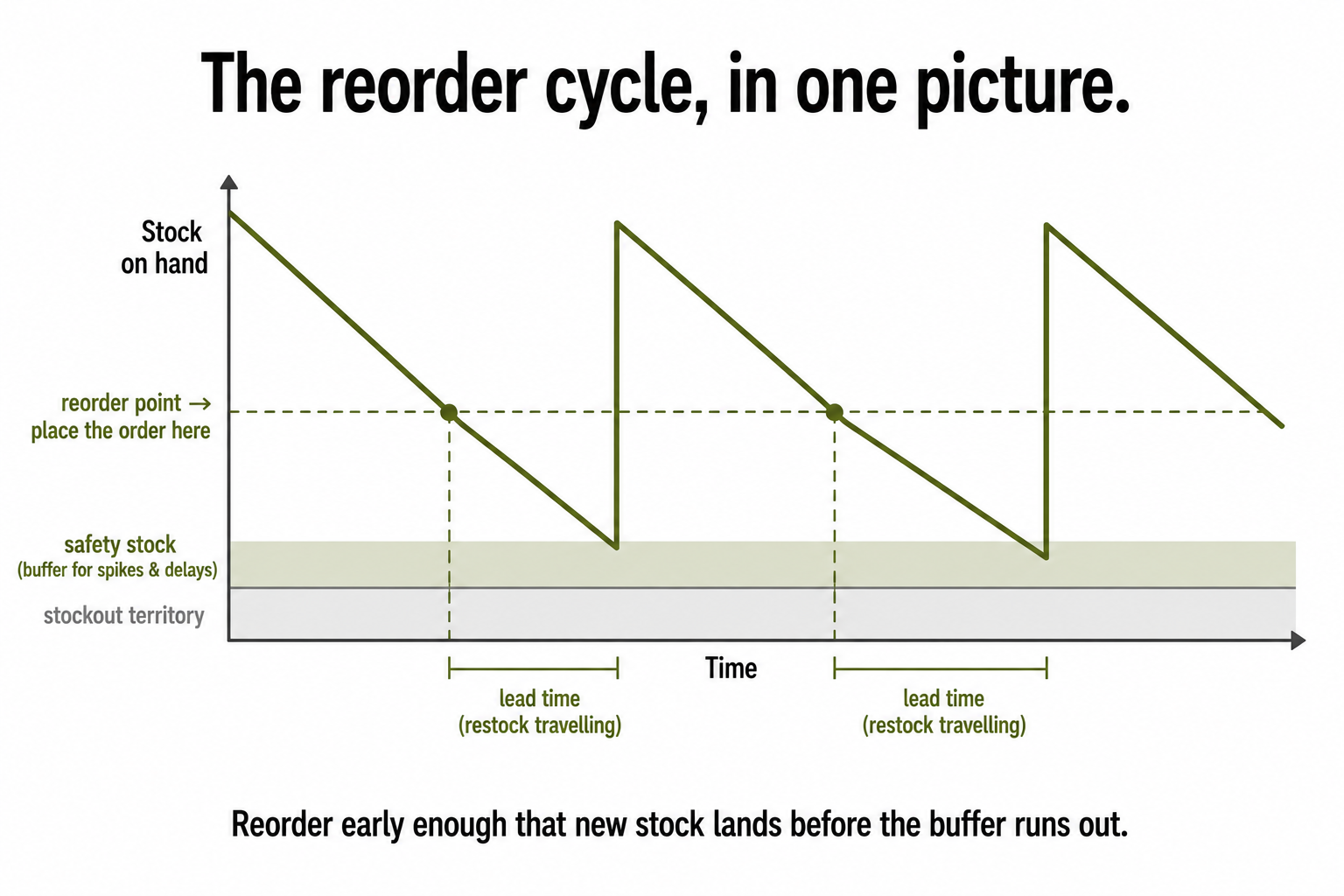
- Safety stock. The buffer you hold against demand spikes and supplier delays. Too little and a busy week causes a stockout; too much and you've created deadstock. It's the dial that sits right between the two worst days.
- Lead time. How long a restock takes to arrive. The longer and less reliable your lead time, the more buffer you need, because you're covering a bigger window of uncertainty.
- Reorder point. The stock level at which you reorder, set so the new stock lands before you run out, accounting for the lead time. Get it wrong and you either stock out waiting or reorder so early you carry excess.
- Stock turnover. How fast inventory sells through. It's the health metric: low turnover is the early warning sign of deadstock forming, money sitting still instead of cycling.
- The ABC idea. Not all products matter equally. A few high-movers deserve tight, careful management; the long tail of slow sellers needs far less attention. Spending equal effort on every SKU is its own kind of waste.
None of this is complicated. It's just disciplined, and it's the discipline most stores skip until a busy day or a bad buy forces the lesson.
Both failures cost more than they look
The reason this matters more than its boring reputation suggests is that both worst days carry hidden costs beyond the obvious one.
A stockout isn't just the sale you missed today. It's the customer who went to a competitor to get the thing now, and may simply stay there, and online it can also cost you visibility, an unavailable product loses ranking and prominence, so the stockout suppresses future discoverability too. The lost transaction is the smallest part of it.
Deadstock isn't just unsold product. It's capital you can't spend on stock that would sell, plus the warehouse space it occupies, plus the eventual markdown to clear it, and that markdown has a second-order cost: discounting to shift deadstock trains customers to wait for discounts, eroding full-price sales over time. A deadstock problem solved by a fire sale can quietly create a discounting problem.
The system tracks; the human decides
One clarification, because it's where the automation line sits. The accurate, real-time count should be automated, that's pure tracking, high-frequency, no judgment. But the decisions, how much to buy, when to discontinue, how much buffer a new product needs, are forecasting judgments that stay human. The system's job is to tell you the truth about what you have and how it's moving; your job is to decide what to do about it. Automating the count is essential; "automating" the buying judgment is how you end up with either a stockout or a warehouse full of deadstock, because the machine optimised a number without the context only you have.
What this comes down to
Inventory management isn't about having lots of stock or having little stock. It's about knowing precisely what you have and how fast it moves, and staying in the narrow band where you can keep the fulfilment promise without freezing your capital. Get it wrong in one direction and you're cancelling orders and breaking promises; wrong in the other and you're bleeding margin into stock that won't sell.
The store that can't say, right now, exactly what it has on hand is one busy day from overselling and one bad buy from deadstock. The discipline is unglamorous, but it's what stands between the delivery promise and the apology, and it's where a surprising amount of a store's capital quietly lives or dies.
A few common questions
What is inventory management actually for? Staying in the narrow band between the two worst days in retail: overselling (selling stock you don't have, then cancelling and breaking the promise) and deadstock (capital frozen in product that won't sell). Both are failures of knowing precisely what you have and how fast it moves. Over-correct for one and you cause the other, so the whole discipline is balancing the cost of too little stock against the cost of too much.
Why is accurate, real-time stock data so important? Because you can't manage what you can't measure, and the problem gets much harder across multiple sales channels. If the same stock is offered on your store and a marketplace and the counts don't update the instant something sells, you'll sell the last unit twice. That's why inventory sync is the textbook first thing to automate (high-frequency, no judgment, expensive when wrong) and why it must be event-driven, not scheduled, since "slightly out of date" is exactly how you oversell your last unit this afternoon.
What are the key inventory concepts to know? Safety stock (the buffer against spikes and supplier delays), lead time (how long a restock takes, which sets how much buffer you need), reorder point (the level at which you reorder so stock lands before you run out), stock turnover (how fast inventory sells, the early warning for deadstock), and the ABC idea (a few high-movers deserve tight management, the long tail far less). None are complicated; the discipline is applying them consistently.
What does a stockout really cost? More than the missed sale. The customer often goes to a competitor to get it now and may not come back, and online an out-of-stock product can lose ranking and visibility, suppressing future discoverability too. Deadstock has hidden costs the other way: frozen capital you can't spend on sellable stock, warehouse space, and an eventual markdown that can train customers to wait for discounts. Both worst days cost well beyond the obvious number.
You should also read:
Affiliate Program KPIs: The Numbers That Show If It's Actually Working
Most affiliate dashboards proudly display the numbers that mean the least. Total affiliates, total clicks, total revenue: big, reassuring, and almost useless for deciding what to do next. The numbers that actually tell you whether your programme is working, and what to fix, are quieter…
Continue reading...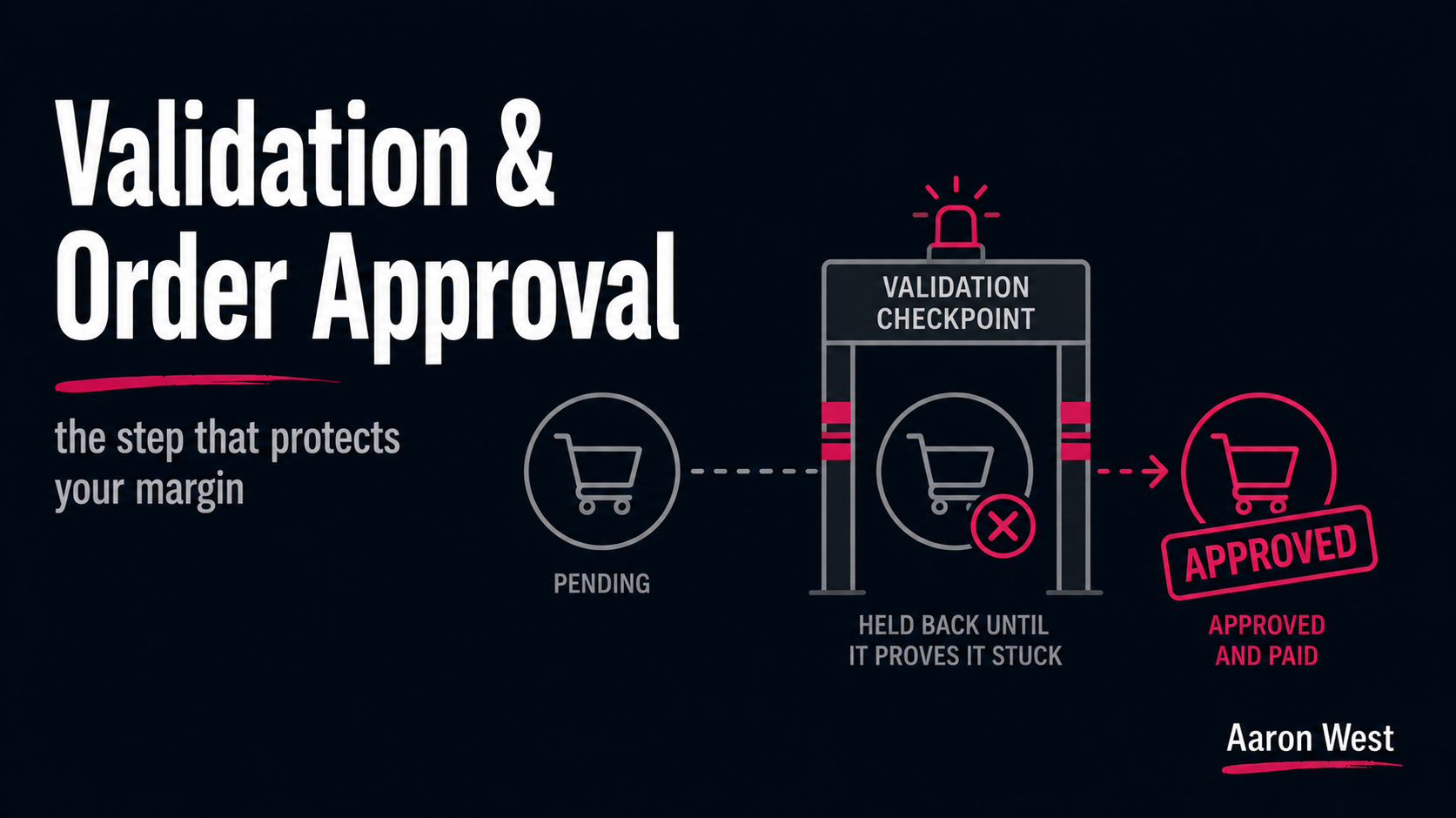
Validation and Order Approval: The Step That Protects Your Margin
Validation is the step where a merchant confirms a tracked affiliate sale is genuine, not returned, cancelled, or fraudulent, before the commission is approved and paid. It is the control that stops you paying for sales that never really stuck, and it works through a…
Continue reading...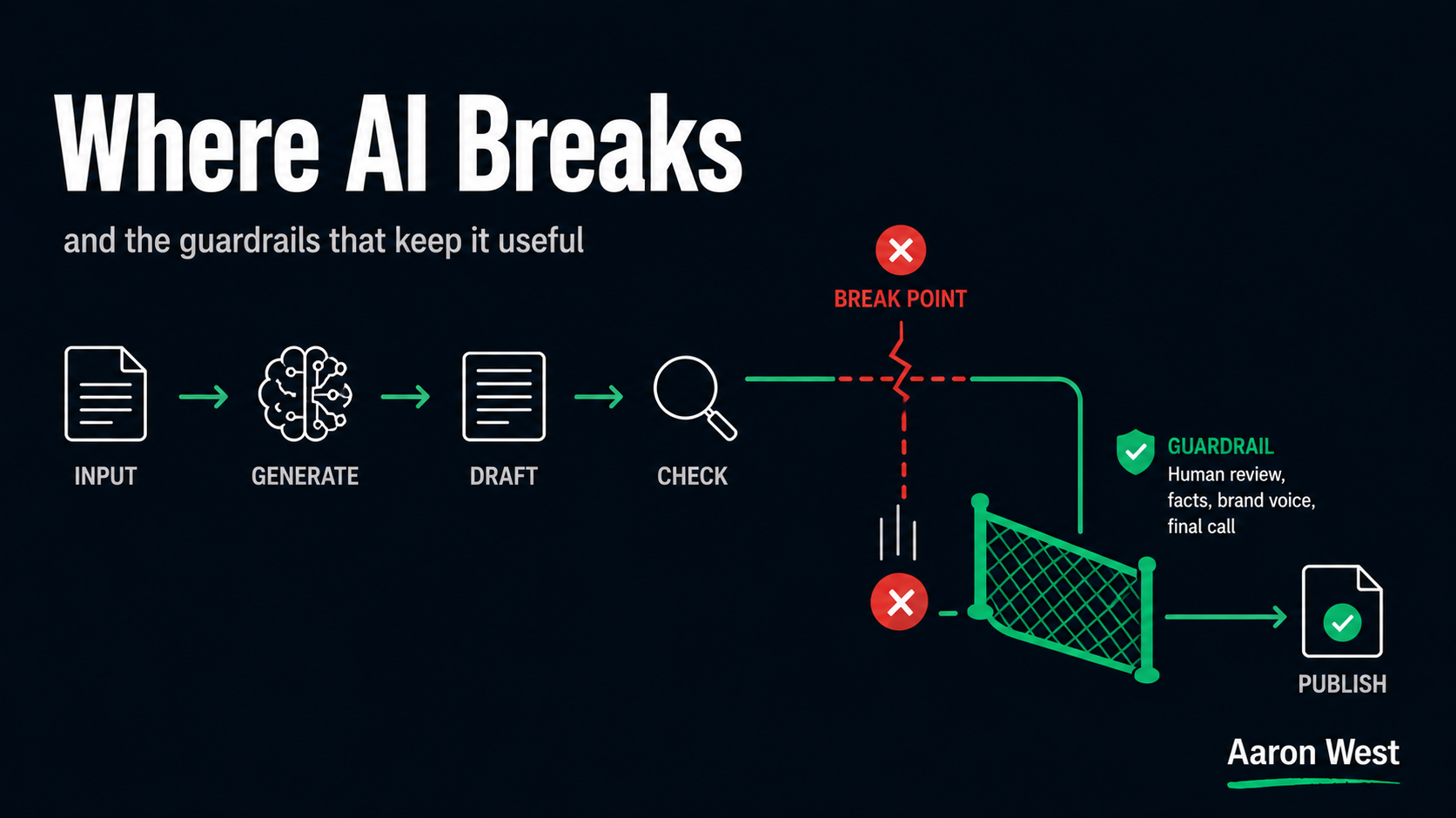
Where AI Breaks in E-Commerce Ops (and the Guardrails That Keep It Useful)
AI does not fail randomly in e-commerce operations. It fails in a handful of specific, predictable ways, and once you know them, you can build the guardrails that let you use AI confidently instead of nervously. The failures are not exotic. They are the same…
Continue reading...