Validation and Order Approval: The Step That Protects Your Margin

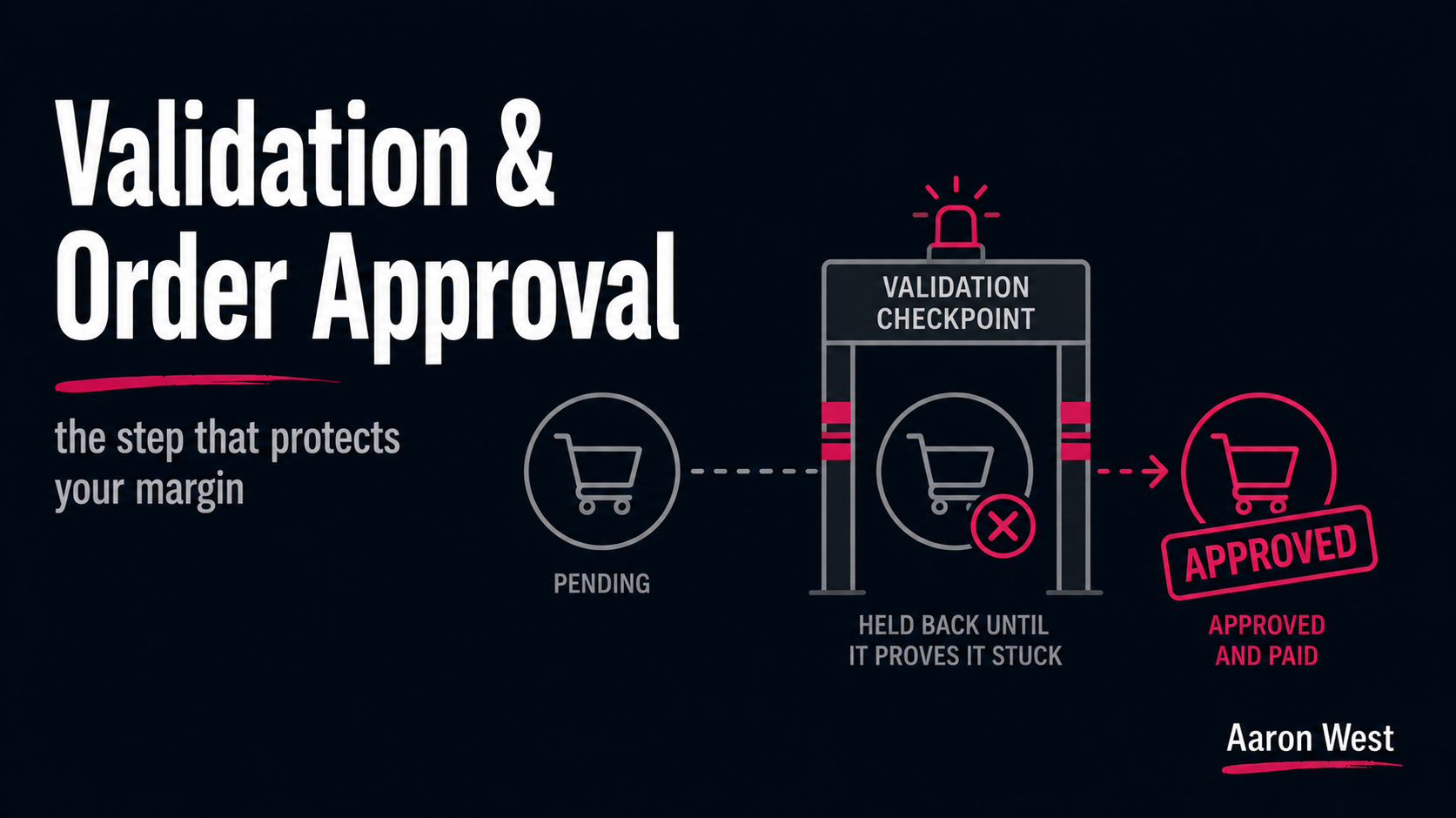
Table of Contents
Validation is the step where a merchant confirms a tracked affiliate sale is genuine, not returned, cancelled, or fraudulent, before the commission is approved and paid. It is the control that stops you paying for sales that never really stuck, and it works through a holding period: a tracked sale sits in "pending" through the customer's returns window, then locks and gets approved for payment only once it has proven real. Skip validation, or do it carelessly, and you pay full commission on orders that get refunded next week. It is the least glamorous step in the channel and one of the most directly tied to your margin.
This completes the integrity layer of the affiliate cluster, alongside fraud control and deduplication. Those two decide what not to pay for; validation is where that decision actually gets enforced, the moment detection becomes protection. But there is a twist that separates a good validation process from a margin-obsessed one that quietly drives partners away, and it is about speed and fairness, not just rigour. This piece explains how validation works, the order lifecycle, what gets voided, and the modern best practice that balances protecting your margin against keeping your partners willing to invest in you.
Why validation exists: tracking doesn't know if a sale stuck
Here is the gap validation fills. Your tracking records a sale the moment it happens, the customer checked out, the conversion fired, the affiliate is credited. But tracking has no idea what happens next. The customer might return the item, cancel the subscription, dispute the charge, or the "sale" might have been fraudulent in the first place. The affiliate platform that tracked the conversion has no visibility into any of that, it saw a checkout, not the aftermath.
So validation is the merchant's job precisely because only the merchant can see the aftermath, your e-commerce system knows about the return, the cancellation, the chargeback; the tracking platform does not. Validation is the reconciliation between "what was tracked" and "what actually held up as a real, kept sale." Without it, you would pay commission on every tracked checkout regardless of whether the customer kept the product, which in a world of rising return rates would mean paying real money for a steady stream of sales that reversed. That is why the step is non-negotiable, and why it sits with you, not the network.
The order lifecycle: pending, locked, approved, paid
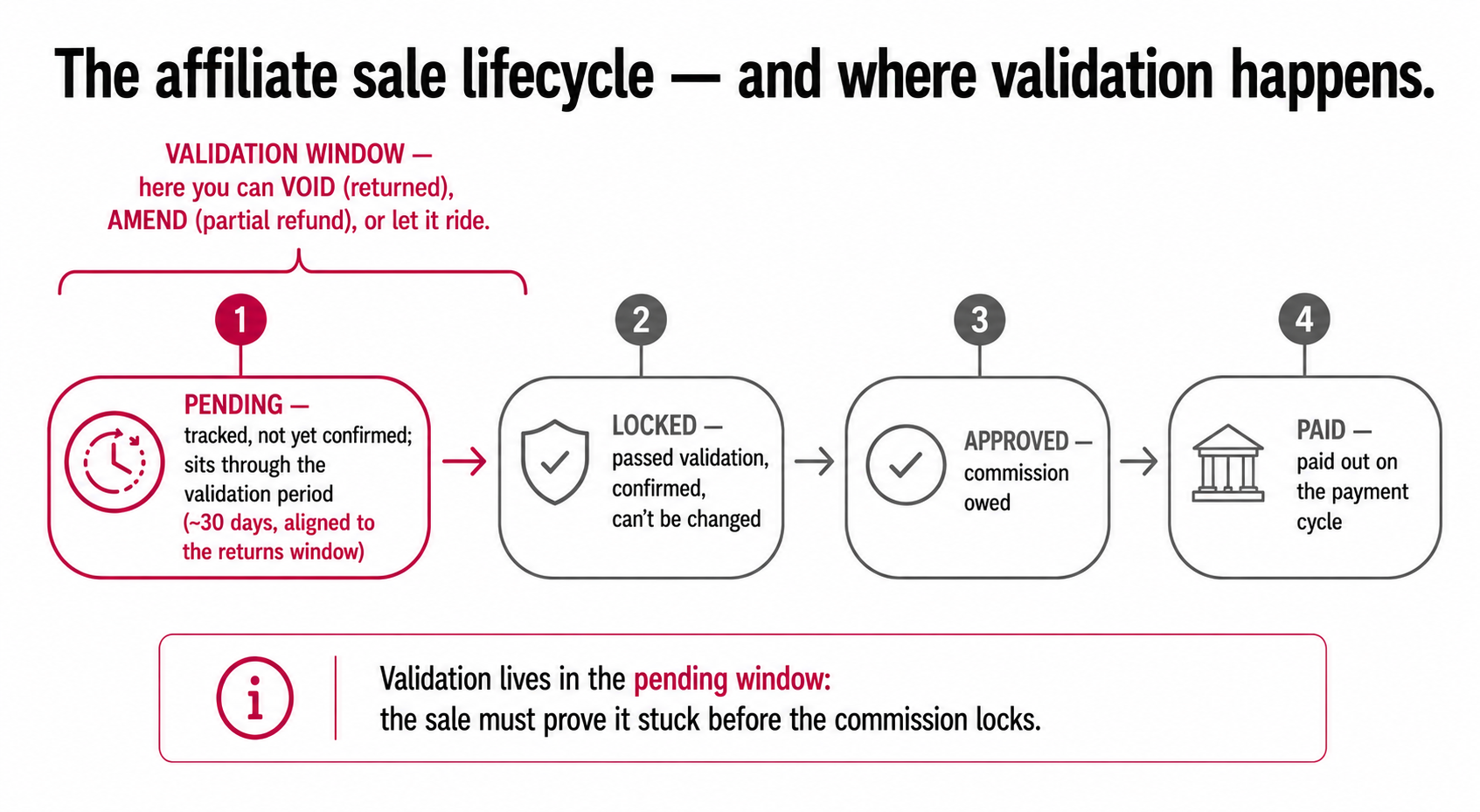
Every affiliate sale moves through a lifecycle of statuses, and understanding it is most of understanding validation. The names vary slightly by platform, but the logic is universal:
- Pending. The sale has been tracked but not yet confirmed. It sits here through the validation period, open to being voided or amended. This is where returns and cancellations get caught.
- Locked. The sale has passed its validation period without being voided. It is now confirmed and cannot be changed, it will appear on the next invoice.
- Approved. The merchant has confirmed the commission is owed.
- Paid. The commission has been paid out to the affiliate, usually on the programme's payment cycle (commonly a monthly cycle).
The key window is the validation period (also called the pending or locking period): the time a sale stays in "pending" before it locks. This is set to cover the customer's returns and cancellation window, because that is the period during which a sale might reverse. A common default is around 30 days, often 30 to 60, deliberately aligned to how long a customer has to send the product back. During that window you can void a sale (the customer returned everything), amend it (a partial refund, so you reduce the commission to match the kept amount), or simply let it ride. After the window, it locks and you have given up the right to change it, which is exactly the point: the affiliate gets certainty.
What gets voided or amended, and why chargebacks matter
During the pending window, you reconcile the tracked sales against what actually happened in your store, and adjust accordingly:
- Full return or cancellation voids the sale, no kept revenue, no commission.
- Partial refund amends it, the commission is recalculated on the revenue actually kept, not the original order value. (A clean way to think about it: commission is owed on
revenue minus refunds, not on the gross checkout.) - Fraudulent order is voided, this is where fraud detection and validation meet, the suspicious conversions you flagged get rejected here.
- Duplicate is voided, where deduplication is done manually rather than at source, the duplicate credit gets removed at this step.
One status deserves special attention because it can bite after you think you are done: the chargeback. A chargeback is a customer disputing a charge with their bank, and crucially it can happen after a sale has already been approved or even paid. An order being refunded does not automatically claw back the commission unless your process handles it, so this is exactly why a sensible holding period before payout exists, and why some programmes hold a reserve. The validation period is your window to catch the returns; a careful payout schedule and clear terms are how you handle the chargebacks that slip past it. Both come back to the same principle from fraud control: detection is only worth anything if there is an enforcement step behind it, and validation is that step.
The twist: validate fast, or you punish your best partners
Here is where most advice stops and the real practitioner judgment begins. Everything above frames validation as protecting your margin, and it does. But validation has a second face, it is also the thing standing between your affiliate and getting paid, and if you handle it badly you quietly make your programme a worse place to send traffic.
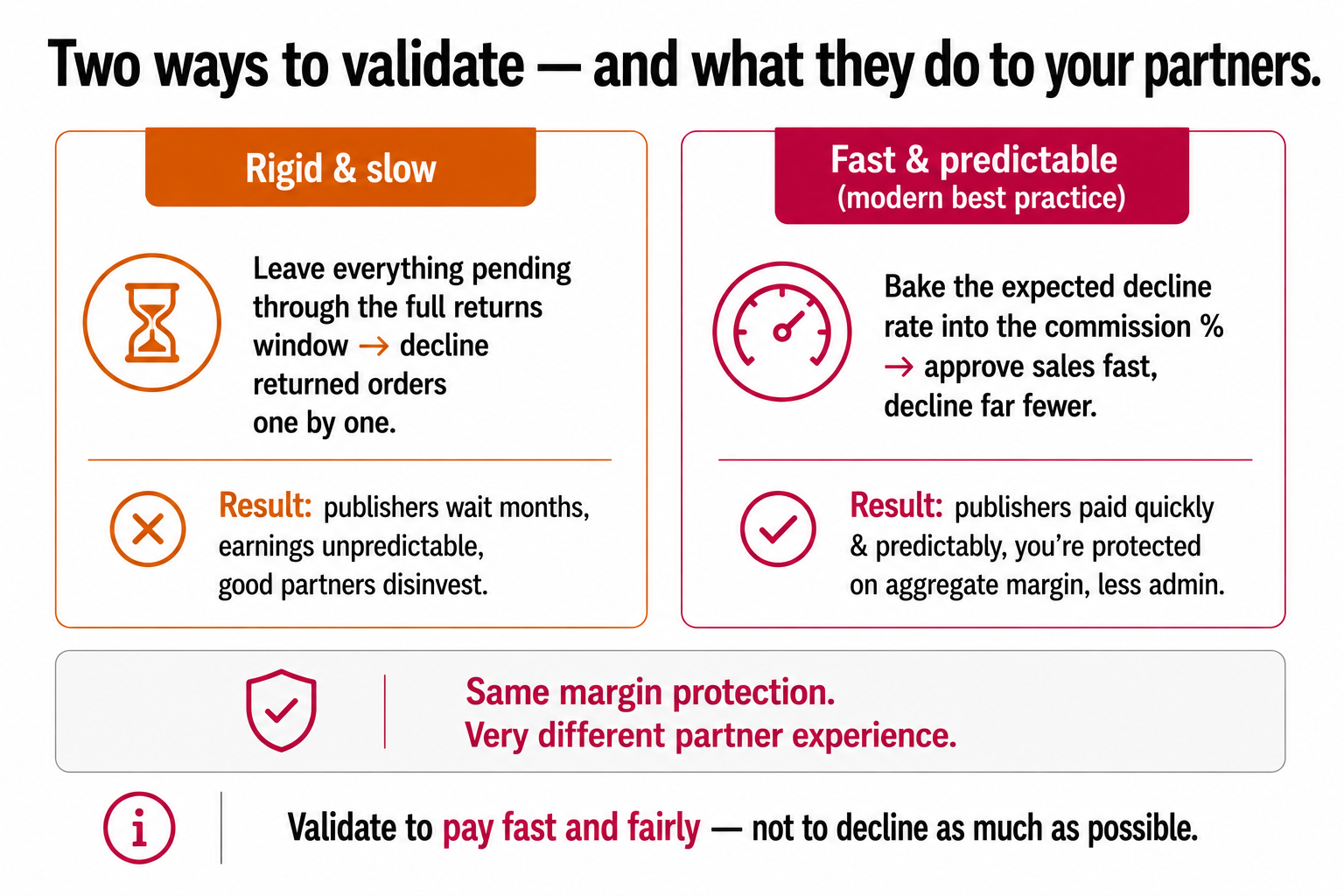
The problem has gotten sharper as e-commerce return rates have climbed. The standard reflex, leave every sale pending through the entire returns window and decline the ones that come back, has a side effect: longer return windows mean longer pending periods, which means publishers wait longer and longer to get paid, and their earnings become harder to predict. A publisher who has invested their own money in traffic or content to drive you sales, and then waits two or three months to find out how much of it will actually be approved, has a cash-flow problem and a trust problem. Faced with that, good publishers do the rational thing: they invest less in you and more in advertisers who pay faster and more predictably. So an overly rigid, slow validation process protects this quarter's margin and erodes next quarter's partner base, the same false economy as aggressive deduplication.
The modern best practice flips the goal. Instead of "validate rigorously to decline as much as possible," it is "validate as fast and predictably as possible while still protecting against genuine reversals." The cleanest version, used to good effect across the industry, is to bake your expected return/decline rate into the commission percentage rather than declining order by order. If you know roughly what proportion of sales come back, you can set a slightly lower commission that already accounts for it, then approve sales fast, even close to instantly, and decline far fewer. The publisher gets paid quickly and predictably, you are still protected on aggregate margin, and the entire administrative burden of poring over individual returns largely disappears. It is better for them and easier for you, which is the rare win-win the channel actually offers.
Getting validation right
So the practitioner's approach to validation pulls in two directions at once, and the skill is holding both. Protect your margin: never pay on raw tracked sales, hold commissions through a validation period aligned to your returns window, void returns and fraud, amend partial refunds, and handle chargebacks with a sensible payout schedule. And protect your partners: validate as fast as you can, make your validation period and rules transparent in your programme terms so publishers know exactly what to expect, and seriously consider building your expected decline rate into the commission so you can approve quickly rather than leaving partners hanging.
The mindset shift is the whole thing. A validation process designed to decline as much as possible feels like it is protecting you, but it is slowly making your programme one that good partners avoid. A validation process designed to pay valid sales as fast and predictably as possible protects exactly the same margin while making your programme one partners want to invest in. Same financial protection, opposite effect on growth.
That is validation, end to end. It is the reconciliation step where a tracked sale proves it actually stuck, returns voided, partial refunds amended, fraud and duplicates rejected, chargebacks handled, before commission locks and pays, moving through pending, locked, approved, and paid. It is where the integrity controls (fraud detection, deduplication) stop being analysis and start being enforcement, the step that turns "we spotted a problem" into "we did not pay for it." And the mark of a programme run by someone who actually understands the channel is that validation is rigorous about what it protects against and generous about speed: it catches every genuine reversal and still pays good partners fast. Protect the margin without punishing the people who earn it. That is the whole job.
A few common questions
What is validation in affiliate marketing? Validation (or order approval) is the step where a merchant confirms a tracked affiliate sale is genuine, not returned, cancelled, refunded, or fraudulent, before the commission is approved and paid. A tracked sale sits in "pending" through a validation period (commonly around 30 days, aligned to the returns window), during which it can be voided or amended, then locks and becomes payable. It's where the channel's integrity controls are actually enforced.
What is a validation (or pending) period? The validation period is the time a tracked sale stays in "pending" status before it locks and becomes payable, set to cover the customer's returns and cancellation window so reversals can be caught. A common default is around 30 days, often 30 to 60. During this window the merchant can void a sale (full return), amend it (partial refund, recalculating commission on kept revenue), or let it lock automatically.
Do affiliate commissions get reversed after a refund or chargeback? Yes, if the process handles it. A full return or cancellation during the validation period voids the commission; a partial refund reduces it to match kept revenue. Chargebacks are trickier because they can happen after a sale is approved or even paid, which is why programmes use a sensible holding period before payout and clear terms, so reversed sales don't leave commission paid on revenue you never kept.
How should I run validation without driving away affiliates? Validate as fast and predictably as possible rather than leaving sales pending for months and declining order by order, which makes publisher earnings unpredictable and pushes good partners to faster-paying advertisers. A strong modern practice is to bake your expected return/decline rate into the commission percentage, then approve sales quickly and decline far fewer. You protect the same aggregate margin while paying partners fast, and you cut the administrative burden.
You should also read:
Affiliate Program KPIs: The Numbers That Show If It's Actually Working
Most affiliate dashboards proudly display the numbers that mean the least. Total affiliates, total clicks, total revenue: big, reassuring, and almost useless for deciding what to do next. The numbers that actually tell you whether your programme is working, and what to fix, are quieter…
Continue reading...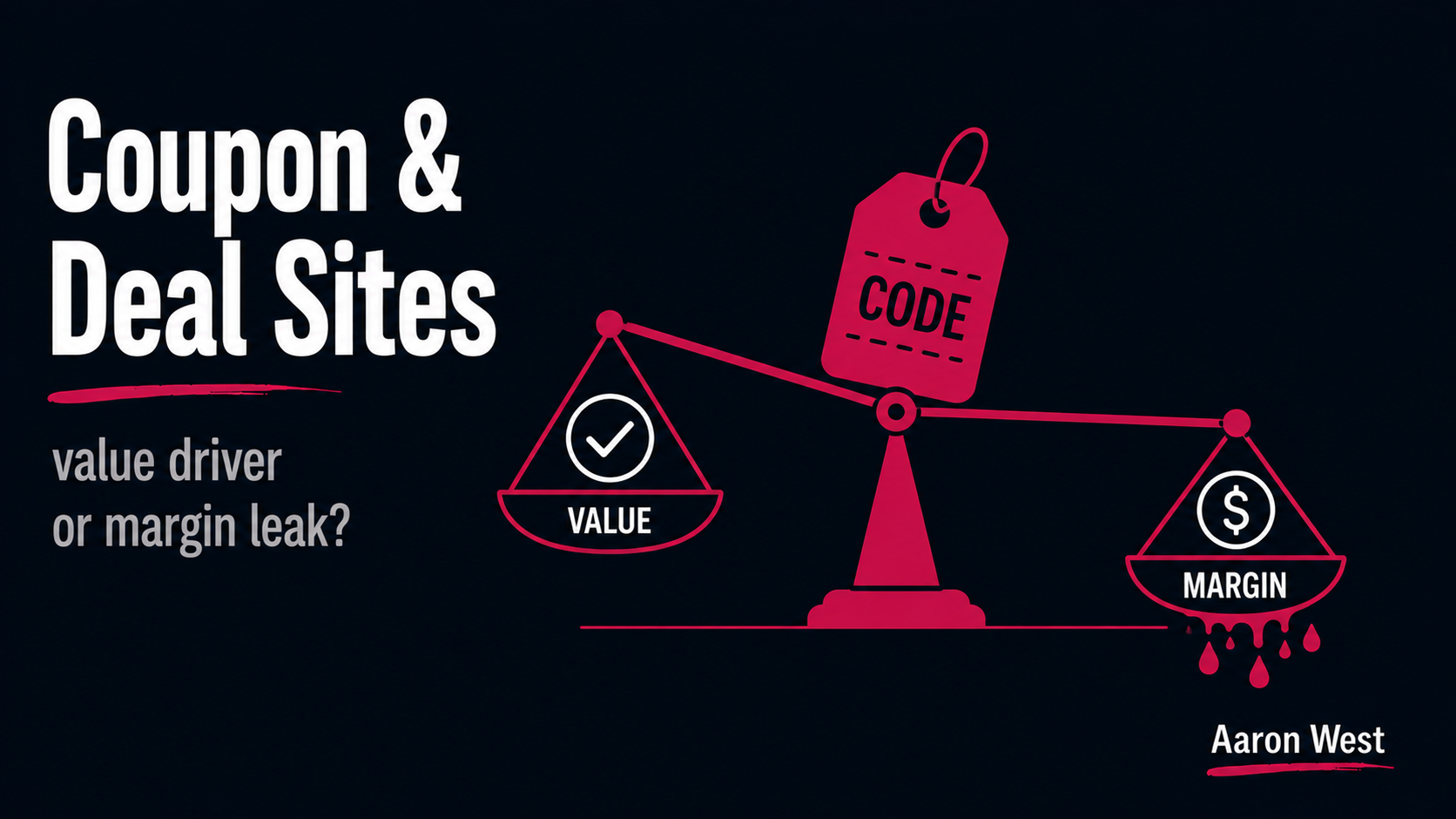
Coupon and Deal Sites: Value Driver or Margin Leak?
Coupon and deal sites are affiliate partners that promote discount codes and offers, and the honest answer to whether they help or hurt is: both, depending entirely on how well you control them. Run well, with unique codes and clear rules, they bring real volume…
Continue reading...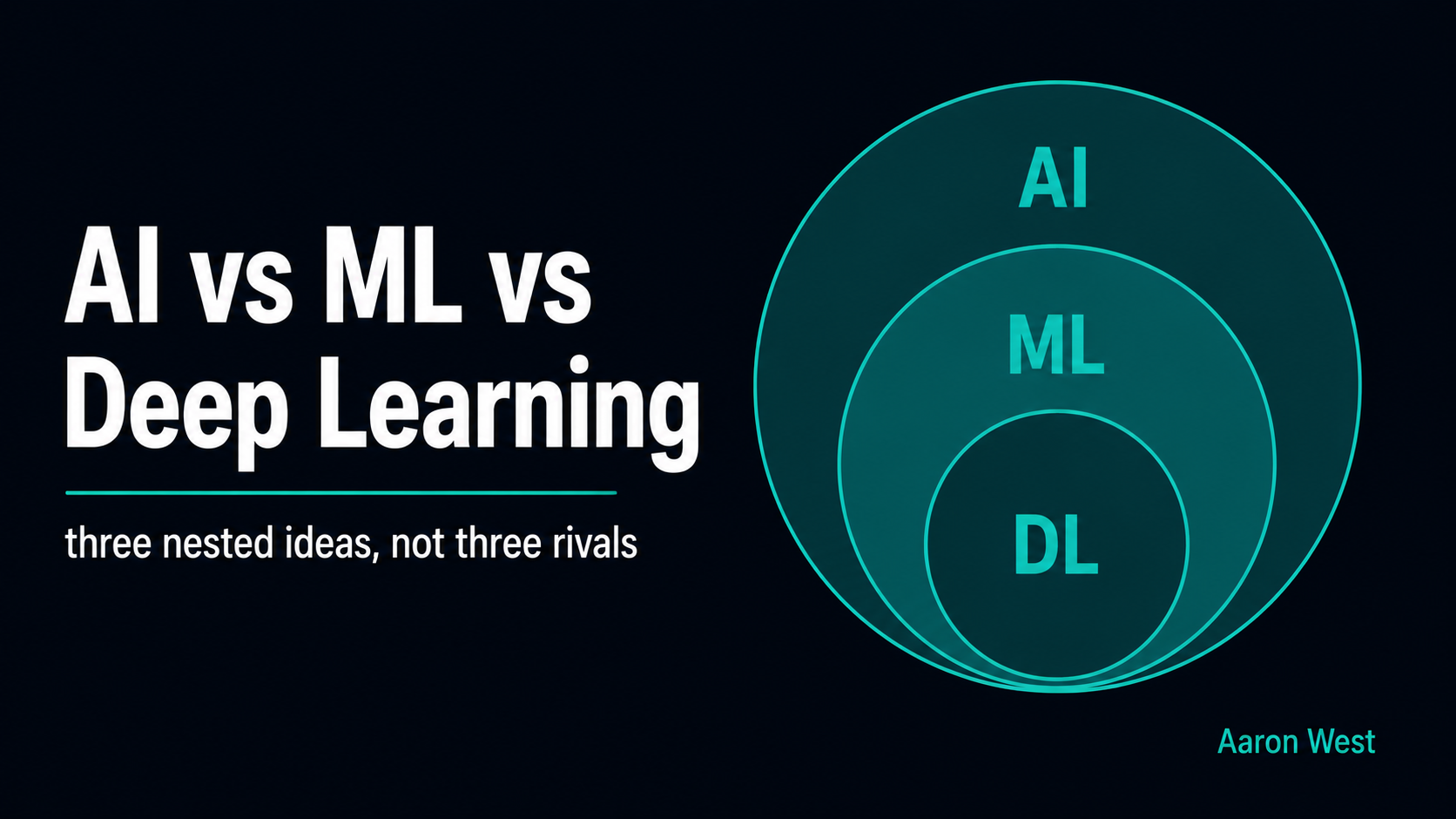
AI vs Machine Learning vs Deep Learning: The Distinction That Actually Matters
Artificial intelligence, machine learning, and deep learning are not three competing things you choose between. They are three nested ideas, each one a more specialised part of the one before it. AI is the big outer goal: machines doing things that would normally need human…
Continue reading...