Cashback and Loyalty Publishers: How They Really Work (and What They Cost You)

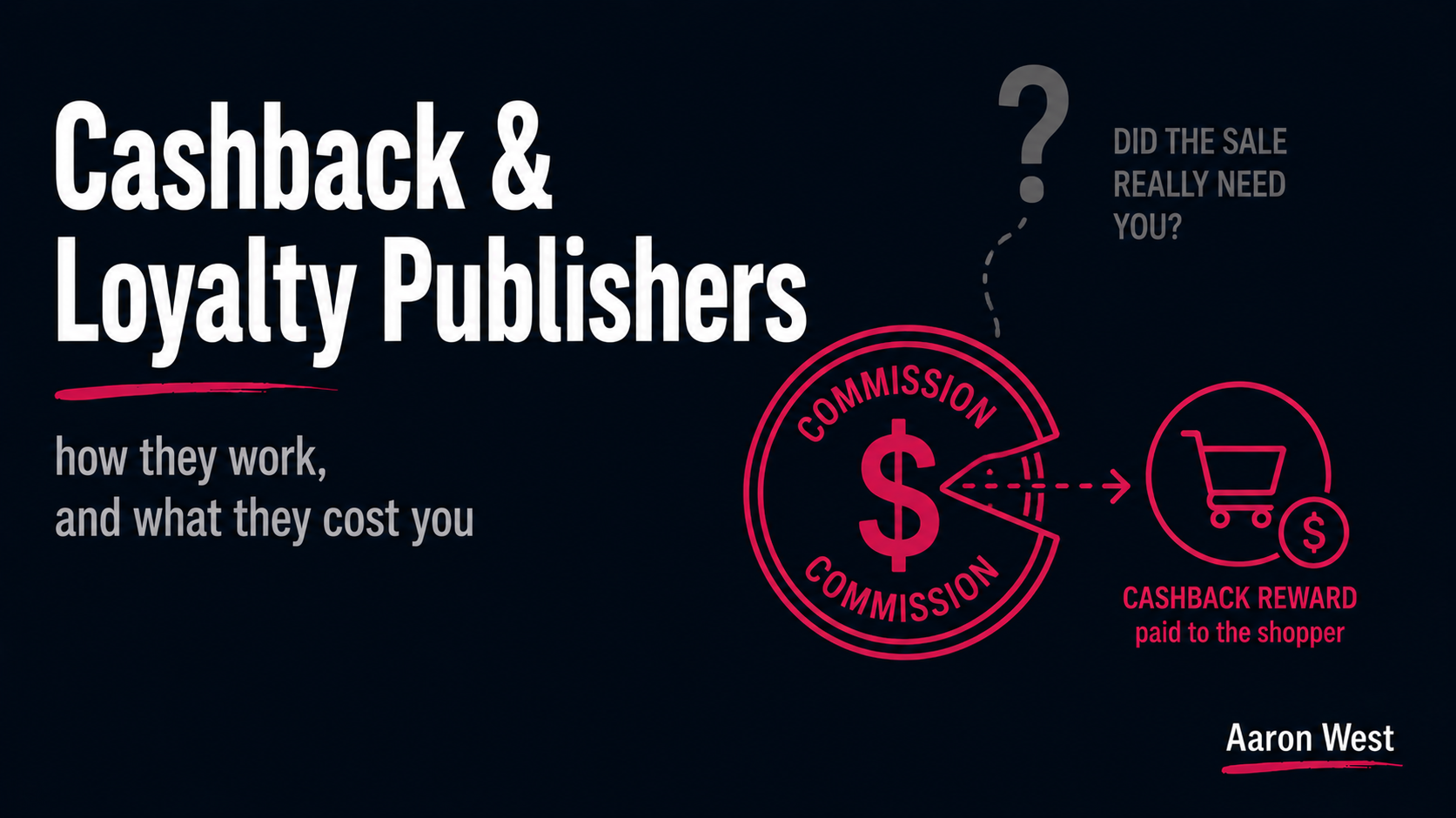
Table of Contents
Cashback and loyalty publishers are affiliate partners that share part of their commission back with the shopper, as cash, points, or perks, so the customer gets rewarded for buying and the publisher earns the rest. They are usually large, high-reach platforms, they are often among the single biggest drivers of tracked revenue in a programme, and they are the partner type that provokes the sharpest disagreement in affiliate marketing. The honest answer to "are they worth it?" is: yes, selectively, and only if you understand the difference between a cashback partner that creates demand and one that merely intercepts it.
This is a deep-dive within the affiliate publisher landscape, and it is the partner type where the incrementality question matters most, because cashback sits right at the bottom of the funnel where the introduce-versus-intercept distinction is hardest and most expensive to get wrong. I am going to give you the genuinely balanced version here, not "cashback is bad" (it is not) and not the vendor pitch that it is pure incremental gold (it is not that either). How it works, what it is genuinely good at, where it quietly costs you, and how to tell which kind of partner you actually have.
How cashback and loyalty publishers actually work
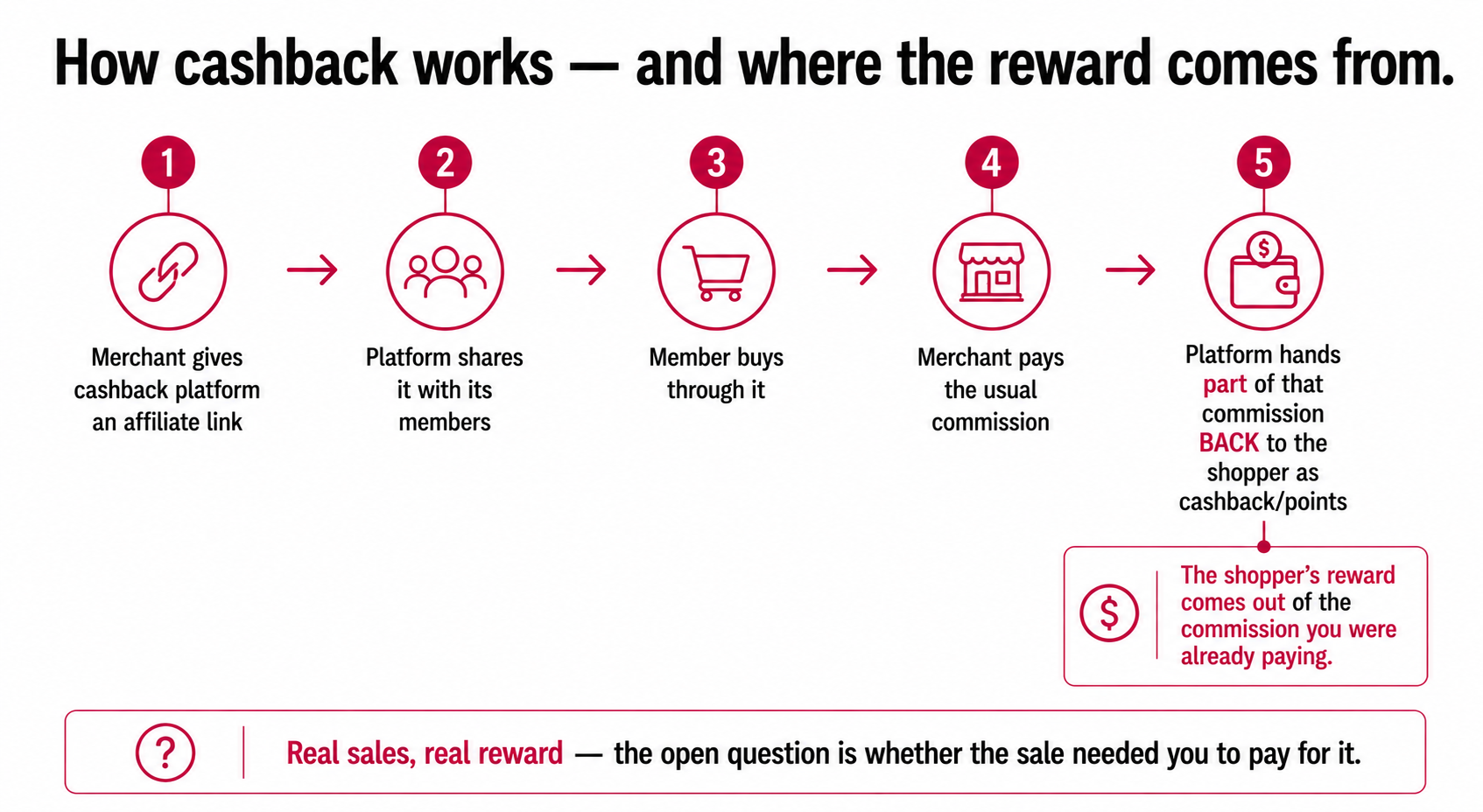
The mechanism is a simple twist on standard affiliate. The merchant gives the cashback platform an affiliate link, the platform shares it with its members, and when a member buys through it, the merchant pays the usual commission, except the platform then hands a portion of that commission back to the shopper as cashback or loyalty points. The shopper's reward comes out of the affiliate commission you were already paying. Loyalty-points versions work the same way, with points instead of cash, redeemable later, which adds a repeat-purchase hook.
This is genuinely different from a traditional content affiliate, and the difference cuts both ways. A blog can link to you and send traffic; a cashback platform does something more active, it gives its members a standing financial reason to start their shopping there and route through it to you. That is real pulling power: these platforms have large, logged-in, habitual member bases who check the cashback app before they buy. It is also the root of the problem, because "check the app before you buy" describes a customer who has often already decided to buy. Hold that tension, it is the whole piece.
What they're genuinely good at
Let us be fair to the channel, because the case for cashback and loyalty partners is real and often understated by the critics.
They drive scale. These are some of the highest-reach partners available, with member bases in the millions, so approving them can meaningfully grow tracked revenue quickly. They drive sales, not just traffic, a cashback platform converts at the point of purchase, which is why it shows up so strongly in the numbers. And they have a genuine loyalty mechanism: the cashback or points reward gives customers a real incentive to come back and buy again, which can support repeat purchase and retention in a way a one-off content mention does not. There is even a context where cashback is close to fully incremental: when a brand runs its own cashback or loyalty programme funded by affiliate commissions (a bank's card-linked rewards, a publisher's member scheme), the revenue is genuinely additive, because the rewards are paid out of commissions the brand captures, not cannibalised from its own margin.
So the channel is not a scam and the volume is not fake, the sales are real sales. The question is never "are these real purchases?" It is the subtler and more important one: would those purchases have happened anyway without you paying a commission? That is where it gets interesting.
Where they quietly cost you: the intercept problem
Here is the tension, stated plainly. Cashback and loyalty affiliates tend to have the lowest incrementality of any partner type, because their core function is often to insert themselves at the final step of a journey, via a browser toolbar or extension that activates at checkout, and claim the commission for a customer who was already committed to buying. The customer was going to purchase from you regardless; the cashback extension popped up at checkout, the member clicked to claim their cashback, and now you are paying a commission, and funding a reward, on a sale you already had.
Under last-click attribution, this looks fantastic, the cashback partner gets full credit and shows up as a top performer. Measured by incrementality, the same partner can score near zero, because if you removed them, most of those sales would still happen. That gap, between how good they look on last-click and how little they actually add, is exactly where programmes quietly leak margin. You are paying premium commission rates to a "top partner" for sales you would have made anyway, and funding the customer's discount on top.
There is a second, sneakier cost: customer-experience friction that lands on you. When a member's cashback goes pending, gets declined because they returned something, or is delayed, the complaint often gets directed at the merchant, not the cashback platform, even though you did not run the rewards programme. And intrusive checkout extensions can interfere with the buying experience itself. So an aggressive cashback partner can cost you not just margin but goodwill, with the support tickets pointed your way.
How to tell which kind of partner you have
The whole decision comes down to one distinction, and it is the same one from the publisher landscape: does this partner drive demand or capture it? With cashback and loyalty specifically, here is how to read it.
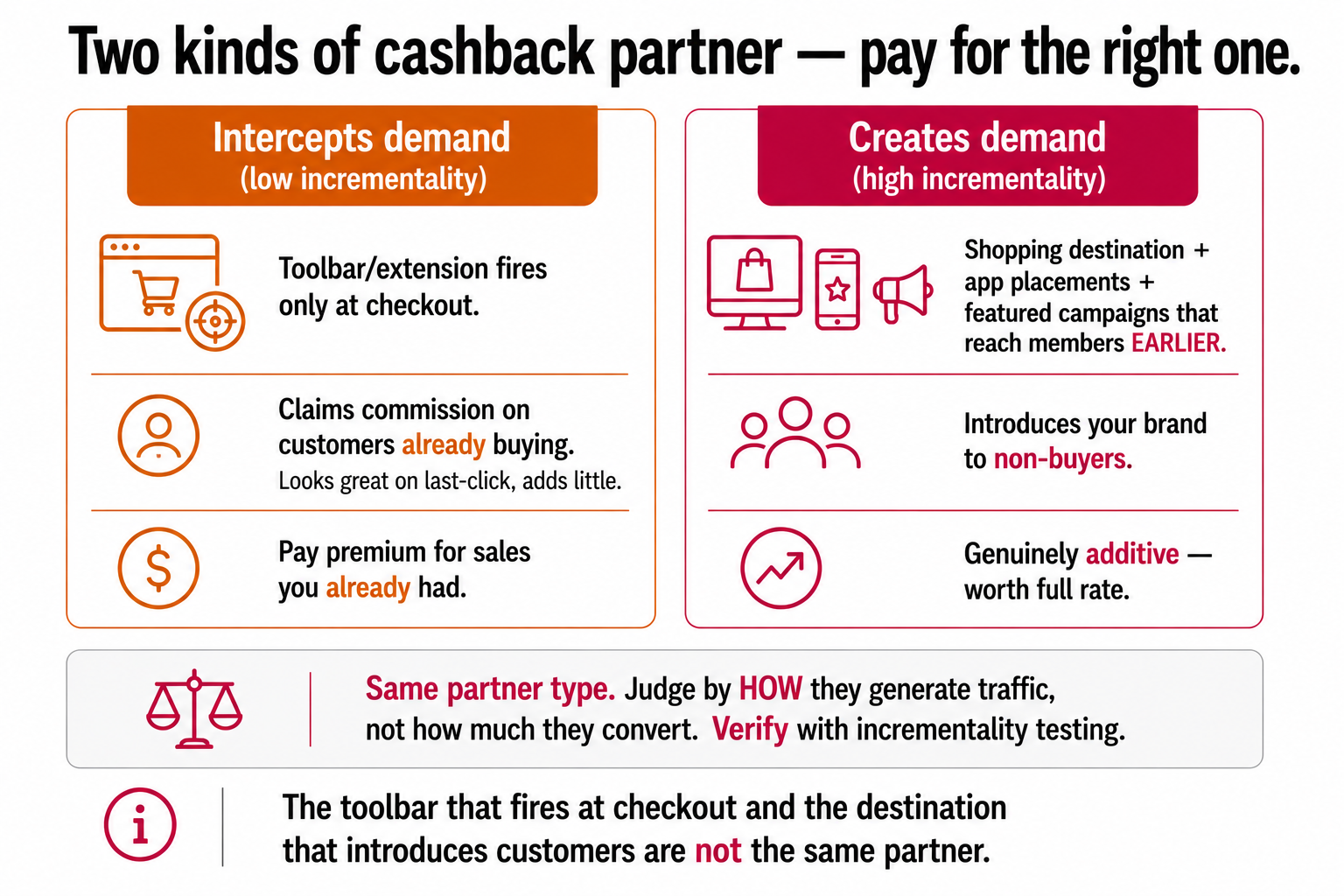
A low-value cashback partner inserts itself only at the final step, a toolbar that fires at checkout, with no earlier influence on the customer. If that is all they do, it is hard to justify their commission as incremental growth, because they are mostly claiming sales you already had. A high-value cashback partner offers multiple ways to reach and influence members earlier in the journey, a genuine shopping destination where members discover and choose merchants, app placements, featured-merchant campaigns, category pages, push notifications that actually introduce your brand to someone who was not already buying. That partner is creating demand, and is worth every cent.
So the practical test is to look at how the partner generates its traffic, not just how much it converts. Ask: do they only activate at checkout, or can they put you in front of members who were not already coming to you? You can verify the answer with incrementality testing, a holdout that measures what actually changes when the partner is present versus absent, and the results will usually sort your cashback partners cleanly into "genuinely additive" and "expensively redundant." Then you act on it: negotiate rates that reflect real incremental value, lean into the partners and placements that introduce customers, and either restructure or step back from the ones that only intercept. Some programmes negotiate lower commissions specifically for last-touch-only cashback activity, and higher rates for genuine new-customer introduction, paying for the value actually delivered rather than the last-click illusion.
The honest verdict
So, are cashback and loyalty publishers worth it? Yes, selectively, and the selection is the entire skill. They are not a category to ban (the reflexive "cashback is just margin leak" take is as lazy as the vendor pitch that it is all incremental gold). They genuinely drive scale, real sales, and a loyalty hook, and a well-structured cashback partner that reaches customers early is one of the strongest relationships in a programme. But they are also the partner type most prone to being paid premium rates for intercepting demand you already owned, and the type whose customer-service friction quietly lands on you.
The discipline is the same one that runs through this whole affiliate cluster: do not judge a partner by the last-click volume it reports, judge it by what it actually adds. Find out how each cashback partner generates its traffic, test their incrementality, pay them in line with the demand they genuinely create, and lean into the ones who introduce customers rather than the ones who merely appear at the checkout. Do that, and cashback and loyalty become a powerful, fairly-priced part of the mix. Skip it, approve every large cashback platform and pay them all top rates on last-click, and you build an expensive habit of paying premium commissions to fund discounts on sales you already had. The partners are not the problem. Paying for interception as if it were introduction is.
A few common questions
How do cashback affiliate publishers work? A merchant gives the cashback platform an affiliate link; the platform shares it with its members; when a member buys through it, the merchant pays the usual affiliate commission, and the platform passes a portion of that commission back to the shopper as cashback (or loyalty points). The shopper's reward is funded out of the affiliate commission the merchant was already paying, so the merchant only pays on an actual tracked sale.
Are cashback and loyalty affiliates worth it for merchants? Selectively. They drive real scale, convert at the point of purchase, and offer a genuine repeat-purchase incentive, and when a partner reaches customers early in the journey they create real incremental demand. But they tend to have the lowest incrementality of any partner type, because many insert themselves only at checkout (via a toolbar) and claim commission on customers who were already going to buy. The value depends entirely on how the partner generates its traffic.
Why do cashback partners look great on last-click but may not be? Because last-click attribution gives full credit to the final touch before purchase, and cashback extensions often activate exactly there, at checkout, when the customer has already decided to buy. So they appear as top performers in last-click reports while adding little genuinely incremental revenue. Measured by incrementality (what changes if you remove them), many score far lower than their last-click numbers suggest.
How should I structure cashback affiliate partnerships? Evaluate each partner by how it generates traffic, not just how much it converts. Favour partners that can reach and influence members early (shopping destinations, app placements, featured campaigns) over toolbar-only checkout interception. Use incrementality testing to separate additive partners from redundant ones, and consider negotiating rates that reflect incremental value, lower for last-touch-only activity, higher for genuine new-customer introduction.
You should also read:
Affiliate Program KPIs: The Numbers That Show If It's Actually Working
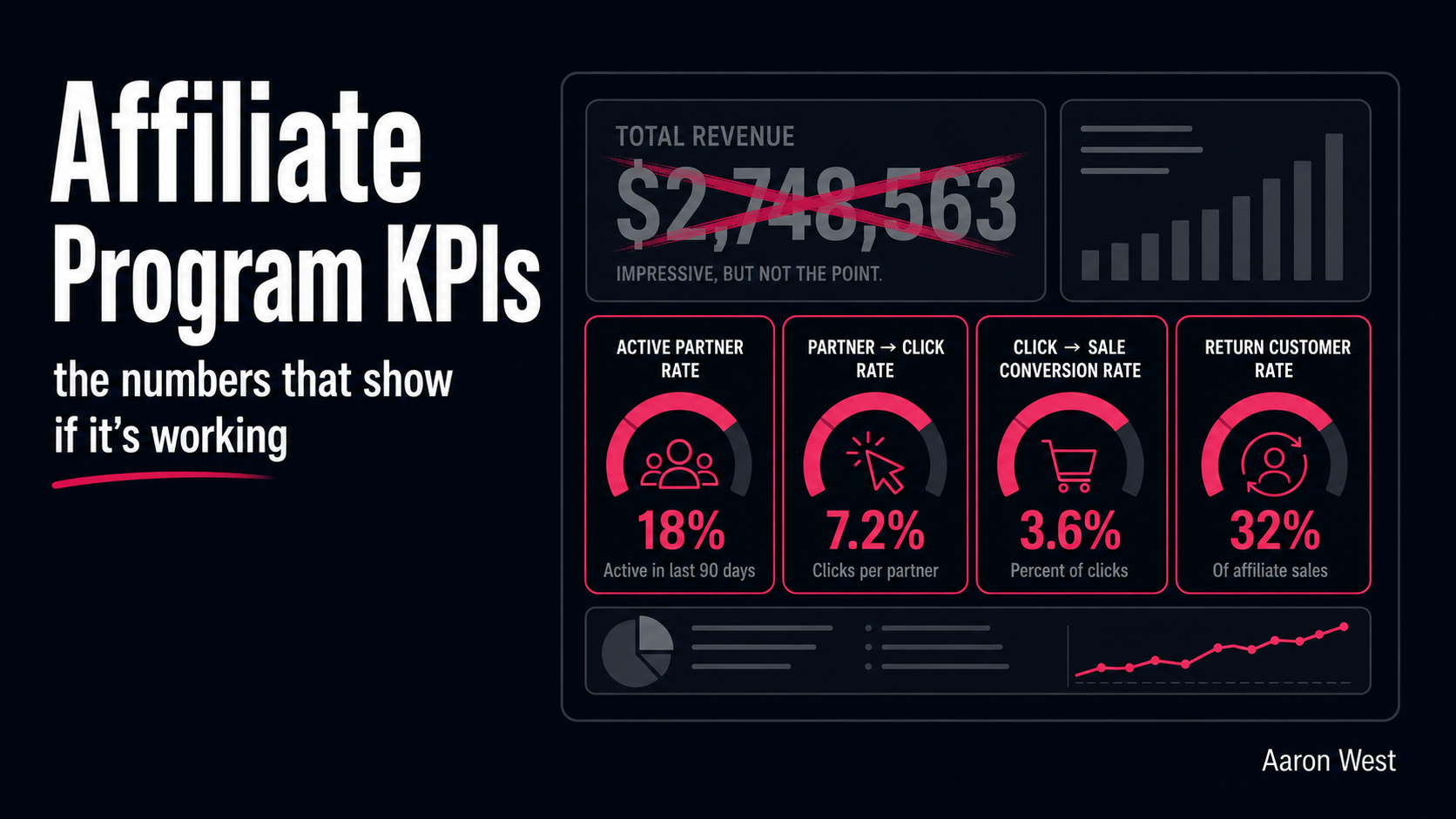
Most affiliate dashboards proudly display the numbers that mean the least. Total affiliates, total clicks, total revenue: big, reassuring, and almost useless for deciding what to do next. The numbers that actually tell you whether your programme is working, and what to fix, are quieter…
Continue reading...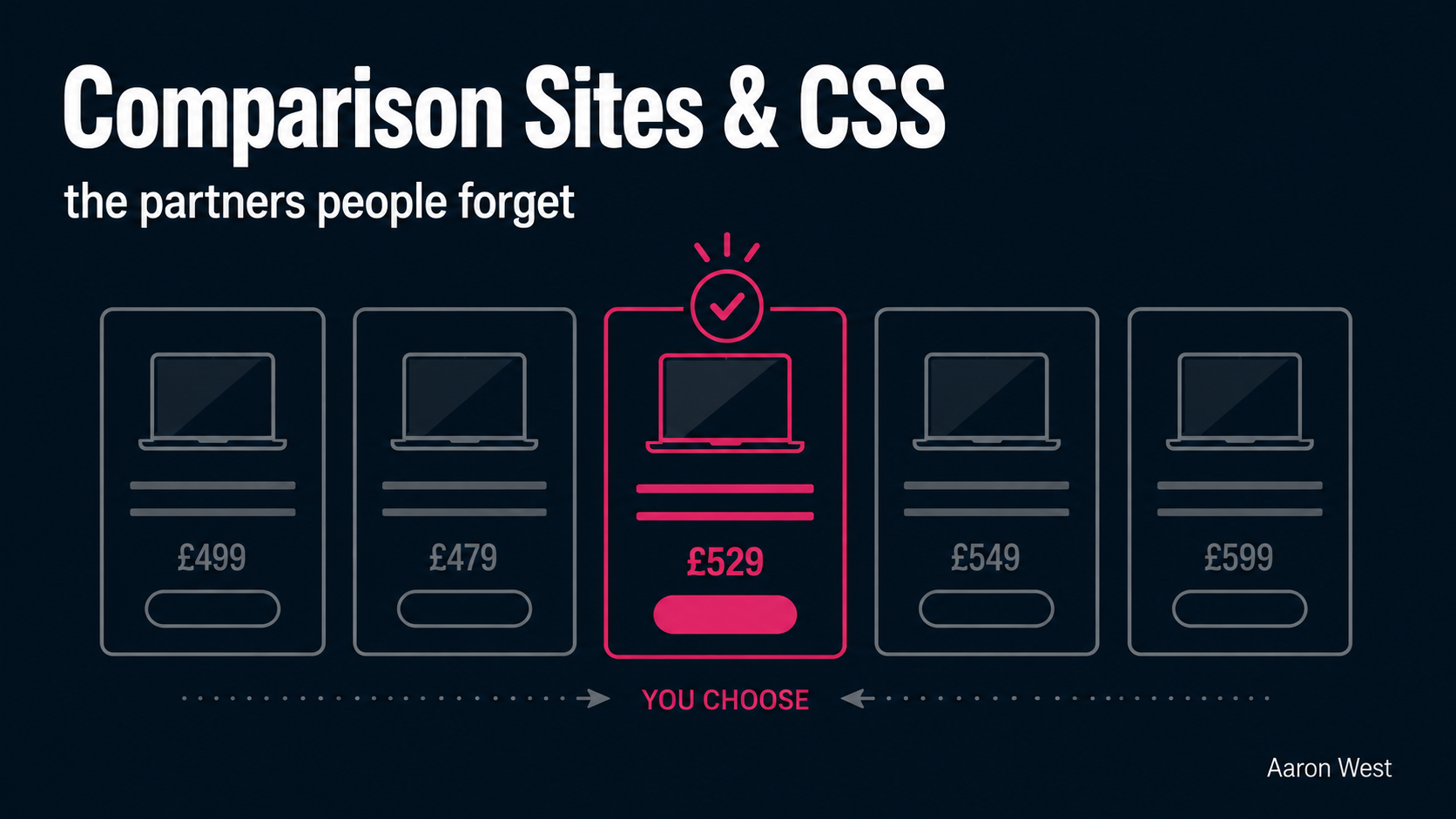
Comparison Sites, CSS, and Sub-Networks: The Partners People Forget
Comparison sites and Comparison Shopping Services (CSS) are affiliate-adjacent partners that list your products alongside competitors so shoppers can compare, then send the click your way for a fee or a commission. They are the partner type most programmes barely think about, which is a…
Continue reading...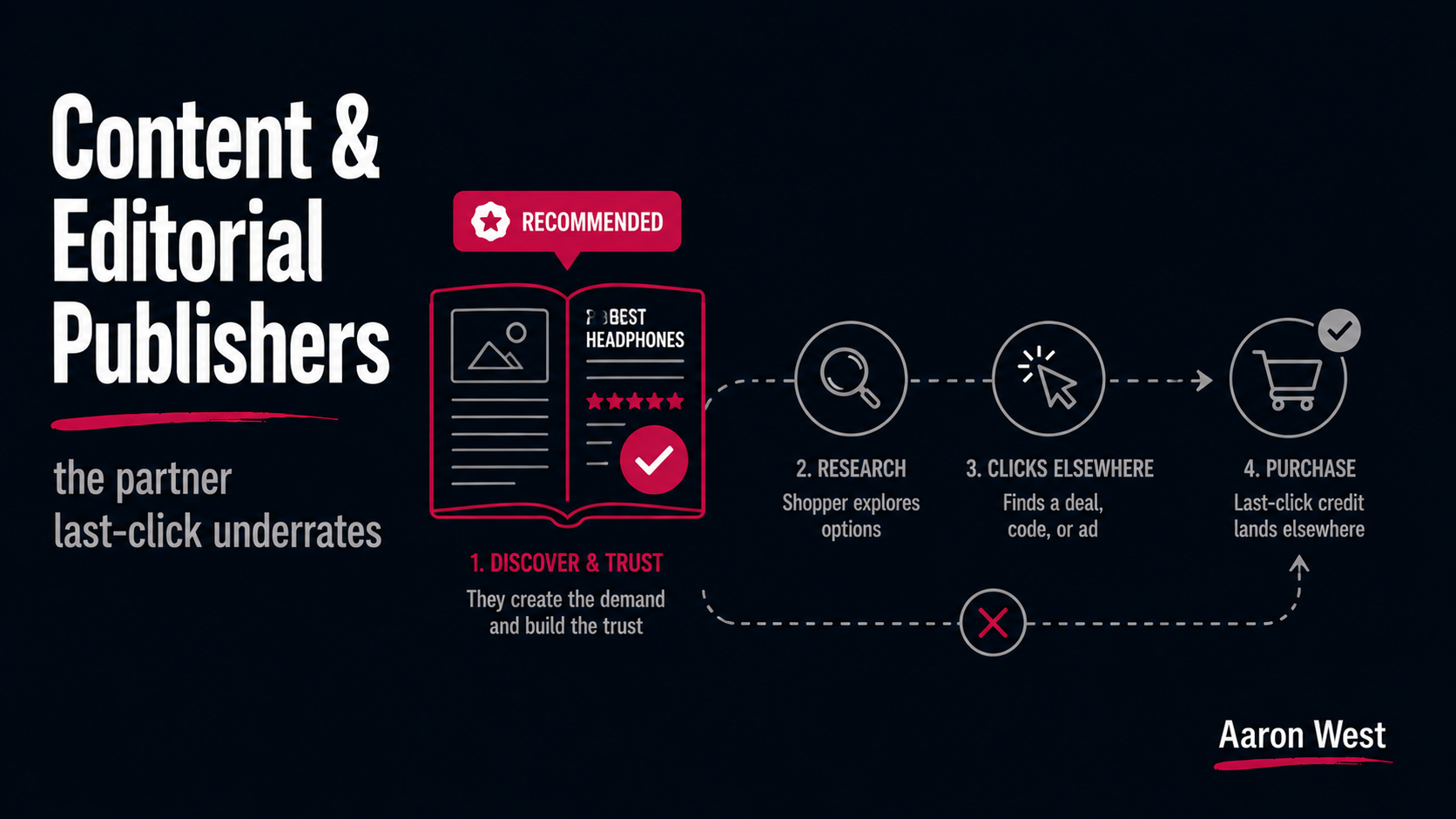
Content and Editorial Publishers: The Affiliate Partner Last-Click Underrates
Content and editorial publishers are affiliate partners who earn commission through genuine editorial work, product reviews, buying guides, comparisons, how-to articles, the kind of content people actively seek out when they are trying to decide what to buy. They are the opposite end of the…
Continue reading...