Content and Editorial Publishers: The Affiliate Partner Last-Click Underrates

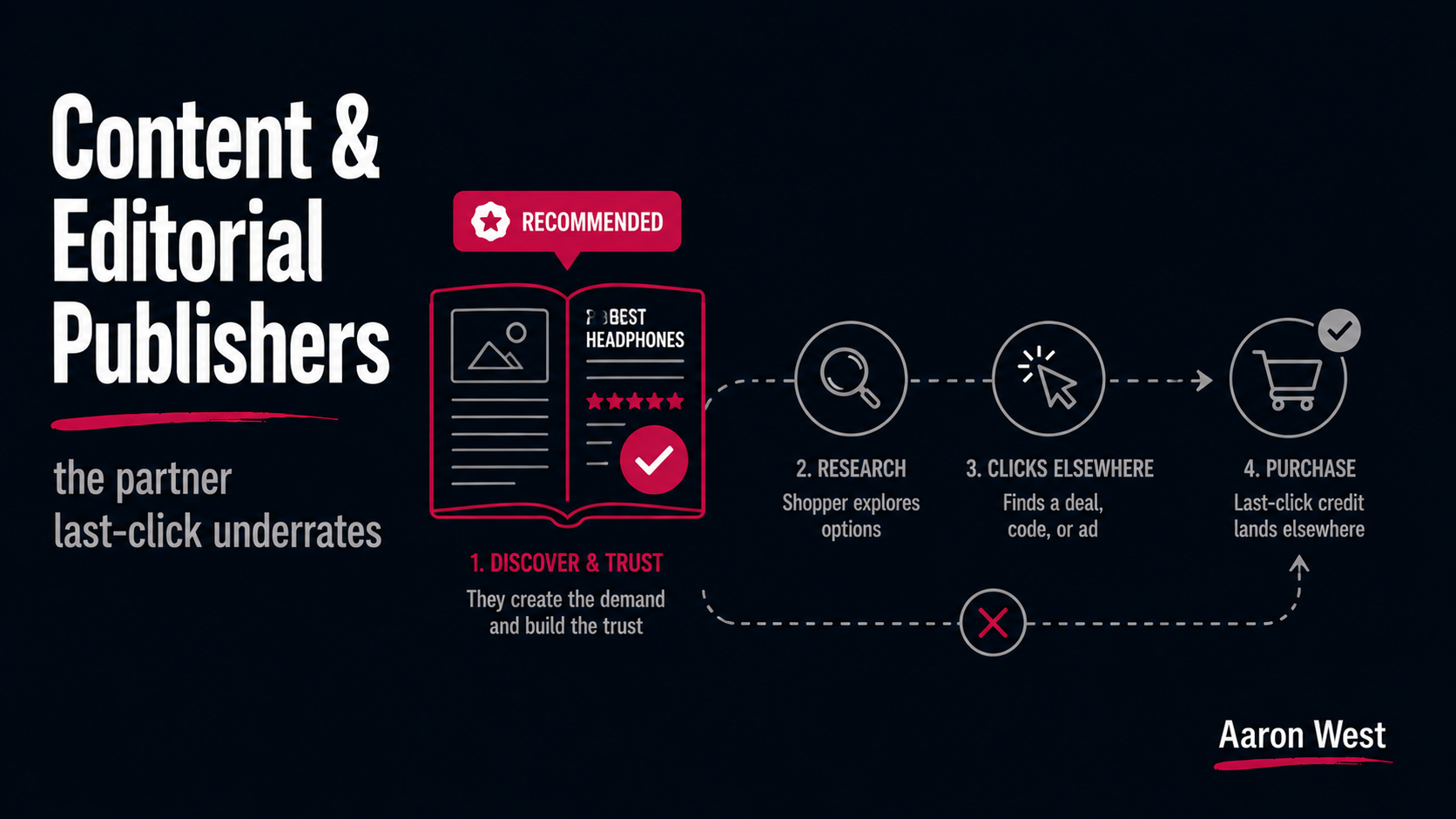
Table of Contents
Content and editorial publishers are affiliate partners who earn commission through genuine editorial work, product reviews, buying guides, comparisons, how-to articles, the kind of content people actively seek out when they are trying to decide what to buy. They are the opposite end of the partner spectrum from cashback and coupon sites: where those intercept a customer at the checkout, a content publisher is often the reason the customer started shopping at all. And that is exactly why they are the partner type most consistently underrated by the way affiliate gets measured.
This is a deep-dive within the affiliate publisher landscape, and it is the clearest case in the whole cluster of the gap between what a partner looks worth on a last-click report and what it is actually worth. Content publishers tend to sit early in the journey, doing the work of awareness and consideration, then a coupon or cashback partner often takes the last click and the credit. If you judge your programme on last-click alone, you will systematically undervalue the partners who actually create your demand. This piece explains how content publishers work, why they are having a moment, the trust mechanism that makes the good ones valuable, and how to value them properly.
How content publishers work, and why they're different
The mechanism is the familiar affiliate one with a crucial difference in where it happens. A content publisher writes something genuinely useful, "the best running shoes for flat feet," "robot vacuums tested over six months," "X versus Y, which should you buy", and includes affiliate links to the products recommended. When a reader clicks through and buys, the publisher earns commission. So far, standard affiliate.
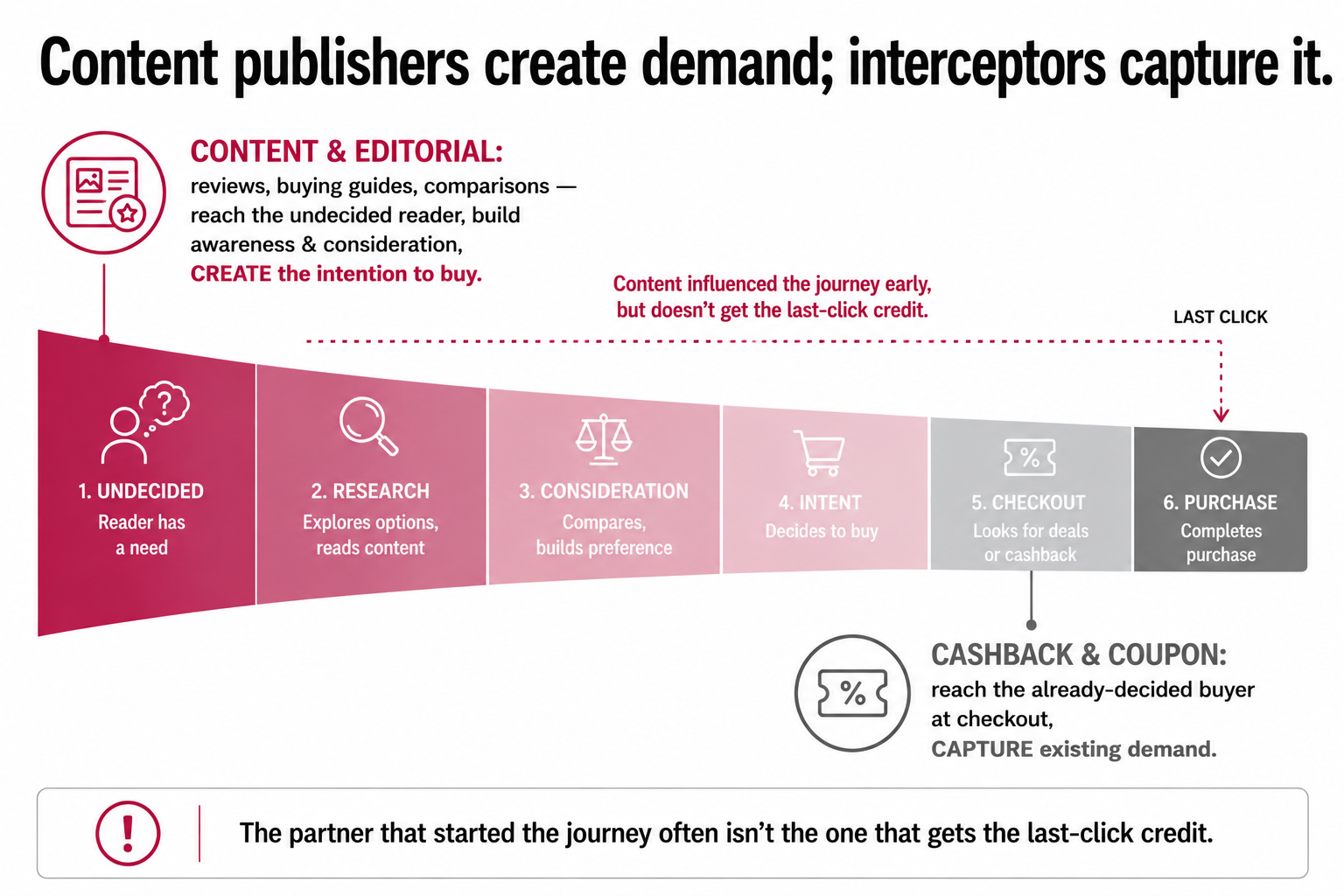
The difference is the moment and the mindset of the reader. A coupon site catches someone who has already chosen to buy and just wants a discount. A content publisher reaches someone who is still deciding, who does not yet know which product, or even which brand, they want. That reader arrives through search or the publisher's audience, reads a recommendation from a source they trust, and forms a purchase intention they did not have before. The content publisher is not capturing existing demand; it is creating it. That single distinction explains everything about why this partner type behaves so differently from the interceptors, why it is harder to measure, and why it is increasingly valuable.
Why content publishers are having a moment
Something real is shifting in how brands think about this partner type, and it is worth understanding because it changes how you should treat them. For years, affiliate was seen as a bottom-funnel, discount-driven performance tactic, the coupon-and-cashback reputation. That perception is changing fast. Affiliate is increasingly being used as a full-funnel strategy, with brands investing in it specifically to build upper-funnel awareness and consideration, not just to close the last click. The framing that affiliate is only about discounts is being actively dismantled, and content publishers are the vehicle for that shift, because they are the partners who can actually do upper-funnel work.
At the same time, major media companies have proven that editorial commerce is a serious business. Trusted publishers have built substantial, durable revenue streams from product-recommendation content, treating commerce as real journalism rather than a side hustle. The recognisable gold standard here is Wirecutter, the New York Times' product-recommendation operation, which built a genuine commerce powerhouse on tested, trustworthy recommendations. The lesson other brands and publishers took from it is the one that matters for you as a programme manager: editorial credibility is what converts. People buy on the recommendation of a source they trust, which means the value of a content partner is inseparable from its integrity.
The trust mechanism (and why it's fragile)
The thing that makes a content publisher valuable is also the thing that is easiest to destroy, so it is worth being precise about it. A content partner converts because readers trust its recommendations. That trust is the entire asset. And trust in commerce content rests on a perception of independence, the reader has to believe the recommendation reflects genuine judgment about what is good, not just what pays the highest commission.
The best commerce publishers protect this fiercely. The gold-standard model keeps the commercial side strictly separated from editorial, so that the people writing the recommendations do not know, and are not influenced by, which products carry commercial agreements, often paired with clear disclosure that affiliate links exist. This "church and state" separation is not corporate fussiness; it is what keeps the recommendations credible, and credible recommendations are what convert. The moment readers suspect a publisher recommends whatever pays most, the trust evaporates and so does the conversion power. For you as a brand, the implication is direct: the content partners worth most are the ones with real editorial integrity, because their endorsement actually moves readers. A publisher that will say anything for a commission is not just an ethical problem, it is a weak partner, because its audience has learned not to believe it. There is a genuine risk across the industry that as more publishers chase affiliate revenue, ethical corners get cut and consumer trust erodes, which would damage the whole channel. The brands that win with content partners are the ones who value, and protect, that integrity rather than pressuring partners to compromise it.
The measurement problem: they look weak on last-click
Here is the catch, and it is the single most important thing to understand about content publishers. Under last-click attribution, content and editorial partners look underperforming on paper, even when they are the primary reason a customer showed up at all. The reader discovers your product in a review weeks before buying, then returns later through a brand search, a direct visit, or, painfully, a coupon site that grabs the last click. The content publisher that created the demand gets no credit; the partner that intercepted the final click gets it all.
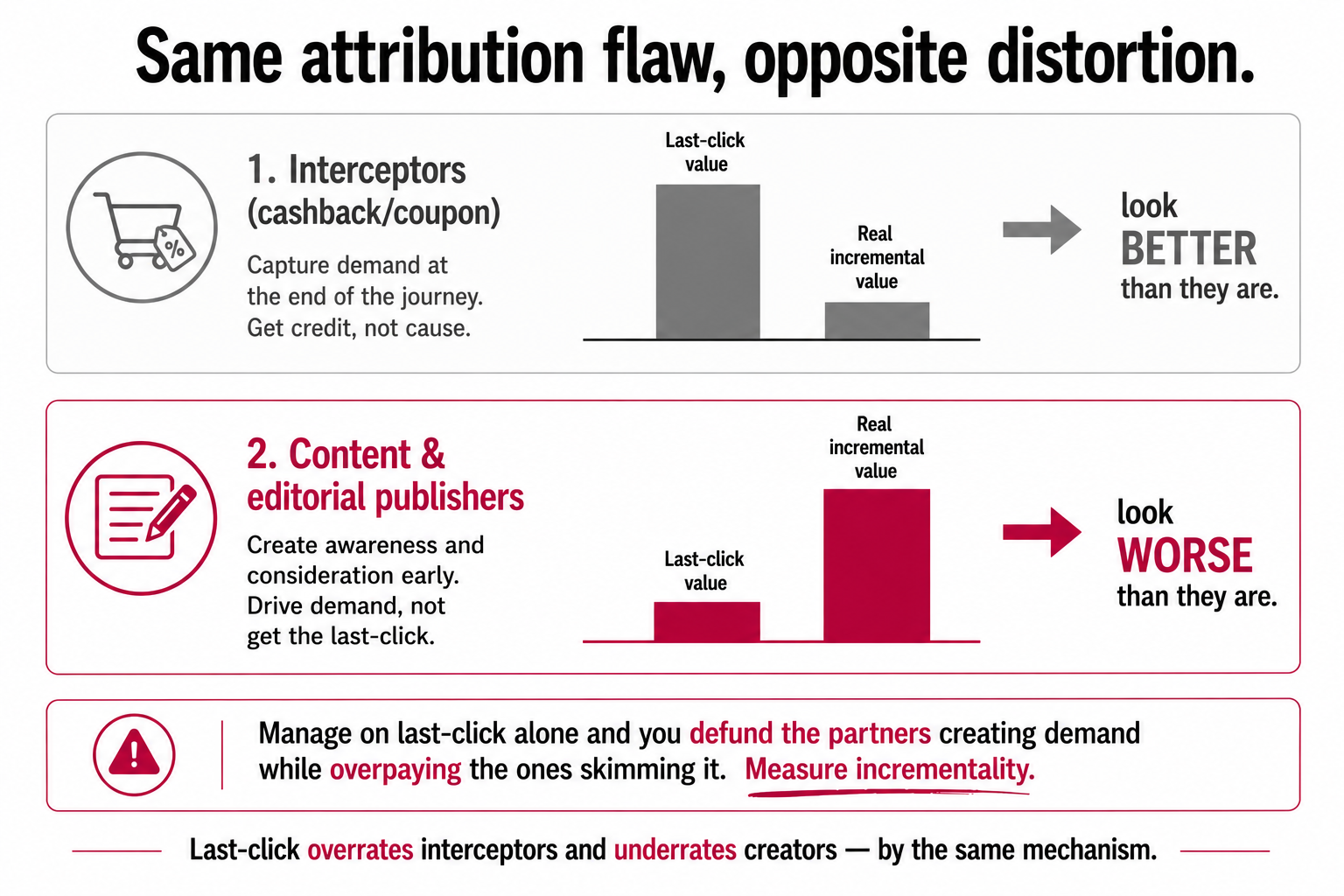
This is the exact inverse of the cashback and coupon problem, and the two are mirror images of the same attribution flaw. Interceptors look better on last-click than they really are; content publishers look worse. If you manage your programme purely on last-click numbers, you will draw precisely the wrong conclusion, that your content partners are underperformers to be cut, and your coupon partners are stars to be paid more, when the truth is often the reverse. You will defund the partners creating your demand and over-invest in the ones skimming it. The fix is the same one that runs through this whole cluster: measure incrementality, not just last click. Ask what actually changes when a content partner is present versus absent, and the genuinely demand-creating publishers reveal their true value, which last-click had been hiding.
How to value content partners properly
So how should a practitioner treat content and editorial publishers? The answer follows directly from everything above, and it is a more active, relationship-led approach than the "approve and forget" treatment most programmes give their long tail.
First, measure them by incrementality and full-funnel contribution, not last-click volume, so you can actually see the demand they create rather than the credit they lose. Second, given that last-click systematically underpays them, consider crediting and rewarding their upper-funnel role deliberately, through multi-touch reporting that recognises the introduction, or commercial arrangements that reflect awareness work rather than only the closing click, the same full-funnel thinking driving brands toward this partner type. Third, treat the strong ones as genuine partnerships, not passive links: the most valuable content relationships involve real collaboration, briefing partners properly, supporting good content, aligning on which products to feature, because a trusted publisher's recommendation is worth far more than a banner ad. And fourth, protect their integrity rather than undermining it; never pressure a credible publisher to compromise the editorial independence that makes their audience trust them, because that trust is the asset you are actually paying for.
The throughline is the one this whole cluster keeps returning to: judge a partner by the value it genuinely creates, not the last click it happens to win. With cashback and coupons, that discipline stops you overpaying for intercepted demand. With content publishers, the very same discipline stops you underpaying, and losing, the partners who create it. They are the partner type that rewards a brand sophisticated enough to look past last-click, and penalises one that is not. In an affiliate world increasingly built on full-funnel thinking and genuine partnership, the brands that learn to value content publishers properly are the ones that will get the best of them, while their competitors quietly cut the very partners driving their growth.
A few common questions
What are content or editorial affiliate publishers? They're affiliate partners who earn commission through genuine editorial content, product reviews, buying guides, comparisons, how-to articles, that people seek out when deciding what to buy. Unlike cashback or coupon partners who intercept customers at checkout, content publishers reach undecided readers earlier and help form the purchase intention, so they tend to create demand rather than capture existing demand.
Why does last-click attribution undervalue content publishers? Because content partners usually influence customers early, during awareness and consideration, while last-click gives all the credit to the final touchpoint before purchase. A reader might discover a product in a review weeks before buying, then return via brand search or a coupon site that takes the last click. The content publisher that created the demand looks like an underperformer on last-click even when it's the reason the customer showed up at all.
Why is editorial independence important in commerce content? Because a content publisher converts on the strength of reader trust, and trust depends on the recommendation seeming independent rather than bought. The strongest commerce publishers separate their commercial side from editorial (so writers aren't influenced by which products pay) and disclose affiliate relationships clearly. If readers suspect a publisher just recommends whatever pays most, the trust, and the conversion power, collapses. For brands, the most valuable content partners are the ones with genuine integrity.
How should brands value content affiliate partners? Measure them by incrementality and full-funnel contribution rather than last-click volume; consider crediting their upper-funnel role through multi-touch reporting or arrangements that reward awareness work, not just the closing click; treat strong partners as real collaborations rather than passive links; and protect, never pressure, the editorial independence that makes their audience trust them. The goal is to value the demand they create, which last-click hides.
You should also read:
Affiliate Fraud: The Types, the Detection Methods, and the Controls
Affiliate fraud is any attempt to earn commissions for results that were not genuinely driven, faked clicks, faked leads, or stolen attribution, and because the whole channel pays for results, it has always attracted people who try to fake results. The defining shift in 2026…
Continue reading...
The Affiliate Marketing Glossary: Every Term, in Plain English
Affiliate marketing is full of acronyms and jargon, CPS, EPC, S2S, dedup, postback, cookie window, that can make a simple channel sound impenetrable. This glossary defines the terms that actually matter, in plain English, grouped so you can see how they fit together. Each definition…
Continue reading...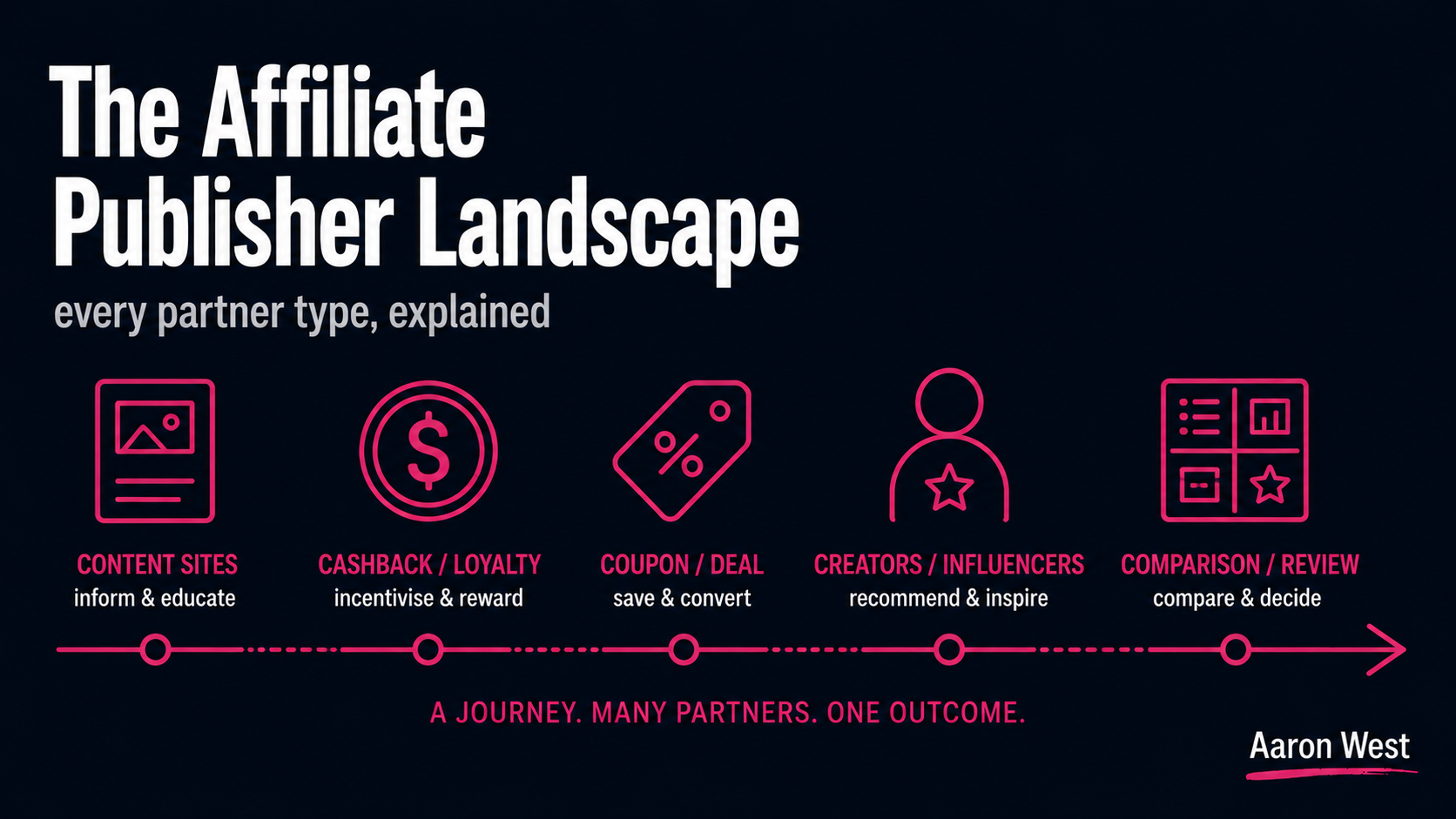
The Affiliate Publisher Landscape: Every Partner Type, Explained
"Affiliate" covers wildly different kinds of partner, content sites, cashback platforms, coupon sites, influencers, comparison engines, and the single most important thing to understand is that they do fundamentally different jobs. Some genuinely introduce new customers to your brand; others mostly intercept customers who were…
Continue reading...