Attribution Models, Explained Honestly: Last-Click, First, Linear, Data-Driven

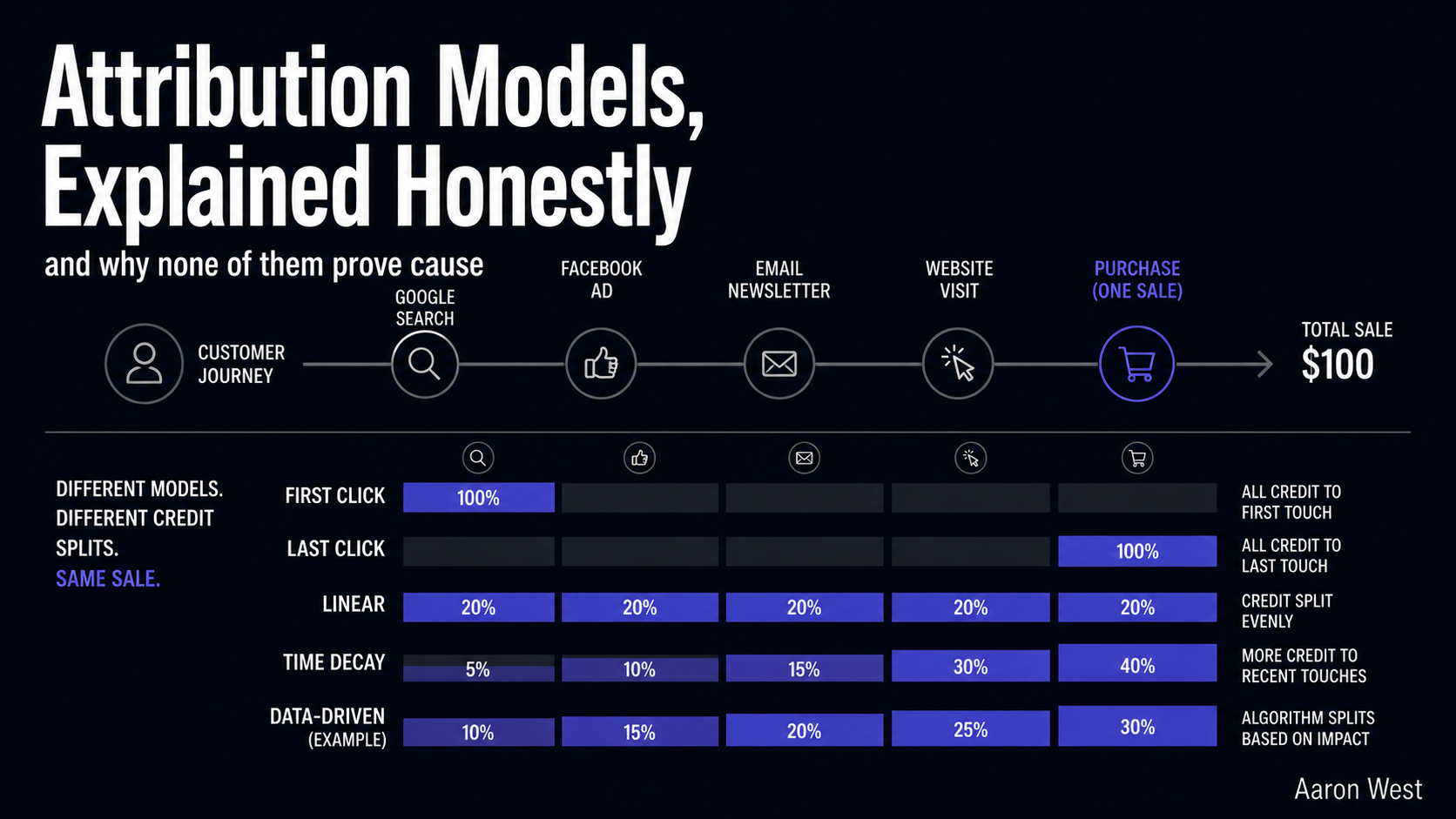
Table of Contents
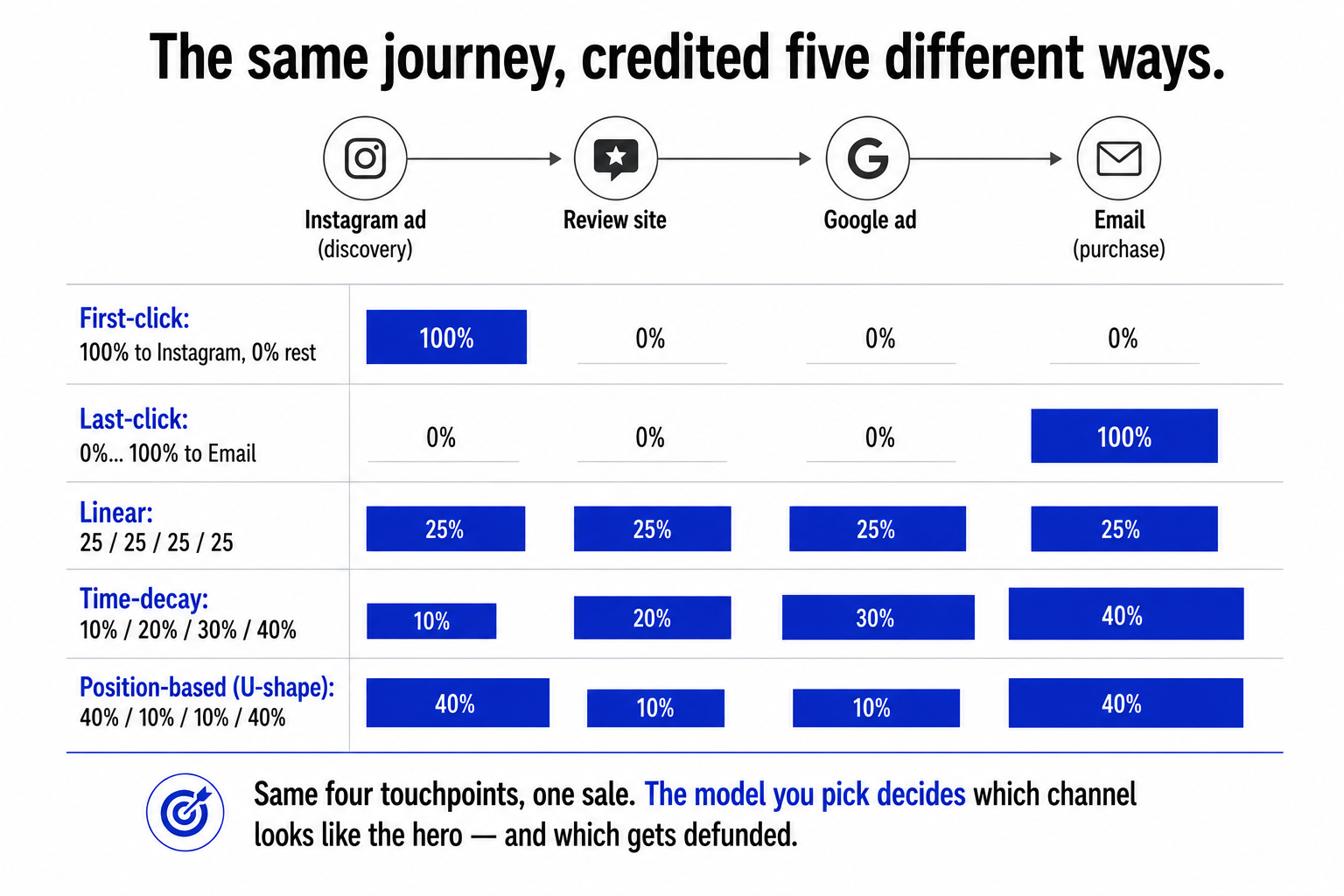
An attribution model is simply a rule for deciding which marketing touchpoint gets credit for a sale, and the uncomfortable truth is that every one of them is, to some degree, a guess. A customer might see your Instagram ad, read a review, click a Google ad a week later, and finally buy after an email reminder. Four touchpoints, one sale. Attribution models are the different rules for splitting the credit between them, and the model you pick can completely change which channel looks like your hero and which looks like dead weight. Pick the wrong one, or trust any single one too much, and you will defund the channel that is actually driving your growth.
This is the conceptual heart of the performance marketing pillar, because attribution sits underneath everything: your ROAS, your channel reports, your budget decisions all depend on how you assign credit. (I have written the affiliate-specific version of this separately, because in affiliate, changing the credit changes who you pay; here I am explaining the models themselves.) Let me walk through the main attribution models in plain terms, what each one credits and where each one lies, the big shift that happened to them recently, and the honest conclusion most guides avoid: there is no single right model, and the ones that split credit by a rule do not actually prove anything caused anything.
The single-touch models: simple and badly skewed
The simplest models give 100% of the credit to one touchpoint, and their appeal is that they are easy to understand and easy to track. Their problem is that real customer journeys have many touchpoints, so crediting one means ignoring all the others.
Last-click (last-touch) gives all the credit to the final interaction before the purchase. It is the most common default, and it systematically over-credits the closers and ignores the openers. The email that nudged a ready-to-buy customer over the line gets full credit; the social ad that first introduced them weeks earlier gets nothing. Last-click makes bottom-of-funnel channels look brilliant and top-of-funnel channels look worthless, which is exactly how businesses end up defunding the awareness work that fills the funnel in the first place. This is the same distortion I describe in affiliate, where last-click overpays the interceptors and underpays the demand-creators.
First-click (first-touch) does the opposite: all the credit to the first interaction, the one that introduced the customer. It spotlights your awareness channels and is useful if your main question is "what brings new people in." But it ignores everything that happened after the introduction, the nurturing, the reminders, the final push, so it over-credits discovery and is blind to what actually closes the deal.
Both single-touch models share the same flaw: they take a multi-step journey and pretend one step was the whole story. They are not wrong so much as wilfully partial, and the danger is forgetting that. A last-click report is not "the truth about what drove sales." It is "the truth about what closed sales," which is a much narrower and more misleading thing.
The multi-touch rule-based models: fairer, still fixed
The next family tries to fix the single-touch problem by spreading credit across all the touchpoints. More realistic, but they still follow a fixed rule that does not adapt to your actual customers.
Linear splits the credit equally across every touchpoint. Four touches, 25% each. It is the most "balanced" model and useful for getting a fairer picture of which channels are involved at all. Its flaw is that it treats every touch as equally important, when they obviously are not, a fleeting ad impression gets the same credit as a high-intent click on a comparison page. Equal is not the same as fair.
Time-decay gives more credit to touchpoints closer to the purchase, less to earlier ones. The logic is that recent interactions had more influence on the final decision. It works well for shorter, momentum-driven journeys. Its weakness is the mirror image of first-click's strength: it undervalues the early discovery channels that did the hard work of bringing the customer into the journey at all, just because they happened first.
Position-based (U-shaped), often the 40-20-40 model, gives 40% each to the first and last touch and splits the remaining 20% across the middle. It is a sensible compromise that values both the channel that introduced the customer and the one that closed them, while still acknowledging the nurture in between. Its limitation is honest and important: the 40-20-40 split is a predetermined assumption, not a discovery about your business. It might be right. It might not. The model cannot tell you which.
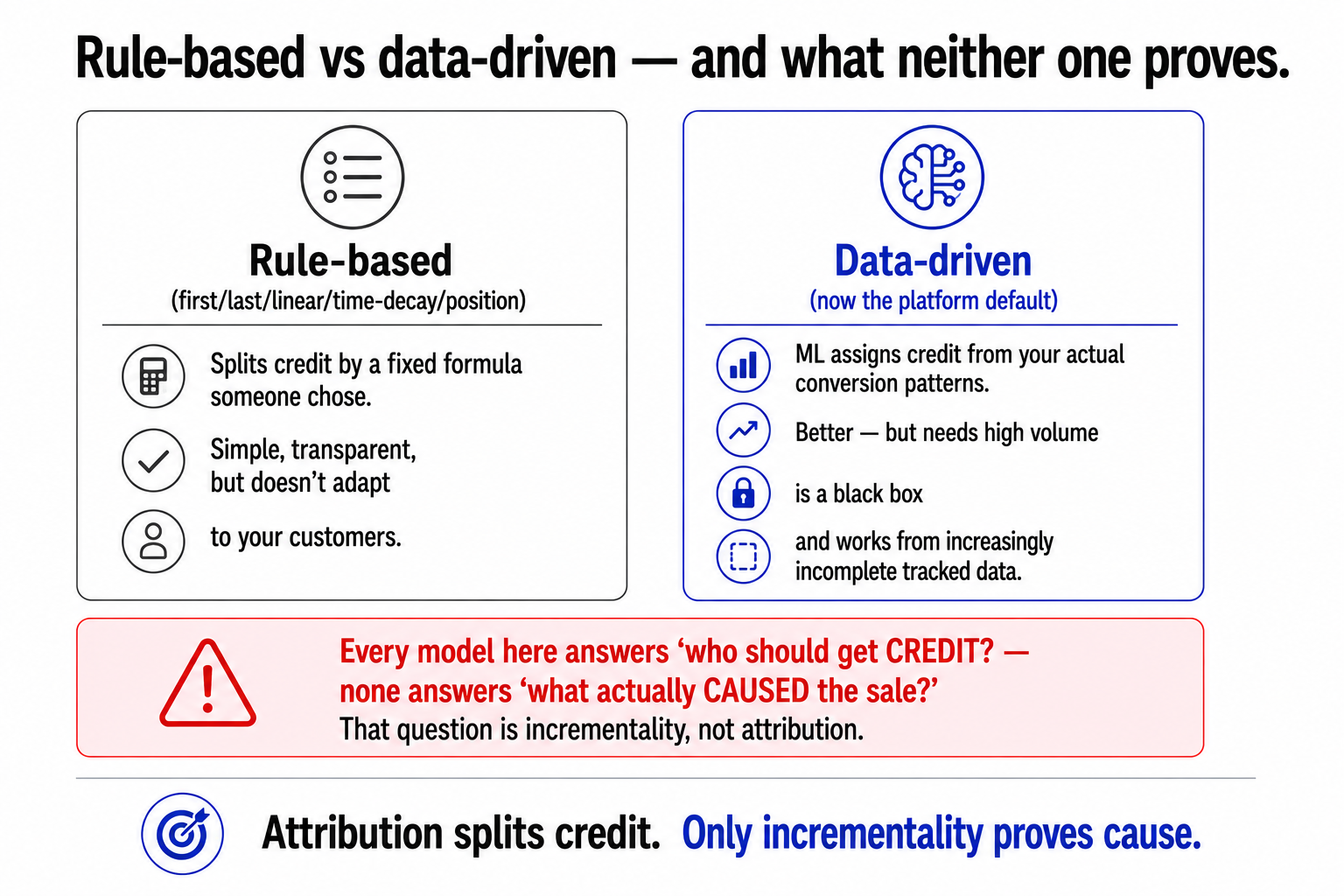
The thread through all three: they are fairer than single-touch, but they are still rules someone made up, applied uniformly regardless of how your customers actually behave. They distribute credit by formula, not by evidence.
Data-driven attribution: better, and not magic
The newest approach, and now the default in the major ad platforms, abandons fixed rules entirely. Data-driven attribution uses machine learning to analyse your actual conversion paths and assign credit based on the statistical patterns it finds, rather than a predetermined split. In principle this is a real improvement: instead of assuming the first and last touch deserve 40% each, it looks at what actually correlates with conversions in your data and credits accordingly. It is why the major platforms deprecated the rule-based models, around late 2023 Google removed first-click, linear, time-decay, and position-based from its tools and shifted those conversions to data-driven, leaving essentially data-driven and last-click as the options.
But "data-driven" is not a synonym for "true," and the honest caveats matter. First, it needs volume: with too few conversions, the model has too little data to find reliable patterns, and its results become noisy and unstable, so smaller accounts may get worse answers from it than from a simple rule. Second, it is a black box: the platform tells you the credit but not really why, which makes it hard to sanity-check and easy to over-trust. Third, and most important, it still has the same fundamental limit as every other model: it works from correlation in tracked data, and tracked data is increasingly incomplete (the privacy and tracking-loss problems) and conflated with the platform's own incentive to credit itself. Data-driven attribution is the best of the credit-splitting models. It is still a credit-splitting model.
The honest conclusion: there is no "best" model
Here is what most attribution guides will not tell you plainly, and what years of staring at these reports has taught me: there is no single best attribution model, and asking "which model is correct" is the wrong question. The right question is "which model best fits the decision I am trying to make." If you want to understand what brings new customers in, first-touch is informative. If you want to know what closes deals, last-click tells you. If you want a balanced view for budgeting, position-based or data-driven helps. Each model is a different lens, useful for a different question, and misleading if you forget which question it answers.
So the genuinely useful practice is not picking the one true model. It is comparing several and watching where they agree and disagree. When last-click and data-driven both say a channel is strong, that is a confident signal. When a channel looks brilliant in last-click but poor in multi-touch, it is probably an interceptor taking credit for sales other channels drove, and you should be suspicious, not impressed. The divergence between models is where the insight lives, because it reveals each channel's real role in the journey rather than a single flattering number.
And the deepest point, the one that connects this to everything else in the pillar: attribution answers "who should get credit," but it never answers "what actually caused the sale." Every model on this page, even the clever machine-learning one, is dividing up credit for conversions that were going to be counted anyway. None of them tells you whether a sale would have happened without that touchpoint, which is the only question that truly matters for deciding where your next euro goes. That question, incrementality, is a different discipline, the one underneath the ROAS critique, and it is measured by experiments (turning a channel down and seeing what happens), not by splitting credit. Attribution is useful and worth doing well. Just never mistake a credit-splitting rule for proof of cause. The model tells you a story about your data. Whether that story is true is a question no attribution model can answer.
A few common questions
What is an attribution model? An attribution model is a rule for deciding which marketing touchpoint gets credit for a conversion when a customer interacted with several before buying. For example, a shopper might see a social ad, read a review, click a search ad, and convert from an email, four touchpoints, one sale. The attribution model decides how to split the credit among them, and the choice dramatically changes which channels look effective and therefore where you spend your budget.
What's the difference between last-click and data-driven attribution? Last-click gives 100% of the credit to the final touchpoint before the purchase, simple, but it over-credits closing channels and ignores everything that introduced and nurtured the customer. Data-driven attribution uses machine learning to assign credit based on patterns in your actual conversion data rather than a fixed rule, which is more sophisticated but needs high conversion volume to be reliable, acts as a black box, and still depends on increasingly incomplete tracked data. The major ad platforms have largely deprecated the older rule-based models in favour of data-driven and last-click.
Which attribution model is best? There isn't one, and "which is best" is the wrong question. The right question is which model fits the decision you're making: first-touch for understanding what brings new customers in, last-click for what closes deals, position-based or data-driven for balanced budgeting. The most useful practice is comparing several models and watching where they agree (a confident signal) and where they diverge (which reveals each channel's real role). Treat each model as a lens for a specific question, not as the truth.
Does attribution tell me what caused a sale? No, and this is the most important thing to understand. Every attribution model answers "who should get credit" for conversions that were going to be counted anyway, not "would this sale have happened without that touchpoint." That second question, incrementality, is what actually matters for deciding where to spend, and it's measured by experiments (turning a channel down and observing the effect), not by any credit-splitting rule. Attribution is useful, but never mistake it for proof that a channel caused the sales it's credited with.
You should also read:
The Tracking Pixel, Explained
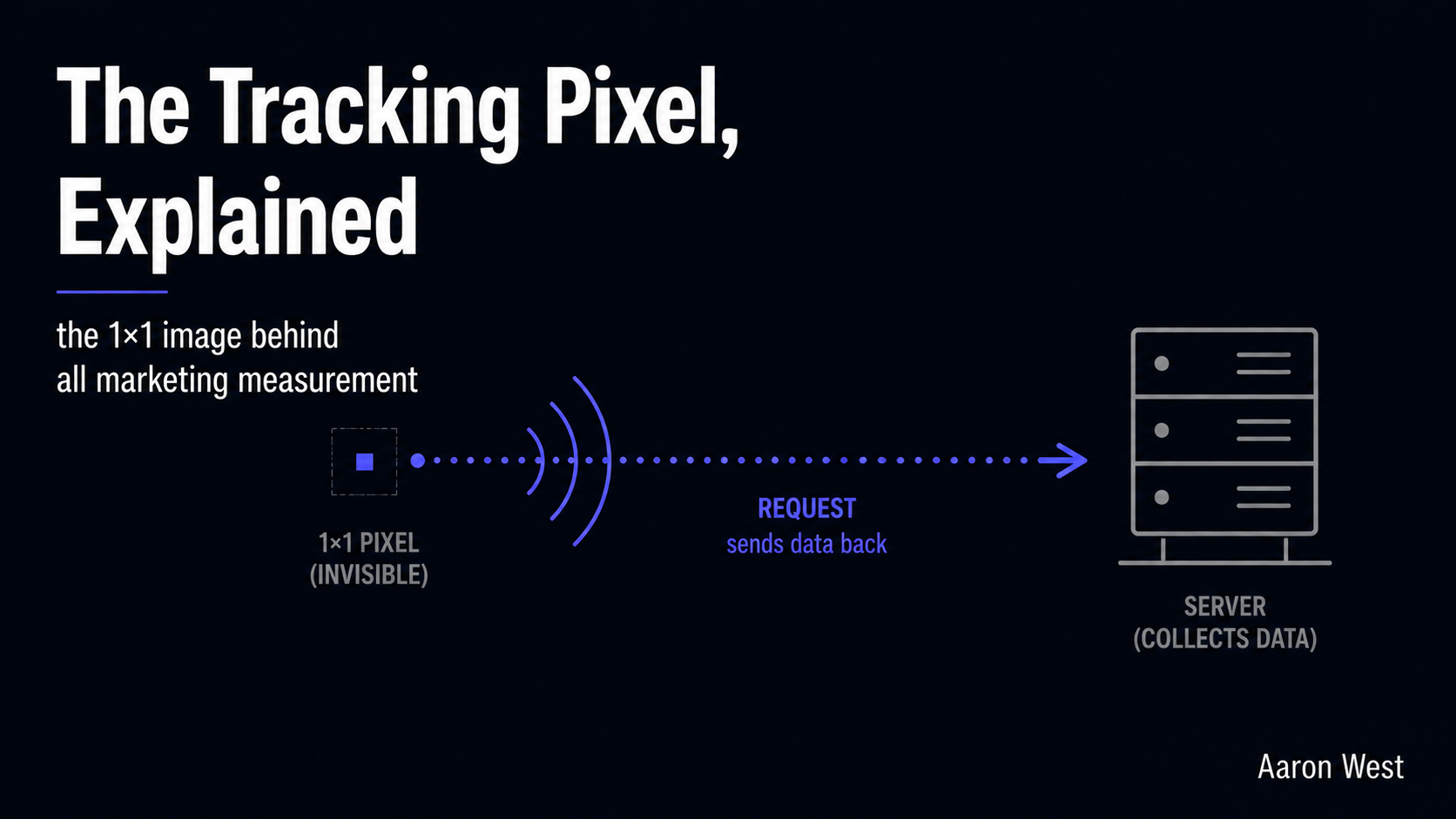
A tracking pixel is a tiny, invisible image, usually a single transparent dot one pixel wide, hidden in the code of a web page, email, or ad, and its only job is to quietly report back when something happens. When the page loads, the pixel…
Continue reading...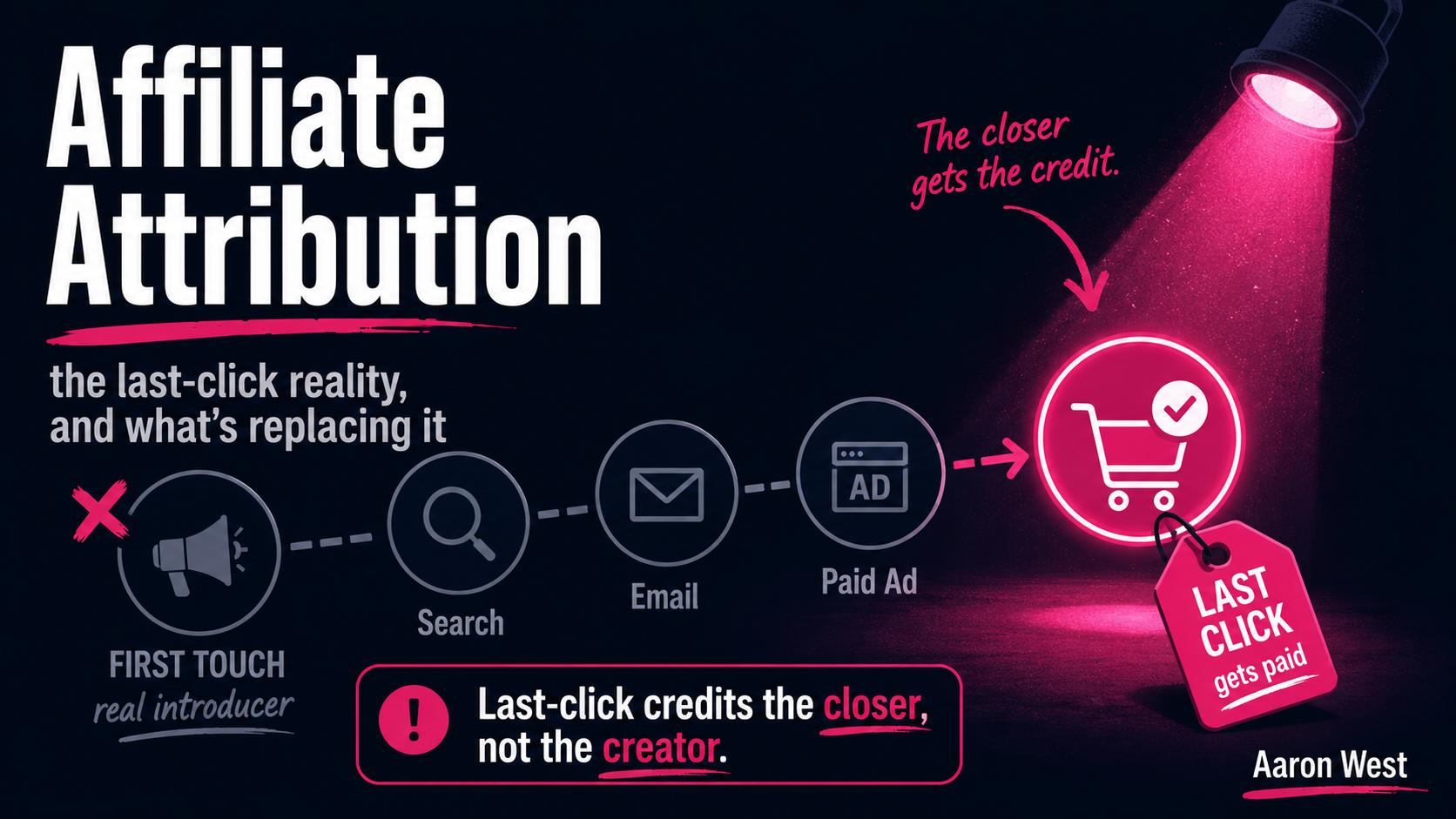
Attribution for Affiliate: The Last-Click Reality and What's Replacing It
Affiliate attribution is the rule that decides which affiliate, and which touchpoint, gets credit for a sale, and for most of the channel's history that rule has been brutally simple: last click wins. Whoever set the last click before purchase takes 100% of the credit…
Continue reading...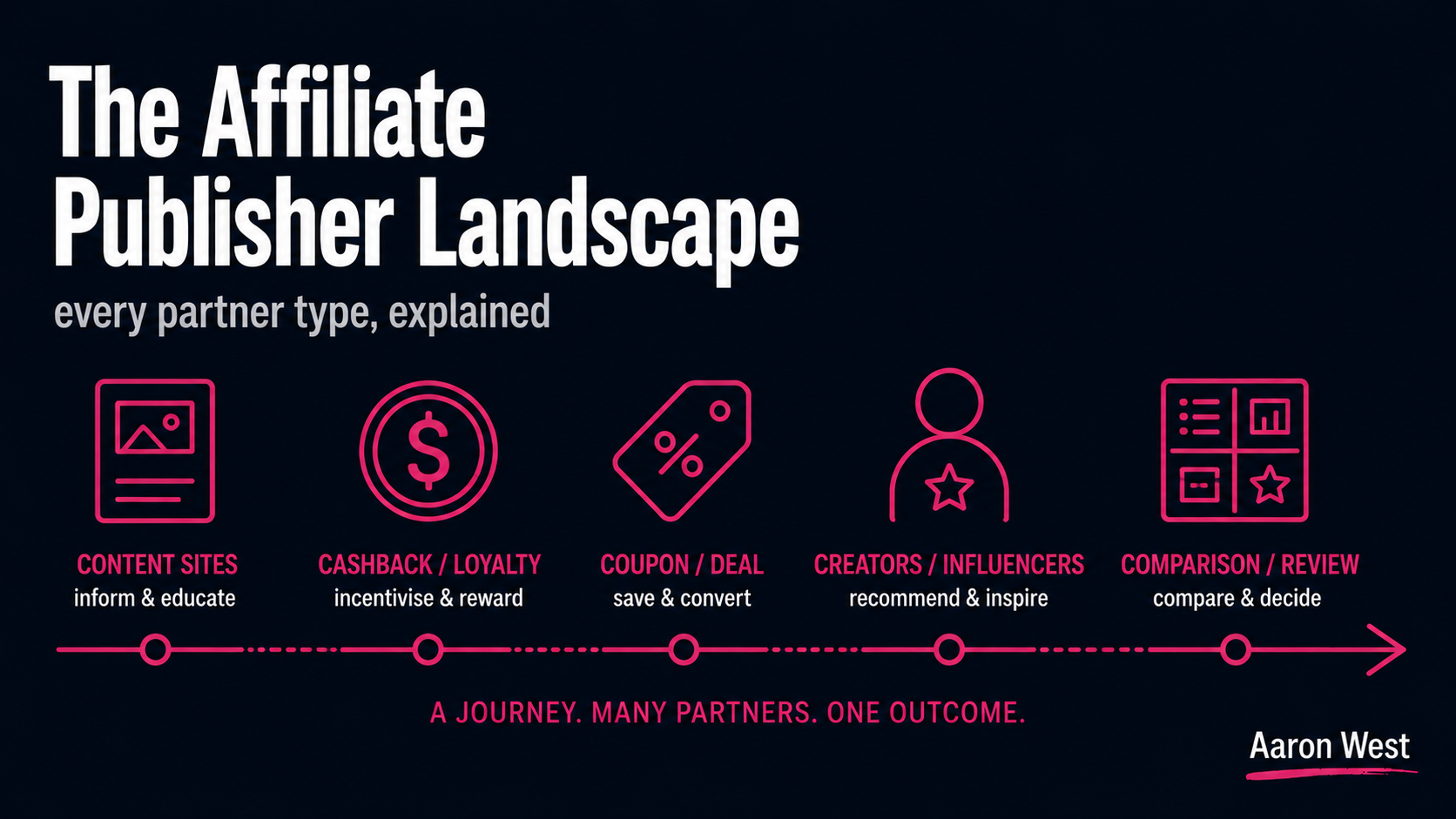
The Affiliate Publisher Landscape: Every Partner Type, Explained
"Affiliate" covers wildly different kinds of partner, content sites, cashback platforms, coupon sites, influencers, comparison engines, and the single most important thing to understand is that they do fundamentally different jobs. Some genuinely introduce new customers to your brand; others mostly intercept customers who were…
Continue reading...