Attribution for Affiliate: The Last-Click Reality and What's Replacing It

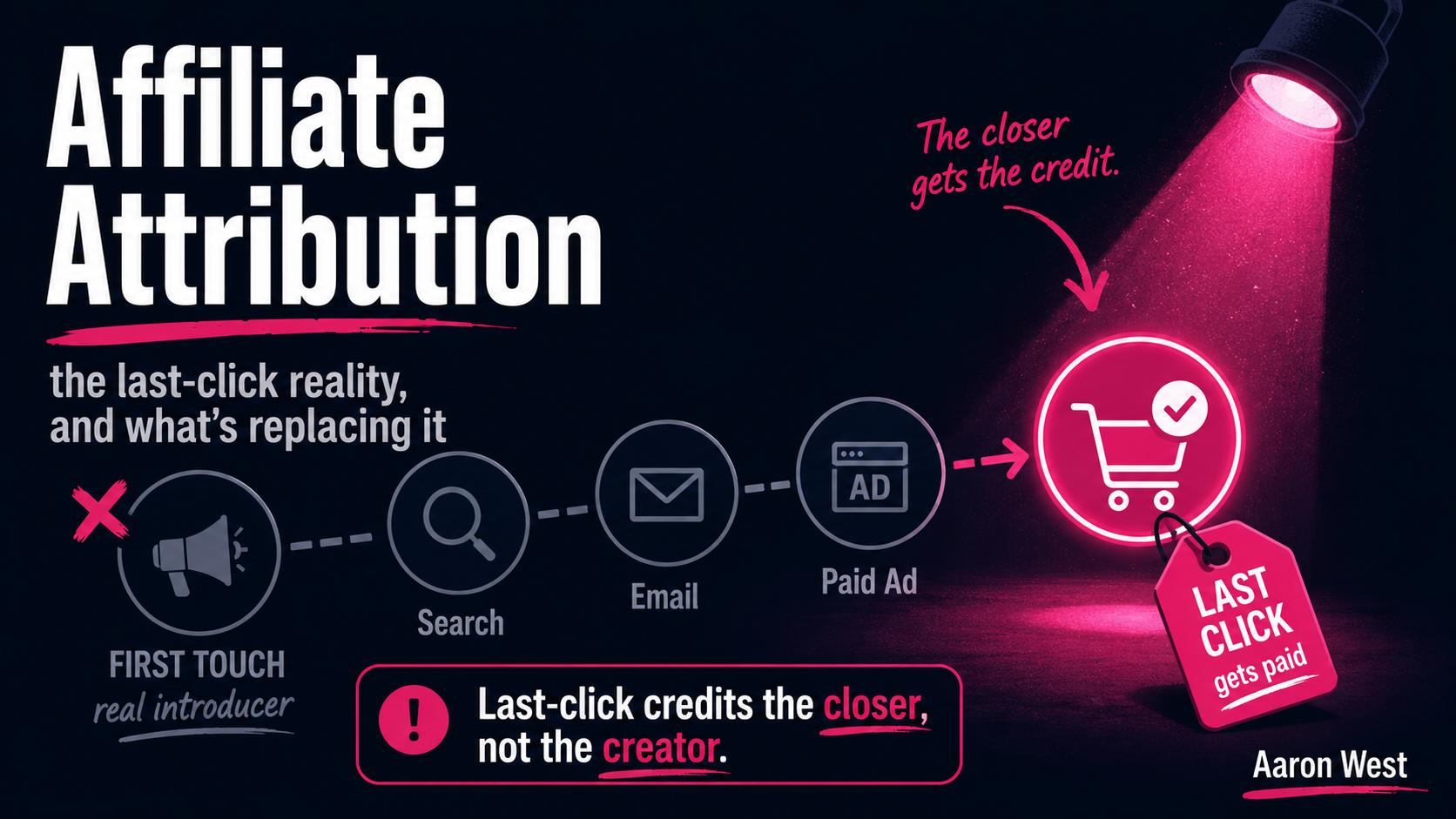
Affiliate attribution is the rule that decides which affiliate, and which touchpoint, gets credit for a sale, and for most of the channel's history that rule has been brutally simple: last click wins. Whoever set the last click before purchase takes 100% of the credit and the commission, and everyone else who helped gets nothing. That simplicity is why affiliate runs on it, and it is also why the channel systematically over-rewards the partners nearest the checkout and under-rewards the ones who actually introduced the customer. What is replacing it is not a different single model so much as a different question: not "who was last?" but "who actually created this sale?"
This is the analytical companion to deduplication, and the distinction between them is worth restating because it is the root of most confusion: dedup is the payment rule (which one partner gets the cheque), attribution is the understanding (how much each touchpoint really contributed). You can, and many programmes do, keep a simple payment rule while measuring with a smarter attribution lens. This piece explains how affiliate attribution actually works, why last-click became the default and where it fails, the models replacing it, and the honest, pragmatic position a practitioner should take. It is part of the broader affiliate guide.
Why affiliate runs on last-click (and why that's not crazy)
Start with why the default is the default, because it is not simply laziness. Affiliate is a performance channel: partners are paid per conversion, which means you need a clear, unambiguous, defensible rule for who triggered the payment. Last-click delivers exactly that. It is simple to implement, simple to explain to a partner, and it leaves no argument about who gets paid, the last click is a fact, not a judgment. The whole affiliate infrastructure, networks, cookies, tracking, grew up around it for that reason.
So last-click is not crazy as a payment mechanism. A performance channel needs a decisive rule, and "last click before purchase" is about as decisive as it gets. The trouble starts the moment you mistake that payment rule for a measurement of value, because as a measure of who actually drove the sale, last-click is not just imperfect, it is systematically biased in one direction. Understanding that bias is the whole point.
Where last-click fails: it credits the closer, not the creator
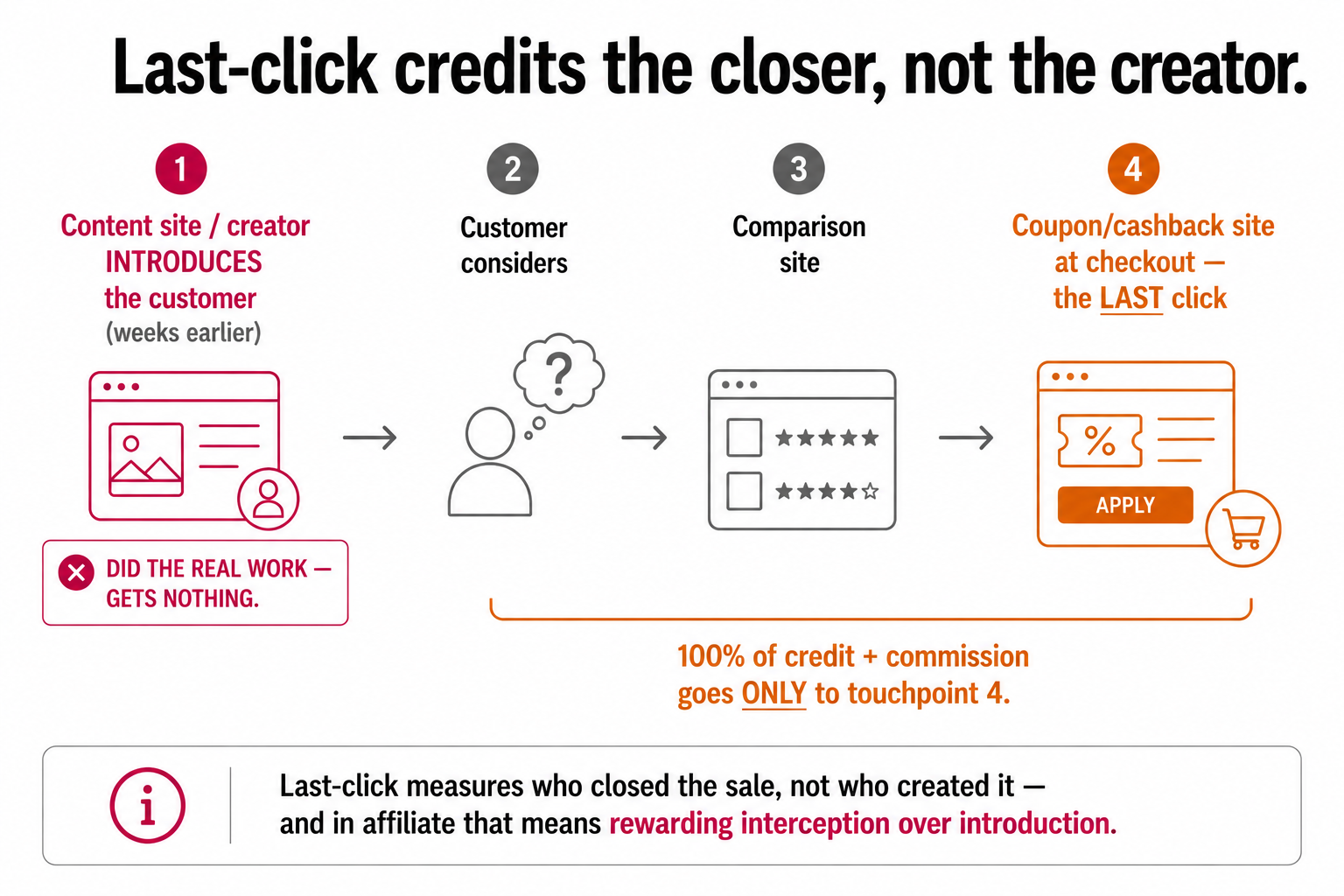
Last-click assigns 100% of the credit to the final touchpoint and ignores every interaction that came before, all the awareness, consideration, and influence that actually moved the customer toward buying. In a world where a typical purchase now involves several touchpoints before conversion, crediting only the last one means you are measuring who closed the sale, not who created it. Those are very different things, and conflating them quietly distorts every decision you make about your programme.
In affiliate specifically, this bias has a predictable shape, and it maps exactly onto the publisher types. The partners who tend to be the last click are the bottom-of-funnel ones: coupon sites the customer visits to find a code right before checkout, cashback platforms they route through at the final moment. Last-click hands these partners full credit, even when the customer had already decided to buy. Meanwhile the content site or creator who introduced the customer weeks earlier, the genuine source of the demand, gets nothing, because they were not the last touch. So last-click does not just fail to measure value neutrally. It actively transfers credit from the partners who create demand to the partners who intercept it, which is exactly backwards from what you want to reward. Pay and optimise on that signal and you will keep over-investing in interception and starving introduction, slowly hollowing out the part of the programme that actually grows the business.
The models that are replacing it
If last-click over-credits the closer, the fix is to spread credit in a way that reflects real contribution. The main alternatives, framed for affiliate:
- First-click. 100% to the first affiliate that introduced the customer. The mirror image of last-click, it over-rewards introduction and ignores the closer. Useful as a corrective lens, rarely fair as a sole rule.
- Linear. Equal credit to every touchpoint in the journey. Simple and fairer than single-touch, but it treats a casual early impression and a decisive final push as identical, which they are not.
- Time-decay. More credit to touchpoints closer to the conversion, less to earlier ones. A reasonable middle ground, though it still tilts toward the closer.
- Position-based (U-shaped / W-shaped). Extra weight to the first and last touches (and key milestones in between), less to the middle. This explicitly rewards both the introducer and the closer, which often matches how affiliate journeys actually work.
- Data-driven attribution (DDA). Machine learning analyses many converting and non-converting journeys and assigns fractional credit based on each touchpoint's actual measured contribution, rather than a fixed rule. The most sophisticated approach, and where the broader industry is heading, but it needs significant conversion volume to work and is harder to apply cleanly to affiliate payouts.
These are the same models used across all of performance marketing (I cover the general version in the performance attribution piece). But there is a catch unique to affiliate, and it is the reason the channel has been slow to move: in most channels, attribution just changes a report. In affiliate, changing the credit rule changes who you actually pay. Splitting credit across five touchpoints means, in principle, paying five partial commissions, and partners expect clear, predictable rules about what earns them money. That operational reality is why full multi-touch attribution remains rare in affiliate even as it becomes standard elsewhere.
The real answer for affiliate: incrementality
Here is the move that matters most, and it is not, strictly, an attribution model at all. The deepest question in 2026 is not "how do we split the credit?" but "did this partner cause a sale that would not have happened otherwise?" That is incrementality, and for affiliate it is more useful than any credit-splitting rule.
The reason incrementality beats the model debate is that it sidesteps the whole argument about how to divide credit and asks the only question that actually matters for budget: is this partner adding sales, or claiming sales you would have made anyway? A coupon site that mostly catches customers already at checkout might score huge on last-click and near-zero on incrementality, because remove it and those sales still happen. A content partner might look modest on last-click and enormous on incrementality, because remove it and the customers never show up at all. You measure it with holdout tests, comparing what happens with a partner present versus absent, and the results frequently invert what last-click told you. This is why incrementality, not a fancier attribution model, is the thing reshaping how serious programmes allocate budget. It answers the question the models only dance around.
The pragmatic position: pay simply, measure smartly
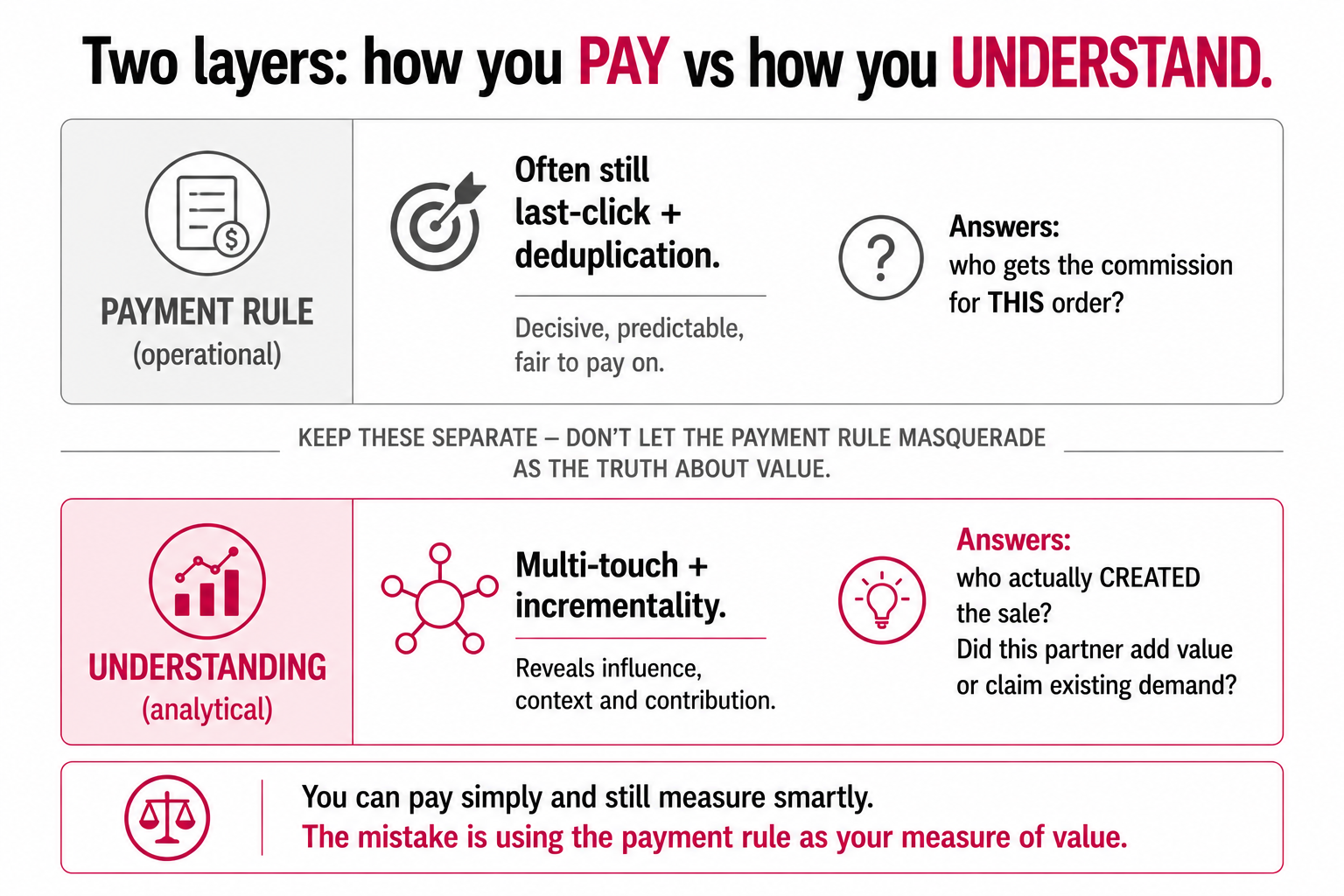
So what should a practitioner actually do? Not, in most cases, rip out last-click payment overnight, that would break the predictability partners rely on and create more problems than it solves. The honest, workable position is to separate the two layers: keep a clear payment rule (often last-click plus deduplication, because partners need to know what earns them money), but stop treating that payment rule as the truth about value. Measure separately, with multi-touch reporting and especially incrementality testing, so you understand contribution even where you still pay on last-click.
That separation is the whole insight. The payment rule answers "who gets the cheque for this order," and it can stay decisive and simple. The measurement answers "which partners are actually growing the business," and it should be as sophisticated as your data allows. When those two disagree, and they will, the measurement is what should drive your strategy: where you recruit, who you give better terms, which partners you nurture, which you quietly stop over-paying. You can even act on incrementality findings through the payment rule, by setting different commission tiers for partners you have verified as genuinely incremental versus those who mostly intercept. Pay simply, measure smartly, and let the smart measurement, not the simple payment rule, steer the programme.
That is affiliate attribution, honestly. Last-click is the historical default and a perfectly reasonable payment rule, but a badly biased measure of value, it credits the closer and robs the creator. The models that improve on it (first-click, linear, time-decay, position-based, data-driven) all try to split credit more fairly, but affiliate's payment-not-just-reporting reality keeps full multi-touch rare. The move that actually changes decisions is incrementality, asking not who was last but who was necessary. And the practitioner's discipline is to hold the payment rule and the value measurement apart, paying with a clear rule while understanding with a sharper one. Do that, and you stop letting "who clicked last" decide where your programme's money and attention go, which is the single most valuable change most affiliate programmes could make.
A few common questions
What is attribution in affiliate marketing? Affiliate attribution is the rule that determines which affiliate or touchpoint gets credit for a sale. Historically the channel runs on last-click attribution, where the affiliate whose link was clicked last before purchase receives 100% of the credit and commission. Attribution is about understanding contribution; it's distinct from deduplication, which is the rule for which single partner actually gets paid.
Why is last-click attribution a problem for affiliate programmes? Because it assigns all credit to the final touchpoint and ignores everything that came before, it measures who closed the sale, not who created it. In affiliate this systematically over-rewards bottom-of-funnel partners (coupon and cashback sites the customer hits right before checkout) and under-rewards the content sites and creators who introduced the customer earlier. Optimising on last-click slowly starves the partners who actually grow the business.
What are the alternatives to last-click attribution? First-click (credit to the introducer), linear (equal credit to all touchpoints), time-decay (more credit nearer conversion), position-based or U/W-shaped (extra weight to first and last touches), and data-driven attribution (machine learning assigns fractional credit by measured contribution). Each spreads credit more realistically than last-click, but applying full multi-touch in affiliate is hard because changing the credit rule changes who you actually pay, not just a report.
What is the best attribution approach for affiliate in 2026? Separate payment from measurement. Keep a clear payment rule (often last-click plus deduplication) so partners know what earns them money, but measure value with multi-touch reporting and especially incrementality testing, which asks whether a partner actually caused a sale that wouldn't have happened otherwise. Let the incrementality insight, not the last-click payment rule, drive recruitment, commission tiers, and budget.
You should also read:

Multilingual Support: The Reality Nobody Plans For
Supporting customers in multiple languages is not a translation problem. It's an operations problem. The naive version, translate your help articles and bolt machine translation onto the live chat, looks complete and breaks in ways that stay invisible right up until a frustrated customer is…
Continue reading...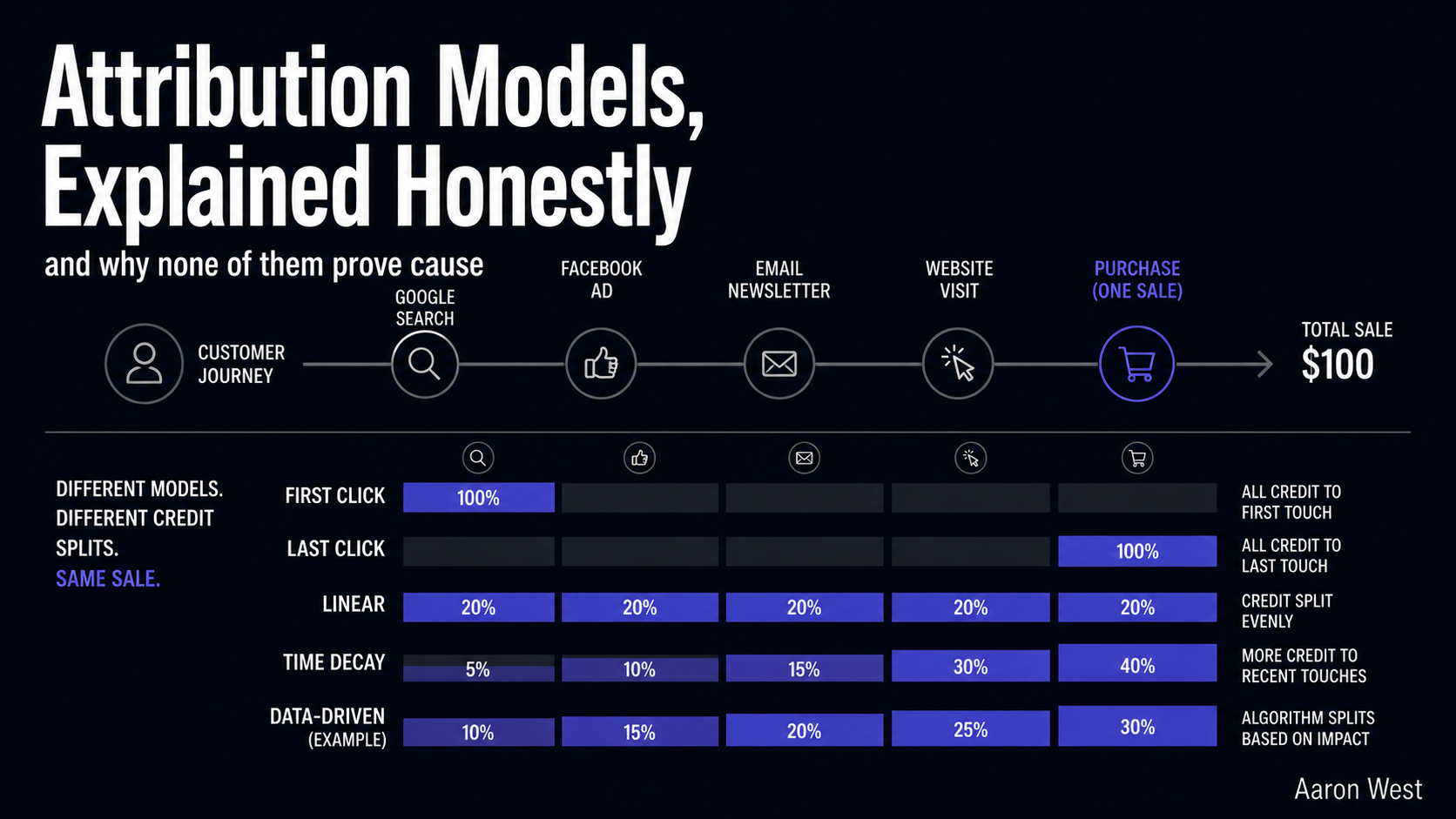
Attribution Models, Explained Honestly: Last-Click, First, Linear, Data-Driven
An attribution model is simply a rule for deciding which marketing touchpoint gets credit for a sale, and the uncomfortable truth is that every one of them is, to some degree, a guess. A customer might see your Instagram ad, read a review, click a…
Continue reading...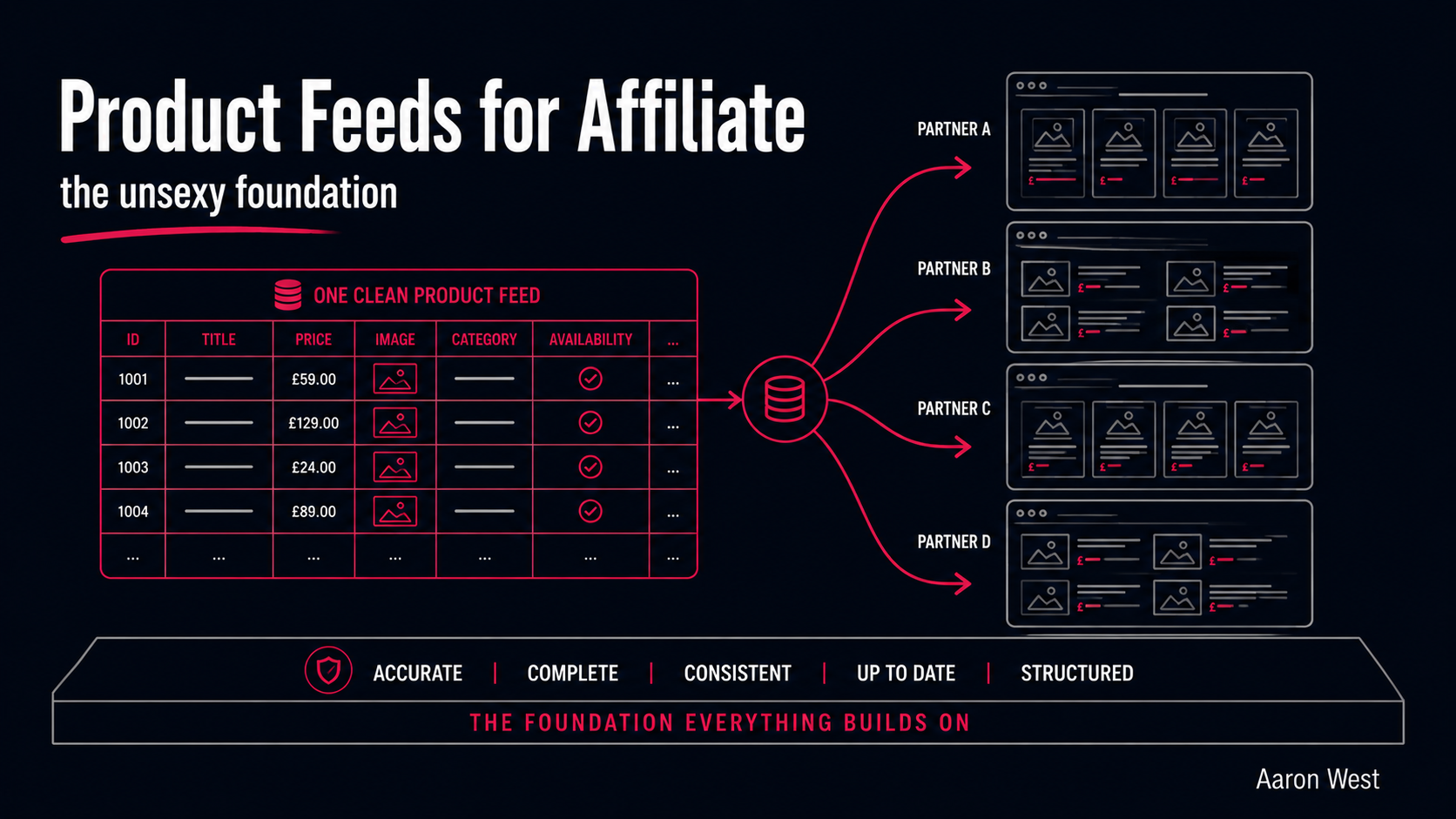
Product Feeds and Data Structure for Affiliate: The Unsexy Foundation
A product feed is a structured, regularly-updated file containing all your product information, name, price, description, image, link, availability, that your affiliate partners use to promote your products accurately. It is the least glamorous part of an affiliate programme and one of the most consequential,…
Continue reading...