Multilingual Support: The Reality Nobody Plans For

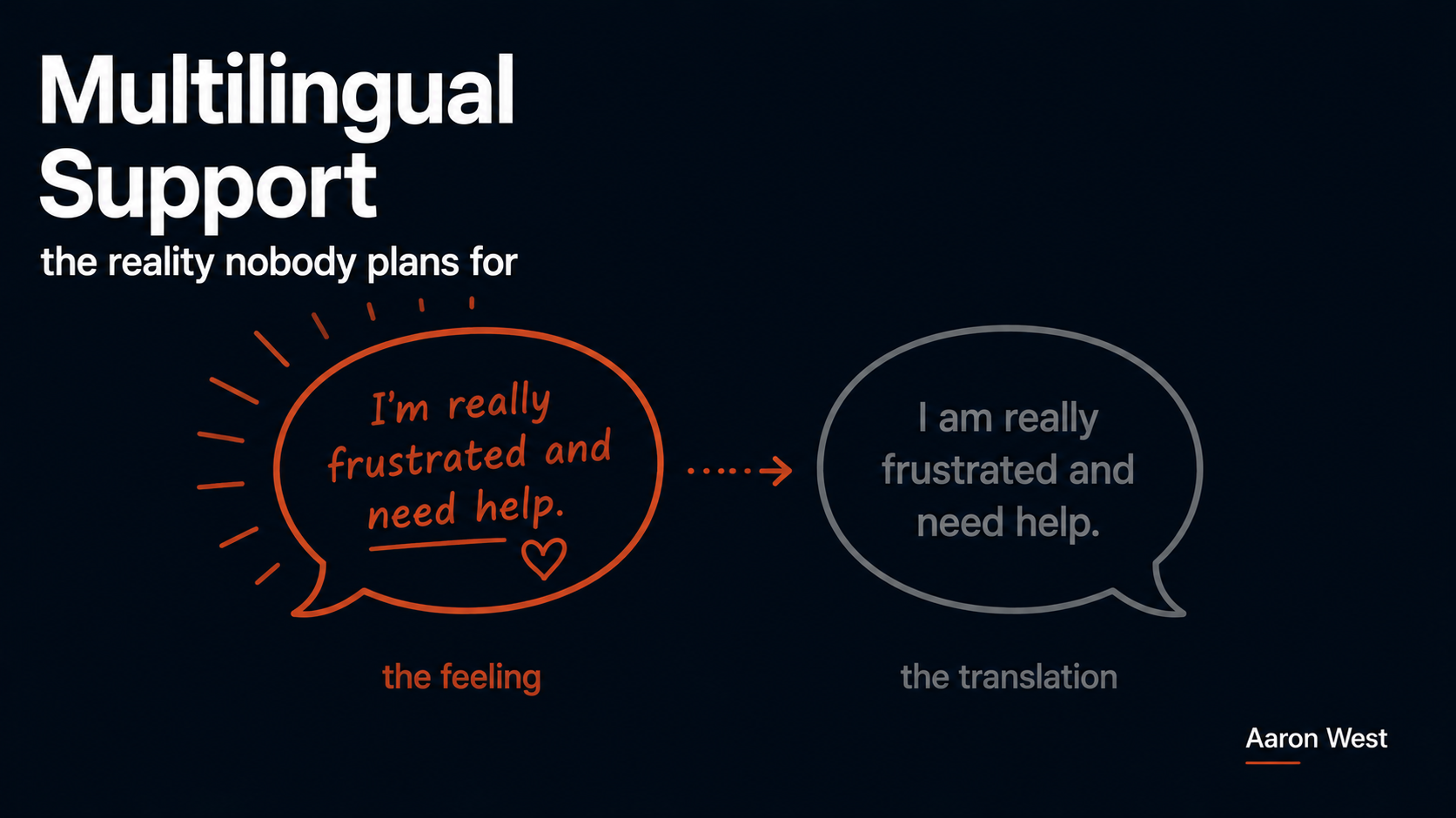
Table of Contents
Supporting customers in multiple languages is not a translation problem. It's an operations problem. The naive version, translate your help articles and bolt machine translation onto the live chat, looks complete and breaks in ways that stay invisible right up until a frustrated customer is on the other end of them. Real multilingual support means running a genuine support experience in each language you serve, tone and culture included, not the same support with the words swapped out.
This closes the Customer Service pillar, and it's the piece I'm most qualified to write, because I've done high-volume support across several languages before I moved into e-commerce and automation. It also ties straight into the Internationalisation pillar, because multilingual support is one of the most underestimated parts of going international. Here's what actually breaks, and where the line between "good enough to automate" and "needs a human who speaks the language" really sits.
The naive view, and why it's tempting
The obvious plan is cheap and scalable: translate the help centre, run machine translation on the chat and email, and declare yourself multilingual. On a slide it looks finished. Every language has coverage, the cost is low, the box is ticked.
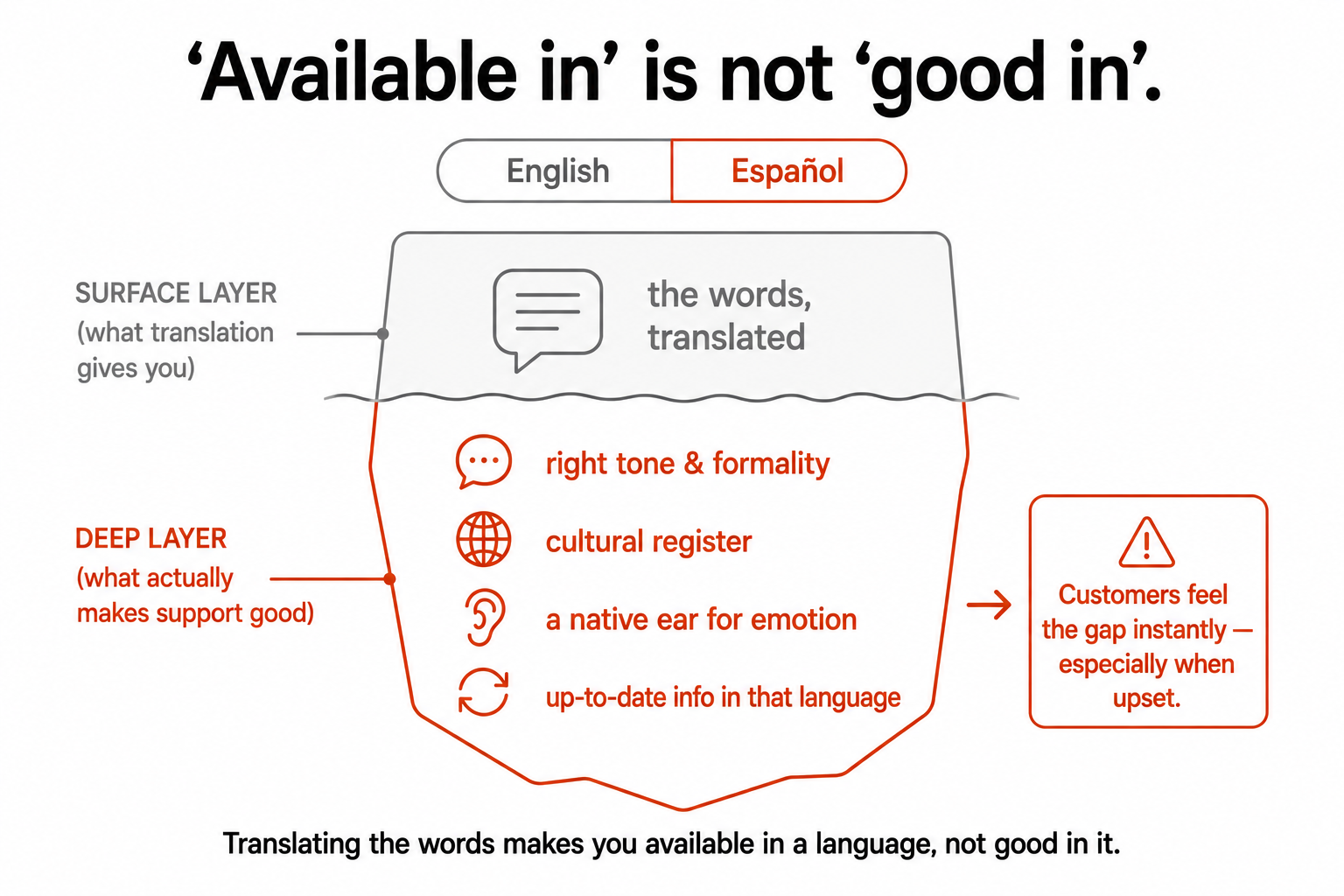
It's the same mistake as treating going international as translation, and it fails for the same underlying reason: language is the surface, and the surface is the easy part. Translating the words makes you available in a language. It does not make you good in that language, and customers feel the difference between those two things instantly, especially at the exact moments when support matters most. The gap between "available in German" and "good in German" is where multilingual support quietly loses people.
Where it actually breaks
The failures are predictable once you've lived them, and they cluster in four places:
Tone and register don't survive translation. Every language carries expectations about formality and directness that a literal translation ignores. German distinguishes the formal Sie from the informal du, and getting it wrong reads as either cold or presumptuous. A level of directness that's normal and efficient in one language lands as rude in another, and a warmth that's friendly in one reads as unprofessional somewhere else. A translation can be word-perfect and still strike entirely the wrong tone, which in support, where people are often already annoyed, makes things worse rather than neutral.
The emotional moment is where machine translation fails worst. This is the cruel part. The complaint, the high-stakes retention moment, is exactly the contact most loaded with nuance, idiom, frustration, and sometimes sarcasm, and those are precisely what machine translation handles worst. The simple "where is my order" translates fine. The upset customer explaining a tangled problem they care about is where literal translation produces something stilted or subtly wrong, at the one moment you most needed to make them feel understood. The moment that most needs to land well is the moment translation handles worst.
The operational reality nobody budgets for. Real multilingual support means staffing the languages, across time zones, with people who can actually handle the hard contacts, not just the easy ones. It means deciding honestly what to do about the long-tail languages where you genuinely can't justify a native speaker. These are staffing and operations problems, not translation problems, and they're the ones that get discovered late.
The knowledge gap that opens over time. A translated help centre goes stale in the secondary languages first. The English updates when something changes; the German, French, or Arabic versions lag, and customers in those languages quietly get worse, older information than your primary-language customers. Multilingual coverage isn't a one-time translation; it's an ongoing maintenance commitment that most teams resource for the launch and forget about afterwards.
The line: where machine translation genuinely helps
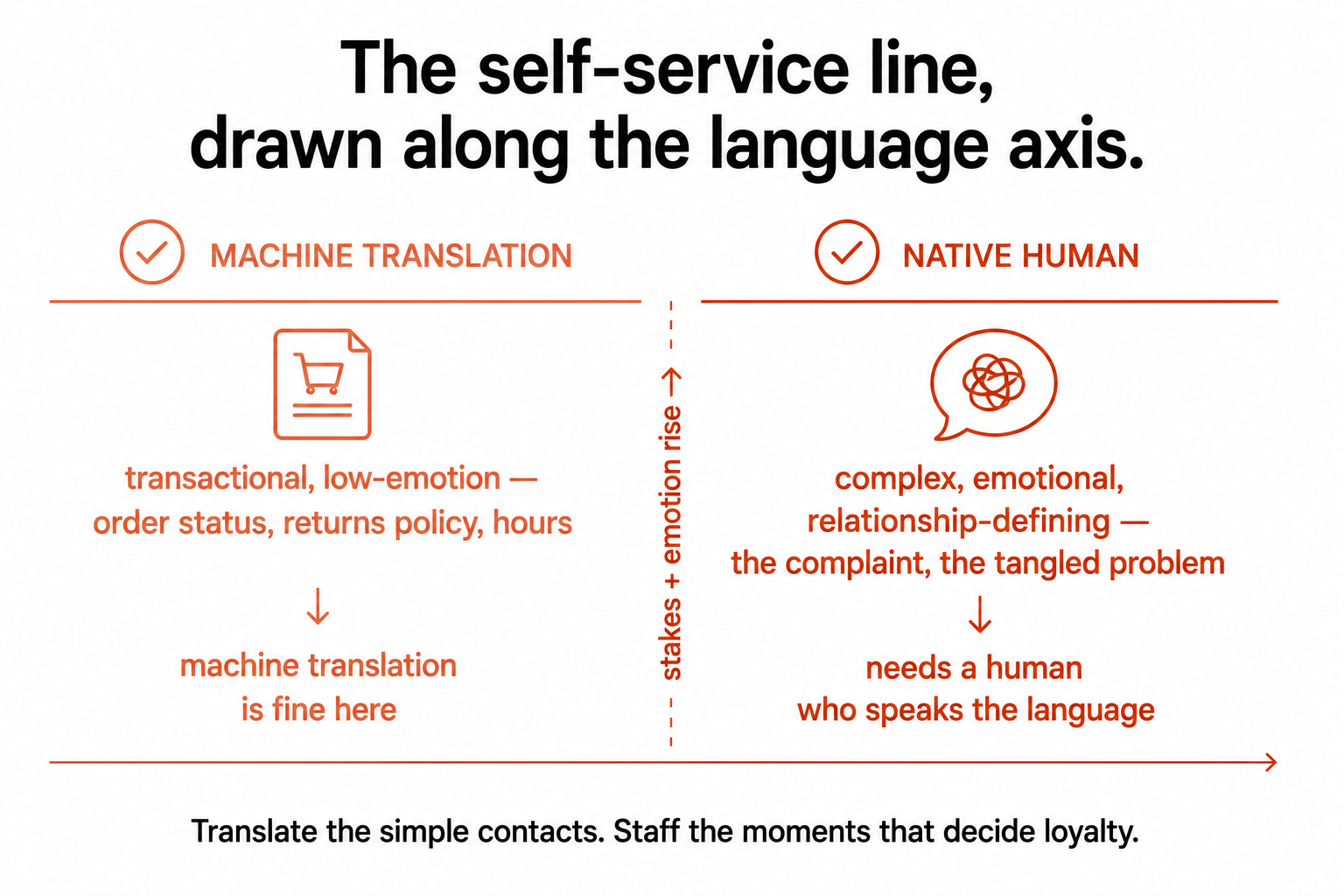
None of this means machine translation is useless. It means you have to draw the same line as self-service versus human support, except along the language axis. Some contacts are transactional and low-emotion, order status, a returns-policy question, opening hours, and for these, machine translation is genuinely fine. The stakes are low, the language is simple, and an instant translated answer beats waiting for a native speaker.
The complex, emotional, relationship-defining contacts are the other side of the line. These need a human who actually speaks the language, because what's required there, reading nuance, matching tone, making someone feel understood, is exactly what translation can't do. So the honest design isn't "machine translation everywhere" or "native speakers for everything." It's machine translation for the transactional contacts, native-speaker humans for the moments that decide loyalty, and a clear-eyed view of which is which.
Match the investment to the market
The strategic discipline here is the same one from the Internationalisation cornerstone: deep in a few languages beats thin in many. Pretending to support fifteen languages badly, with stale help content and machine-translated apologies, is worse than openly supporting five well and being honest about the rest. Customers forgive "we don't offer full support in your language yet, here's the best we can do." They don't forgive being given a cold, slightly-wrong, clearly-automated response at the moment they were upset and needed a person.
So decide where the genuine investment goes by the value of each market, support those languages properly, with native speakers on the hard contacts and maintained content, and for the rest, be honest and graceful: a clear fallback, set expectations, and machine translation used openly for what it's good at rather than disguised as full support. Honesty about a limitation costs you far less than faking a capability you don't have.
The chatbot version of this deserves a specific warning, because it's the trap of the multilingual chatbot problem. A bot that handles English well and degrades quietly in other languages is worse than no bot at all, because the degradation is invisible to the team that built it. Everyone tests it in English, it looks great, and the German or Arabic experience silently falls apart where nobody's watching.
What this comes down to
The lived version is simple: the thing that doesn't survive translation is the part that decides whether the customer feels looked after. You can translate the words perfectly and still miss the tone, the nuance, and the human read that turns a frustrated customer into a loyal one. Multilingual support is an operations and people problem wearing a translation costume, and the companies that get it wrong are almost always the ones that mistook "available in that language" for "good in that language."
A customer who's angry in their own language doesn't want a translated apology. They want to feel understood, and feeling understood is the one thing translation can't fake. Support the languages you serve properly, draw the machine-translation line honestly, and be straight about the ones you can't yet do well. That's the whole discipline, and it's worth far more than a flag dropdown that promises a quality you can't deliver.
A few common questions
Is multilingual support just a translation problem? No. It's an operations and people problem. Translating your help content and adding machine translation makes you available in a language, but not good in it. Real multilingual support means handling tone, cultural register, the emotional nuance of difficult contacts, the staffing and time-zone reality, and the ongoing maintenance of content in each language, none of which is solved by translation alone.
Where does machine translation work in support, and where doesn't it? It works for transactional, low-emotion contacts, order status, returns policy, opening hours, where the language is simple and an instant translated answer beats waiting. It fails on the complex, emotional, relationship-defining contacts like a serious complaint, where nuance, idiom, and tone matter and a literal translation lands wrong at exactly the moment that most needs to feel human. Draw the line along stakes and emotion.
Should we support every language our customers speak? Usually no, not all of them properly. Deep support in a few languages beats thin, badly-machine-translated coverage in many. Pretending to support fifteen languages with stale content and automated apologies is worse than supporting five well and being honest about the rest. Match the investment to the value of each market, and use a clear, honest fallback for the languages you can't yet do well.
Why is a multilingual chatbot risky? Because it can degrade silently in the languages the team doesn't speak. A bot tested and tuned in English may look excellent while the German, French, or Arabic experience quietly falls apart where nobody is watching. The degradation is invisible to its builders, which makes it worse than no bot in those languages, since customers hit a broken experience that the company believes is working.
You should also read:
Self-Service vs Human Support: Where Each Actually Belongs
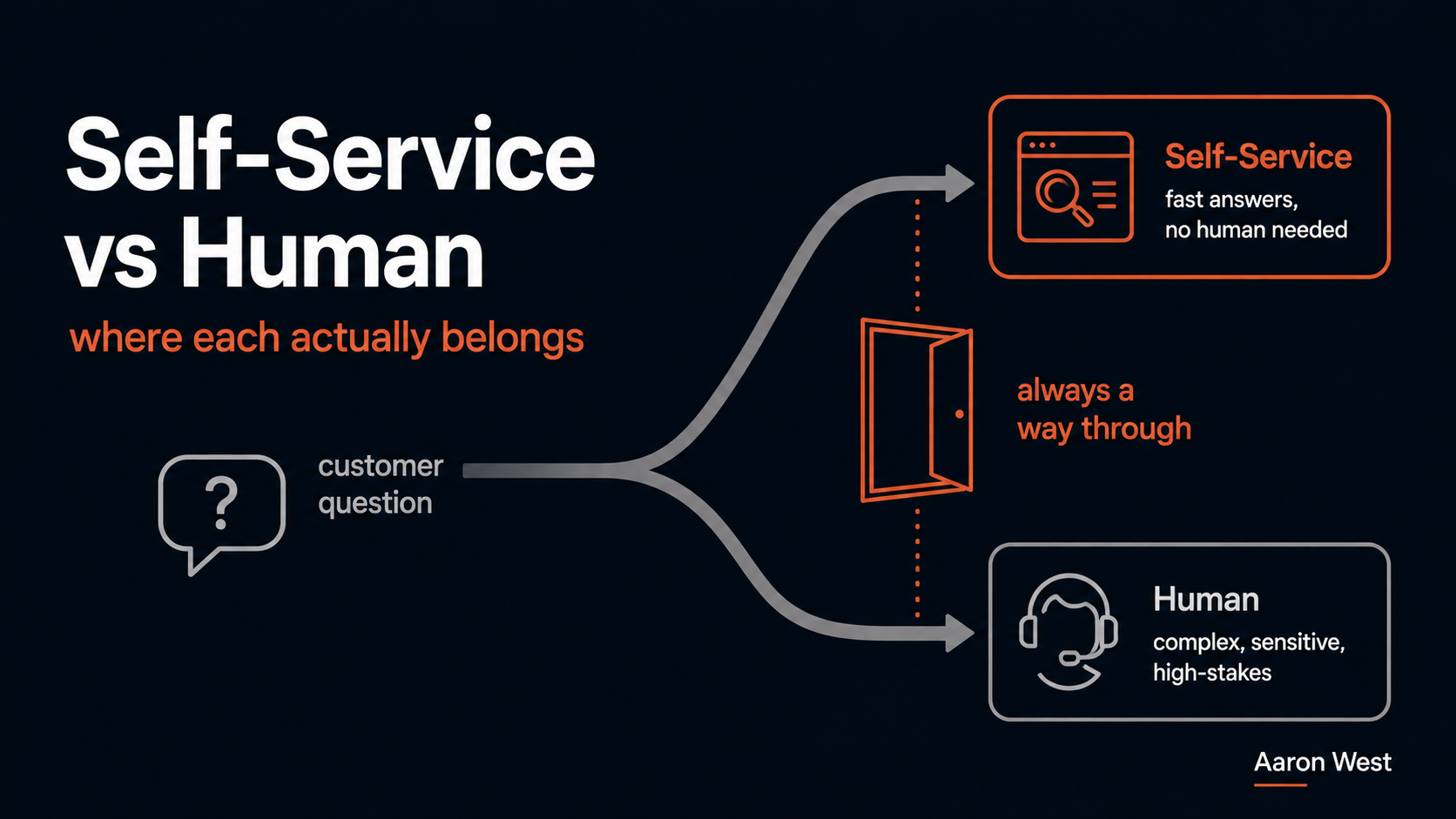
Self-service should handle the questions that don't need a human, so that humans are free for the ones that do. That's the whole rule, and almost every mistake in this area comes from breaking it in one of two directions: putting a human on work…
Continue reading...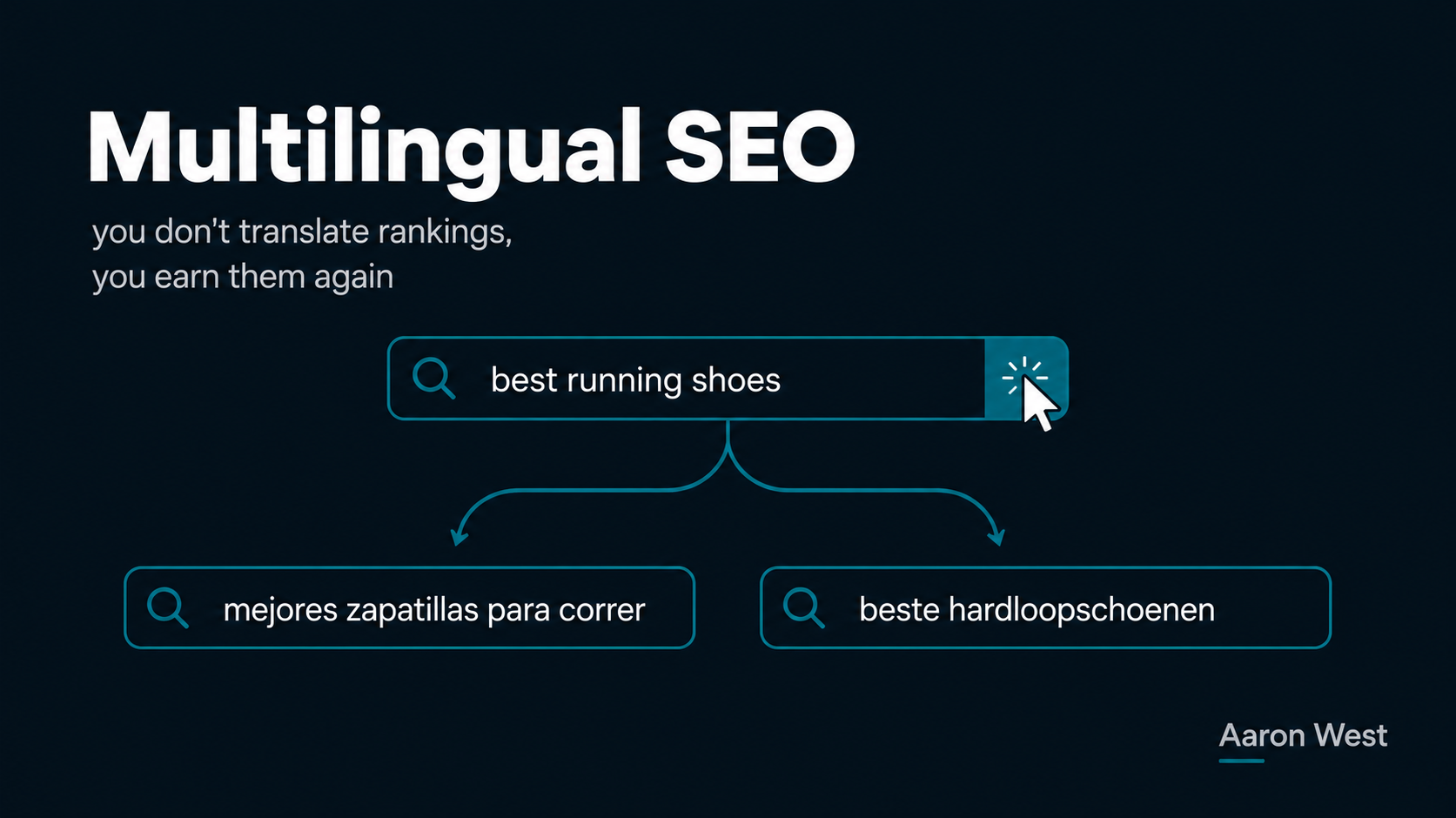
Multilingual SEO: You Don't Translate Rankings, You Earn Them Again
Multilingual SEO is not translating your existing rankings into another language. It's earning new rankings, in a new market, where people search with different words, different intent, and different competitors. Translate your pages and you'll often end up ranking for the literal translation of your…
Continue reading...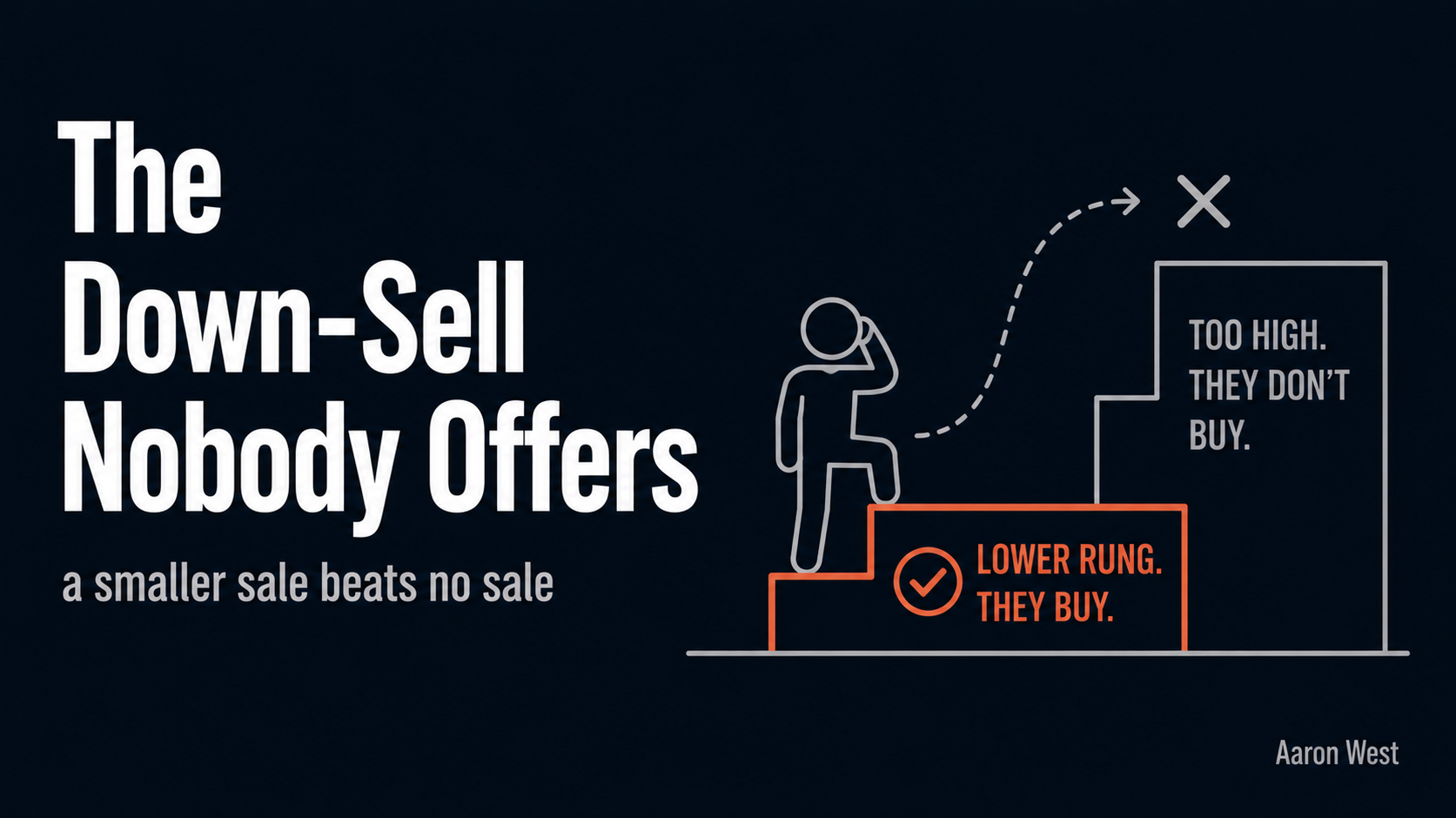
The Down-Sell Nobody Offers (and Why It Saves the Sale)
Almost every online store has an upsell. Almost none have a down-sell. We pour energy into getting customers to spend more, the upgrade, the add-on, the bundle, and we completely ignore the move that saves the sale when a customer is about to spend nothing.
Continue reading...