Multilingual SEO: You Don't Translate Rankings, You Earn Them Again

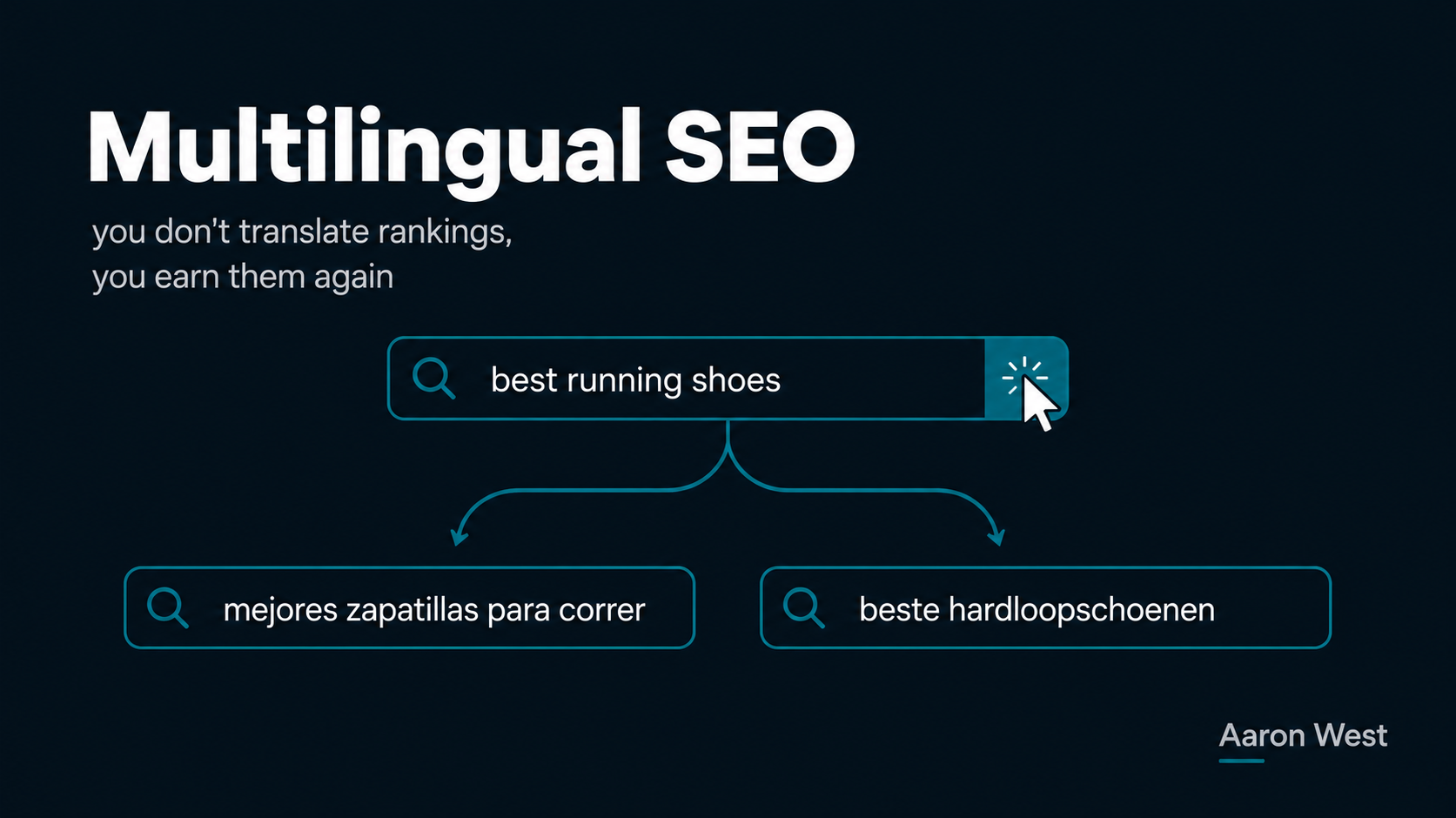
Table of Contents
Multilingual SEO is not translating your existing rankings into another language. It's earning new rankings, in a new market, where people search with different words, different intent, and different competitors. Translate your pages and you'll often end up ranking for the literal translation of your home keywords, which is frequently not what anyone in that market actually types into a search box.
This is the discoverability dimension from the internationalisation cornerstone, and it trips up even teams who did the rest of the localisation well. Ranking and being found at home buys you nothing abroad. Each market is a fresh search landscape, and you have to earn your place in it from scratch. Here's what that actually takes, in plain terms.
The mistake that quietly wastes the whole effort
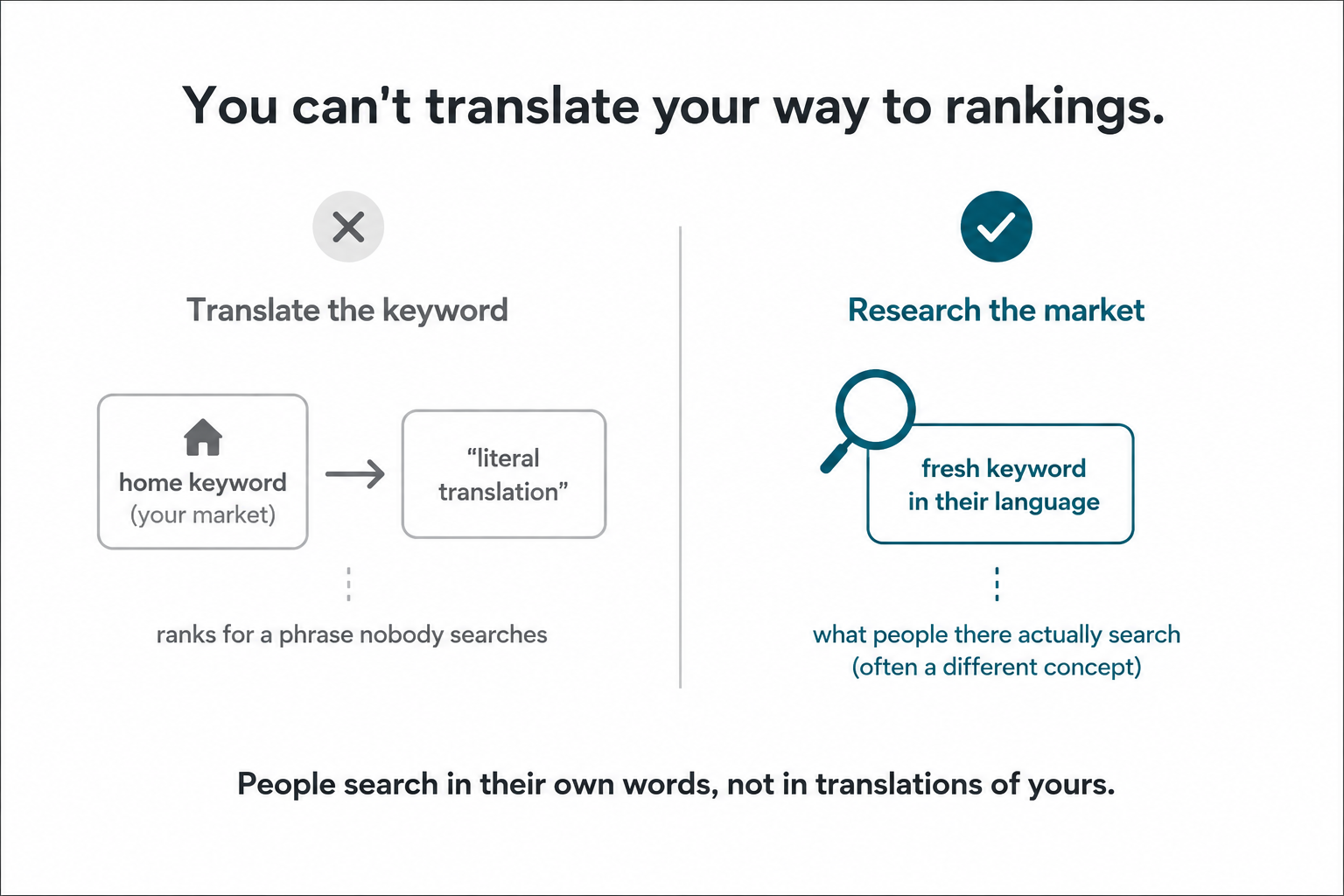
The single most common multilingual SEO mistake is translating keywords. It feels logical: you rank for a term at home, so you translate that term and target its equivalent abroad. The problem is that people don't search in translations. They search in the words that are natural to them, and those words are often a different concept entirely, not a dictionary swap of yours.
The same product can be searched for with a completely different phrase in another market, a different framing, a different level of formality, sometimes a borrowed English word, sometimes a local one that has no clean equivalent. If you target the translated version of your home keyword, you can rank beautifully for a phrase almost nobody in that market uses, and miss the phrase they all use. You did the work and aimed it at the wrong target.
This is why multilingual SEO has to start where home SEO started: with native keyword research, done in-market, in the language, by someone who understands how people there actually search. Not translation of your keyword list. Fresh research. Skip that and everything downstream is optimised for the wrong words.
The stack that actually ranks you in a new market
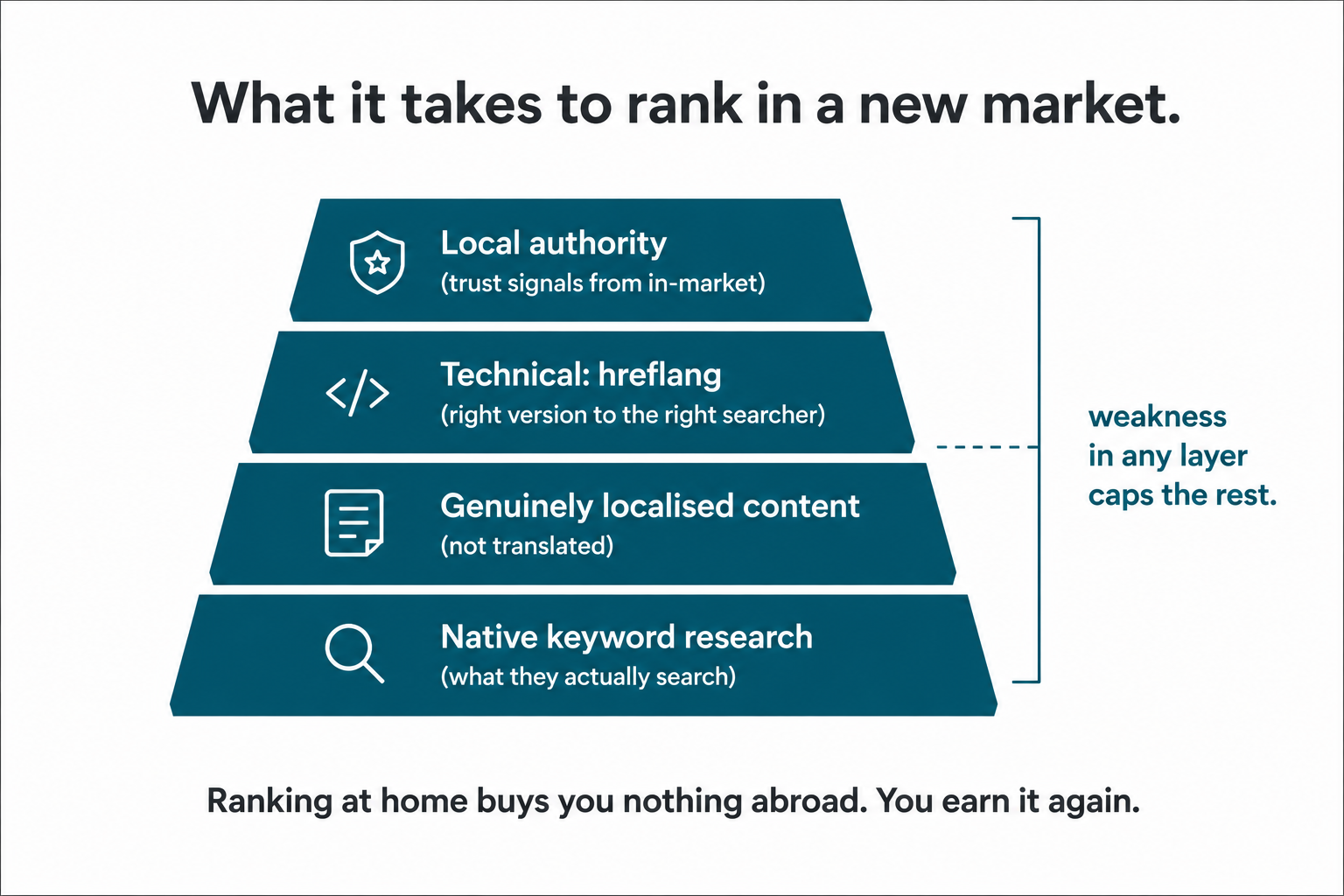
Native keyword research is the start, not the whole job. Multilingual SEO has four layers, and weakness in any one caps the others.
Native keyword research. Covered above. The foundation. What people actually search, in their language, with their intent and seasonality.
Genuinely localised content. Not translated pages, localised ones, in exactly the sense from translation versus localisation. Search engines have spent years getting better at spotting thin, machine-translated content, and they reward pages that read as genuinely written for the reader. A page that's clearly a translation tends to perform like one. And the questions people ask about a product can differ by market, so sometimes the content itself needs to differ, not just its wording.
The technical layer: hreflang. This is the one piece of genuine machinery, so here it is in plain words. Hreflang is a small tag you add to a page that tells search engines "this page is the German version, that one is the French version, show each to the right people." Without it, engines can get confused about which language or regional version to show, or treat your translated pages as duplicates of each other. With it, the right version reaches the right searcher. It's fiddly to get exactly right and it's worth getting right, because errors here quietly undermine all the content work.
Local authority. Rankings are partly about trust, and trust is local. Links and signals from credible sites in that market carry weight that signals from your home market don't. Building a bit of genuine local authority, being referenced, listed, and linked within the market, is slow and it's real.
The AI-era version of the same problem
There's a 2026 twist worth naming. Search is no longer only blue links; answer engines now respond directly, and they work across languages too. The good news is that the discipline doesn't change, it intensifies. The same things that make a page citable in your home language, a clear answer up front, genuine expertise, structure a machine can parse, make it citable in another language, as covered in how being found changed in the AI era.
The catch is the same as the keyword catch: a machine-translated, thin page is exactly the kind of content answer engines have least reason to cite, in any language. So the multilingual version of being citable is the localised version: genuinely useful content, in the market's language, answering the questions that market actually asks. There's no shortcut that translation alone unlocks.
What multilingual SEO actually is
Strip it down and it's simple to say and slow to do: you don't get to carry your home rankings across the border. You earn new ones, in a new language, against new competitors, for the words people there actually use. The technical layer makes sure the right version reaches the right person; the content and authority layers earn the right to rank at all; and native keyword research aims the whole thing at reality instead of at a translation of your assumptions.
Ranking abroad isn't translating your rankings. It's earning them again, in a language that searches differently from yours. Do the research first, and you build on what people actually want. Skip it, and you optimise, beautifully, for words nobody is searching.
A few common questions
Is multilingual SEO just translating my pages? No, and that's the costliest assumption in the topic. Translating pages often makes you rank for the literal translation of your home keywords, which frequently isn't what people in the new market search for. Multilingual SEO starts with fresh, native keyword research in each market, then genuinely localised content, the right technical setup, and local authority.
What is hreflang and do I need it? Hreflang is a tag that tells search engines which language or regional version of a page to show to which users. If you have the same content in multiple languages, you generally need it, because without it engines can show the wrong version or treat your language variants as duplicates. It's fiddly to implement correctly and worth the care, since errors quietly undermine the rest of your work.
Can I just machine-translate my content for SEO? It rarely performs well. Search engines and answer engines have both gotten good at recognising thin, machine-translated content, and they favour pages that read as genuinely written for the reader. Machine translation can be a starting point, but content that's meant to rank and be cited needs real localisation, not just conversion.
Why does the same product rank differently in different markets? Because each market is its own search landscape: different keywords, different search intent and seasonality, different competitors, and different local authority. You're not extending your home ranking, you're competing fresh, which is why native research and local content matter so much.
You should also read:

SMS and Push: The Most Intimate Channels You Own, and the Highest Bar for Using Them
SMS and push notifications are the most intimate channels you own, which makes them the most powerful and the easiest to ruin. The rule for both is the same: the more personal the channel, the higher the bar for sending. Use them for the genuinely…
Continue reading...
Discounts Are a Loan Against Your Margin
A discount feels free to give, and that is exactly why it is dangerous. It is a loan against your margin, and like any loan it gets repaid: in the margin you hand over, in the reference price you quietly reset, and in the customers…
Continue reading...
Why Carts Get Abandoned at Checkout (and How to Win Them Back)
The customers you lose at checkout are the most expensive customers you will ever lose, because they are the ones who already decided to buy. They wanted your product. They picked it, added it to the cart, and walked all the way to the payment…
Continue reading...