Discounts Are a Loan Against Your Margin

Table of Contents
A discount feels free to give, and that is exactly why it is dangerous. It is a loan against your margin, and like any loan it gets repaid: in the margin you hand over, in the reference price you quietly reset, and in the customers you train to never pay full price again. Used deliberately, for a real reason and with an end date, a discount is a legitimate tool. Used reflexively, the moment anyone hesitates, it rots the brand from the inside.
This is the capstone of a thread that has run through several pieces on this blog, the reactivation reflex, the loyalty-as-discount trap, the difference between down-selling and discounting. They all circle the same truth from different angles, and here it is stated plainly: a discount is borrowed money, and you always pay it back.
What you borrow, and what you repay
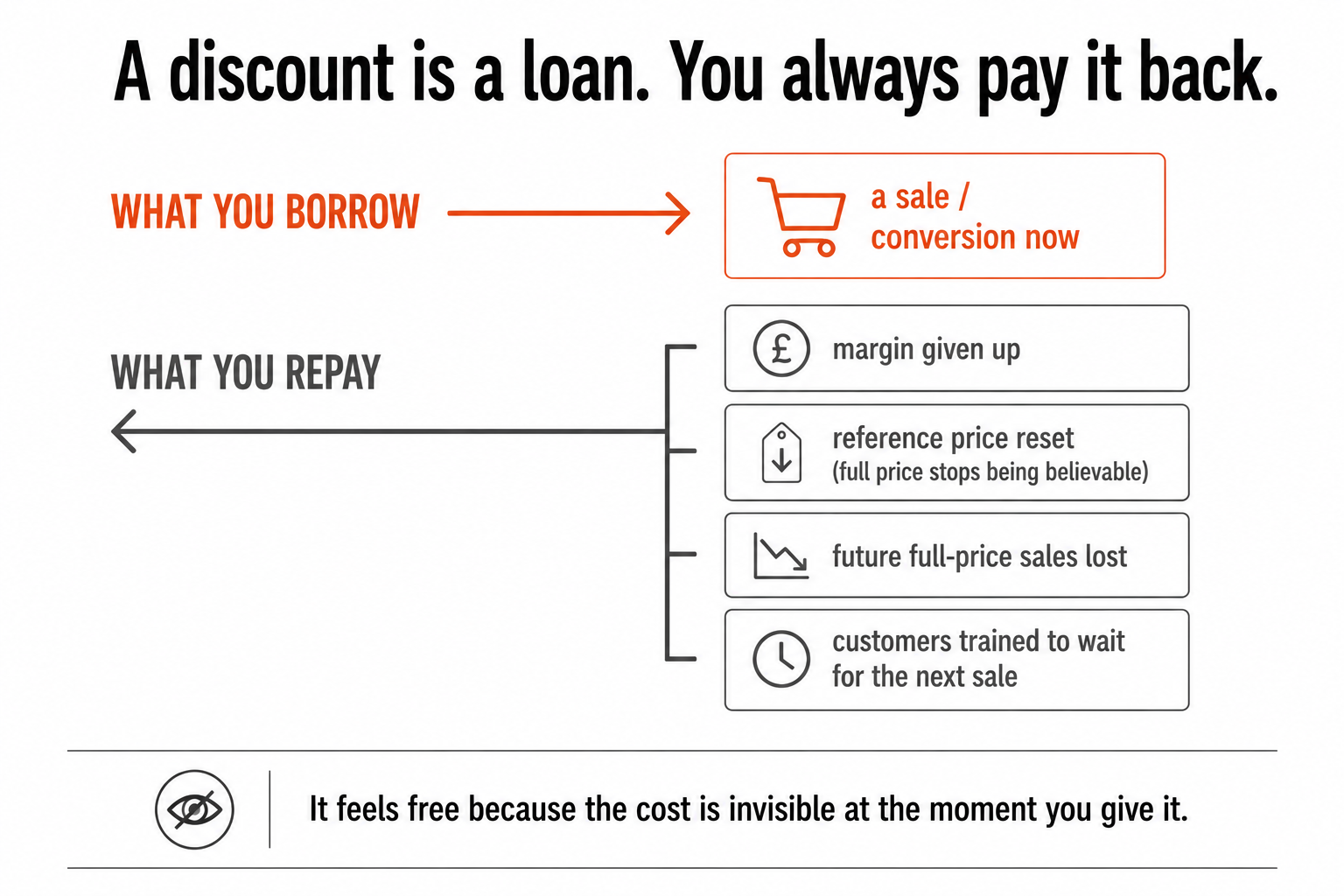
When you run a discount, what you borrow is immediate: a sale that might not have happened, a hesitant customer pushed over the line, a slow week made to look better. That is the loan landing in your account. It feels good, because the cost is invisible at the moment you give it.
The repayments come later, and there are several of them.
You repay in margin given up, which is the obvious one. Twenty percent off is twenty percent of profit you will never see on that order, and on a thin-margin product it can be most of the profit, or all of it.
You repay in reference price. This one is quieter and more expensive. Every time a customer sees your product at a lower price, that lower number becomes the price they believe is real. The full price starts to look like a number you made up to discount from. Run enough sales and you have taught your own customers that your "real" price is a fiction, and the only honest price is the sale price.
You repay in trained behaviour. If there is always a sale coming, the rational customer waits for it. You have converted full-price buyers into discount-waiters, and you did it to yourself, one promotion at a time.
The giveaway hiding inside most discounts
Here is the trap that makes reflexive discounting so expensive: a large share of any broad discount goes to people who would have bought anyway.
Picture a customer with the item already in their cart, ready to pay. Then a banner offers them ten percent off. They take it, of course. But you did not win that sale with the discount. You already had it. You simply handed back ten percent of a profit you were about to earn. Multiply that across every shopper who would have converted without the nudge, and a big chunk of your "promotion" is pure giveaway, money posted straight from your margin to customers who needed no convincing.
This is the same distinction that sits under the down-sell: there is a world of difference between discounting the product and offering a genuinely different, lower option. Slashing the price of the thing someone was already going to buy is not strategy. It is reflex. And reflex is where the loan gets most expensive, because you are borrowing against sales you already had.
When a discount actually earns its keep
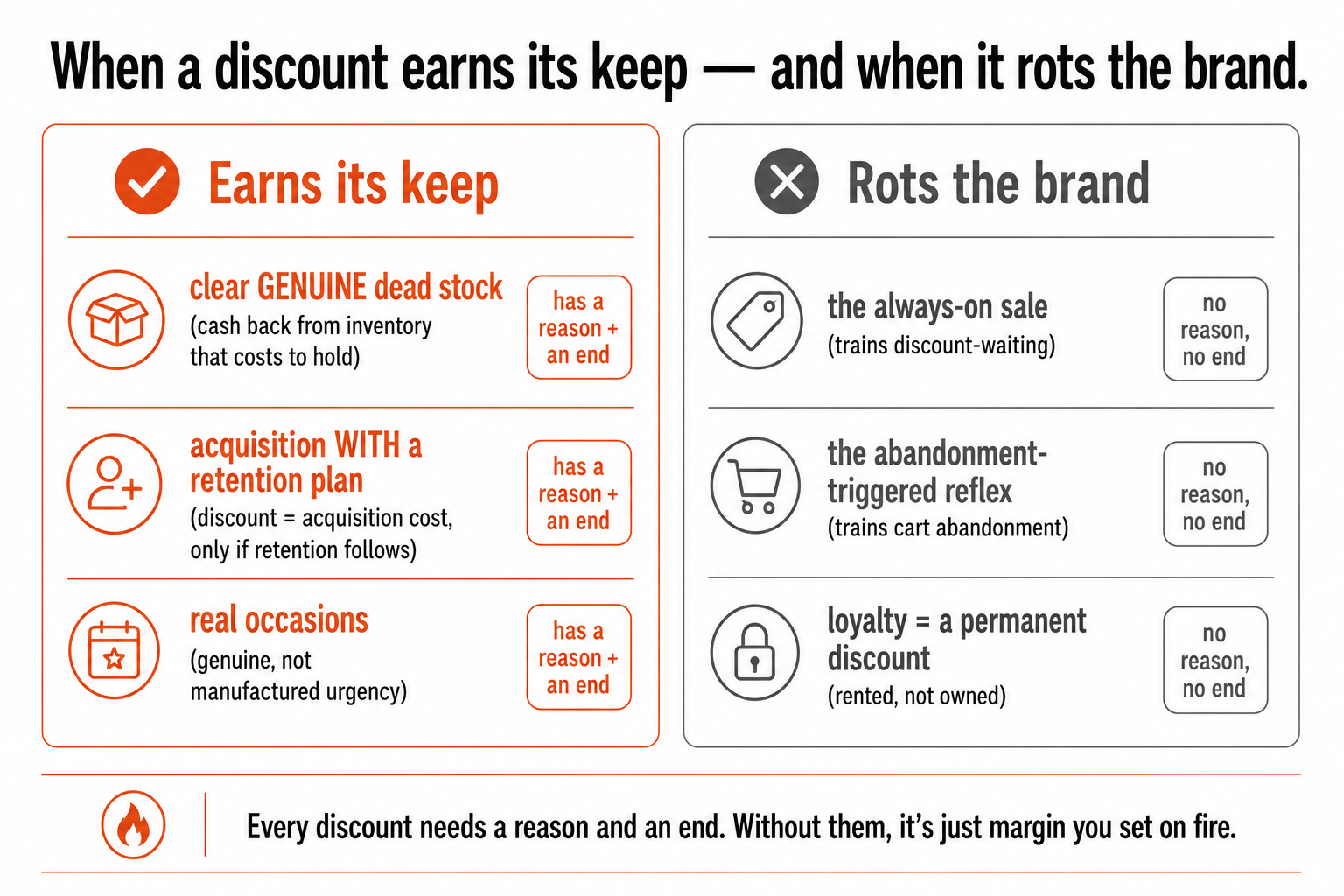
None of this means never discount. It means discount on purpose. There are a few situations where the loan is worth taking, and they share one feature: there is a clear reason and a clear end.
Clearing genuine dead stock. Inventory that is not selling is not neutral. It costs you to hold, it ties up cash, and it gets less sellable over time. A discount that converts dead stock back into cash is a good trade, because the alternative is worse. The reason is real and the end is obvious: when the stock is gone, the discount is gone.
Acquisition with a retention plan. A first-order discount can be a legitimate acquisition cost, but only if you have a plan to keep the customer afterward. The discount buys the first purchase; retention is what pays the loan back. Without the retention plan, you have not acquired a customer, you have rented a transaction at a loss, which is exactly the warning the reactivation piece makes about the discount reflex.
Genuine occasions. A real seasonal moment, a true clearance, a milestone, these are honest reasons customers understand and do not resent. The test is whether the urgency is real or manufactured. A countdown timer on a sale that resets every week is not an occasion. It is a tell.
When it rots the brand
The corrosive discounts share the opposite feature: no real reason, and no end.
The always-on sale is the clearest example. If your store is never not on sale, you have not made your products cheaper, you have made your full price meaningless. The abandonment-triggered reflex, firing a discount the moment someone leaves a cart, is worse than it looks: customers learn the pattern fast, and once they know that abandoning a cart summons a coupon, you have trained them to abandon carts. You taught the behaviour you are now paying to undo.
And the slow one, loyalty as a permanent discount. As the loyalty piece argues, a programme that is just a standing price cut does not build loyalty. It builds a customer who is loyal to the discount, the most fragile relationship there is, because the moment a competitor offers a deeper cut, they are gone. You rented them. You never owned them.
The discipline, in one sentence
Every discount needs a reason and an end. That is the whole rule. A discount with a reason and an end is a tool. A discount without them is just margin you set on fire and called marketing.
So before you run one, ask the two questions a loan demands: what is this borrowing for, and how does it get paid back? If you can answer both, take the loan. If the honest answer is "to hit this month's number" with no plan beyond that, you are not running a promotion. You are quietly resetting your own prices and teaching your best customers to wait.
Borrow deliberately. Never reflexively. And notice, if you have followed the thread across reactivation, loyalty, cashback, and the down-sell, that they have all been saying the same thing from different rooms: the cheapest-looking move is usually the one with the longest repayment.
A few common questions
Are discounts always bad? No. A discount is a tool, and like any tool it depends on how you use it. The problem is reflexive discounting, cutting price the moment anyone hesitates, with no reason and no end. A deliberate discount with a clear purpose and a clear stop date is perfectly legitimate.
When should I run a discount? When there's a real reason and a defined end. The strongest cases: clearing genuine dead stock (turning unsellable inventory back into cash), acquisition where you have a plan to retain the customer afterward, and honest occasions. The test for an occasion is whether the urgency is real or manufactured.
Why do discounts hurt the brand? Mostly through reference price and trained behaviour. Every sale teaches customers that the lower number is the "real" price, so full price stops being believable. And if there's always a sale coming, rational customers wait for it, so you convert full-price buyers into discount-waiters.
How do I stop my customers expecting discounts? Make discounts the exception, not the rhythm. Give each one a reason and an end, avoid the always-on sale and the automatic abandonment coupon (which trains the exact behaviour you're paying to undo), and compete on value rather than on a permanent price cut. It takes patience to undo a discount habit, but the alternative is a brand whose real price nobody believes.
You should also read:
Reviews Are the One Voice on Your Page a Shopper Trusts More Than Yours
There is exactly one voice on your product page that a shopper trusts more than your own, and it is not yours. It is other customers. Everything you write about your product, however honest, carries an unavoidable discount in the reader's mind, because they know…
Continue reading...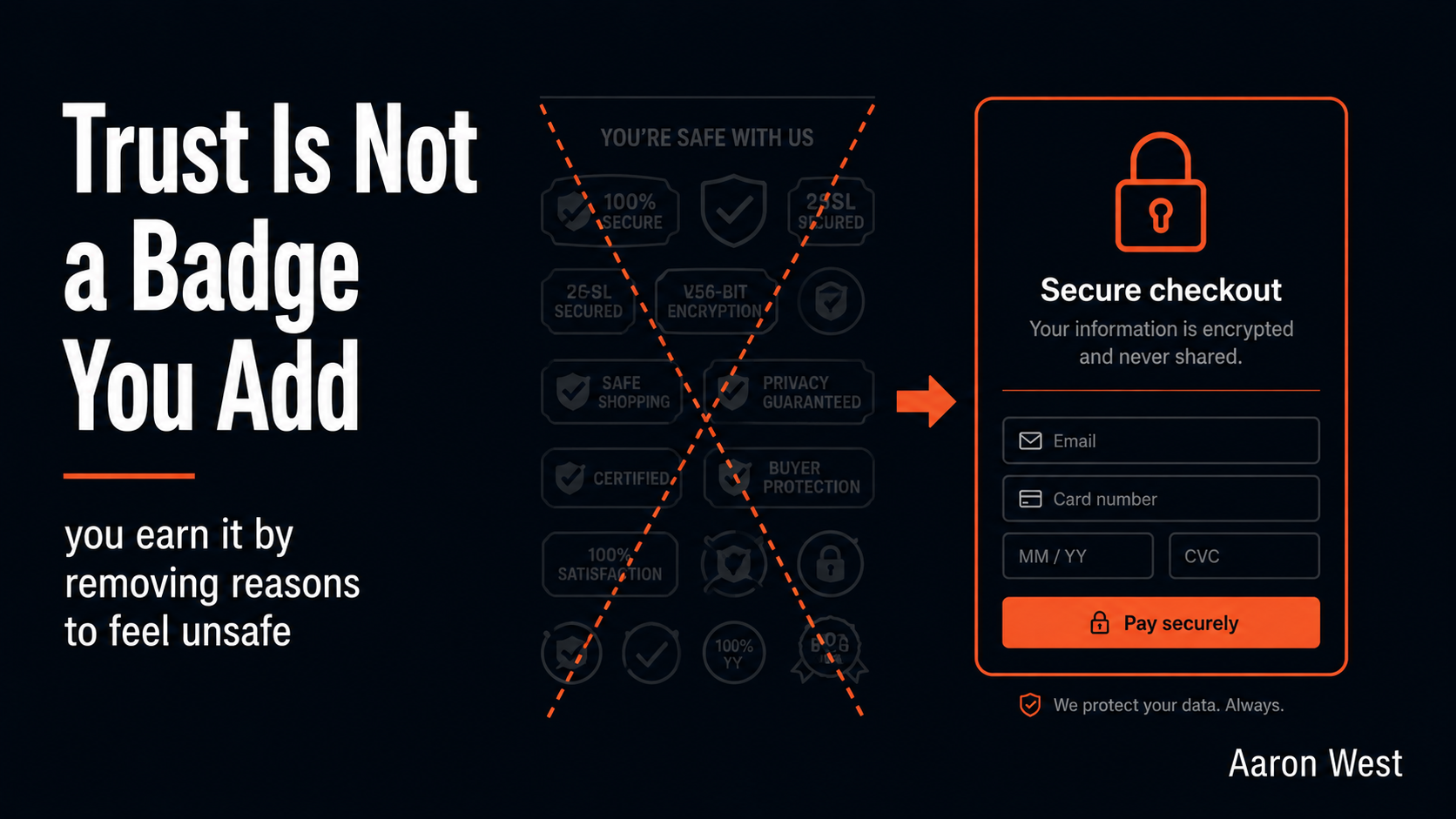
Trust Is Not a Badge You Add to Your Checkout
The moment a customer is about to type in their card number is the most anxious moment in the entire buying journey, and it is where a surprising number of otherwise-willing buyers quietly back out. Around a fifth of shoppers have abandoned a purchase specifically…
Continue reading...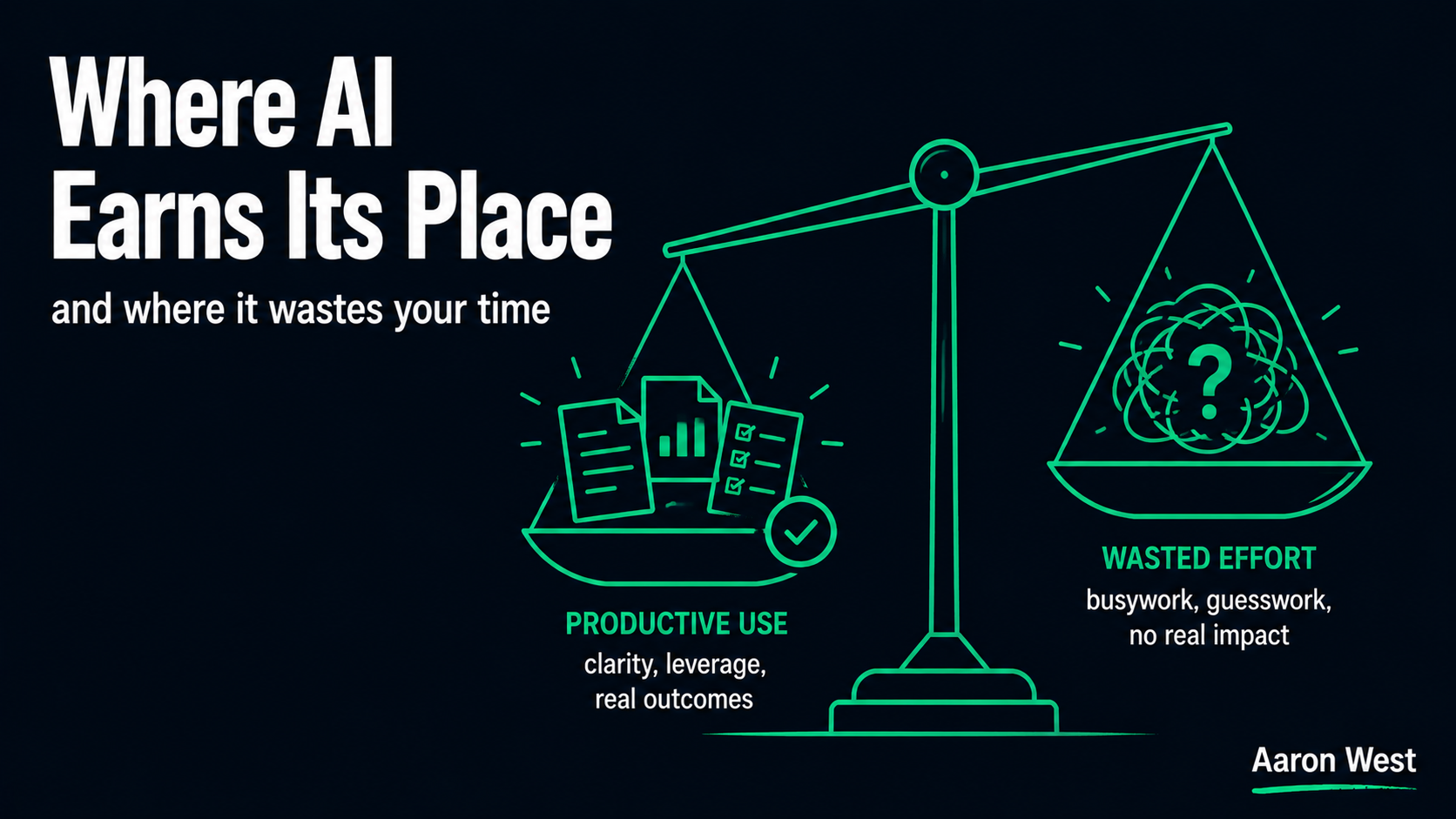
Using AI in Real E-Commerce Work: Where It Earns Its Place and Where It Wastes Your Time
After actually using AI across real e-commerce work rather than reading about it, here is the honest summary: AI is genuinely transformative for a specific, narrow band of tasks, and a confident waste of time for a surprising number of others. The skill in 2026…
Continue reading...