The Down-Sell Nobody Offers (and Why It Saves the Sale)

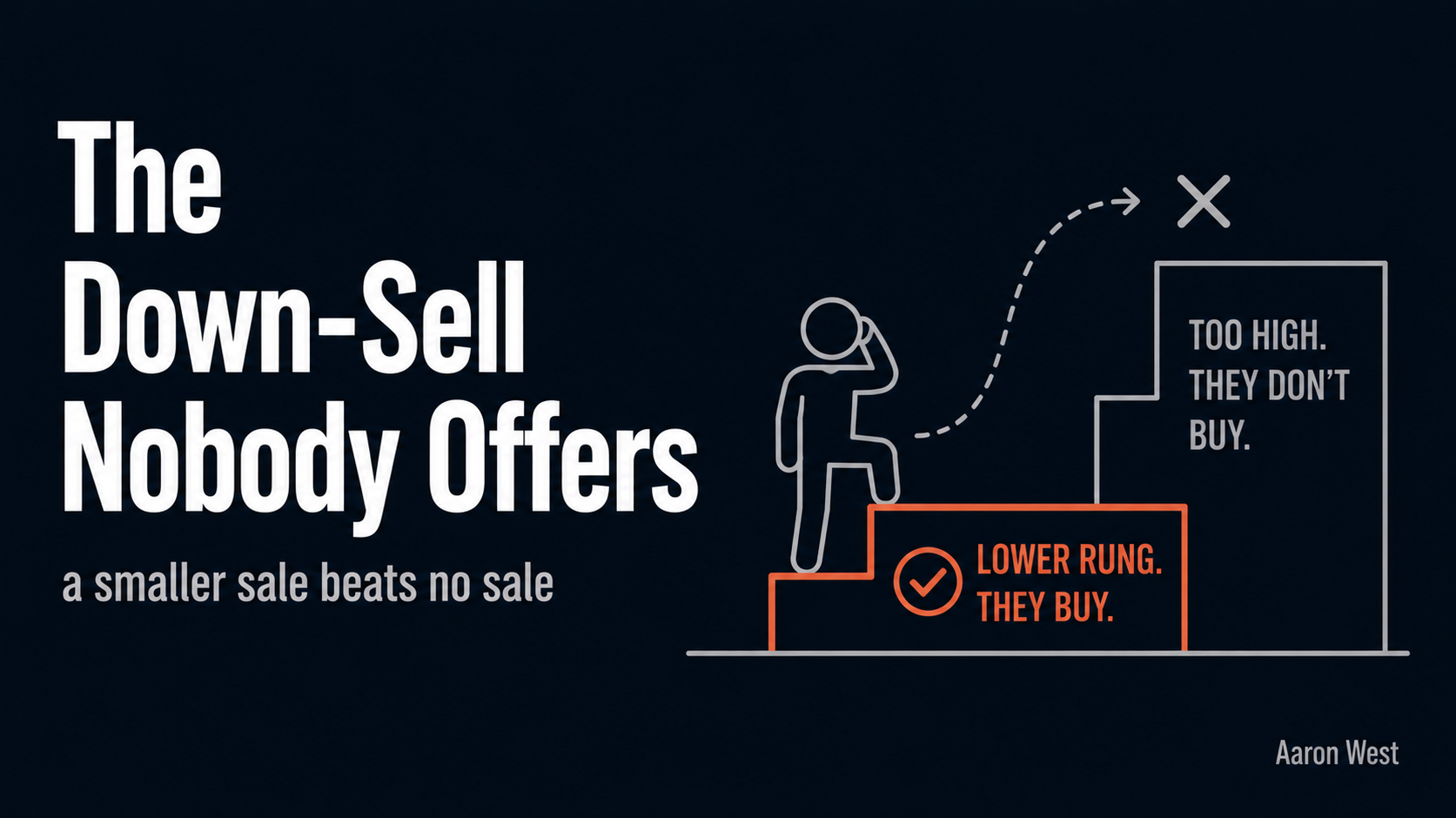
Table of Contents
Almost every online store has an upsell. Almost none have a down-sell. We pour energy into getting customers to spend more, the upgrade, the add-on, the bundle, and we completely ignore the move that saves the sale when a customer is about to spend nothing. That move is the down-sell: offering a genuinely cheaper, smaller, or simpler alternative when someone balks at the main option, so you keep a smaller sale instead of losing the whole thing. It is the most under-used move in e-commerce, and for a lot of stores it is the easiest money left on the table.
This sits under the AOV anchor, which introduced the down-sell as the third move most stores skip. Here is the full case for it: what it actually is, why a smaller sale is worth so much more than the zero you get from a lost one, and the crucial distinction between down-selling and simply caving on price, which is the mistake that makes people afraid of the whole idea. Plain language, and a slightly contrarian argument for the move nobody makes.
What a down-sell actually is
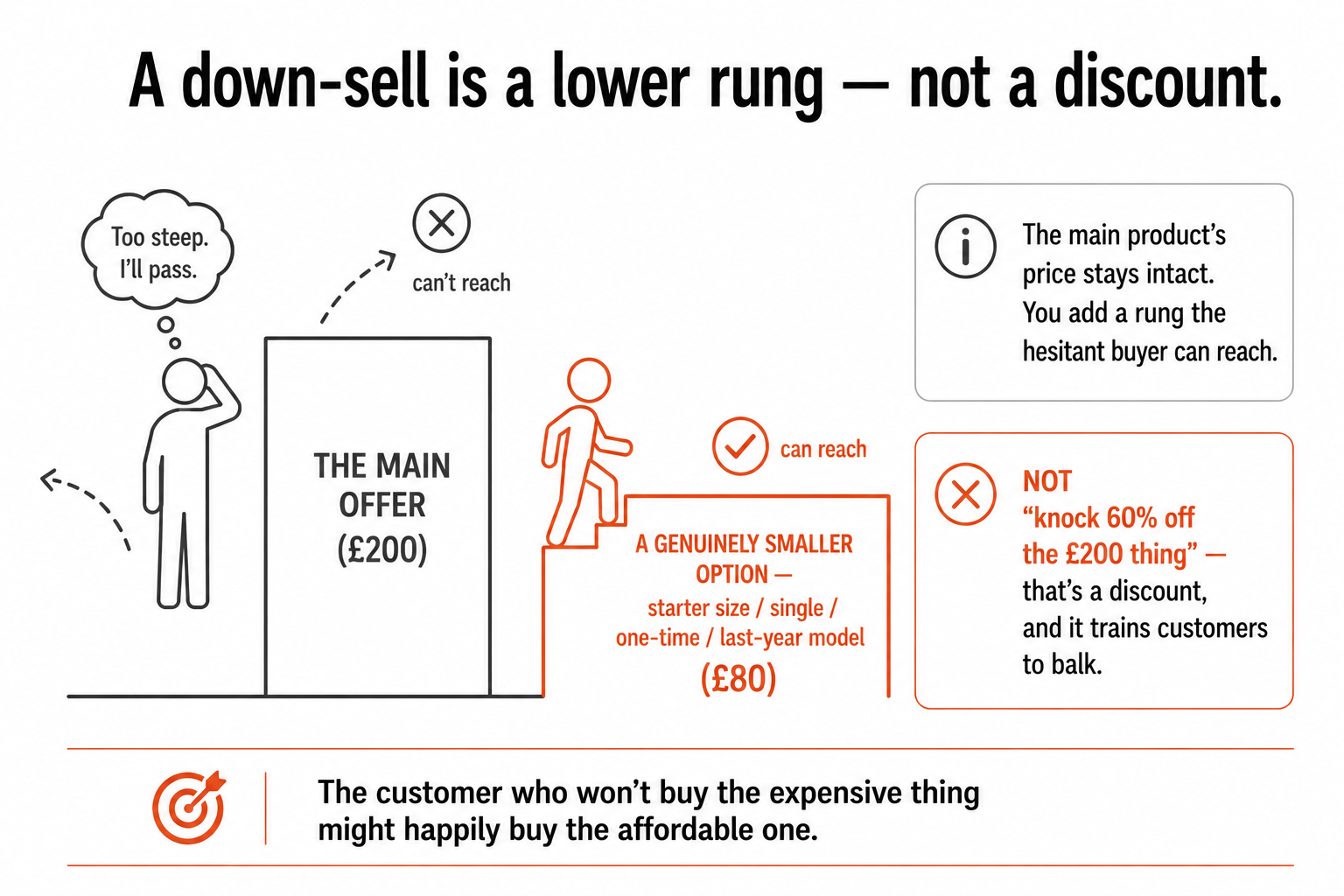
A down-sell is not a discount. That confusion is exactly why so few stores use it, so let me be precise: a down-sell is offering a different, lower-commitment option when the customer hesitates at the main one. The product stays the same price. What changes is that you put a smaller rung within reach. In practice that looks like the smaller size when they balk at the large, the starter version when the full kit is too much, the single item when the bundle is too big a leap, the one-time purchase when the subscription feels like too much commitment, or last season's model when this year's is over budget.
The logic is simple and a little obvious once you say it out loud: the customer who will not buy the expensive thing might happily buy the affordable thing, and a smaller sale beats no sale every single time. Yet the default behaviour when a customer hesitates is to do nothing, let them leave, and chalk it up as someone who "wasn't going to convert anyway." That is a choice, and it is usually the wrong one, because you had a buyer with real intent who was stopped by one specific obstacle, price or size of commitment, and you let them walk rather than offering them a door they could actually fit through.
Why a smaller sale is worth far more than zero
The reason the down-sell matters so much is not just the immediate revenue, though a small sale obviously beats no sale. It is what the small sale becomes. A lost sale is worth exactly zero, and worse, it is a dead end, that person leaves with nothing, no relationship, no reason to return. A down-sold sale is worth the revenue and it converts a browser into a customer, and a customer is a fundamentally different thing from a bounce.
This is where the down-sell connects to everything in retention. A first purchase, however small, makes the next purchase meaningfully more likely, the relationship has begun, the trust has been tested and passed, the customer knows what it is like to buy from you. The down-sell engineers a first purchase that would not otherwise have happened, which means it does not just save a transaction, it starts a relationship you can grow. The customer who bought the starter version can be sold the full version later, once they have experienced the value. The one who balked and bounced can be sold nothing, because they are gone. So the down-sell is not really a smaller win. It is the difference between acquiring a customer and losing one, and that difference compounds for as long as the relationship lasts.
The distinction that makes it safe: down-sell the offer, do not discount the product
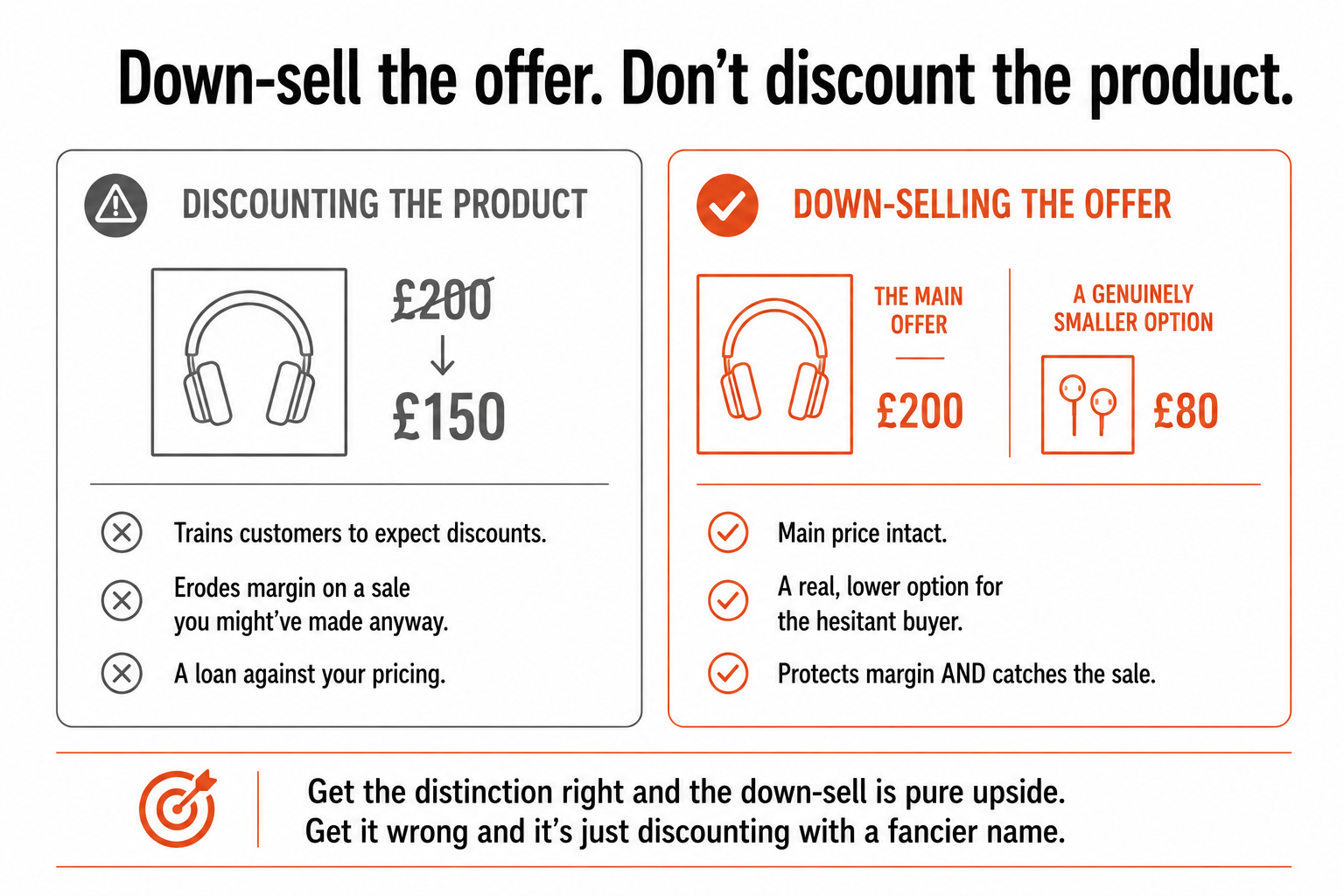
Here is the part that matters most, because it is where the down-sell either works or quietly poisons your business: a down-sell is not caving on price. The lazy, dangerous version of "saving the sale" is to slap a discount on the main product the moment someone hesitates, knock fifty euros off the thing they were looking at to push them over the line. That is not a down-sell, it is a discount, and it does real damage. It trains your customers to expect discounts, teaching them that hesitating is rewarded with a lower price, and it erodes your margin on a sale you might well have made at full price anyway. Reflexive discounting is a loan against your own pricing, and it comes due.
A proper down-sell does the opposite. It keeps the main product at its full price and offers a genuinely different, lower option alongside it. The large stays the price of the large, you simply also offer the small. The customer who could not justify the premium tier is not given the premium tier at a discount, they are offered the standard tier, which is a real, lower-priced, lower-featured product. This protects your pricing and your margin while still catching the customer who would otherwise have left. The rule, in one line: down-sell the offer, do not discount the product. Get that distinction right and the down-sell is pure upside. Get it wrong and you are just discounting under a fancier name, with all the corrosion that brings.
Where the down-sell belongs
The down-sell fits the moment of hesitation, which means it lives wherever a customer signals they are about to leave empty-handed. That is the cart they are lingering in, the checkout they are about to abandon, the point where the price has clearly given them pause. It is also a natural late step in a win-back sequence, the price-sensitive lapsed customer who would not return for the full offer might return for the smaller one. The unifying idea is that the down-sell is the safety net under the upsell. You aim high, you lead with your best and your better, but you keep a lower rung in place so the customer who cannot reach the high offer steps onto something rather than walking away with nothing.
Think of the two moves as two different questions. The upsell asks the customer, "would you like more?" The down-sell asks, "would this work better for you?" For a confident, ready buyer, the first question grows the basket. But for the customer standing at the edge, hesitating, about to leave, the second question is the one that saves the sale and begins the relationship. Stores that only know how to ask the first question leave money, and customers, on the table every single time someone balks. The down-sell is the move almost nobody offers, which is precisely why offering it, properly, as a genuine lower option rather than a panicked discount, is a quiet, durable edge.
A few common questions
What is a down-sell in ecommerce? A down-sell is offering a genuinely cheaper, smaller, or simpler alternative when a customer balks at the main option, so you save a smaller sale instead of losing the whole thing. In practice that's the smaller size when they hesitate at the large, the starter version when the full kit is too much, the single item instead of the bundle, the one-time purchase instead of the subscription, or last season's model when this year's is over budget. The logic is simple: the customer who won't buy the expensive thing might happily buy the affordable one, and a smaller sale beats no sale every time.
Isn't a down-sell just a discount? No, and this is the most important distinction. A discount knocks money off the main product, which trains customers to expect discounts and erodes your margin on a sale you might have made at full price anyway. A down-sell keeps the main product at full price and offers a genuinely different, lower option alongside it, the standard tier rather than the premium tier at a discount, a real lower-priced product, not the same product cheaper. The rule in one line: down-sell the offer, don't discount the product. Get that right and the down-sell is pure upside; get it wrong and you're just discounting under a fancier name.
Why is a smaller sale worth bothering with? Because a lost sale is worth exactly zero, and worse, it's a dead end, that person leaves with no relationship and no reason to return. A down-sold sale is worth the revenue and it converts a browser into a customer, which is a fundamentally different thing from a bounce. A first purchase, however small, makes the next one meaningfully more likely, the relationship has begun and the customer knows what buying from you is like. The down-sell engineers a first purchase that wouldn't otherwise have happened, so it doesn't just save a transaction, it starts a relationship you can grow.
Where should I offer a down-sell? At the moment of hesitation, wherever a customer signals they're about to leave empty-handed: the cart they're lingering in, the checkout they're about to abandon, the point where the price has clearly given them pause. It's also a natural late step in a win-back sequence for a price-sensitive lapsed customer. Think of it as the safety net under your upsell, aim high and lead with your best, but keep a lower rung in place so the customer who can't reach the high offer steps onto something rather than walking away with nothing.
You should also read:
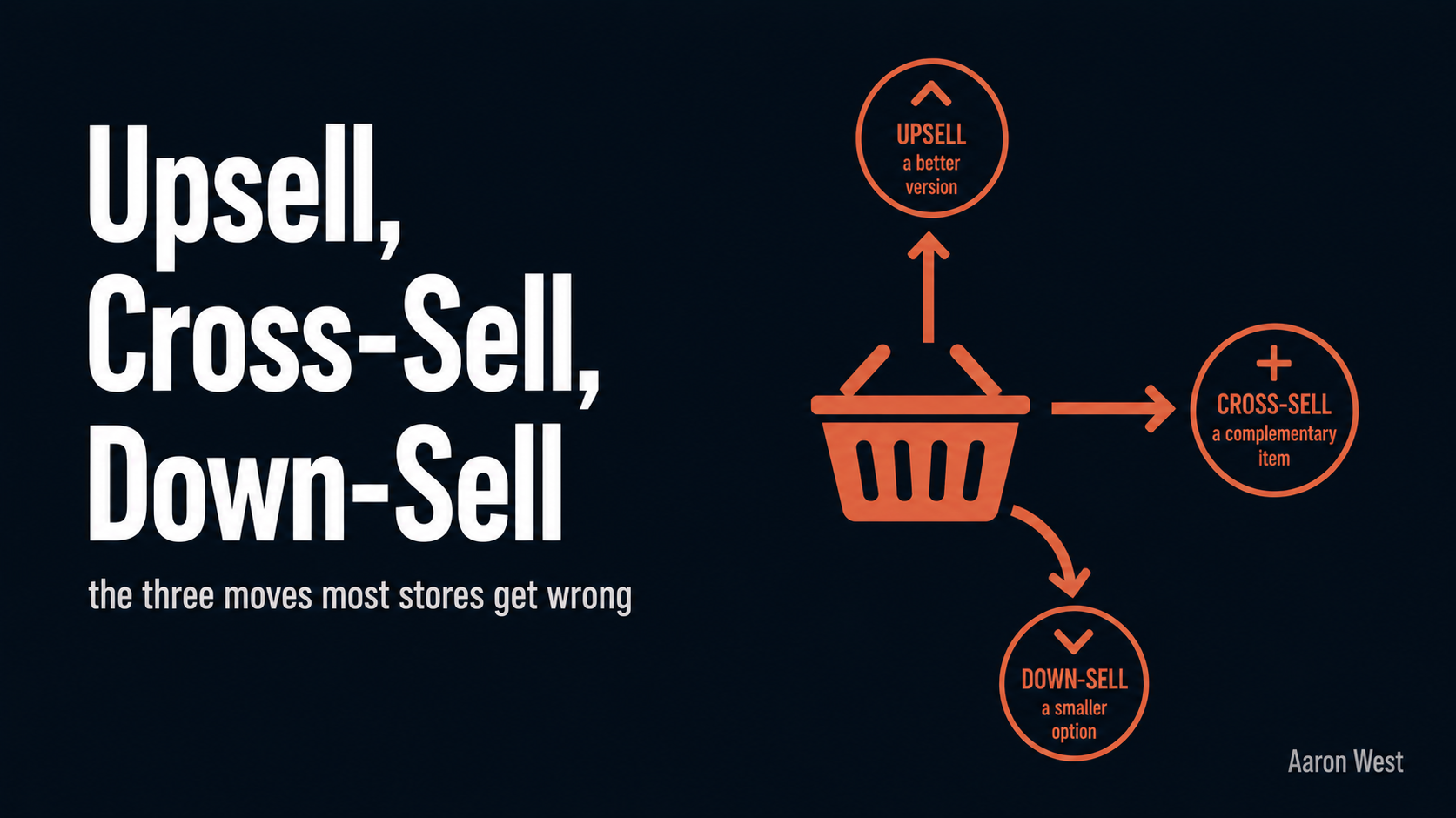
Upsell, Cross-Sell, Down-Sell: The Three Moves Most Stores Get Wrong
Raising the average order value, getting each customer who already chose to buy to spend a little more, is usually the fastest and cheapest way to grow an e-commerce business. You are not paying to acquire anyone or convince anyone, you are making more of…
Continue reading...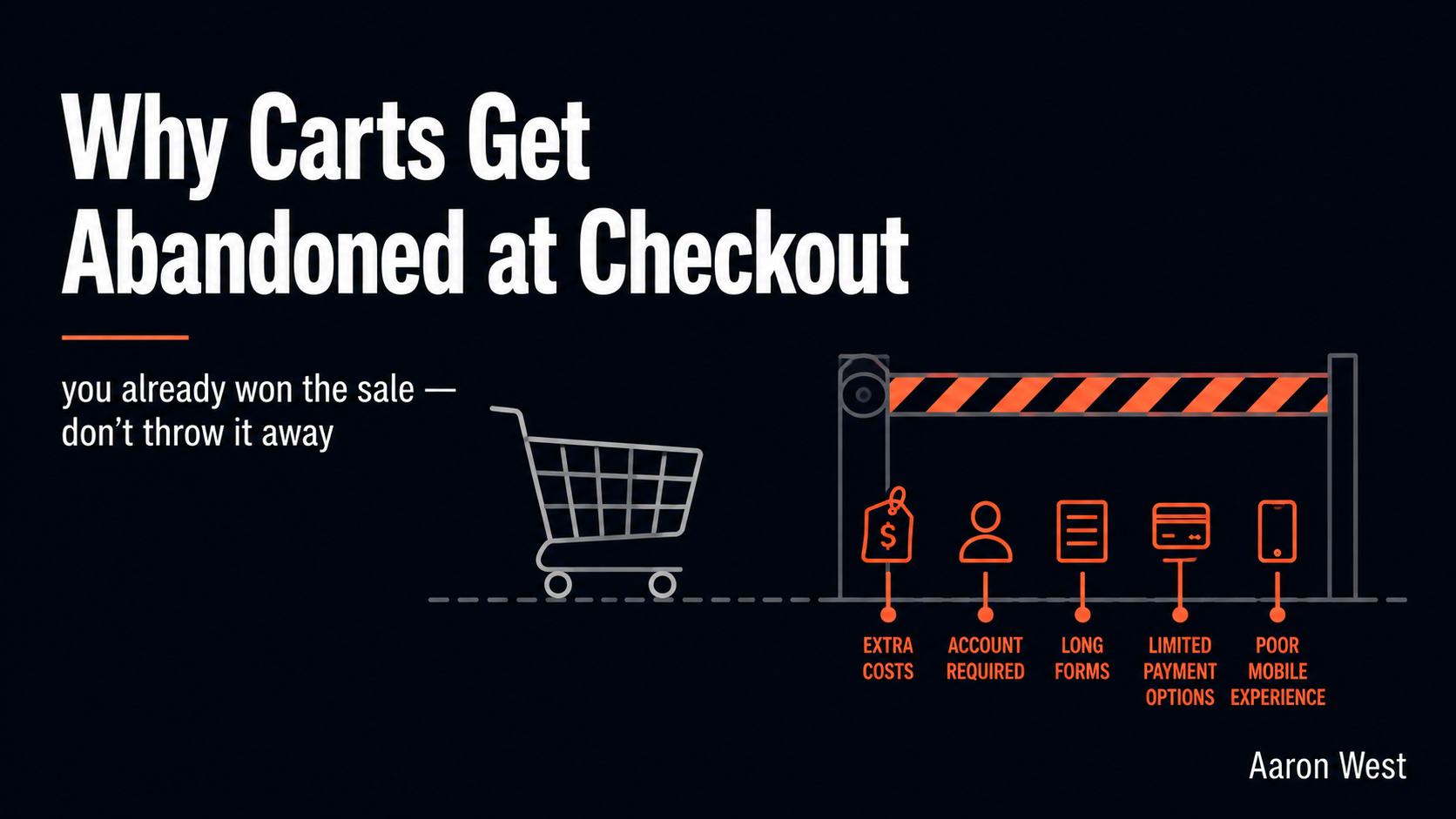
Why Carts Get Abandoned at Checkout (and How to Win Them Back)
The customers you lose at checkout are the most expensive customers you will ever lose, because they are the ones who already decided to buy. They wanted your product. They picked it, added it to the cart, and walked all the way to the payment…
Continue reading...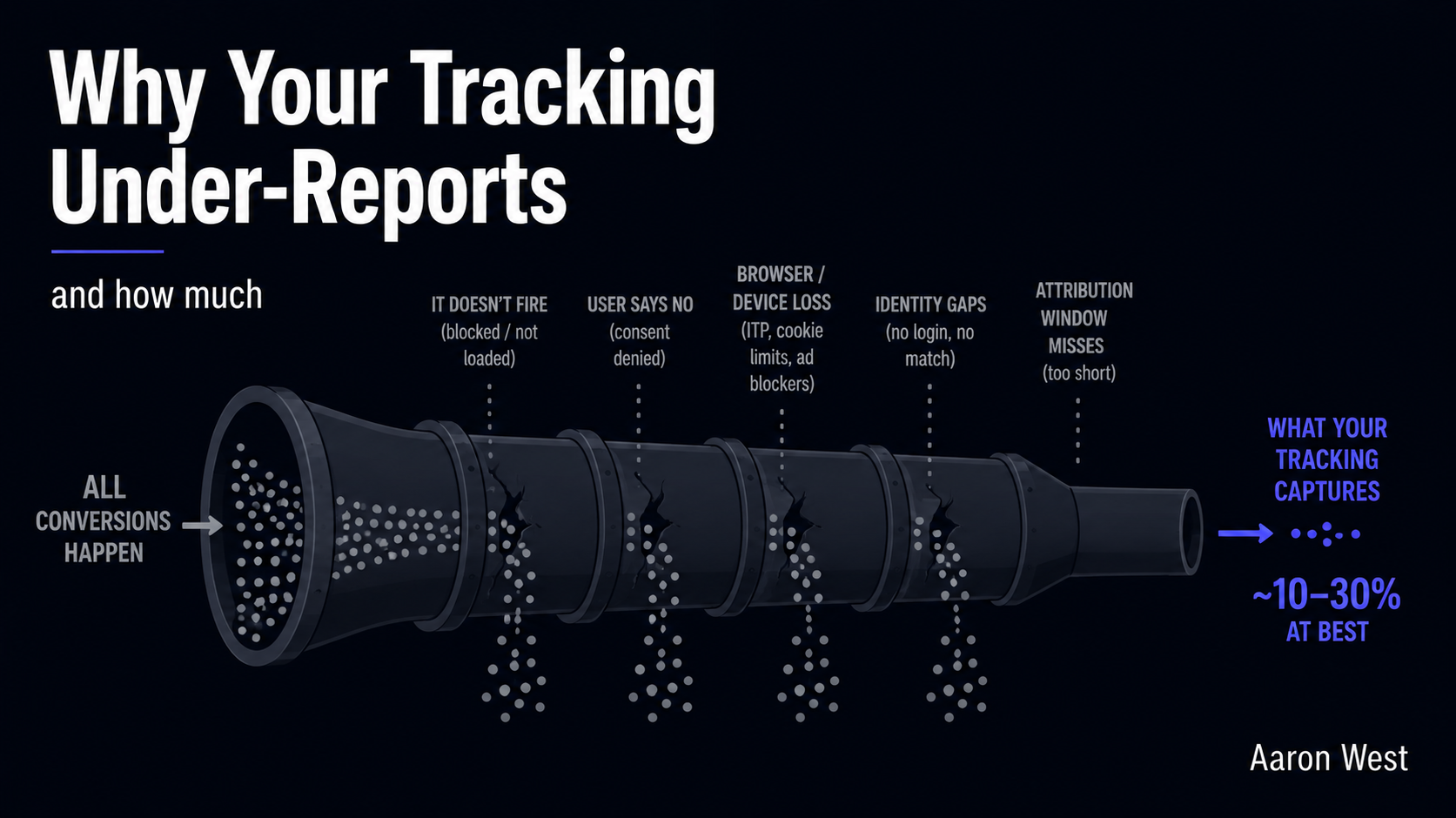
Why Your Tracking Under-Reports (and How Much)
Your analytics is almost certainly showing you fewer conversions than actually happened, and the gap is bigger than most marketers think. Where the deduplication problem makes your platforms claim more sales than you made, the under-reporting problem is the mirror image: a large slice of…
Continue reading...