Why Carts Get Abandoned at Checkout (and How to Win Them Back)

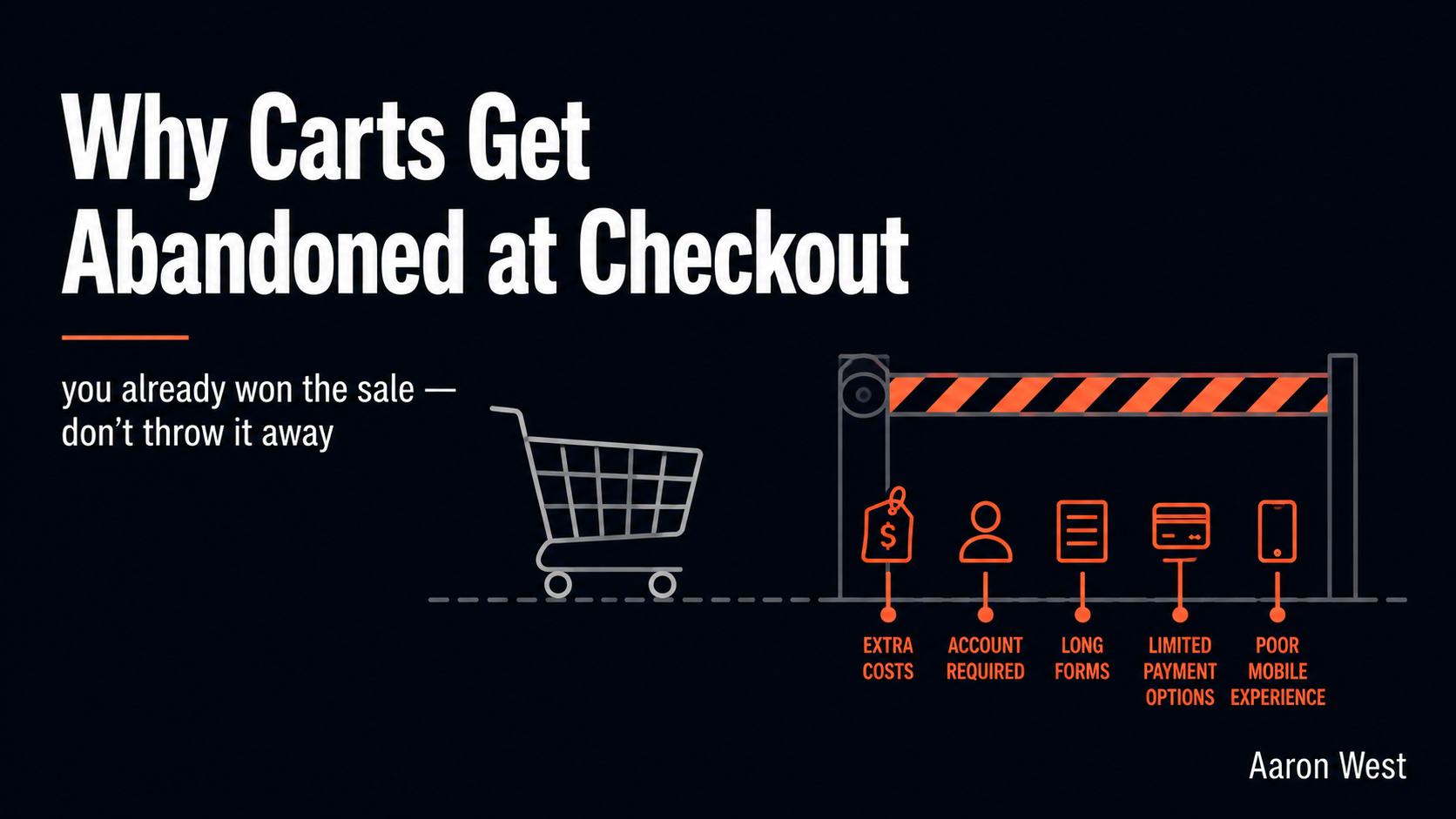
Table of Contents
The customers you lose at checkout are the most expensive customers you will ever lose, because they are the ones who already decided to buy. They wanted your product. They picked it, added it to the cart, and walked all the way to the payment step with their intention fully formed, and then something in the checkout itself made them stop. Every other kind of lost visitor is someone you still had to persuade. A checkout abandoner is someone you had already persuaded and then lost anyway, which means the sale was yours and the process took it back. That is why, of all conversion work, fixing checkout returns the most: you are not creating demand, you are stopping yourself from destroying demand you already earned.
This is a companion to my cornerstone on where online stores lose the sale, drilling into the single biggest and most fixable leak in the whole funnel. Roughly seven in ten carts are abandoned, and while a good chunk of that is idle browsing that was never going to convert, a real and recoverable slice is genuine buyers stopped by avoidable friction. Here I will go through why people abandon checkout, the actual reasons, ranked, with the psychology behind each, and the concrete fix for every one. The encouraging part is that the causes are well known and remarkably consistent, which means this is one of the most solvable problems in e-commerce. Plain language, practical, no fluff.
The one principle behind every checkout leak
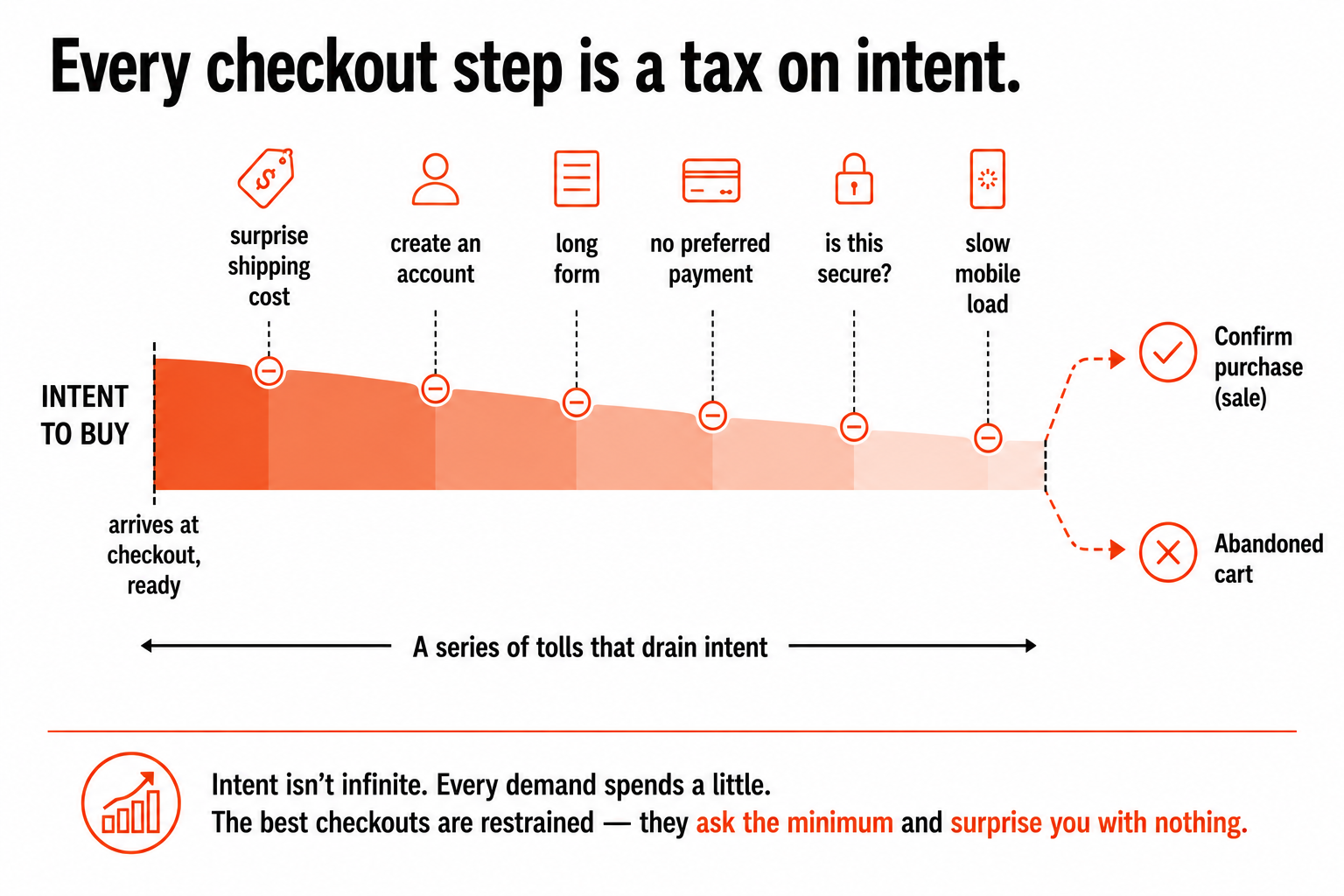
Before the list, the idea that makes sense of all of it: every field, every step, and every surprise in your checkout is a tax on someone's intention to buy. Intent is not infinite. A person arrives at checkout with a certain amount of willingness, and every demand you make, every form to fill, account to create, surprise to absorb, decision to make, spends a little of it. Get to "confirm purchase" before their willingness runs out and you have a sale. Exhaust it first and you have an abandoned cart. Every checkout problem below is really just a different way of taxing intent too heavily, and every fix is a way of spending less of it.
This reframes the whole job. You are not "designing a checkout," you are protecting a finite, draining resource, the customer's resolve, from the moment they hit the payment page to the moment the order completes. The best checkouts feel almost frictionless not because they are clever but because they are restrained: they ask for the minimum, surprise the customer with nothing, and get out of the way. Hold that principle and every specific fix below follows naturally from it.
The reasons, ranked, with the fix for each
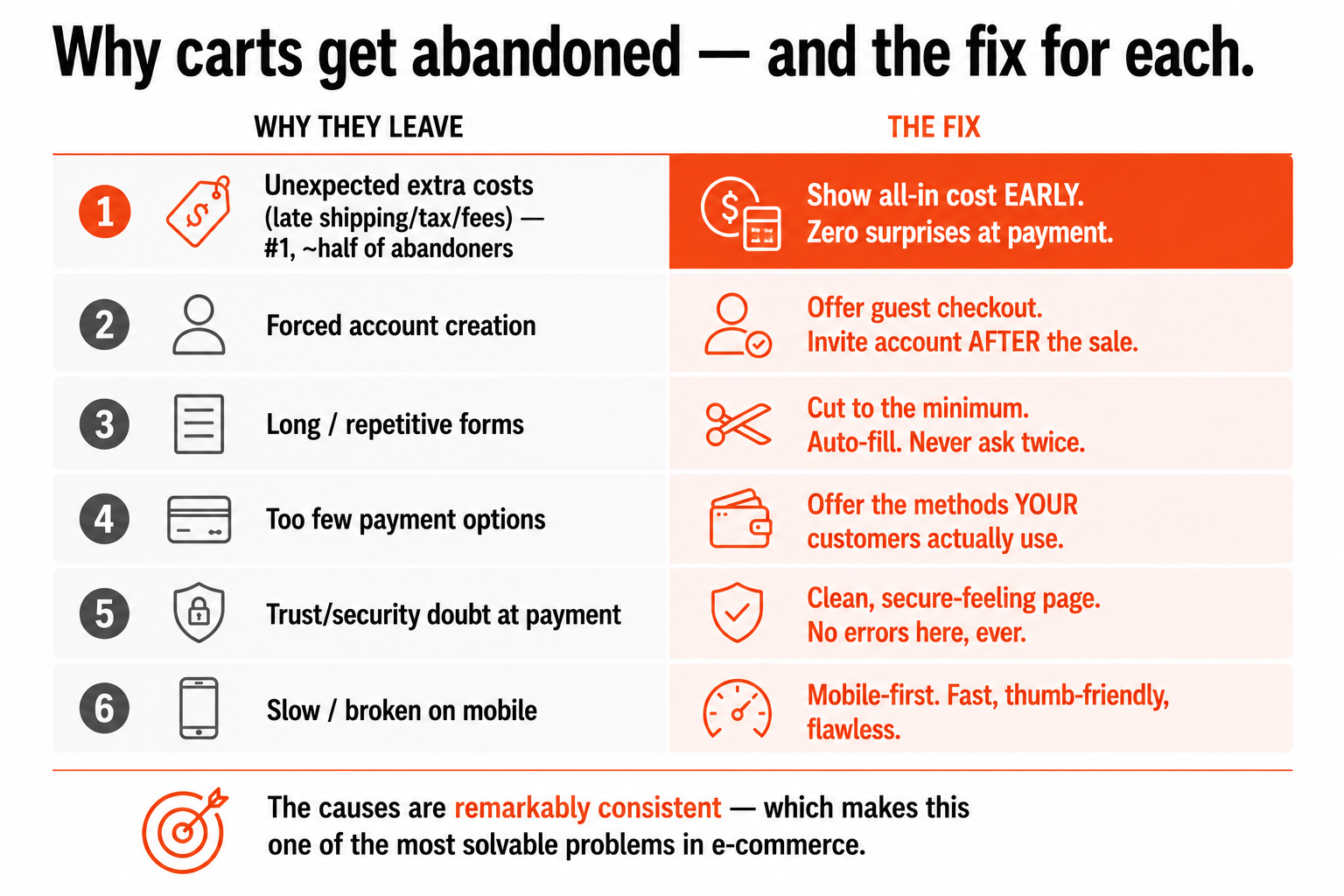
The causes of checkout abandonment are studied better than almost anything in e-commerce, and they come up in the same order again and again. Here they are, each with the why and the fix:
- Unexpected extra costs (the number one reason, by a wide margin). When shipping, tax, or fees show up late in checkout, after the customer anchored on the product price, it is the most common reason people abandon, cited by around half of all abandoners. The psychology is a small sense of betrayal: you showed them one number and quietly raised it at the till. The fix: show the true, all-in cost as early as possible, on the product page or cart, not the final step. If shipping is the issue, consider building it into the price or setting a clear free-shipping threshold. The goal is zero surprises at the payment step. This single fix addresses the biggest leak there is, so start here.
- Forced account creation. Demanding that someone create an account, choose a password, verify an email, before they can give you money is a wall thrown up in front of a willing buyer, and a meaningful share of them simply leave. The fix: offer a guest checkout, prominently. Let people buy first and create an account after if they want (you can invite them to save their details on the confirmation page, once the sale is safe). Never make registration a gate in front of the purchase.
- Long or repetitive forms. Every extra field is a small tax, and checkouts that ask for more than the purchase actually needs, or make people type the same thing twice, wear willingness down. The fix: ruthlessly cut fields to the minimum the order genuinely requires. Combine steps where you can, auto-fill what you can (address lookup, card scanning), and never ask for the same information twice. If you cannot articulate why a field is necessary to complete this order, remove it.
- Too few payment options. People have a preferred way to pay, and a surprising number will abandon rather than use an unfamiliar method. If the option someone trusts is not there, you have lost them over plumbing. The fix: offer the payment methods your actual customers use, which you can learn from your own data and market. The point is not to add every method that exists, it is to not be missing the one a given customer was going to use.
- Doubt about trust and security, right at the payment step. Handing over card details is the moment of maximum vulnerability, and any flicker of doubt, an unprofessional-looking page, no visible security cues, an error that makes the site feel broken, can stop a buyer cold. The fix: make the payment step feel solid and safe. Clear security signalling, a clean and professional payment page, visible reassurance about returns and data, and absolutely no errors or glitches at this step, because a broken-feeling checkout is a trust catastrophe exactly where trust matters most.
- A slow or broken mobile checkout. A large and growing share of shopping happens on phones, and checkouts that are sluggish, fiddly, or actually break on a small screen lose people who would have bought happily on a working flow. The fix: treat mobile as the primary case, not an afterthought. The checkout must be fast, thumb-friendly, and flawless on a phone, because that is where a great many of your buyers actually are, and mobile friction is often invisible to teams who only ever test on a desktop.
Find your worst offender, then fix in order
Knowing the common reasons is the map; finding your leak is the work, and they are not the same thing. Your checkout has its own worst offender, and it may not be the industry's number one. The way to find it is to look at your checkout as a series of sub-steps and measure the drop-off between each: how many people who reach the cart go on to start checkout, how many who start it reach the shipping step, the payment step, the confirmation. The step with the steepest fall is your biggest leak, and it tells you exactly where to point your effort instead of guessing.
Then, as I argue throughout this work, the numbers tell you where but not why, and the why almost always comes from watching real people actually try to check out. A sharp drop at the payment step might be a missing payment method, a confusing field, an error on mobile, or a trust wobble, and the only reliable way to know which is to observe real sessions rather than theorise in a meeting. Watch where they hesitate, where they click something that does not respond, where they go back and forth. The reason is almost always more specific and more mundane than your guesses, and once you see it, the fix is usually obvious and small.
So the practical sequence is simple. Find your steepest checkout drop-off from the data, watch real people at that step to learn why, apply the matching fix from the list above, and check whether the drop-off shrank. Then move to the next steepest. You will likely find that a couple of unglamorous changes, surfacing costs earlier, adding a guest option, cutting three needless form fields, recover more sales than any amount of homepage redesigning, because you are mending the leak nearest the money. That is the quiet power of checkout work: the customer already wanted to buy. Your only job is to stop getting in their way, one removed obstacle at a time. Do that, and you turn intention you had already won, but were quietly throwing away, back into revenue.
A few common questions
Why is checkout abandonment worth fixing first? Because the people you lose at checkout already decided to buy, they're the most valuable losses in your funnel. Every other lost visitor is someone you still had to persuade; a checkout abandoner is someone you'd already persuaded and then lost to the process itself. So fixing checkout doesn't create demand, it stops you destroying demand you already earned, which is why it returns more than almost any other conversion work. Roughly seven in ten carts are abandoned, and a real, recoverable slice is genuine buyers stopped by avoidable friction.
What's the single biggest reason people abandon checkout? Unexpected extra costs. When shipping, tax, or fees appear late, after the customer anchored on the product price, it's the most common reason they abandon, cited by around half of all abandoners. It registers as a small betrayal, you showed one number and quietly raised it. The fix is to show the true all-in cost as early as possible (product page or cart, not the final step), and consider building shipping into the price or offering a clear free-shipping threshold. The aim is zero surprises at payment.
How do I reduce checkout abandonment? Treat every field, step, and surprise as a tax on the customer's intent, and spend as little of it as possible. Show all-in costs early; offer guest checkout instead of forcing account creation; cut forms to the minimum and auto-fill what you can; provide the payment methods your customers actually use; make the payment page feel secure and never break it; and treat mobile as the primary case, fast and flawless. Then find your own worst step by measuring drop-off between checkout sub-steps, and fix in order of severity.
How do I know which checkout fix my store needs most? Measure the drop-off between each checkout sub-step, cart to checkout, checkout to shipping, shipping to payment, payment to confirmation. The steepest fall is your biggest leak and tells you where to focus. Then watch real people check out at that step to learn why they give up, the reason is usually more specific and mundane than you'd guess. Apply the matching fix, verify the drop-off shrank, and move to the next steepest. Your worst offender may not be the industry's number one, which is exactly why you measure rather than assume.
You should also read:
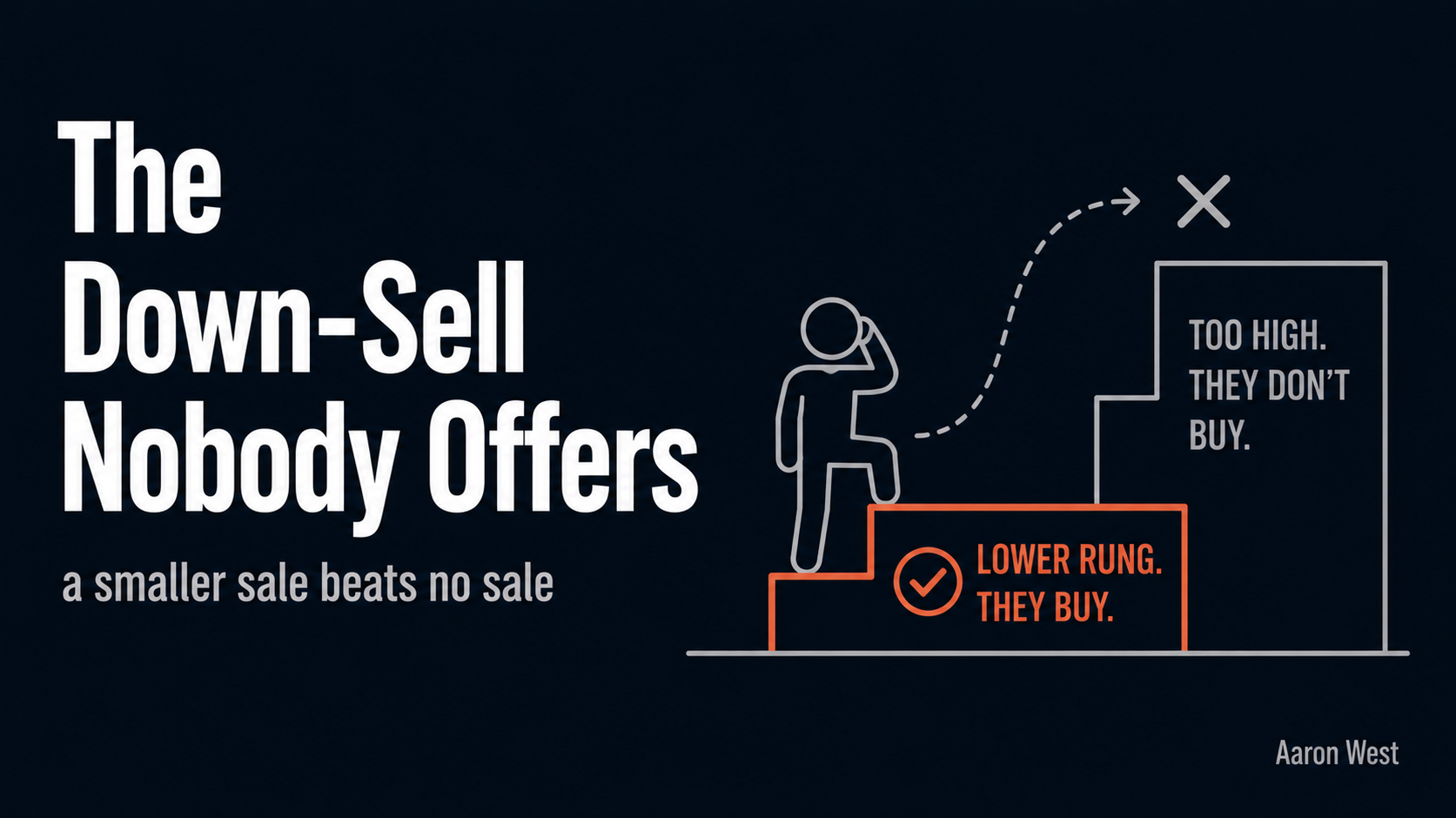
The Down-Sell Nobody Offers (and Why It Saves the Sale)
Almost every online store has an upsell. Almost none have a down-sell. We pour energy into getting customers to spend more, the upgrade, the add-on, the bundle, and we completely ignore the move that saves the sale when a customer is about to spend nothing.
Continue reading...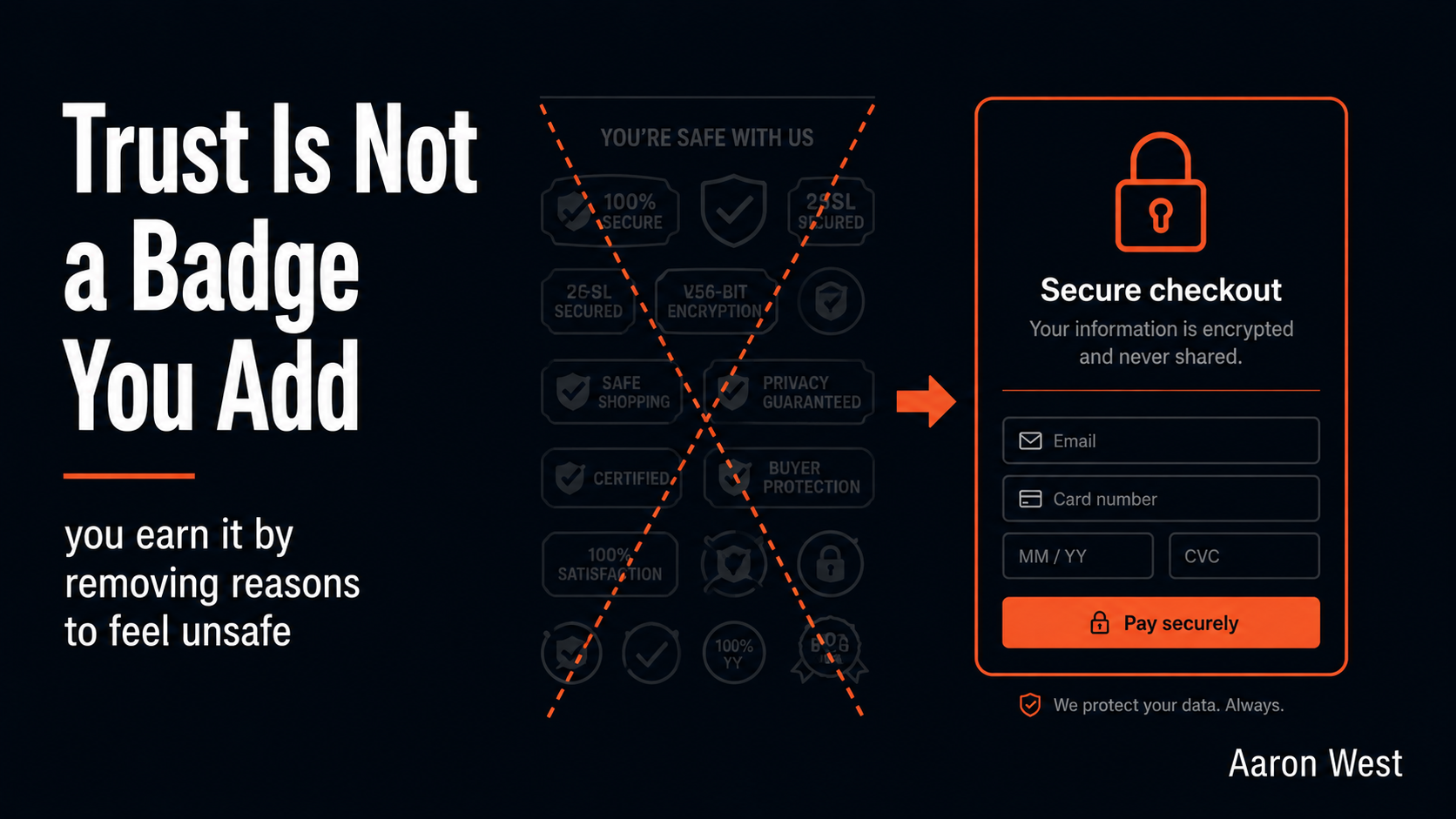
Trust Is Not a Badge You Add to Your Checkout
The moment a customer is about to type in their card number is the most anxious moment in the entire buying journey, and it is where a surprising number of otherwise-willing buyers quietly back out. Around a fifth of shoppers have abandoned a purchase specifically…
Continue reading...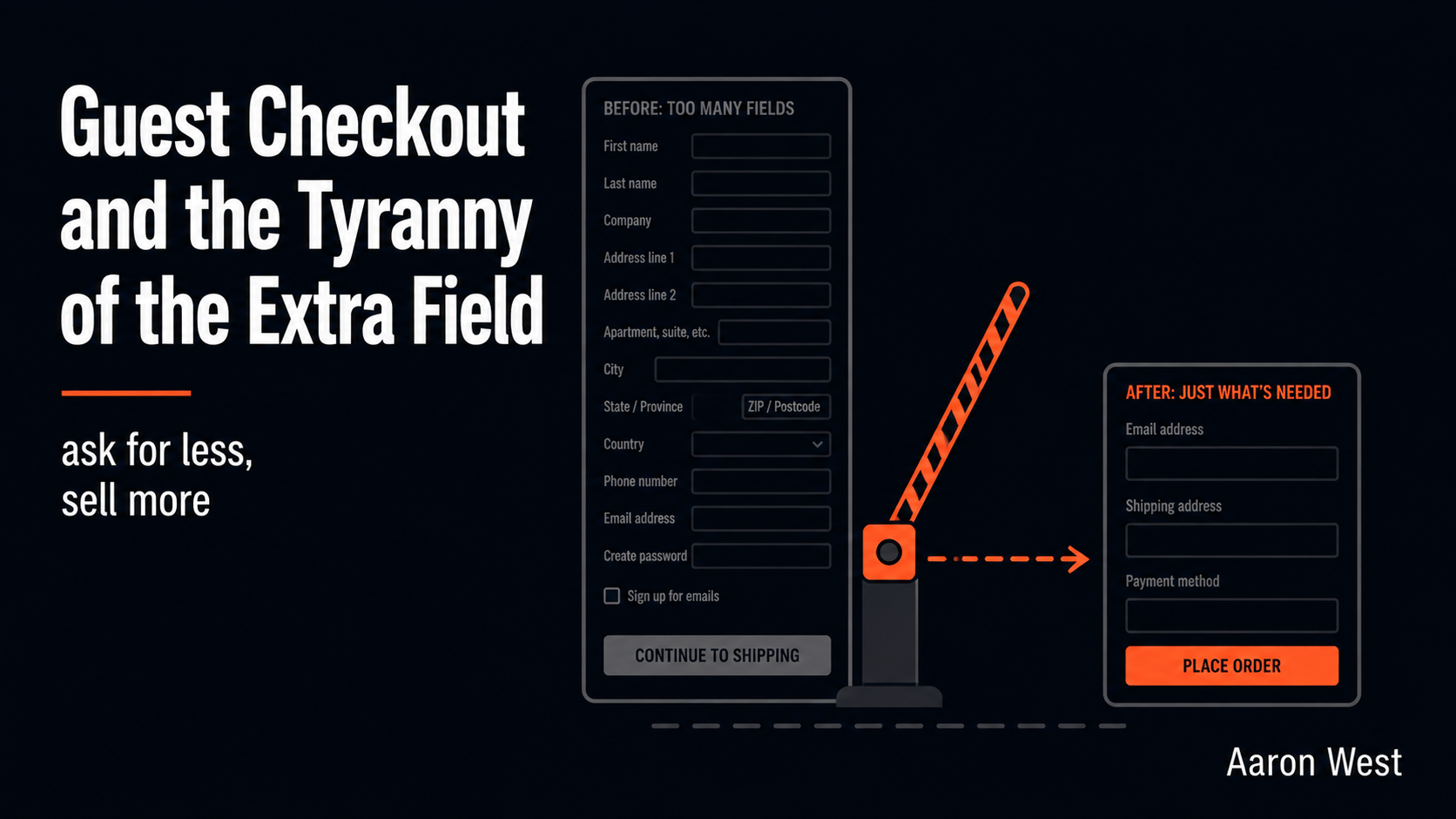
Guest Checkout and the Tyranny of the Extra Field
Two of the most damaging things you can do at checkout are entirely self-inflicted, and they come from the same mistake: putting your convenience ahead of the customer's. The first is forcing people to create an account before they can buy. The second is making…
Continue reading...