Upsell, Cross-Sell, Down-Sell: The Three Moves Most Stores Get Wrong

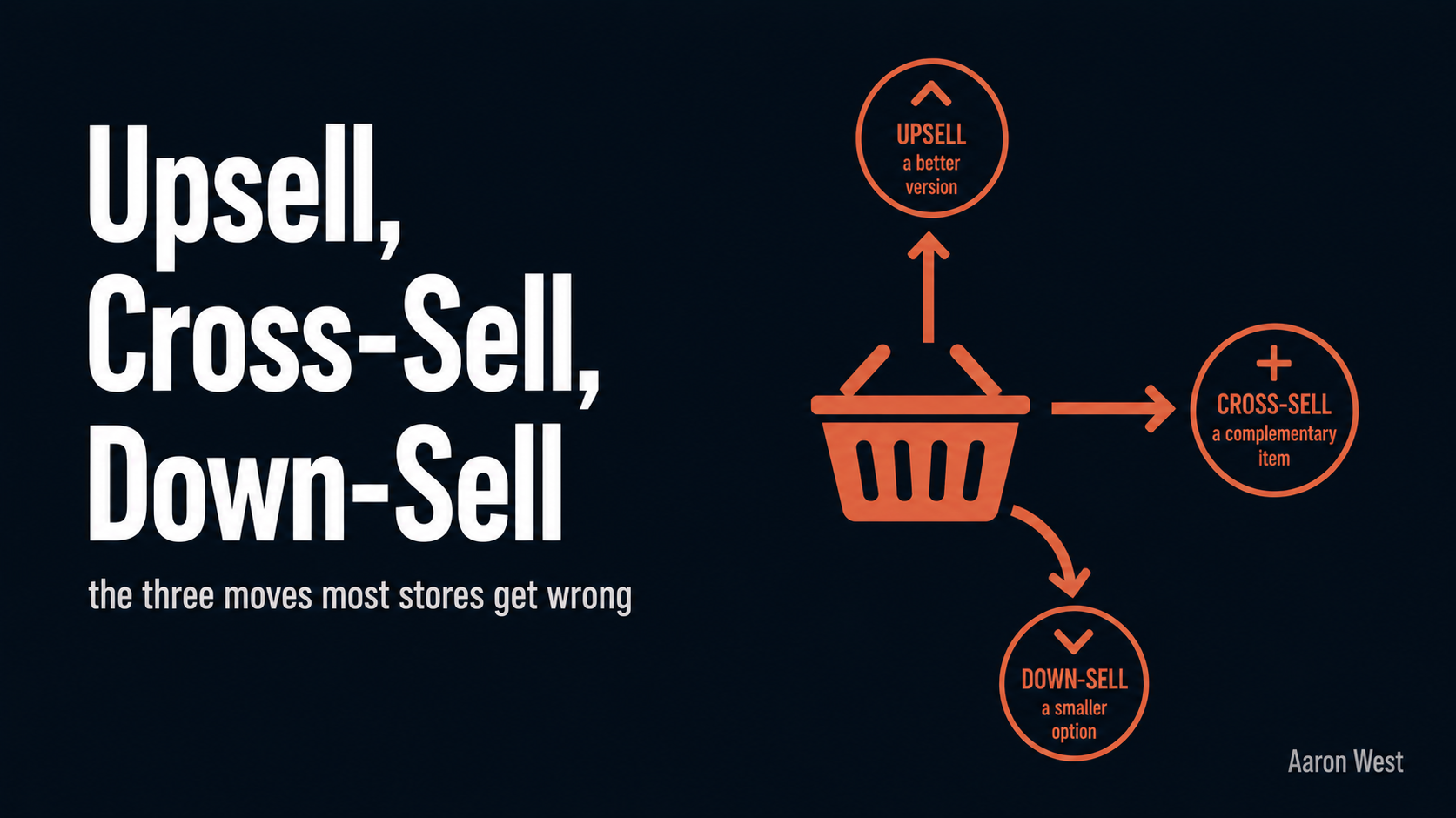
Table of Contents
Raising the average order value, getting each customer who already chose to buy to spend a little more, is usually the fastest and cheapest way to grow an e-commerce business. You are not paying to acquire anyone or convince anyone, you are making more of the traffic and the trust you already earned. And the three classic moves for doing it, upselling, cross-selling, and down-selling, are powerful precisely because they work on a customer who has already decided to buy. So why do so many stores get so little from them, or actively damage the sale by trying?
Because most stores have the frame wrong. They think of these three moves as "selling more stuff," a way to squeeze extra revenue out of a checkout. That framing is exactly why their upsells feel like a cash grab and their cross-sells get ignored. The right frame is different: each of these is a way to help a customer arrive at the right purchase, and each one fits a different moment and a different customer intent. Get the move-to-moment match right and you raise both the basket and the satisfaction. Get it wrong and you do not just fail to add a sale, you damage the one you already had. This is the anchor for the whole AOV side of the hub, and it starts with knowing which move is which.
What the three moves actually are
They get muddled constantly, so here they are in plain terms, with the customer intent each one serves:
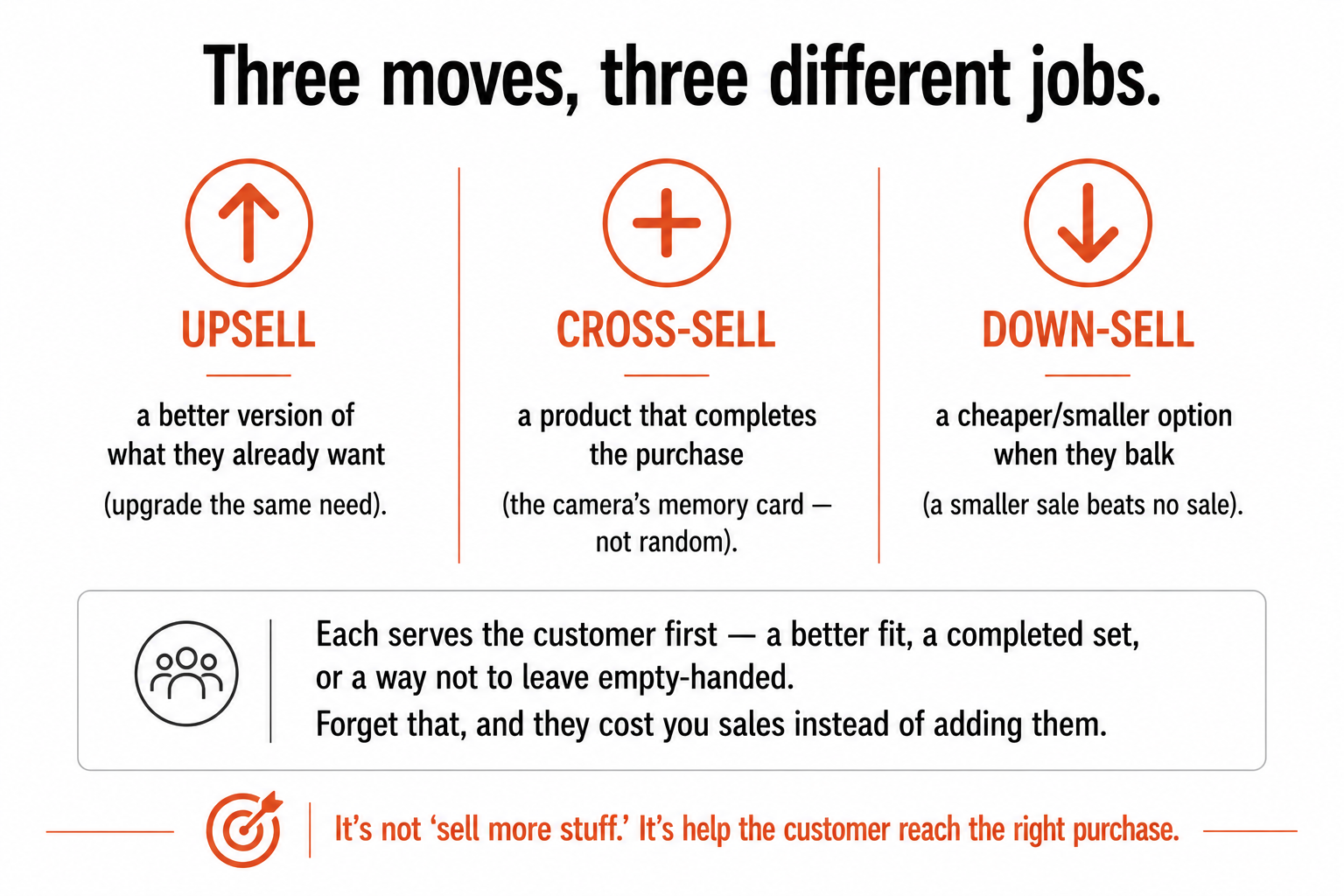
- Upsell: a better version of the thing they already want. The customer is choosing a product; the upsell offers the upgraded model, the larger size, the premium tier. Same need, higher value. It works when the better version is a genuinely obvious next step, the bigger bag of coffee, the model with the feature they will clearly want.
- Cross-sell: a complementary product that completes the purchase. The customer has chosen the camera; the cross-sell is the memory card and the case, the things that make the original purchase work better. It is not "here are some other things we sell," it is completing the story the customer already started.
- Down-sell: a cheaper or smaller alternative, offered when the customer balks. The customer is hesitating at the price or the size of the commitment, and rather than lose them entirely, you offer a lower rung they can step onto, the starter size, the single instead of the bundle, the one-time instead of the subscription. A smaller sale instead of no sale. This is the move almost nobody offers, and it is important enough that it gets its own piece.
Notice that all three serve the customer first. The upsell gets them a better fit, the cross-sell completes their purchase, the down-sell keeps a hesitant buyer from leaving empty-handed. That is the whole point, and the moment you forget it is the moment these moves start costing you sales instead of adding them.
The mistake that turns a basket-builder into a sale-killer
The single most common way stores wreck these moves is the same one every time: irrelevance. An upsell or cross-sell that does not genuinely fit what the customer is buying reads instantly as a cash grab, and a cash grab does not just fail to convert, it actively erodes the trust that got you the original sale. This is why the generic "you may also like" carousel of semi-random products under every page converts so poorly: it is not strategic, it is not completing anything, it is just inventory shown in the hope something sticks. The customer can feel the difference between "this genuinely goes with what you are buying" and "we are trying to pad the order," and the second one makes them trust the whole store a little less.
Relevance is the entire game. A cross-sell should complete the story the customer started, the memory card with the camera, not a random unrelated product. An upsell should be the version they would plausibly have wanted anyway, not the most expensive thing you can bolt on. When the offer is genuinely useful, the customer experiences it as help and the basket grows. When it is transparently about your revenue rather than their purchase, you can lose the upsell and dent the sale you already had. The bar for putting an offer in front of a buying customer is not "could they conceivably want this," it is "does this genuinely make their purchase better." If it does not clear that bar, leave it out, because an irrelevant offer is worse than no offer.
Right move, right moment
Beyond relevance, the other half of getting this right is timing, because each move has a moment where it fits and moments where it grates. Putting the right offer at the wrong point in the journey is its own way of failing.
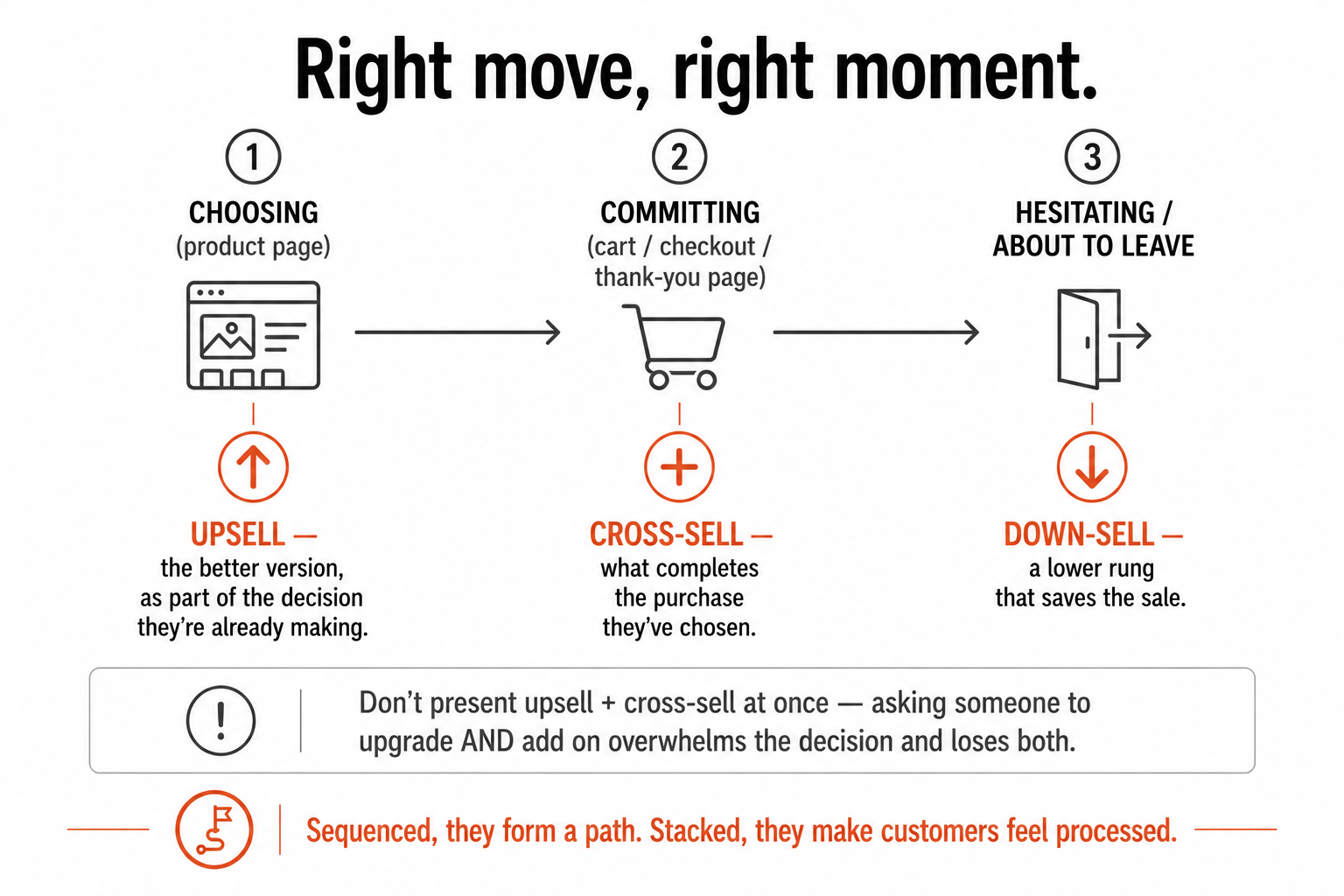
The upsell belongs at the point of choosing, on the product page or as the customer selects, when "actually, the better version is right here" is a natural part of the decision they are already making. The cross-sell belongs once the core decision is made, in the cart, at checkout, or on the thank-you page after purchase, the moment when "you have chosen this, here is what completes it" makes sense and does not distract from the main decision. A useful rule that follows from this: do not present an upsell and a cross-sell at the same time, because asking someone to both upgrade and add on at once overwhelms the decision and usually loses both. And the down-sell belongs at the moment of hesitation, when a customer is lingering, balking at the price, or about to abandon, the instant where a lower rung saves the sale.
Get the sequence right and the moves stop competing with each other and start forming a path: upgrade at the point of choice, complete at the point of commitment, and a lower rung waiting for anyone about to walk. Get it wrong, stack everything at once, and you produce the cluttered, pushy checkout that makes customers feel processed rather than helped.
Track margin, not basket size
One discipline holds all of this together, and it is easy to lose: the goal is more profit per customer, not a bigger number on the AOV dashboard. Over-optimising for basket size can quietly backfire. Aggressive volume discounts ("buy three, save fifteen percent") can lift the average order value while cannibalising sales you would have made at full margin, so the headline number rises and the actual profit falls. A bigger basket built on thinner margins is not a win, it just looks like one. This is the decision-versus-vanity-metric problem again: AOV on its own can flatter you. Track the profit per order, not just the size of it.
The same restraint applies to how many offers you put in front of a customer. Each move has to earn its place, the same discipline that protects the inbox and the thank-you page. One relevant, well-timed offer helps. Five competing offers at every step is a slot machine, and it makes the customer trust you less and buy less. Restraint is not the timid choice here. It is the profitable one.
So the reframe to carry out of this: upselling, cross-selling, and down-selling are not three ways to extract more money from a checkout. They are three ways to help a customer arrive at the right purchase, a better version, a completed set, or an affordable alternative they can actually say yes to. Done with relevance, the right timing, and an eye on margin, all three raise the basket and the satisfaction at the same time. Done as a cash grab, they cost you the sale you had already won. The move is right when it genuinely serves the customer. It backfires the moment it only serves you.
A few common questions
What's the difference between upselling, cross-selling, and down-selling? An upsell offers a better version of the thing the customer already wants, the upgraded model, the larger size, the premium tier, same need, higher value. A cross-sell offers a complementary product that completes the purchase, the memory card and case with the camera, not a random extra. A down-sell offers a cheaper or smaller alternative when the customer balks at the main option, a starter size, a single instead of a bundle, saving a smaller sale instead of losing the whole thing. All three serve the customer first: a better fit, a completed set, or a way not to leave empty-handed.
Why do upsells and cross-sells sometimes hurt sales? Because of irrelevance. An offer that doesn't genuinely fit what the customer is buying reads as a cash grab, and a cash grab doesn't just fail to convert, it erodes the trust that got you the original sale. That's why generic "you may also like" carousels of semi-random products convert so poorly, they're not completing anything, they're just inventory shown in hope. The bar for putting an offer in front of a buying customer isn't "could they conceivably want this," it's "does this genuinely make their purchase better." If it doesn't clear that bar, leave it out, because an irrelevant offer is worse than no offer.
When should I show an upsell versus a cross-sell? Match the move to the moment. The upsell belongs at the point of choosing, on the product page, when "the better version is right here" is part of the decision they're already making. The cross-sell belongs once the core decision is made, in the cart, at checkout, or on the thank-you page, when "you've chosen this, here's what completes it" makes sense. A useful rule: don't present both at once, asking someone to upgrade and add on simultaneously overwhelms the decision and usually loses both. And keep a down-sell ready for the moment of hesitation, when a customer is about to abandon.
Does increasing average order value always increase profit? No, and this is the trap. Over-optimising for basket size can backfire, aggressive volume discounts can lift average order value while cannibalising sales you'd have made at full margin, so the headline number rises while actual profit falls. A bigger basket on thinner margins isn't a win, it just looks like one. Track profit per order, not just its size. The goal of these moves is more profit per customer, achieved by genuinely helping them reach the right purchase, not a bigger number on the AOV dashboard.
You should also read:
Payment Friction Is the Last Gate, and the Most Absurd Place to Lose a Sale
The most absurd way to lose a customer is at the very last step, when someone has chosen the product, accepted the price, filled in their details, reached for their wallet, and then cannot pay the way they want to. Every other lost sale is…
Continue reading...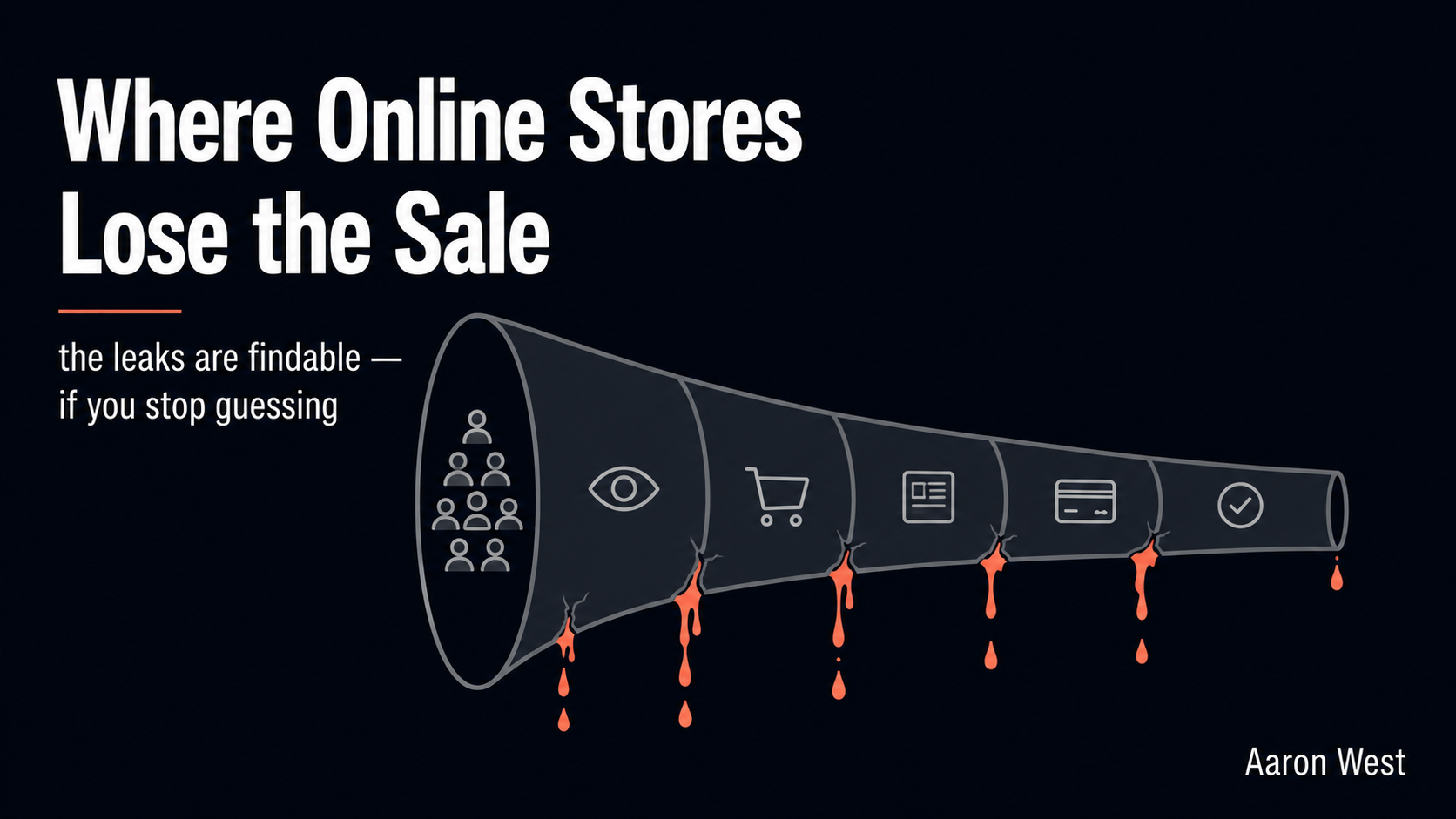
Where Online Stores Lose the Sale
Most online stores spend almost all their energy trying to get more people to show up, and almost none on the fact that the overwhelming majority of the people who already showed up leave without buying. This is backwards. You have, sitting in your analytics…
Continue reading...
Why Most Chatbot Projects Fail Before a Single Line of Code
Most chatbot projects are lost before anyone opens a tool. By the time the building starts, the decisions that decide success or failure, what the bot is for, what it will handle, how it will be measured, who will maintain it, have usually already been…
Continue reading...