Payment Friction Is the Last Gate, and the Most Absurd Place to Lose a Sale

Table of Contents
The most absurd way to lose a customer is at the very last step, when someone has chosen the product, accepted the price, filled in their details, reached for their wallet, and then cannot pay the way they want to. Every other lost sale is at least a failure of persuasion. This one is a failure of plumbing. The customer did everything right, decided to give you money, and you could not take it. Around one in eight shoppers who abandon a checkout do so specifically because their preferred payment method was not offered, and that is among the most maddening statistics in all of e-commerce, because unlike almost every other leak, this one has nothing to do with whether your offer was good. It was good enough. They wanted to pay. You just made it too hard.
This completes the checkout-friction set under my cornerstone on where stores lose the sale, and it is the natural close to the checkout-abandonment and guest-checkout pieces, which both flagged payment as a leak without going deep on it. Here I will explain the two distinct payment problems (missing the method, and the friction of using it), why express and wallet payment has become the single biggest fix, and the judgment call that stops you from overcorrecting. Plain language, no payment-processor sales pitch.
The two payment problems, and why they hide from you
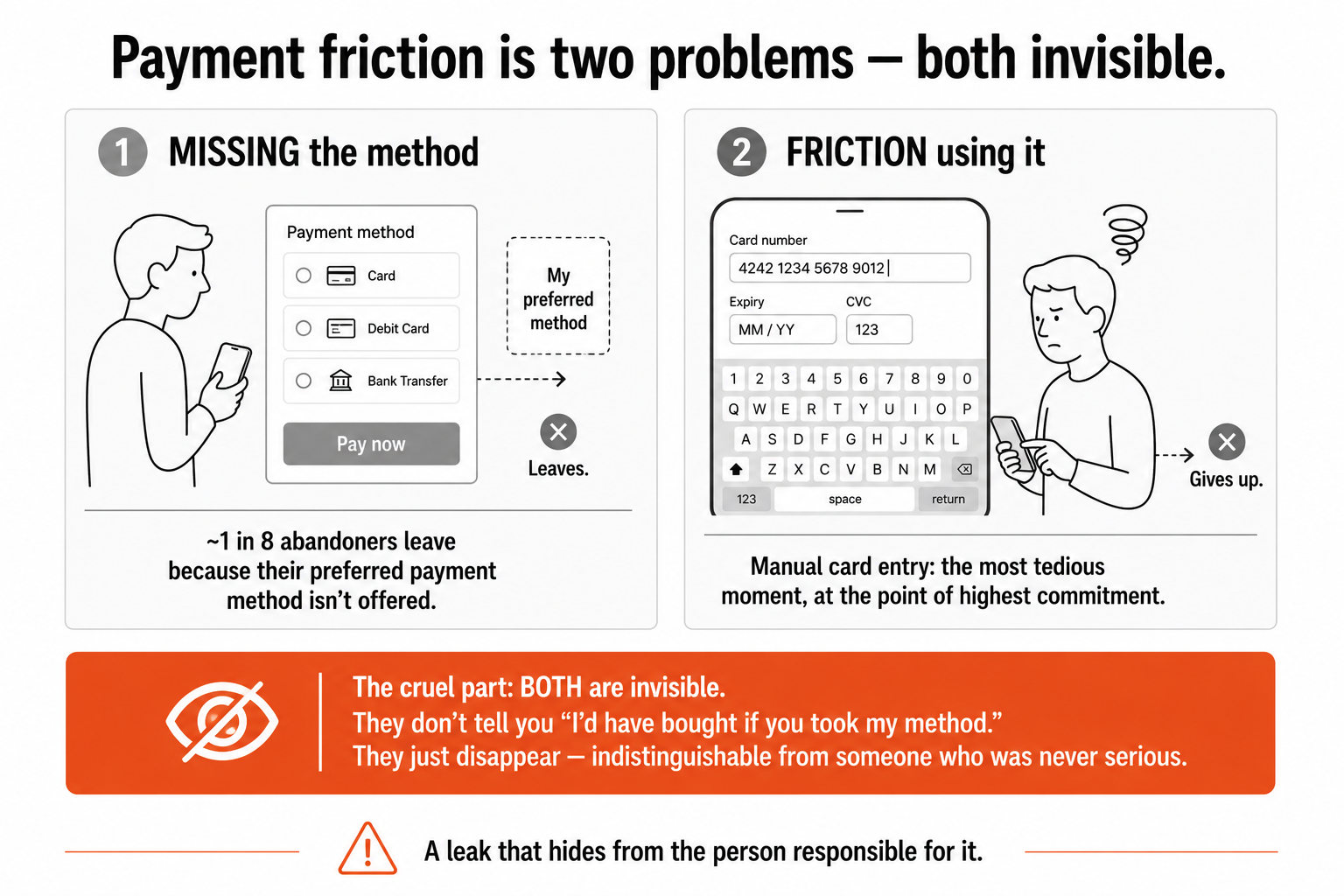
Payment friction is really two separate problems wearing one label, and they need different fixes. The first is simple absence: the customer's preferred way to pay is not on offer. People develop strong habits around payment, a particular wallet, a particular method, the way they always pay online, and a meaningful share of them will abandon rather than enter their card manually or sign up for something unfamiliar. If the option they reach for is not there, you have lost them not over price or product but over a gap in your plumbing.
The second is friction in the act of paying, even when the method exists. Typing a sixteen-digit card number, an expiry date, a security code, and a billing address is genuinely tedious on a desktop and actively painful on a phone, where most shopping now happens, fat fingers on a small keyboard, easy to mistype, easy to give up. Manual card entry is one of the single most friction-heavy moments in the entire buying journey, and it sits right at the point of highest commitment, which is the worst possible place for tedium.
Here is what makes both of these so dangerous: they are invisible to you. This is the cruel part. A customer who leaves because your preferred payment method was missing does not email you to say "I would have bought if you took my usual method." They do not leave a comment. They just silently disappear, indistinguishable in your analytics from someone who was never serious, and you go on believing your checkout is fine because nobody is complaining, while a steady trickle of ready buyers leaves over a problem you cannot see and therefore never fix. Payment friction is a leak that actively hides from the person responsible for it, which is exactly why it persists in so many stores that are otherwise well run.
Express and wallet payment: the single biggest fix
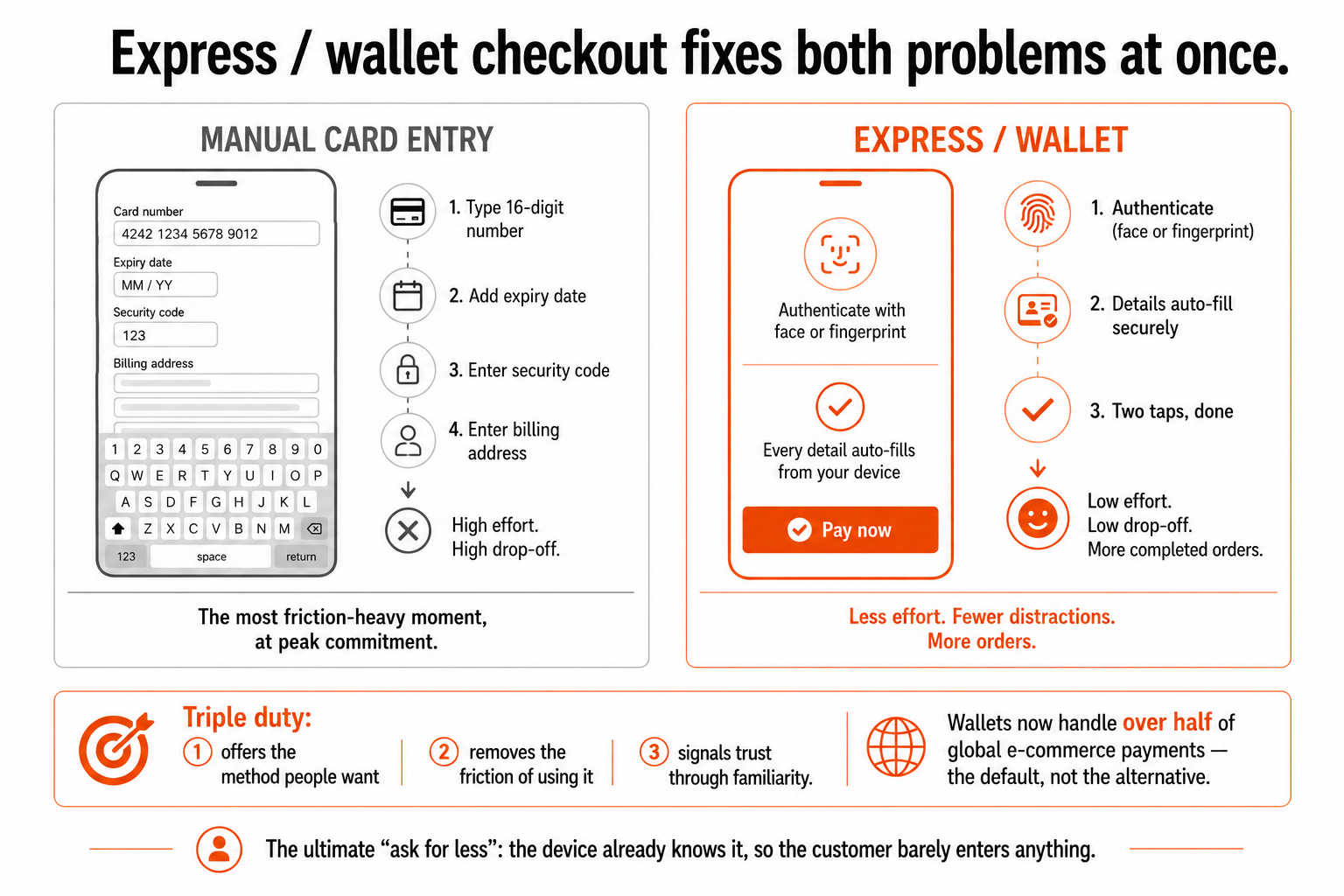
The most effective single thing most stores can do about payment friction is offer express, wallet-based checkout, because it solves both problems at once. Digital wallets have quietly become the dominant way people pay online, they now account for more than half of global e-commerce payments, which means they are no longer the alternative option to add for completeness, they are increasingly the default people expect, and a store without them feels behind. So offering them fixes the first problem (the method people want is there) almost by definition.
But the deeper reason they matter is how they fix the second problem. A wallet or express checkout works by eliminating manual entry entirely: instead of typing a card number and an address, the customer authenticates with their face or fingerprint and every detail, payment, billing, shipping, fills in automatically from what their device already holds. The single most tedious, error-prone, abandonment-prone part of checkout, the manual data entry, collapses into a two-tap confirmation. This is the same principle as the guest-checkout argument, asking the customer to do less, taken to its logical end: the best checkout is one where the customer barely has to enter anything at all, because the device they are holding already knows it. Express payment is the ultimate "ask for less."
It is also, not incidentally, a trust signal. A payment method someone uses every day carries instant, effortless credibility, seeing it at checkout reassures them in a way no security badge can, because it is familiar rather than declarative. So express and wallet payment does triple duty: it offers the method people want, it removes the friction of using it, and it quietly signals safety through familiarity. For most consumer stores, getting express checkout right is the highest-leverage payment improvement available, and it matters most on mobile, where manual entry hurts worst and where, increasingly, the sale is won or lost.
The judgment call: match, don't maximise
Now the balancing point, because the lesson here is not "add every payment method that exists." That overcorrects into a different problem, and it is the same mistake as the wall of trust badges: a checkout offering fifteen payment options is cluttered, slower, and presents the customer with a needless decision at the exact moment you want them moving smoothly toward "confirm." Too much choice is its own friction. Every method you add also carries real cost, fees, integration, maintenance, another thing that can break, so piling them on indiscriminately is neither free nor helpful. The goal is not maximal choice. The goal is to not be missing the method your particular customer was going to use.
That distinction is everything, and it makes payment a question you answer with your own data and your own market rather than a generic checklist. Which methods your customers actually reach for depends heavily on who and where they are, payment habits vary enormously by country and region, and a method that is utterly dominant in one market can be nearly unknown in another. A store selling internationally that offers only the payment methods common in its home country is quietly losing a slice of every foreign market to a plumbing gap. So the work is not "add everything," it is: look at who your customers are and where they buy from, find out how those people actually prefer to pay, and make sure those specific methods, plus a strong express/wallet option for the friction win, are present and prominent. Offer the few that matter to your actual buyers, well, rather than a cluttered wall of everything.
That is payment friction in full, and it is the fitting last piece of the checkout story, because it is literally the last gate. Think about everything that had to go right to get someone here: a product page that answered their doubts, a checkout you stripped of needless friction, the trust you earned at the moment of payment. All of that careful work, every bit of it, is wasted at the final tap if the customer cannot pay the way they want to, because they were entirely done deciding and you lost them anyway, over plumbing. So the test is simple, and worth applying to your own store honestly: can your customer pay, on their phone, with the method they actually reach for, in as few taps as possible? If the answer is no, you are losing buyers who did everything right, silently, and the fix is squarely within your control. Mind the last gate. It is the most unforgivable place to lose a sale.
A few common questions
Why do customers abandon checkout over payment? Two reasons, and both are plumbing failures rather than persuasion ones. First, their preferred payment method isn't offered, around one in eight people who abandon checkout do so specifically for this, and they leave rather than enter a card manually or sign up for something unfamiliar. Second, the friction of paying even when the method exists: typing a sixteen-digit card number, expiry, security code, and billing address is tedious on a desktop and painful on a phone, right at the point of highest commitment. Both are especially dangerous because they're invisible, customers don't tell you they'd have bought if you took their method, they just disappear.
What's the best way to reduce payment friction? Offer express, wallet-based checkout, it fixes both payment problems at once. Digital wallets now handle more than half of global e-commerce payments, so they're the method people increasingly expect by default. More importantly, they eliminate manual entry: the customer authenticates with their face or fingerprint and all payment, billing, and shipping details auto-fill from their device, collapsing the most tedious, error-prone part of checkout into a two-tap confirmation. It's the logical end of "ask the customer to do less," and it doubles as a trust signal, since a familiar payment method carries instant credibility. It matters most on mobile, where manual entry hurts worst.
Should I add as many payment methods as possible? No, match rather than maximise. A checkout with fifteen payment options is cluttered, slower, and forces a needless decision at the moment you want the customer moving smoothly to "confirm", too much choice is its own friction, and every method carries real cost and maintenance. The goal isn't maximal choice, it's not being missing the method your particular customer was going to use. Payment habits vary enormously by country and region, so use your own data and market to find how your actual customers prefer to pay, then offer those specific methods plus a strong express/wallet option, prominently.
Why is payment friction so often overlooked? Because it hides from the person responsible for it. A customer who leaves because their preferred method was missing, or because manual card entry was too painful, doesn't complain, they silently disappear, indistinguishable in your analytics from someone who was never serious. So store owners go on believing their checkout is fine because nobody's complaining, while a steady trickle of ready buyers leaves over a problem they can't see. The fix is to stop assuming and test it: try to buy from your own store, on a phone, with a few different payment methods, and see where it gets hard.
You should also read:
The Down-Sell Nobody Offers (and Why It Saves the Sale)
Almost every online store has an upsell. Almost none have a down-sell. We pour energy into getting customers to spend more, the upgrade, the add-on, the bundle, and we completely ignore the move that saves the sale when a customer is about to spend nothing.
Continue reading...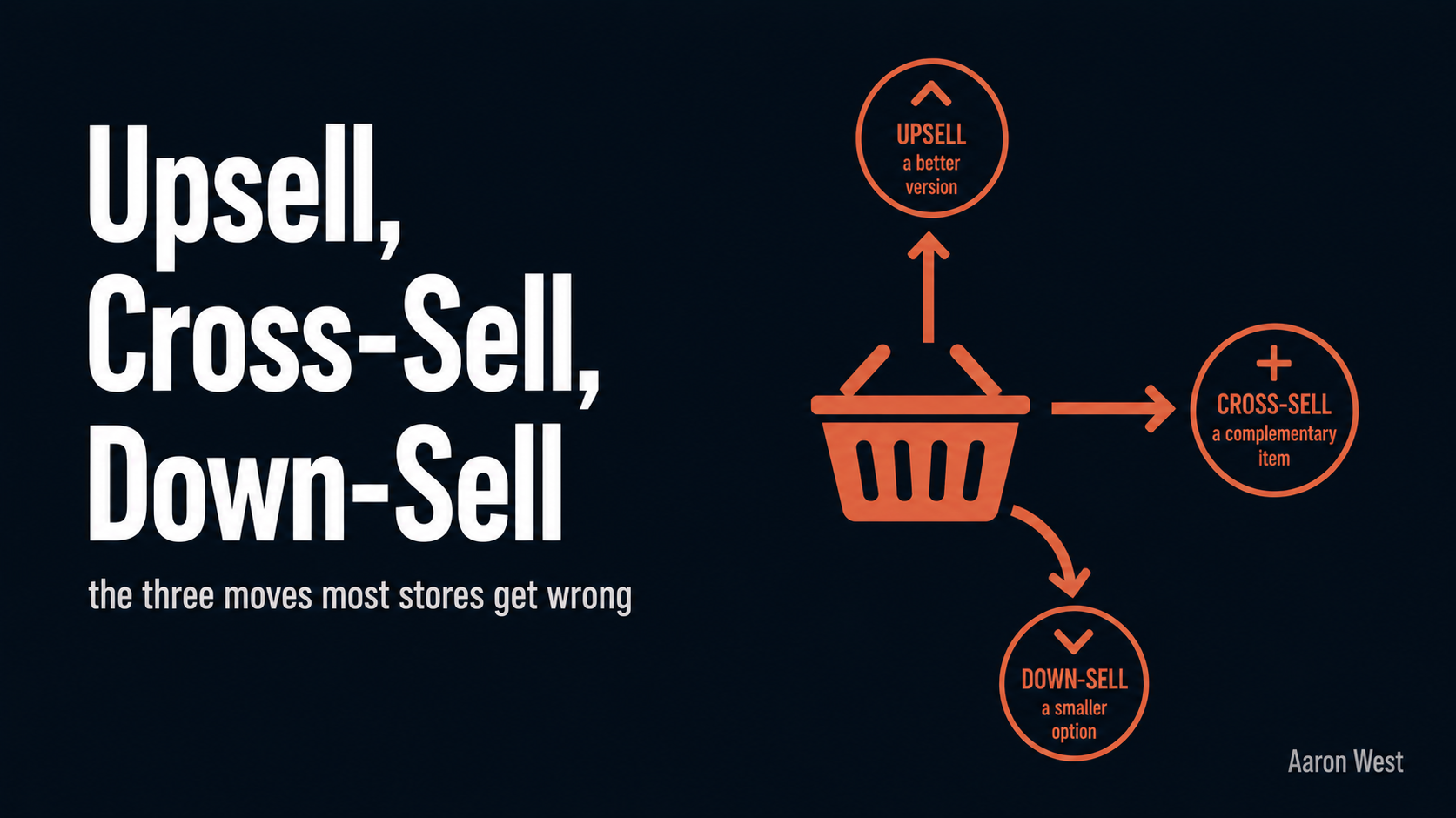
Upsell, Cross-Sell, Down-Sell: The Three Moves Most Stores Get Wrong
Raising the average order value, getting each customer who already chose to buy to spend a little more, is usually the fastest and cheapest way to grow an e-commerce business. You are not paying to acquire anyone or convince anyone, you are making more of…
Continue reading...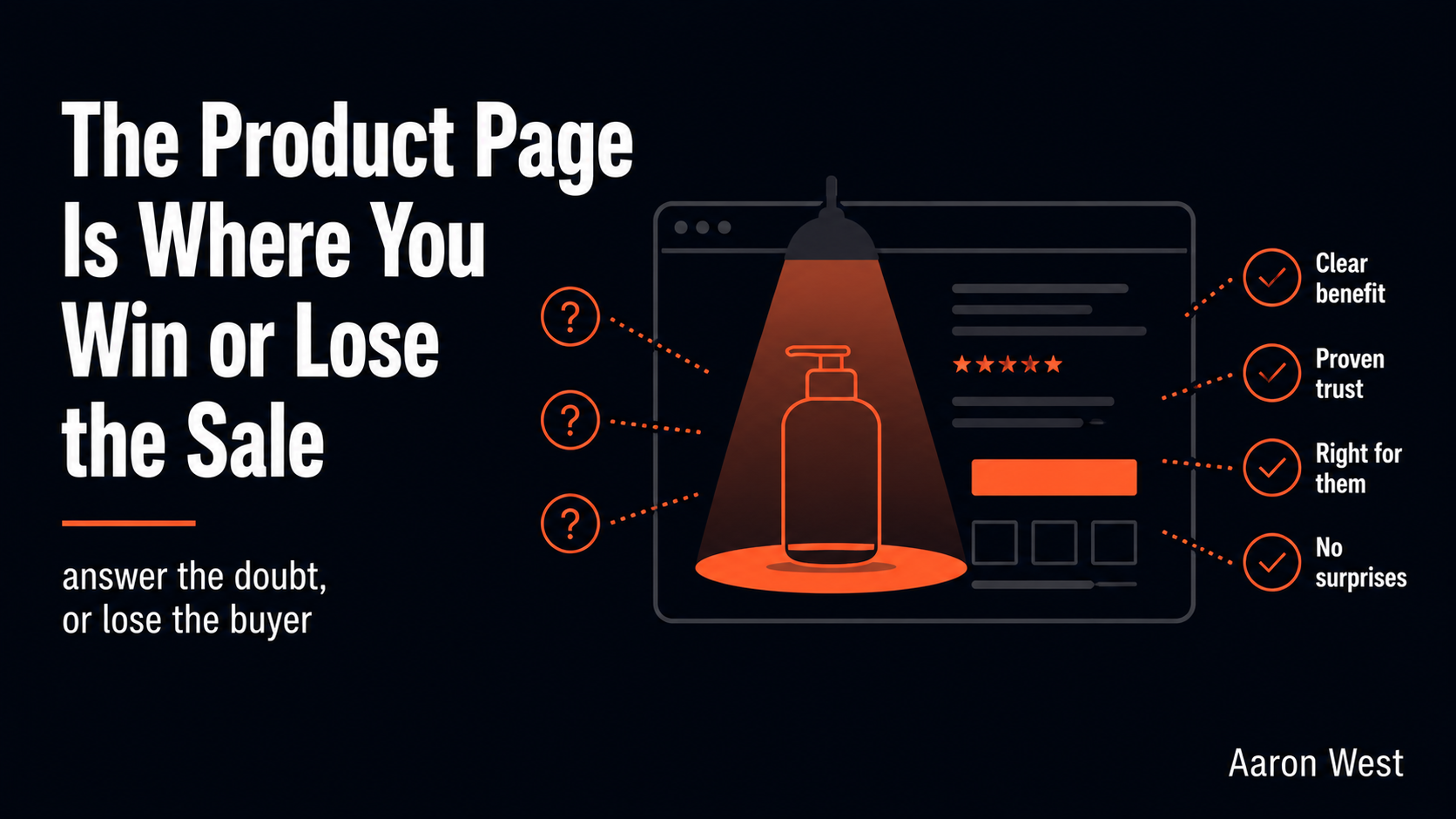
The Product Page Is Where You Win or Lose the Sale
The product page is where the buying decision actually gets made, which makes it the most important page on your store, and the one most stores treat as an afterthought. Everything before it, the ads, the homepage, the category listings, only does one job: deliver…
Continue reading...