SMS and Push: The Most Intimate Channels You Own, and the Highest Bar for Using Them

Table of Contents
SMS and push notifications are the most intimate channels you own, which makes them the most powerful and the easiest to ruin. The rule for both is the same: the more personal the channel, the higher the bar for sending. Use them for the genuinely timely and genuinely wanted, or don't use them at all, because there's no faster way to get someone to resent your brand than buzzing their pocket with something that didn't need to.
This is the third core of the Email & SMS pillar, and it's where the cornerstone's warning about owned channels gets sharpest. If email is the channel you can abuse fastest, SMS and push are the channels where abuse is punished hardest. Here's why intimacy changes the rules, how SMS and push actually differ, and the bar a message has to clear before it earns the interruption.
Why intimacy changes everything
A marketing email lands in a space people have mentally filed as "stuff I'll get to." A text message lands in the same place as messages from their family and friends. A push notification interrupts whatever they're doing right now, on the device that's never more than a metre away. That's a fundamentally more personal, more immediate space than the inbox, and the rules that work in email don't carry over.
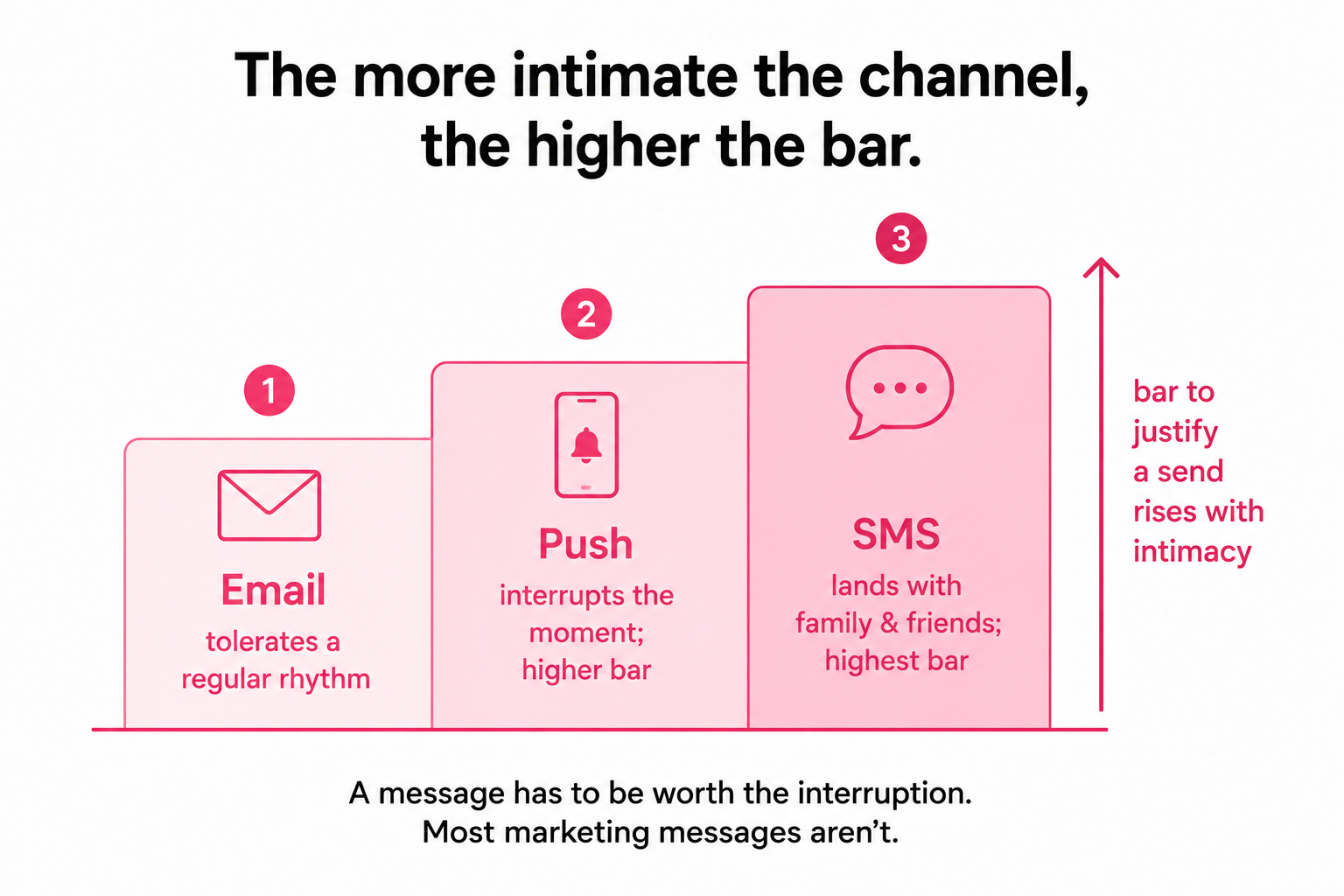
Email tolerates a regular rhythm; people accept a steady cadence from brands they like. SMS and push tolerate far less, and they punish overuse far faster. The same message that would be a forgettable email becomes an irritation as a text, because it intruded somewhere more personal to say something that didn't warrant it. The intimacy that makes these channels powerful is exactly the thing you burn when you overuse them, and unlike email, you tend to burn it in one or two sends, not ten.
So the governing principle is a ladder of intimacy: the more personal the channel, the higher the bar a message must clear to justify being sent through it. Email, a moderate bar. Push, higher. SMS, highest of all. A message has to be worth the interruption, and most marketing messages simply aren't.
SMS and push are not the same thing
People lump them together, but they work differently, and the differences decide which one fits a job.
SMS reaches a phone number directly, lands as a text, and works whether or not the person has your app, in fact whether or not they ever think about your brand between purchases. It has extraordinary immediacy and reach, and it carries a cost per message, so every send is literally money as well as goodwill. That combination, high immediacy, real cost, maximum intimacy, makes SMS the channel with the very highest bar. You're paying to interrupt someone in their most personal space, so it had better matter.
Push reaches people through your app, which means it only works for people who installed the app and granted permission, a much smaller, more committed group. It's effectively free to send, and it's easy for people to ignore or switch off entirely if you annoy them. So push is lower-cost and lower-reach than SMS, aimed at an already-engaged audience, and its failure mode is quieter: people don't pay to leave, they just disable notifications and you lose the channel without a clear signal.
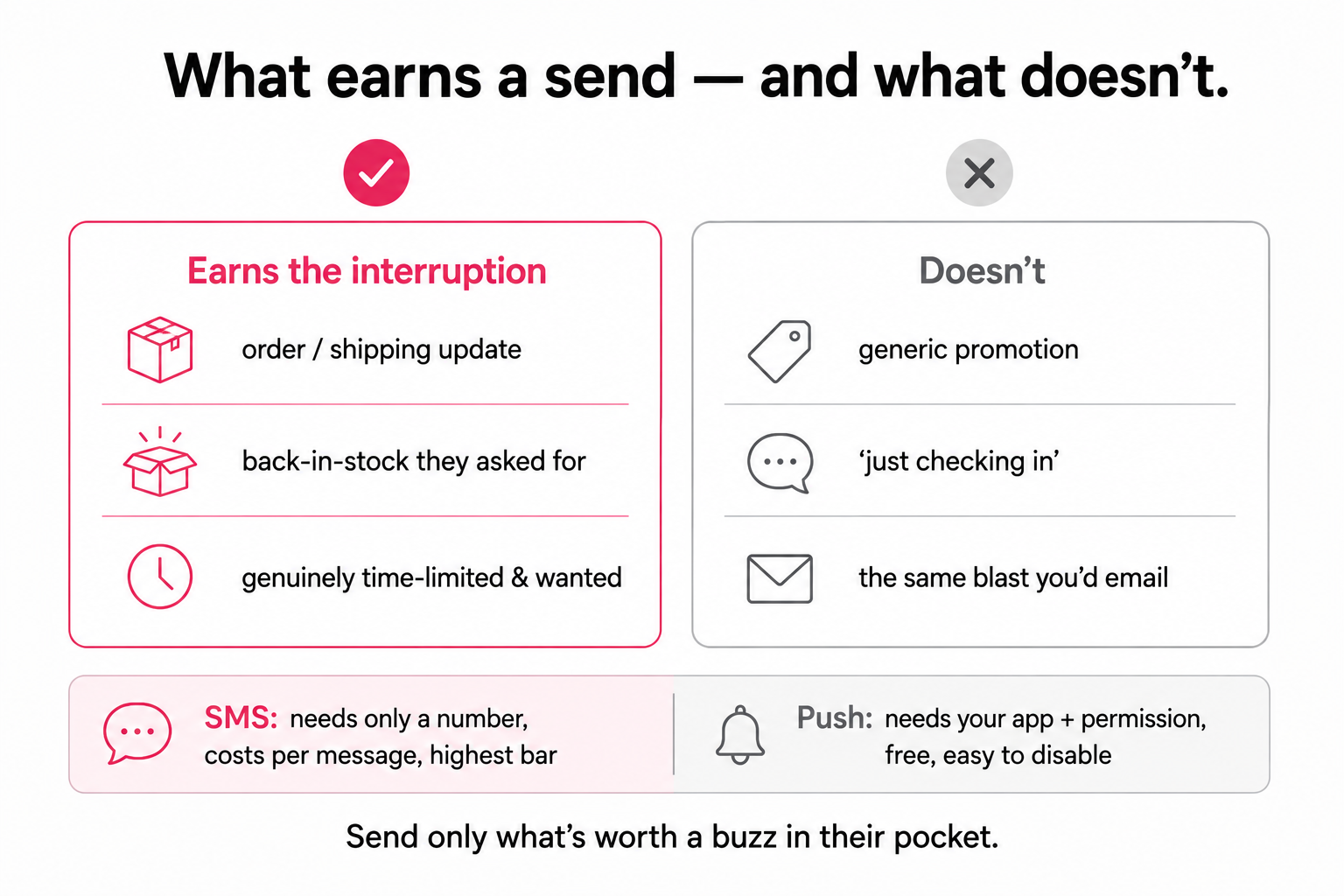
The practical choice between them comes down to a question: does the message's timeliness and importance justify the intrusion and, for SMS, the cost? An order-shipped update or a back-in-stock alert someone explicitly asked for can justify a text. A generic promotion almost never can, though it might be acceptable as a push to people who opted into exactly that.
The abuse pattern (and how fast it costs you)
The predictable way brands ruin these channels is by treating them as just another broadcast pipe: they got the phone numbers, so they start sending promotions by text the way they send them by email. It works for a send or two, and then the opt-outs come, fast and irritated, because people guard their text messages more fiercely than their inbox. The very thing that made SMS attractive, that texts get read almost immediately, works against you when the text wasn't worth reading.
This is the engagement trap from why more emails isn't a retention strategy, but accelerated. In email, overuse erodes a relationship over weeks. In SMS, it can end one in a single ill-judged blast. The restraint isn't a nice-to-have on these channels; it's the entire strategy. Brands that "do SMS" well are mostly brands that send SMS rarely, and only when it genuinely helps the person receiving it.
One more thing that isn't optional: these are the most heavily regulated marketing channels there are. Consent rules, opt-out requirements, and timing restrictions are real legal obligations that vary by market, and getting them wrong carries real consequences. That's genuinely a legal matter to get proper advice on, not something to take from a blog post. This isn't legal advice; it's a flag that the rules here have teeth.
What these channels are actually for
SMS and push aren't smaller versions of email. They're a more intimate, more immediate space that you're allowed into conditionally, and the condition is that you respect it. Used for the genuinely timely and genuinely wanted, an order update, a real back-in-stock, a thing the person actively asked to be told, they're unmatched. Used as another promotional pipe, they're the fastest way to turn permission into resentment.
The channel that reaches them fastest is the one they'll abandon fastest if you waste it. So before any SMS or push goes out, ask the only question that matters: is this worth a buzz in their pocket? If you're not sure, the answer is no.
A few common questions
Is SMS marketing better than email? Not better, more intimate, which makes it both more powerful and more dangerous. SMS lands in the same space as messages from family and friends, so it's excellent for genuinely timely, genuinely wanted messages and corrosive for trivial ones. The more personal the channel, the higher the bar a message must clear, and SMS has the highest bar of all.
What's the difference between SMS and push notifications? SMS reaches a phone number directly, works without your app, has very high immediacy, and costs per message. Push reaches people through your app, so it only works for those who installed it and granted permission, it's effectively free to send, and it's easy for people to disable. SMS has higher reach and cost; push targets an already-engaged, smaller audience.
What should I actually send by SMS or push? Things that are genuinely time-sensitive and genuinely wanted: order and shipping updates, a back-in-stock alert someone asked for, a truly time-limited and relevant message. Generic promotions almost never justify a text, though a relevant push to people who opted into exactly that can be acceptable. The test is whether the message is worth the interruption.
How often should I send marketing texts? Rarely, and only when it genuinely helps the recipient. SMS punishes overuse far faster than email, often ending a relationship in a single ill-judged blast rather than eroding it over weeks. Brands that do SMS well mostly send it sparingly. Note too that these channels are heavily regulated, with real consent and opt-out obligations that vary by market, so get proper advice on the rules.
You should also read:
Email Is Still the Highest-Leverage Channel You Own
Email is still the highest-leverage channel in marketing, and the reason has nothing to do with it being clever or new. It's that you own it. No algorithm decides who sees your email. You reach the people who chose to hear from you, directly, on…
Continue reading...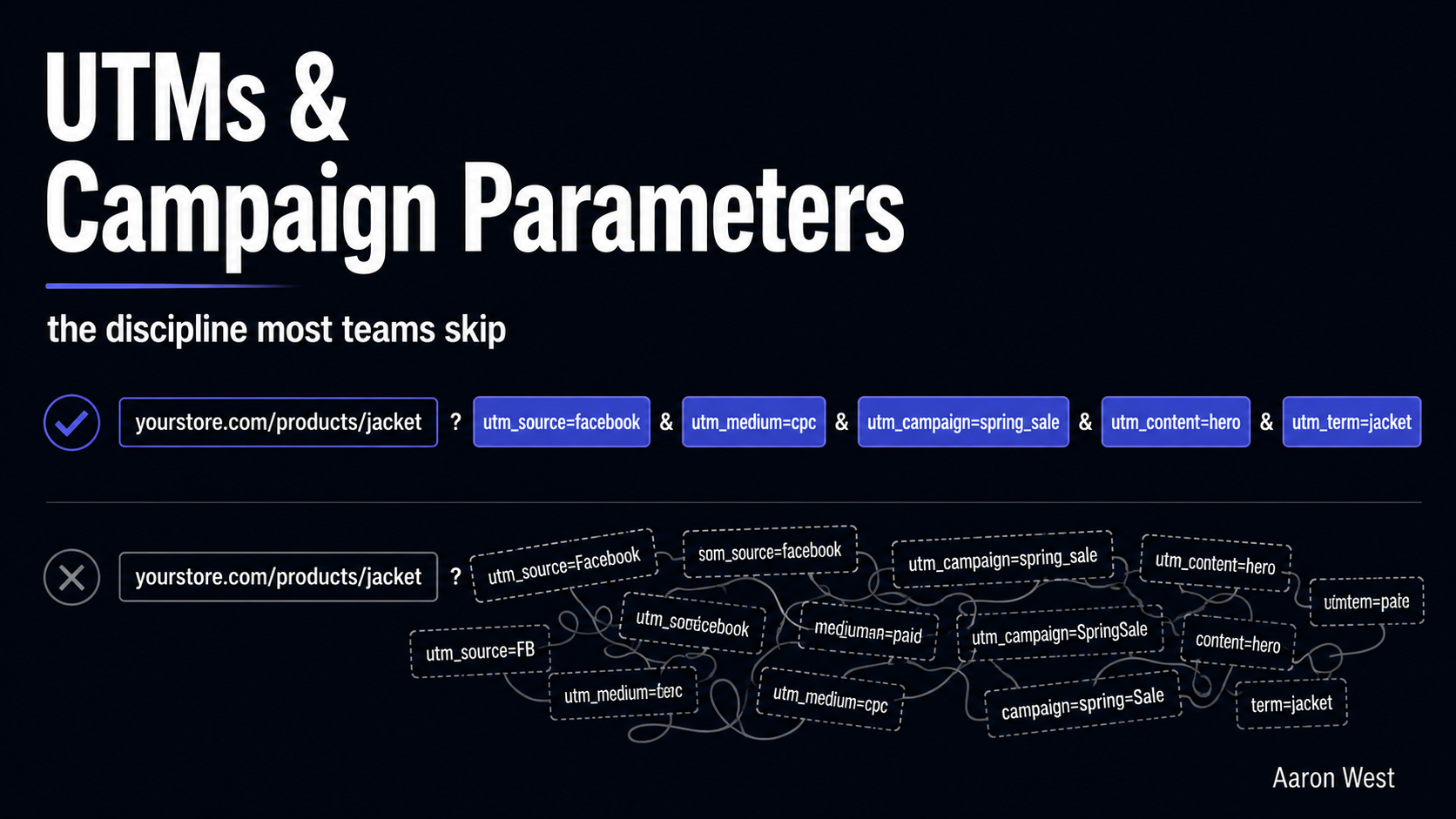
UTMs and Campaign Parameters: The Discipline Most Teams Skip
A UTM parameter is a small tag added to the end of a link that tells your analytics where a visitor came from, and the difference between a team that uses them with discipline and one that does not is the difference between knowing which…
Continue reading...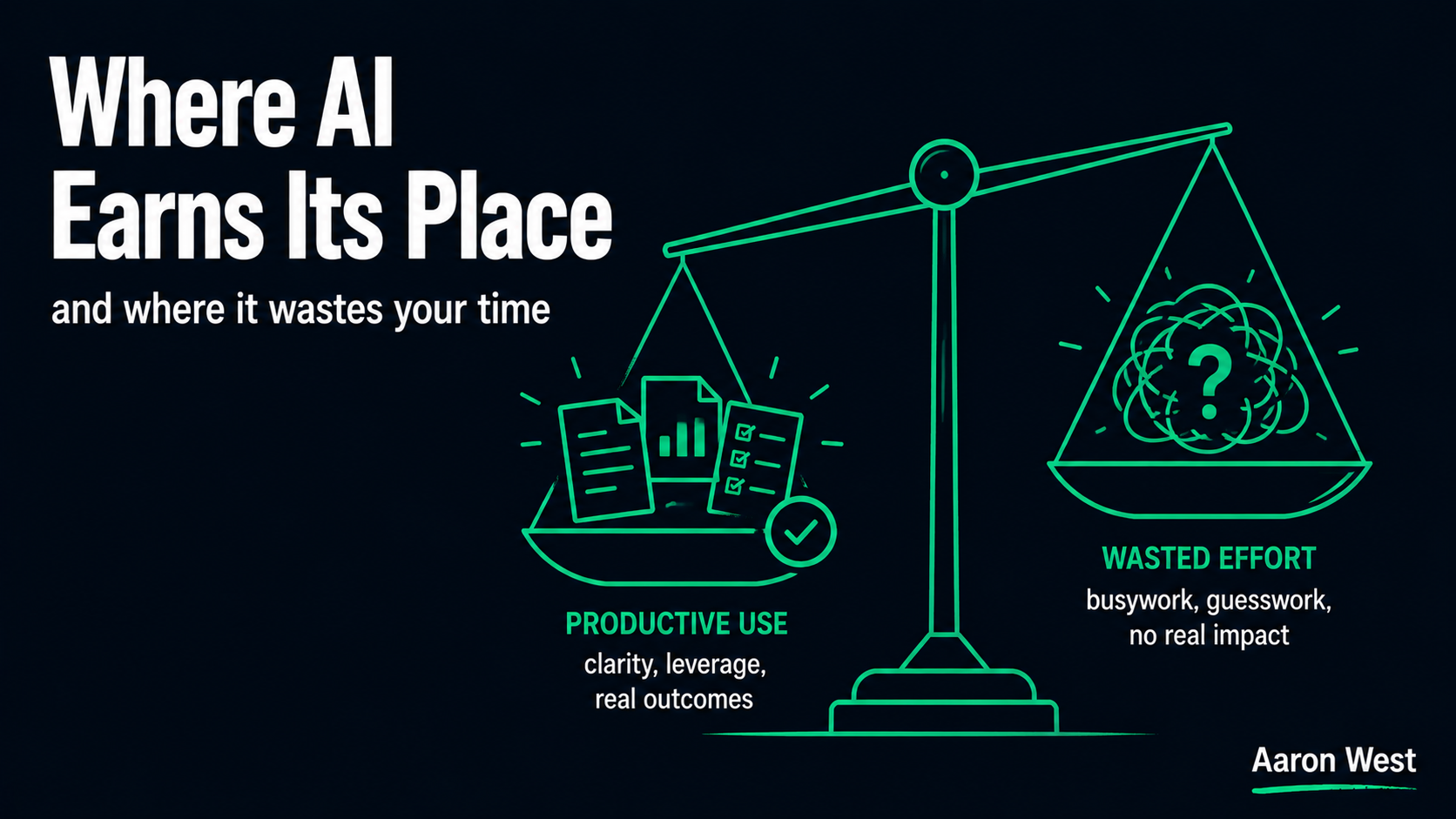
Using AI in Real E-Commerce Work: Where It Earns Its Place and Where It Wastes Your Time
After actually using AI across real e-commerce work rather than reading about it, here is the honest summary: AI is genuinely transformative for a specific, narrow band of tasks, and a confident waste of time for a surprising number of others. The skill in 2026…
Continue reading...