UTMs and Campaign Parameters: The Discipline Most Teams Skip

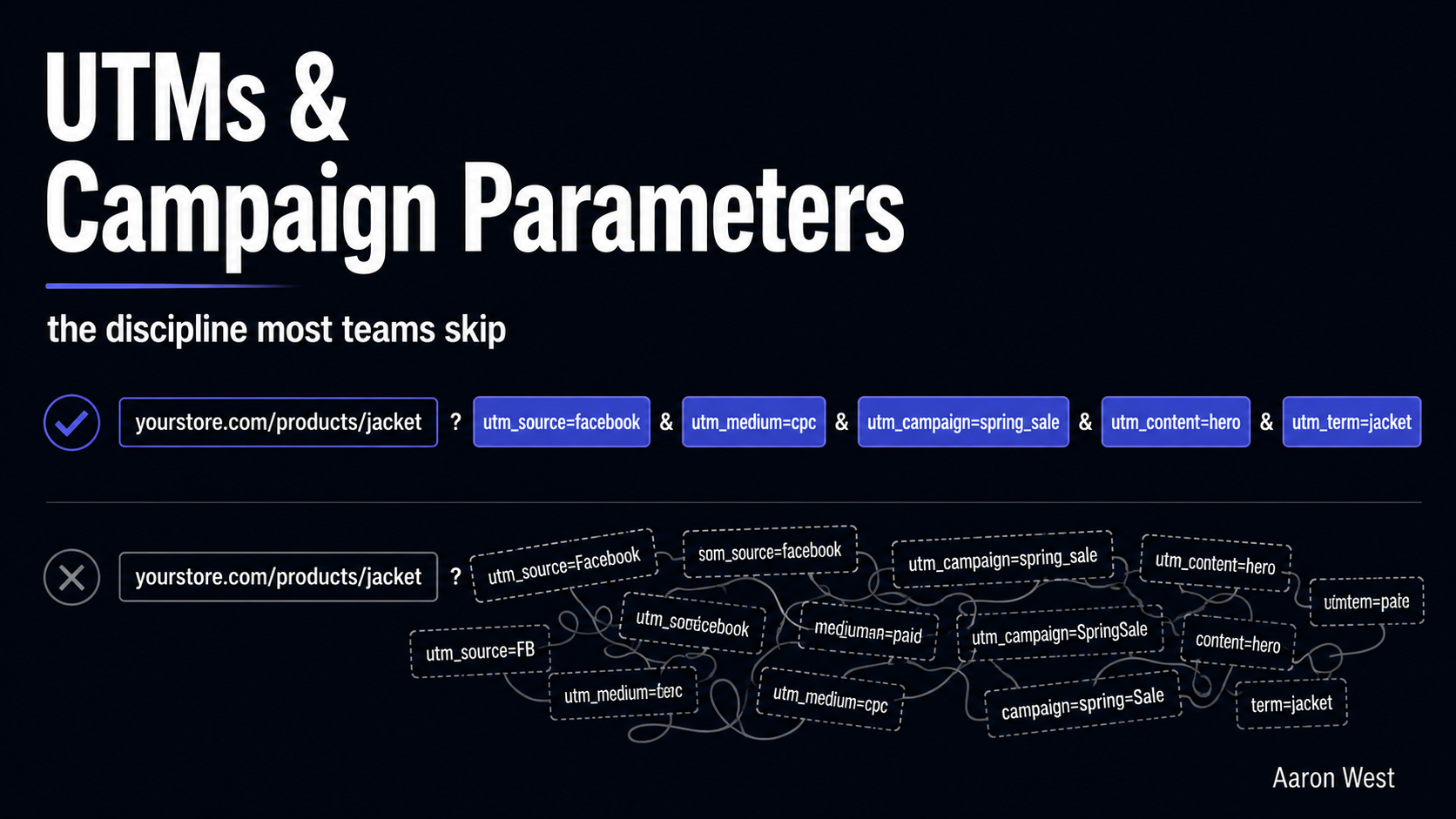
Table of Contents
A UTM parameter is a small tag added to the end of a link that tells your analytics where a visitor came from, and the difference between a team that uses them with discipline and one that does not is the difference between knowing which marketing actually works and guessing. The tags themselves are trivial, five standard parameters, a few extra characters on a URL. The discipline is what is hard, and it is what almost everyone skips. The result is the single most common cause of unusable marketing data I see: not missing tracking, but inconsistent tracking, where Facebook, facebook, and FB all show up as three different sources and your reports quietly become fiction.
This is the first piece in the tracking layer of the performance marketing pillar, and I am starting here deliberately, because UTMs are the foundation everything else in measurement sits on. Your attribution, your channel reports, your ability to tell whether that campaign was worth it, all of it depends on clean UTM data, and clean UTM data depends entirely on a discipline that takes ten minutes to set up and gets skipped anyway. Let me explain what the parameters are, the rule that matters more than all the others, and the specific mistakes that turn good intentions into broken reports. No technical background needed.
What the five parameters actually are
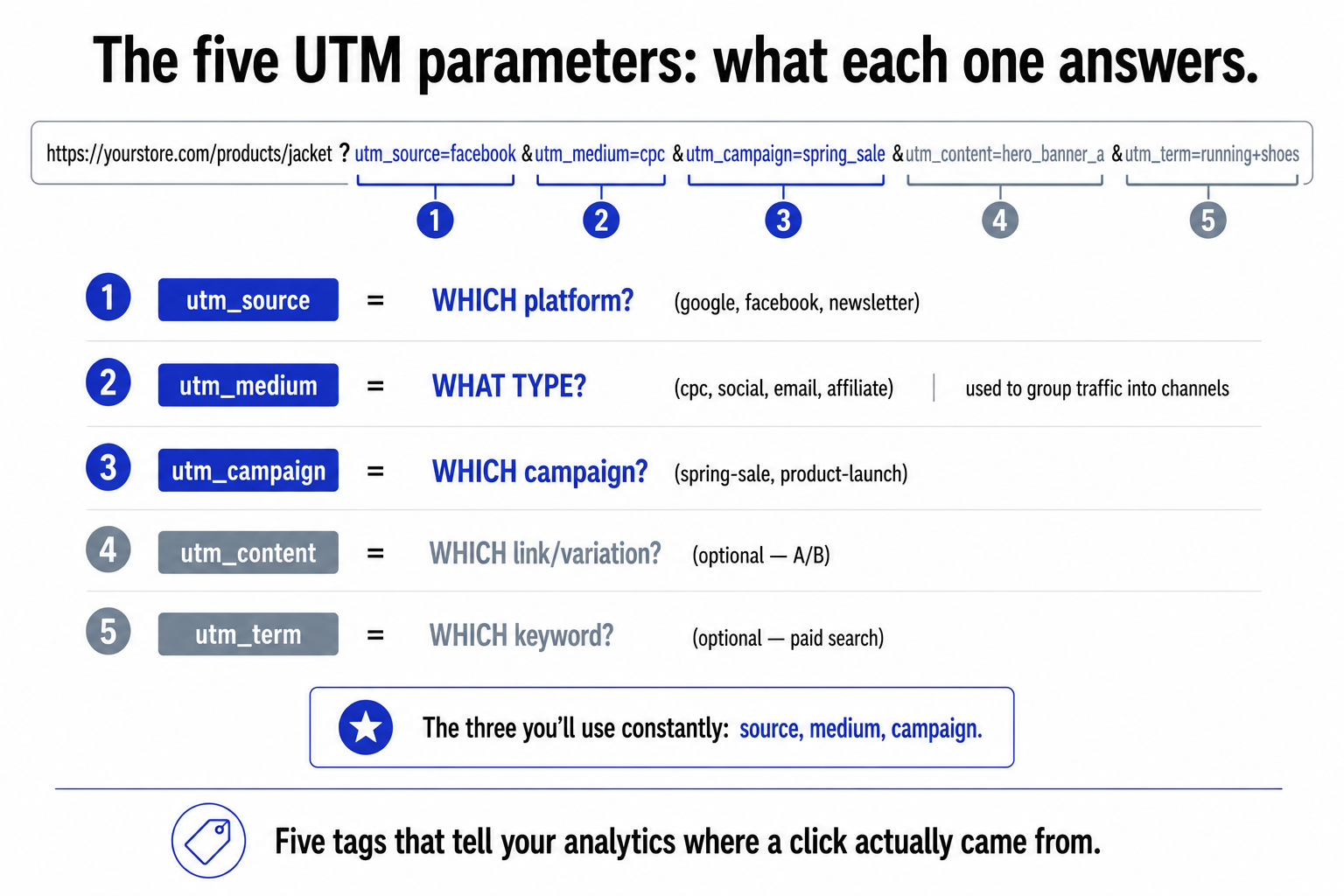
A UTM (the initials come from "Urchin Tracking Module," an old analytics tool, the name stuck) is just a label you append to a link so that when someone clicks it, your analytics records where the click came from. There are five standard ones, and each answers a specific question:
- utm_source: which platform sent the traffic? The specific origin:
google,facebook,newsletter,linkedin. The "who." - utm_medium: what type of traffic is it? The channel category:
cpc(paid search),social,email,affiliate,display. The "how." This one matters more than people realise, because analytics tools use the medium to group traffic into channels. - utm_campaign: which specific campaign? The named initiative:
spring-sale,product-launch. This is what lets you separate one promotion from another when several run at once. - utm_content: which specific link or variation? Optional. Distinguishes two links in the same email, or two ad creatives, so you can see which version worked.
- utm_term: which keyword? Optional, mostly used in paid search to record the keyword.
That is the entire system. You attach these to the links in your ads, emails, and social posts (never to links between pages on your own site, more on that mistake below), and your analytics reads them to tell you, accurately, that this sale came from the spring-sale email rather than from "direct" or "somewhere." The three you will use constantly are source, medium, and campaign; content and term are there when you need finer detail.
The one rule: consistency beats cleverness
If you remember one thing about UTMs, make it this: consistency beats cleverness, every time. The tags only work if they are applied the same way by everyone, on every link, forever. The moment two people tag the same source two different ways, your data fragments, and fragmented data is worse than no data, because it looks complete while being wrong.
Here is the mechanism that makes this so unforgiving. Analytics tools treat Facebook, facebook, and FB as three entirely separate sources. So if your team has not agreed on exactly one spelling, your "Facebook" traffic gets split across three lines in your report, none of which shows the real total, and any comparison you make is nonsense. Multiply that across every source, medium, and campaign your team touches, and the report becomes unusable, not because anyone did anything obviously wrong, but because nobody agreed on the rules. The practical conventions that prevent this are unglamorous and absolute:
- Everything lowercase.
facebook, neverFacebookorFACEBOOK. Pick lowercase and never deviate, this single rule prevents the majority of fragmentation. - No spaces. Use hyphens or underscores as separators:
spring-sale-2026, neverspring sale 2026(spaces break in URLs and create messy data). - One documented taxonomy, one source of truth. Write down the approved values for source and medium, and the naming pattern for campaigns, in a shared document everyone uses. This "UTM playbook" is the actual deliverable, the tags are easy, the agreed standard is the thing that makes them work.
- Use a builder, not memory. Generate links from a URL-builder tool (a free one exists, and a shared tracking spreadsheet works too) rather than hand-typing parameters, which is where typos and inconsistency creep in.
None of this is clever. That is exactly the point. The teams with trustworthy marketing data are not the ones with the most sophisticated tracking; they are the ones boring enough to spell facebook the same way every single time.
The mistakes that quietly break your reports
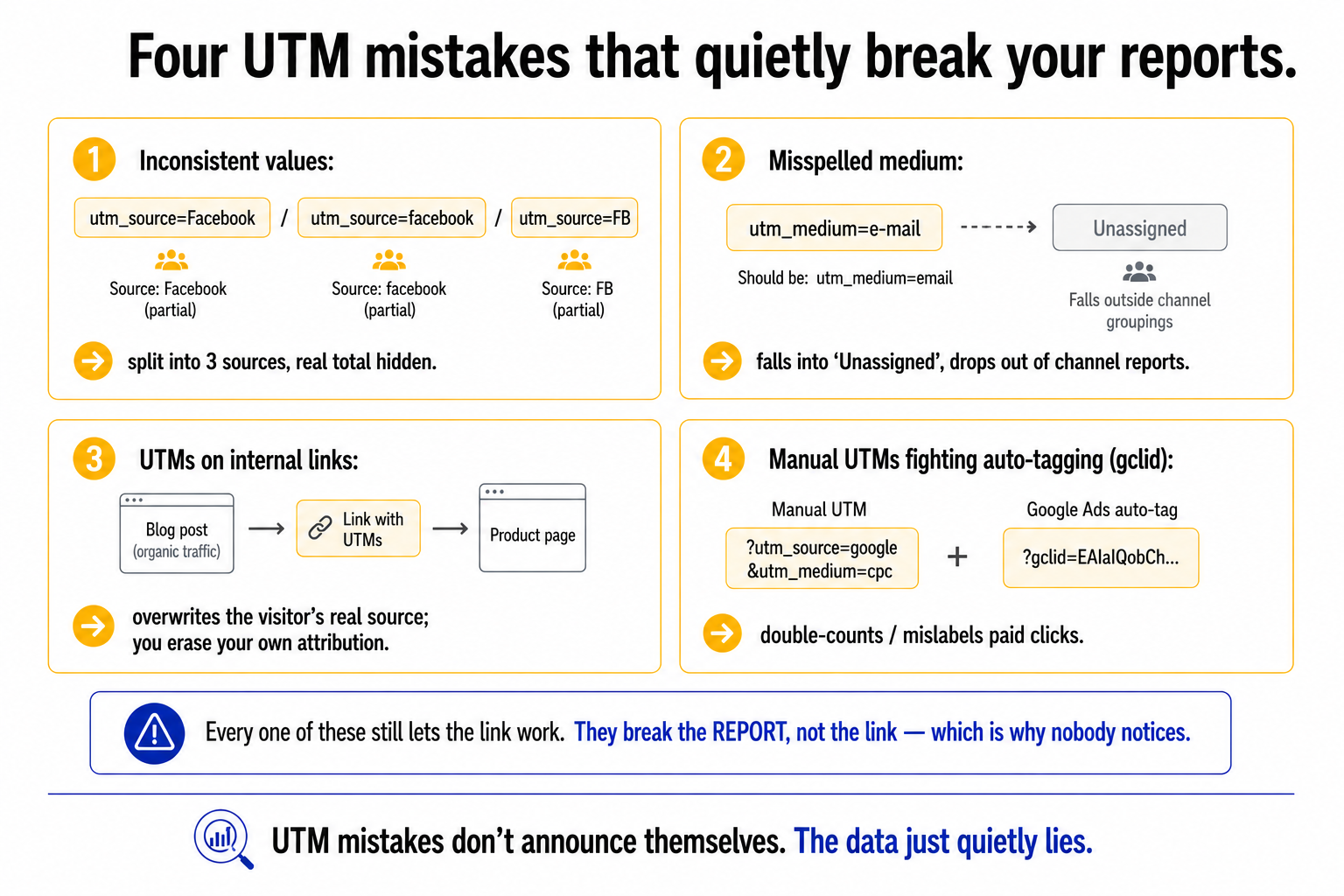
Beyond inconsistency, a handful of specific UTM mistakes recur everywhere, and each one corrupts your data in a way that is hard to spot after the fact. The ones worth knowing:
Putting the wrong information in the wrong parameter. The classic is jamming the campaign name into the source field, or cramming several facts into one tag. Each parameter has a job; mix them up and your channel grouping collapses. Source is the platform, medium is the type, campaign is the initiative, keep them in their lanes.
A misspelled or non-standard medium. This one is sneaky because the link still works. But analytics tools map the medium to channel groupings, so if you type e-mail instead of email, or invent a medium the tool does not recognise, that traffic falls into an "Other" or "Unassigned" bucket and silently drops out of your channel reports. A typo in the medium does not break the link; it breaks the report, which is worse, because you do not notice.
Tagging your own internal links. UTMs are for incoming traffic from your campaigns, not for links between pages on your own website. If you put UTMs on internal links, you overwrite the visitor's original source, so a customer who arrived from your email and then clicked an internally-tagged link suddenly looks like they came from that internal tag. You have erased the real attribution with your own hands. Never UTM-tag internal navigation.
Fighting the platform's auto-tagging. Some ad platforms (Google Ads being the main one) automatically add their own tracking parameter (a click identifier like gclid). If you also add manual UTMs, the two can conflict and double-count or mislabel. The rule of thumb: where a platform auto-tags reliably, let it, and do not bolt manual UTMs on top of the same clicks.
The thread through all of these: UTM mistakes rarely announce themselves. The link still works, the campaign still runs, and the data quietly lies. That is what makes the discipline matter, the cost of getting it wrong is invisible until you try to make a decision on the data and discover it cannot be trusted.
Why this boring thing is worth the effort
Let me close by connecting the chore to the payoff, because UTM discipline feels like bureaucracy until you see what it actually buys you. Every important marketing question, which channel drives the most profitable customers, was that campaign worth it, is paid social pulling its weight against email, depends on being able to trust your attribution, and your attribution is only as good as the tags feeding it. Clean, consistent UTMs are what let your analytics correctly assign a sale to the campaign that drove it instead of dumping it into "direct" or splitting it across three misspelled sources. Skip the discipline and every downstream number, your channel ROAS, your attribution model, your reporting, inherits the mess.
There is a neat parallel here with affiliate, by the way: the SubIDs an affiliate adds to their links are essentially the same idea, extra labels appended to a URL so the data comes back segmented and meaningful. Same principle, same discipline, same payoff: structured labels in, usable data out. Sloppy labels in, garbage out.
So treat UTMs as what they are: not a technical afterthought but the foundation of trustworthy marketing measurement. Agree the taxonomy, write it down, enforce lowercase, use a builder, keep the parameters in their lanes, never tag internal links, and let platform auto-tagging do its job. It takes a morning to set up and a moment of discipline per link thereafter. In return, your data tells you the truth, which, given that every decision you make rests on it, is just about the highest-leverage boring thing in all of marketing. The teams that win at measurement are not smarter. They are just more consistent, and consistency, in tracking, is the whole game.
A few common questions
What are UTM parameters? UTM parameters are small tags added to the end of a link that tell your analytics where a visitor came from. There are five: utm_source (which platform, e.g. google, facebook), utm_medium (what type of traffic, e.g. cpc, social, email, used by analytics to group channels), utm_campaign (which specific campaign), and the optional utm_content (which link or ad variation) and utm_term (which keyword). You add them to links in ads, emails, and social posts so your analytics can correctly attribute traffic and sales to the campaign that drove them.
Why does UTM consistency matter so much? Because analytics tools treat differently-spelled values as entirely separate sources, "Facebook," "facebook," and "FB" become three lines in your report, none showing the real total. Without an agreed convention, your data fragments and becomes unusable while still looking complete, which is worse than having no data. The fix is unglamorous: everything lowercase, no spaces (use hyphens or underscores), one documented taxonomy everyone follows, and a URL builder instead of hand-typing. Consistency beats cleverness every time.
What are the most common UTM mistakes? Four recur: (1) putting the wrong information in the wrong parameter (e.g. campaign name in the source field); (2) a misspelled or non-standard medium, which makes traffic fall into "Unassigned" and drop out of channel reports, the link still works, so nobody notices; (3) tagging your own internal links, which overwrites the visitor's real source and erases your attribution; and (4) adding manual UTMs on top of a platform's auto-tagging (like Google's gclid), which causes conflicts and double-counting. They all share a trait: the link still works, so the damage is invisible until you try to trust the data.
Should I put UTMs on internal links? No. UTMs are for incoming traffic from your campaigns, not for links between pages on your own website. If you tag internal links, you overwrite the visitor's original source, so someone who arrived from your email and then clicked an internally-tagged link looks like they came from that internal tag instead. You erase the real attribution. Use UTMs only on external links pointing into your site from ads, emails, and posts.
You should also read:
Upsell, Cross-Sell, Down-Sell: The Three Moves Most Stores Get Wrong
Raising the average order value, getting each customer who already chose to buy to spend a little more, is usually the fastest and cheapest way to grow an e-commerce business. You are not paying to acquire anyone or convince anyone, you are making more of…
Continue reading...
CRM Is Not Software. It's a Discipline
Here is a scene I have watched play out more than once. A team decides they need to "do CRM." They evaluate platforms, pick one, pay for it, migrate their customer data into it, and tick the box: we have a CRM now. Six months…
Continue reading...
Payment Friction Is the Last Gate, and the Most Absurd Place to Lose a Sale
The most absurd way to lose a customer is at the very last step, when someone has chosen the product, accepted the price, filled in their details, reached for their wallet, and then cannot pay the way they want to. Every other lost sale is…
Continue reading...