Self-Service vs Human Support: Where Each Actually Belongs

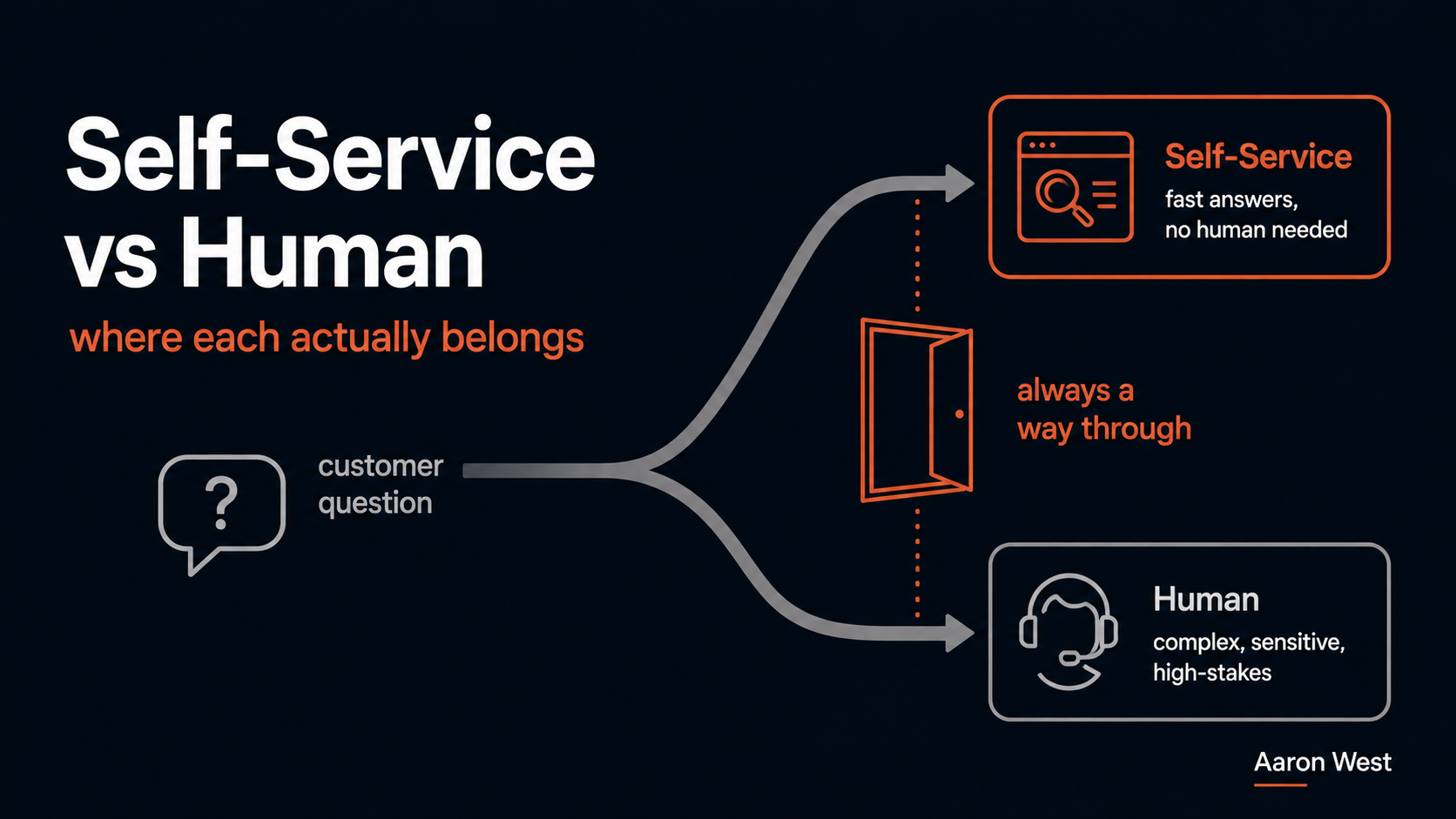
Table of Contents
Self-service should handle the questions that don't need a human, so that humans are free for the ones that do. That's the whole rule, and almost every mistake in this area comes from breaking it in one of two directions: putting a human on work a help page could answer instantly, or putting a help page in front of work that genuinely needed a person. The worst version is the second one dressed up as efficiency, using self-service as a wall to keep customers away from support, which is deflection in a nicer outfit and it costs you exactly the loyalty support is supposed to protect.
This is a core of the Customer Service pillar, and it follows directly from the cornerstone: if support is a retention channel rather than a cost to minimise, then self-service exists to make humans more available for the moments that matter, not less. Here's how to draw the line, and how the line gets drawn wrong.
What self-service is genuinely good at
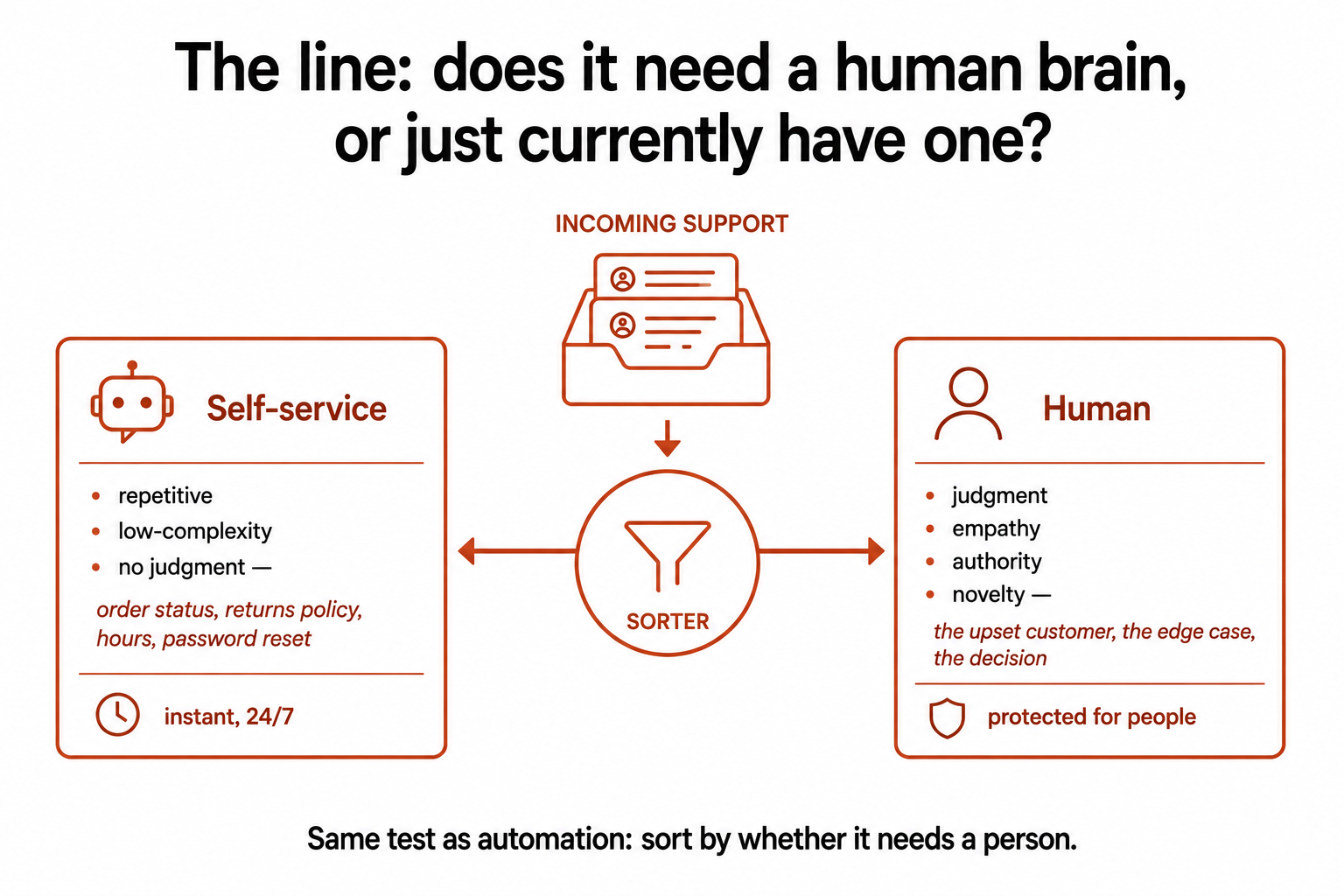
Some support contacts don't need a human at all. They're high-volume, low-complexity, repetitive, and answerable without any judgment: where's my order, what's your returns policy, how do I reset my password, what are your opening hours. The answer is the same every time, it's known in advance, and nothing about the situation requires a person to weigh anything. These are the questions self-service was built for.
For this kind of work, self-service is genuinely better than a human, not just cheaper. A good help centre or a well-built chatbot answers instantly, at any hour, without a queue, in a way that's consistent every time. A customer who just wants to know where their parcel is at eleven at night is better served by an instant accurate answer than by waiting until morning for a person to tell them the same thing. Handled well, self-service isn't a downgrade for these contacts; it's an upgrade.
This is the automation principle applied to support. The question to ask of any support contact is the same one you ask of any task you're thinking of automating: does this need a human brain, or does it just currently have one? Sort the contacts that way. The ones that don't need judgment go to self-service, instantly and around the clock. The ones that do are protected for people.
What humans are for
The other side of the line is the work you should never hand to a machine. Some contacts need judgment, because the situation is unusual and no script fits. Some need empathy, because the customer is upset and what they need first is to feel heard by a person. Some need authority, because the right answer is to make an exception or fix something, and that requires someone empowered to decide. And some are simply novel, the thing nobody anticipated, which by definition no help page covers.
These are the cornerstone's loyalty moments, the contacts where retention is actually won or lost, and they're precisely the ones that reward real human attention. Trying to force them through self-service is where the damage happens, because a frustrated customer who needs a person and keeps hitting a help article or a looping bot doesn't just stay frustrated. They conclude that you've built a system specifically designed to avoid talking to them, which is corrosive to trust in a way a slow response never is.
So the design goal isn't "deflect as much as possible." It's "deflect the trivial so that the difficult gets a great human." The two are connected: every simple contact self-service absorbs is human time freed for a hard one. Self-service done right is what makes excellent human support affordable.
The mistake: self-service as a wall
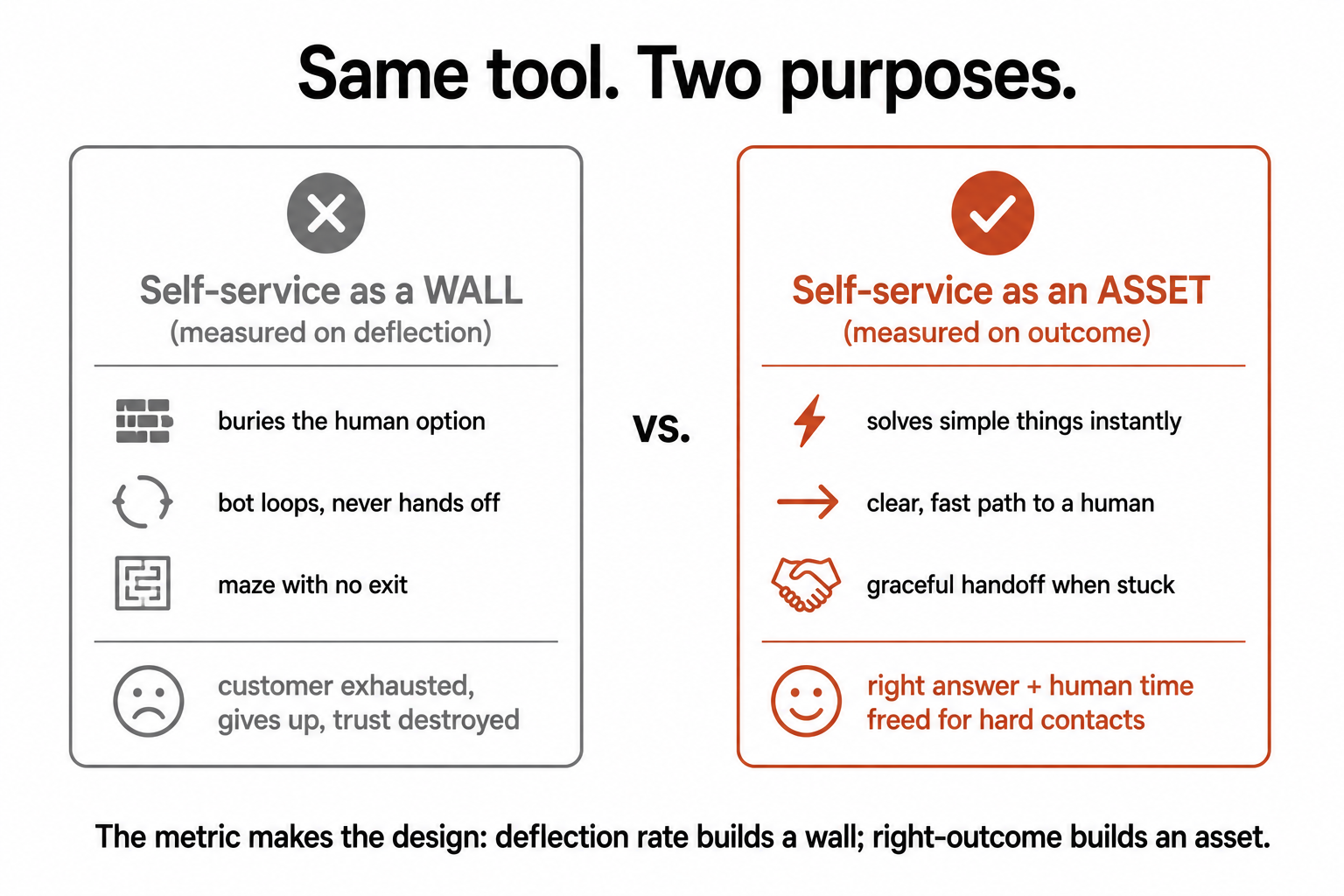
Here's where it goes wrong, and it goes wrong constantly. When self-service is built under the cost framing, its purpose quietly shifts from solve the simple things to reduce contact, and those are not the same goal. A system built to reduce contact starts being designed to wear the customer down: the help centre that buries the contact option, the chatbot that loops without resolving and without handing off, the support maze with no apparent exit to a human. It's optimised to make people give up.
This saves contact volume and it destroys trust, and it's penny-wise and retention-foolish in exactly the way the cornerstone warns about. The customer who gives up didn't get helped; they got exhausted. They remember it. And the cruel part is that the contacts most likely to be walled out are the difficult, emotional ones, the very moments that decide loyalty, because those are the ones a deflection-tuned system is most determined to avoid. You end up using self-service to repel customers at exactly the moment you most needed to keep them.
The tell is always the metric. Self-service measured on deflection rate, on how many contacts it prevented, will inevitably evolve into a wall, because that's what the number rewards. Self-service measured on whether the customer got the right outcome, whether their question was actually answered or cleanly handed to someone who could, evolves into an asset. The metric makes the design, every time.
The escape hatch is non-negotiable
The single rule that separates self-service-as-asset from self-service-as-wall is this: there must always be a fast, obvious path to a human when the self-service can't help. Not buried three screens deep, not hidden behind a bot that pretends it didn't understand, not gated behind proving you tried hard enough. Obvious and quick.
And the self-service itself, especially a chatbot, has to know when it's beaten and hand off gracefully. A bot that recognises it can't resolve something and routes the customer smoothly to a person, with the context already attached so they don't have to repeat themselves, is doing its job. A bot that loops, deflects, or insists on trying when it clearly can't is doing the opposite, and it's one of the main reasons chatbot projects fail. The handoff is not an admission of failure; it's the most important feature self-service has.
Get the line right and both sides win. Customers get instant answers to simple things and genuine human help on hard things. The business gets efficiency and retention, not one at the expense of the other. Get it wrong, build the wall, and you get neither: frustrated customers and damaged loyalty, with a deflection number that looks great right up until you notice who you deflected.
What this comes down to
Self-service isn't there to keep customers away from you. It's there so that when they do reach a human, that human has the time and space to be worth reaching. Sort the work honestly, send the no-judgment questions to instant self-service, protect the judgment-and-empathy ones for people, and always leave an obvious door to a human open. Measure it on whether customers got the right outcome, not on how many you kept out.
A help centre built to answer is one of the best things you can give a customer. A help centre built to avoid them is one of the fastest ways to lose them. Same tool, opposite outcome, and the only thing that decides which one you've built is what you were trying to do when you built it.
A few common questions
What should self-service handle, and what should humans handle? Self-service should handle high-volume, low-complexity, repetitive questions that need no judgment, like order status, returns policy, opening hours, and password resets, because instant 24/7 answers genuinely beat a queue for these. Humans should handle anything needing judgment, empathy, authority, or that's simply novel, the upset customer, the edge case, the exception. The test is the same as automation: does this need a human brain, or does it just currently have one?
Is deflecting support contacts a good goal? Deflecting genuinely trivial contacts is good, because it frees humans for the moments that matter. But "deflection" as the goal is dangerous: it pushes you to build self-service that wears customers down rather than helps them, walling out the difficult, emotional contacts that actually decide loyalty. Measure self-service on whether customers got the right outcome, not on how many contacts it prevented.
Why do customers hate chatbots and help centres so much? Usually because they've been built as walls rather than assets, designed to reduce contact instead of solve problems. A bot that loops without resolving or handing off, or a help centre that hides the path to a human, tells the customer you're trying to avoid them, which destroys trust. The same tools, built to answer and to hand off gracefully, are genuinely useful.
Should self-service always offer a way to reach a human? Yes, and it should be fast and obvious, not buried or gated. The defining rule of good self-service is that there's always a clear escape hatch to a person when it can't help, and that bots hand off gracefully with context attached so the customer doesn't repeat themselves. The handoff isn't a failure; it's the most important feature self-service has.
You should also read:
Multilingual Support: The Reality Nobody Plans For
Supporting customers in multiple languages is not a translation problem. It's an operations problem. The naive version, translate your help articles and bolt machine translation onto the live chat, looks complete and breaks in ways that stay invisible right up until a frustrated customer is…
Continue reading...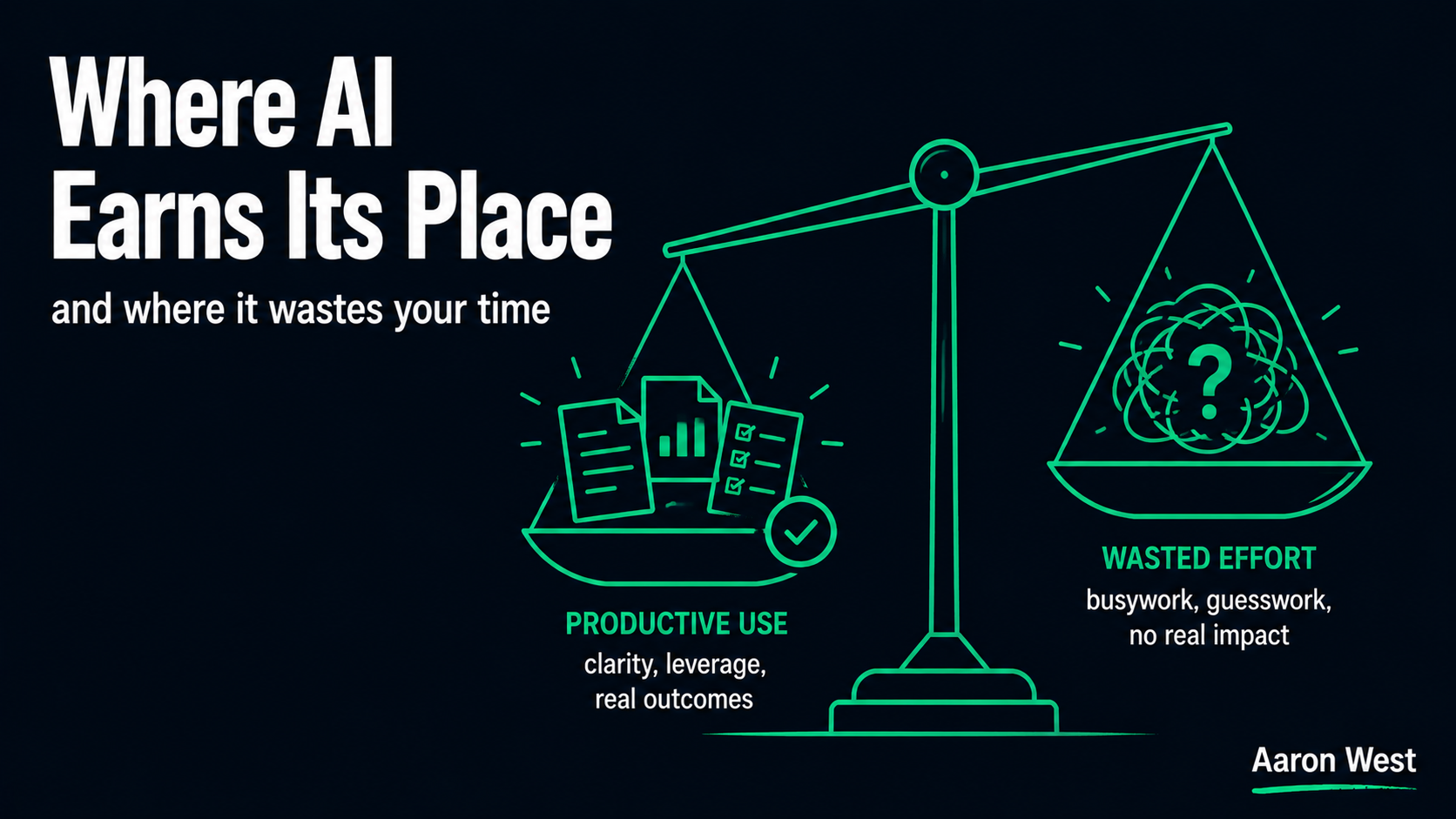
Using AI in Real E-Commerce Work: Where It Earns Its Place and Where It Wastes Your Time
After actually using AI across real e-commerce work rather than reading about it, here is the honest summary: AI is genuinely transformative for a specific, narrow band of tasks, and a confident waste of time for a surprising number of others. The skill in 2026…
Continue reading...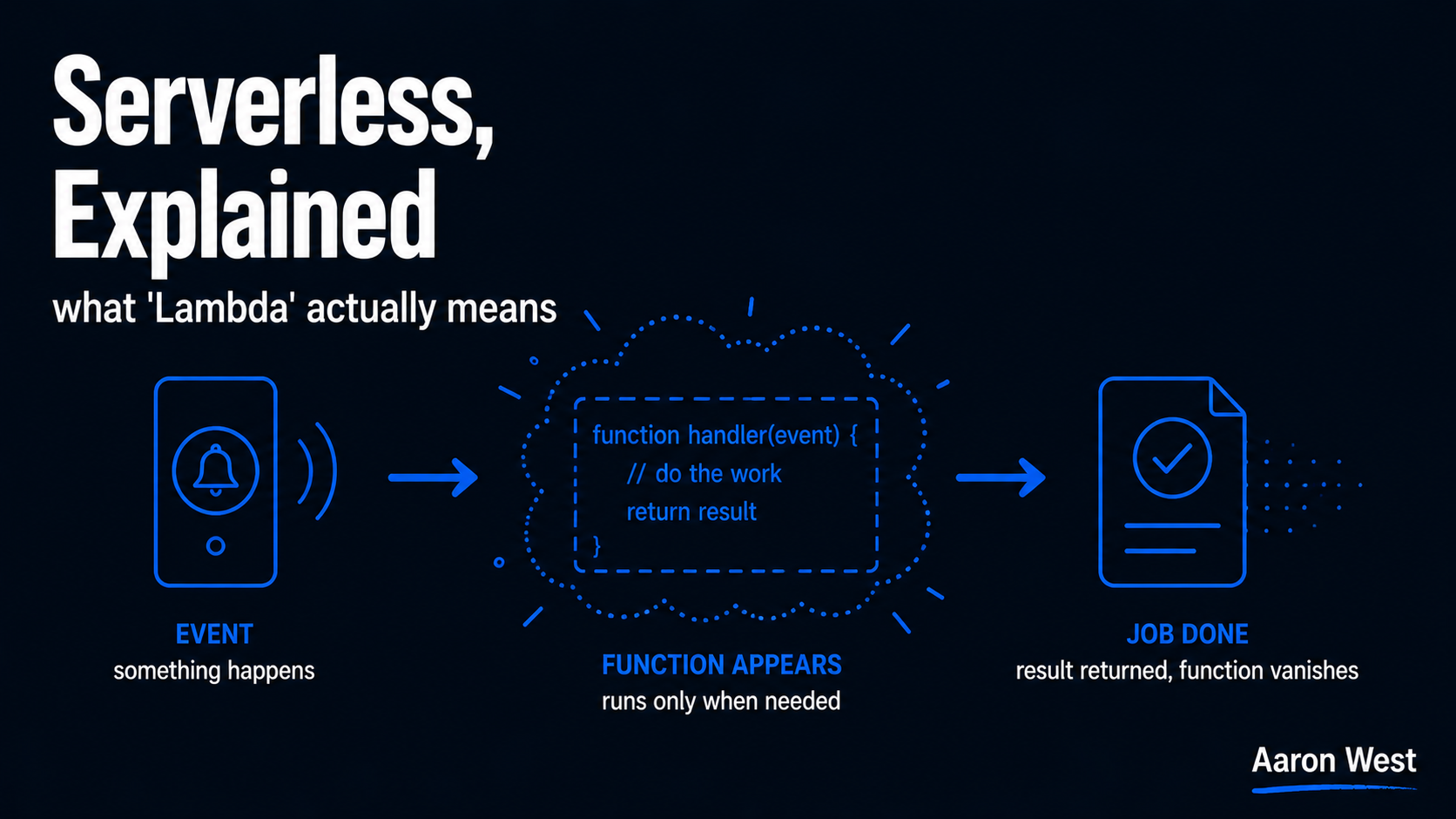
Serverless Explained for a Marketing Team (What "Lambda" Actually Means)
"Serverless" is one of the most misleading words in technology, because it does not mean there are no servers. It means you do not have to think about them. With serverless computing, you hand a small piece of code to a cloud provider, it runs…
Continue reading...