Support Is a Retention Channel, Not a Cost to Minimise

Table of Contents
Most companies treat customer support as a cost centre to be minimised: deflect the tickets, cut the handle time, shrink the team, get the cost-per-contact down. That framing is the central mistake in how businesses think about support. Support is a retention channel. It's where you meet customers at their most frustrated and decide, in a single interaction, whether they stay with you for years or leave for good and tell people why.
This opens the Customer Service pillar, and I lead with it because everything else in support follows from getting this one framing right. I spent years in high-volume customer service, in several languages, before I moved into e-commerce and automation, and the lesson that stuck is the one most companies never learn: the way you treat support determines what you measure, what you optimise for, and ultimately how many customers you keep. Here's why the cost-centre framing quietly bleeds retention, and what changes when you flip it.
What the cost-centre framing optimises for
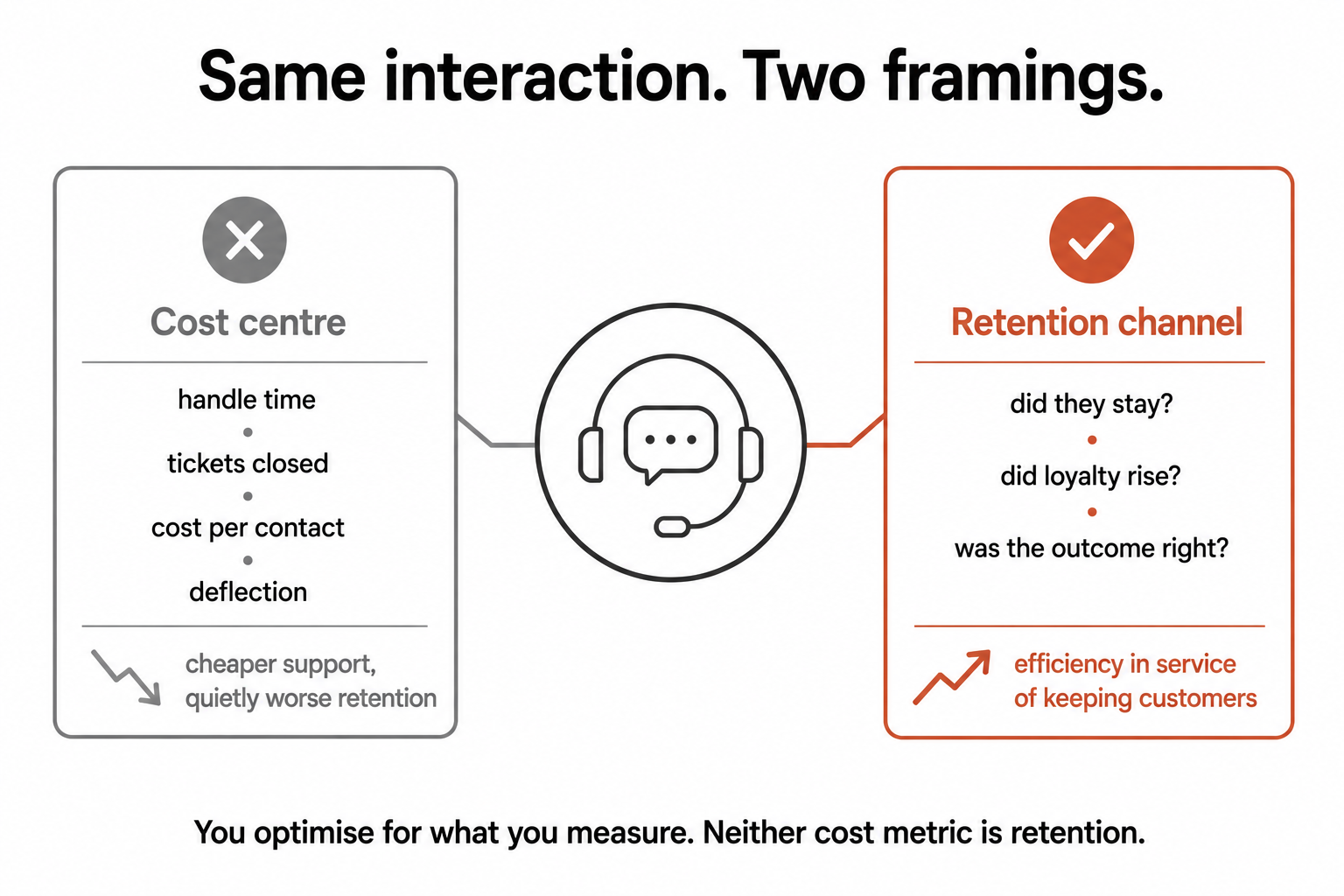
When support sits on the books as a cost line, everything about how you run it bends toward one goal: spend less. The metrics that get watched are all efficiency metrics, tickets handled, average handle time, cost per contact, deflection rate, and every one of them rewards making support cheaper, not making customers stay. The logic is relentless and it feels responsible: fewer tickets is good, faster is good, a smaller team is good, customers solving it themselves so they never reach a human is best of all.
The problem is that you optimise for what you measure, and none of those measures is retention. A support operation tuned purely for cost will, quite rationally, start treating the customer with a problem as an expense to be minimised rather than a relationship to be protected. It will build walls to deflect contact, script agents to close tickets fast, and quietly punish the long, difficult, empathetic conversation that was actually the most valuable thing happening that day. You get cheaper support and worse retention, and because the cost saving is visible on a dashboard and the lost loyalty is not, it looks like a win.
That invisibility is the trap. The savings show up immediately and clearly. The churn shows up later, spread across a hundred quiet non-renewals and bad reviews that nobody traces back to the support experience that caused them. So the cost framing keeps looking smart right up until you wonder why retention is sliding.
Why support is disproportionately a retention moment
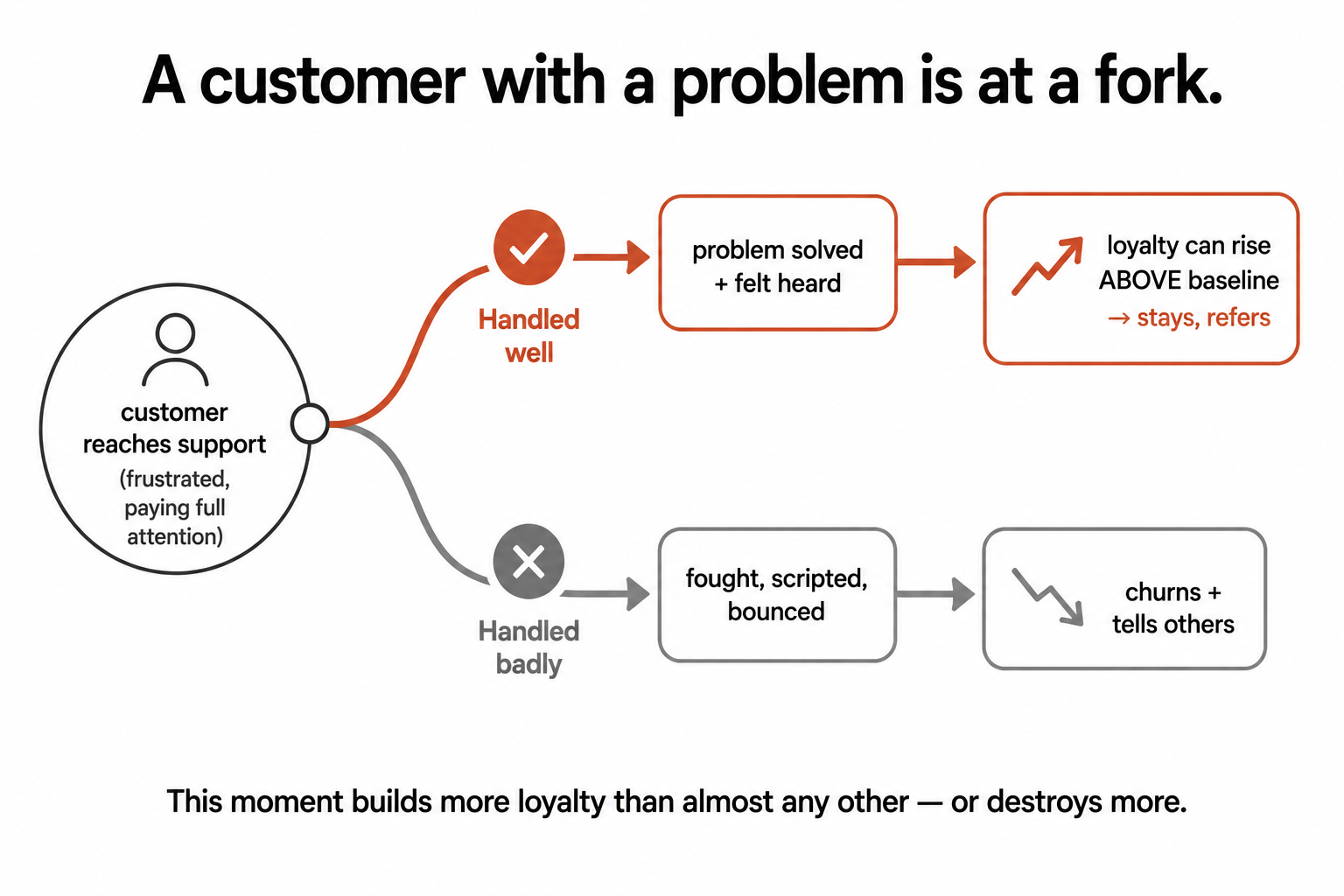
Here's what the cost framing misses about the nature of a support contact. A customer who reaches out with a problem is not in a neutral state. They're at a fork. Something went wrong, or they're confused, or they're frustrated, and how you handle the next few minutes pushes them down one of two paths that diverge sharply.
Handle it well, and something surprising happens: their loyalty can go up, sometimes higher than if nothing had gone wrong at all. Demonstrating under pressure that you'll look after them is far more convincing than a transaction that simply went smoothly, because anyone can look good when nothing's wrong. That's the service-recovery effect, and it's the subject of the complaint that becomes loyalty. Handle it badly, and you don't just lose the ticket, you lose the customer, and you often gain a detractor who tells other people about it.
So the support interaction carries unusual leverage in both directions. A good experience here builds more loyalty than a good experience almost anywhere else, and a bad one destroys more. Treating that high-leverage moment as a cost to minimise is like treating your most important sales conversation as an interruption to get through quickly. The economics are exactly backwards: this is one of the highest-return moments you have with a customer, and the cost framing tells you to spend as little on it as possible.
What years on the front line teaches you fast is that the person contacting support is rarely contacting you only about the thing they typed. Underneath the order number and the broken link, they're asking a bigger question: should I still trust you? The answer they walk away with is worth far more than the cost of the conversation.
Efficiency still matters, but as a means
None of this is an argument against efficiency, and it's important to be clear about that, because the cost framing and the retention framing can look similar in their tactics. Both want self-service for simple questions. Both want to automate the trivial. The difference is why.
In the cost framing, efficiency is the goal: deflect and automate to spend less. In the retention framing, efficiency is a means: automate and deflect the genuinely trivial so that your humans are free to be excellent at the moments that actually decide loyalty. Same tactics, opposite purpose, and the purpose changes everything about how you design them. This is the automation principle applied to support, sort the work by whether it needs a human, handle the rest automatically, and protect human attention for where it counts, which is exactly what self-service versus human support is about.
The companies that win on support didn't necessarily spend more on it. They spent it on the right moments. They stopped trying to make support cheap and started trying to make it count, which often means automating the password resets ruthlessly so a real person has time to save the furious customer whose order vanished before an event they'd planned for months. Cheap support spreads thin effort across everything. Good support concentrates real effort where it changes whether someone stays.
What changes when you flip the framing
Reframing support from cost centre to retention channel isn't a slogan; it changes concrete decisions. You measure it differently, adding retention impact and outcome quality alongside the efficiency numbers instead of only the efficiency numbers. You staff it differently, putting capable, empowered people on the hard contacts rather than scripting everyone to close fast. You treat the difficult ticket as an opportunity rather than a failure, because it's the one most likely to move loyalty. And you connect support to the metrics that actually matter to the business, retention and lifetime value, the territory of retention metrics, rather than judging it solely on cost per contact.
You also start treating recurring complaints as data. If the same problem generates the same contact a thousand times, that's not a support volume to deflect, it's a broken process pointing at itself, and fixing the cause does more for both cost and retention than handling the symptom ever will. Support, seen properly, is one of the best listening posts a business has.
What support is actually for
Support is not the cost of having customers. It's one of the main places you earn the right to keep them. Every contact is a customer at a fork, asking underneath whatever they typed whether they should still trust you, and the answer they leave with is worth far more than the few minutes the conversation cost. Run support to be cheap and you optimise for a number that isn't retention, save a little that's visible, and lose a lot that isn't.
Run it to count, concentrate real human effort on the moments that decide loyalty, automate the trivial to make room for that, and fix the causes the complaints reveal, and support stops being a cost you tolerate and becomes one of the most efficient retention investments you have. The interaction is going to happen either way. The only question is whether you treat it as an expense to minimise or a relationship to protect.
A few common questions
Is customer support a cost centre or a profit driver? Treated as a cost centre it behaves like one, but that framing misses its real value. Support is a retention channel: it's where customers at their most frustrated decide whether to stay or leave. Because a support moment builds or destroys more loyalty than almost any other interaction, running it purely to cut cost optimises for the wrong number and quietly bleeds retention.
Doesn't reducing support contacts save money? Reducing genuinely trivial contacts through good self-service is sensible, because it frees humans for the moments that matter. But reducing contact by building walls that keep frustrated customers from reaching help saves a visible cost and loses an invisible amount of loyalty. The goal isn't fewer contacts; it's the right outcome on the contacts that decide whether someone stays.
How should I measure customer support? Add retention and outcome-quality measures to the efficiency ones, rather than judging support on cost per contact, handle time, and deflection alone. Those efficiency metrics all reward making support cheaper, none of them rewards keeping customers, so optimising only for them steers you toward cheap support and worse retention. Connect support to retention and lifetime value to see its real impact.
What's the biggest mistake companies make with support? Treating it as a cost to minimise rather than a retention moment to protect. That framing leads to deflection walls, scripted fast closes, and thin effort spread across everything, which saves visible money while losing invisible loyalty. The fix is to concentrate real human effort on the high-leverage moments, automate the trivial to make room, and measure what actually matters: whether customers stay.
You should also read:
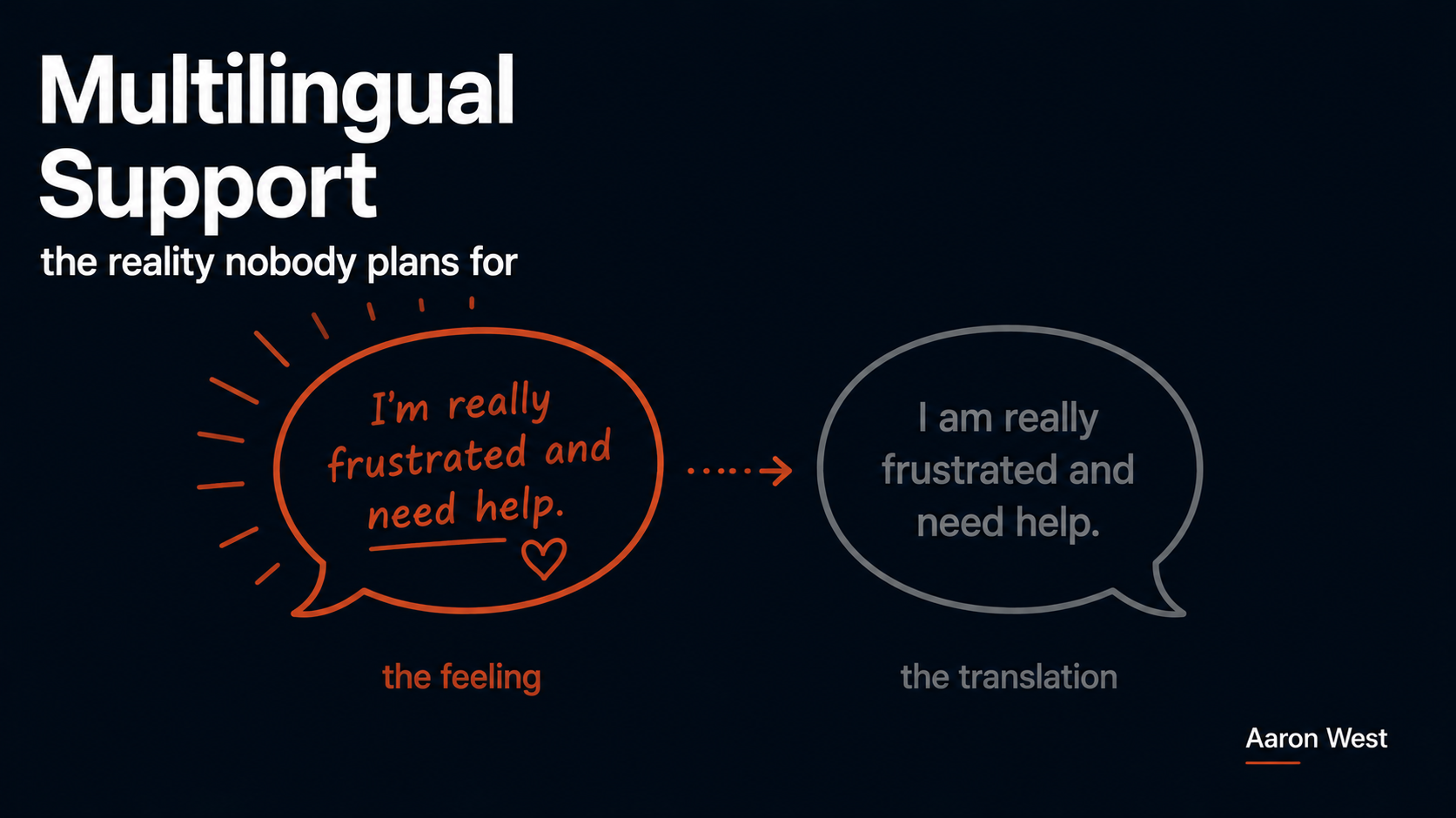
Multilingual Support: The Reality Nobody Plans For
Supporting customers in multiple languages is not a translation problem. It's an operations problem. The naive version, translate your help articles and bolt machine translation onto the live chat, looks complete and breaks in ways that stay invisible right up until a frustrated customer is…
Continue reading...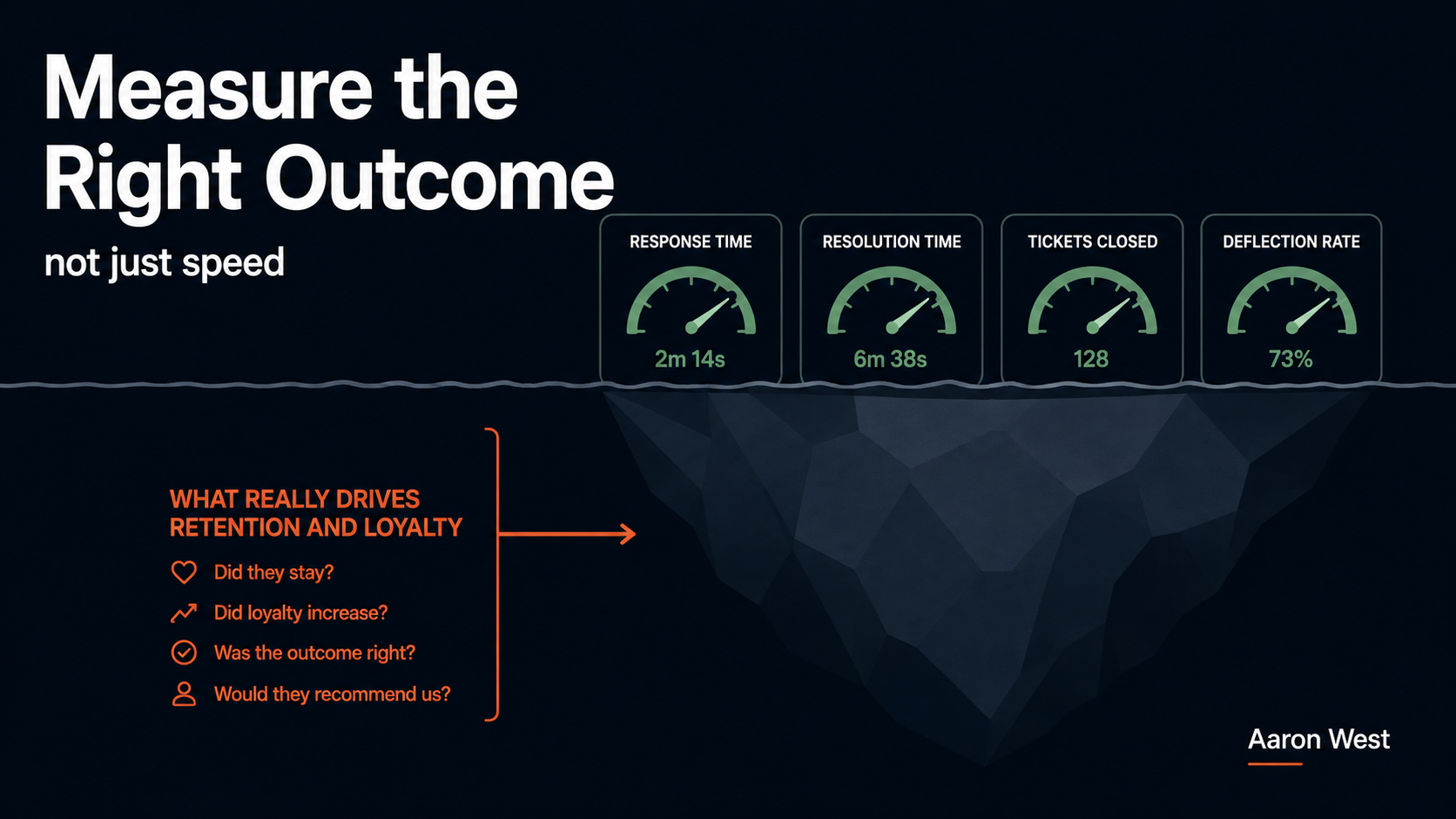
Support Metrics: Measure the Right Outcome, Not Just Speed
Most support metrics measure speed and cost: response time, average handle time, tickets closed per hour, SLA hit-rate, cost per contact. They're popular because they're easy to count and they roll up into tidy dashboards. The problem is that they reward the wrong behaviour. They…
Continue reading...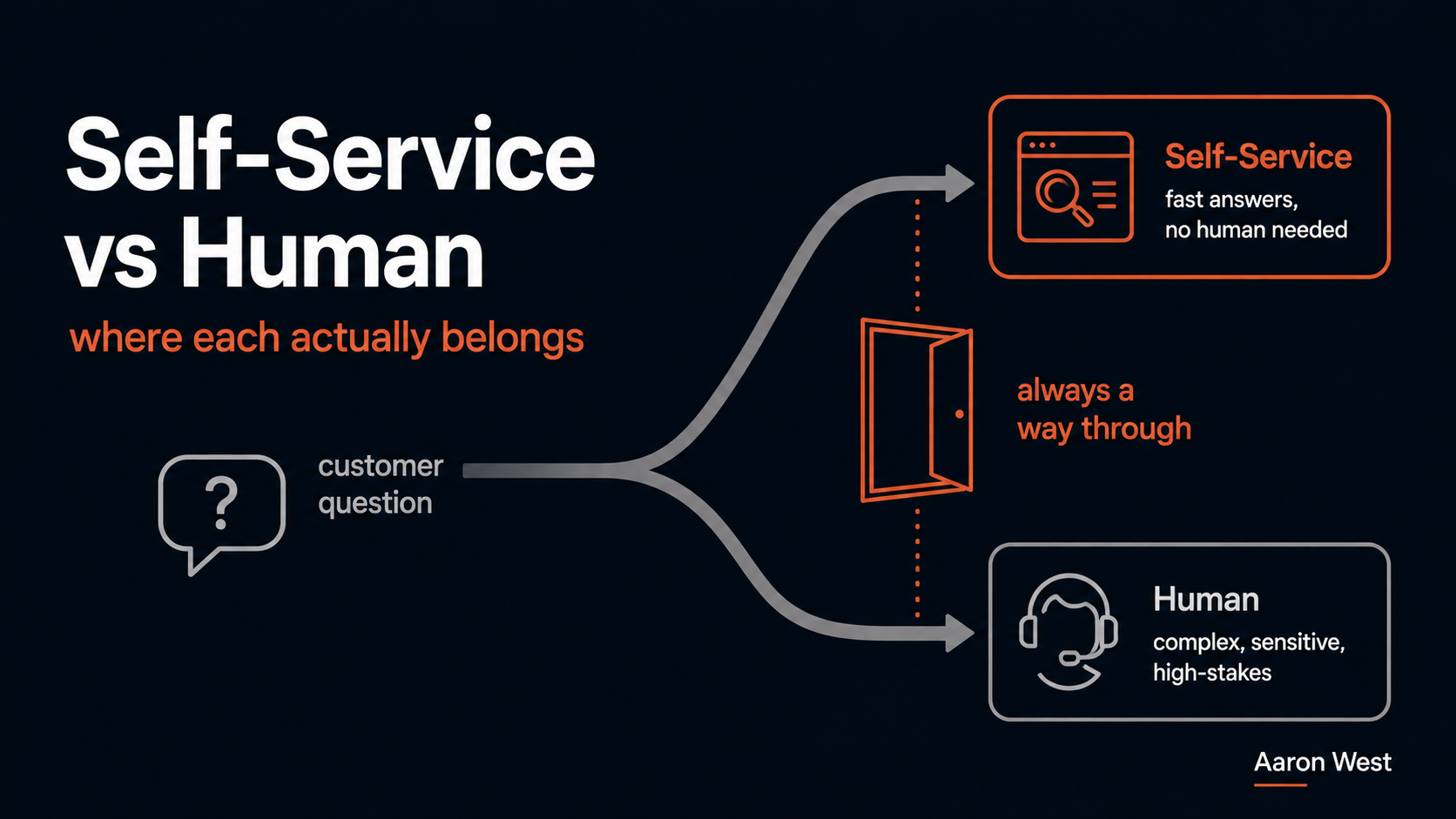
Self-Service vs Human Support: Where Each Actually Belongs
Self-service should handle the questions that don't need a human, so that humans are free for the ones that do. That's the whole rule, and almost every mistake in this area comes from breaking it in one of two directions: putting a human on work…
Continue reading...