Retail Media and Amazon Ads: Advertising Where People Are Already Buying

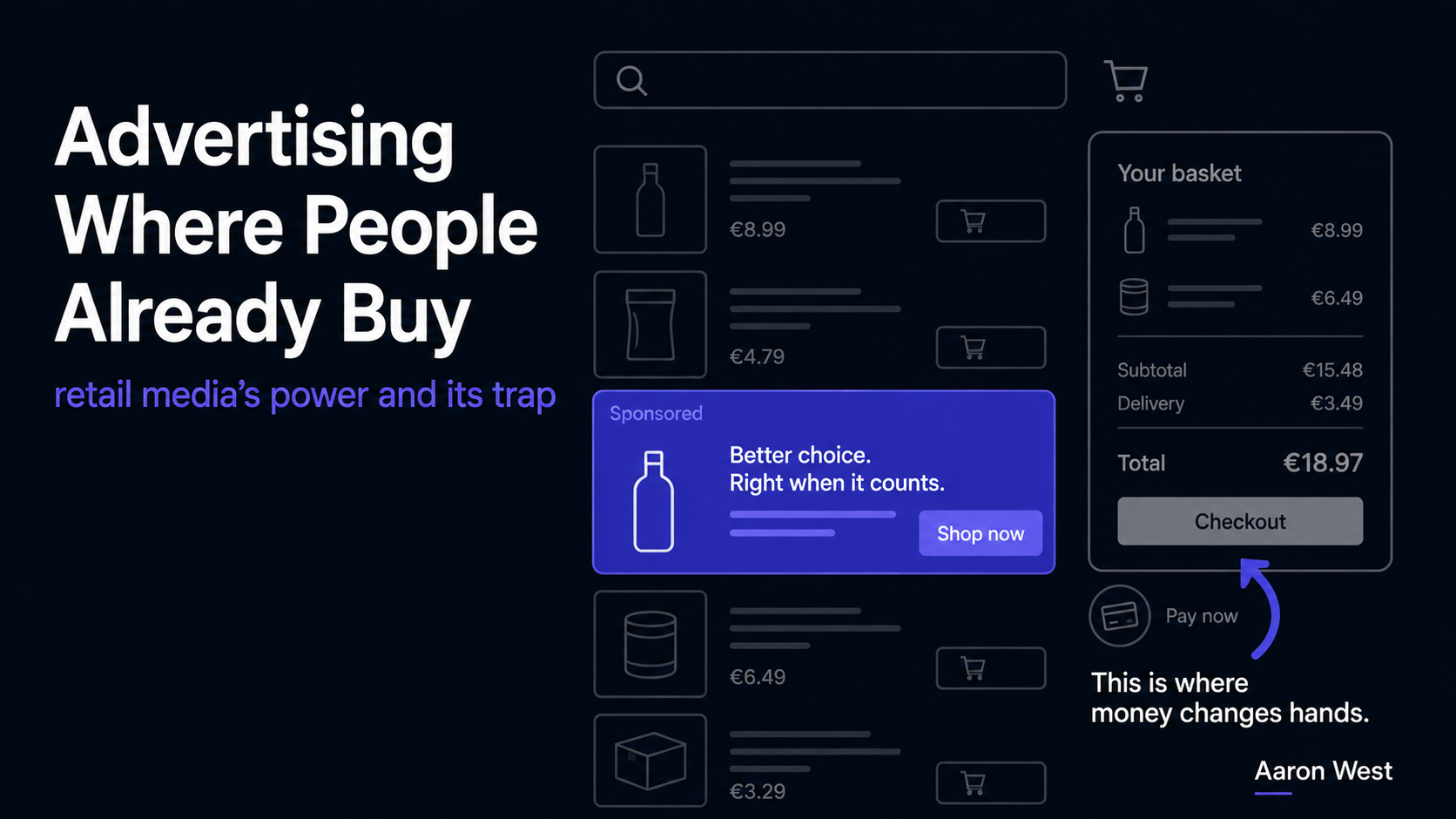
Table of Contents
Retail media is advertising placed on a retailer's own digital shelf, right where people are already shopping and ready to buy. Its strength is obvious: you reach shoppers at the moment of purchase, with the retailer's real purchase data behind both the targeting and the measurement. Its trap is subtler and more important: it's mostly a channel for capturing demand that already exists, not creating new demand, which makes it both unusually well-measured and unusually easy to over-fund.
This closes the durable core of the Paid Media pillar, and it's where the cornerstone's principles meet one of the fastest-growing channels in advertising. Retail media has grown from "Amazon ads" into a whole category, and understanding what it's genuinely good at, and what it only appears to be good at, is the difference between using it well and pouring money into a flattering dashboard.
(The market specifics below, who's biggest, which formats exist, are current as of mid-2026 and will shift; the principle, retail media is a harvesting channel, will not.)
What retail media actually is
A retail media network is an advertising business run by a retailer on its own digital property. The retailer, Amazon being the obvious one, but also Walmart Connect, Instacart, Kroger, Target and others, lets brands buy ad placements across its store: sponsored product listings in search results, banner placements, and increasingly inventory beyond the store itself. You're advertising inside the place where people are actively shopping, using the retailer's own data about what those people buy.
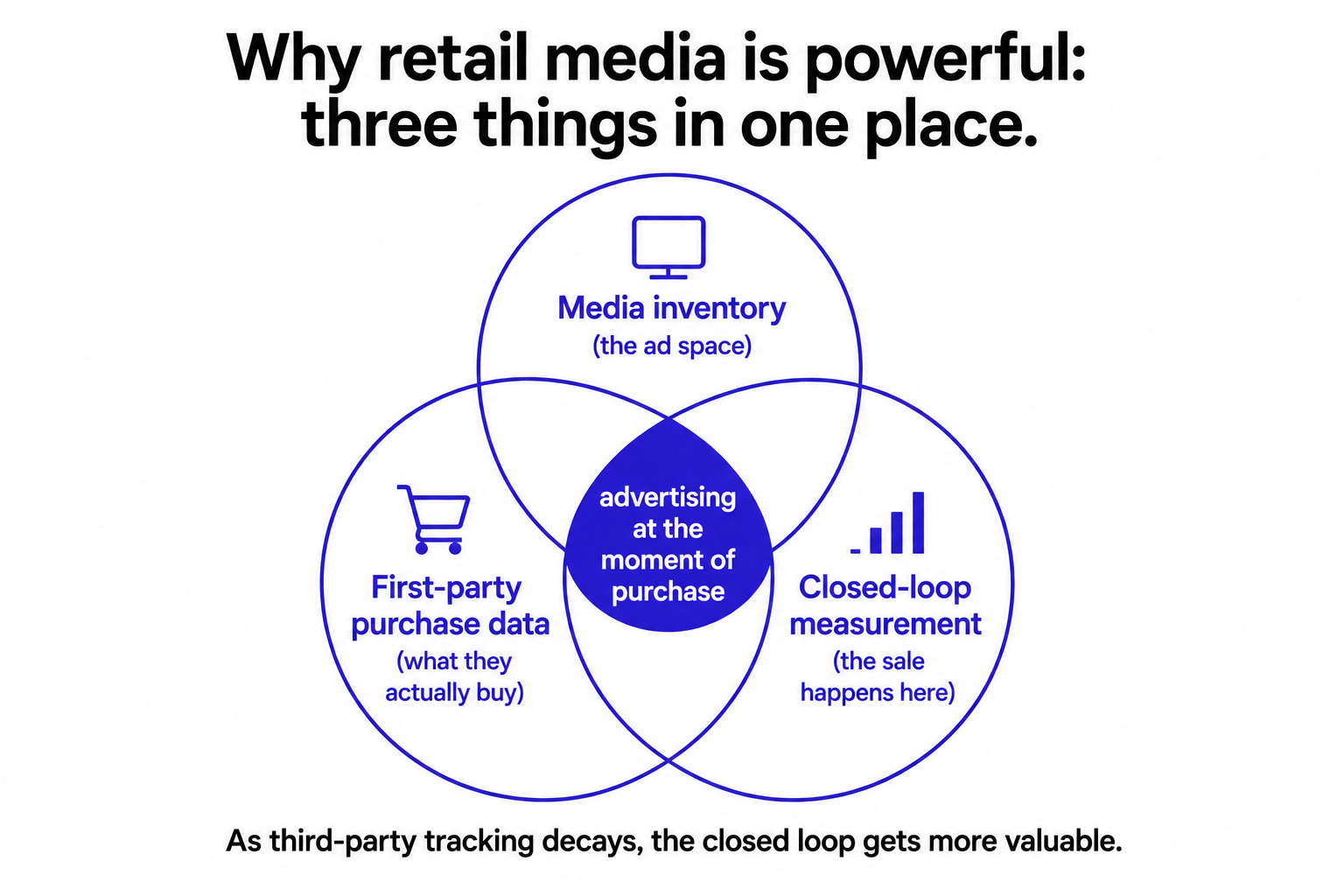
That last part is the key. The retailer knows what its shoppers actually purchase, not what they clicked or browsed elsewhere, but what they bought. That gives retail media a combination that's rare and getting rarer: media inventory, first-party purchase data, and closed-loop measurement, all in one place. The retailer can show you an ad, target it using real purchase behaviour, and then tell you whether it led to a sale, because the sale happened on its own platform. As third-party tracking across the open web keeps degrading, that closed loop is increasingly valuable, and it's a big part of why retail media has grown so fast.
Amazon sits at the centre of this. It dominates retail media by a wide margin, with the next-largest networks a long way behind, and its measurement and attribution set the standard the rest of the industry is judged against. Its ad formats span sponsored placements within the store and a programmatic arm that reaches beyond it, and the draw for advertisers is access to genuinely unmatched purchase data and conversion volume. One honest constraint: Amazon's advertising is a closed ecosystem, available to brands selling on Amazon, so it's a channel you opt into by being there, not one you can bolt on from outside.
The trap: it harvests demand, it rarely creates it
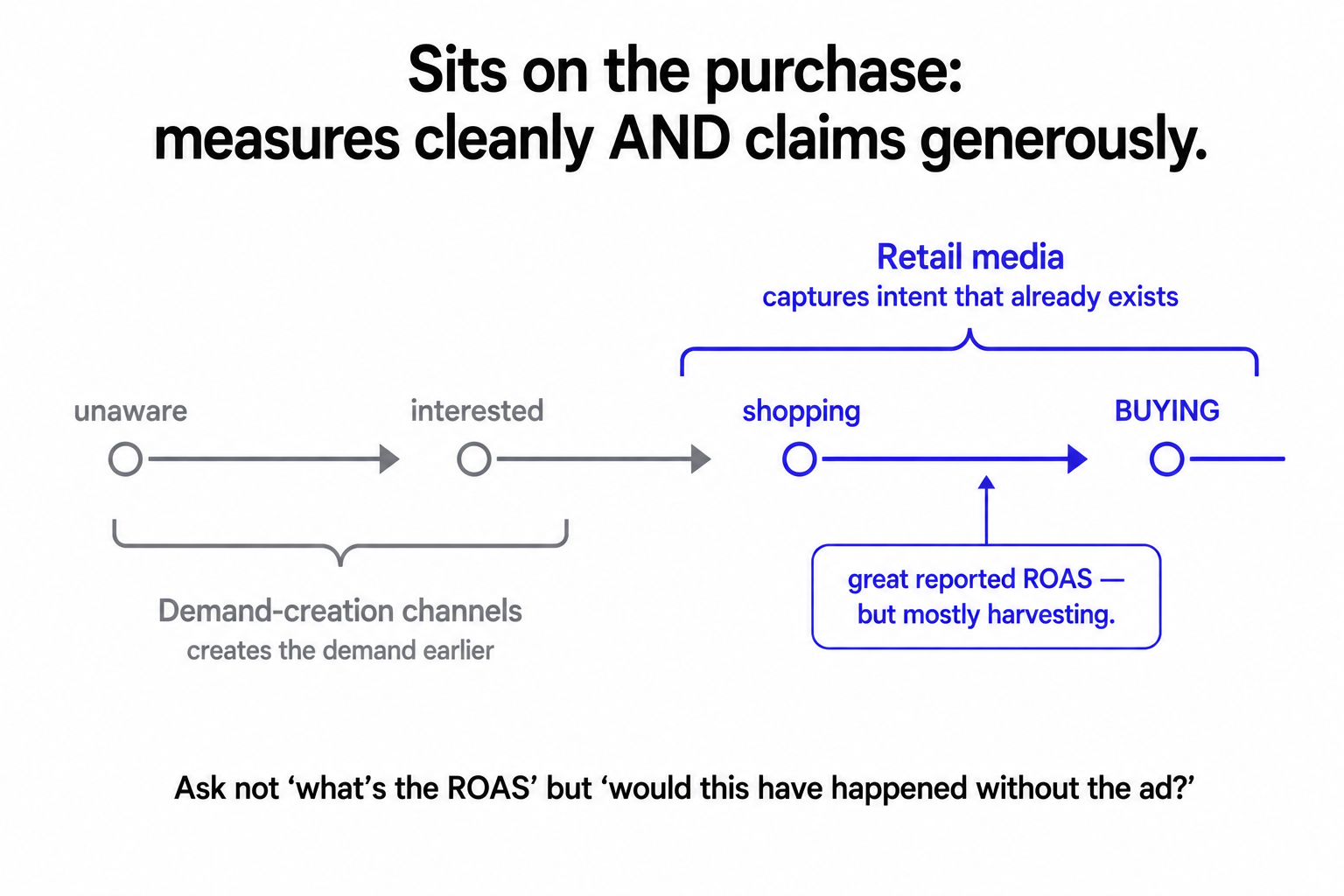
Here's the thing that decides whether retail media helps or just flatters you, and it's the incrementality problem from budget allocation in its purest form. Retail media is, overwhelmingly, a harvesting channel. The person typing your product category into a retailer's search bar was already shopping. They had intent before your ad appeared. When your sponsored placement captures that sale, it often captured a sale that was likely to happen anyway, to you or to a competitor.
That's not worthless, capturing intent and winning the placement over a competitor is real, but it means retail media reports beautifully and over-credits itself almost by design. It sits right on top of the purchase, so it both measures cleanly and claims credit generously, for the same reason: it's closest to the moment money changes hands. A channel that great at attribution will always look like your best performer, because it's standing exactly where conversions get counted.
The danger is treating that flattering number as a signal to keep pouring budget in. Past a point, you're spending more and more to capture demand you were largely getting already, while the channels that actually create demand, that make someone want your product before they go searching, show worse numbers and get starved. This is why the maturing retail-media market is visibly shifting away from chasing reported return alone toward profit, new-customer acquisition, and lifetime value, exactly the move the budget-allocation piece argues for. The smart question on retail media isn't "what's the ROAS," it's "how much of this would have happened without the ad."
So how should you actually use it?
None of this is an argument against retail media. If you sell where a retail media network operates and people search your category there, it's often unavoidable and genuinely effective at what it does, winning the placement at the point of purchase. The argument is about how you budget it: as a harvesting channel, sitting alongside demand creation, not as the whole growth engine.
A few durable habits for using it well:
- Treat strong reported ROAS with suspicion, not celebration. The cleaner the attribution, the more credit-claiming is baked in. A great retail-media return is partly real and partly the channel standing where conversions are counted.
- Protect your demand-creation budget from it. The pressure is always to move money toward the channel with the best dashboard numbers. Resist letting the harvester starve the creators, or you'll slowly stop generating the very demand the harvester captures.
- Watch the maturing surfaces. Retail media is extending off-site (retailer data used to target ads elsewhere), into physical stores (in-store screens), and into privacy-safe measurement environments. These are worth understanding as they develop, but they don't change the core question of incrementality.
- Get the basics right where you do play. Where retail media fits, the same input discipline from the Google piece applies: clean product data, strong listings, and creative that earns the click are what the placement actually rewards.
What retail media actually is
Retail media puts your advertising exactly where the money changes hands, with the retailer's real purchase data behind it and a clean, closed loop measuring the result. That makes it powerful and flattering in equal measure, because the same position that lets it measure so cleanly also lets it claim credit so generously. Amazon built the standard for it, and the whole category is growing fast precisely because advertising tied to real purchase behaviour is so valuable as other tracking decays.
Use it for what it genuinely does: capture the demand that's already there, at the moment of purchase, better than a competitor would. Just don't mistake that for growth. Retail media rarely creates the demand that isn't there yet, and the brands that thrive on it are the ones that keep funding the channels that do.
A few common questions
What is retail media? Retail media is advertising sold by a retailer on its own digital properties (and increasingly beyond them), using the retailer's first-party data about what shoppers actually buy. Amazon Ads, Walmart Connect, Instacart, and others are examples. Its defining strength is combining ad inventory, real purchase data, and closed-loop measurement in one place, so you advertise right where people are shopping and can see whether it led to a sale.
Why is retail media growing so fast? Because it ties advertising directly to real purchase behaviour and measures outcomes in a closed loop, which is increasingly valuable as third-party tracking across the open web degrades. Brands under pressure to prove return are drawn to a channel that combines media, first-party data, and a clear line to the sale. Amazon dominates the category and effectively set the measurement standard others are judged against.
Is a high ROAS on Amazon Ads as good as it looks? Treat it with caution. Retail media sits right on the moment of purchase, so it both measures cleanly and claims credit generously, often for sales that would have happened anyway because the shopper already had intent. A strong reported return is partly real and partly the channel standing exactly where conversions get counted. The better question is how much of it was incremental.
Should retail media be my main advertising channel? For most brands, no, not on its own. Retail media is excellent at harvesting existing demand at the point of purchase, but it rarely creates new demand. If you let its flattering numbers pull budget away from demand-creation channels, you slowly stop generating the demand it captures. Use it as a harvesting channel alongside demand creation, and judge it on incrementality, not headline ROAS.
You should also read:
Budget Allocation: The Paid-Media Decision That Actually Decides Your ROAS
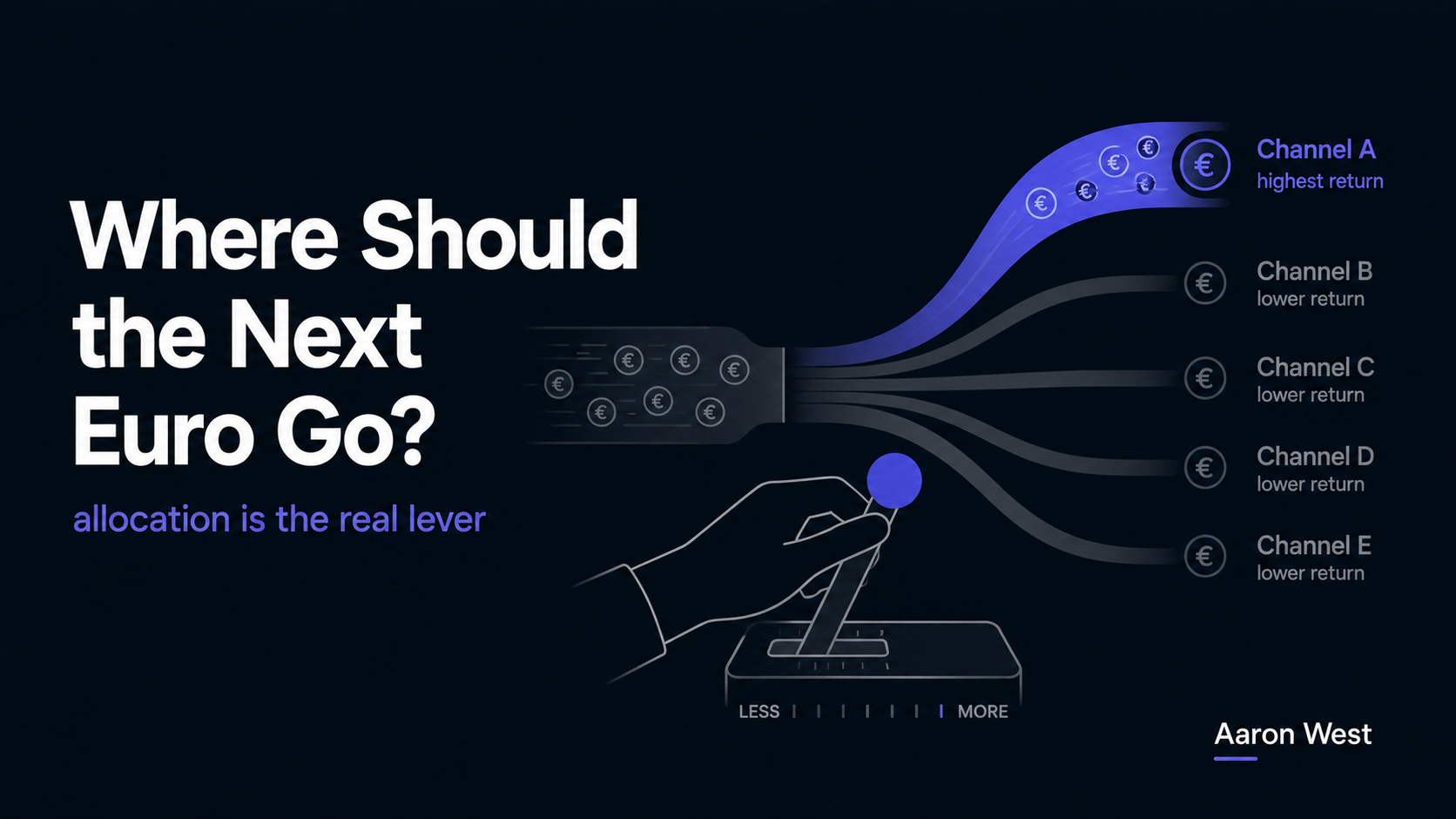
The most important paid-media decision isn't made inside a campaign. It's how you split the budget across channels. And the question that should drive it isn't "which channel has the best ROAS," it's "what does the next euro return, and would that sale have happened…
Continue reading...
Paid Media: The Principles That Outlast Every Platform
Paid media is a field where the platforms change constantly and the principles barely change at all. There's always a channel of the year, a new ad format, an algorithm update that's supposedly rewritten the rules. The teams that actually win don't chase any of…
Continue reading...
Comparison Sites, CSS, and Sub-Networks: The Partners People Forget
Comparison sites and Comparison Shopping Services (CSS) are affiliate-adjacent partners that list your products alongside competitors so shoppers can compare, then send the click your way for a fee or a commission. They are the partner type most programmes barely think about, which is a…
Continue reading...