Budget Allocation: The Paid-Media Decision That Actually Decides Your ROAS

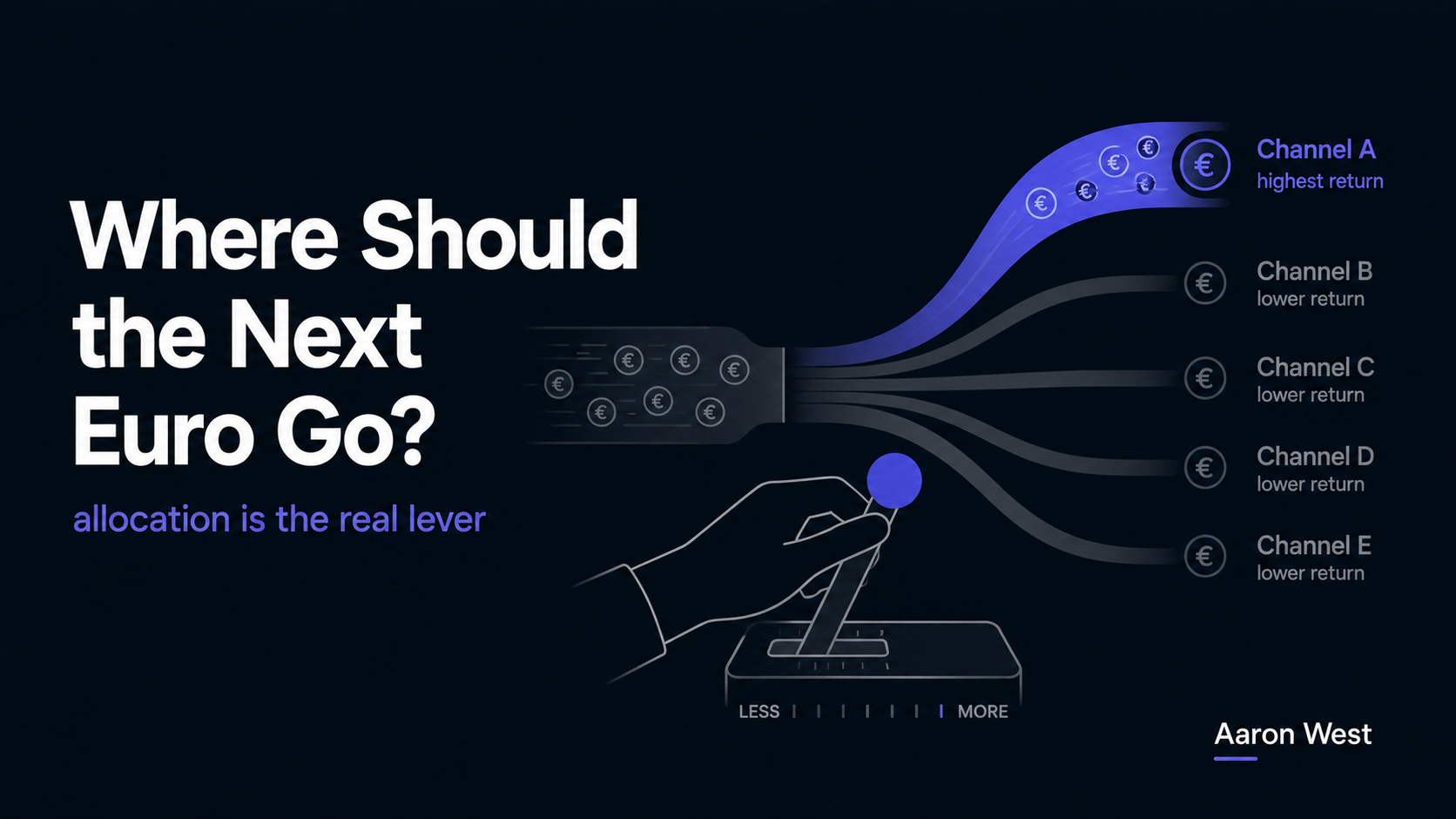
Table of Contents
The most important paid-media decision isn't made inside a campaign. It's how you split the budget across channels. And the question that should drive it isn't "which channel has the best ROAS," it's "what does the next euro return, and would that sale have happened without it." Get allocation right and mediocre campaigns still perform. Get it wrong and brilliant campaigns pour money into the wrong place.
This is a core of the Paid Media pillar, expanding the incrementality and marginal-return questions from the cornerstone. It's also the least glamorous lever in paid media and quietly the most powerful. Here's why allocation beats optimisation, why your dashboard's favourite channel is often the wrong one to feed, and how to think about the next euro honestly.
Allocation beats optimisation, and it isn't close
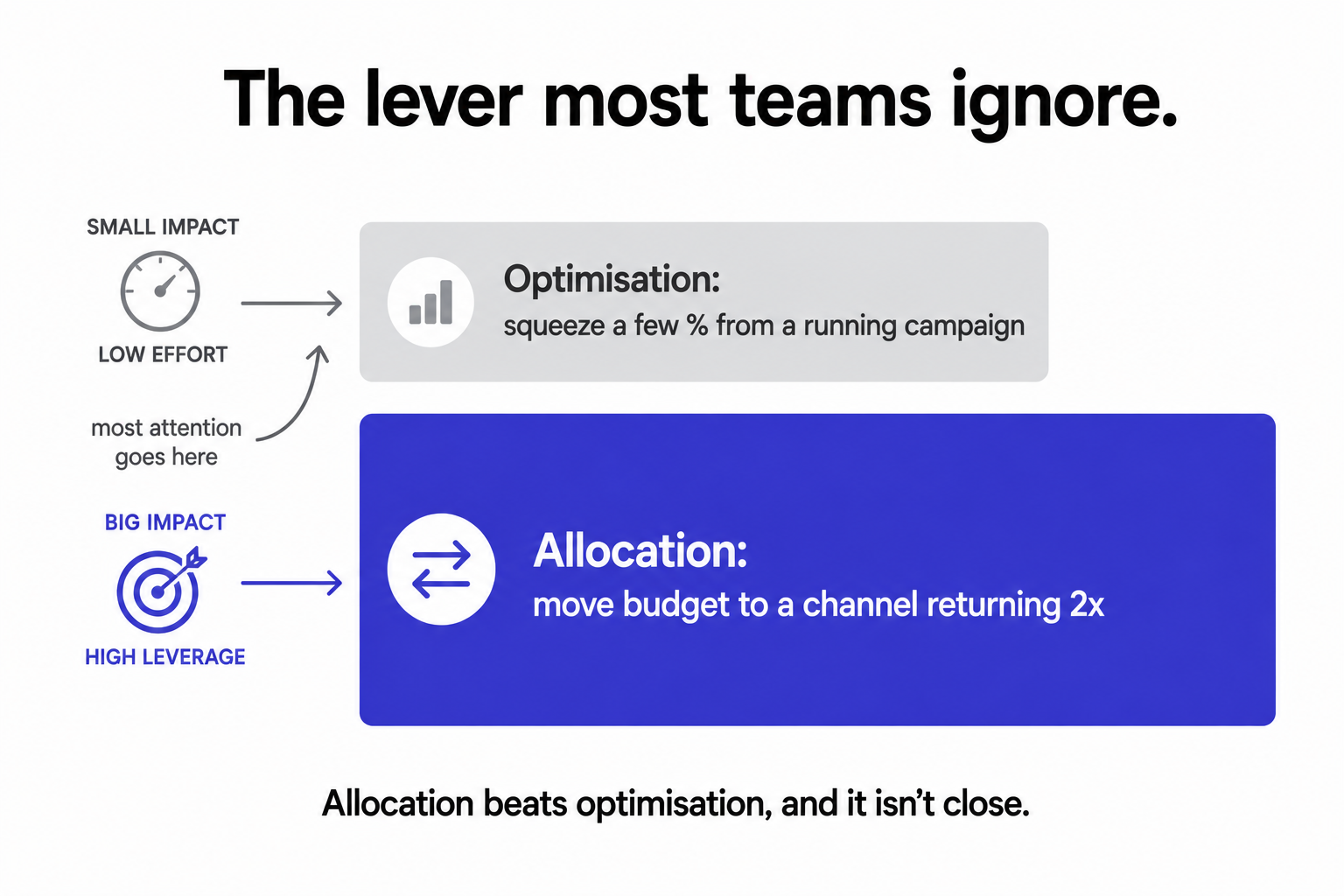
Most paid-media effort goes into optimising campaigns: tweaking, testing, squeezing a few more percent out of what's already running. That work matters, but it's small compared to the decision sitting above it. You can optimise a campaign by a few percent, or you can move budget out of a channel returning very little and into one returning twice as much. The second move dwarfs the first, and it gets a fraction of the attention.
The reason is that optimisation feels like control and allocation feels like a gamble. Adjusting a campaign is concrete and safe; moving budget between channels means admitting that some of your spend is in the wrong place. So teams polish the campaigns they have and leave the bigger lever, where the money actually sits, mostly untouched. They're sanding the deck while the ship points the wrong way.
The shift is to treat budget as movable, not as last year's split carried forward with small edits. Every euro should be somewhere because it earns more there than anywhere else right now, not because that's where it was last quarter. Allocation is the lever; optimisation is the polish.
The blended-average trap
When teams do think about allocation, they usually do it on averages: this channel's ROAS is X, that one's is Y, so favour X. The problem is that an average hides the only thing that matters for the next decision, which is what the next euro does, not what the average euro did.
Spend has diminishing returns. The first euro into a channel usually works much harder than the ten-thousandth, because you reach the most responsive people first and work down from there. So a channel with a great average ROAS can be a terrible place for your next euro if you've already saturated it, and a channel with a worse average can be the best place for the next euro if it's nowhere near saturated. Managing to the blended average is how you keep feeding a channel long past the point where it's still working, simply because its lifetime average still looks good.
The discipline is to think at the margin. Not "what did this channel return on average" but "what will the next chunk of budget return here versus somewhere else." That's a harder question, and it's the right one. Averages describe the past. Margins decide the next move.
The big one: are you creating sales or claiming them?
Here's the question that quietly wrecks more paid-media budgets than any targeting mistake: is this spend incremental? Would the sale have happened anyway, without the ad?
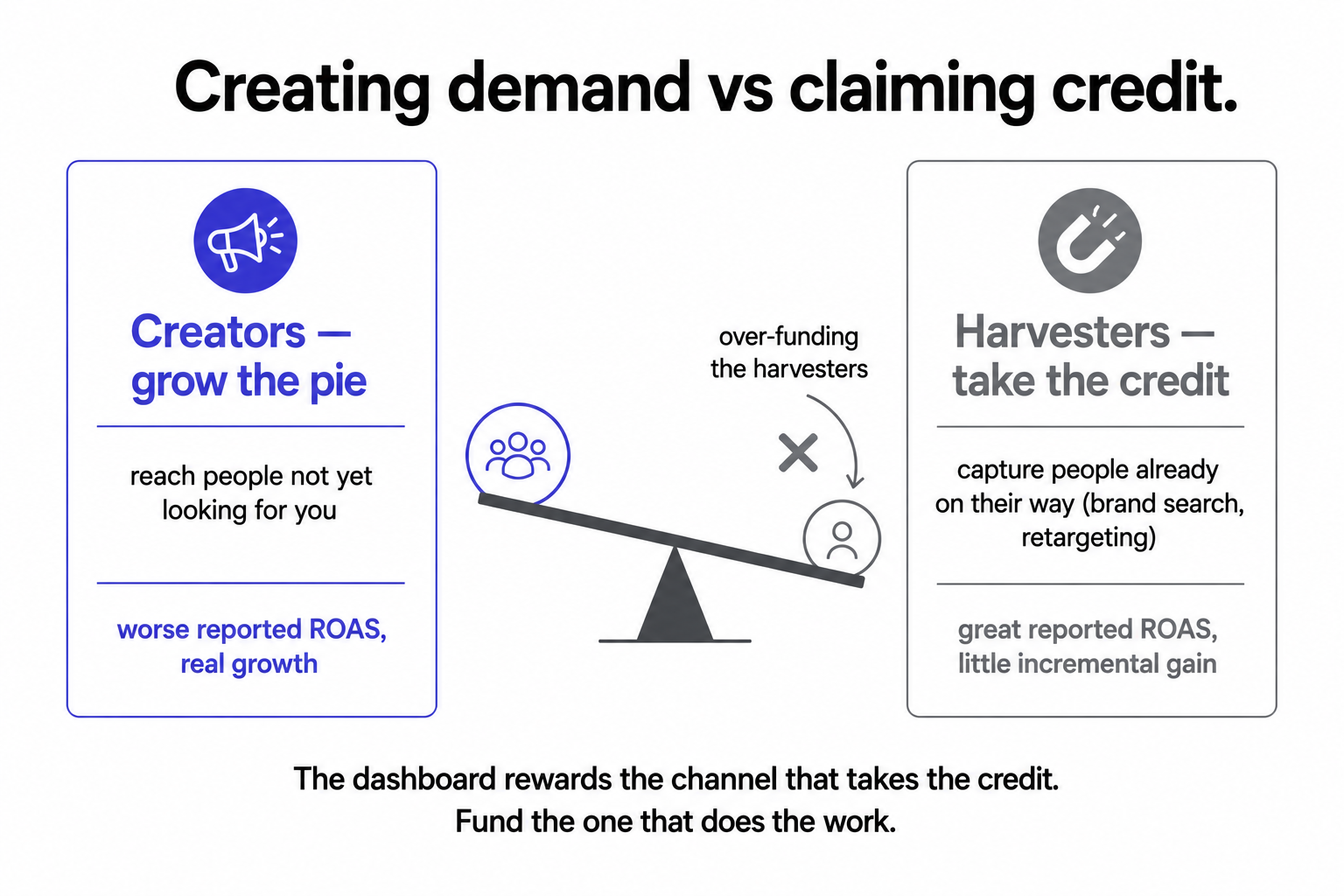
It matters because the channels that report the best ROAS are very often the ones best positioned to claim credit rather than create demand. Think about the techniques that always look efficient on a dashboard: ads that target people already searching for your brand, or ads that follow people around after they've already visited your site. These capture buyers who were, in many cases, already on their way to purchasing. The channel didn't create the sale; it stood in the doorway and took the credit as the customer walked through.
Pour more budget into those channels and the dashboard glows, while the business barely moves, because you're spending more to claim sales you were already getting. Meanwhile the channels that actually create demand, that reach people who weren't yet looking for you, tend to show a worse reported return, because creating a new customer is harder and less immediately attributable than capturing an existing intent. Judge purely on reported ROAS and you systematically defund the channels growing the business and overfund the ones flattering your dashboard. This is the same illusion behind why ROAS is the metric that lies and why attribution has to be read honestly: reported credit is not the same as caused outcome.
How to think about it without fooling yourself
You don't need a perfect attribution model to allocate better; you need the right instinct and a willingness to test. A few durable habits:
- Ask the incrementality question on every channel: if I turned this off, what would actually disappear? The honest answer is often "less than the dashboard implies," especially for the credit-claiming channels.
- Test by pulling back, not just by adding. Scaling a channel up tells you less than dialling one down and watching whether sales actually fall. If you cut a channel and revenue barely moves, that channel was mostly claiming credit.
- Fund demand creation even though it looks worse. The channels that grow the business rarely win a last-click beauty contest. If you only ever feed the best reported ROAS, you slowly starve your own growth.
- Treat the split as a live decision. Revisit where the marginal euro goes regularly, because saturation, seasonality, and competition all move it. Last quarter's optimal split is not this quarter's.
None of this requires fancy tooling. It requires resisting the dashboard's flattering story and asking, every time, whether the money is creating something or just claiming it.
What budget allocation actually is
Budget allocation is the highest-leverage decision in paid media, and it lives above the campaigns, not inside them. It comes down to thinking at the margin instead of the average, and to separating the channels that create demand from the ones that merely claim credit for it. The dashboard will always make the credit-claimers look like your best performers, because claiming credit is exactly what they're good at.
The dashboard rewards the channel that takes the credit. Your job is to fund the channel that does the work. Knowing the difference, and being willing to act on it even when the reported numbers protest, is most of the skill.
A few common questions
What's more important, optimising campaigns or allocating budget? Allocation, and it isn't close. Optimising a campaign might gain you a few percent; moving budget out of a weak channel into one returning twice as much is a far bigger move. Optimisation feels safer and gets most of the attention, but the bigger lever is how the money is split across channels in the first place.
Why shouldn't I just fund my highest-ROAS channel? Because reported ROAS rewards channels that claim credit, not necessarily ones that create sales. Branded search and retargeting often show excellent returns by capturing buyers who were already on their way, so feeding them more spends money to claim sales you were already getting. Judge on incrementality and marginal return, not headline ROAS.
What does "incremental" mean in paid media? Incremental spend creates sales that wouldn't have happened otherwise. The key question for any channel is: if I turned this off, what would actually disappear? Channels that mainly capture existing intent are largely non-incremental even when they report a great return, while demand-creating channels are more incremental but look worse on a last-click dashboard.
How do I test whether a channel is incremental? Pull it back rather than only scaling it up. If you reduce or pause a channel and revenue barely moves, it was mostly claiming credit rather than creating sales. Watching what actually disappears when you dial a channel down tells you far more about its true contribution than its reported ROAS ever will.
You should also read:

Creative for Performance: What Actually Makes an Ad Convert
As platforms automate more of targeting and bidding, the creative is the biggest lever you still control, and increasingly where the difference between a winning and losing campaign actually comes from. But performance creative isn't about looking good. It's about being instantly clear, hooking attention…
Continue reading...
Paid Media: The Principles That Outlast Every Platform
Paid media is a field where the platforms change constantly and the principles barely change at all. There's always a channel of the year, a new ad format, an algorithm update that's supposedly rewritten the rules. The teams that actually win don't chase any of…
Continue reading...
AI vs Machine Learning vs Deep Learning: The Distinction That Actually Matters
Artificial intelligence, machine learning, and deep learning are not three competing things you choose between. They are three nested ideas, each one a more specialised part of the one before it. AI is the big outer goal: machines doing things that would normally need human…
Continue reading...