Creative for Performance: What Actually Makes an Ad Convert

Table of Contents
As platforms automate more of targeting and bidding, the creative is the biggest lever you still control, and increasingly where the difference between a winning and losing campaign actually comes from. But performance creative isn't about looking good. It's about being instantly clear, hooking attention in the first moment, and saying one thing to the right person. The most common waste in paid media is a beautiful ad that says nothing fast enough to matter.
This is a core of the Paid Media pillar, expanding the cornerstone's point that the creative is the lever you still own. The leverage in paid media has quietly moved, and a lot of teams' attention hasn't moved with it. Here's where it went, what actually makes performance creative work, and the mistake that wastes the one input you fully control.
The lever moved, and most teams didn't notice
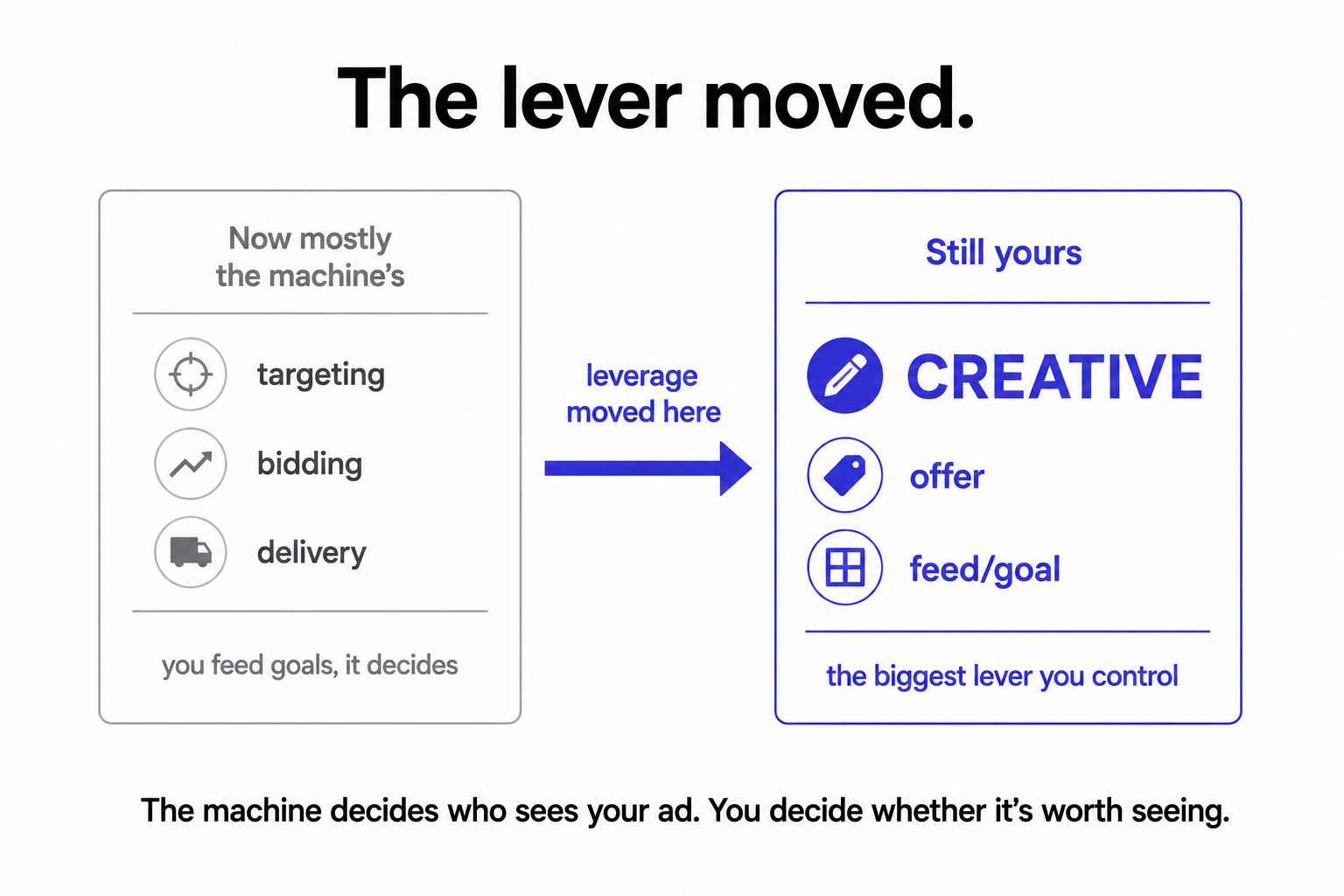
For years, the skill in paid media was targeting: choosing exactly who to show your ad to, in fine detail. That's the part platforms have increasingly taken over. The machine now decides, in large part, who sees your ad, when, and how much to bid to reach them. You feed it goals and signals, and it handles the targeting and bidding that used to be the job.
That shift changes where your leverage lives. The things you still genuinely control are narrower now: the creative, the offer, and the data you feed the system (the product feed, the conversion goal). Of those, creative is the biggest and most flexible lever, the one you can change fastest and that most directly determines whether the automated machinery has something worth distributing. A platform can optimise the delivery of a weak ad all day and still lose, because no amount of clever targeting saves a message that doesn't land.
So the uncomfortable truth for a lot of teams is that they're still pouring energy into the settings they no longer fully control and neglecting the creative they completely control. The leverage moved to creative. The attention mostly stayed on the dashboard.
What performance creative actually is
"Good creative" for performance is not the same as good creative for a brand award. It has a job, getting a specific person to stop, understand, and act, and the principles that serve that job are unglamorous and consistent.
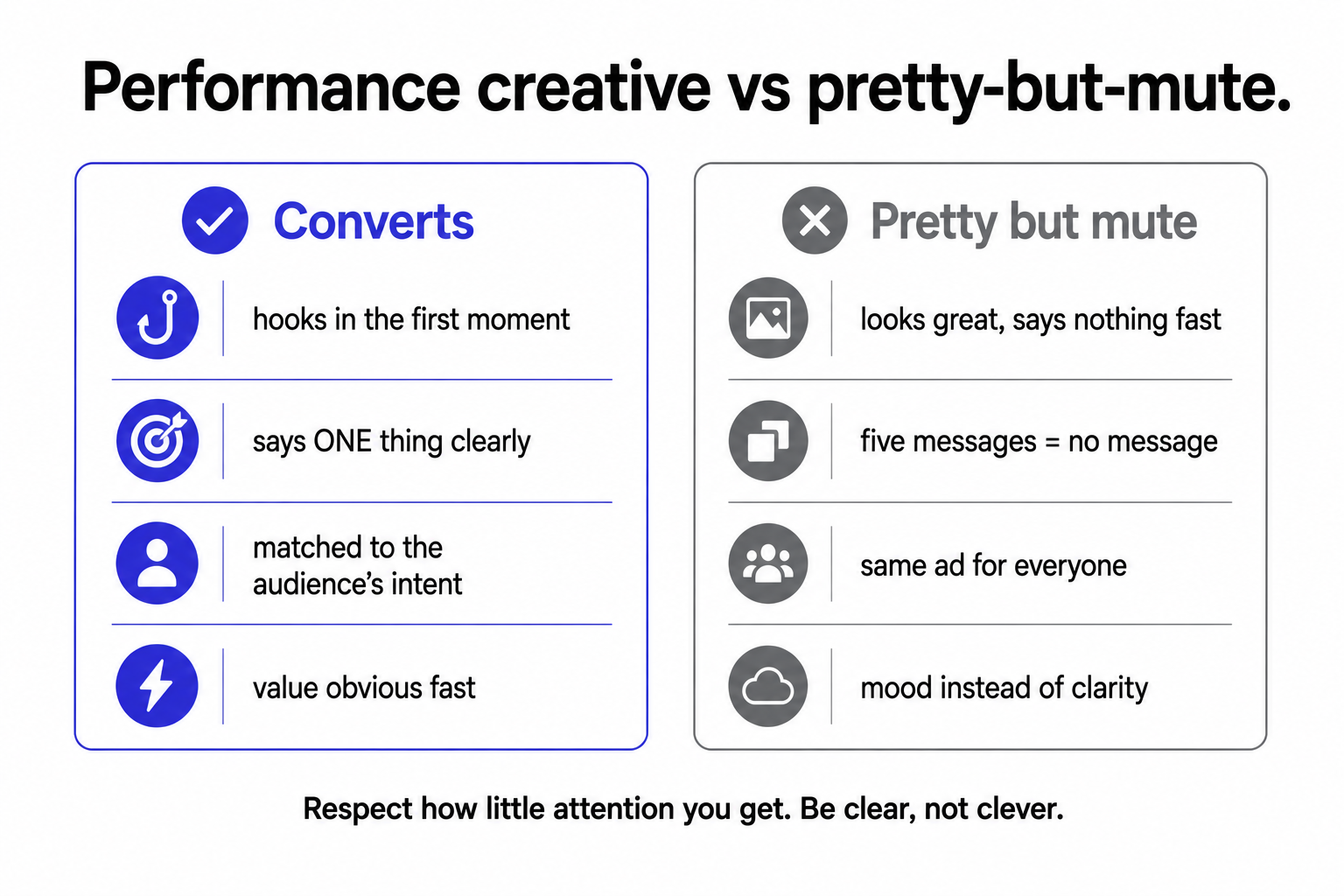
- Stop the scroll. If the first moment doesn't earn attention, nothing else in the ad matters, because nobody sees it. The hook is not a nice-to-have; it's the precondition for everything else. A weak opening wastes a strong rest.
- Say one thing. The instinct is to cram in every benefit. The result is an ad that says nothing, because the viewer can't hold five messages in the second of attention you've got. Pick the one thing that matters most to this person and lead with it. Clarity beats cleverness, every time.
- Match the message to intent. The same product needs different creative for someone who's never heard of you than for someone who already visited and left. A cold prospect needs the problem and the hook; a warm audience needs the nudge and the reason to act now. Running one creative at everyone treats two very different people as the same person.
- Make the value obvious, fast. Don't bury the product or the benefit behind atmosphere. The viewer should grasp what this is and why it matters almost immediately. Mood is not a substitute for clarity.
- Make the value clever, not the ad. Performance creative can absolutely be creative, but in service of communicating value faster, not in service of being admired. An ad that wins a creativity prize and sells nothing has done the wrong job well.
None of these are about budget or polish. They're about respecting how little attention you actually get and using it to be clear rather than clever.
You don't know what works. You find out.
Even with the principles right, here's the humbling part: you cannot reliably predict which creative will perform. The ad you're proudest of underwhelms; the rough one you almost didn't run takes off. Anyone who tells you they know in advance is guessing with confidence.
That means the discipline isn't producing one perfect hero ad; it's producing and testing enough creative to find the winners. Volume and variety of tests beat a single polished centrepiece, because you're searching for what resonates rather than assuming you already know. Teams that treat creative as a one-and-done production, agonise over a hero, ship it, move on, learn far less than teams that ship many variations and let results sort them out.
And winners don't stay winners. Creative fatigue is real: run the same ad to the same audience long enough and performance decays, because people have seen it. The ad didn't get worse; the novelty wore off. So performance creative is never finished. It's a pipeline, not a project: keep feeding fresh variations in, keep retiring the tired ones, keep learning what this audience actually responds to.
What creative for performance actually is
The leverage in paid media moved to creative as the platforms swallowed targeting and bidding, and performance creative is a craft with a specific job: stop the right person, say one clear thing, match it to where they are, and make the value impossible to miss. It rewards clarity over cleverness, testing over prediction, and a steady pipeline over a perfect hero. It is the input you most fully control, and most teams under-invest in it precisely because the old leverage was somewhere else.
The machine now decides who sees your ad. You decide whether it's worth seeing. That's where performance is won now, and it's the one part of the system that still belongs entirely to you.
A few common questions
Why does creative matter more in paid media now? Because platforms have automated much of targeting and bidding, which used to be where the skill lived. The machine now largely decides who sees your ad and what to bid, so the creative, along with the offer and the data you feed the system, is the main lever you still control, and the biggest determinant of whether the automated delivery has something worth distributing.
What makes an ad actually convert? Hooking attention in the first moment, saying one clear thing rather than five, matching the message to where the viewer is (cold prospect versus warm audience), and making the value obvious fast. Performance creative is about clarity, not polish. A beautiful ad that doesn't communicate value quickly is wasted, however good it looks.
Should I make one great ad or many? Many. You can't reliably predict which creative will win, so the discipline is producing and testing enough variations to find the winners, not agonising over a single hero. Volume and variety of tests beat one polished centrepiece, because you're searching for what resonates rather than assuming you already know.
Why did my best-performing ad stop working? Creative fatigue. Run the same ad to the same audience long enough and performance decays simply because people have seen it; the ad didn't get worse, the novelty wore off. Performance creative is a pipeline, not a project, so keep feeding in fresh variations and retiring tired ones rather than expecting a winner to last forever.
You should also read:
Google Ads, Shopping and PMax: What to Control, What to Let the Machine Do
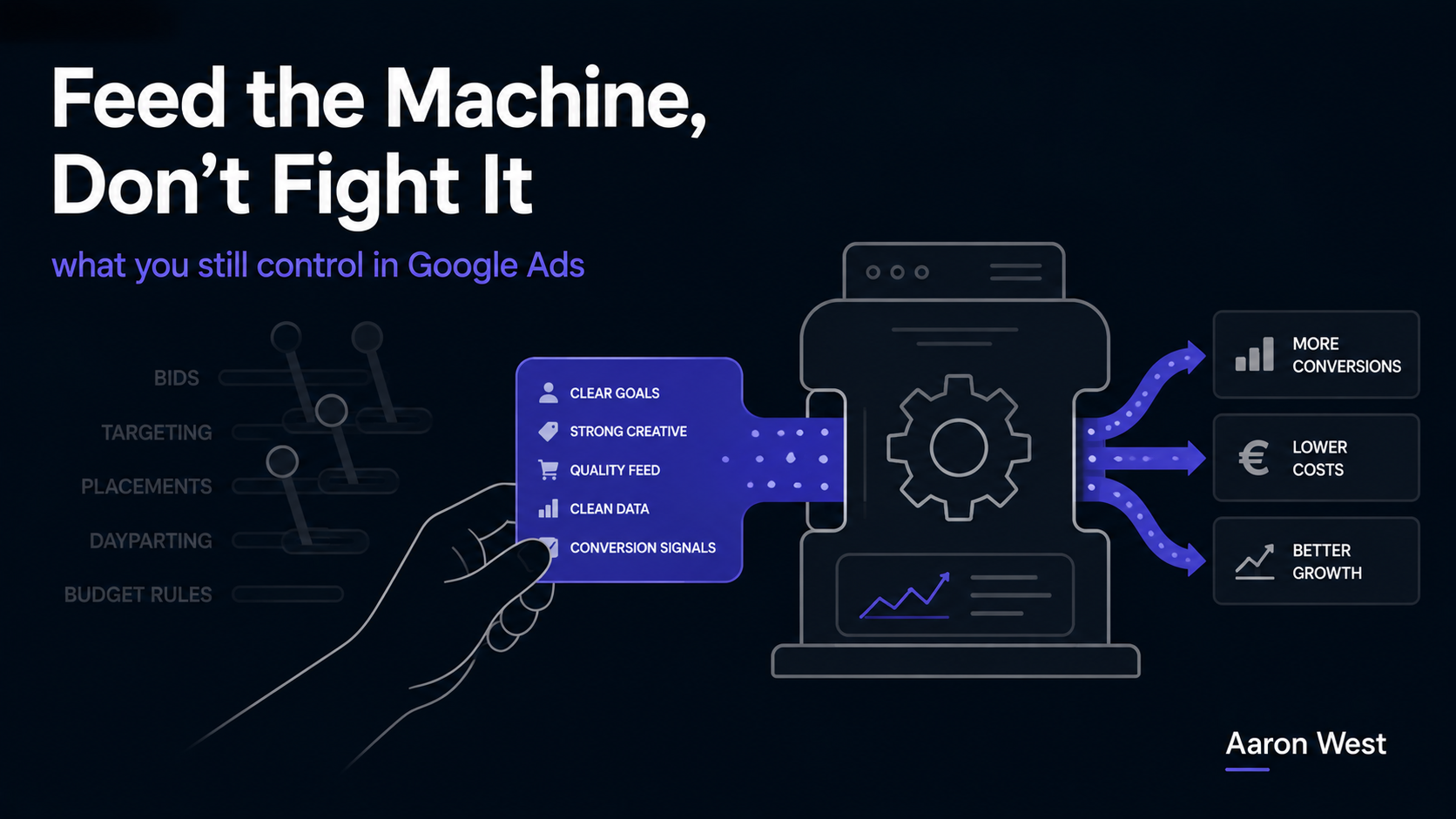
In Google Ads today, you no longer set the bids or hand-pick the audiences in most campaigns. The machine does. What you still control, and what now decides whether your campaigns work, is the quality of what you feed it: clean conversion data, a good…
Continue reading...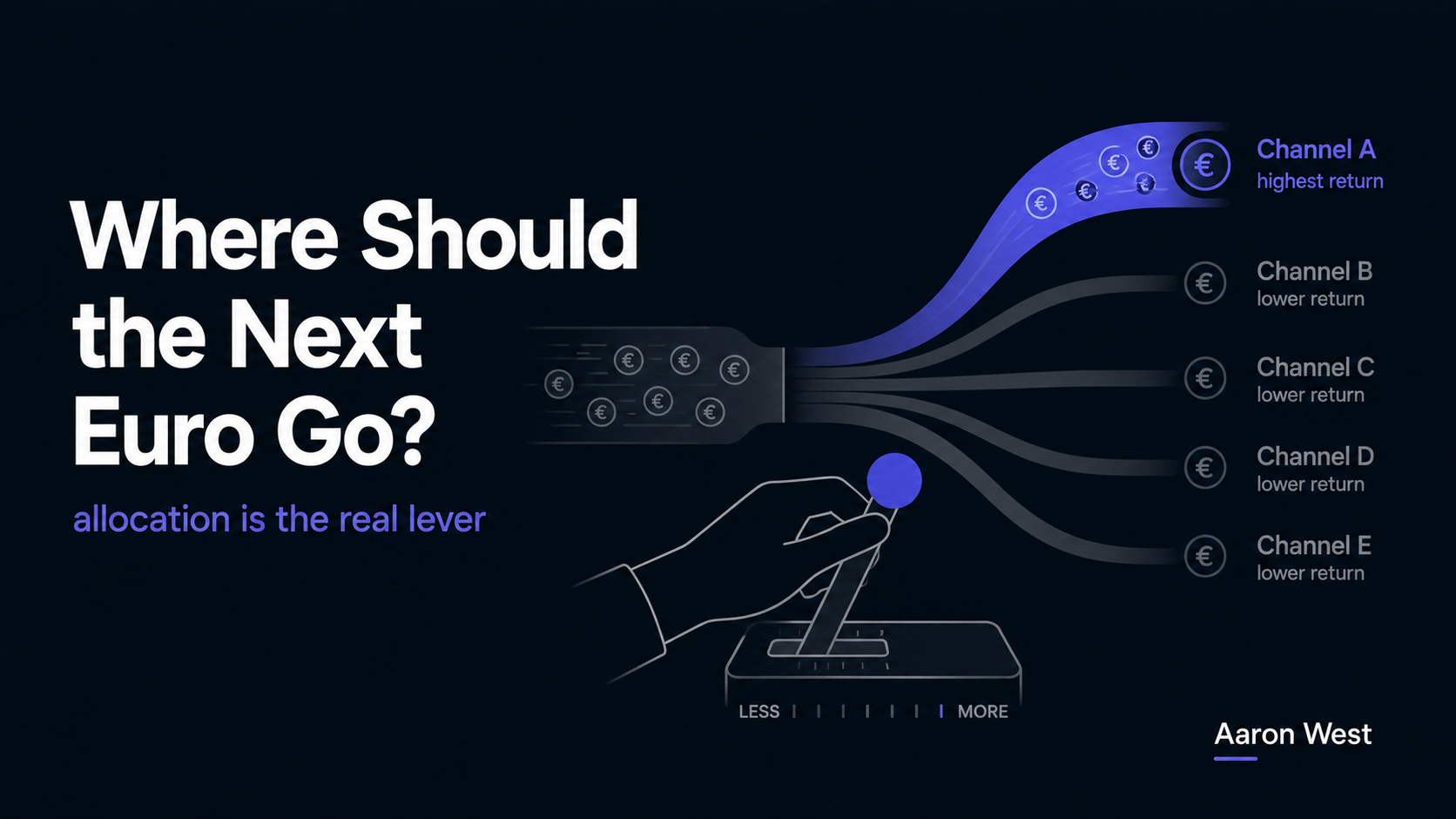
Budget Allocation: The Paid-Media Decision That Actually Decides Your ROAS
The most important paid-media decision isn't made inside a campaign. It's how you split the budget across channels. And the question that should drive it isn't "which channel has the best ROAS," it's "what does the next euro return, and would that sale have happened…
Continue reading...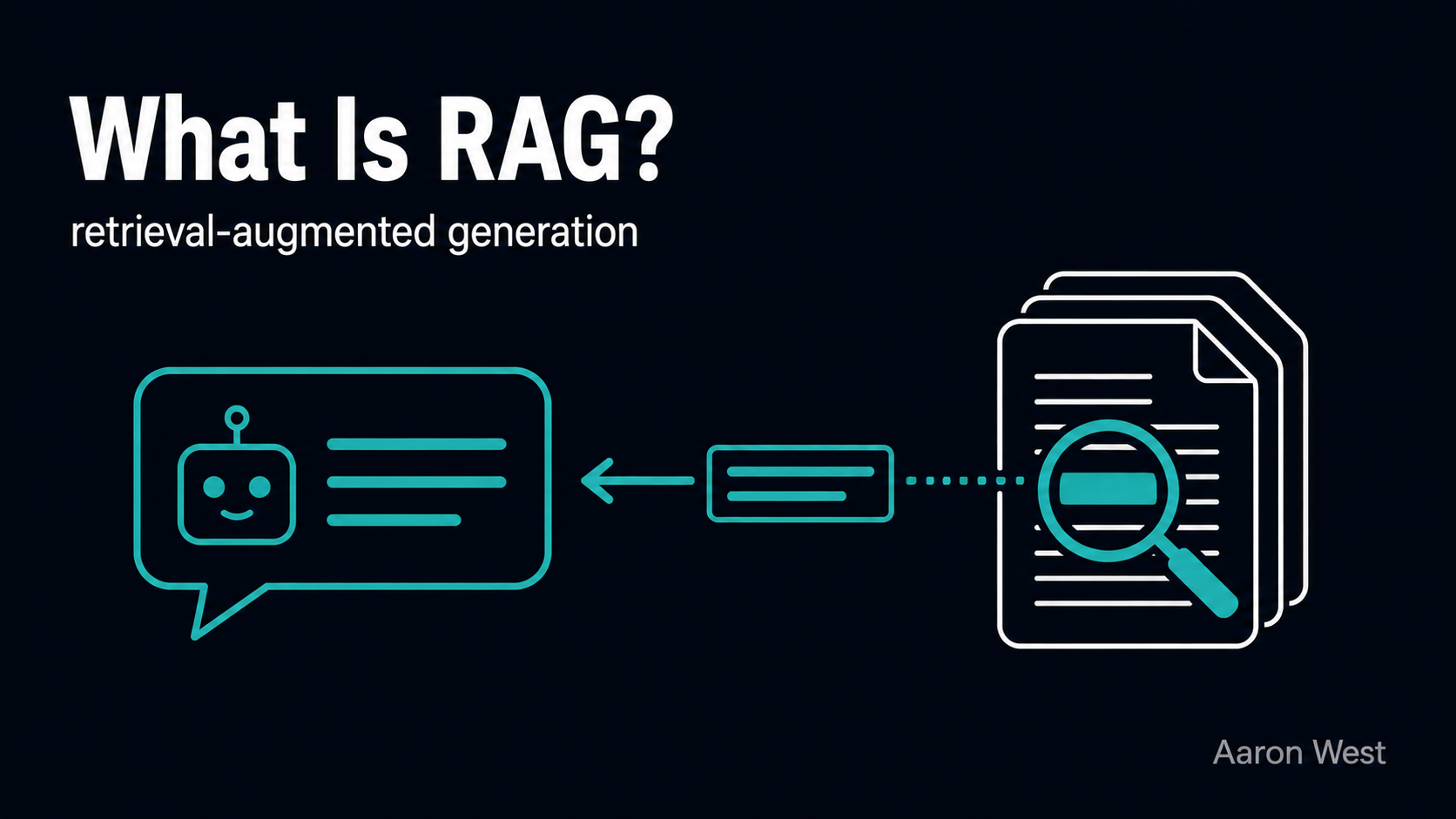
What Is RAG (Retrieval-Augmented Generation), and Why Everyone Is Using It
RAG, retrieval-augmented generation, is a way of making an AI model answer from a specific, trusted set of documents instead of relying only on what it absorbed during training. Before the model writes its answer, the system goes and fetches the most relevant material from…
Continue reading...