Google Ads, Shopping and PMax: What to Control, What to Let the Machine Do

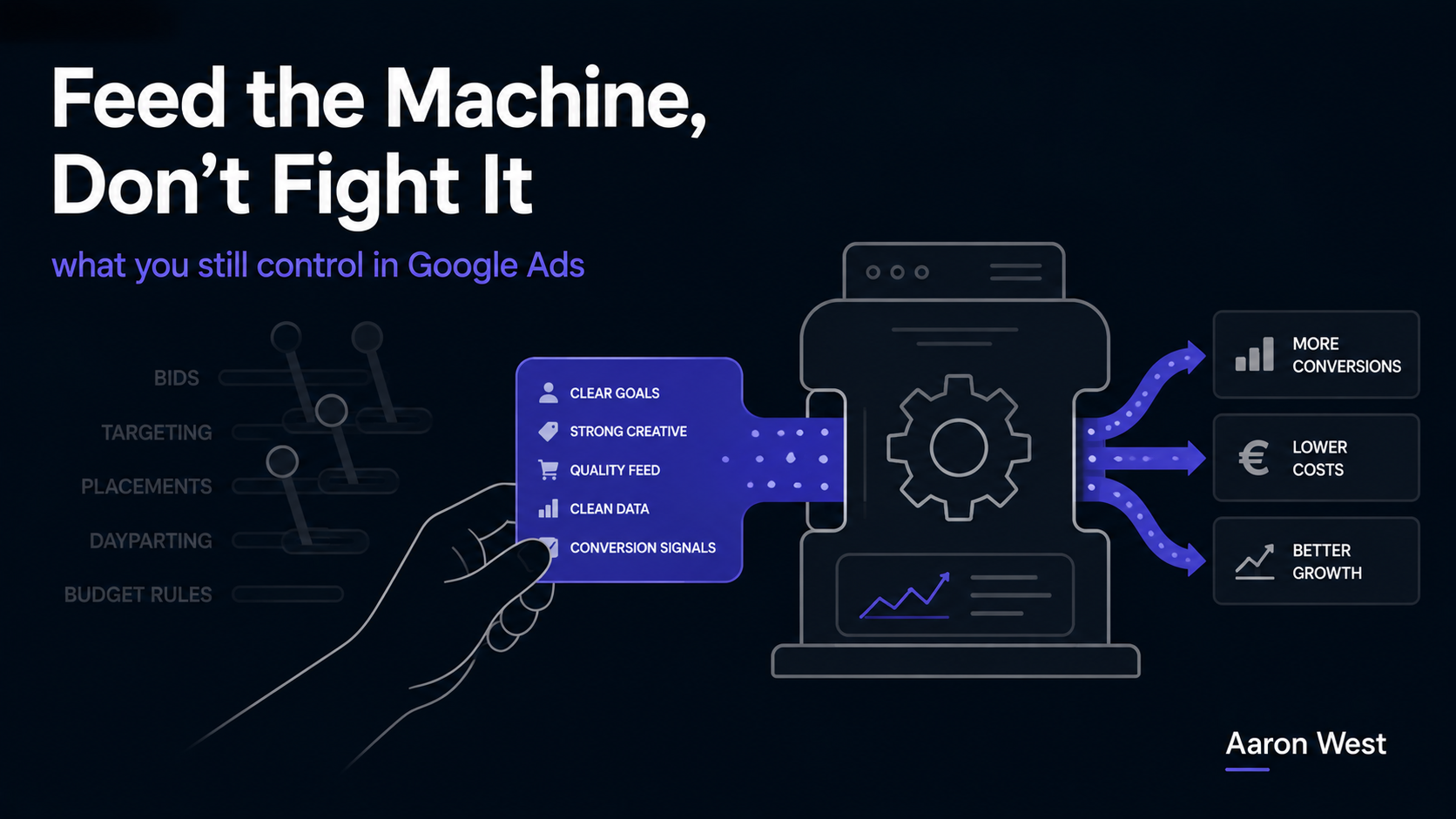
Table of Contents
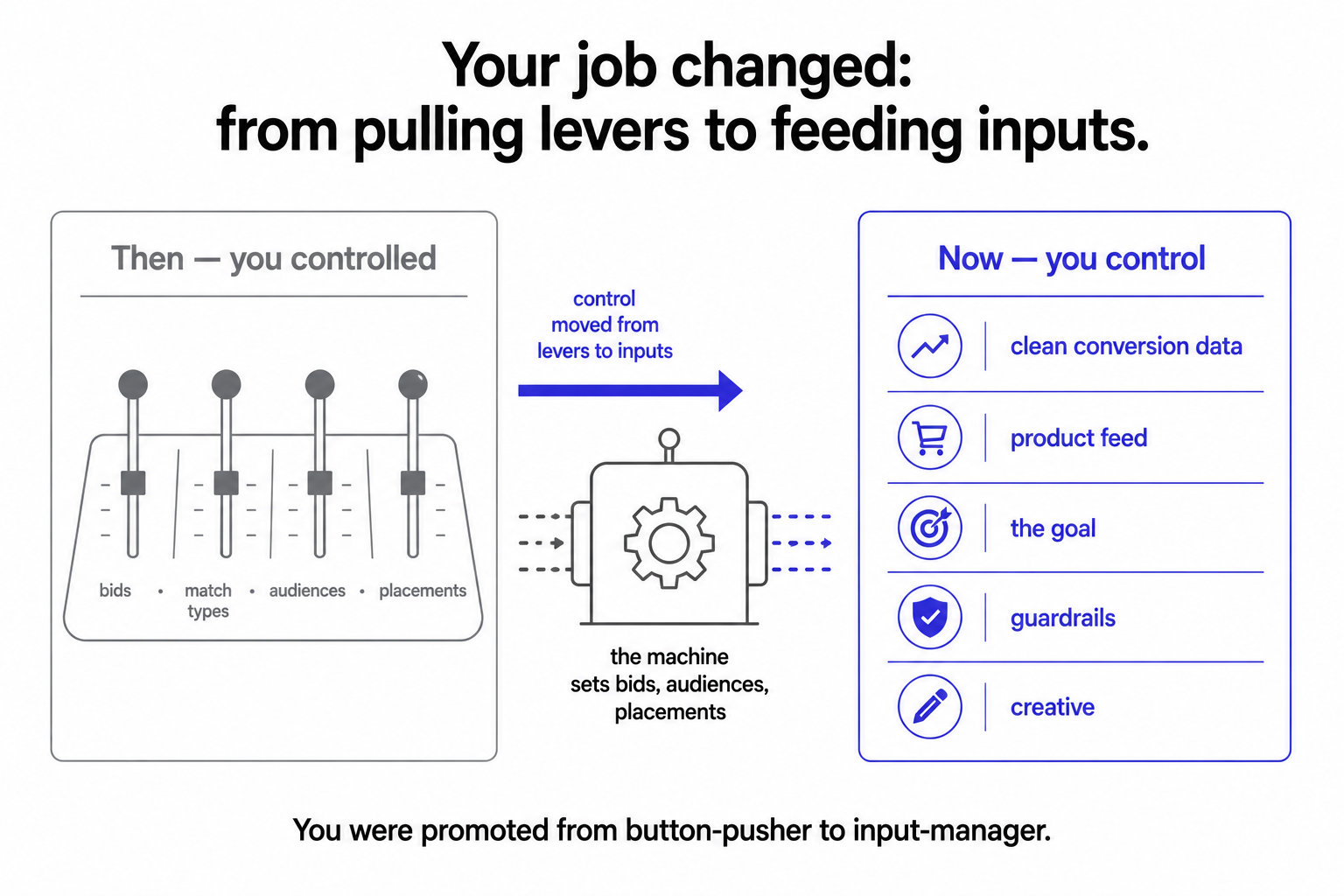
In Google Ads today, you no longer set the bids or hand-pick the audiences in most campaigns. The machine does. What you still control, and what now decides whether your campaigns work, is the quality of what you feed it: clean conversion data, a good product feed, the right goal, and sensible guardrails. The job changed from pulling levers to managing inputs, and most of the people struggling are still trying to pull levers that no longer exist.
This is a core of the Paid Media pillar, the platform-specific expression of the creative-is-the-lever shift. Google has spent years moving control from the advertiser to its own automation, and by 2026 that shift is close to complete. Here's what the machine now owns, what you still own, and why the thing you own is more important than ever.
(This is a fast-moving area. The campaign-type names and features below are current as of mid-2026; the principle underneath them, control the inputs not the bids, will outlast all of them.)
What the machine now owns
A few years ago, paid search was a craft of manual control: you set bids, chose match types, picked audiences, managed placements. Most of that is now automated, and the automation is no longer optional in the way it once was.
Smart Bidding sets your bids automatically toward a goal you choose, like a target cost per acquisition, a target return on ad spend, or simply maximising conversions. Performance Max runs a single campaign across Google's whole range of surfaces, search, shopping, display, and more, and decides placement, audience, and bid largely on its own. And the newer AI-driven campaign types are extending this further, taking over functions that used to be manual and, in some cases, replacing older campaign types outright. The direction is consistent and one-way: manual controls are receding, automation is expanding, and Google is steadily making the automated path the default rather than the option.
You can resent this or you can use it, but you can't really opt out of it any more. So the productive response is to understand what the shift actually asks of you, because it didn't remove your job. It changed it.
The input that matters most: clean conversion data
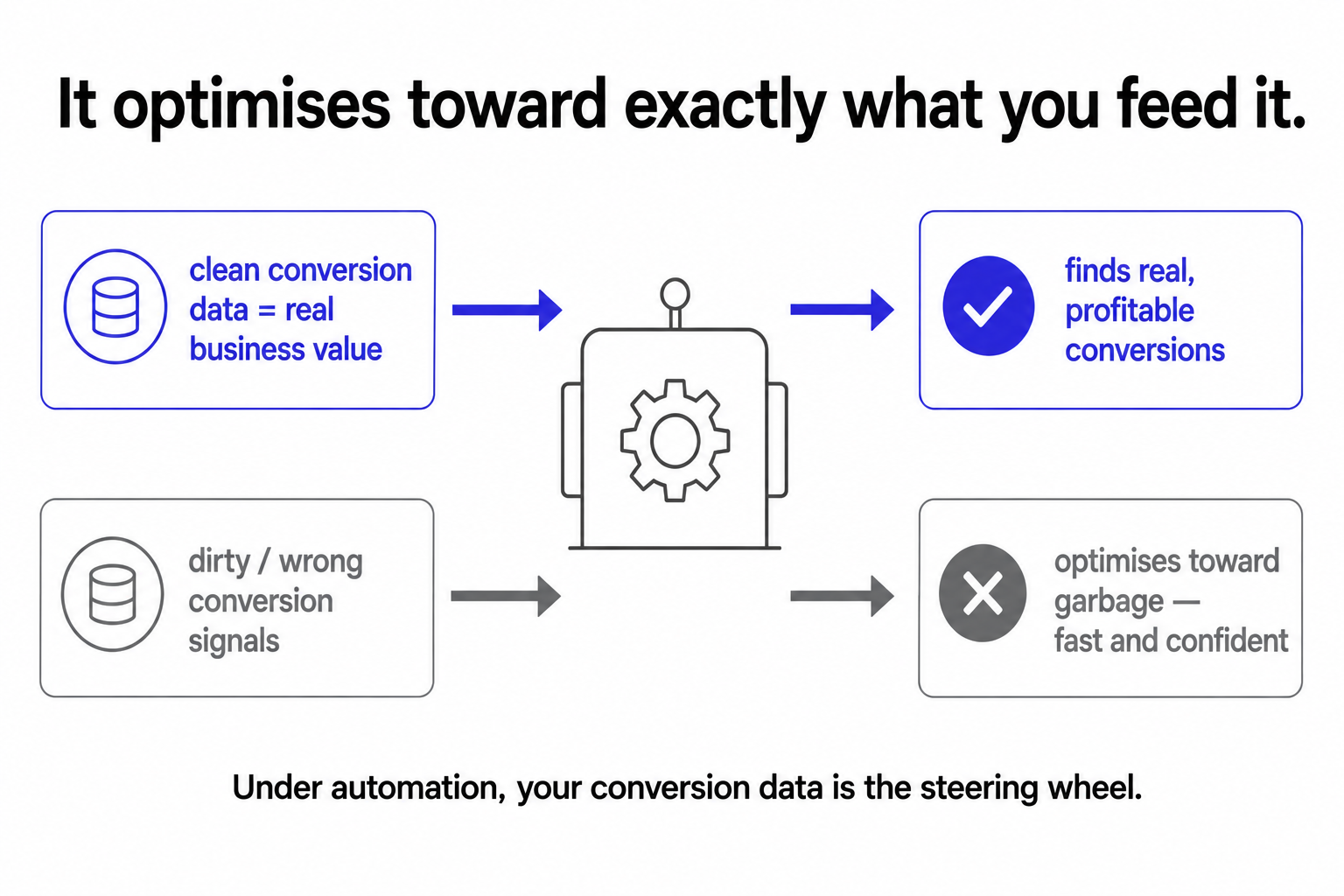
If the machine optimises toward a goal, then the single most important thing in the account is the integrity of the data that defines that goal. This is the part teams consistently underrate, and it's now the highest-leverage thing you control.
Here's why it matters so much more under automation. When you set bids manually, a slightly wrong conversion number was a reporting annoyance. When the machine sets bids, your conversion data is the steering wheel. Tell it that the wrong thing is a conversion, or feed it duplicated, delayed, or miscounted signals, and it will optimise toward that wrong thing relentlessly and confidently. The automation doesn't sanity-check your goals; it pursues them. Dirty signals don't make it slower, they make it learn fast in the wrong direction, which is worse than no learning at all.
So the unglamorous work, making sure your conversions are tracked correctly, that they reflect real business value rather than vanity actions, that the numbers feeding the machine are clean, is no longer back-office hygiene. It's the main lever. An account with mediocre campaigns and pristine conversion data will usually beat an account with clever campaigns and messy data, because the machine can only be as smart as the signals you give it. This is the practical face of why ROAS is the metric that lies: if you optimise toward a return number that doesn't reflect profit, the machine will faithfully chase unprofitable growth.
The rest of what you control
Conversion data is the big one, but it's not alone. The inputs that decide automated campaigns are, in rough order of leverage:
- The goal you set. Target ROAS, target CPA, or maximise conversions are not interchangeable. The goal tells the machine what to chase, so choosing one that reflects actual business value (profit, not just conversion count) is a strategic decision, not a setting.
- The product feed. For Shopping and Performance Max, the feed effectively is the campaign. Titles, images, attributes, and accuracy in the feed cap how well the automation can possibly perform. A weak feed cannot be rescued by good bidding.
- Guardrails. The machine will happily spend wherever it predicts conversions, including places you don't want to appear or audiences you're already getting for free. Brand exclusions, negative lists, and other guardrails are how you keep the automation inside the lines.
- Creative and assets. The lever from the creative piece. The machine assembles and serves from what you give it, so weak assets cap weak results no matter how good the targeting engine is.
Notice what's not on the list: bids, individual placements, manual audience picking. Those moved to the machine, and trying to claw them back mostly means fighting the system instead of steering it.
Automation is not hands-off
The trap on the other side is assuming that because the machine drives, you can leave the wheel. You can't. Automation optimises toward what you tell it brilliantly, which includes optimising toward the wrong thing brilliantly if your goals or signals are off. So the human job is real, it's just moved up a level: set the right goal, feed clean data, build the guardrails, supply strong creative, and watch for where the automation goes astray.
The most important thing to watch for is the incrementality problem from budget allocation. Automated campaigns, especially ones spanning many surfaces, are very good at finding and claiming the easy conversions, including people who would have bought anyway. A Performance Max or Shopping campaign can report a wonderful return while quietly spending a chunk of its budget capturing existing demand. The machine optimises toward reported conversions; it has no concept of whether those conversions were incremental. That judgment is yours, and it's exactly the kind of thing the automation will never do for you.
There's also a discipline point: the automation needs time to learn, and frequent changes reset that learning. Constant tinkering, the old manual habit, actively hurts automated campaigns. Set good inputs, then let it stabilise rather than poking it daily out of nervousness.
What this actually comes down to
Google Ads in 2026 is a machine that will do exactly what you tell it, faster and across more surfaces than you ever could manually, in whatever direction your data points it. That makes the quality of your inputs, your conversion data above all, the whole game. The advertisers losing right now are fighting the machine for control it already has. The ones winning are feeding it truth, pointing it at real business value, and guarding it with sensible limits.
The machine does exactly what you tell it. So the only question that matters is whether you're telling it the truth. Point the data right, and the automation works for you. Point it wrong, and it will pursue your mistake with total confidence.
A few common questions
Do I still control bids in Google Ads? In most campaigns, no. Smart Bidding sets bids automatically toward a goal you choose, and campaign types like Performance Max decide placement, audience, and bid largely on their own. What you control now is the inputs: the conversion data, the goal, the product feed, the guardrails, and the creative. Trying to manually manage bids mostly means fighting a system that has already taken that job.
What's the most important thing to get right in Google Ads now? Clean conversion data. Because the machine optimises toward whatever you define as a conversion, your tracking is effectively the steering wheel. Dirty or wrong signals make it optimise confidently in the wrong direction, which is worse than not optimising at all. An account with clean conversion data and average campaigns usually beats one with messy data and clever campaigns.
Is automated bidding "set and forget"? No. Automation optimises toward what you tell it, including the wrong thing if your goals or signals are off. Your job moved up a level: set the right goal, feed clean data, build guardrails, supply good creative, and watch for where the automation strays, especially toward non-incremental conversions it's happy to claim credit for. It also needs time to learn, so constant changes that reset the learning period hurt more than they help.
Why might Performance Max show a great return but not grow my business? Because it can spend a chunk of its budget capturing demand that already existed, people who would have bought anyway, and report those as conversions. The machine optimises toward reported conversions and has no concept of incrementality. A strong reported return can hide weak incremental growth, which is why judging automated campaigns on incrementality, not just their dashboard numbers, is part of the human job.
You should also read:
Creative for Performance: What Actually Makes an Ad Convert
As platforms automate more of targeting and bidding, the creative is the biggest lever you still control, and increasingly where the difference between a winning and losing campaign actually comes from. But performance creative isn't about looking good. It's about being instantly clear, hooking attention…
Continue reading...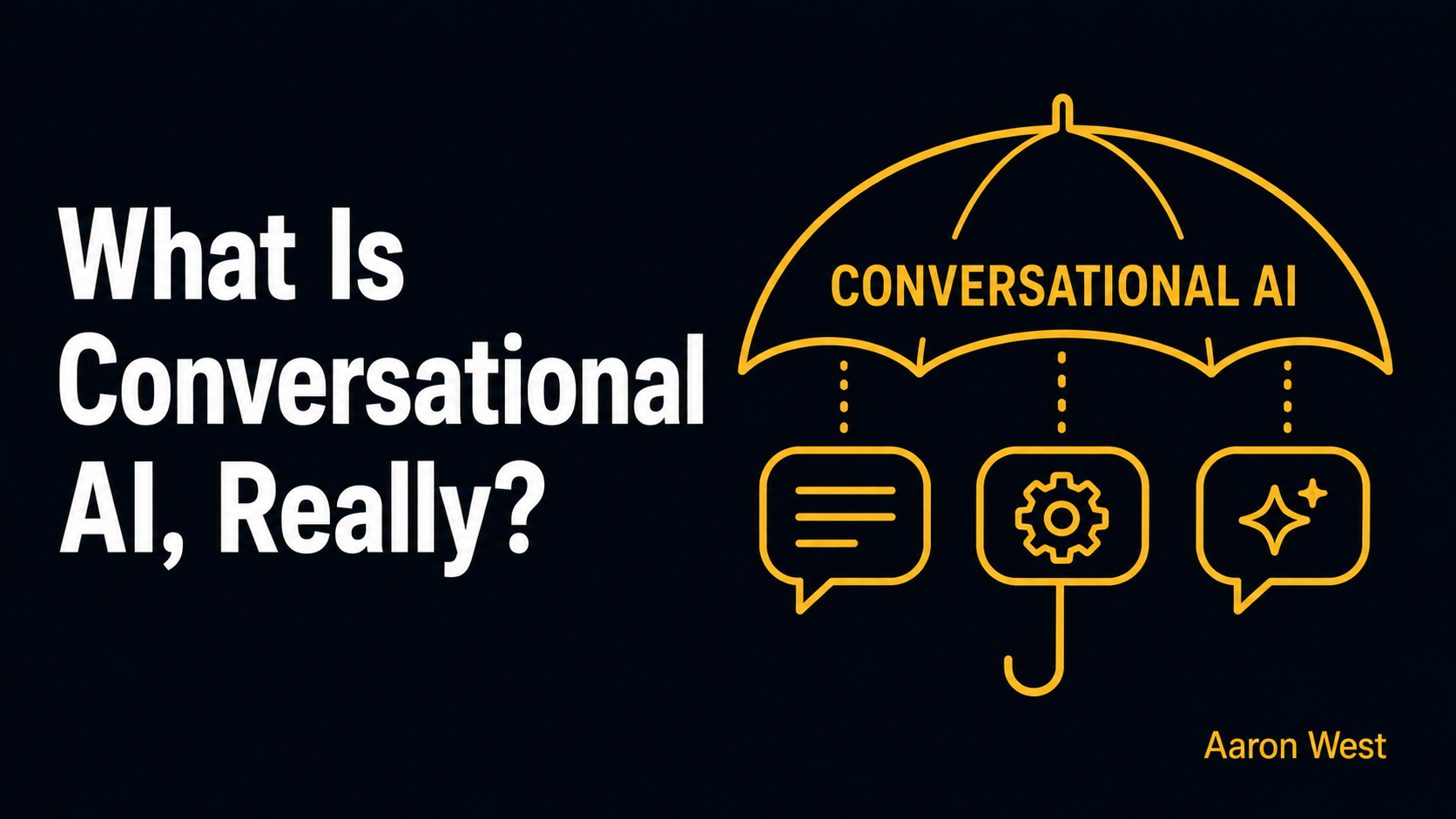
What Is Conversational AI, Really, and What It Still Can't Do
Conversational AI is the umbrella term for any technology that lets a machine understand, process, and respond to human language in something close to a natural conversation, by text or by voice. That is the whole definition. It is not one product or one technique.
Continue reading...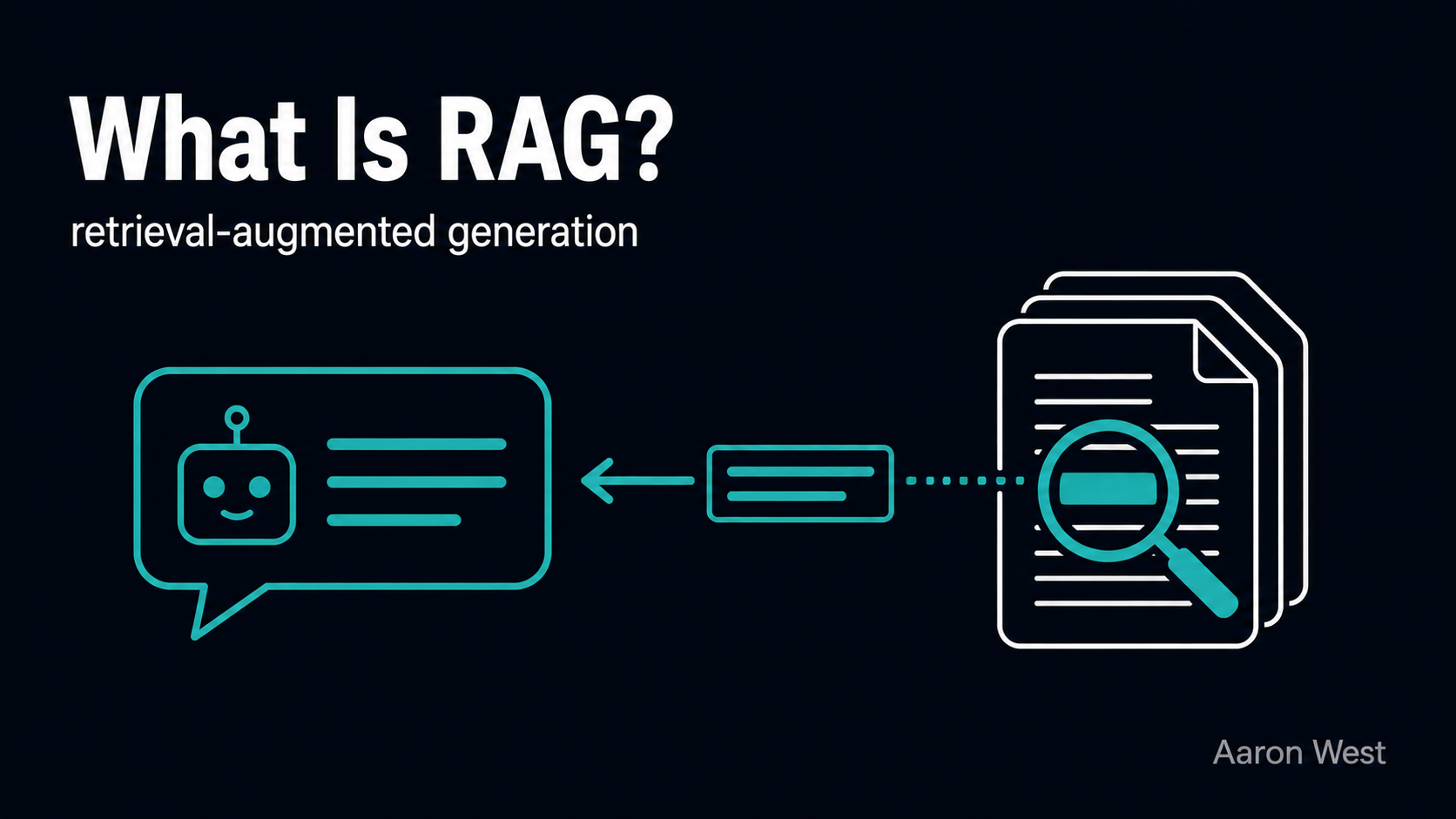
What Is RAG (Retrieval-Augmented Generation), and Why Everyone Is Using It
RAG, retrieval-augmented generation, is a way of making an AI model answer from a specific, trusted set of documents instead of relying only on what it absorbed during training. Before the model writes its answer, the system goes and fetches the most relevant material from…
Continue reading...