The Complaint That Becomes Loyalty

Table of Contents
A complaint, handled well, can leave a customer more loyal than if nothing had gone wrong at all. That's the most counterintuitive and most useful fact in customer service: the moment something breaks is the moment you have the customer's full attention and your biggest single opportunity to earn their trust. And most companies waste it, because they've been trained to see a complaint as a threat to manage rather than a chance to take.
This is a core of the Customer Service pillar, and it's the engine behind the cornerstone's claim that support is a retention channel. The complaint is where that's most true and most often thrown away. I spent years in high-volume support before moving into e-commerce, and if there's one thing the front line teaches you, it's that the customer almost never remembers the exact resolution. They remember whether they felt fought or helped. Here's why a complaint is such a powerful retention moment, and what separates the handling that wins loyalty from the handling that loses it.
Why a complaint is an opportunity, not a failure
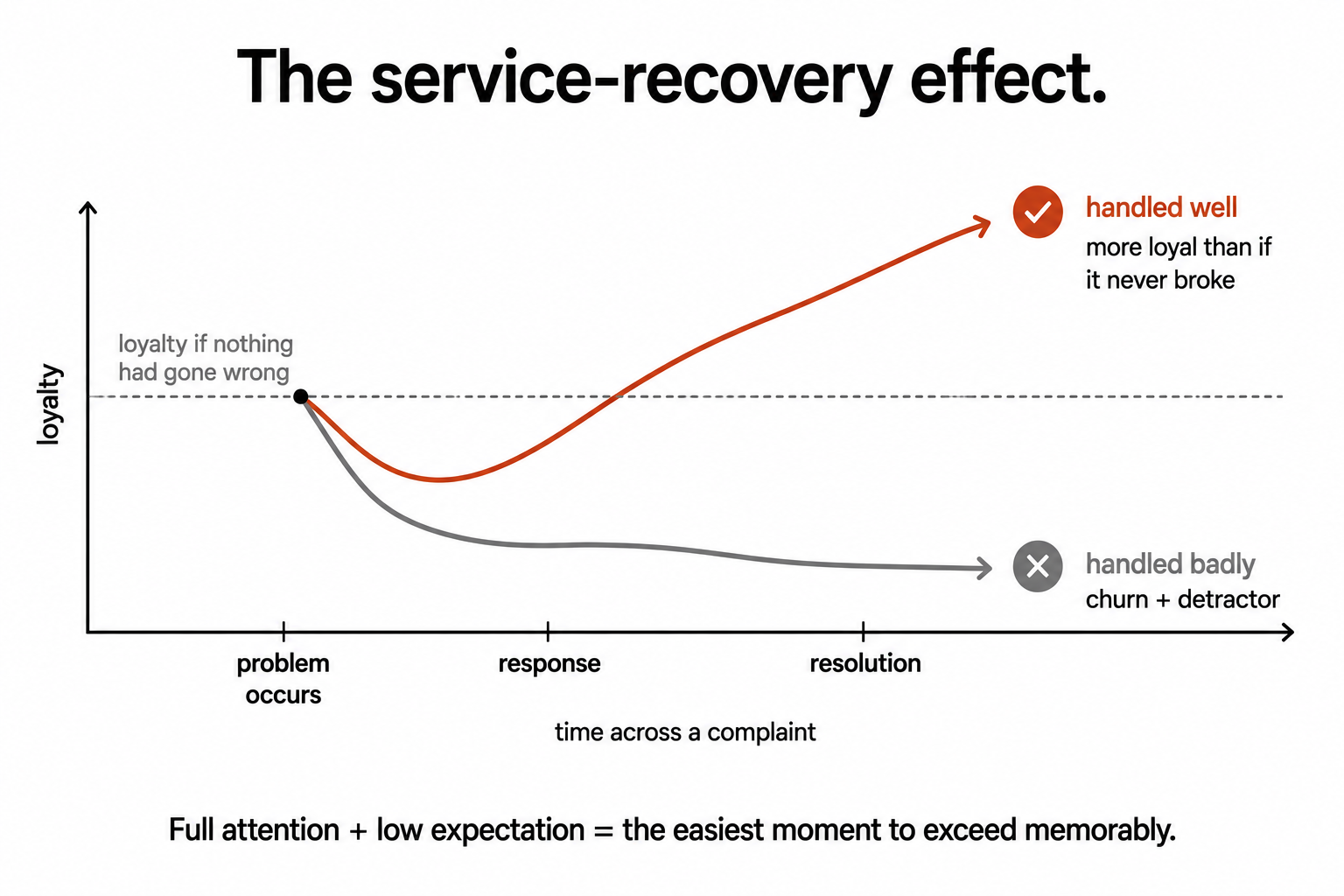
There's a well-established pattern in customer service often called the service-recovery effect: a problem that's resolved well can produce higher loyalty than if the customer had never had the problem in the first place. It doesn't always happen, and it's not a licence to break things on purpose, but the effect is real and it's worth understanding, because it inverts how most companies instinctively treat complaints.
The reason it works comes down to two things, attention and expectation. When everything goes smoothly, the customer isn't really paying attention; a transaction that just works is forgotten by the afternoon. But when something goes wrong, the customer is fully engaged. They're watching closely, because the outcome suddenly matters to them. At the same time, their expectation is low, because most people expect friction when they complain: defensiveness, scripts, being passed around, having to fight for what they're owed. That combination, full attention and low expectation, is the easiest situation in the world to exceed memorably. A smooth purchase is invisible. A disaster handled brilliantly is a story they tell other people.
So the complaint isn't the failure. The original problem is a small failure; the complaint is the opportunity to turn it into something better than neutral. The actual failure, the expensive one, is mishandling the complaint, because that's what converts a recoverable moment into a lost customer and a warning to their friends.
What handling it right actually looks like
The mechanics of good recovery aren't mysterious, but they cut against a lot of corporate instinct. A handful of things do most of the work:
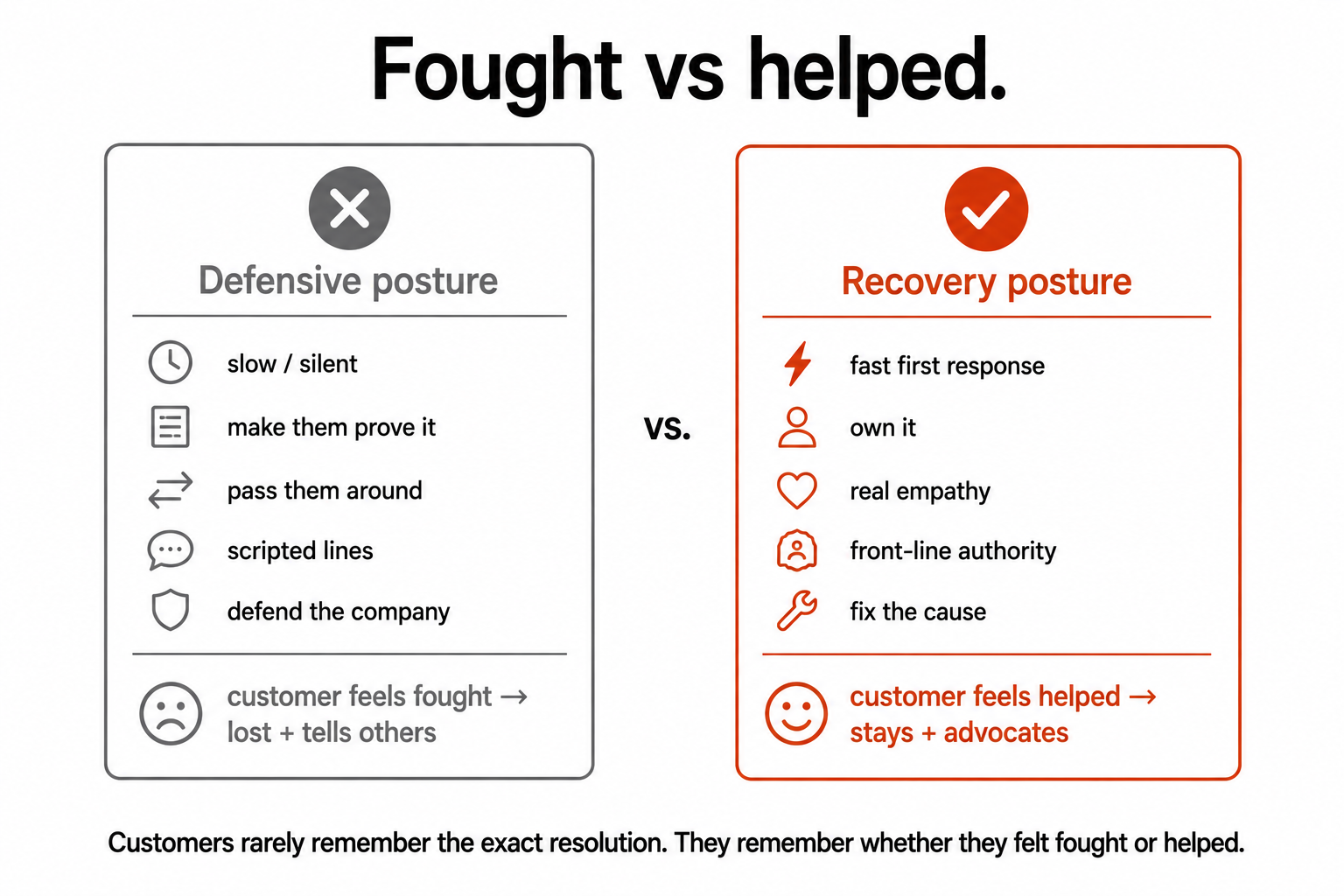
- Speed of first response. Acknowledge fast, even before you've solved it. Silence is the enemy, because a customer left waiting fills the gap with the worst assumptions. A quick "we've got this, here's what's happening" buys enormous goodwill before the fix even lands.
- Ownership, not deflection. Don't make the customer prove the problem, don't pass them from person to person, and don't hide behind policy. The single most damaging move in support is making someone feel they have to fight you to get something put right. They will remember whether you fought them or fought the problem.
- Real empathy, not scripted empathy. The customer can tell the difference instantly. A robotic "I understand your frustration" read off a card often makes things worse, because it signals you're processing them, not hearing them. Genuine acknowledgement, in normal human language, disarms. The exact words matter far less than whether the person feels heard.
- Authority at the front line. The person handling the complaint needs to be able to actually fix it, or to fast-track it to someone who can, without a maze. Being bounced around is the loyalty-killer, because every handoff says "this isn't my problem" to a customer who just wants someone to own it.
- Fix the cause, not just the case. Resolving this one complaint keeps this one customer. Noticing that the same complaint keeps arriving, and fixing the process behind it, keeps all of them and lowers your support volume at the same time. The complaint is data, and recurring complaints are a broken process pointing at itself.
None of this is expensive. It's mostly about posture, treating the person as someone to keep rather than a problem to close, and most of the failures come from getting the posture wrong rather than from lacking some clever tool.
The defensive trap
Here's why companies waste the opportunity so reliably: they treat complaints as threats to defend against rather than relationships to recover. The instinct, especially as organisations get bigger and more cautious, is to minimise blame, limit what's conceded, and route everything through a script that protects the company. Each of those moves feels prudent in isolation. Together they create the exact experience that turns a recoverable customer into a lost one.
The deep error is a misplaced goal. The defensive posture is trying to win the interaction, to come out of it having given away as little as possible. But winning the interaction and keeping the customer are often opposite outcomes. You can be completely right about the policy, defend it flawlessly, and lose the customer anyway, and then you've won the argument and lost the relationship, which is the worst possible trade. Defending the company beats keeping the customer, and you end up with neither.
This is the thing the front line teaches that a policy manual never will. The customer in front of you, upset about something that went wrong, is not an adversary to be managed down. They're someone deciding, in real time, whether you're worth staying with. Treat the complaint as an argument to win and they'll feel it, and they'll leave. Treat it as a chance to show them you'll look after them and the same problem becomes the reason they trust you more than they did before.
What this comes down to
A customer with a complaint is handing you something valuable: their full attention, low expectations, and a chance to prove you're worth staying with. The original problem barely matters by comparison. What matters is whether the next few minutes make them feel fought or helped, and that's almost entirely within your control, because it comes down to posture far more than tools or budget.
Take the chance, respond fast, own it, be genuinely human, give the front line the authority to fix things, and address the cause so it stops recurring, and the complaint becomes the reason they stay, the story they tell about how well you looked after them. Fumble it, defend the company, make them fight, and the same complaint becomes the story of why they left. The problem was never the threat. How you answer it is.
A few common questions
Can a complaint actually make a customer more loyal? It can. There's a well-established pattern, often called the service-recovery effect, where a problem resolved well leaves a customer more loyal than if nothing had gone wrong, because you've demonstrated under pressure that you'll look after them. It doesn't always happen and it's not a reason to break things deliberately, but it means a complaint is a genuine retention opportunity, not just damage to contain.
Why is a complaint such a powerful moment? Because of attention and expectation. When things go wrong the customer is fully engaged and watching closely, and at the same time their expectation is low, since most people expect friction when they complain. That combination makes it unusually easy to exceed expectations memorably. A smooth transaction is forgotten by the afternoon; a disaster handled brilliantly becomes a story the customer tells others.
What's the most important thing when handling a complaint? Posture, more than any single tactic: treat the person as someone to keep, not a problem to close. In practice that means a fast first response, owning the issue instead of deflecting, real rather than scripted empathy, enough authority at the front line to actually fix it, and addressing the underlying cause. Customers rarely remember the exact resolution; they remember whether they felt fought or helped.
Why do companies handle complaints so badly? Because they treat them as threats to defend against rather than relationships to recover, especially as they grow more cautious. They try to win the interaction by conceding as little as possible, but winning the interaction and keeping the customer are often opposite outcomes. You can defend the policy flawlessly and lose the customer anyway, which means you won the argument and lost the relationship.
You should also read:
Cashback and Loyalty Publishers: How They Really Work (and What They Cost You)
Cashback and loyalty publishers are affiliate partners that share part of their commission back with the shopper, as cash, points, or perks, so the customer gets rewarded for buying and the publisher earns the rest. They are usually large, high-reach platforms, they are often among…
Continue reading...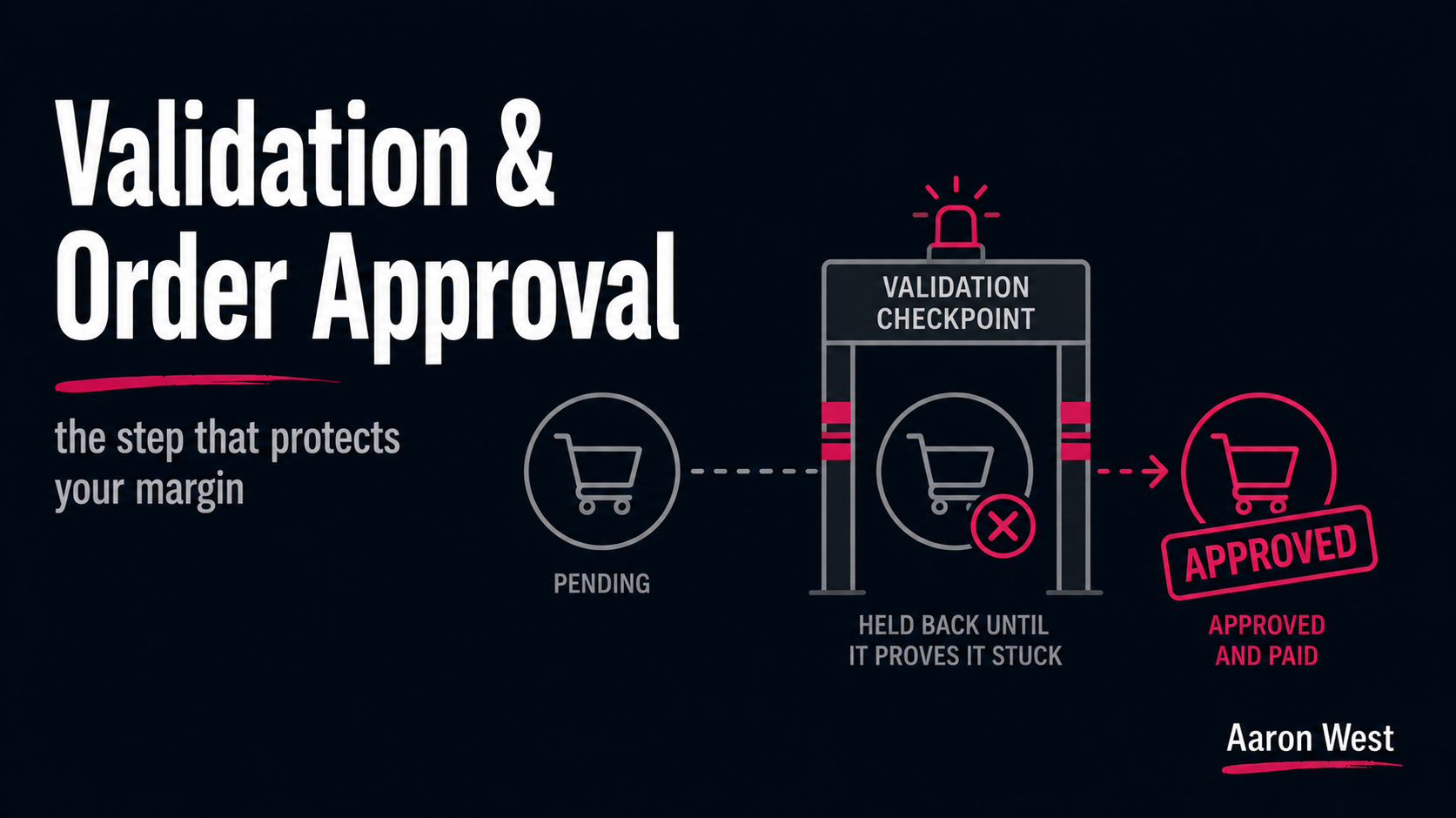
Validation and Order Approval: The Step That Protects Your Margin
Validation is the step where a merchant confirms a tracked affiliate sale is genuine, not returned, cancelled, or fraudulent, before the commission is approved and paid. It is the control that stops you paying for sales that never really stuck, and it works through a…
Continue reading...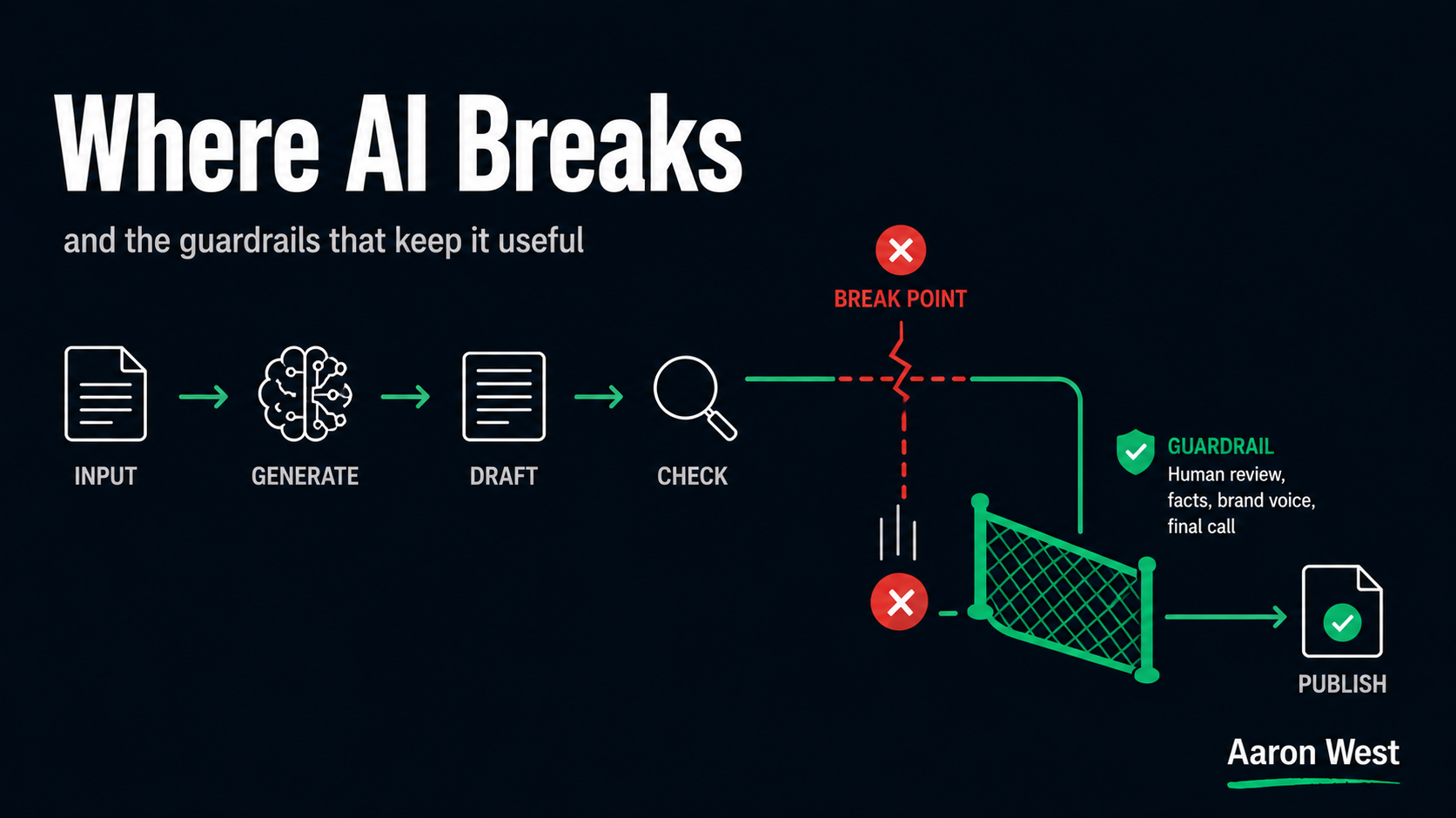
Where AI Breaks in E-Commerce Ops (and the Guardrails That Keep It Useful)
AI does not fail randomly in e-commerce operations. It fails in a handful of specific, predictable ways, and once you know them, you can build the guardrails that let you use AI confidently instead of nervously. The failures are not exotic. They are the same…
Continue reading...