Where AI Breaks in E-Commerce Ops (and the Guardrails That Keep It Useful)

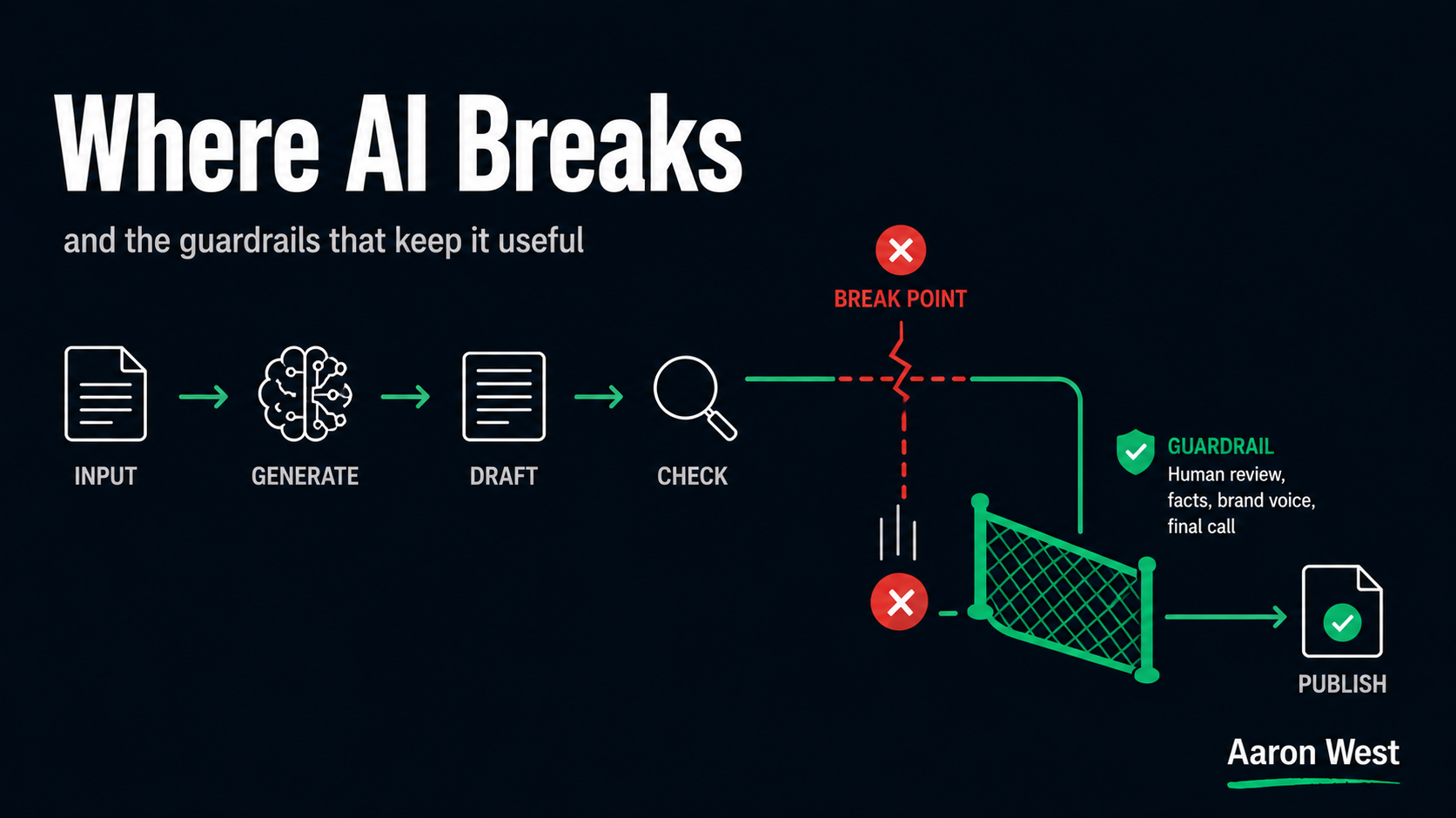
Table of Contents
AI does not fail randomly in e-commerce operations. It fails in a handful of specific, predictable ways, and once you know them, you can build the guardrails that let you use AI confidently instead of nervously. The failures are not exotic. They are the same ones, over and over: it invents facts with total confidence, it makes small errors that quietly compound at scale, it gets trusted precisely because it sounds sure, and it breaks on the messy, unusual cases real operations are full of. None of these mean "don't use AI." They mean "use it with the right guardrail for the risk," which is the entire skill.
I have run AI in real operations long enough to have seen each of these break, and the pattern is reassuringly consistent: the damage almost always comes from putting AI somewhere its specific weakness meets a high cost of being wrong, with nothing in between. This is the honest companion to where AI earns its place. That piece maps the wins; this one maps the failure modes and, more usefully, the guardrail for each. Because the goal is not to fear AI or to trust it blindly. It is to know exactly where it breaks and stand a guardrail there.
Failure 1: It invents facts, confidently
The most famous failure and still the most dangerous in e-commerce: AI hallucinates, it generates plausible, fluent, completely false statements, and it does so with exactly the same confident tone it uses when it is right. There is no wobble in its voice when it is making something up. A model will state a return window you do not offer, a material your product is not made of, or a policy that does not exist, and it will sound authoritative doing it.
In operations, this breaks hardest anywhere AI output reaches a customer or a system as fact: a support bot inventing a policy, a product description stating a fabricated specification, an AI-drafted email promising something untrue. The cost is not embarrassment, it is refunds, complaints, and eroded trust. The guardrail is twofold and non-negotiable for factual, customer-facing use. First, ground it in your real data rather than letting it answer from its general training, which is what retrieval (RAG) is for: feed it your actual policies and product data and constrain it to those. Second, keep a human or a hard rule on anything that must be exactly right, and explicitly instruct the model to use only supplied facts and never to invent. Hallucination is not a reason to avoid AI. It is a reason to never let ungrounded AI speak as an authority to your customers.
Failure 2: Small errors that compound silently at scale
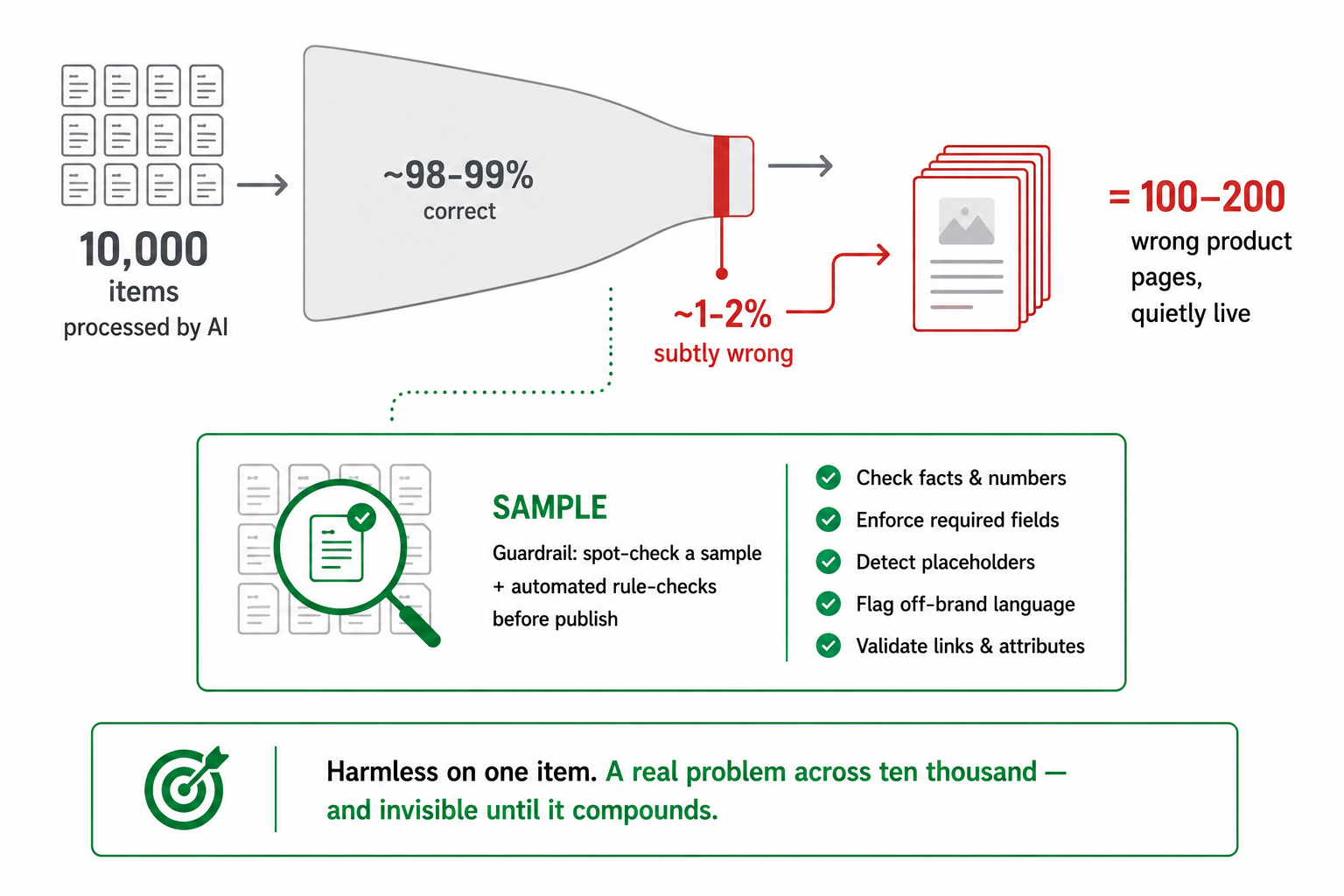
This is the failure that does the most damage precisely because nobody sees it happening, and it is the one I would most want an operations person to internalise. AI's great strength is doing things at volume. That is also where its most insidious failure lives: a small error rate, harmless on one item, becomes a real problem across ten thousand. If a model mislabels or subtly mis-describes even one or two percent of a large catalogue, that is hundreds of wrong product pages, quietly live, that no one chose to create and no one is looking at.
The danger, as one AI expert put it bluntly, is that these systems do exactly what you told them, not what you meant, and a gap that small can scale across weeks before anyone notices. This is the silent-failure problem from automation wearing an AI mask: an error you cannot see is far more expensive than one you can, because it compounds before it surfaces. The guardrail is spot-checking and monitoring: when AI processes things in bulk, you review a sensible sample of the output rather than zero (a small error rate across a big batch is still a real number of mistakes), and where you can, you put automated checks in place that flag outputs failing basic rules before they go live. You will not catch every error. You need to catch the pattern before it compounds.
Failure 3: Over-reliance on a confident voice
This is a human failure more than a technical one, but it is where AI does real organisational damage, so it belongs on the list. Because AI presents everything, right or wrong, fluently and confidently, people start trusting outputs they should be checking. The fluent tone reads as competence, and the review step quietly erodes: a draft that was meant to be checked gets waved through because it "looked fine," and the model's confidence substitutes for actual verification. International AI safety researchers flag exactly this, the danger of over-reliance, where users trust incorrect outputs because they are presented so confidently.
In operations this shows up as a slow rotting of the human-in-the-loop you thought you had. The guardrail is cultural as much as technical: treat AI as a fast junior assistant whose work is always reviewed, never as an oracle. Build the review step into the process so it cannot be skipped, and be most suspicious precisely when the output sounds most polished, because confident and correct are not the same thing, and the model cannot tell you which one it is being. The teams that get burned are the ones that let "it's usually right" quietly become "we stopped checking."
Failure 4: It breaks on the messy, unusual, and high-judgment
AI handles the common case well and the genuinely unusual case badly, and e-commerce operations are full of unusual cases. It is brittle: insert something irrelevant or unexpected and its performance can drop sharply, because it is pattern-matching on what it has seen, not reasoning about what is actually in front of it. The weird partial-refund situation, the customer complaint that does not fit any template, the edge case in your data that a human would instantly recognise as odd, these are where AI confidently does the wrong thing because it has no real understanding of the context, only the shape of similar-looking examples.
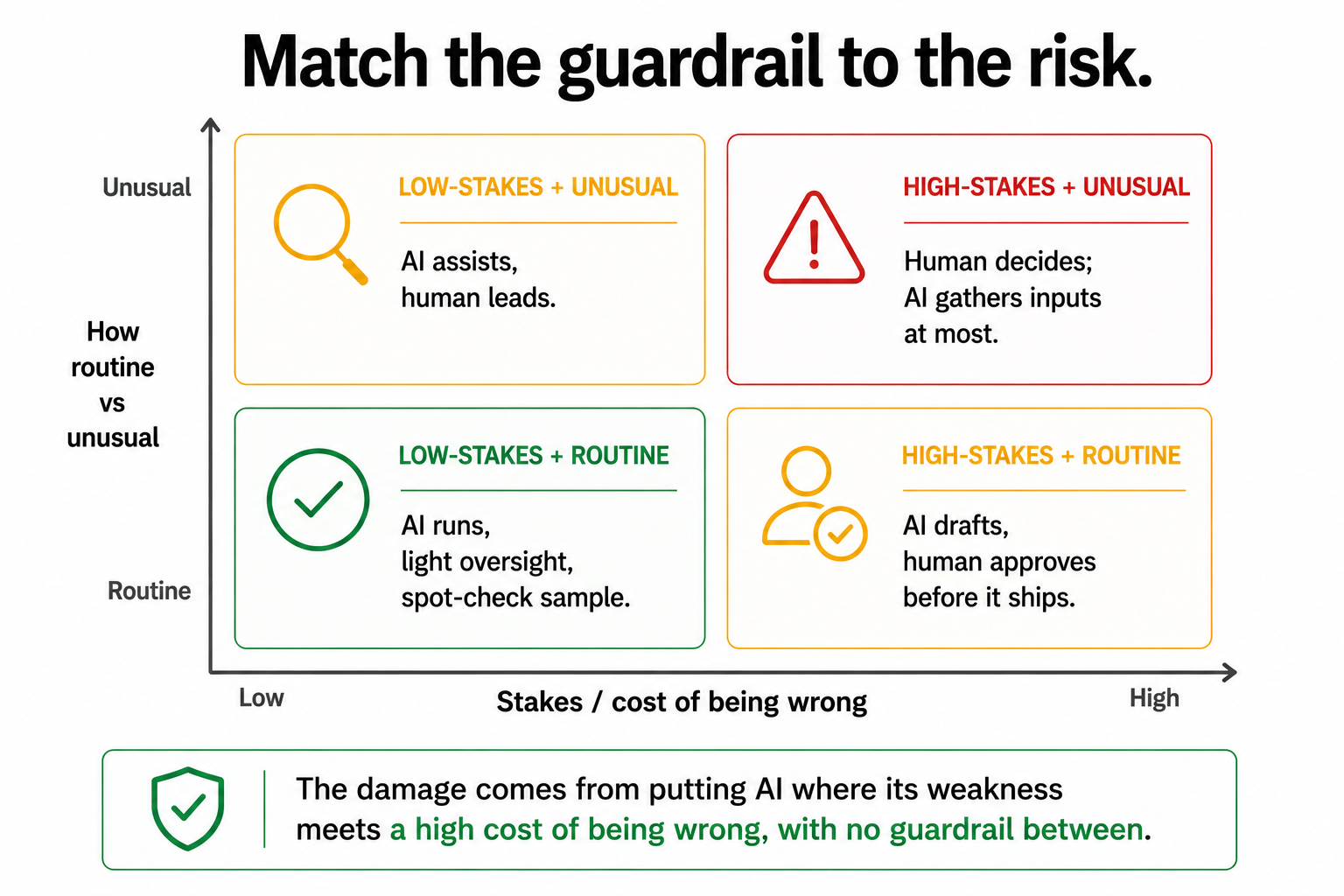
This is the same line the automation framework draws: anything genuinely novel, high-judgment, or context-heavy stays human, or stays human-gated. The guardrail is scope discipline: point AI at the high-volume, well-bounded, repetitive work where the cases really are similar, and route the unusual ones to a person. A practical pattern is risk-tiering, let AI run with light oversight on low-stakes, repetitive tasks, and require human approval for anything high-stakes, irreversible, or unusual. The mistake is expecting one AI deployment to handle both the thousand routine cases and the ten weird ones equally well. It will not. Design for that split deliberately.
The pattern under all four: put the guardrail where the cost is
Step back and every failure has the same shape, which is what makes this manageable rather than frightening. AI breaks when its specific weakness, fabrication, scaled error, false confidence, brittleness on the unusual, meets a place where being wrong is expensive, and there is no guardrail standing between them. Remove the guardrail and even a good model becomes a liability. Add the right guardrail and the same model becomes a dependable tool. The work is not choosing whether to trust AI. It is deciding, task by task, what happens when it is wrong, and making sure something catches it before the customer does.
That decision comes back to the single question from the cornerstone: what does being wrong cost here, and who checks? Low cost, human reviewing anyway, let AI run. High cost, no check, that is precisely where you install grounding, a human gate, a spot-check, or a hard rule. Guardrails are not bureaucracy slowing AI down. They are what lets you use it on more things, not fewer, because you can extend AI confidently into higher-stakes work once you know the failure is caught. The teams that scale AI well are not the ones that trust it most. They are the ones that understand exactly how it breaks and have quietly built the net underneath.
So that is where AI breaks in e-commerce ops: it invents facts confidently, it makes small errors that compound silently at scale, it gets over-trusted because it sounds sure, and it falls apart on the messy and unusual. And the guardrails map one-to-one: ground it and gate it for facts, spot-check and monitor at scale, build in review and stay suspicious of polish, and tier by risk so the unusual goes to a human. Knowing the failure modes is not a reason to hold back. It is exactly what lets you push forward safely. AI in operations is neither a miracle nor a minefield. It is a powerful tool with known, predictable failure points, and the whole job is standing a guardrail at each one.
A few common questions
Where does AI most commonly fail in e-commerce operations? In four predictable ways: it hallucinates (states false things confidently), it makes small errors that compound silently across large volumes, it gets over-trusted because it sounds authoritative, and it breaks on messy or unusual cases it has no real understanding of. None are random, which is what makes them manageable with the right guardrails.
What is the most dangerous AI failure in operations? Often the silent one: a small error rate that's harmless on a single item but becomes hundreds of mistakes across a large catalogue or thousands of interactions, quietly live before anyone notices. Because it doesn't announce itself, it compounds. The guardrail is spot-checking samples of bulk output and adding automated rule-checks, rather than assuming "it ran, so it's fine."
How do I use AI safely without slowing everything down? Match the guardrail to the risk. Let AI run with light oversight on low-stakes, repetitive tasks; require human approval for high-stakes, irreversible, or unusual ones; and ground anything customer-facing in your real data. Guardrails let you use AI on more tasks confidently, not fewer, because the failure is caught before it reaches a customer.
Why is AI's confidence a problem? Because AI sounds equally sure whether it's right or wrong, it can't signal its own uncertainty. People then trust outputs they should be checking, and the review step erodes. The fix is to treat AI as a fast assistant whose work is always reviewed, build review into the process so it can't be skipped, and be most careful exactly when the output sounds most polished.
You should also read:
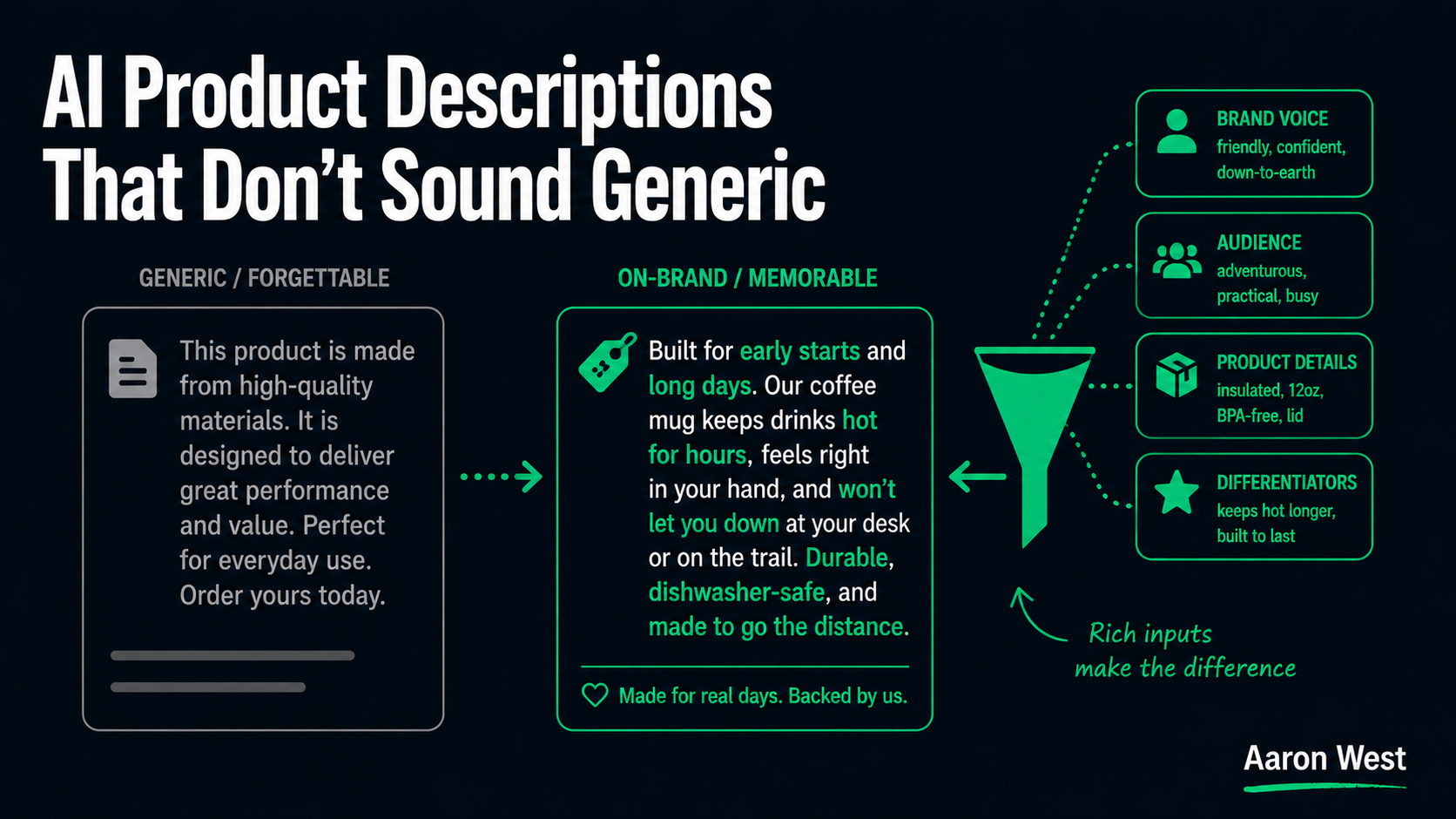
AI for Product Descriptions That Don't Sound Generic
The most common complaint about AI-written product descriptions is that they all sound the same, bland, interchangeable, like they could describe any product from any store. The complaint is fair, and here is the part nobody selling AI tools wants to say plainly: when AI…
Continue reading...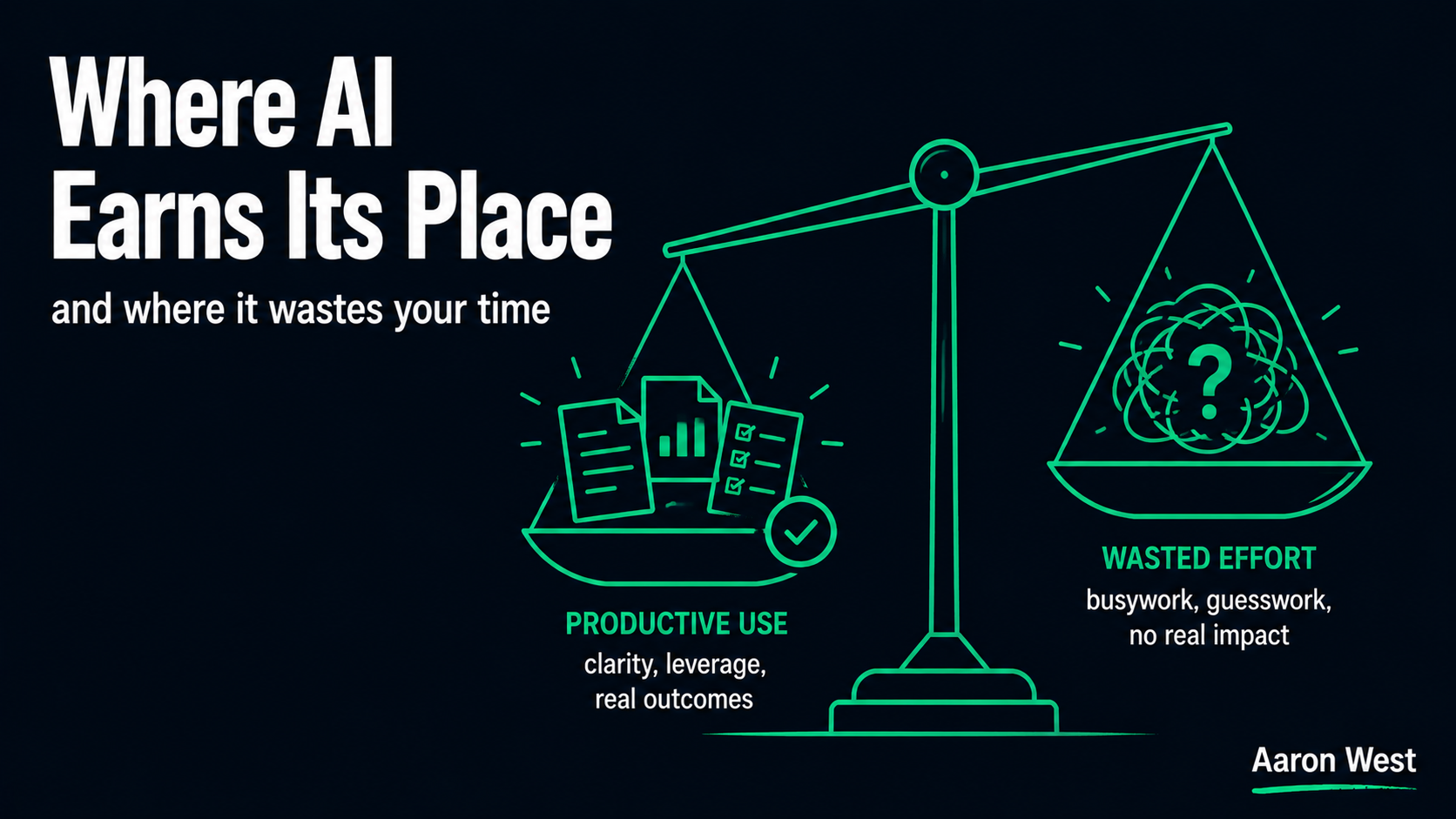
Using AI in Real E-Commerce Work: Where It Earns Its Place and Where It Wastes Your Time
After actually using AI across real e-commerce work rather than reading about it, here is the honest summary: AI is genuinely transformative for a specific, narrow band of tasks, and a confident waste of time for a surprising number of others. The skill in 2026…
Continue reading...
Everything I Know About Building Chatbots That Actually Work
The hard part of building a chatbot was never the technology. I learned this in 2019, building a natural-language chatbot from scratch for a large hotel group, across dozens of locations and several languages, back when "conversational AI" was a research term and not a…
Continue reading...