How I Use AI to Turn One Piece of Content Into Ten (Without It Sounding Recycled)

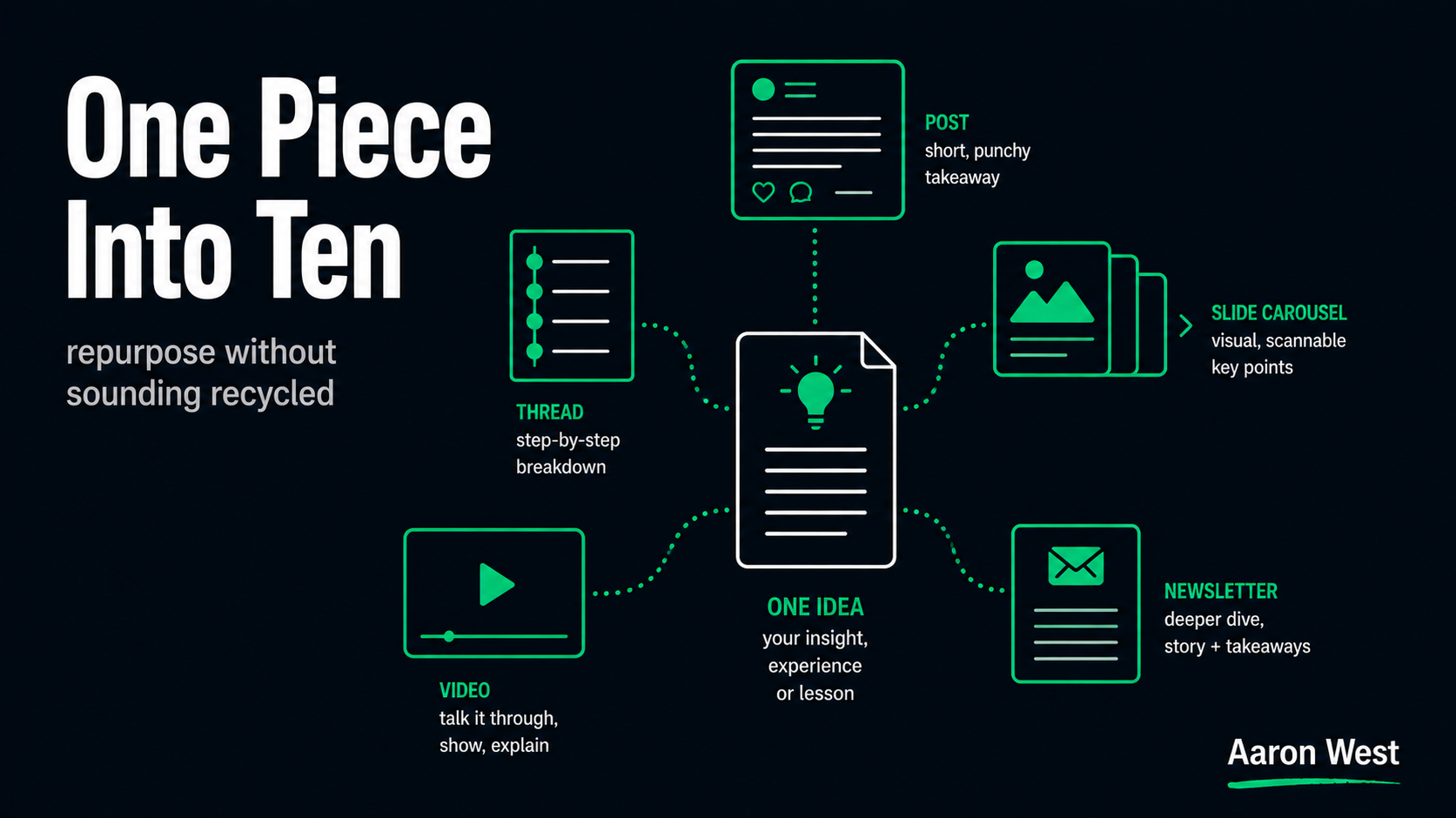
Table of Contents
The promise of AI content repurposing is seductive: write one thing, turn it into ten, flood every channel. The reality is that most people do it badly, and badly here has a specific, recognisable shape, they take one post and paste a near-identical version onto every platform. That is not repurposing, it is duplication, and audiences and platforms both punish it. Real repurposing is adaptation: taking the ideas from one strong piece and genuinely rewriting them to be native to each platform and audience. Done that way, AI makes it fast and powerful. Done the lazy way, it just spreads the same flat content thinner.
I do this every week, this very article will become a LinkedIn post, and I have a clear method that keeps each version feeling like it was made for where it lives rather than copy-pasted. As I set out in the cluster cornerstone, turning one piece into many is one of AI's genuine strengths, drafts, fast, at volume, finished by a human, but only if you respect the difference between adapting and duplicating. So here is the actual workflow: start from a real source, adapt natively rather than copy, and apply the discipline that stops the output sounding recycled.
The core distinction: adapt, don't duplicate
Everything good about repurposing and everything bad about it comes down to one distinction, so let me make it sharp before the method.
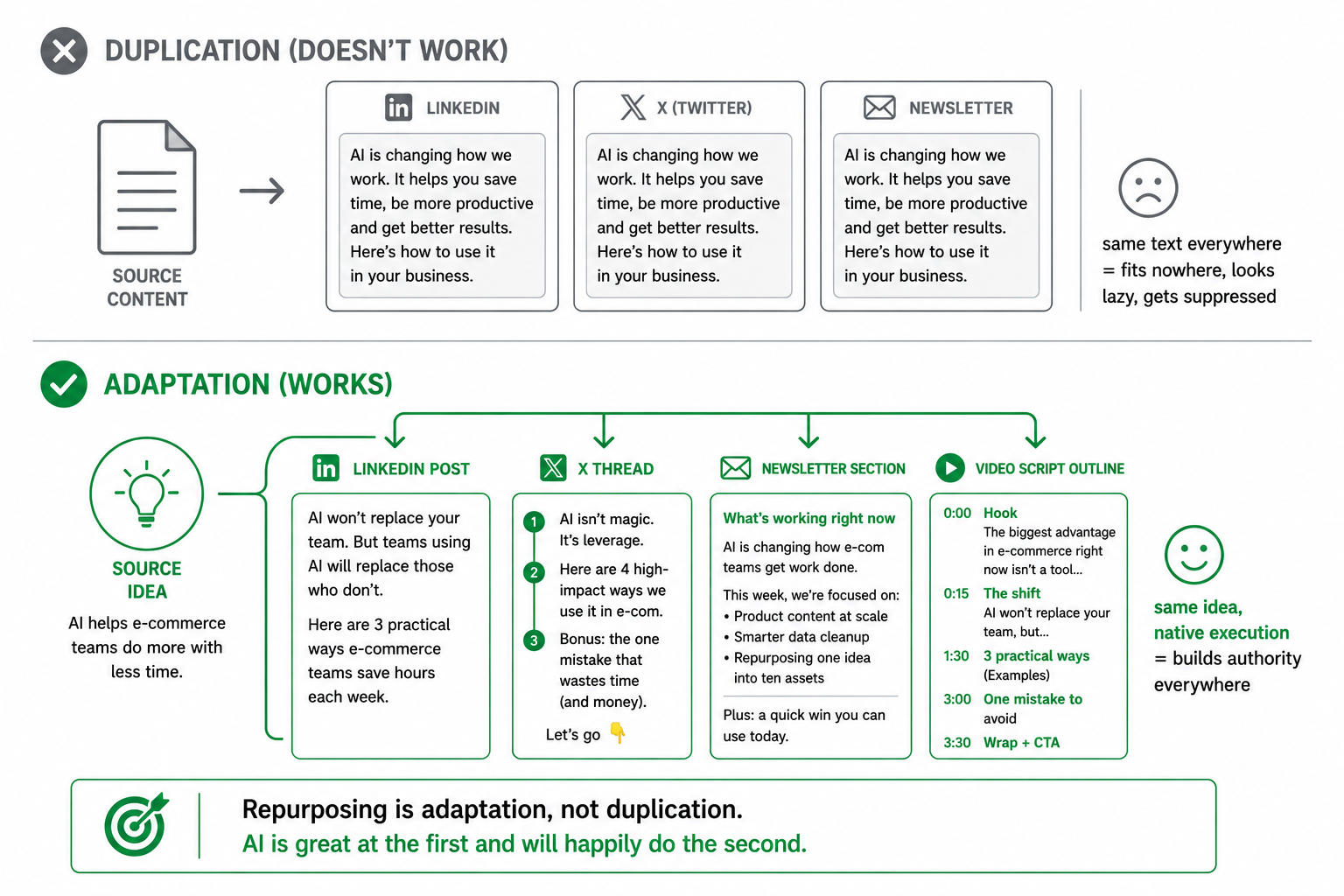
Duplication is taking your blog post and posting the same paragraphs, or a trivially reworded version, on LinkedIn, on X, in your newsletter. It is fast and it is worthless, because each platform has its own format, its own norms, and its own audience expecting something that fits. The same text everywhere fits nowhere, reads as lazy, and on some platforms is actively suppressed. Search engines and social algorithms in 2026 are good at spotting thin, duplicated content, and they do not reward it.
Adaptation is taking the core ideas of the source piece, the argument, the data, the examples, and rebuilding them in the natural shape of each destination. The same insight becomes a punchy text post on LinkedIn, a threaded argument on X, a section in a newsletter, a short video script, each genuinely written for that place. The underlying idea is shared; the execution is native. This is the entire difference between repurposing that builds your authority on every channel and "repurposing" that quietly erodes it. AI is brilliant at the adaptation version, because reshaping one idea into many formats is exactly the kind of high-volume language transformation it excels at. It will also happily do the duplication version if you let it, so the discipline is on you, not the tool.
Step one: start from one strong source of truth
The method begins not with AI but with the source, because everything downstream inherits its quality. Pick one genuinely good, substantial piece as the origin: a thorough blog post, a webinar, a detailed guide, something with real structure and real ideas. This becomes your "source of truth" for the whole batch.
This matters more than any prompt trick, because repurposing multiplies whatever you start with. Adapt a thin, generic source and you get ten thin, generic pieces, you have scaled mediocrity. Adapt one strong, idea-rich piece and you get ten strong derivatives, because there is genuine substance to reshape for each format. This is why the most effective pattern is one comprehensive "pillar" piece deliberately broken down into many smaller native assets, rather than trying to spin filler into more filler. It is also why I write the long, deep article first, the cornerstone, the proper guide, and treat the social posts as adaptations of it, never the other way around. Get the source right and the rest is reshaping. Get the source wrong and no amount of AI will save the outputs.
Step two: adapt each format natively, with the right brief
With a strong source in hand, this is where AI does the heavy lifting, and where the craft is in the instructions. The mistake is asking AI to "make this into social posts", a vague ask gets you vague, samey output. The method is to brief each format specifically.
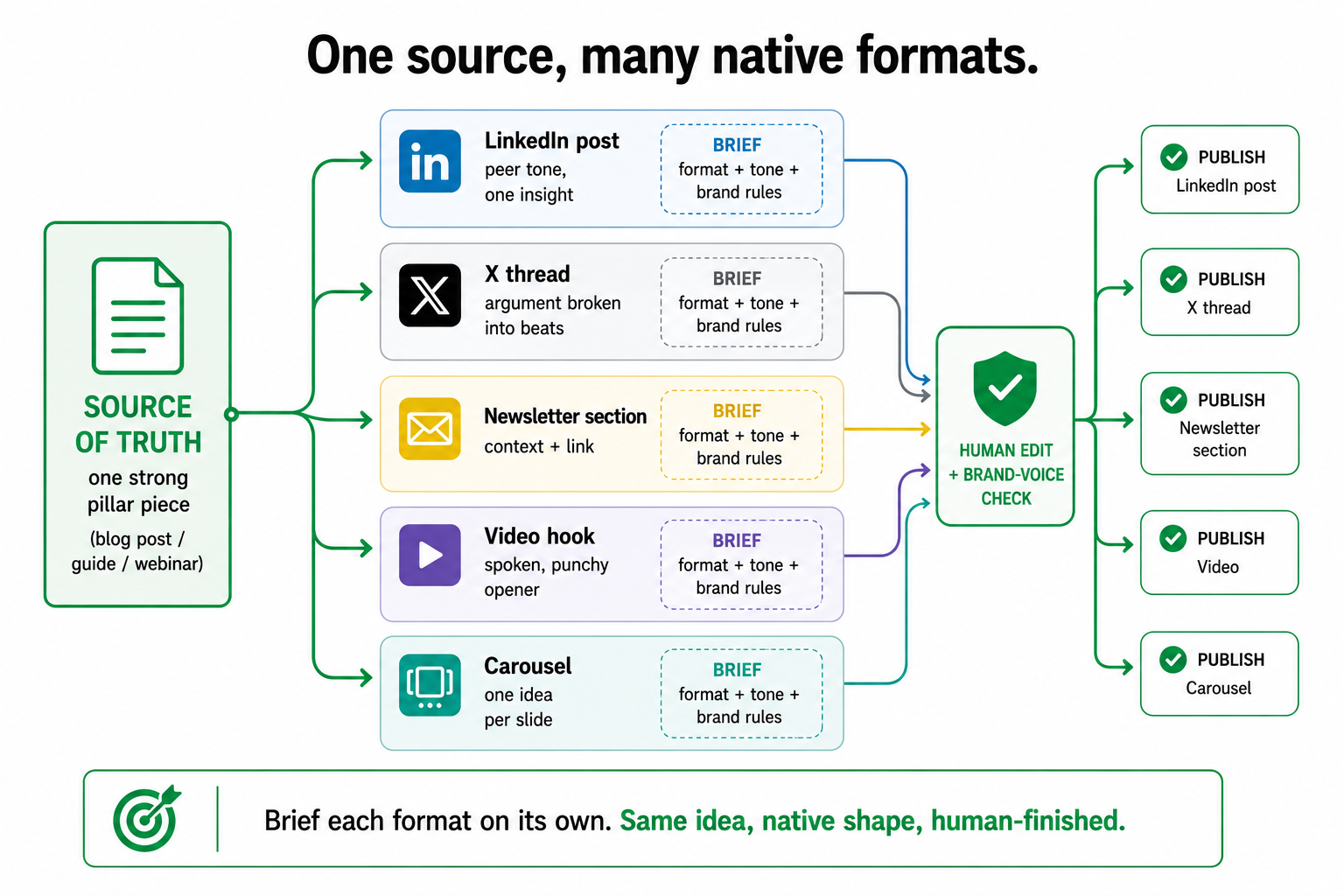
For each destination, tell the model what you actually want: the platform and its norms, the format (a short post, a thread, a carousel outline, a newsletter section, a video hook), the tone for that audience, and crucially the same brand-voice rules you would use anywhere, the reusable rule set I describe in the product-descriptions piece. A LinkedIn post for peers is not a TikTok script, and the brief should say so. Feed the model the source piece, tell it which one specific format to produce and how that format should feel, and let it draft. Then do the next format as its own focused task rather than asking for everything in one go, which produces sharper, more native results. The pattern is: one strong source in, one well-briefed format out, repeated, each draft genuinely shaped for its home. That is how the same idea ends up sounding native everywhere instead of cloned.
Step three: the discipline that stops it sounding recycled
AI will draft all of this fast. The reason most AI repurposing still reads as recycled, even when the formats are technically different, comes down to three habits people skip, so here is the discipline that separates good from spam.
Edit every draft; never publish raw. Unedited AI output sounds flat and impersonal, and audiences can feel it, engagement drops accordingly. The draft is the starting point, not the finish line. A human adds the specific phrase, the real opinion, the bit of personality the model could not invent, which is the same human-in-the-loop rule that governs the whole cluster. Repurposing does not remove the editing; it moves the work from writing to shaping, which is faster but not free.
Keep one consistent voice across all the formats. The risk when you generate many pieces, possibly across different tools or sessions, is that they drift into sounding like different people. The fix is the reusable brand-voice rule set applied to every format, so the LinkedIn post and the newsletter still sound like the same person with the same point of view, just dressed for different rooms. Consistency across the variations is what makes them feel like a coherent brand rather than scattered content.
Add genuine per-platform value, do not just reformat. The strongest repurposing adds something native to each version, a platform-specific example, a reframed hook, an extra practical tip, so each piece earns its place on its own rather than being an obvious echo. If a version brings nothing a reader could not get from the original, it is duplication wearing an adaptation's clothes.
So that is how I turn one piece into ten without it sounding recycled. Start from one genuinely strong source, because repurposing multiplies whatever quality you begin with. Adapt each format natively with its own specific brief rather than pasting the same text everywhere. And keep the discipline that separates real repurposing from spam: edit every draft, hold one consistent voice across them all, and make each version earn its place with something native. Repurposing is not about saying the same thing in more places. It is about letting one good idea show up properly dressed wherever your audience actually is. Do it that way and AI turns a single strong piece into a week of content that all feels deliberate, because it is.
A few common questions
What does it mean to repurpose content with AI? Taking one strong source piece (a blog post, guide, or webinar) and using AI to adapt its core ideas into multiple platform-native formats, a LinkedIn post, an X thread, a newsletter section, a video script. The key word is adapt: real repurposing reshapes the idea for each platform, rather than pasting the same text everywhere, which is duplication and performs poorly.
Why does AI-repurposed content often sound recycled? Usually because it's duplicated rather than adapted (the same text lightly reworded across platforms), published without human editing (raw AI drafts read flat), or generated without a consistent brand voice (so the pieces sound like different people). The fixes: adapt natively per platform, edit every draft, and apply one reusable set of voice rules across all formats.
How do I turn one blog post into many pieces without losing quality? Start with one genuinely strong, idea-rich source, since repurposing multiplies whatever you begin with. Then brief AI separately for each format (platform, format, tone, brand rules) rather than asking for "social posts" vaguely. Draft each format as its own focused task, then edit every output and add something native to each. One strong source plus specific briefs plus human finishing is the whole method.
Isn't repurposing the same content bad for SEO? Duplicating it is, search engines don't reward thin, copy-pasted content. Adapting it is not: when you genuinely transform a blog post into a video script, a carousel, or a native social post, you're creating distinct, useful content for each context, which builds authority across platforms rather than diluting it. The difference is adaptation versus duplication.
You should also read:
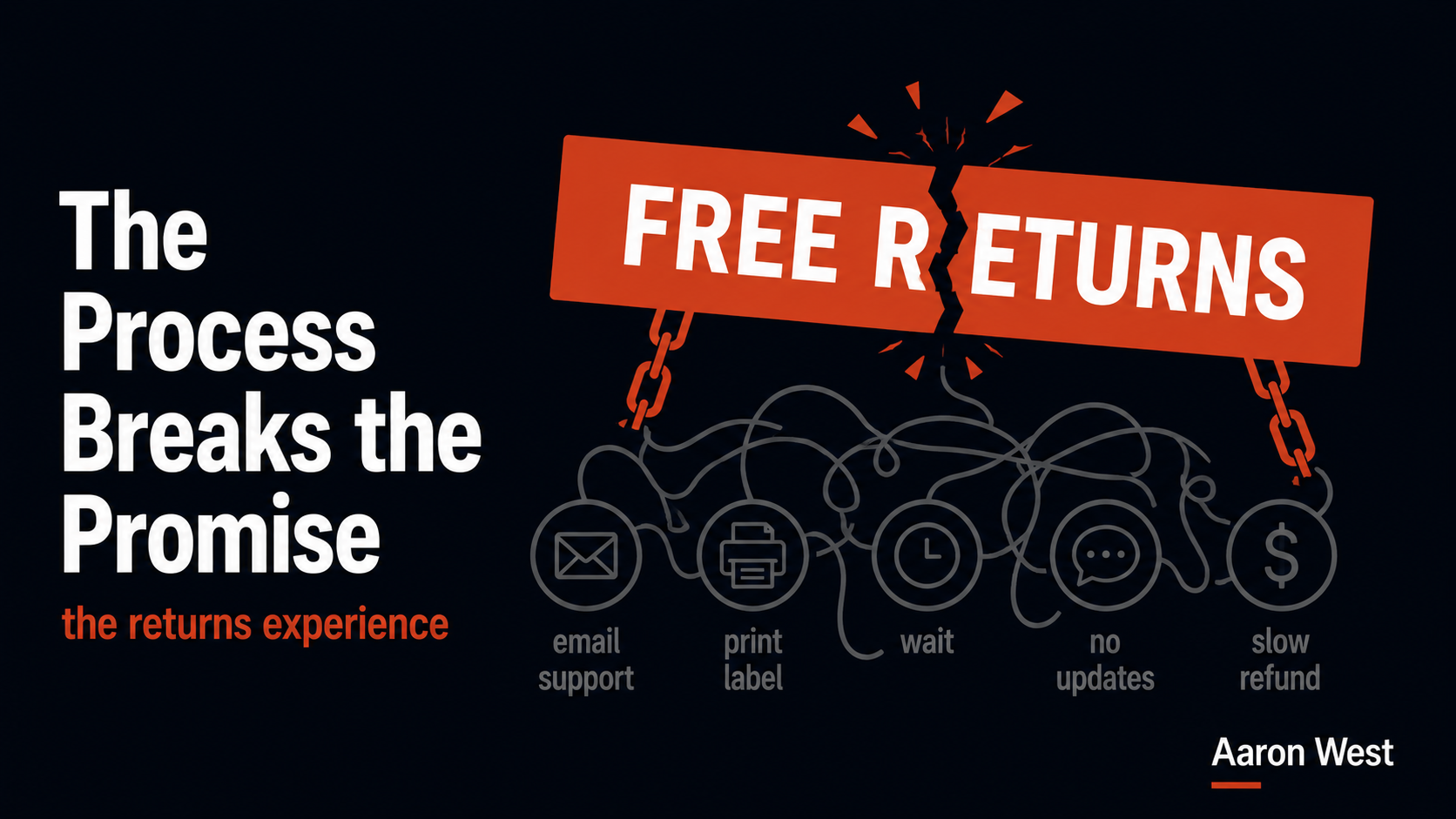
The Returns UX Most Stores Get Wrong
A generous returns policy means nothing if the returns process is painful, and most stores quietly undermine their own policy with a returns experience that's hard to start, slow to resolve, and silent the whole way through. The returns UX is where the policy's promise…
Continue reading...
Reducing Returns Without Making Them Painful: Fix the Cause, Not the Access
The right way to reduce returns is to remove the reasons people return, not to make returning harder. Making returns painful does cut the return rate, but it does it by losing the customer, the exact mistake the cost-centre view makes. Reducing the cause, the…
Continue reading...
Your Returns Policy Is a Conversion Lever, Not Fine Print
Your returns policy is read most by the people who haven't bought yet, the ones deciding whether it's safe to. That makes it one of the most powerful conversion levers in the store, and most stores waste it by writing it as defensive legal fine…
Continue reading...