Your Returns Policy Is a Conversion Lever, Not Fine Print

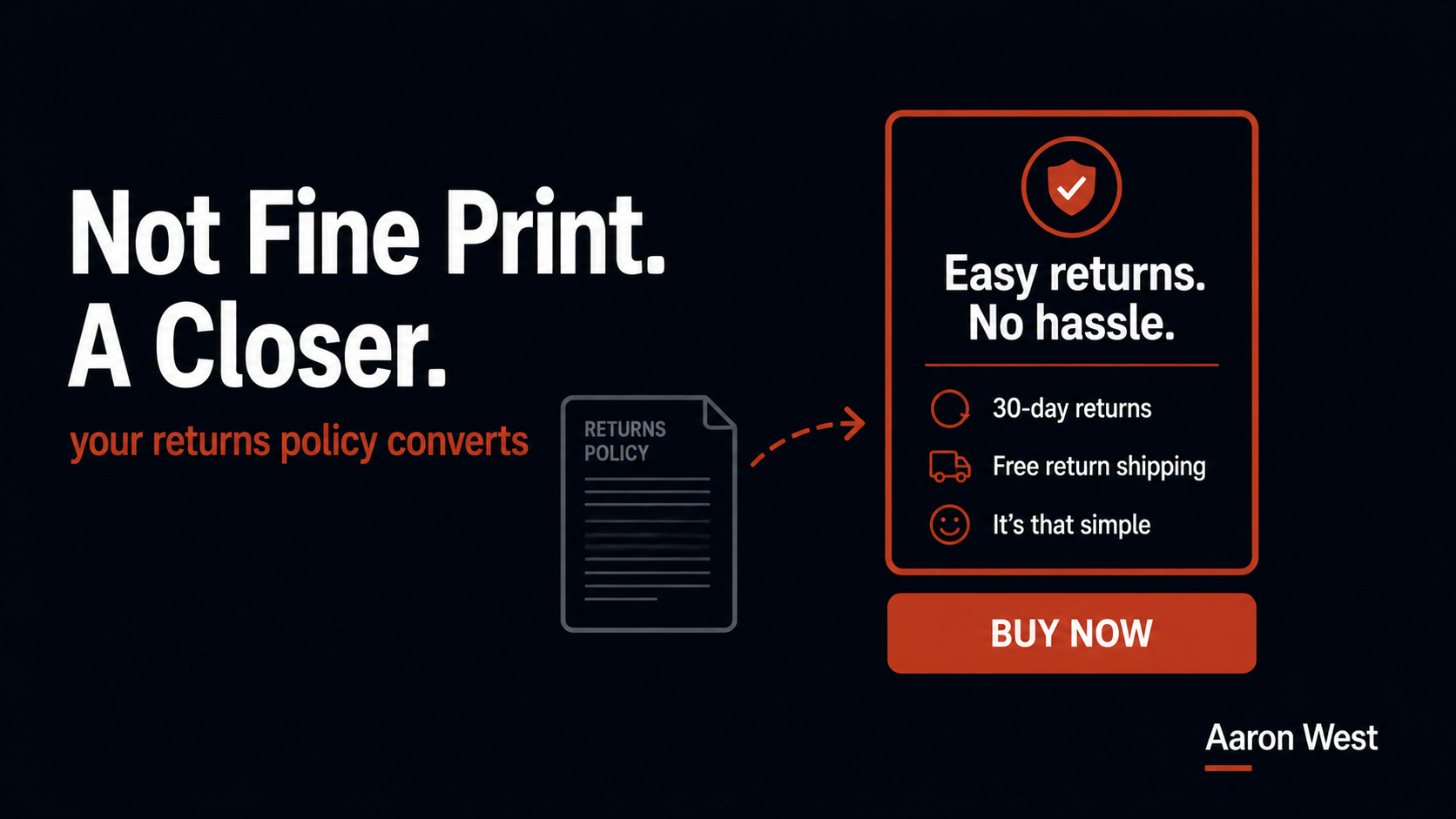
Table of Contents
Your returns policy is read most by the people who haven't bought yet, the ones deciding whether it's safe to. That makes it one of the most powerful conversion levers in the store, and most stores waste it by writing it as defensive legal fine print and burying it in the footer. A clear, generous, easy-to-find returns policy lowers the perceived risk of ordering and lifts conversion. A vague or punitive one quietly kills sales before they ever happen.
This is a core of the Returns pillar, under the cornerstone that returns are a retention moment, not a cost centre. The cornerstone made the claim that good returns actually sell; this piece is that claim in full, because the single biggest place returns touch conversion is the policy itself, and it's usually the place stores least expect it to matter.
Who actually reads the returns policy
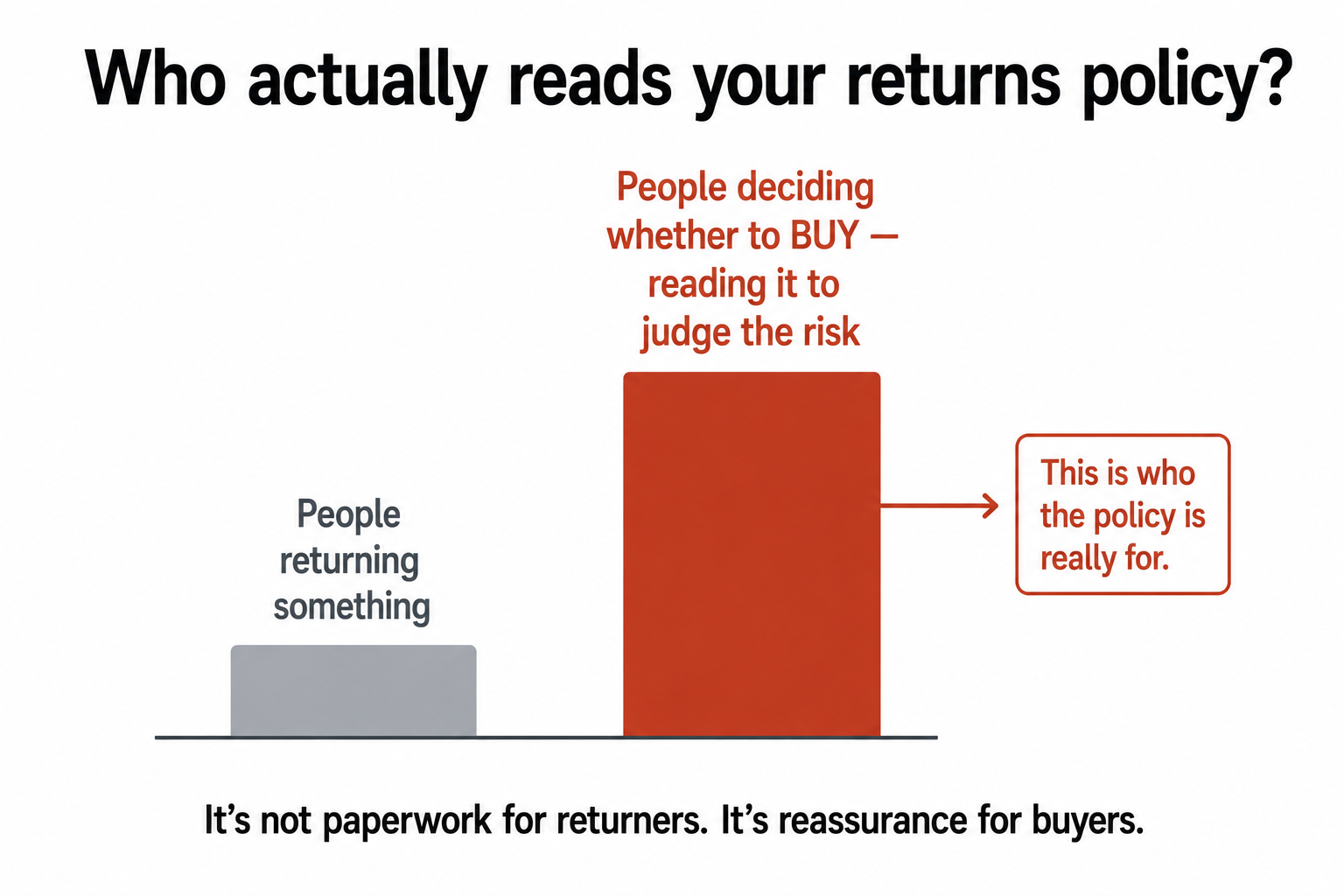
Here's the assumption to overturn: the returns policy is not mostly read by people returning things. It's read by people deciding whether to buy. Online, the customer can't pick the product up, try it on, or judge it in person, so the question "what happens if this isn't right?" is live at the exact moment they're deciding to order. The returns policy is the answer to that question, and it's being consulted at the highest-stakes point in the journey, just before the buy button.
That reframes what the policy is for. It's not paperwork that governs the small minority who return something. It's reassurance aimed at the large majority who are deciding whether to risk the purchase at all. Treat it as the former and you'll write it to protect yourself from returners. Treat it as the latter and you'll write it to win buyers, which is where the money is.
The fine-print mistake
Most returns policies are written by the part of the business that fears returns, to limit liability. So they're defensive, hedged, full of conditions and exceptions, and tucked into the footer where buyers won't trip over them. Every one of those choices makes sense if the goal is protecting against the few who'd abuse a return. Every one of them backfires if the goal is converting the many who are weighing the risk.
A policy stuffed with conditions signals "we expect to fight you about this," which is precisely the wrong message to send someone deciding whether to trust you with their money. A policy nobody can find can't reassure anybody. And a policy written in legalese reads as risk, because ambiguity, at the point of purchase, defaults to caution. The defensive policy doesn't just fail to help; it actively suppresses sales while feeling responsible.
The three things that make a returns policy convert
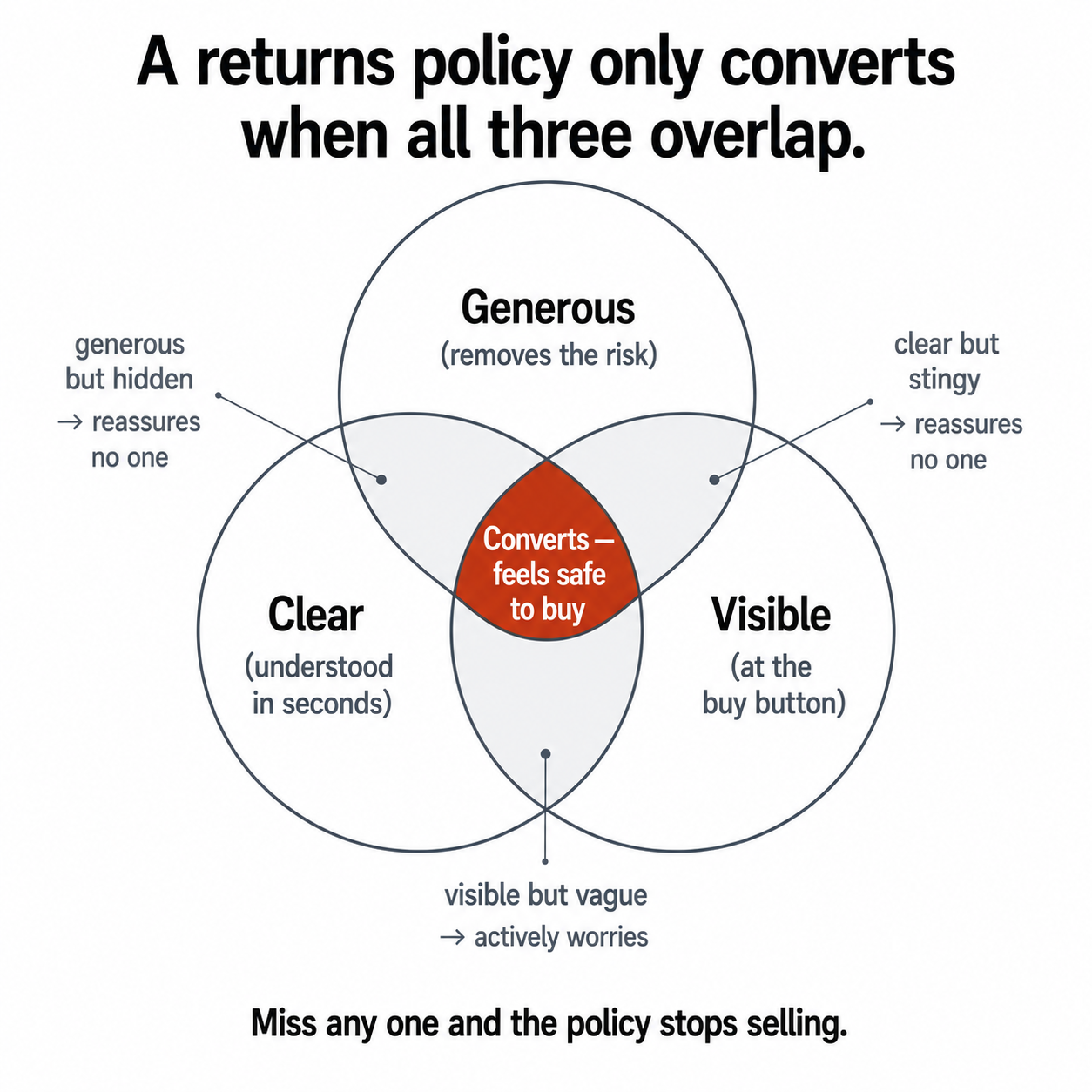
A returns policy that pulls its weight as a conversion lever does three things:
- It's generous enough to remove the risk. A reasonable window, a return that's free or cheap, no obstacle course. Generosity costs something in return volume, but as the cornerstone argued, it's paid for by the first purchases it unlocks and the loyalty it builds. A policy that makes ordering feel safe converts more of the traffic you already paid to get.
- It's clear and plain. Written so a customer understands it in seconds, with no legalese and no hidden conditions waiting to ambush them. Clarity is reassurance; ambiguity is risk. If understanding your returns policy requires effort, customers assume the effort is hiding something.
- It's visible at the decision point. On the product page, near the buy button, not only in a footer link nobody clicks. A generous, clear policy that buyers never see does nothing, because the reassurance has to arrive at the moment the doubt does.
Generous, plain, and visible. Miss any one and the policy stops converting: generous-but-hidden reassures no one, clear-but-stingy reassures no one, and visible-but-vague actively worries people.
The policy as a confidence signal
There's a subtler effect worth naming. A confident, generous returns policy doesn't only remove risk; it signals belief in the product. "Return it for any reason, no hassle" implicitly says "we don't think you'll want to," which is quietly persuasive in a way a hedged policy never is. The store that stands behind its products visibly is read as a store whose products are worth standing behind. This is why the returns policy sits squarely in the trust conversation: it's one of the clearest signals a store sends about how much it believes in what it sells.
Generous, not exploitable
None of this means writing a policy a determined abuser could drive a truck through. Generosity and naivety aren't the same thing. You can state the policy confidently and plainly while keeping sensible controls against genuine abuse, the wardrobers, the serial returners, the fraudulent claims, which is a real and separate problem covered in the piece on the refund gate. The point isn't "no controls." It's that the controls should sit quietly in the back, protecting against the few, rather than being plastered across the policy where they scare off the many. Generous-but-controlled, not generous-but-naive.
What this comes down to
The returns policy is the most under-leveraged piece of sales copy in most stores. It's written by the part of the business that fears returns, displayed where buyers won't see it, and optimised to protect against the few rather than to reassure the many, and all three of those choices cost sales.
Flip it. Write the policy as what it actually is, a promise that makes the first purchase feel safe, in plain language, and put it where the decision happens. A returns policy written to limit liability protects you from the handful of customers who'd exploit it and scares off the crowd who just wanted to know it was safe to try. It's not fine print. Handled right, it's one of your best closers.
A few common questions
Does a returns policy really affect conversion? Yes, strongly, because it's read most by people deciding whether to buy, not by people returning things. Online, customers can't judge a product in person, so "what happens if this isn't right?" is a live question at the point of purchase, and the returns policy answers it. A clear, generous, visible policy lowers the perceived risk of ordering and lifts conversion; a vague, punitive, or hidden one suppresses sales before they happen.
What makes a returns policy convert? Three things together: generous enough to remove the risk (reasonable window, free or cheap returns, no obstacle course), clear and plain enough to understand in seconds (legalese and hidden conditions read as risk), and visible at the decision point (on the product page near the buy button, not buried in the footer). Miss any one and it stops working, since reassurance has to be generous, understandable, and actually seen at the moment the doubt arises.
Won't a generous returns policy just get abused? Generous isn't the same as naive. You can state the policy confidently and plainly while keeping sensible controls against genuine abuse in the background, where they protect against the few without scaring off the many who are simply weighing the risk. The mistake is plastering the anti-abuse conditions across the policy itself, which converts a sales asset back into defensive fine print.
Where should the returns policy live? At the decision point, on the product page near the buy button, as well as somewhere findable site-wide, not only as a footer link. A generous, clear policy that buyers never encounter does nothing for conversion, because the reassurance only works if it arrives at the same moment as the doubt it's meant to answer.
You should also read:
Returns Triage and the Refund Gate
The one place to keep a deliberate control in an otherwise fast, easy returns process is the refund itself: don't release the money before you've confirmed the return is genuine. That's the refund gate, and it's the returns-specific version of a rule that runs through…
Continue reading...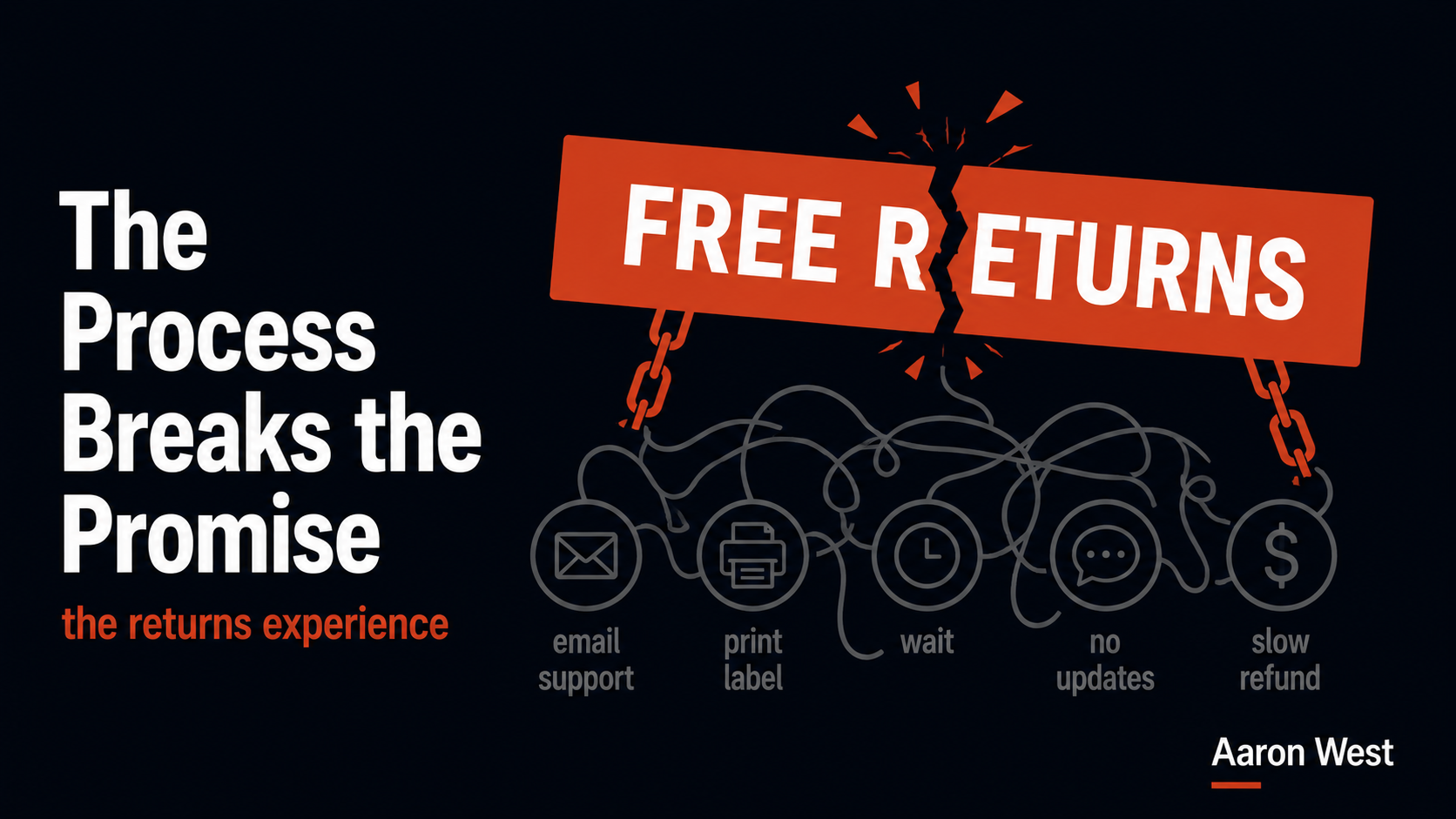
The Returns UX Most Stores Get Wrong
A generous returns policy means nothing if the returns process is painful, and most stores quietly undermine their own policy with a returns experience that's hard to start, slow to resolve, and silent the whole way through. The returns UX is where the policy's promise…
Continue reading...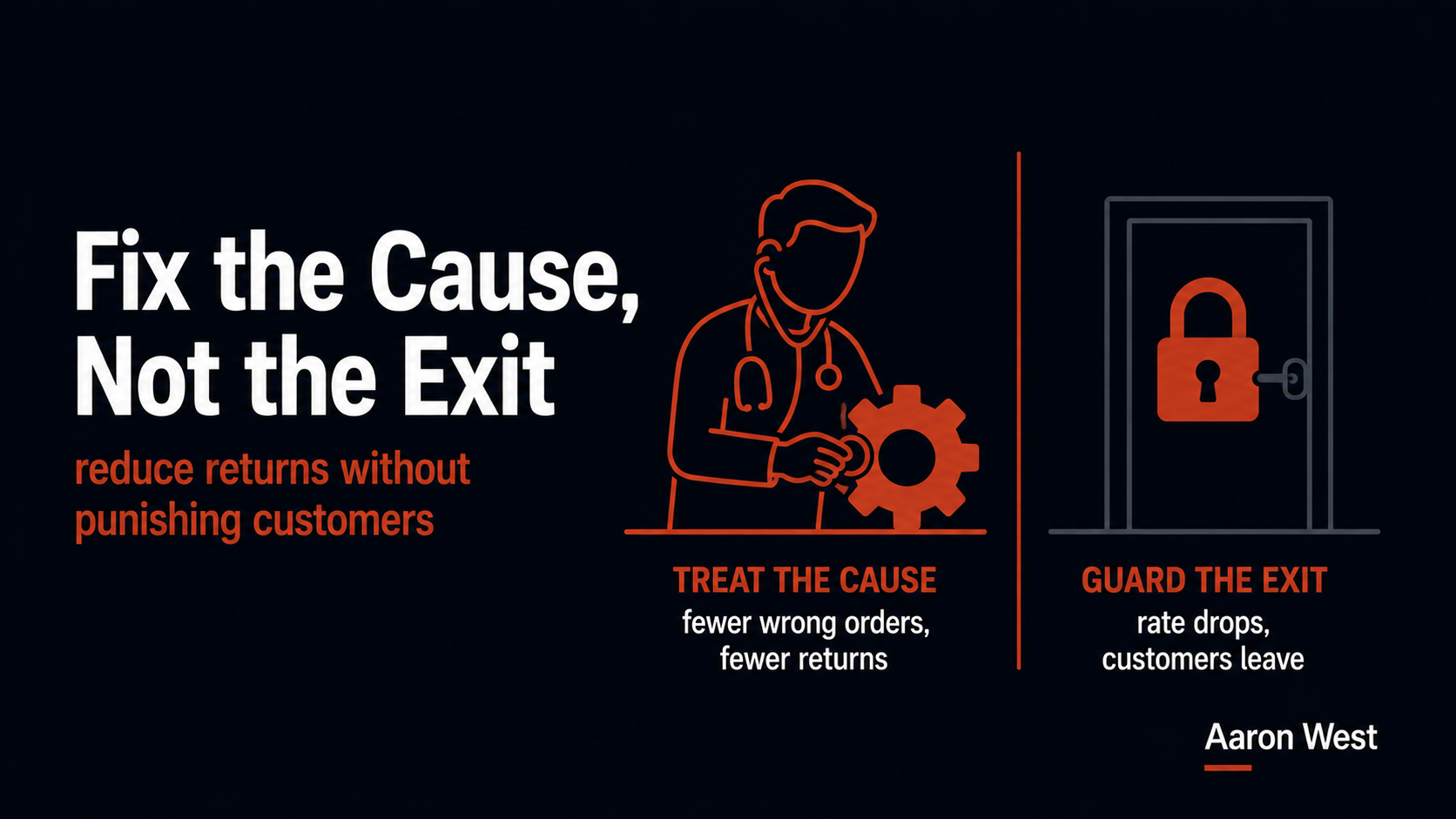
Reducing Returns Without Making Them Painful: Fix the Cause, Not the Access
The right way to reduce returns is to remove the reasons people return, not to make returning harder. Making returns painful does cut the return rate, but it does it by losing the customer, the exact mistake the cost-centre view makes. Reducing the cause, the…
Continue reading...