Reducing Returns Without Making Them Painful: Fix the Cause, Not the Access

Table of Contents
The right way to reduce returns is to remove the reasons people return, not to make returning harder. Making returns painful does cut the return rate, but it does it by losing the customer, the exact mistake the cost-centre view makes. Reducing the cause, the sizing that runs wrong, the photo that oversold it, the description that left out the detail that mattered, cuts returns while keeping the customer, because the order was right in the first place and the return never needed to happen.
This is a core of the Returns pillar, under the cornerstone that returns are a retention moment, not a cost centre. Almost every store wants fewer returns. The question is how, and there are two roads, only one of which doesn't cost you the customer.
Two ways to cut returns, and only one is good
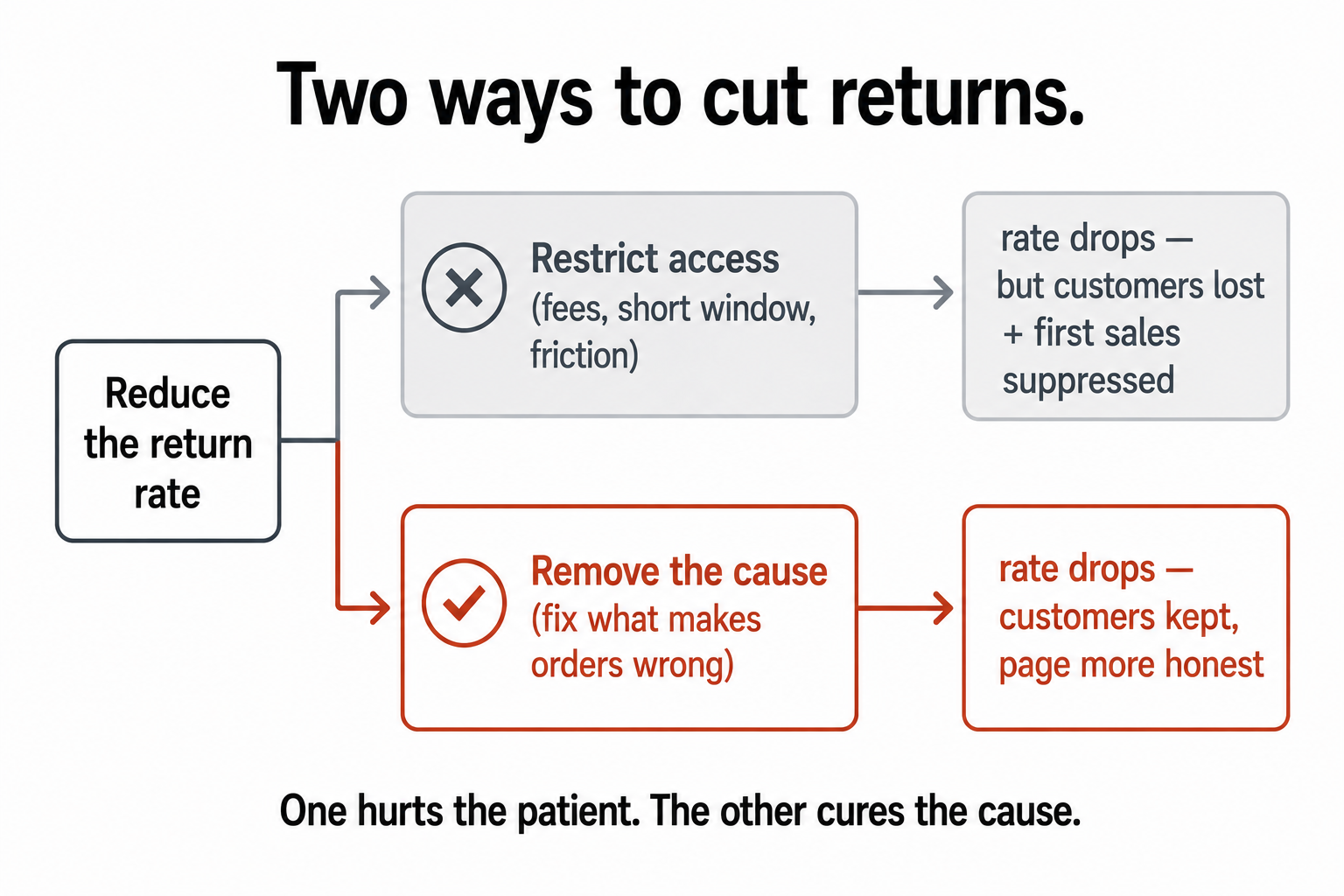
When "reduce returns" lands on someone's desk, it almost always gets actioned the wrong way: restrict access. Shorten the window, add a restocking fee, make the process annoying, bury the option. And it works in the narrow sense, the return rate drops, because some people give up. But every "saved" return is a customer who wanted their money back and didn't get it easily, which the cornerstone already showed is a churn event you caused on purpose, plus a suppressed first purchase from the next buyer who reads the now-stingy policy. You cut the number by hurting the patient.
The other road removes the cause. The return rate drops not because customers gave up but because fewer orders were wrong in the first place. Nobody is frustrated, nobody is lost, and the next buyer sees an honest product page rather than a defensive policy. Same goal, opposite outcome. One degrades your business to improve a metric; the other improves the business and the metric together.
Returns are data: read them before you act
The reason cause-removal is even possible is that returns tell you why they happened, if you let them. The return reason is one of the most useful fields your store collects, because it's the customer telling you, with the most effort they can muster (packing it up and sending it back), exactly what went wrong. A product or category with a high return rate isn't a cost problem to suppress; it's a signal pointing at a fixable cause. Treated as pure cost, that signal gets thrown away with the returned item. Treated as feedback, it's a to-do list.
So the work starts with reading: track return reasons, find the products and categories driving the rate, and fix the specific cause each one is pointing at. That turns "reduce returns" from a blunt policy lever into a targeted product-page and quality programme.
The main causes, and how you actually fix them
Most returns trace back to a handful of causes, and each has a fix that lives on your side of the transaction, not the customer's:
- Sizing and fit. In apparel especially, this is the big one, and most fit returns are a sizing-information problem, not a product problem. Accurate size guides, real measurements, consistent sizing across the range, and fit feedback like "runs small" do more to cut returns than any policy change, because they let the customer order the right size the first time.
- Misleading or thin product representation. A return is very often an expectation gap: the product that arrived didn't match the product the customer thought they were buying. True-to-life photos (real colour, scale, multiple angles), honest descriptions, and the one detail that actually mattered close that gap on the product page before the order is placed.
- Overselling. This is the uncomfortable one: an overstated product page buys you a sale and a return and a disappointed customer. Setting expectations honestly, even when honesty costs you the occasional sale, pre-empts the return that an oversell would have guaranteed. Honest representation is a returns-reduction tool, not just an ethics point.
- Quality and defects. A high rate of returns-for-faulty isn't a returns problem at all; it's a supply or quality signal showing up at the wrong end of the business. The fix is upstream, with the product or the supplier, not in the returns process.
- The wrong customers buying. Sometimes targeting or merchandising sends the wrong people to a product, who then return it because it was never right for them. That's a demand-side fix, in who you point at the product, not a returns fix.
Notice the pattern: every one of these causes is something you control, on the product page, in the sizing guide, in the photos, in the targeting, or in the supply chain. The customer returning the item is the last step in a problem that started long before they clicked buy.
Why fixing causes beats restricting access
Beyond the customer cost, cause-removal simply works better over time. A fix to the cause compounds: a corrected size guide helps every future buyer of that product, a more honest product page both reduces returns and, because it's clearer and more confident, tends to convert better, and a fixed quality issue stops the returns at the source permanently. Restriction degrades: every "saved" return spends a customer, the policy gets stingier, and the suppressed-first-purchase cost grows as more buyers read the defensive terms. One approach gets better the longer you run it; the other gets worse.
There's also a clean feedback loop in it. Track return reasons, find the worst offenders, fix the cause, watch that product's rate fall, all without touching the policy or adding a gram of friction. It's the kind of measurable, compounding improvement that a blunt "tighten the policy" can never deliver.
What this comes down to
You don't reduce returns by guarding the exit. You reduce them by making sure the thing in the box is the thing the customer expected, and that expectation is set entirely by you, on the product page, in the sizing guide, in the photos, in who you point at the product. The returns you actually want to eliminate are the ones that shouldn't have happened, and those are caused by your own pages far more often than by your customers.
Fix the cause and the return rate falls on its own, with no customer left resenting you and the next buyer seeing a more honest, more convincing product page. That's the only kind of return reduction worth having. The other kind just moves the cost from your returns line to your retention, where you can't see it.
A few common questions
What's the right way to reduce returns? Remove the reasons people return, rather than making returning harder. Restricting access (fees, short windows, friction) does lower the return rate, but it does so by losing the customer and suppressing future first purchases, the cost-centre mistake. Removing the cause (fixing the sizing, the photos, the description, the quality issue) lowers the rate while keeping the customer, because the order was right in the first place and the return never needed to happen.
How do I find out what's causing my returns? Read your return reasons, they're one of the most useful fields you collect, because the customer is telling you exactly what went wrong with the most effort they can: sending the item back. Track reasons by product and category, find the ones driving your rate, and fix the specific cause each points at. A high return rate on a product is a signal pointing at a fixable problem, not just a cost to suppress.
What actually causes most returns? A handful of causes, all on your side: sizing and fit (usually a size-information problem, fixable with accurate guides and "runs small" notes), misleading or thin product representation (an expectation gap, fixed with true photos and honest descriptions), overselling (an overstated page buys a sale and a return), quality defects (a supply signal, fix upstream), and the wrong customers being sent to a product (a targeting fix). The customer returning is the last step in a problem that started before they bought.
Why is fixing causes better than tightening the policy? Because it compounds while restriction degrades. A corrected size guide helps every future buyer, a more honest product page reduces returns and converts better, and a fixed quality issue stops returns permanently, all improving the longer you run them. Tightening the policy gets worse over time: every "saved" return costs a customer, and the stingier policy suppresses more first purchases. One cures the cause; the other hides the cost in your retention where you can't see it.
You should also read:
Returns Triage and the Refund Gate
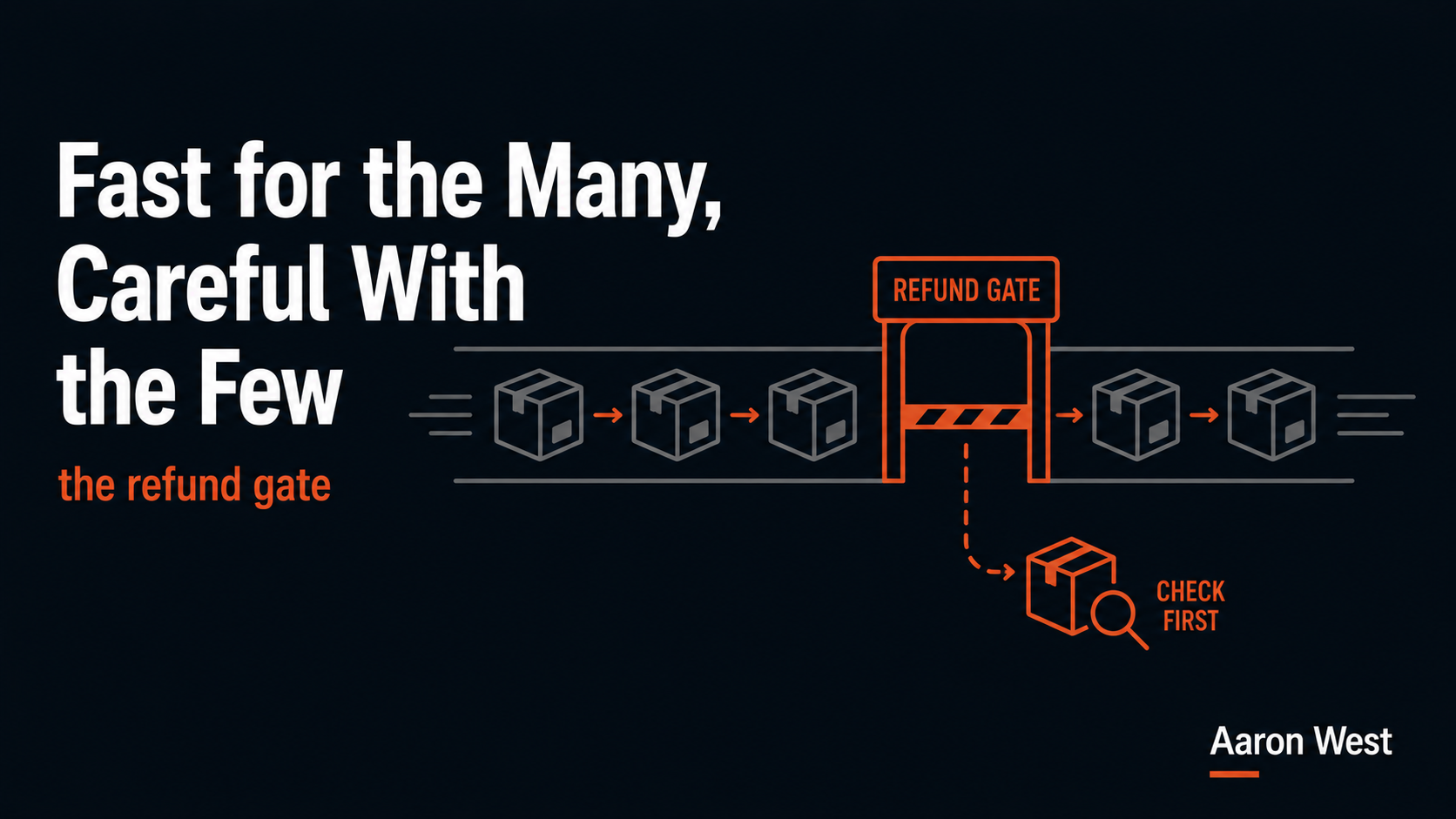
The one place to keep a deliberate control in an otherwise fast, easy returns process is the refund itself: don't release the money before you've confirmed the return is genuine. That's the refund gate, and it's the returns-specific version of a rule that runs through…
Continue reading...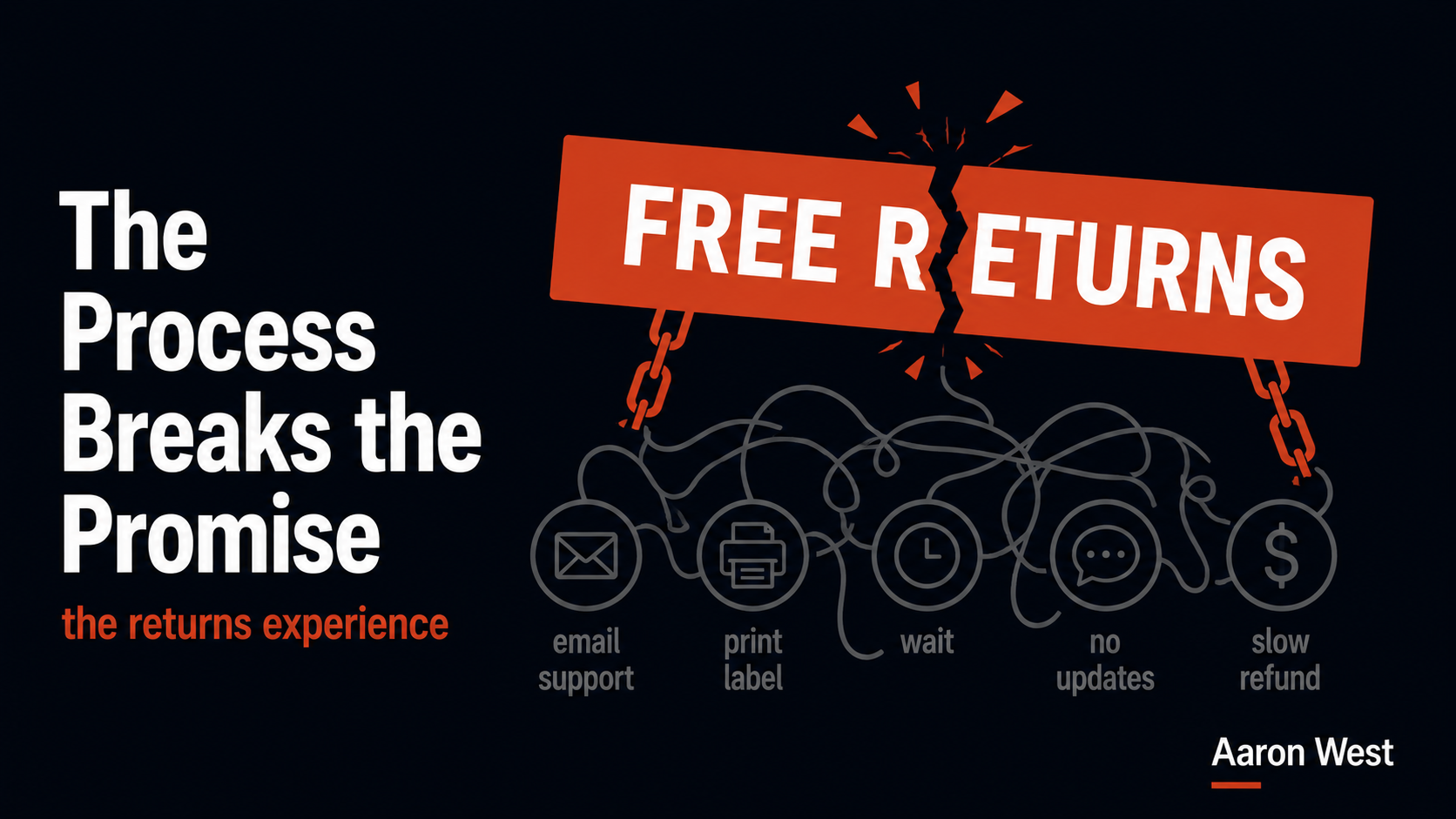
The Returns UX Most Stores Get Wrong
A generous returns policy means nothing if the returns process is painful, and most stores quietly undermine their own policy with a returns experience that's hard to start, slow to resolve, and silent the whole way through. The returns UX is where the policy's promise…
Continue reading...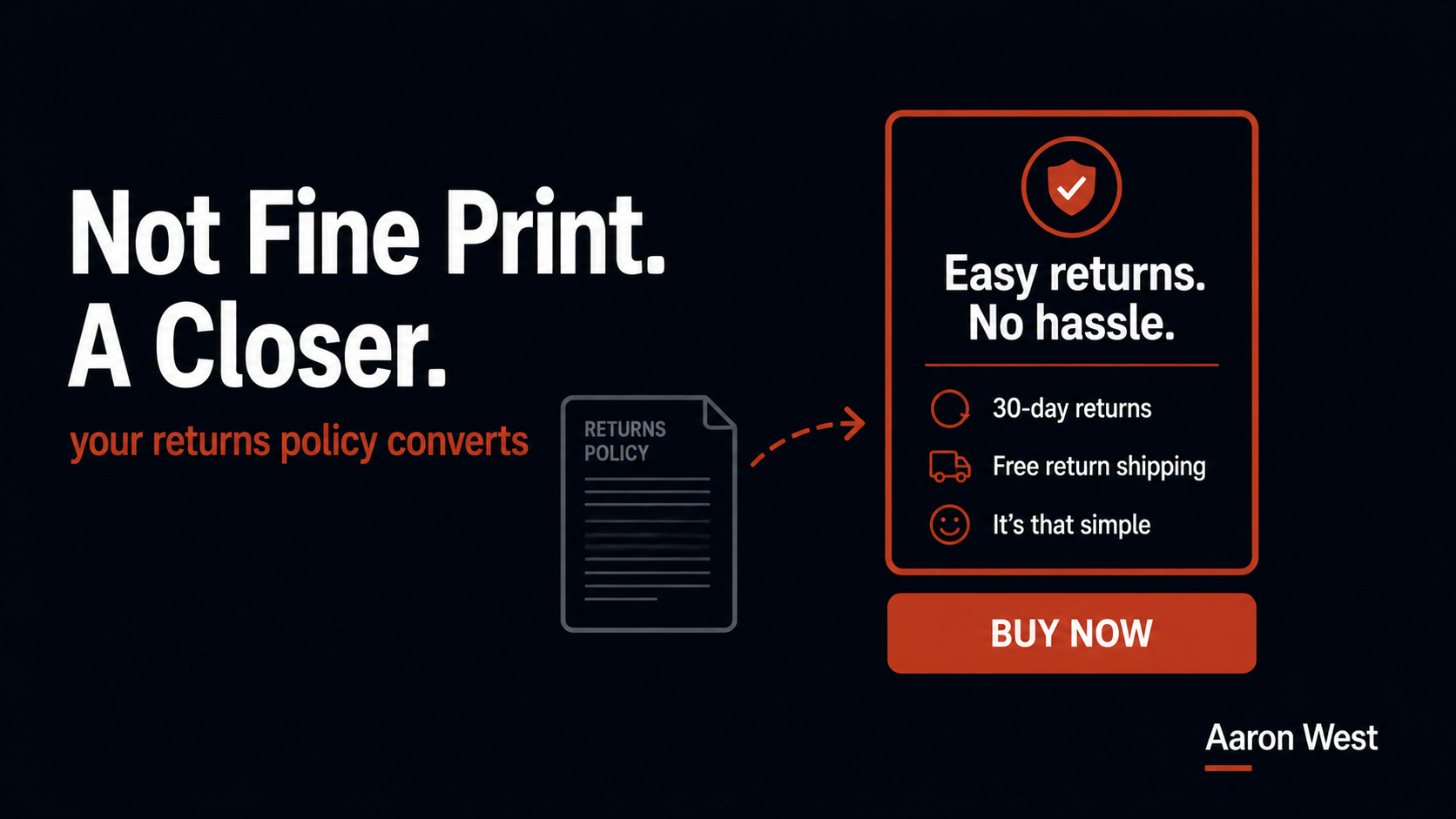
Your Returns Policy Is a Conversion Lever, Not Fine Print
Your returns policy is read most by the people who haven't bought yet, the ones deciding whether it's safe to. That makes it one of the most powerful conversion levers in the store, and most stores waste it by writing it as defensive legal fine…
Continue reading...