Local Payment Methods: The Cross-Border Detail That Kills Conversion

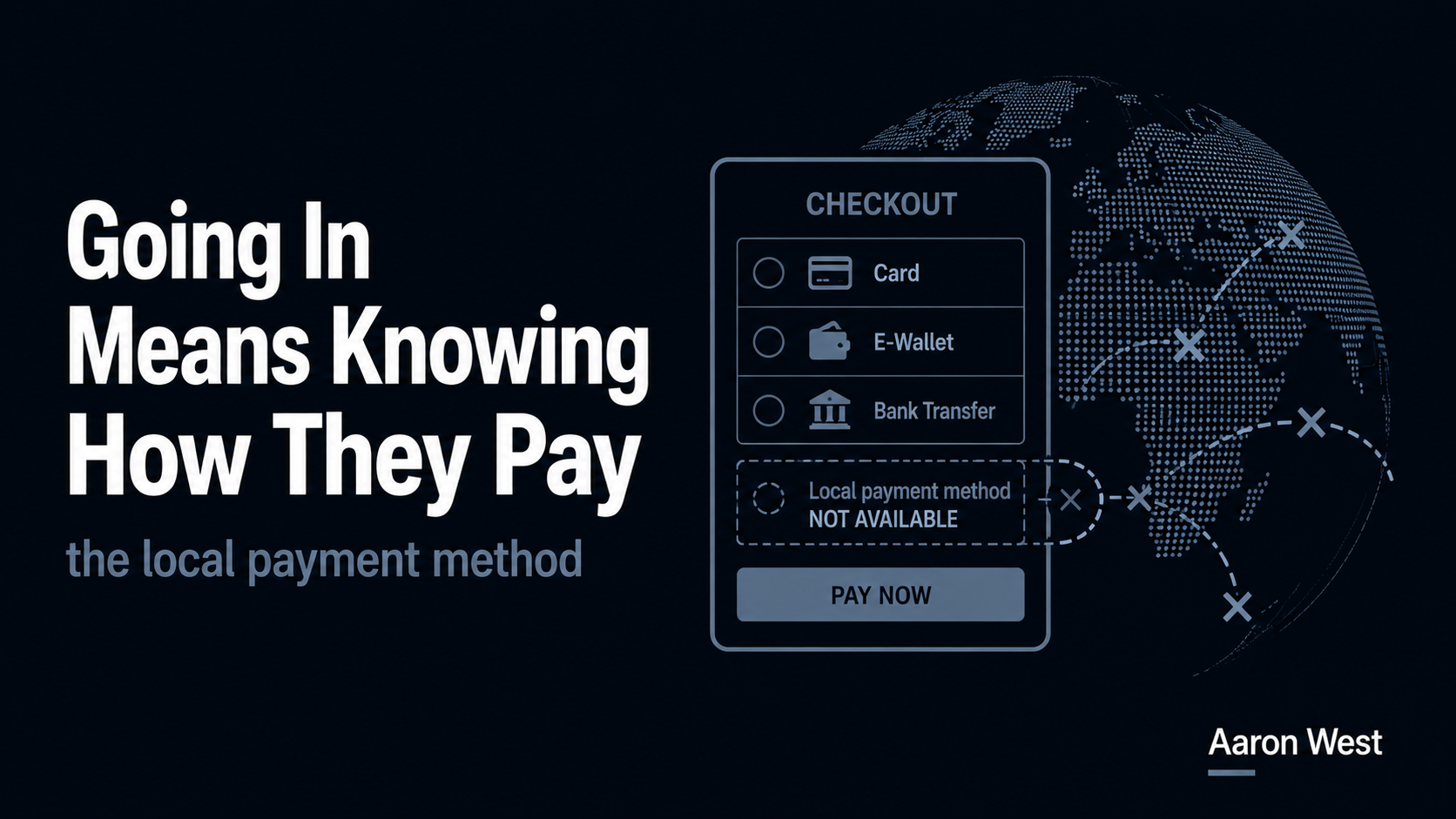
Table of Contents
When you sell into a new country, the fastest way to kill your conversion there isn't getting the language slightly wrong. It's failing to offer the local payment method that customers in that market trust and expect. Every market has its own dominant ways to pay, and a checkout that converts beautifully at home can convert terribly abroad simply because the local method is missing. It's the cross-border detail that's easiest to overlook and most expensive to ignore.
This closes the Payments pillar's core, and it sits at the intersection of two parts of the hub: the payment-methods principle that the method list is a conversion decision, and the internationalisation reality that selling abroad is really running a separate business in each market. Payments are where those two collide, and where a lot of cross-border expansions quietly fail at the very last step.
The overlooked killer in cross-border selling
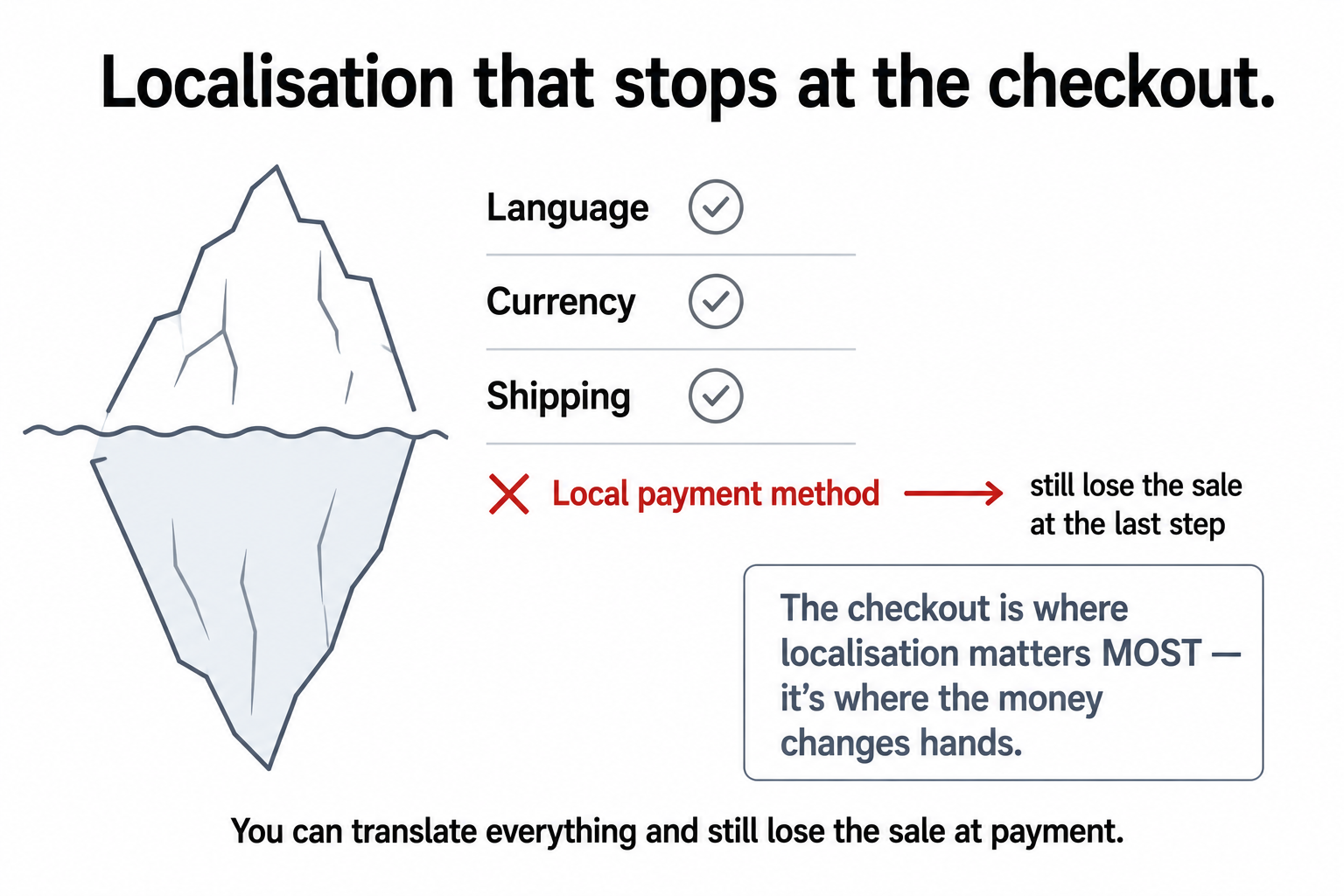
When teams plan an international expansion, the attention goes to the visible things: translating the site, showing local currency, sorting out shipping. All of that matters. But payment preference is intensely local, and it's the part that gets forgotten precisely because it's invisible until a customer reaches the checkout and finds nothing they recognise. You can translate every word and convert every price and still lose the sale at the payment step, because a flawlessly localised store with a foreign-only checkout is still asking the customer to pay in a way that feels alien to them.
That's the trap. Localisation is treated as something you do to the store, the pages, the copy, the prices, while the checkout is assumed to be universal. It's backwards. The checkout is where localisation matters most, because it's the exact point where money changes hands and trust is most fragile. A customer will forgive imperfect translation long before they'll hand their details to a payment flow that doesn't offer the way they actually pay.
Why local methods matter more abroad than at home
At home, you probably don't think about this, because your customers' preferred method is most likely already in your default payment stack. You set up the methods that are normal in your own market, and they happen to be the ones your customers use. The mismatch never appears.
Cross the border and that quiet alignment breaks. The dominant method in your new market may be one you've personally never used and don't currently offer, and the methods you do offer may be ones local customers distrust or simply can't use. Some markets have low credit-card penetration and run on bank-transfer or real-time-payment schemes. Some are dominated by a local wallet that's effectively the default way to pay online. Some have a strong norm of paying on invoice after delivery, or of cash on delivery. Drop a card-only checkout into any of those and you don't get a slightly lower conversion rate; you get a wall, because a large share of customers there literally don't pay that way.
And the trust dimension is amplified cross-border. A customer is already slightly wary buying from a foreign store; a checkout that then asks for a payment method they don't recognise or use confirms the wariness at the worst moment. The local method isn't just convenient, it's a trust signal that says "this store is set up for people like me."
It's a cost win too, not only conversion
There's a second reason local methods are worth the effort, and it ties back to the cost job the cornerstone named. Cross-border card payments often carry extra costs: currency conversion, cross-border interchange, higher decline rates that themselves cost you sales. Local payment rails, in many markets, are cheaper to process as well as more likely to convert. So offering the right local method can be one of those rare moves that improves conversion and margin at the same time, you sell to more customers, and each sale costs you less to collect than forcing it through an expensive cross-border card transaction would have.
That doesn't make it free, integrations, reconciliation, and sometimes local acquiring arrangements are real work, but it does mean the decision isn't a pure cost trade-off. Done right, local methods pay for themselves twice.
The judgment: enter fewer markets properly, including how they pay
The discipline here is the same one that runs through the internationalisation work: it's better to enter a few markets properly than many markets thinly, and "properly" explicitly includes payments. Don't expand into a market without first learning how it pays, because the payment method is as much a part of entering that market as the language and the logistics are.
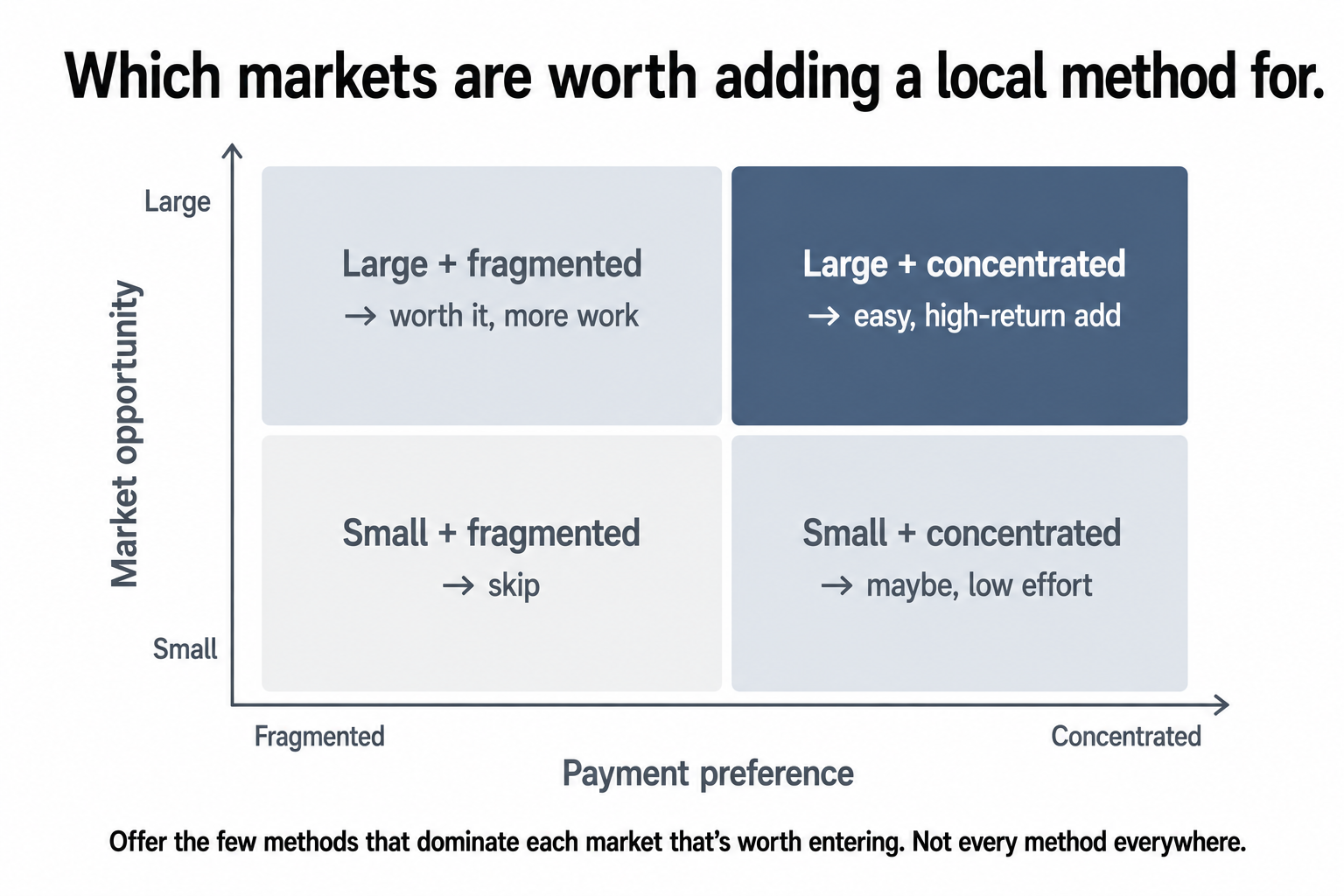
And the "more isn't better" rule from the payment-methods piece still applies, just per market. The answer isn't to bolt every local method from everywhere onto one global checkout; that's clutter and cost with no benefit. It's to offer the few methods that genuinely dominate each target market, shown to customers in that market, and to prioritise by market size and how concentrated its payment preferences are. A market where almost everyone uses one local method is an easy, high-return addition. A market with fragmented preferences and a small opportunity may not be worth the integration at all.
What this comes down to
You can translate every word, convert every price, and sort out shipping to the last detail, and still lose the sale at the payment step because you didn't offer the one method that market trusts. Payment preference is local, the trust cost of getting it wrong is highest at the checkout, and the right local method often improves conversion and margin together.
Going into a market means going into how that market pays. It's not a finishing touch you add later; it's part of the cost of entry, and the part most likely to be skipped. Skip it, and the rest of your localisation is just decoration on a checkout that doesn't convert.
A few common questions
Why do local payment methods matter for cross-border selling? Because payment preference is intensely local, and a checkout that converts at home can convert terribly abroad simply because it lacks the method customers in that market trust and use. You can translate the whole site and convert the prices and still lose the sale at the last step, because a large share of customers in some markets literally don't pay the way your home checkout expects. It's the most overlooked conversion killer in international expansion.
Why does this matter more abroad than at home? At home your customers' preferred method is probably already in your default stack, so the mismatch never appears. Abroad, the dominant method may be one you've never used and don't offer, and the methods you do offer may be ones local customers distrust or can't use. The trust cost is also amplified, since a customer already wary of buying from a foreign store has that wariness confirmed by a checkout asking for an unfamiliar payment method.
Do local methods only help conversion? No, they often help cost too. Cross-border card payments carry currency conversion, cross-border fees, and higher decline rates, while local payment rails are frequently cheaper to process as well as more likely to convert. So the right local method can be one of the rare moves that improves conversion and margin at the same time, though integration and reconciliation are real work, so it isn't free.
Should I offer every local method in every market? No. The "more isn't better" rule still applies, per market. Don't bolt every local method from everywhere onto one global checkout, that's clutter and cost with no benefit. Offer the few methods that genuinely dominate each target market, shown to customers there, and prioritise by market size and how concentrated its preferences are. It's better to enter fewer markets properly, payments included, than many markets thinly.
You should also read:
Chargebacks and Payment Fraud: The Defence Most Stores Set Up Too Late
Chargebacks and payment fraud are the risk that turns a "sale" into a loss after you've already shipped the goods, and most stores only build a real defence after the first painful wave has hit. Two very different problems hide under the single word "fraud":…
Continue reading...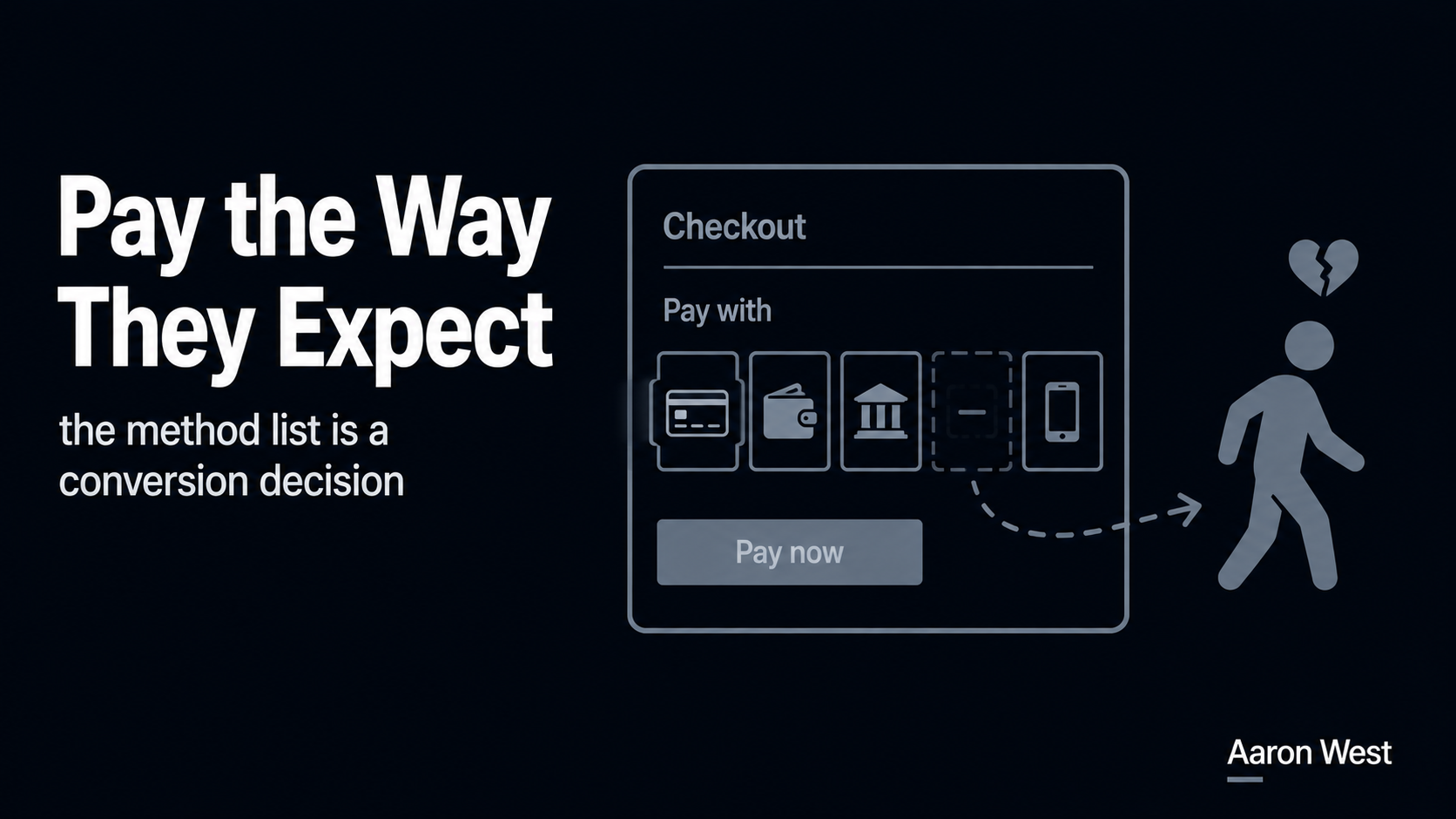
Payment Methods: Match What You Offer to How People Actually Pay
The payment methods you offer are a conversion decision disguised as a technical one. Customers have a preferred way to pay, often a strong one, and if you don't offer it, a meaningful share don't email to complain, they just abandon, silently, at the last…
Continue reading...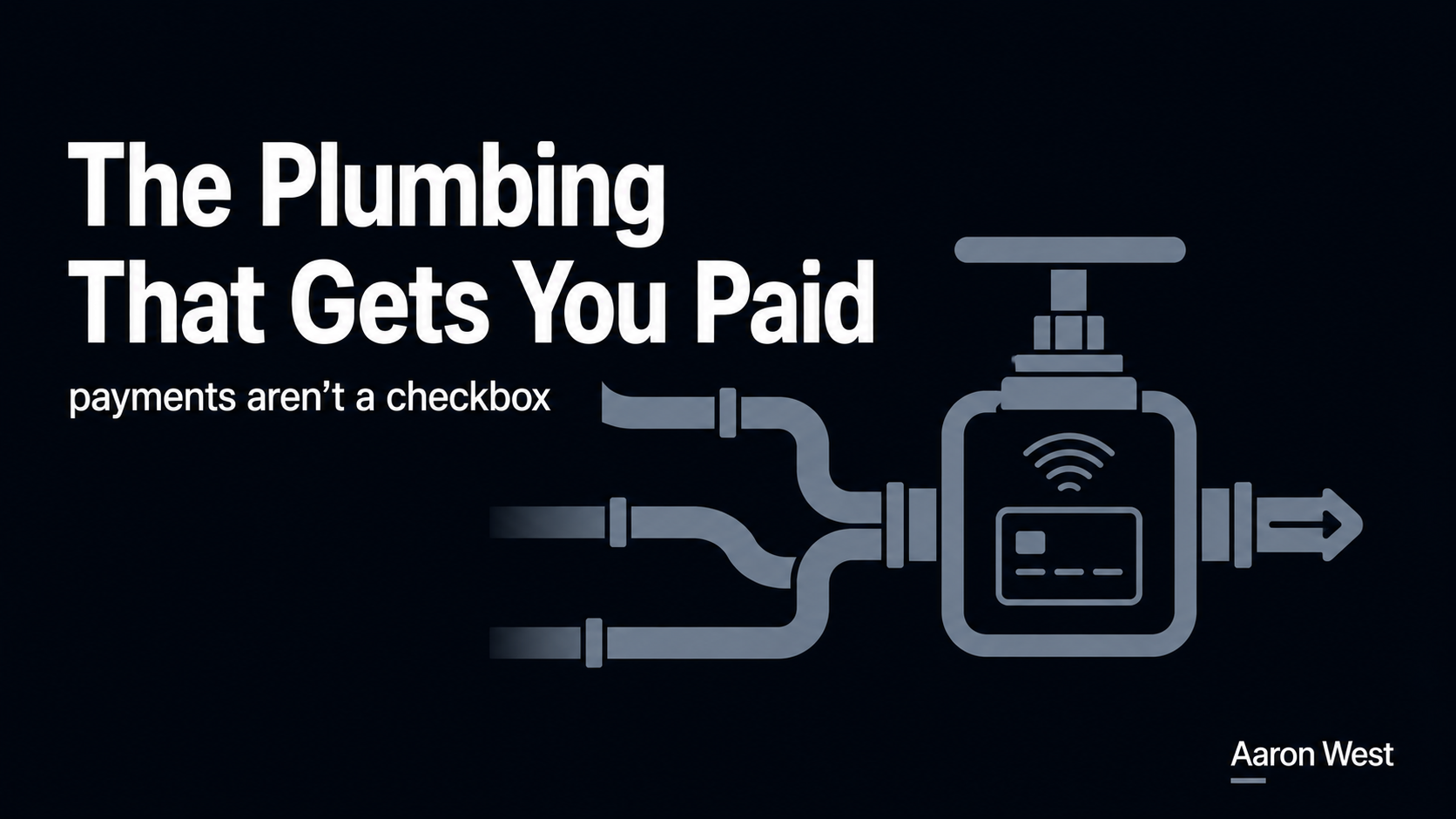
Payments Are the Plumbing That Decides Whether You Get Paid
Payments are the infrastructure that turns a customer's intention to buy into money in your account, and they're the part of e-commerce nobody thinks about until they fail, at the worst possible moment: the instant a ready customer is trying to pay. Treating payments as…
Continue reading...