Payments Are the Plumbing That Decides Whether You Get Paid

Table of Contents
Payments are the infrastructure that turns a customer's intention to buy into money in your account, and they're the part of e-commerce nobody thinks about until they fail, at the worst possible moment: the instant a ready customer is trying to pay. Treating payments as a one-time setup with a single provider is a quiet, expensive mistake, because the payment layer decides four things at once: whether the customer can pay the way they want, whether they feel safe doing it, how much each sale costs you in fees, and how much fraud and chargeback risk you end up carrying.
This opens the Payments pillar. It's the cornerstone the rest of the cluster links up to: which payment methods to offer, when buy now, pay later earns its place, how to handle fraud and chargebacks, and how payment expectations shift across markets. But it all rests on one idea: payments aren't a checkbox you tick once. They're the highest-stakes plumbing in the store, and the least examined.
Invisible until they break, and they break at the worst moment
Good payments are invisible. When the checkout just works, no customer ever thinks about the payment layer, and neither do most store owners, which is exactly why it gets so little attention. The trouble is that when payments fail, they fail at the single worst point in the entire customer journey: the moment someone has decided to buy and is actively trying to hand you money.
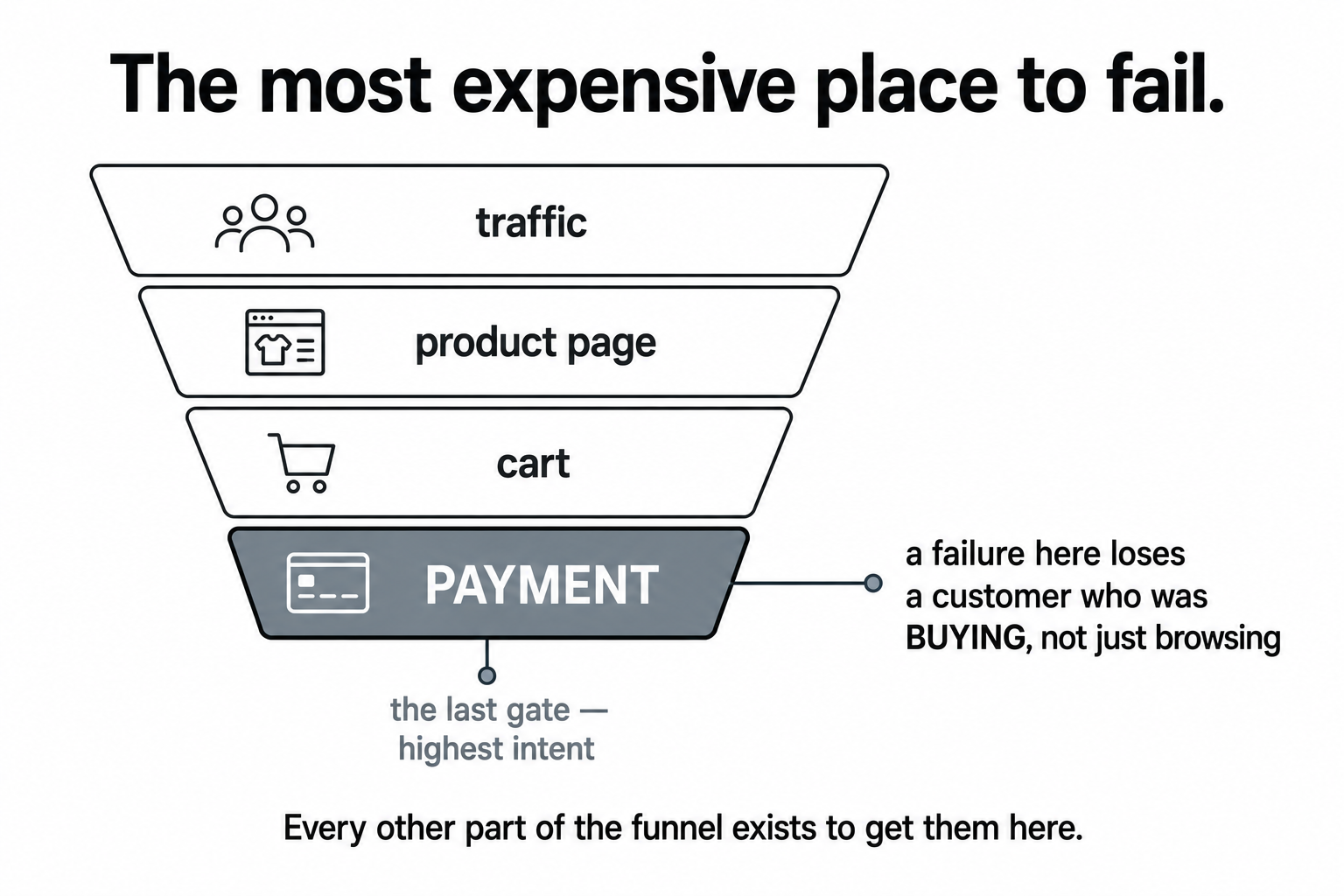
Think about everything that has to go right by the time a customer reaches the payment step. They found you, they browsed, they chose, they trusted you enough to get this far, and now they're committed. A failure here, a declined card with no explanation, a payment method they don't have, a form that looks unsafe, a redirect that breaks on their phone, doesn't just lose a browser. It loses the most valuable, highest-intent visitor you have, at the precise instant they were ready to convert. Every other failure in the funnel loses someone who might have bought. A payment failure loses someone who was buying. That's what makes it the most expensive failure there is, and it's the one running on infrastructure nobody looks at.
The four jobs the payment layer quietly does
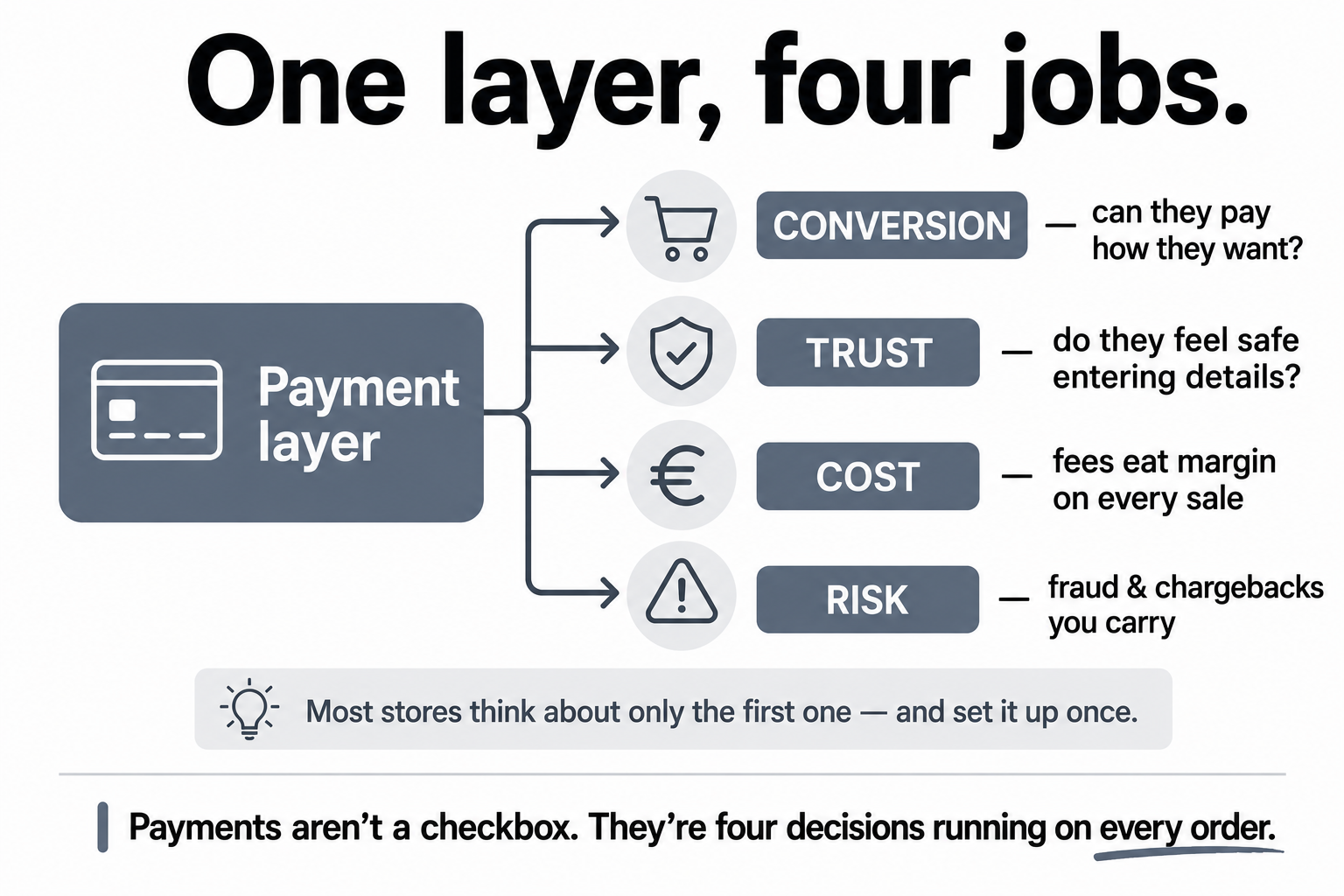
The reason "set up a provider and forget it" fails is that the payment layer is doing four different jobs at the same time, and most stores only ever think about the first one.
Conversion. Can the customer pay the way they actually want to? People have a preferred, trusted way to pay, and if you don't offer it, a meaningful share don't complain, they just leave. The methods you offer are a conversion decision, which is a big enough topic to be its own piece, but the headline is simple: a missing preferred method is a silent lost sale.
Trust. The payment step is where the customer is most alert to risk, because it's where they hand over card or bank details. Anything that feels unfamiliar or unsafe, a clunky redirect to a page that doesn't match your brand, a form that looks amateur, an unrecognised provider, raises doubt at the exact moment doubt is most expensive. Perceived security at the payment step is part of whether the sale completes, which is why payments and trust are inseparable.
Cost. Every transaction carries fees, processing, scheme fees, currency conversion, method-specific charges, and they come straight out of margin on every single sale. Because each fee is small and automatic, it's invisible in a way a big annual cost never would be, so most stores never examine it. But a fraction of a percent across all your revenue is real money, and the mix of methods you offer changes it, because some methods cost considerably more than others.
Risk. Fraud, chargebacks, and failed payments are liabilities the store carries, and they can turn a "sale" into a net loss once you've shipped the goods and lost the disputed payment. How you handle this is its own discipline, but the point for now is that the payment layer is also your risk layer, whether you've thought about it that way or not.
Why "set it up once" is the mistake
Put those four jobs together and it's obvious why a one-time setup doesn't hold. Each of the four keeps moving. Customer expectations about how to pay shift over time and differ sharply between markets, so the right method mix in one country is the wrong one in another, which is why payments and going international are tightly linked. Fees can be renegotiated as your volume grows, and the cheapest setup at launch is rarely the cheapest at scale. Fraud patterns evolve, so the controls that worked last year leak this year. New methods appear and become expected faster than you'd think.
None of that is a setup task. It's an operational area you maintain, the same way you'd maintain any other part of the business that touches both conversion and margin. The store that picks a provider at launch and never revisits payments is quietly losing sales to missing methods, leaking margin to fees it never renegotiated, and carrying fraud risk on controls that have aged, all without any of it showing up as an obvious problem. That's the danger of invisible plumbing: nothing looks broken until you go and look.
The leverage hiding in plain sight
Here's what makes this worth your attention rather than your provider's. Stores pour effort into the top of the funnel, traffic, product pages, conversion-rate tweaks, and then route every hard-won, ready-to-buy customer through a payment layer they set up once and never examined. It's the last thing standing between a customer and your bank account, and it's the part most likely to be running on autopilot.
That's leverage. Fixing a missing payment method recovers sales you were silently losing. Examining your fee structure recovers margin on every future transaction. Tightening fraud controls stops turning sales into losses. Making the payment step feel trustworthy converts customers who were one doubt away from leaving. None of these are glamorous, and none of them involve buying more traffic, which is exactly why they're under-worked and high-return.
What this comes down to
Every other part of your funnel exists for one purpose: to get the customer to the payment step. That's the moment intent finally becomes money, and it's running on plumbing most stores installed once and forgot about, plumbing that quietly decides whether they can pay, whether they feel safe, what each sale costs you, and how much risk you carry.
Treat payments as infrastructure you maintain, not a checkbox you ticked at launch. Look at the methods, the fees, the fraud controls, and the trust signals with the same seriousness you give your product pages, because this is the last gate before the sale, and it's the most expensive place in the whole business to be losing customers you've already won.
A few common questions
Why do payments matter so much in e-commerce? Because they're where intent becomes money, and they fail at the worst possible moment, the instant a ready customer is trying to pay. A payment failure loses someone who was actively buying, not just browsing, which makes it the most expensive failure in the funnel. The payment layer also quietly decides four things on every order: whether the customer can pay how they want, whether they feel safe, what the sale costs you in fees, and how much fraud risk you carry.
What does the payment layer actually decide? Four things at once. Conversion (a missing preferred payment method is a silent lost sale), trust (the payment step is where customers are most alert to risk, so anything unfamiliar or unsafe-looking costs you), cost (fees come out of margin on every transaction and vary a lot by method), and risk (fraud and chargebacks are liabilities the store carries). Most stores only ever think about the first one.
Can I just set up payments once and leave them? No, and that's the common mistake. All four jobs keep moving: customer expectations shift and differ by market, fees can be renegotiated as you grow, fraud patterns evolve, and new methods become expected. A store that picks a provider at launch and never revisits payments quietly loses sales to missing methods, leaks margin to un-renegotiated fees, and carries aging fraud risk, none of which looks broken until you go and look.
Where's the easy leverage in payments? In the things nobody examines. Adding a missing payment method recovers silently lost sales; reviewing your fee structure recovers margin on every future transaction; tightening fraud controls stops sales becoming losses; making the payment step feel trustworthy converts customers who were one doubt from leaving. None of it requires buying more traffic, which is exactly why it's under-worked and high-return.
You should also read:
Local Payment Methods: The Cross-Border Detail That Kills Conversion
When you sell into a new country, the fastest way to kill your conversion there isn't getting the language slightly wrong. It's failing to offer the local payment method that customers in that market trust and expect. Every market has its own dominant ways to…
Continue reading...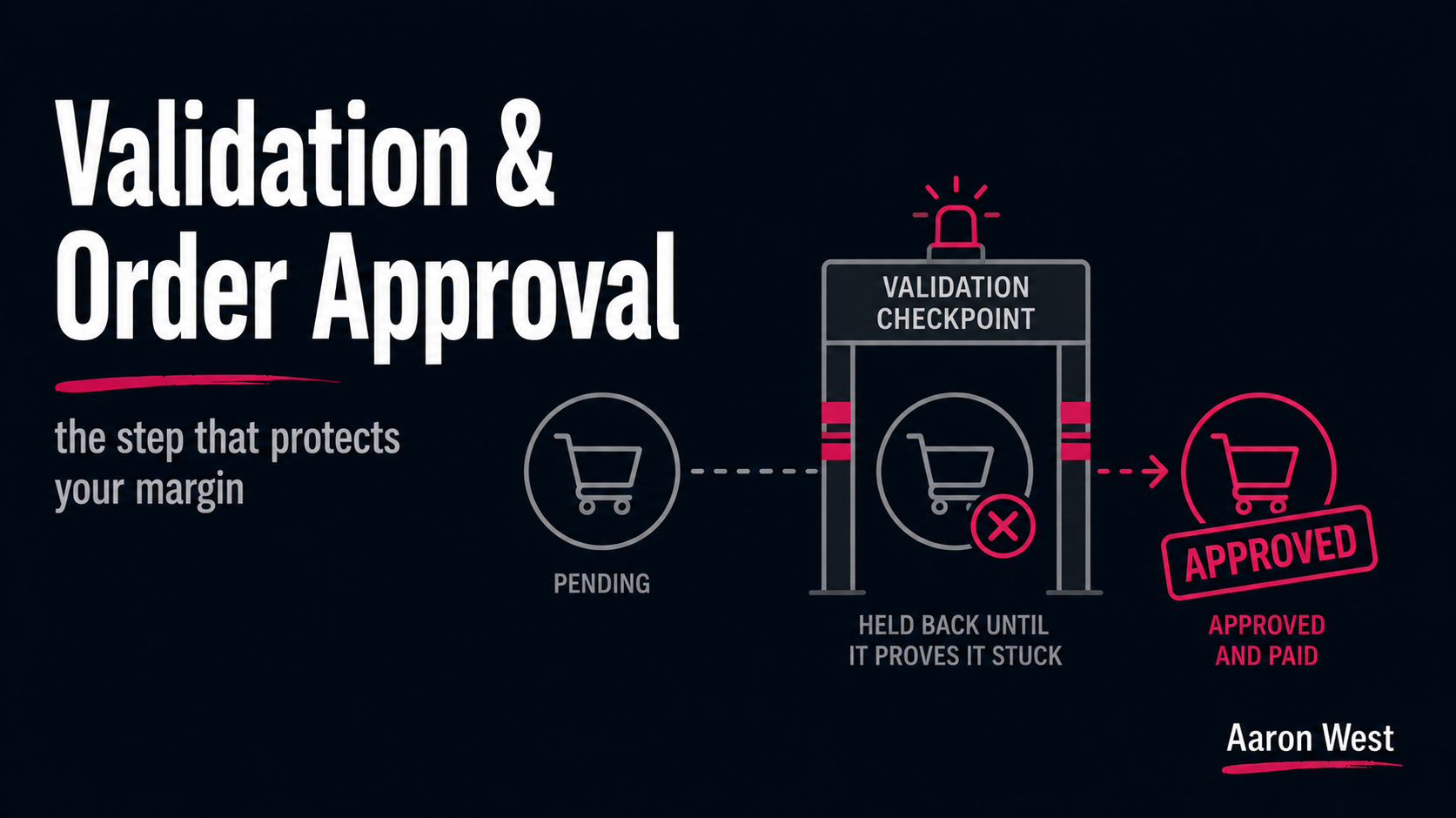
Validation and Order Approval: The Step That Protects Your Margin
Validation is the step where a merchant confirms a tracked affiliate sale is genuine, not returned, cancelled, or fraudulent, before the commission is approved and paid. It is the control that stops you paying for sales that never really stuck, and it works through a…
Continue reading...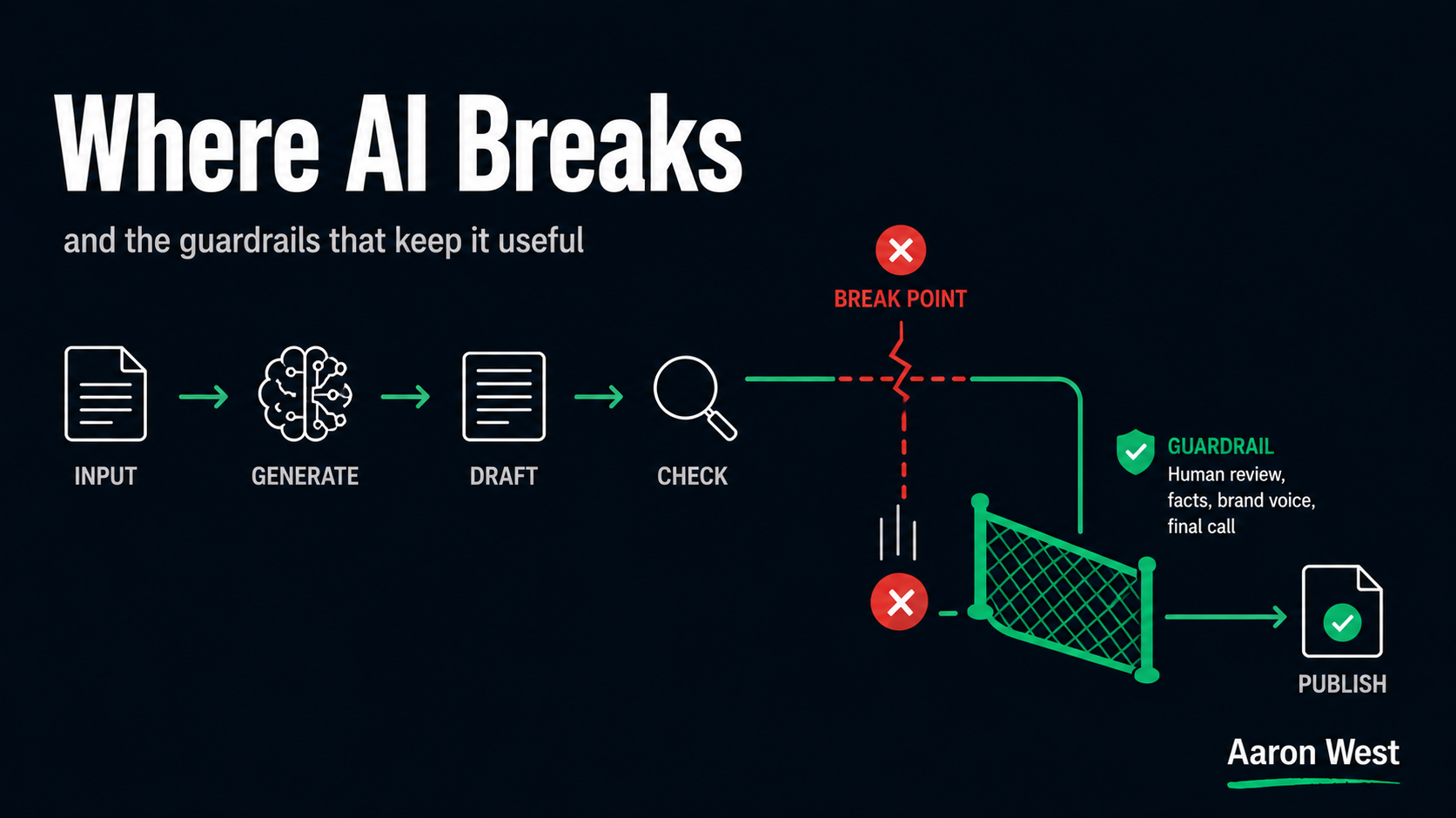
Where AI Breaks in E-Commerce Ops (and the Guardrails That Keep It Useful)
AI does not fail randomly in e-commerce operations. It fails in a handful of specific, predictable ways, and once you know them, you can build the guardrails that let you use AI confidently instead of nervously. The failures are not exotic. They are the same…
Continue reading...