The Free-Shipping Threshold: Psychology Meets Margin Maths

Table of Contents
A free-shipping threshold, "free delivery over €50," is one of the most effective levers in e-commerce, because customers dislike paying for shipping out of all proportion to what it actually costs. The prospect of "free" delivery reliably nudges a shopper to add another item to clear the bar, lifting the average order. But it only works if the number is set with the margin maths, not plucked from the air. Set it too low and you give away delivery you'd happily have charged for; set it too high and you just annoy people; set it right, and it raises the average order without costing you anything.
This closes the Pricing pillar's core, under the cornerstone that price is a strategy. It belongs here rather than in logistics because, despite looking like a delivery policy, the free-shipping threshold is really a pricing-and-basket decision. It's where the perception tricks of psychological pricing meet hard margin arithmetic, and getting the two to agree is the whole skill.
Why it works: the irrational hatred of paying for postage
Start with the psychology, because it's the engine. Customers hate paying for shipping in a way that makes no rational sense. A shopper will happily add fifteen euros of product to a basket to avoid a five-euro delivery fee, ending up spending more, because of how the two costs feel. Paying for shipping feels like a penalty, money handed over for nothing you get to keep, while spending more on products feels like getting something. The maths says they spent more; the feeling says they "saved" the shipping. That gap between the maths and the feeling is exactly the perception layer the psychological-pricing piece is about, and the free-shipping threshold harnesses it honestly: the customer genuinely does get more product, and you genuinely do get a bigger order. Nobody's tricked; the framing just lines everyone's incentives up.
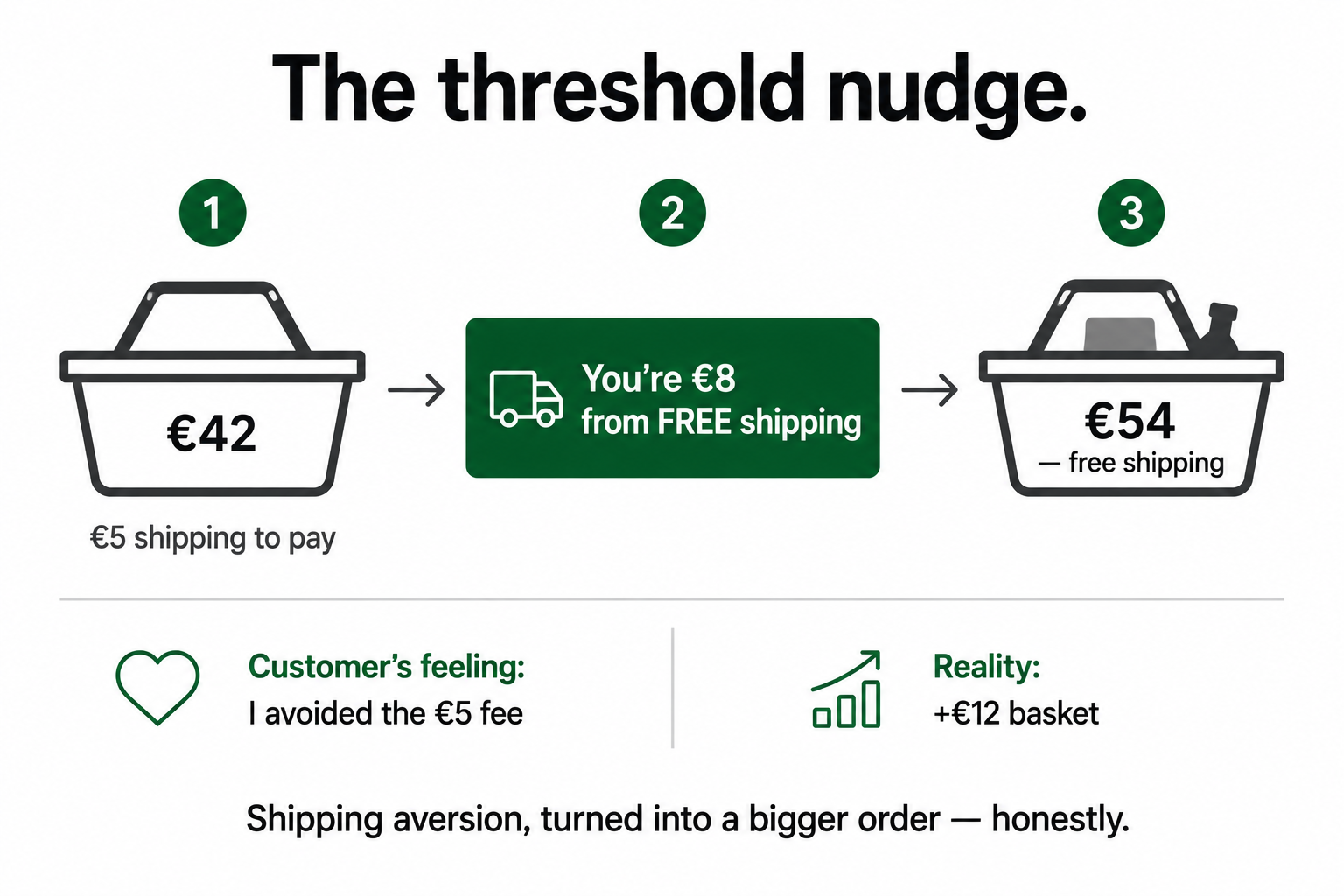
That's why "you're €8 away from free shipping" is one of the most reliable basket-building prompts there is. It turns a vague "should I add anything else" into a concrete, gamified target with a reward attached, and customers clear it far more often than a flat "add more to your order" would ever achieve.
The lever it really pulls: average order value
The threshold's main job isn't saving customers money on delivery; it's raising your average order value. It works by pulling baskets that were sitting just below the bar up over it, which is why it sits as much in the basket-building world as in pricing. A customer at forty-two euros who adds a twelve-euro item to reach a fifty-euro threshold has just grown their order by nearly thirty percent, and they feel good about it because they "got free shipping."
That reframing matters for where you set the bar. The threshold isn't there to be generous; it's there to move the basket. Which means the single most important input isn't the shipping cost or the competitor's threshold. It's your own average order value.
The margin maths everyone skips
Here's the part stores routinely get wrong: they pick a round number, or copy a competitor's threshold, and never run the arithmetic underneath. The threshold has to be set so that the extra margin from the bigger basket covers the shipping cost you're now absorbing on those orders. Get that relationship right and free shipping pays for itself out of the larger order; get it wrong and you're funding deliveries out of margin you didn't mean to spend.
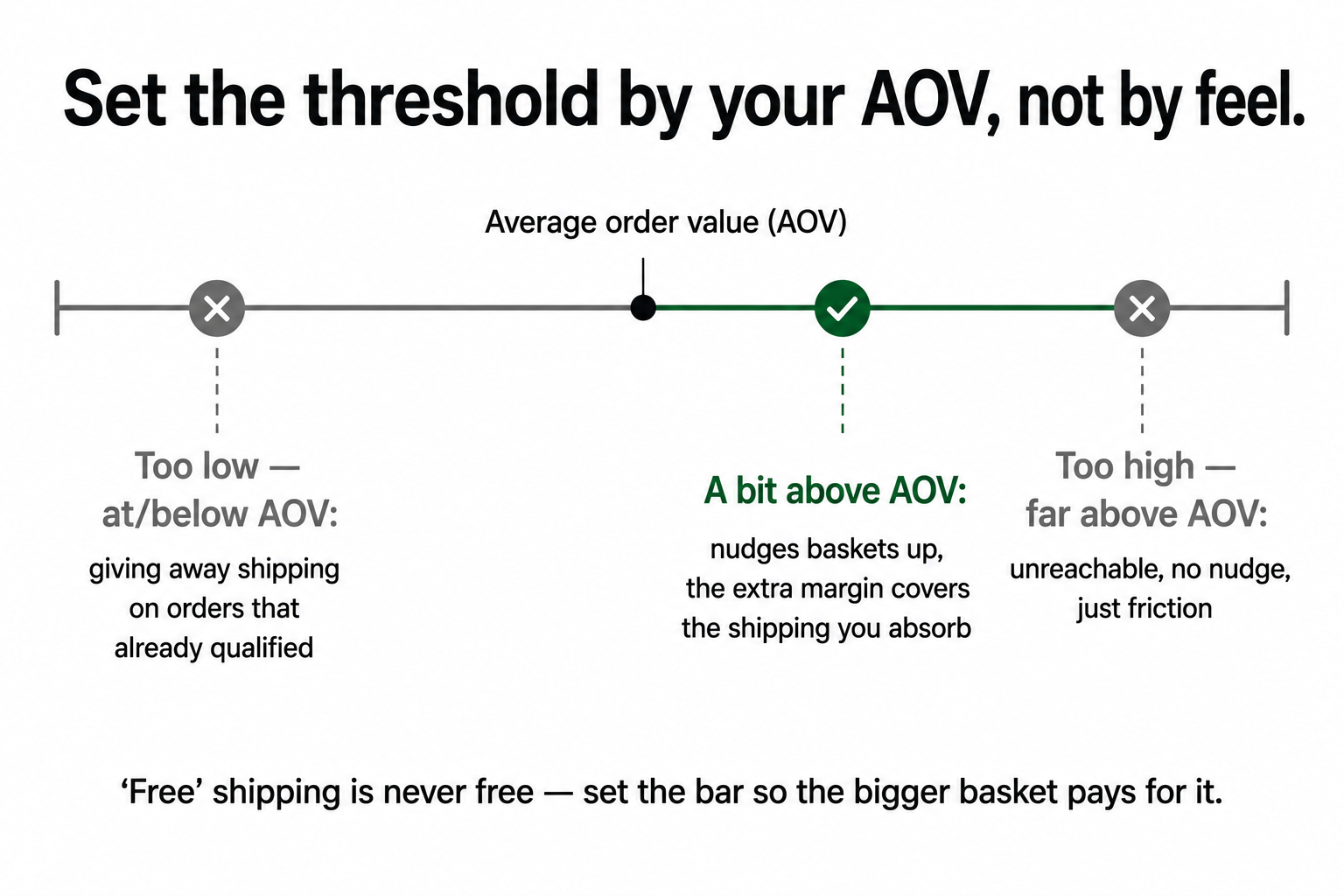
The anchor for the number is your average order value, and the failure modes fall out of that directly:
- Set it at or below your average order value, and it's a giveaway. If most orders already clear the bar without changing, you're now eating the shipping on sales that were happening anyway, at the size they were already happening. That's a subsidised cost with no behaviour change, the un-incremental trap from the promotions piece, wearing a delivery label.
- Set it far above your average order value, and it doesn't nudge; it just annoys. A bar most customers can't realistically reach stops being an incentive and starts reading as "shipping is expensive here," adding friction at exactly the wrong moment. The nudge only works when the bar is close enough to feel achievable.
- Set it just above your average order value, and it does its job. Close enough that a meaningful share of below-the-line baskets will stretch to clear it, far enough that you're genuinely capturing extra spend rather than rewarding orders that already qualified. That's the sweet spot, and it's specific to your basket, not a number borrowed from someone whose average order, margins, and shipping costs you don't know.
One more honesty point that catches stores out: "free" shipping is never free. The cost is always paid somewhere, absorbed into product prices or taken out of margin. That's fine, as long as you know which one you're doing and the maths works. The trouble starts when a store offers free shipping as if it were costless, never accounts for it, and slowly bleeds margin on every order without seeing where it went. And if you fund it by inflating product prices, watch that you don't push the price past what the product is worth, because then you've solved a shipping-perception problem by breaking the value perception the cornerstone cares about.
What this comes down to
"Free shipping over €50" looks like a delivery policy and is actually a pricing lever in disguise. Its power comes from a genuine quirk of how customers feel about paying for postage; its job is to lift the average order; and its number should be set by the maths of your basket and your margin, not by a round figure or a glance at a competitor. Put it a little above your average order value, make sure the extra margin on the lifted baskets covers the shipping you absorb, and remember that "free" is always paid somewhere, so account for it on purpose.
Set the number deliberately and it lifts your average order essentially for free, powered by the fact that customers will do almost anything to avoid paying for delivery. Set it by feel, and it's just a discount you didn't mean to give, handed out on every order, quietly, where you'll never see it on the dashboard.
A few common questions
Why does a free-shipping threshold work? Because customers dislike paying for shipping out of all proportion to its actual cost. A shopper will add more in product to avoid a smaller delivery fee, because paying for shipping feels like a penalty while spending more on products feels like getting something. The threshold harnesses that honestly, the customer really does get more product and you really do get a bigger order, which is why "you're €8 from free shipping" is one of the most reliable basket-building prompts there is.
What is the free-shipping threshold actually for? Raising average order value. Its real job isn't saving customers money on delivery; it's pulling baskets that sit just below the bar up over it. A customer at €42 who adds a €12 item to reach a €50 threshold has grown their order by nearly a third and feels good about it. That's why the most important input when setting the bar is your own average order value, not the shipping cost or a competitor's number.
How do I set the right free-shipping threshold? Anchor it to your average order value and set it a little above. Too low (at or below your average) and you give away shipping on orders that already qualified, with no behaviour change. Too high (far above your average) and it's unreachable, so it stops nudging and just reads as expensive shipping. A bit above your average is the sweet spot: close enough that below-the-line baskets stretch to clear it, far enough that you capture genuine extra spend. And check that the extra margin on those lifted baskets covers the shipping you now absorb.
Is free shipping actually free? Never. The cost is always paid somewhere, either absorbed into product prices or taken out of margin, and that's fine as long as you know which you're doing and the maths works. The danger is offering it as if it were costless, never accounting for it, and slowly bleeding margin on every order. And if you fund it by raising product prices, make sure you don't push past what the product is worth, or you've fixed a shipping-perception problem by breaking your value perception.
You should also read:
Discounts Are a Loan Against Your Margin
A discount feels free to give, and that is exactly why it is dangerous. It is a loan against your margin, and like any loan it gets repaid: in the margin you hand over, in the reference price you quietly reset, and in the customers…
Continue reading...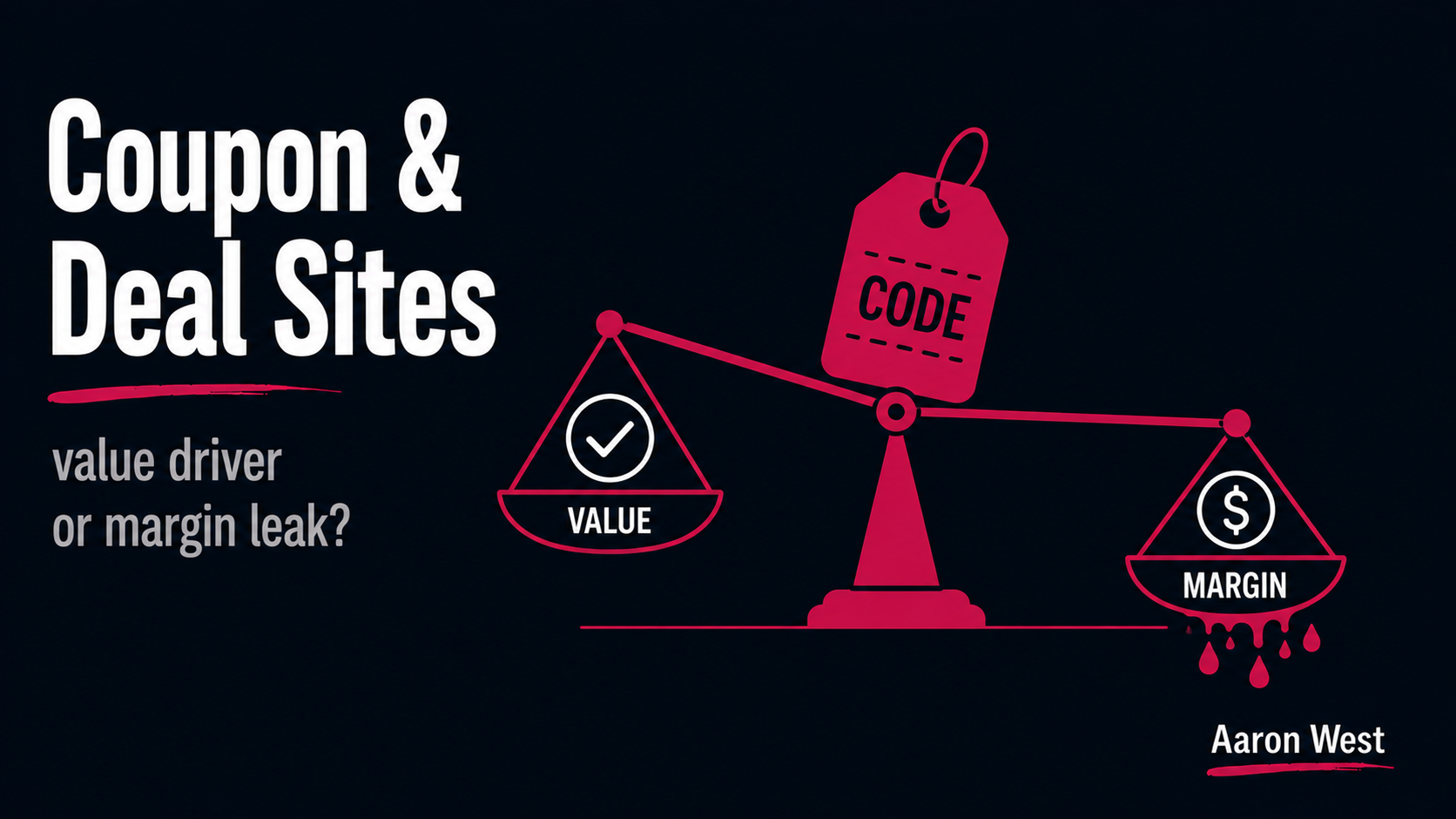
Coupon and Deal Sites: Value Driver or Margin Leak?
Coupon and deal sites are affiliate partners that promote discount codes and offers, and the honest answer to whether they help or hurt is: both, depending entirely on how well you control them. Run well, with unique codes and clear rules, they bring real volume…
Continue reading...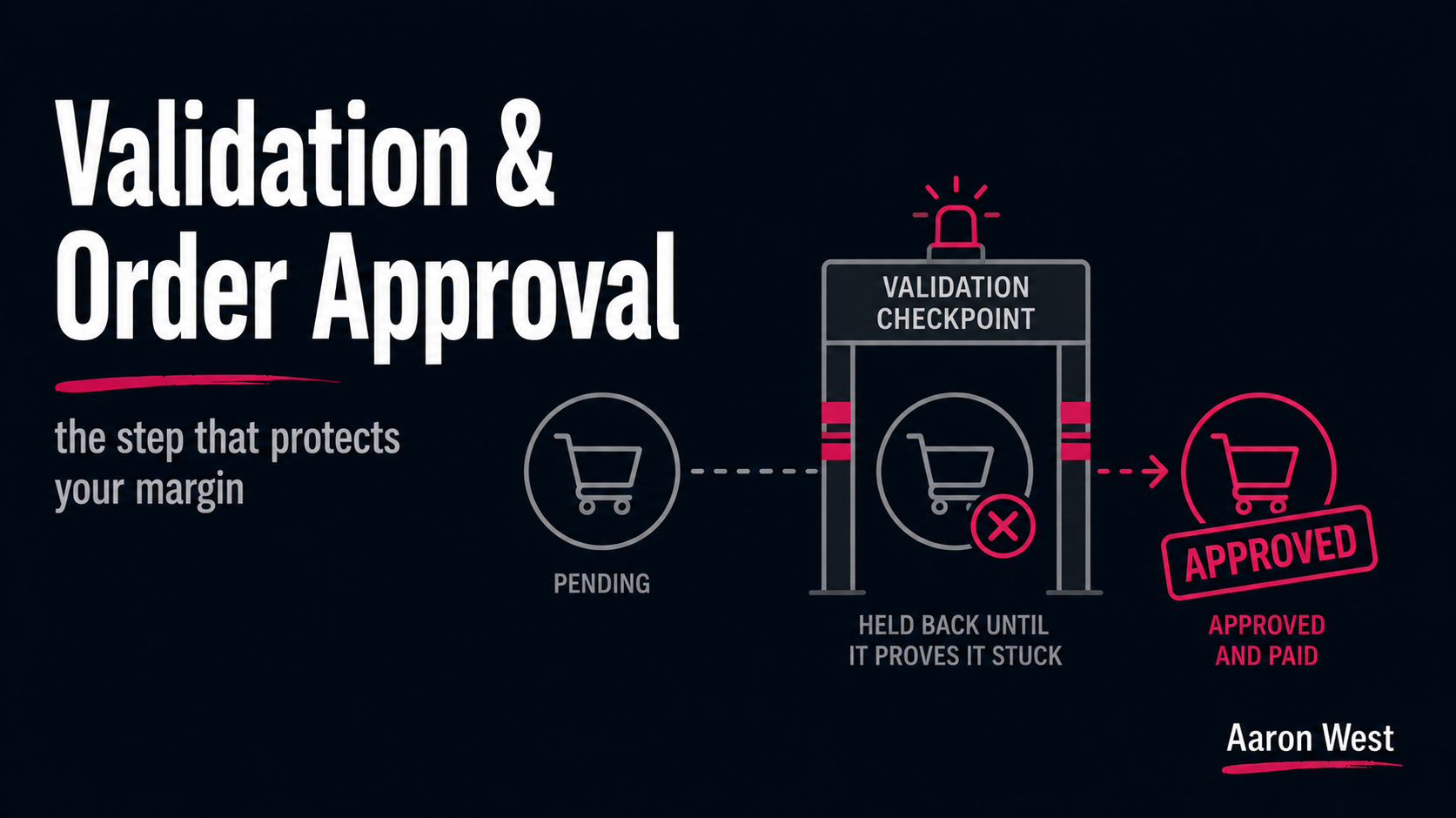
Validation and Order Approval: The Step That Protects Your Margin
Validation is the step where a merchant confirms a tracked affiliate sale is genuine, not returned, cancelled, or fraudulent, before the commission is approved and paid. It is the control that stops you paying for sales that never really stuck, and it works through a…
Continue reading...