How Affiliate Marketing Actually Works: A Practitioner's Complete Guide

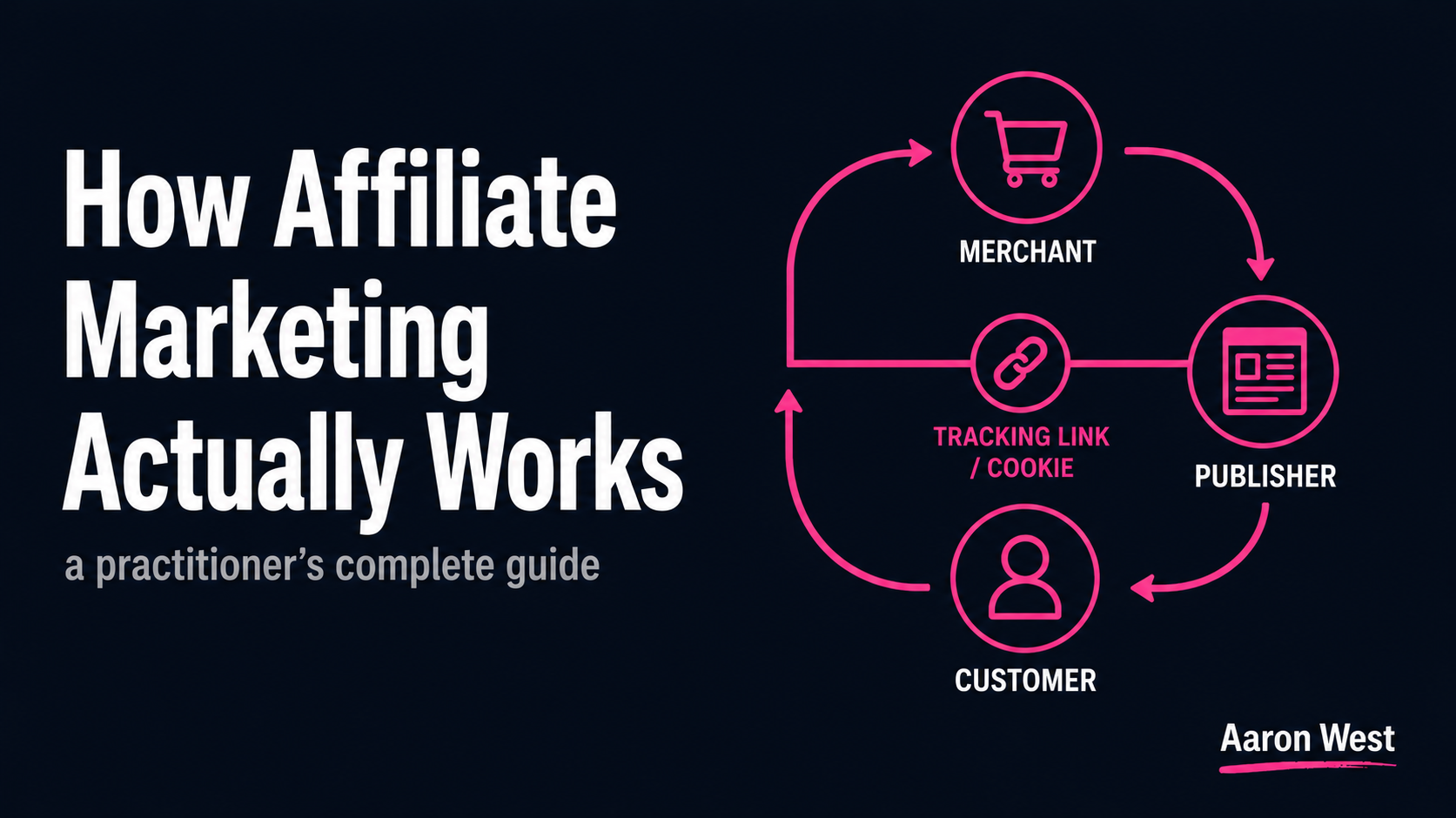
Table of Contents
- The four players
- How tracking actually works: click, cookie, conversion
- The privacy shift: why cookie tracking is breaking, and what's replacing it
- How commissions are designed
- The partner types (a quick map)
- The integrity problem: fraud, quality, and disclosure
- Why affiliate works, when it's done right
- A few common questions
Affiliate marketing is a performance-based model where a business pays external partners (publishers) a commission for the sales or actions they drive, tracked through unique links so each partner gets credit for exactly what they brought in. The business only pays when it gets a result, which is what makes it one of the few genuinely low-risk acquisition channels in marketing: no result, no cost. That single property, you pay for outcomes, not for the chance of outcomes, explains almost everything about how the channel is built and why it works the way it does.
I have managed affiliate programmes from the inside, and the thing that surprises people is how much real machinery sits under that simple idea, tracking, attribution, commission design, partner types, fraud control, all of which decide whether a programme thrives or quietly leaks money. This guide is the complete, plain-language map of how affiliate marketing actually works: the players, the mechanics of tracking and attribution, how commissions are designed, the kinds of partners, and the integrity problems you have to manage. It is the foundation the rest of this cluster builds on, so I have kept it thorough and jargon-light. Where a piece goes deeper on one part, I link to it.
The four players
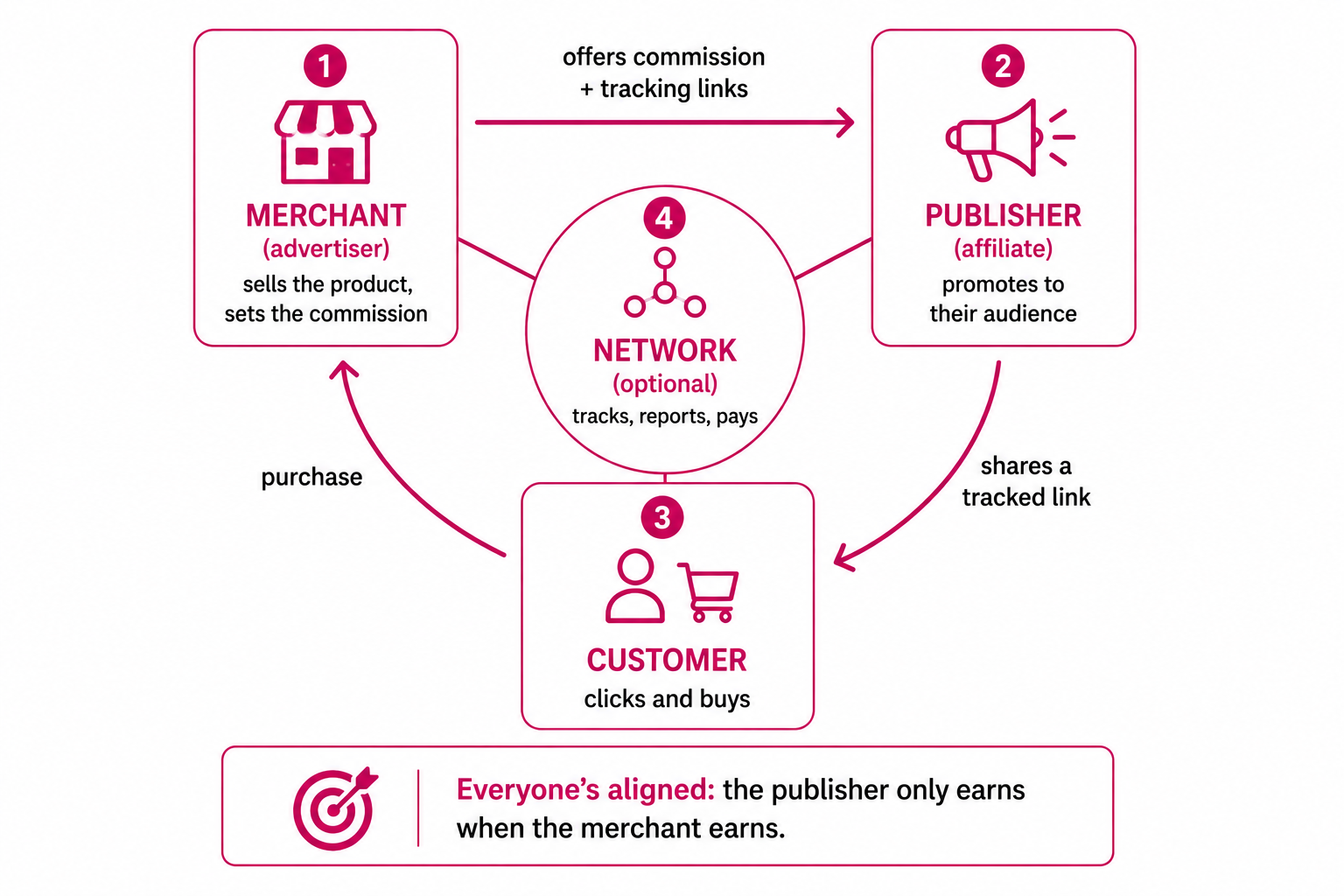
Every affiliate programme is built from four roles, and understanding who does what makes the rest obvious.
The merchant (or advertiser). The business selling the product and running the programme. That is the seat I write from. The merchant sets the commission, decides which actions get paid, approves partners, and validates sales.
The affiliate (or publisher). The partner who promotes the merchant's products to their audience and earns commission on what they drive. "Affiliate" and "publisher" are the same role under two names; the industry uses "publisher" more as the partners have grown from individual bloggers into serious media businesses. Publishers come in many types, content sites, cashback platforms, coupon sites, influencers, comparison engines, which I break down in the affiliate publisher landscape.
The customer. The person who clicks a publisher's link and buys. They usually have no idea any of this machinery exists, which is rather the point.
The network (optional but common). The platform sitting between merchant and publishers, handling the tracking technology, the reporting, and crucially the payments, paying hundreds of publishers individually is a job most merchants gladly outsource. Networks are not mandatory (you can run a programme in-house or on a SaaS platform), but they are common, and the trade-offs between network, SaaS, and in-house are a real decision I cover in networks vs platforms vs in-house.
The relationship between these four is the whole model: the merchant offers a commission, the publisher promotes to the customer, the network tracks and pays, and everyone is aligned because the publisher only earns when the merchant earns.
How tracking actually works: click, cookie, conversion
The mechanics that make all of this possible come down to one chain: a click is recorded, stored, then matched to a later purchase so the right publisher gets credited. Here is the sequence, because it is the heart of the whole system.
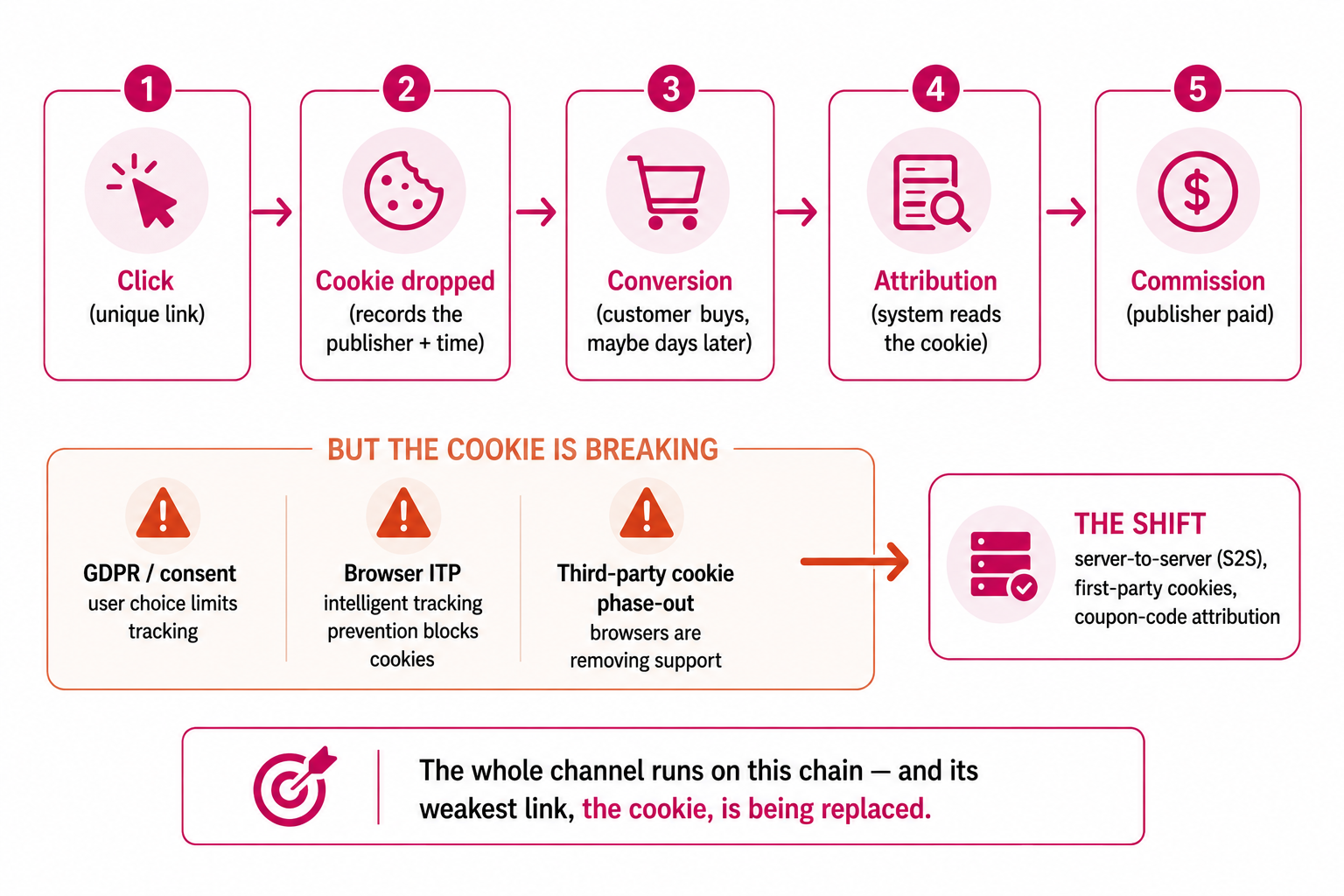
A publisher gets a unique tracking link for the merchant's programme, carrying an identifier that says "this traffic came from me." When a customer clicks it, two things happen: they land on the merchant's site, and a small file called a cookie is dropped in their browser, recording which publisher sent them and when. The customer browses, maybe leaves, maybe comes back days later, and eventually buys. At checkout, the system reads that cookie, sees the publisher's identifier, and attributes the sale to them, triggering the commission. That is the click → cookie → conversion → attribution → commission chain, and the full mechanics get their own deep-dive in how affiliate tracking actually works.
Two concepts in that chain matter enough to name now. The first is cookie duration (or "cookie life"), the window after the click during which a purchase still earns commission. The industry default is around 30 days, but it ranges from 24 hours for impulse buys to 90 days or more for considered, high-value purchases. It matters more than it sounds: a longer window credits the publisher for slower conversions and signals you are being fair, while a stingy window quietly minimises payouts and pushes good publishers to your competitors. The second is what happens when that cookie fails, because increasingly it does, and that is the most important shift in the channel right now.
The privacy shift: why cookie tracking is breaking, and what's replacing it
The single biggest change in affiliate marketing is that the traditional cookie, the mechanism the whole channel was built on, is becoming unreliable, and the industry is moving to more robust ways of tracking. You cannot understand affiliate in 2026 without understanding this.
The cookie is breaking for three converging reasons: privacy regulations like GDPR (which require consent before tracking), browser changes like Safari's Intelligent Tracking Prevention (which deliberately shortens or blocks third-party cookies), and the broader phase-out of third-party cookies across the web. The practical effect is that your "30-day cookie" may not actually survive 30 days in every browser, and a meaningful share of genuine sales go untracked, which means publishers are under-credited and the channel looks less effective than it really is. This under-counting problem is real enough that it deserves its own piece: why you're under-counting affiliate sales.
The response is a move toward more durable tracking: server-to-server (S2S) tracking, which moves the attribution logic off the user's browser onto the servers directly (covered in S2S and postback tracking explained); first-party cookies set by the merchant's own domain rather than a third party; and alternatives like unique coupon-code attribution. A large share of affiliate platforms have already adopted or are moving toward these cookieless solutions. The direction is clear: away from the fragile browser cookie, toward server-side and first-party methods that survive privacy restrictions. If you take one forward-looking thing from this guide, make it this, the programmes that thrive are the ones that fixed their tracking before the cookie finished dying.
How commissions are designed
The commission is the engine of the programme, and how you design it shapes who you attract and what behaviour you reward. The core models, in plain terms:
- CPS (cost per sale), a percentage of, or fixed amount per, each sale. The classic and most common affiliate model, fully performance-based: the merchant pays only on a confirmed sale.
- CPA (cost per action), a fixed payment for a defined action that may not be a sale: a signup, a lead form, an app install. Useful where the valuable outcome is not an immediate purchase.
- CPL (cost per lead), a payment for a qualified lead, common in industries (finance, insurance, B2B) where the sale happens later, offline, or over a long cycle.
- Hybrid, a combination, for example a small CPL plus a CPS, to reward both the lead and the eventual sale.
- Tenancy / flat fees, a fixed payment for placement (a homepage feature, a newsletter slot) regardless of performance, used for premium publishers and campaigns.
Which model fits depends on what you actually want and how your business converts, and getting it right is its own discipline, I go deeper in affiliate commission models. The principle to hold here: the commission is not just a cost, it is the incentive you are setting, so design it to reward the behaviour you actually want, not just "more clicks." A programme paying generously on first-time-customer sales attracts different partners than one paying flat per click, and you get the behaviour you pay for.
The partner types (a quick map)
"Affiliate" covers wildly different kinds of partner, and a programme's health depends on the mix. The main types, each with its own economics:
- Content and editorial publishers, blogs, review sites, magazines, who recommend within genuine content. Often your highest-quality, most defensible partners.
- Cashback and loyalty platforms, which share part of their commission back with the shopper. High volume, but you have to understand what you are really paying for.
- Coupon and deal sites, which promote discount codes. Can drive volume, can also leak margin or simply harvest sales that would have happened anyway.
- Influencers and creators, increasingly central, the social-commerce shift, bringing audience and authenticity rather than search traffic.
- Comparison and CSS (comparison-shopping) sites and sub-networks, the price-comparison and aggregator partners that quietly drive a lot of considered-purchase volume.
The reason the mix matters is that these partners do very different jobs, some genuinely introduce new customers, others mostly intercept customers already on their way to buy, and paying both as if they are the same is one of the most common ways a programme wastes money. I break the whole landscape down in the affiliate publisher landscape, because choosing and balancing partner types is most of the strategic work.
The integrity problem: fraud, quality, and disclosure
Because affiliate marketing pays for results, it attracts people who try to fake results, so any serious programme needs integrity controls. This is the unglamorous half of the job that protects everything else.
The common abuses: cookie stuffing (dropping affiliate cookies on users who never clicked, to claim commissions they did not earn), typosquatting (registering misspellings of the brand's domain to hijack traffic that was already coming to you), and fake reviews or undisclosed promotion (publishers posing as neutral while earning commission). These are not edge cases; they are why programmes need a validation step, confirming sales are genuine before paying, and active fraud detection. I cover the controls in affiliate fraud: types, detection, and controls and validation and order approval.
There is also a legal-and-trust layer: regulators (the FTC in the US, and equivalent consumer-protection rules elsewhere) require affiliates to disclose that links are commercial. Beyond compliance, it is just good practice, the channel works long-term on trust, and a programme built on hidden or faked endorsements eventually collapses when customers work it out. The honest version is also the durable version, which is a theme you will find throughout how I think about this.
Why affiliate works, when it's done right
Step back and the appeal is clear: affiliate marketing is one of the only channels where you pay purely for outcomes, it scales through partners rather than through your own ad budget, and it puts your brand in front of audiences you could not easily reach yourself, through people those audiences already trust. Done well, it is efficient, broad, and resilient.
But "done right" is doing real work, and it is where the rest of this cluster lives. The mechanics above are the foundation; the craft is in the choices on top, designing commissions that reward the right behaviour, building a partner mix that introduces customers rather than just intercepting them, fixing your tracking before the cookie dies, and policing integrity so you are paying for real results. The deepest lesson, the one I have learned managing programmes at scale, is that affiliate is not a "set up some links" channel at all. It is a partnership business, and the programmes that win treat their best partners less like link-placers and more like a team they actively manage. That thesis deserves its own piece, and it gets one, but the foundation is this: understand the players, the tracking, the money, the partners, and the integrity, and you understand how affiliate marketing actually works.
That is the map. Each part below it goes deeper. Start here, then follow the links into whichever part you need to get right.
A few common questions
How does affiliate marketing work, in simple terms? A business (the merchant) gives partners (publishers/affiliates) unique tracking links and pays them a commission for the sales or actions they drive. When someone clicks a partner's link, a cookie records who sent them; if they buy within the cookie window, the sale is attributed to that partner and a commission is paid. The merchant only pays for results, which makes it a low-risk acquisition channel.
What is a cookie duration in affiliate marketing? It's the time window after someone clicks an affiliate link during which a purchase still earns the affiliate a commission. The industry default is around 30 days, ranging from 24 hours for impulse buys to 90+ days for high-value considered purchases. Longer windows credit affiliates for slower conversions and signal fairness; very short ones minimise payouts and push good partners elsewhere.
What are the main affiliate commission models? CPS (cost per sale, a percentage or fixed amount per sale, the most common); CPA (cost per action, a fixed fee for a defined action like a signup); CPL (cost per lead, paying for qualified leads, common in finance and B2B); hybrid (a combination, e.g. a small lead fee plus a sale commission); and tenancy/flat fees (fixed payment for premium placement). The model you choose is the incentive you're setting, so it should reward the behaviour you actually want.
Is affiliate cookie tracking going away? Traditional third-party cookie tracking is becoming unreliable due to privacy laws (GDPR), browser restrictions (Safari's ITP), and the phase-out of third-party cookies, so genuine sales increasingly go untracked. The industry is shifting to more durable methods: server-to-server (S2S) tracking, first-party cookies set by the merchant's domain, and coupon-code attribution. Tracking isn't disappearing; it's moving off the fragile browser cookie.
You should also read:
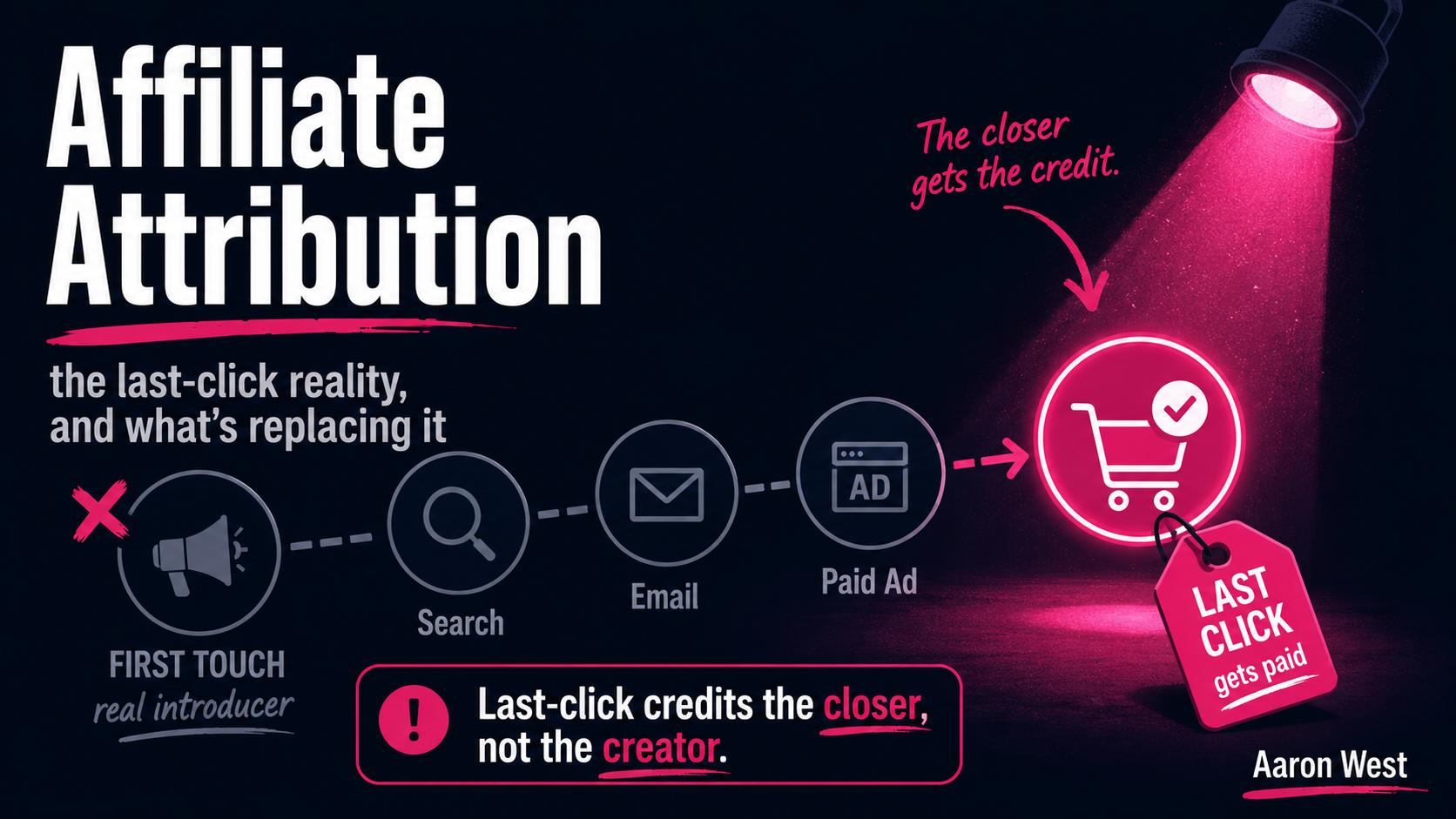
Attribution for Affiliate: The Last-Click Reality and What's Replacing It
Affiliate attribution is the rule that decides which affiliate, and which touchpoint, gets credit for a sale, and for most of the channel's history that rule has been brutally simple: last click wins. Whoever set the last click before purchase takes 100% of the credit…
Continue reading...
Affiliate Fraud: The Types, the Detection Methods, and the Controls
Affiliate fraud is any attempt to earn commissions for results that were not genuinely driven, faked clicks, faked leads, or stolen attribution, and because the whole channel pays for results, it has always attracted people who try to fake results. The defining shift in 2026…
Continue reading...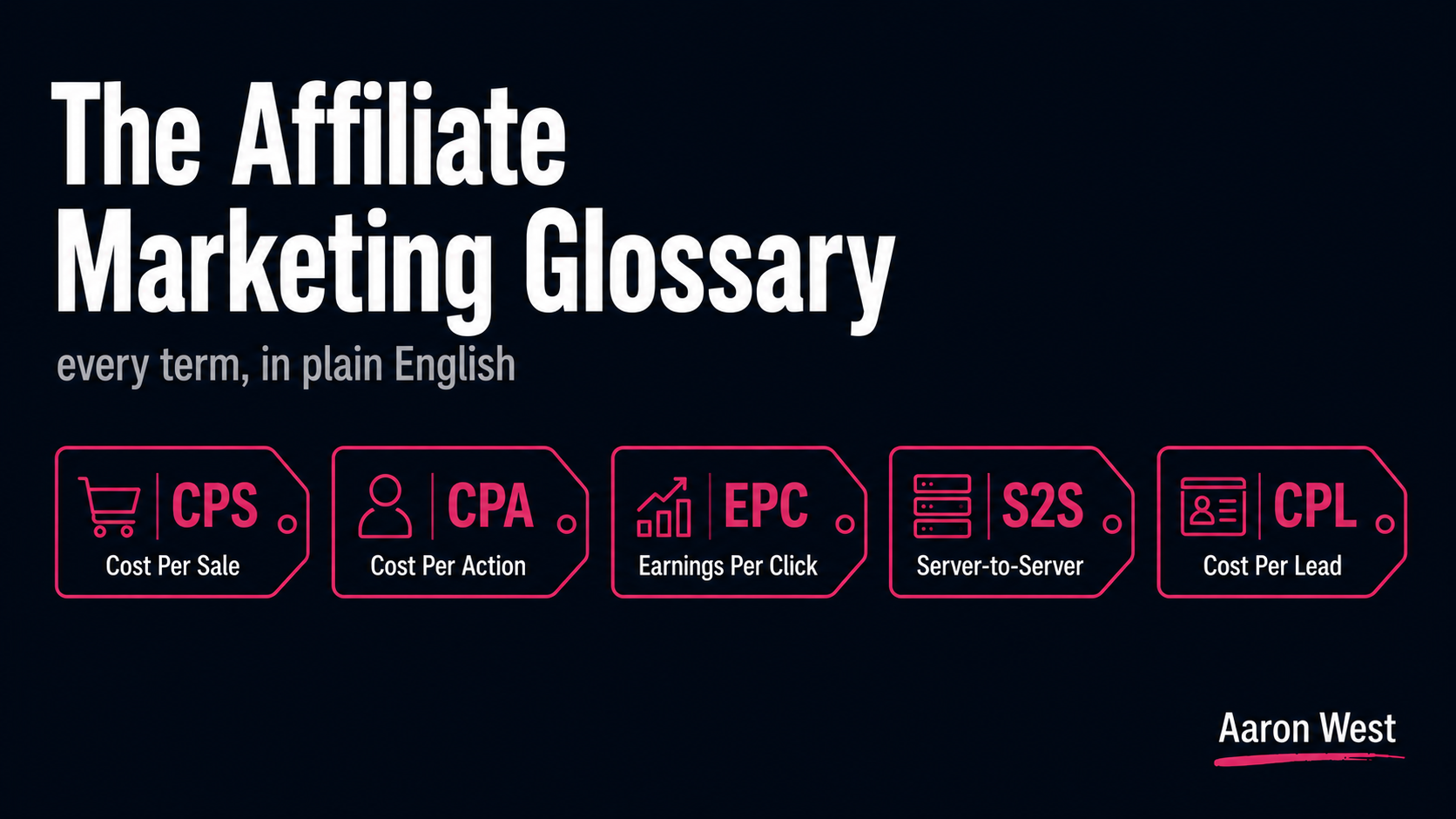
The Affiliate Marketing Glossary: Every Term, in Plain English
Affiliate marketing is full of acronyms and jargon, CPS, EPC, S2S, dedup, postback, cookie window, that can make a simple channel sound impenetrable. This glossary defines the terms that actually matter, in plain English, grouped so you can see how they fit together. Each definition…
Continue reading...