Click-and-Collect: The Blur Between Online and Store

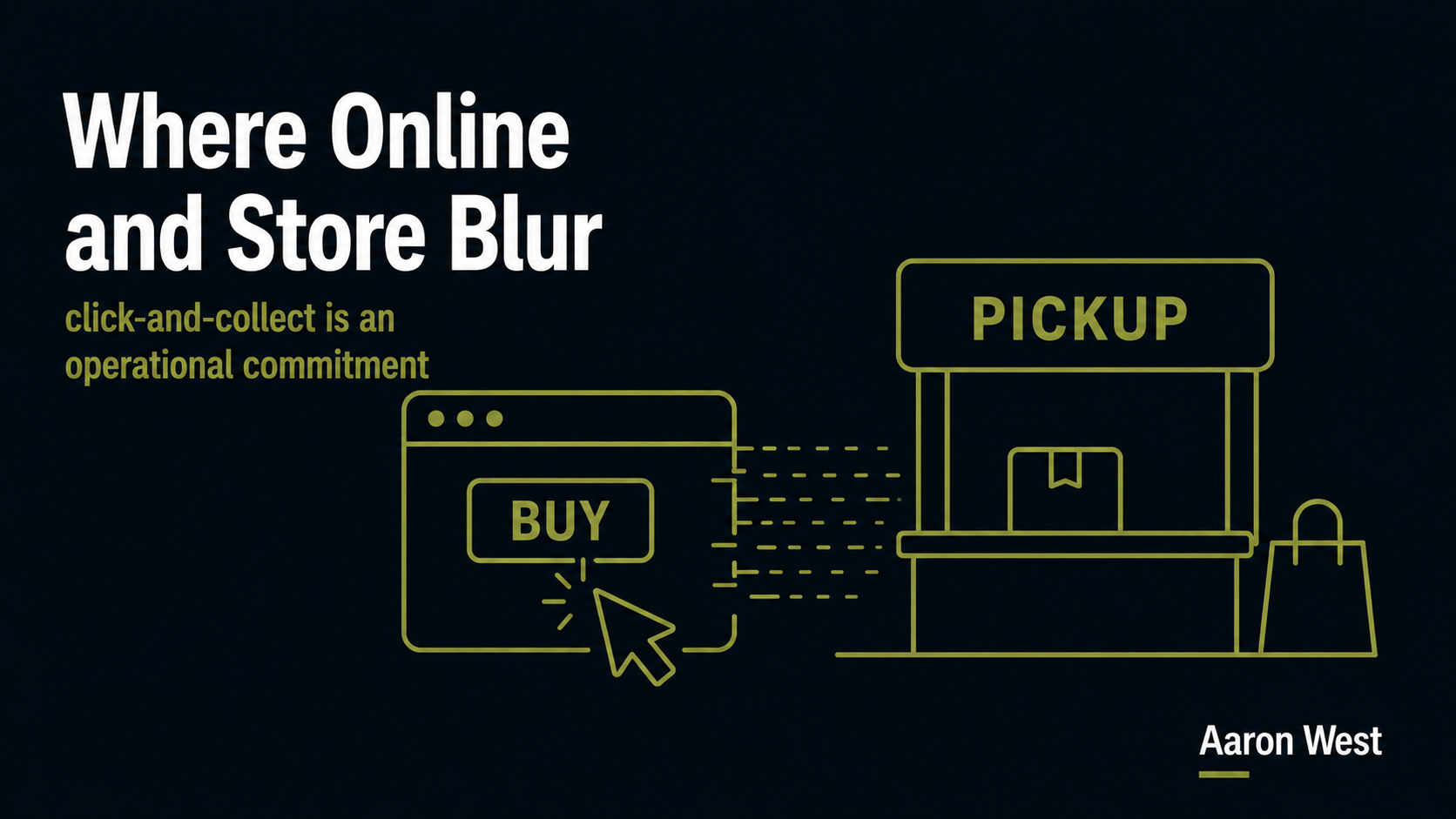
Table of Contents
Click-and-collect, buying online and picking up in a physical location, is where the line between online and store dissolves, and it can be a genuine win for both sides. The customer skips the shipping cost and the wait, and the retailer turns store stock into a fulfilment network and pulls footfall back through the door. But it only works if the operational reality behind it, accurate real-time store inventory and a fast, pleasant pickup, is actually there, because a botched collect is a worse experience than either pure online or pure store.
This closes the Logistics pillar's core, under the cornerstone that fulfilment is a customer-experience decision. Click-and-collect is the fulfilment model where that's most obviously true, because the customer experiences the fulfilment directly, in person, at your counter.
Why it's a win for both sides
The appeal is real on both ends of the transaction, which is rare.
For the customer, it removes the parts of delivery people dislike: no shipping cost, often faster (collect today versus wait several days), no staying home for a delivery window, no missed-parcel redelivery hassle, and immediate possession of the thing they bought. For a lot of purchases, "I'll grab it on the way home" beats "I'll wait three days for a courier."
For the retailer, it does several useful things at once: store stock becomes a fulfilment source, so you ship nothing, you turn the customer's trip to the store into footfall (and footfall means the chance of a cross-sell or an impulse add-on), and your per-order fulfilment cost drops because there's no carrier and no last-mile delivery to pay for. It's one of the few fulfilment moves that can genuinely lower your cost and improve the customer's experience at the same time, when it's done right.
The blur is omnichannel made concrete
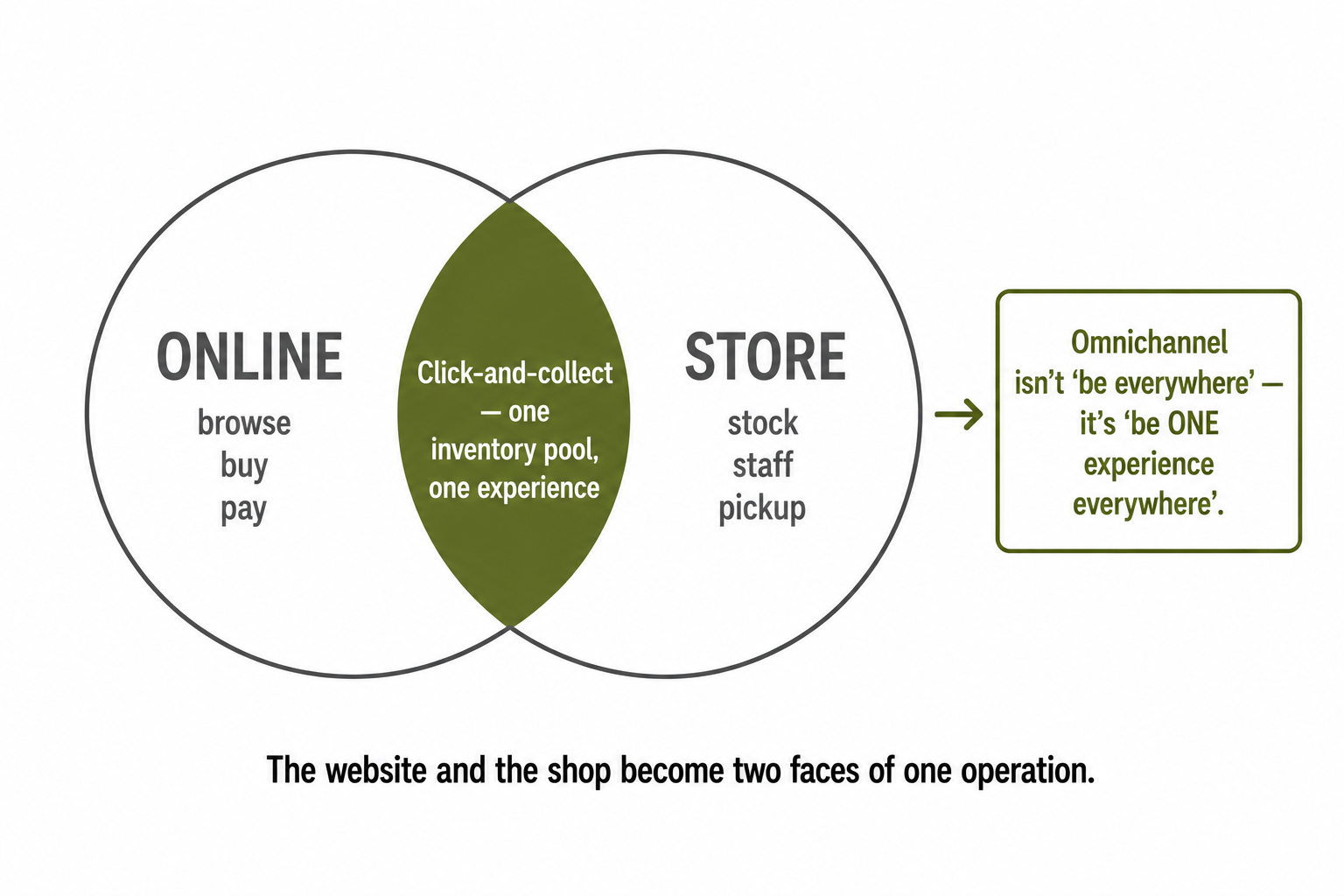
The deeper point is what click-and-collect represents. The customer picking up an online order in your store isn't thinking "I'm using the online channel" or "I'm using the store channel." They're thinking "I'm buying from this brand." Click-and-collect treats inventory and channels as a single pool rather than separate silos, and that's what omnichannel actually means in practice.
This is worth stating clearly, because "omnichannel" is usually misunderstood as "be present on every channel." It isn't. It's "be one experience across every channel", one brand, one inventory pool, one customer relationship, regardless of which surface the customer touches. Click-and-collect is that idea made concrete: the website and the shop stop being two businesses that happen to share a logo and become two faces of one operation. Get that right and the channels reinforce each other; treat them as separate and click-and-collect is the seam where the cracks show.
Where it breaks (and it breaks at the moment of truth)
Everything above is the upside. The reason many retailers do click-and-collect badly is that it makes operational demands most stores aren't set up for, and when those demands aren't met, it fails at the worst possible moment, the customer standing in your store.
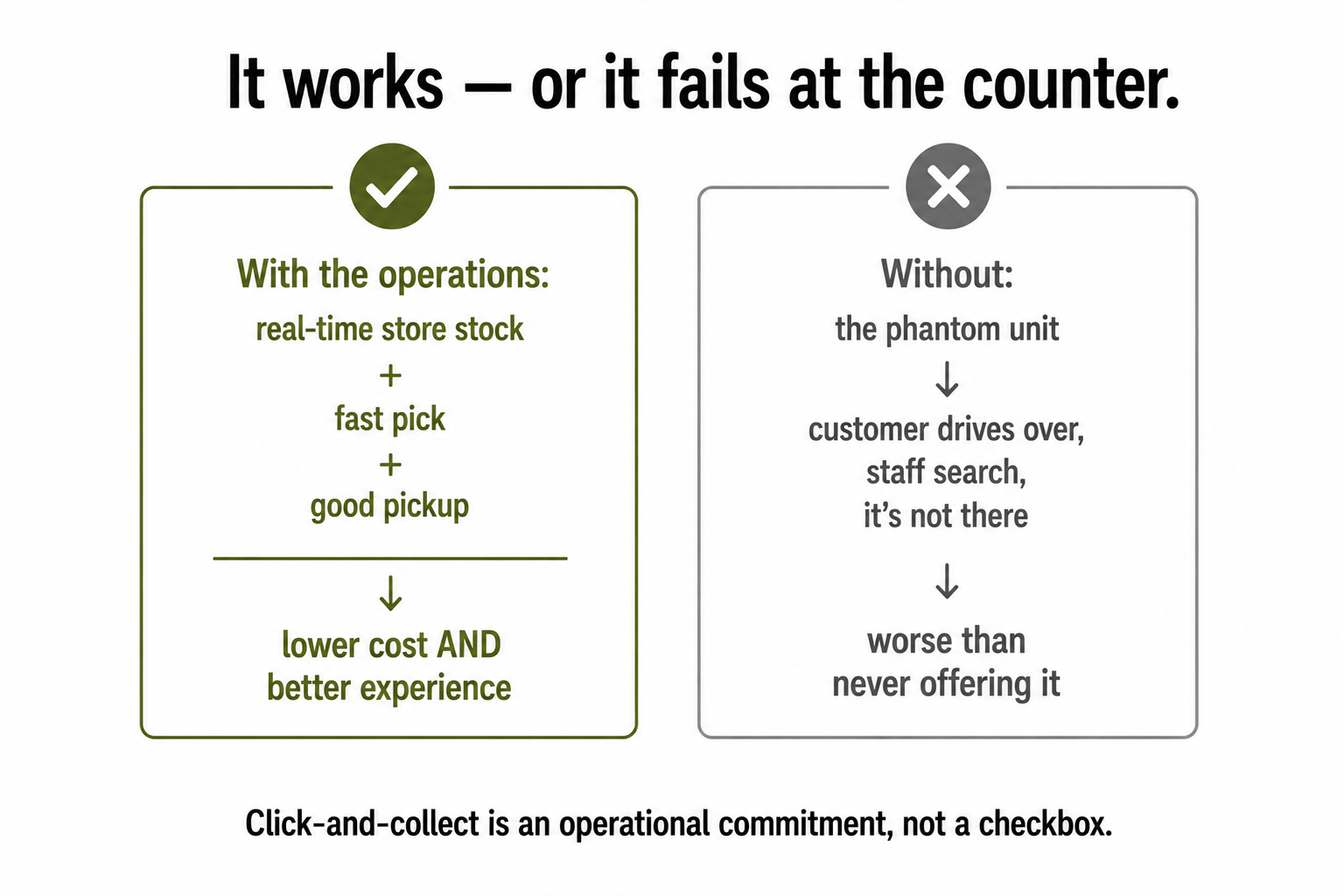
- Accurate, real-time store inventory. This is the hard one. The website has to know what's actually on the shelf of that specific store, right now, not what the warehouse has, not what the chain has somewhere. If you promise a collect and the customer drives over and it isn't there, you've created an experience worse than if you'd never offered the option, the broken promise of the inventory piece made vivid, in person, with a customer who made a trip for nothing.
- Fast in-store fulfilment. Someone has to pick the order quickly and have it ready when promised. A click-and-collect that means queuing for twenty minutes while a staff member hunts for the item is slower than just buying it off the shelf, which defeats the entire point.
- A good pickup experience. The collect moment is the fulfilment experience here, the "how it feels" job the cornerstone named. A clear, quick, dignified pickup builds trust; queuing behind the returns desk for ages destroys it. This is the physical brand moment, and it's easy to under-resource.
Miss any of these and click-and-collect becomes a feature that fails exactly when the customer is most invested, which is worse than not having it at all.
The footfall double-edge, and the returns connection
Two strategic notes to finish.
The footfall the retailer gains is a double-edged opportunity. The cross-sell and impulse-add upside is only real if the in-store experience is set up to capture it, the pickup point placed so customers walk through the store, staff equipped to suggest the add-on. Done lazily, a collection locker right by the entrance, you get the cost-shift (no shipping) without the cross-sell upside, which is leaving the best part on the table. Whether footfall becomes revenue is a deliberate design choice, not an automatic benefit.
And click-and-collect pairs naturally with in-store returns, because the blur runs both ways. The same counter that hands over a collect can take back a return, and an in-store return is often better for the retailer than a posted one, because the customer is physically present, which is a chance to exchange, to cross-sell, to recover the sale rather than just refund it. The same channel-blur that makes collect work makes in-store returns a retention opportunity, the forward and reverse journeys meeting at one counter.
What this comes down to
Click-and-collect erases the line between your website and your shop, which is a real advantage when the inventory is one honest pool and the pickup is fast and pleasant, and a real liability when it isn't. It's sold as a convenience feature, but it's actually an operational commitment: a promise that the thing your website said was in that store actually is, ready, quickly, when the customer arrives.
Keep that promise and you've turned your stores into a fulfilment network customers thank you for, lower cost for you, better experience for them, the rare move that wins on both. Break it, with a phantom unit and a twenty-minute wait, and you've made buying from you harder than just shipping it would have been.
A few common questions
What is click-and-collect and why does it matter? Buying online and picking the order up in a physical location. It matters because it can win for both sides: the customer skips the shipping cost, the wait, and the missed-parcel hassle and gets immediate possession, while the retailer turns store stock into a fulfilment source, pulls footfall (and cross-sell) back into the store, and lowers per-order fulfilment cost. It's one of the few fulfilment moves that can lower cost and improve the experience at the same time, when the operations behind it are right.
How is click-and-collect related to omnichannel? It's omnichannel made concrete. The customer collecting an online order in your store isn't thinking "online channel" or "store channel", they're thinking "this brand", which is the whole point: omnichannel isn't "be present on every channel," it's "be one experience across every channel," one brand, one inventory pool, one relationship. Click-and-collect treats the website and the shop as two faces of one operation rather than two separate businesses.
Why do so many retailers do click-and-collect badly? Because it makes operational demands most stores aren't set up for, and it fails at the worst moment, the customer in the store. It needs accurate real-time inventory for the specific store (promise a collect that isn't actually there and you've created a worse experience than not offering it), fast in-store fulfilment (a twenty-minute wait defeats the point), and a good pickup experience (the physical brand moment). Miss any one and the feature fails exactly when the customer is most invested.
Does click-and-collect actually drive extra sales? It can, through footfall and cross-sell, but only if the in-store experience is designed to capture it, the pickup point placed so customers walk through the store, staff ready to suggest add-ons. Done lazily (a locker by the door), you get the cost saving without the cross-sell upside. It also pairs well with in-store returns, where a physically present customer is a chance to exchange or cross-sell rather than just refund, so the channel-blur is a retention opportunity both ways.
You should also read:
Chargebacks and Payment Fraud: The Defence Most Stores Set Up Too Late
Chargebacks and payment fraud are the risk that turns a "sale" into a loss after you've already shipped the goods, and most stores only build a real defence after the first painful wave has hit. Two very different problems hide under the single word "fraud":…
Continue reading...
Cultural UX: Why the Same Store Converts Differently Across Markets
The same store, identically built and perfectly translated, will convert at different rates in different markets, and the gap usually isn't the product or the price. It's culture: what signals trust, how people expect to shop, pay, and be spoken to, and what feels normal…
Continue reading...
Upsell, Cross-Sell, Down-Sell: The Three Moves Most Stores Get Wrong
Raising the average order value, getting each customer who already chose to buy to spend a little more, is usually the fastest and cheapest way to grow an e-commerce business. You are not paying to acquire anyone or convince anyone, you are making more of…
Continue reading...