B2B Account Management: In B2B the First Order Is the Start, Not the Win

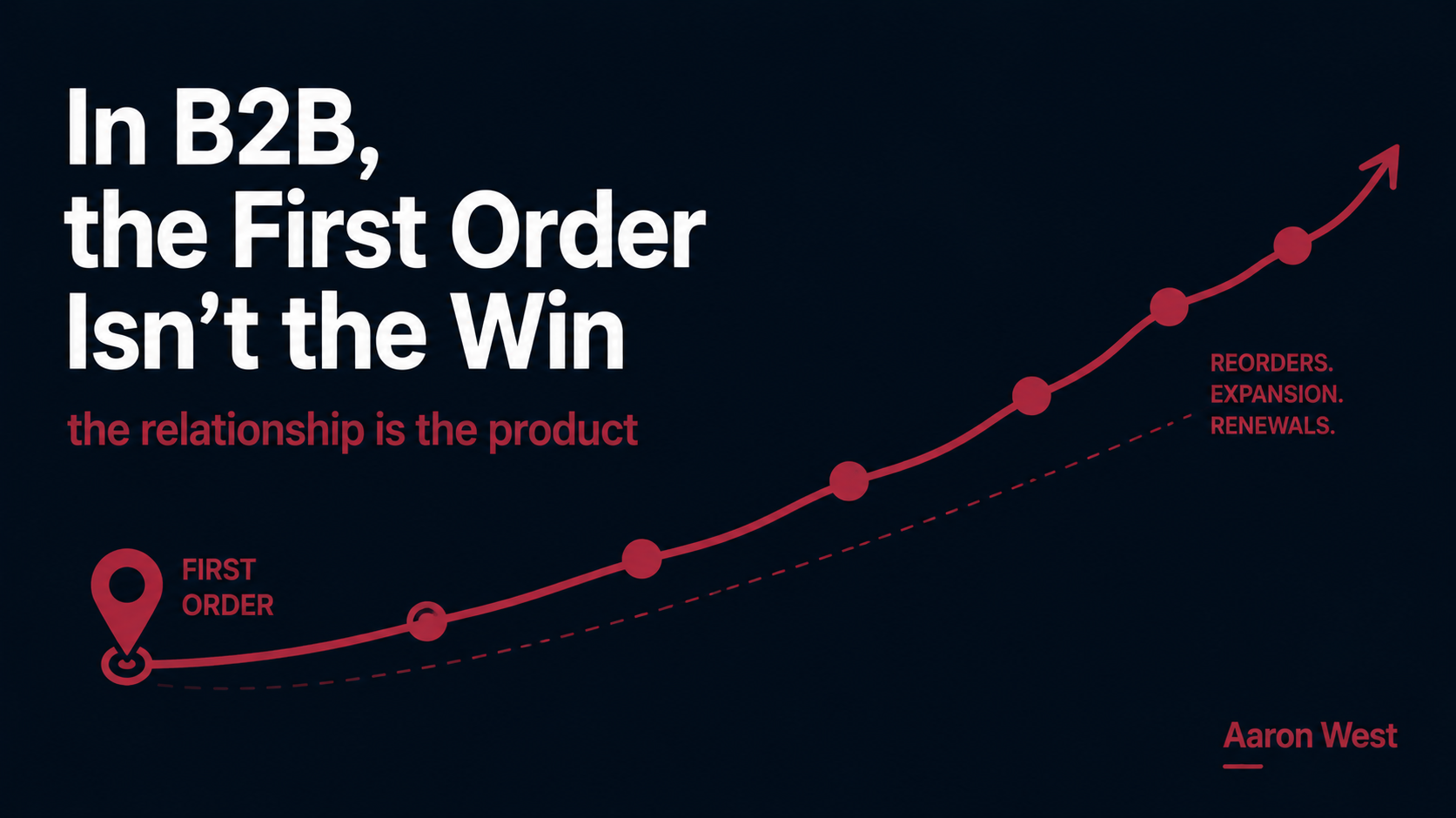
Table of Contents
In B2B, winning the first order is the start of the relationship, not the end of the sale. The real value sits in the years of reorders, expansions, and renewals that follow, which means the post-sale experience, account management, reordering, support, and the human relationship behind it all, matters more than the acquisition that everyone obsesses over. The B2B store's job after that first order is to make the ongoing relationship effortless, and to support, not replace, the people who manage it.
This closes out the B2B E-Commerce cluster, and it's the part most stores under-build, because all the energy goes into landing the order. B2C optimises hard for the first conversion, and for good reason. But in B2B, the first order is small change next to the lifetime of the account, and treating it as the finish line leaves most of the money on the table.
The value is in the relationship, not the transaction
Go back to the cornerstone's last point: in B2B, the relationship outlasts the transaction. That isn't a sentiment, it's an economic fact. A B2B account that reorders for years is worth a multiple of its first order, sometimes a large one, and the lifetime value of the relationship is what justifies the cost of winning it in the first place.
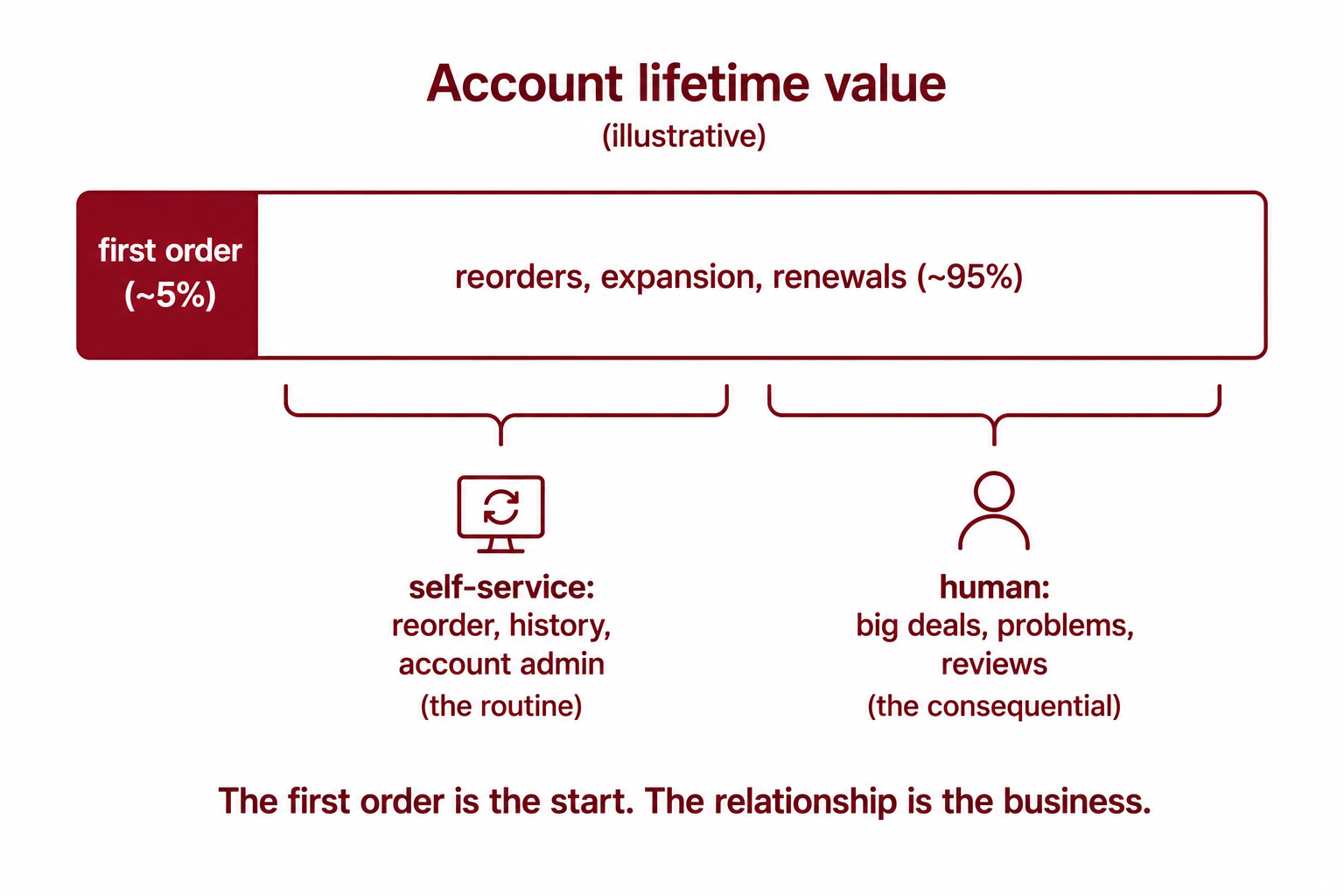
That reframes everything about where you spend effort. If the first order is 5% of an account's lifetime value and the reorders are the other 95%, then a store and a team that pour themselves into acquisition and neglect the post-sale experience are optimising for the small number. The win isn't the first order. The win is the second, the twentieth, and the renewal.
What account management actually is
Account management is the ongoing work of keeping an account buying, growing, and satisfied. In B2B it has two halves that have to work together: the human side, a rep or account manager who knows the account, handles the consequential moments, and owns the relationship; and the digital side, the self-service tools that let the account run its own routine without needing a phone call.
The mistake at each extreme is instructive. Pure human account management doesn't scale and buries everyone in routine admin. Pure self-service with no human strips out the relationship that B2B actually runs on, and an account that feels like a faceless login churns the moment a competitor offers a human who picks up the phone. Good B2B account management is the two halves doing what each is best at.
The self-service account portal
This is where the store earns its keep after the sale. The unglamorous account-portal features are, in B2B, some of the highest-leverage things you can build: order history, fast reordering, saved lists and standing orders, multiple users with their own logins, access to invoices and statements, and self-service returns. None of it is exciting. All of it makes an account sticky.
Think about what a regular B2B customer actually wants: to reorder the usual quickly, to check what they ordered last quarter, to add a colleague who can place orders too, to pull an invoice without emailing anyone. A store that makes those things effortless removes a dozen tiny frictions that would otherwise be reasons to look elsewhere, or reasons to tie up a salesperson with admin. The reorder experience in particular deserves more design attention than the first-purchase flow and almost always gets less, even though, as the buying-process piece argued, the reorders are where the money is.
Expansion: the growth that doesn't need new logos
The cheapest growth in B2B isn't a new customer. It's selling more to the accounts you already have, more products, more volume, more of their sites or departments buying from you. Winning a new account is expensive and slow; growing an existing one is neither, because the relationship, the credit terms, and the trust already exist.
The data you hold on an account, what they buy, how often, what they don't buy that similar accounts do, is the honest basis for expansion. That's genuinely useful cross-selling: "you buy X regularly, accounts like you also rely on Y," not the spammy upsell of consumer retail. Done from real account knowledge, expansion feels like service, not selling. The store surfaces the patterns; the account manager has the conversation. This is also where the human and digital halves pay off together: the system spots the opportunity, the person makes it land.
B2B churn is quiet, and that's what makes it expensive
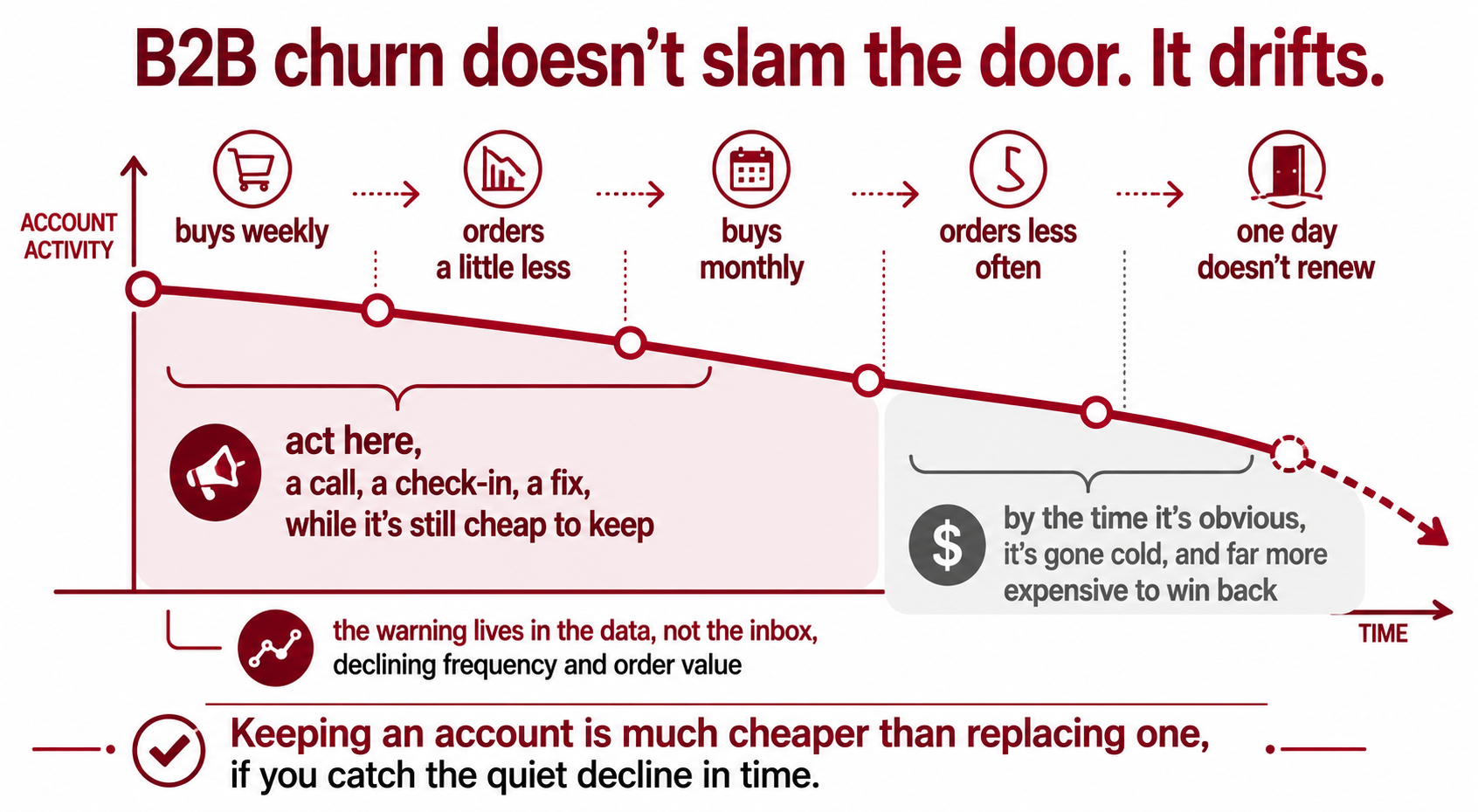
Here's the part that catches teams out. A B2B account rarely rage-quits. It doesn't fire off an angry email and close its account. It just, quietly, orders a little less, then less often, then one day doesn't renew. By the time anyone notices, the relationship has already gone cold, and winning it back costs far more than keeping it would have.
Which means the signals of B2B churn live in the data, not the inbox: declining order frequency, falling order value, a site that used to buy weekly and now buys monthly. Watching those retention signals and acting on them early, a call, a check-in, a fix, is B2B retention. The store that surfaces a quietly-declining account to its account manager while there's still time to act is doing the single most valuable thing a B2B system can do, because keeping an account is so much cheaper than replacing one. This is the support-as-retention logic applied to the whole relationship: the routine runs itself, and the humans spend their attention where it changes an outcome.
What this comes down to
In B2B you don't win when the customer buys. You win when they keep buying, buy more, and renew. The first order just earns you the right to the relationship, and the relationship is where the business actually is.
So build the store, and the team, for the relationship rather than the conquest: make reordering and account admin effortless, use what you know to help accounts grow, keep the humans on the moments that matter, and watch the quiet signals that an account is drifting before it's gone. The acquisition gets all the attention. The retention gets all the profit. In B2B, the relationship is the product.
A few common questions
Why does account management matter more in B2B than B2C? Because B2B value lives in the relationship, not the first transaction. An account that reorders for years is worth a large multiple of its first order, so the post-sale experience, reordering, support, expansion, the human relationship, drives most of the lifetime value. Teams that pour effort into acquisition and neglect the post-sale experience are optimising for the small number; the win is the second order and the renewal, not the first sale.
What should a B2B account portal include? The unglamorous, high-leverage features: order history, fast reordering, saved lists and standing orders, multiple users per account with their own logins, access to invoices and statements, and self-service returns. None of it is exciting, but all of it makes an account sticky by removing the small frictions that would otherwise be reasons to look elsewhere or to tie up a salesperson with admin. The reorder flow deserves more design attention than the first-purchase flow and usually gets less.
How do you grow a B2B account? Sell more to accounts you already have, more products, more volume, more of their sites or departments, because growing an existing relationship is cheaper and faster than winning a new one. Use the data you hold (what they buy, how often, what similar accounts buy that they don't) as the honest basis for expansion: useful cross-selling from real account knowledge, not spammy upsell. The system surfaces the pattern; the account manager has the conversation.
How do you spot B2B churn before it happens? Watch the data, because B2B accounts rarely rage-quit, they drift. The signals are declining order frequency, falling order value, an account that used to buy weekly and now buys monthly. By the time it doesn't renew, it's already gone cold and far more expensive to win back. A store that surfaces a quietly-declining account to its account manager while there's still time to act is doing the most valuable thing a B2B system can do, because keeping an account is much cheaper than replacing one.
You should also read:
B2B E-Commerce Is Not B2C With Bigger Orders
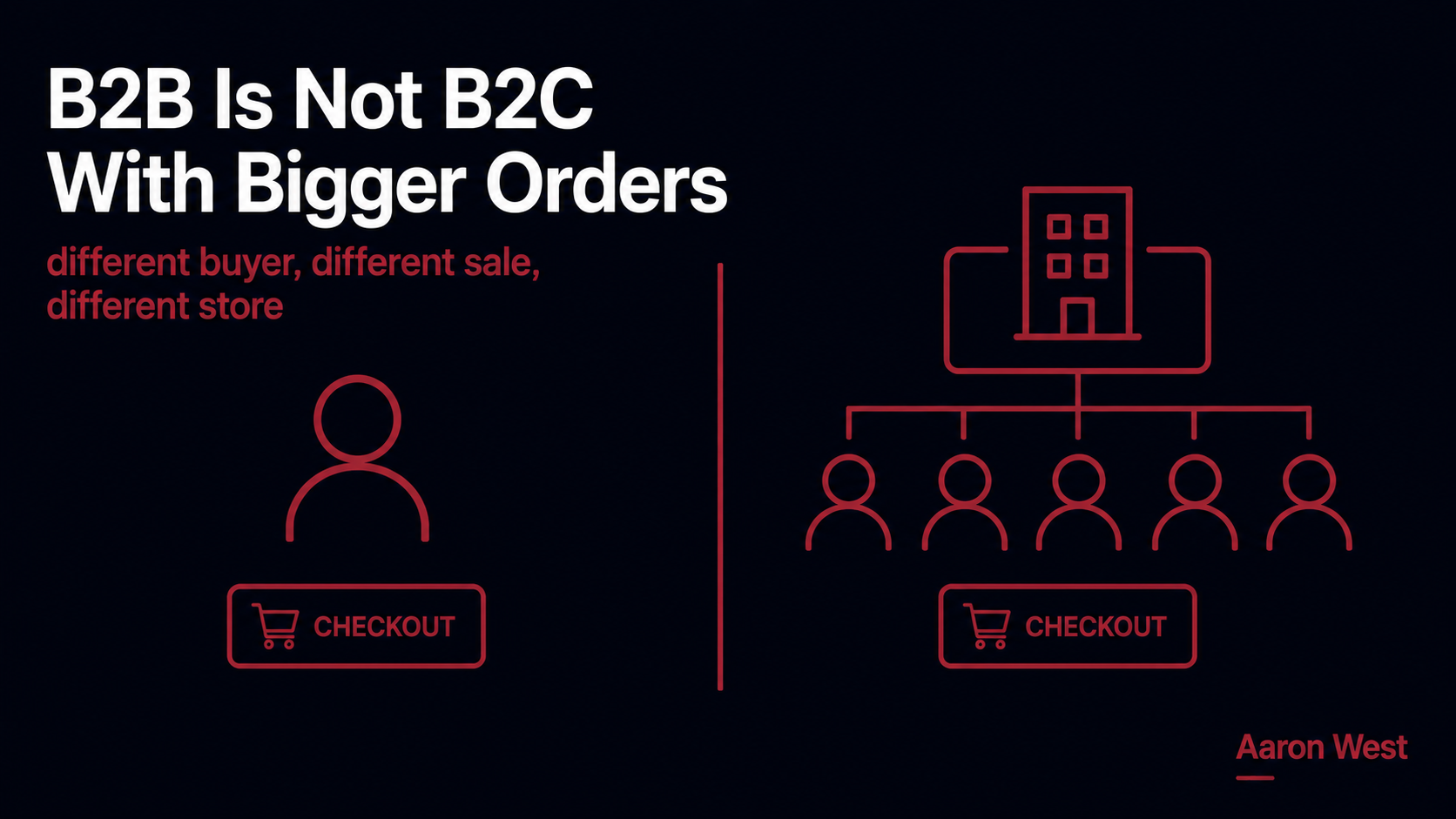
B2B e-commerce is selling to other businesses through an online channel, and the single most expensive mistake is treating it as B2C with bigger order values. The buyer is a professional spending someone else's money, the purchase usually involves several people and an approval chain,…
Continue reading...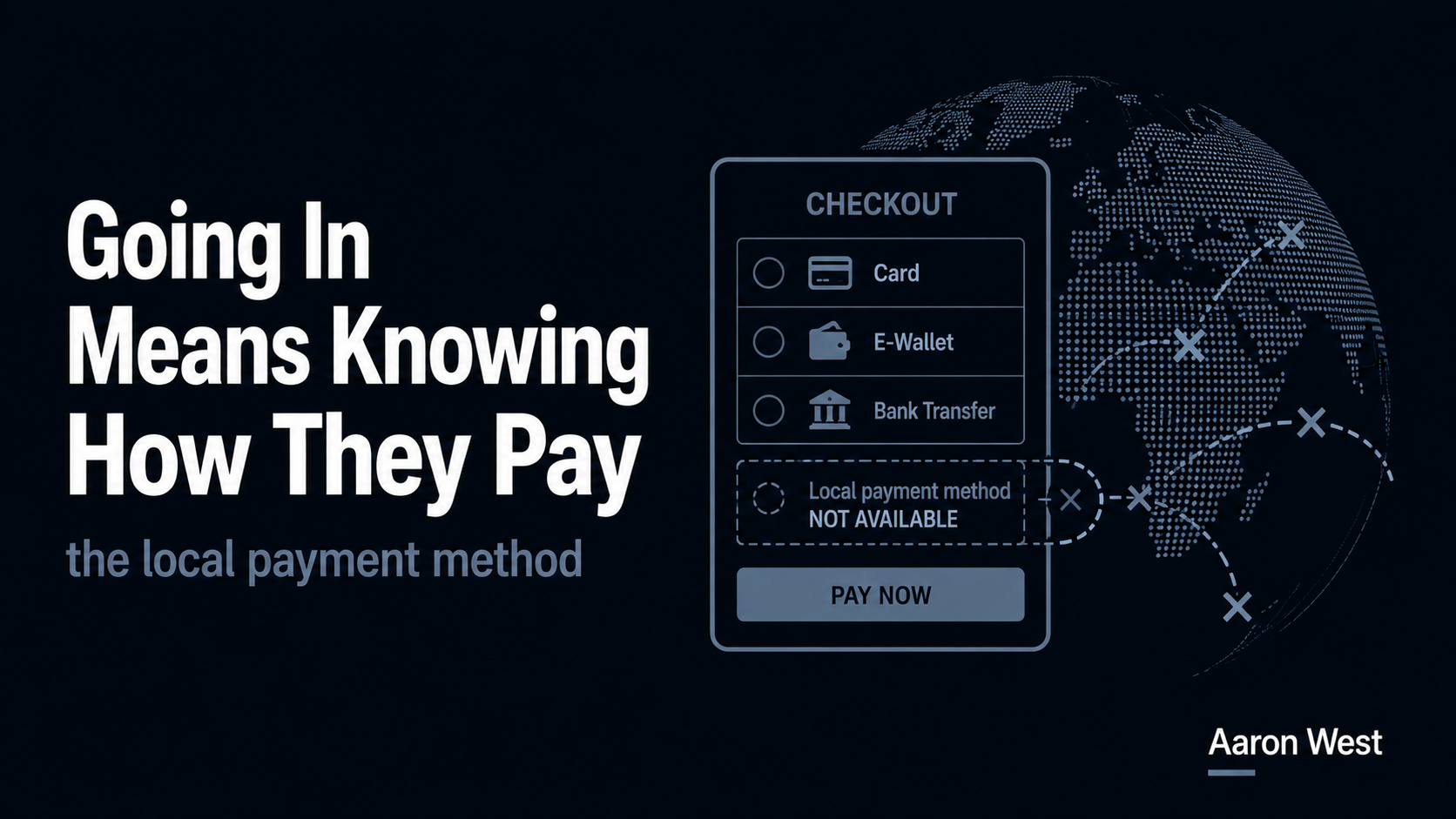
Local Payment Methods: The Cross-Border Detail That Kills Conversion
When you sell into a new country, the fastest way to kill your conversion there isn't getting the language slightly wrong. It's failing to offer the local payment method that customers in that market trust and expect. Every market has its own dominant ways to…
Continue reading...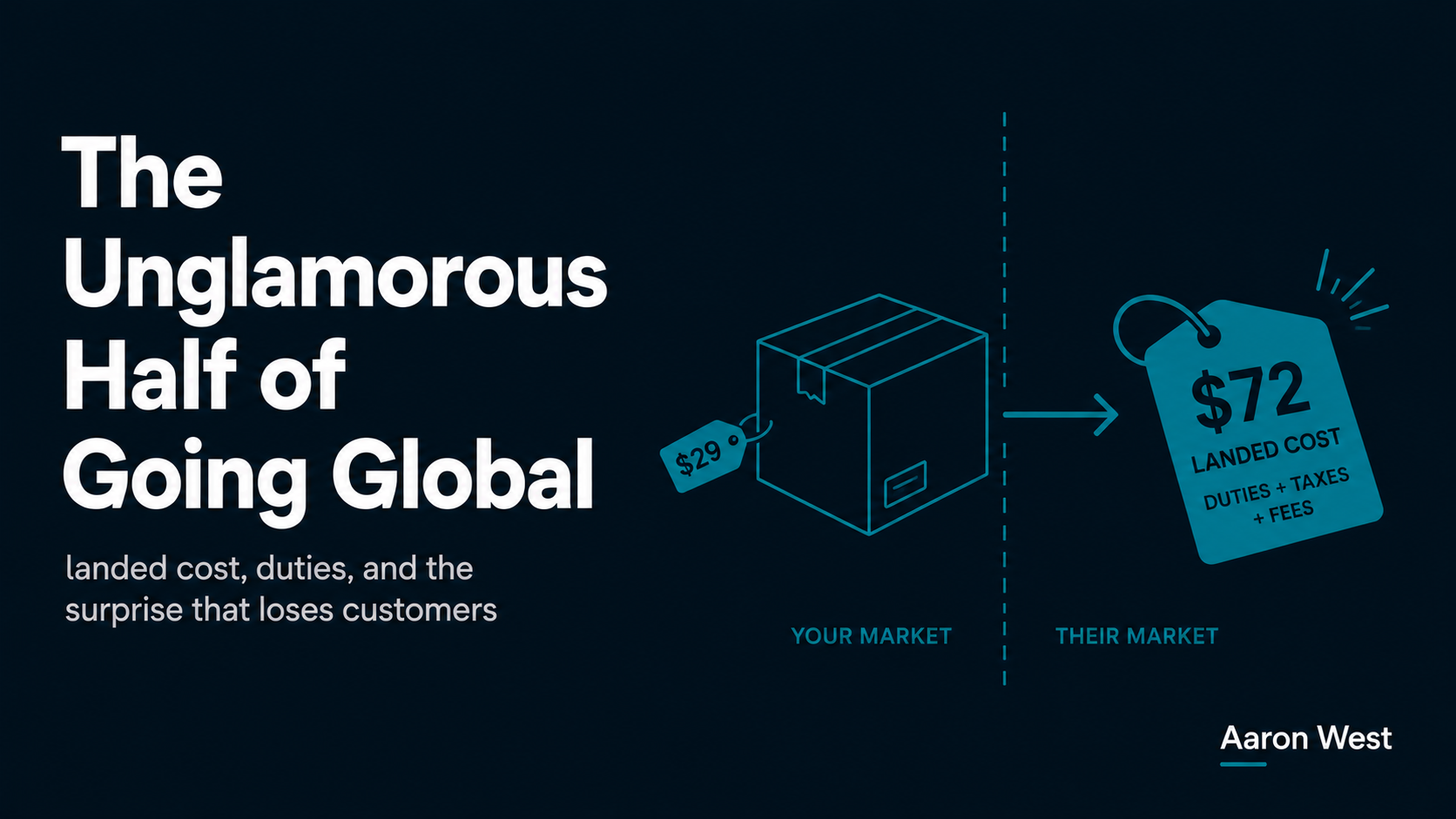
Cross-Border Logistics, Tax and Duties: The Unglamorous Half That Decides the Economics
Cross-border logistics, tax, and duties are the part of going international that turns a clean plan into a real operation, and the place where "we'll figure it out" quietly becomes "we lose money on every order." It's the least exciting dimension of expanding abroad and…
Continue reading...