Customer Lifetime Value: The Number Most Teams Calculate Wrong


Table of Contents
Customer lifetime value (CLV, or LTV) is the total profit a customer generates over the whole relationship, not the revenue from one order. Most teams get it wrong in the same three ways: they use revenue instead of margin, they ignore churn, and they treat a hopeful projection as a fact. Calculated honestly, it's the single most clarifying number in e-commerce. Calculated the usual way, it's a flattering fiction.
This is a reference piece in the E-Commerce Foundations cluster. CLV matters because it quietly sets the ceiling on almost every growth decision you make, so getting it wrong is expensive in a very direct way.
What CLV actually is
Strip it back: customer lifetime value is the profit you expect to earn from a customer across the entire time they stay a customer. Not one order. Not revenue. Profit, over the lifetime.
The simplest honest version multiplies three things: how much profit you make per order, how often the customer orders, and how long they keep ordering before they drift away. A customer who brings €40 of margin per order, four times a year, for three years, is worth roughly €480 in lifetime value. That's the number. Everything that goes wrong with CLV goes wrong in how people fill in those three inputs.
The three ways teams get it wrong
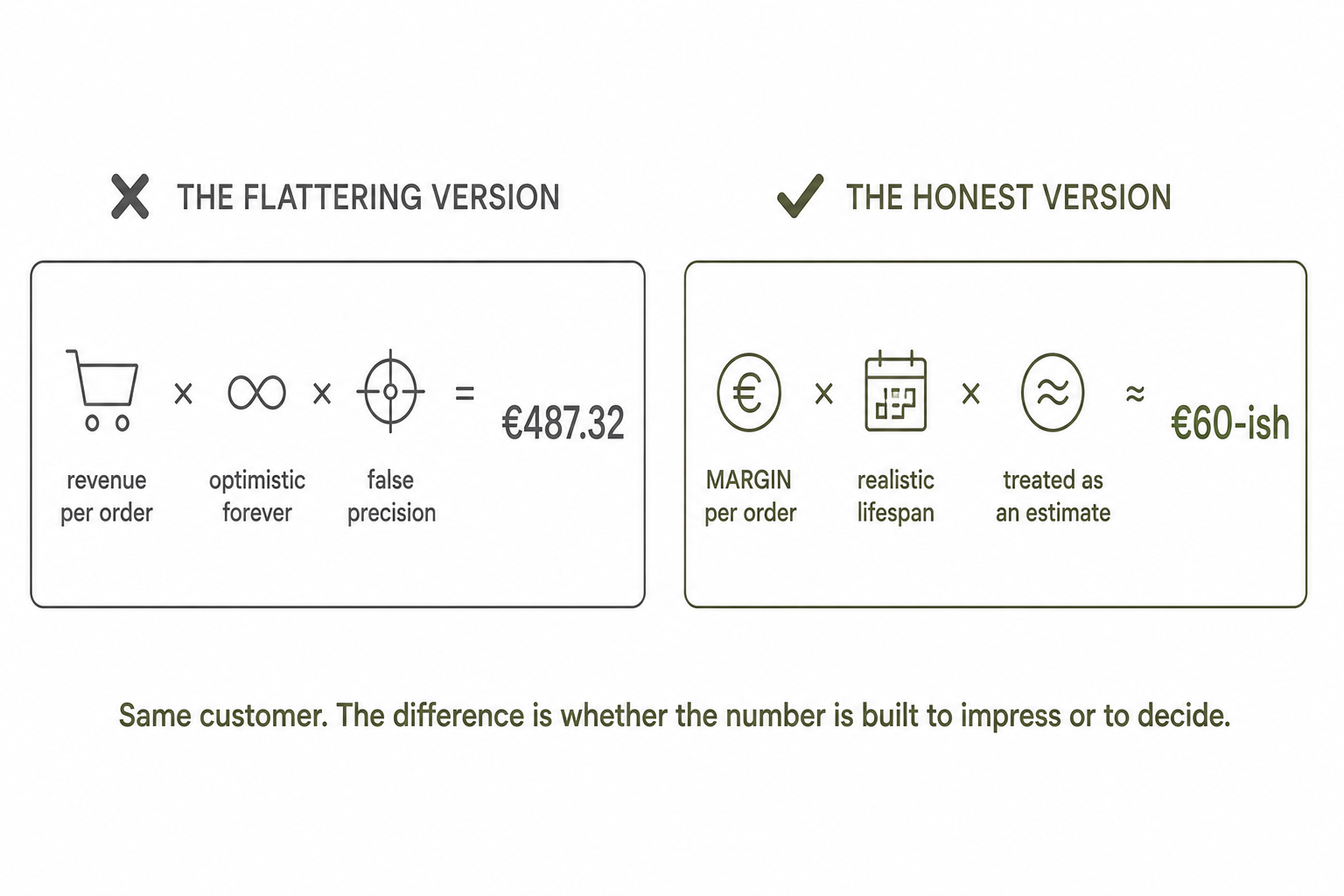
1. Revenue instead of margin. This is the big one. Teams calculate CLV on the top line, the total a customer spends, not what's left after the cost of goods, shipping, returns, and payment fees. A customer worth €500 in revenue might be worth €60 in actual margin once you subtract everything that order cost you to fulfil. Build your decisions on the €500 and you'll behave as if each customer is eight times more valuable than they are.
2. Ignoring churn, or assuming "forever." CLV depends entirely on how long a customer stays, and that's exactly the input people are most optimistic about. Assume customers stick around for five years when the data says most leave within one, and your CLV balloons on a foundation of wishful thinking. Customers churn; a CLV that doesn't account for how fast is just a fantasy with a decimal point.
3. Treating the projection as a fact. CLV is a forward estimate built on assumptions about future behaviour. It is not a measured, banked number. Dress it up with false precision, "our CLV is €487.32," and you'll start trusting it far more than a number built on guesses about the future deserves. The decimal places are theatre. It's a directional estimate, and the moment you forget that, it starts making decisions for you that it isn't reliable enough to make.
Why it matters: CLV sets the ceiling on acquisition
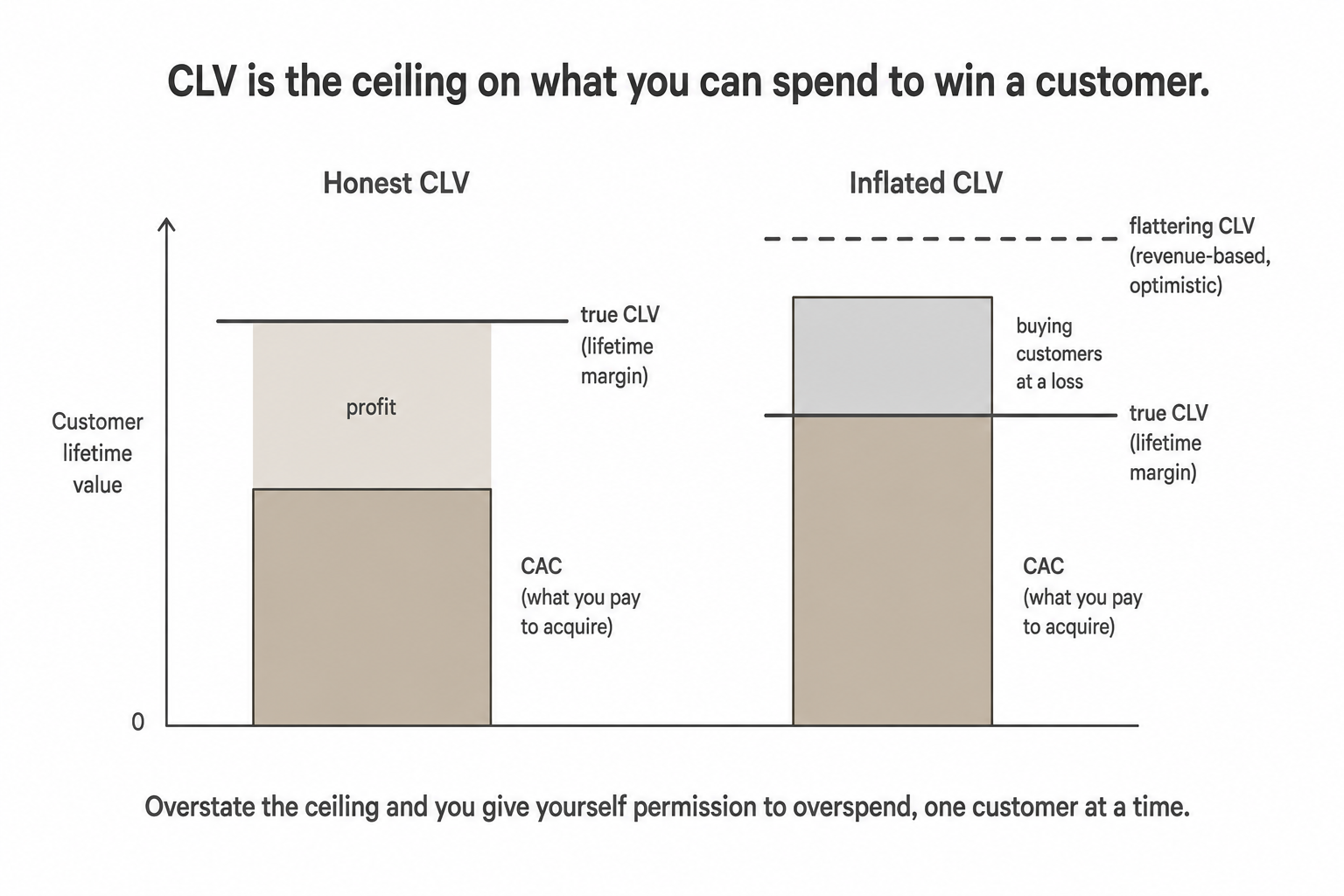
Here's why this isn't an academic exercise. CLV is the number that tells you how much you can afford to spend to acquire a customer. If a customer is worth €480 in lifetime margin, you can spend a healthy chunk of that to win them and still come out ahead. If they're actually worth €60, the same acquisition spend buys you customers at a loss, one at a time, thousands of times over.
So an overstated CLV doesn't just sit harmlessly in a spreadsheet. It gives you permission to overspend on paid acquisition, affiliate commissions, and discounts, because the flattering number says you can afford it. The CAC-to-CLV relationship (what you pay to acquire versus what they're worth) is one of the most important ratios in the business, and it's only as trustworthy as the CLV underneath it. Get CLV wrong and every acquisition decision downstream inherits the error.
The simple honest version
The fix isn't a more sophisticated model. It's a more honest one. A rough, conservative, margin-based CLV you actually trust beats a precise, revenue-based one you don't. Use margin not revenue. Be conservative about how long customers really stay. And treat the output as a directional estimate, not a fact.
When I ran small businesses years ago, long before any of this had an acronym, the only number that ever mattered was what was left after everything it cost me to make a sale, added up over how long a customer kept coming back. That's CLV in miniature, and the discipline is identical at any scale: count the profit, not the turnover, and don't flatter the lifespan.
The averaging trap, again
Like conversion rate, a single blended CLV hides more than it shows. Customers from different channels and cohorts have wildly different lifetime values, a customer who found you through a discount-hunting coupon site is often worth a fraction of one who came through word of mouth. Average them together and you get a number that's true of no one, which then misleads exactly the decision CLV exists to inform: how much to spend acquiring each kind of customer. Segment CLV by channel and cohort, or it'll quietly tell you to overpay for your worst customers and underinvest in your best.
What this comes down to
CLV calculated to impress is a story. CLV calculated to decide is a tool. The difference is entirely in the inputs: margin instead of revenue, a realistic lifespan instead of a hopeful one, and the humility to treat the result as an estimate rather than a fact with decimal places.
Get it honest and it becomes the most clarifying number you have, the one that tells you, plainly, how much you're allowed to spend to grow. Get it flattering and it becomes the most expensive number you have, quietly licensing you to buy customers at a loss while the spreadsheet says you're winning.
A few common questions
What is customer lifetime value, simply? The total profit you expect a customer to generate over the entire time they stay a customer, not the revenue from one order. The simplest honest version multiplies profit per order, how often they order, and how long they keep ordering. A customer bringing €40 of margin four times a year for three years is worth roughly €480. The word that matters is profit, over the lifetime, not revenue from a single sale.
Why do most teams calculate CLV wrong? Three common ways. They use revenue instead of margin, so a customer worth €500 in spend but €60 in actual profit looks eight times more valuable than they are. They assume customers stay far longer than the data supports, ballooning the number on wishful thinking. And they treat a forward projection built on assumptions as a measured fact, complete with false-precision decimal places. Each error inflates CLV, and inflated CLV licenses overspending.
Why does CLV matter so much? Because it sets the ceiling on what you can afford to spend to acquire a customer. If they're worth €480 in lifetime margin, you can invest to win them and still profit; if they're really worth €60, the same spend buys customers at a loss, repeatedly. The CAC-to-CLV ratio is one of the most important numbers in the business, and it's only as reliable as the CLV underneath it, so an overstated CLV corrupts every acquisition decision downstream.
How should I calculate CLV honestly? Use margin, not revenue. Be conservative about how long customers actually stay rather than assuming they last forever. Treat the result as a directional estimate, not a fact, the decimal places are theatre. And segment it by channel and cohort, because a blended average hides that some customers are worth a fraction of others and will mislead you into overpaying for your worst acquisition sources. A rough, conservative, margin-based number you trust beats a precise revenue-based one you don't.
You should also read:

What Is Headless Commerce, and Why It's Oversold for Most Stores
Headless commerce means splitting your store's front end (what the customer sees) from its back end (the engine that handles products, carts, and orders), so the two talk through an API instead of being one bundled system. It buys real flexibility. And for most stores,…
Continue reading...
Unit Economics: The Only Numbers That Decide Whether You Have a Business
Unit economics is the profit or loss on a single sale after every cost that sale actually causes, and it's the only thing that decides whether growth makes you richer or just busier. If you lose money on one order, you lose more money on…
Continue reading...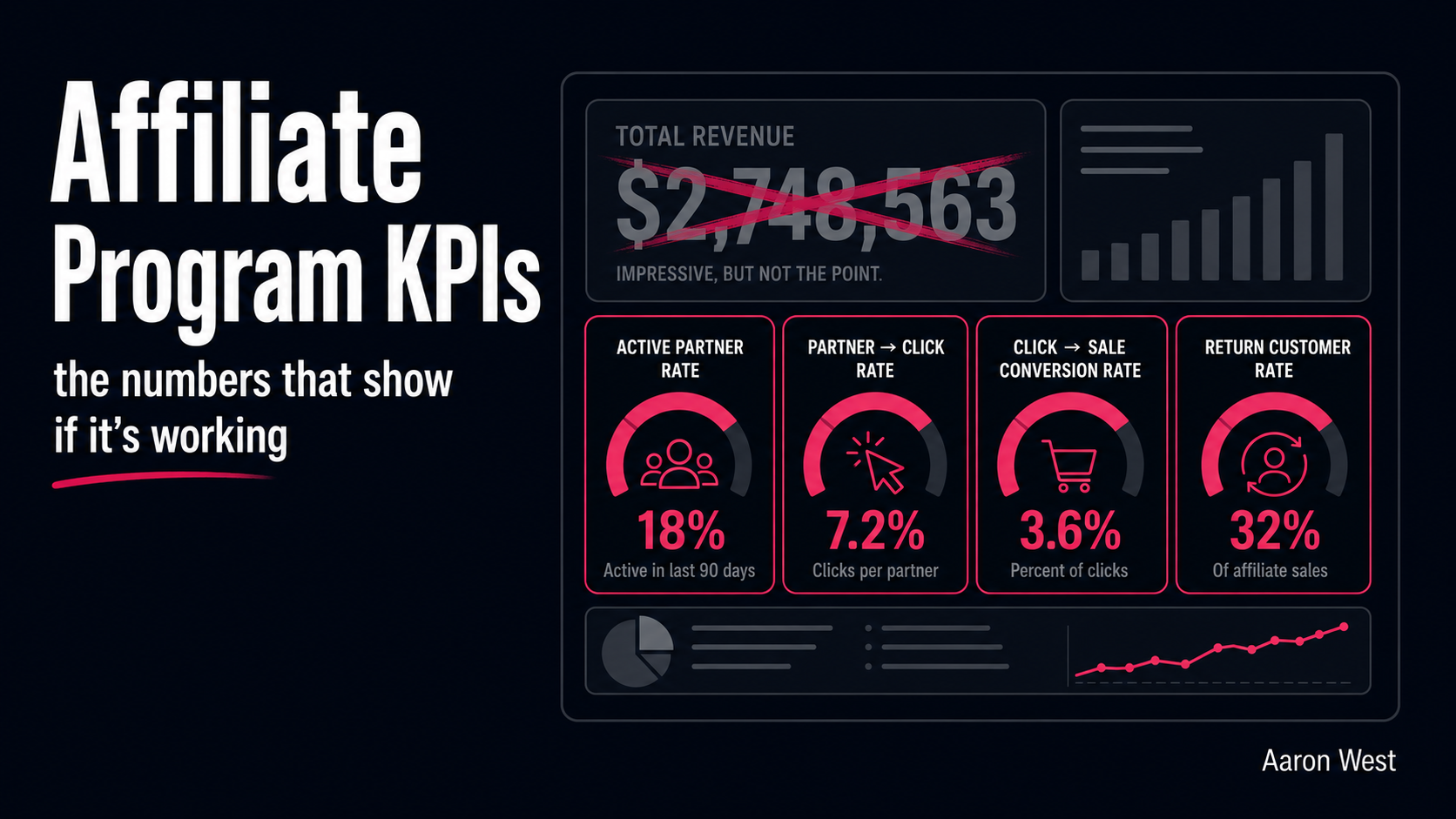
Affiliate Program KPIs: The Numbers That Show If It's Actually Working
Most affiliate dashboards proudly display the numbers that mean the least. Total affiliates, total clicks, total revenue: big, reassuring, and almost useless for deciding what to do next. The numbers that actually tell you whether your programme is working, and what to fix, are quieter…
Continue reading...