Returns Are an Environmental Problem, Not Just a Cost

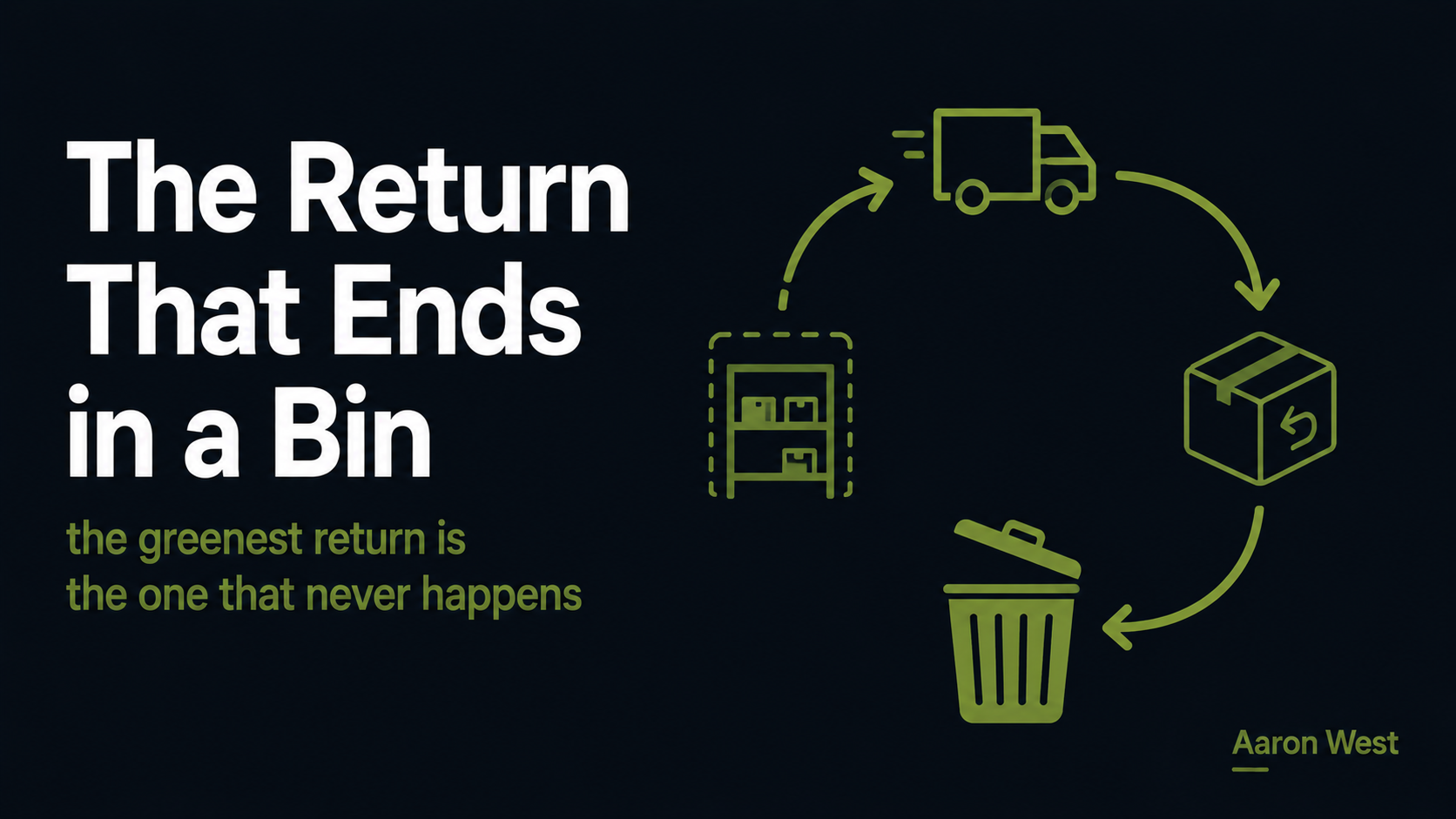
Returns are usually counted as a financial cost, but they're also one of the biggest hidden environmental impacts in e-commerce: the wasted outbound journey, the return journey, and the uncomfortable reality that a meaningful share of returned goods are never resold, they're discarded because re-processing costs more than they're worth. Reducing returns is the same lever for both problems, the biggest cost saving and one of the biggest sustainability wins at once.
This is a core of the Sustainability & Ethical E-Commerce pillar, under the cornerstone on what actually matters versus what's just marketing. It's the cornerstone's green-equals-lean thesis in its sharpest form: the thing that costs you the most money is also one of the things that costs the planet the most.
The hidden environmental cost
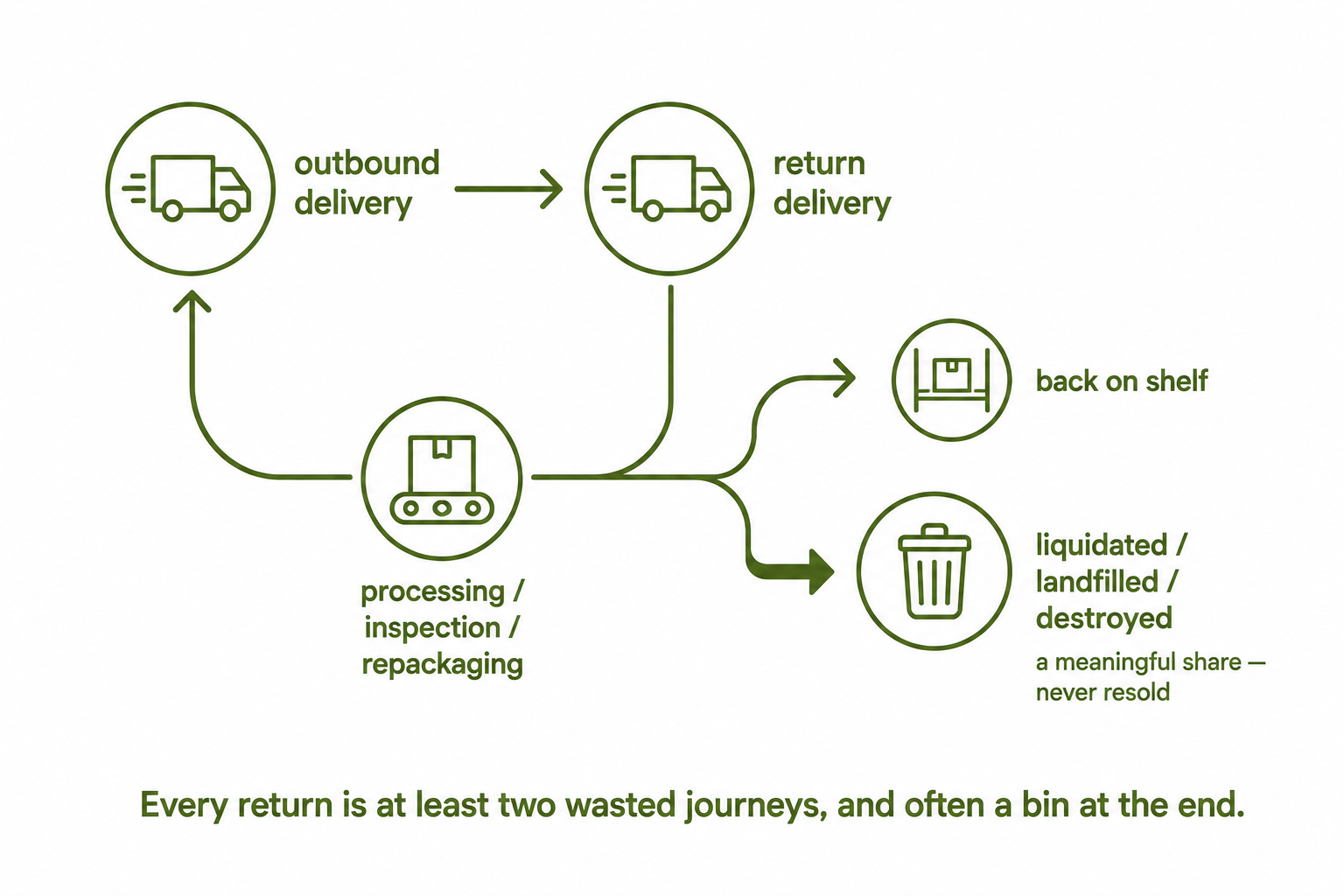
Everyone treats returns as a money problem, and they are one, returns are genuinely expensive to process. But each return is also an environmental event, and that side of it stays almost invisible in the sustainability conversation. A return means an outbound delivery that's now been wasted, a return delivery back, the processing and inspection, the repackaging, and, often, disposal.
Add that up across a high return rate and the carbon and material waste of returns dwarfs the tree-planting badge the same store is probably advertising. It's a large, growing impact, return rates have climbed as online shopping normalised, and it sits almost entirely outside the marketed version of sustainability, because nobody wants to put "we generate a lot of return freight" on a badge.
The double hit, and the part nobody advertises
A return isn't one wasted journey, it's at least two, the outbound trip that didn't stick and the return trip back, plus the processing at the end. That alone makes returns environmentally heavy. But there's a part brands very much don't advertise.
A meaningful share of returned goods never get resold. Re-inspecting, cleaning, repackaging, and restocking a returned item can cost more than the item is worth, so instead of going back on the shelf, returned goods are liquidated in bulk, sent to landfill, or destroyed. The "free, easy returns" the customer happily uses often end with the product in a bin, never reaching another buyer. That's the real environmental cost of the frictionless-returns era, and it's hidden almost by design, because it sits at the unglamorous back end of the operation where no customer ever looks.
Reducing returns is green and cheap, the same lever
This is the cornerstone's green-equals-lean point in its purest form. Returns are simultaneously a top financial cost and a top environmental impact, which means cutting them wins on both at once. There's no trade-off to manage here, no "greener but pricier." Reducing returns is pure upside on both axes.
That makes return reduction arguably the single highest-leverage sustainability move most stores have available, and the happy part is that they're already strongly motivated to do it for the money. You don't have to sell anyone on the environmental case; the financial case already has their attention. The environmental win comes along for free, riding on a project the business wanted to do anyway. Which is exactly the kind of sustainability the cornerstone argued for: real, operational, and self-funding.
The right way to cut returns, and the wrong way
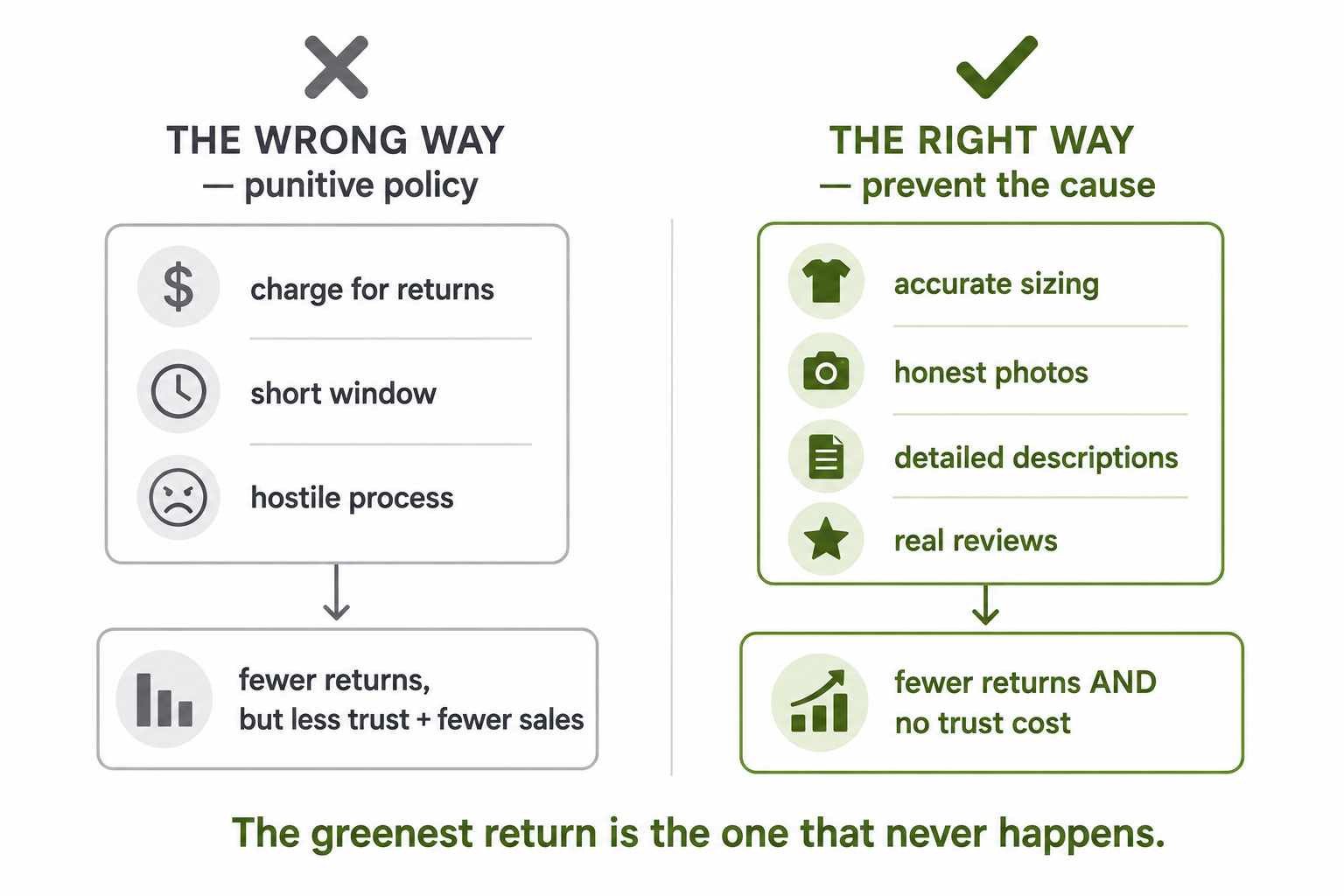
But how you cut returns matters enormously, and there's a tempting wrong way. The wrong way is a restrictive, punitive returns policy: charge for returns, shorten the window, make the process a hassle. That does reduce returns, by hurting trust and suppressing conversion, which is the exact opposite of what a good returns policy does for a store. Chasing a greener return number by making customers afraid to buy is a brand-damaging way to win an environmental metric, and it'll cost you more in lost sales than it saves.
The right way is to prevent the returns that shouldn't have happened in the first place, the ones caused by bad information. A huge share of returns are avoidable: wrong-size returns from missing or unclear sizing guidance, "not as described" returns from misleading photos or vague descriptions, disappointment returns from over-promising. Fix the information and you prevent the return at its source, with no trust cost at all, because the customer who got what they expected was never going to send it back. You're not making returns harder; you're making them unnecessary.
Better product information is a sustainability strategy
Reframed, the most effective return-reduction tool isn't a policy at all, it's product information. Accurate sizing, honest photography, detailed and truthful descriptions, real reviews, anything that helps a customer buy the right thing the first time, prevents a return, which saves the money and the impact together. The unglamorous discipline of good product data turns out to be one of the most powerful sustainability levers a store has, precisely because the greenest return is the one that never happens.
And it sits on firmer trust ground as scrutiny rises. The destroyed-returns reality is increasingly being exposed, and loud "free, unlimited returns" marketing sits awkwardly against it. A store that quietly reduces returns by helping people buy right, rather than competing on how frictionless it is to buy wrong and send it back, is both greener and more honest, and increasingly that's the same thing.
What this comes down to
Returns are an environmental problem hiding inside a cost problem: the wasted journeys, the processing, and the returned goods that quietly end up in a bin. The good news is that the fix for the cost and the fix for the impact are the same fix, and it isn't a punitive returns policy that wrecks trust to win a number. It's preventing the returns that bad information caused, with accurate sizing, honest photos, and truthful descriptions.
"Free, easy, unlimited returns" became a competitive arms race that's both environmentally indefensible and financially painful, and the smart correction isn't to punish customers for returning, it's to stop causing the returns in the first place. The greenest return is the one that never happens, and the way to get there is to help people buy the right thing the first time. That's a sustainability strategy and a profit strategy wearing exactly the same clothes.
A few common questions
Why are returns an environmental problem and not just a cost? Because each return is an environmental event, not only a financial one. It means a wasted outbound delivery, a return delivery back, processing and inspection, repackaging, and often disposal. Across a high return rate that adds up to a large, growing impact that dwarfs a tree-planting badge. And the part brands don't advertise: a meaningful share of returned goods are never resold, because re-inspecting and restocking can cost more than the item is worth, so they're liquidated, landfilled, or destroyed. The "free returns" customers enjoy often end with the product in a bin.
Why is reducing returns such a high-leverage sustainability move? Because returns are simultaneously a top financial cost and a top environmental impact, so cutting them wins on both at once, with no trade-off to manage. It's the green-equals-lean principle in its purest form: pure upside on both axes. That arguably makes it the single highest-leverage sustainability move most stores have, and the bonus is that they're already strongly motivated to do it for the money, so the environmental win rides along for free on a project the business wanted to do anyway.
What's the wrong way to reduce returns? A restrictive, punitive policy: charging for returns, shortening the window, making the process a hassle. It does cut returns, but by hurting trust and suppressing conversion, the opposite of what a good returns policy does for a store, and it'll cost more in lost sales than it saves. Chasing a greener return number by making customers afraid to buy is a brand-damaging way to win an environmental metric. The goal isn't to make returns harder; it's to make them unnecessary.
What's the right way to reduce returns? Prevent the ones that shouldn't have happened, the returns caused by bad information. A huge share are avoidable: wrong-size returns from unclear sizing, "not as described" returns from misleading photos or vague descriptions, disappointment returns from over-promising. Fix the information, with accurate sizing, honest photography, detailed truthful descriptions, and real reviews, and you prevent the return at its source with no trust cost, because the customer who got what they expected was never going to send it back. Better product information is one of the most powerful sustainability levers there is.
You should also read:
Sustainable E-Commerce: What Actually Matters and What's Just Marketing
Most "sustainable e-commerce" is marketing. A recycled-paper logo, a tree-planting badge, a carbon-neutral sticker bought through offsets, while the real environmental impact, shipping, returns, packaging volume, and overproduction, goes untouched. Real sustainability isn't a green badge or an offset checkbox; it's operational decisions that reduce…
Continue reading...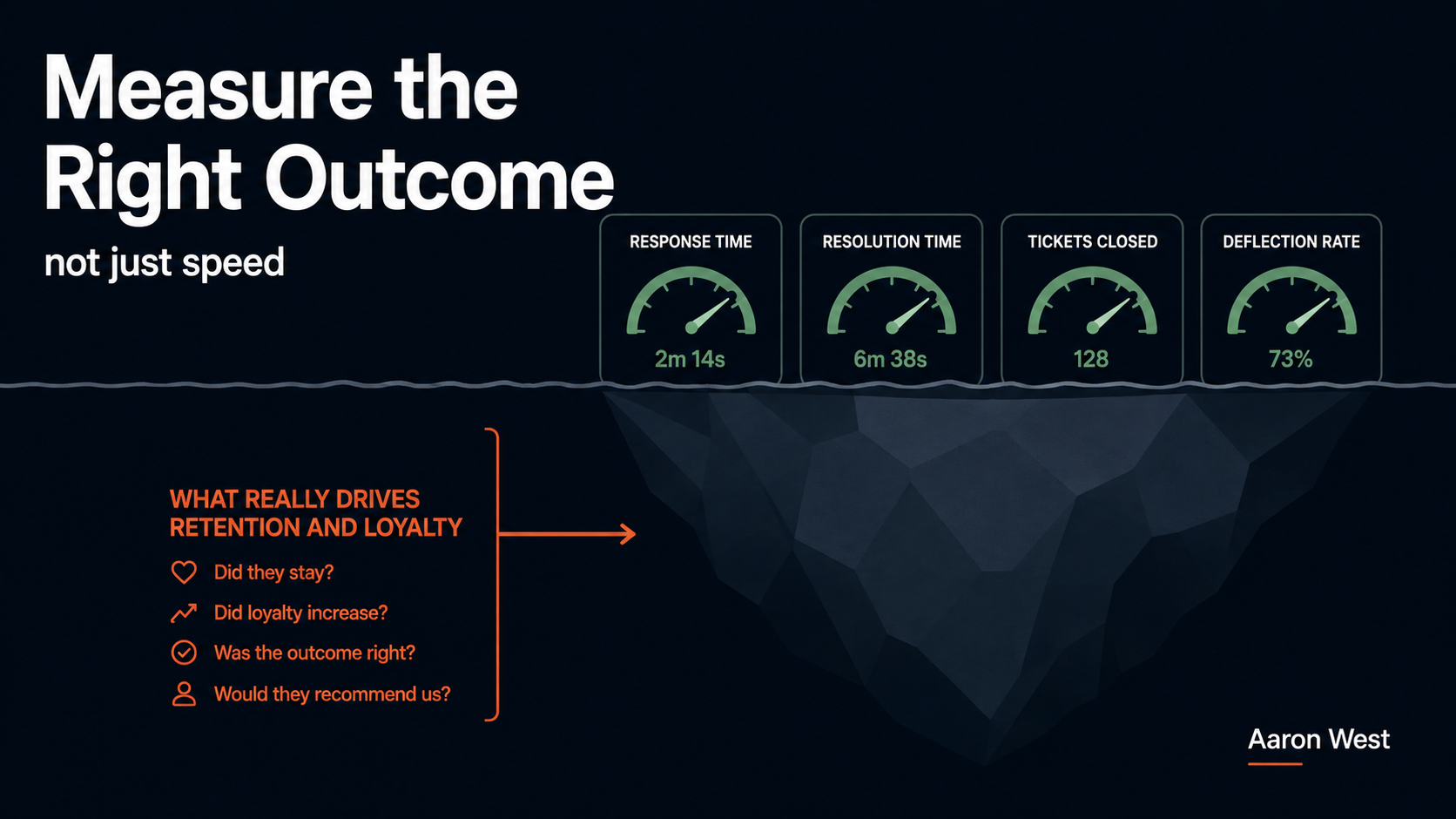
Support Metrics: Measure the Right Outcome, Not Just Speed
Most support metrics measure speed and cost: response time, average handle time, tickets closed per hour, SLA hit-rate, cost per contact. They're popular because they're easy to count and they roll up into tidy dashboards. The problem is that they reward the wrong behaviour. They…
Continue reading...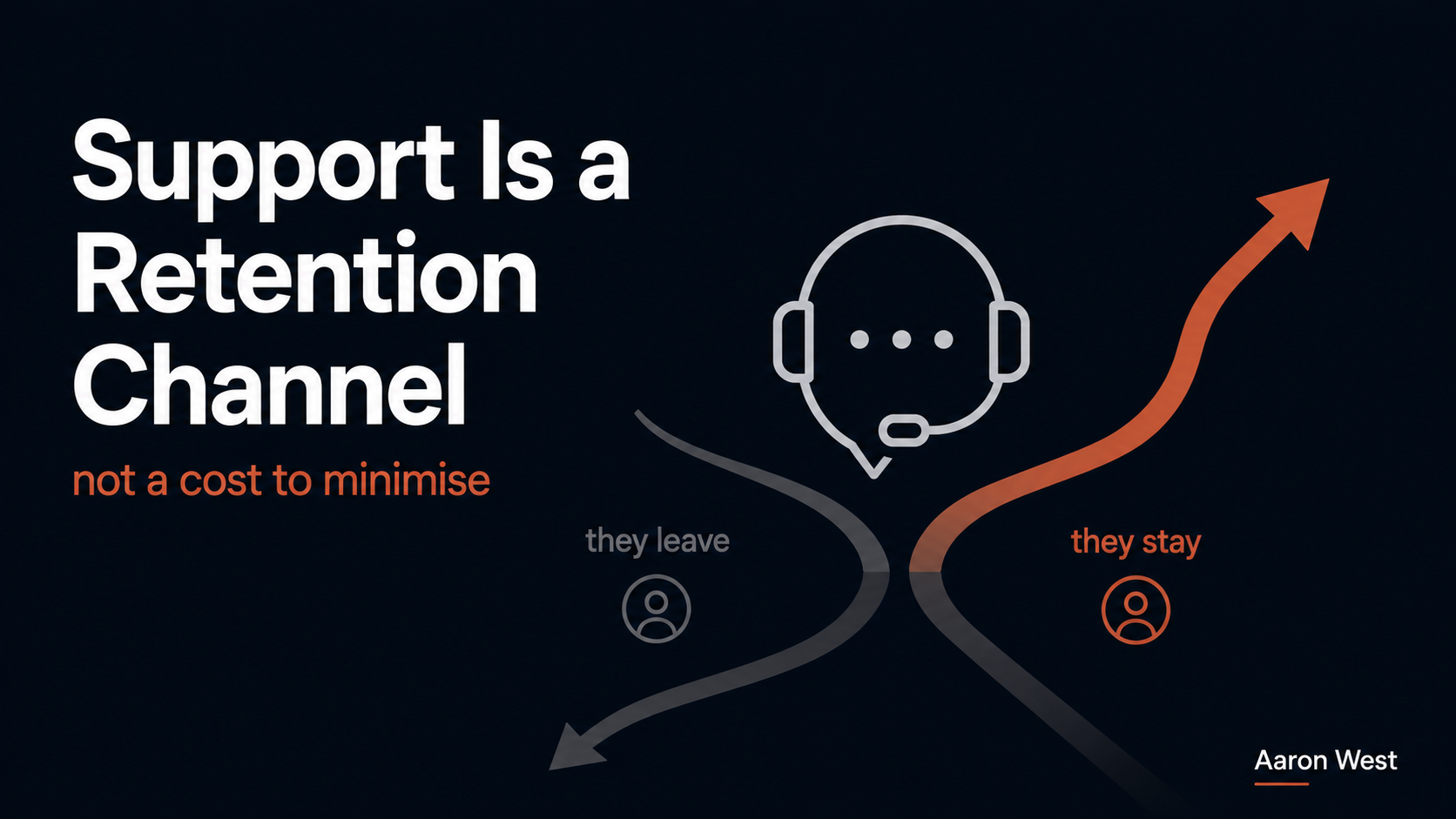
Support Is a Retention Channel, Not a Cost to Minimise
Most companies treat customer support as a cost centre to be minimised: deflect the tickets, cut the handle time, shrink the team, get the cost-per-contact down. That framing is the central mistake in how businesses think about support. Support is a retention channel. It's where…
Continue reading...