Sustainable E-Commerce: What Actually Matters and What's Just Marketing

Table of Contents
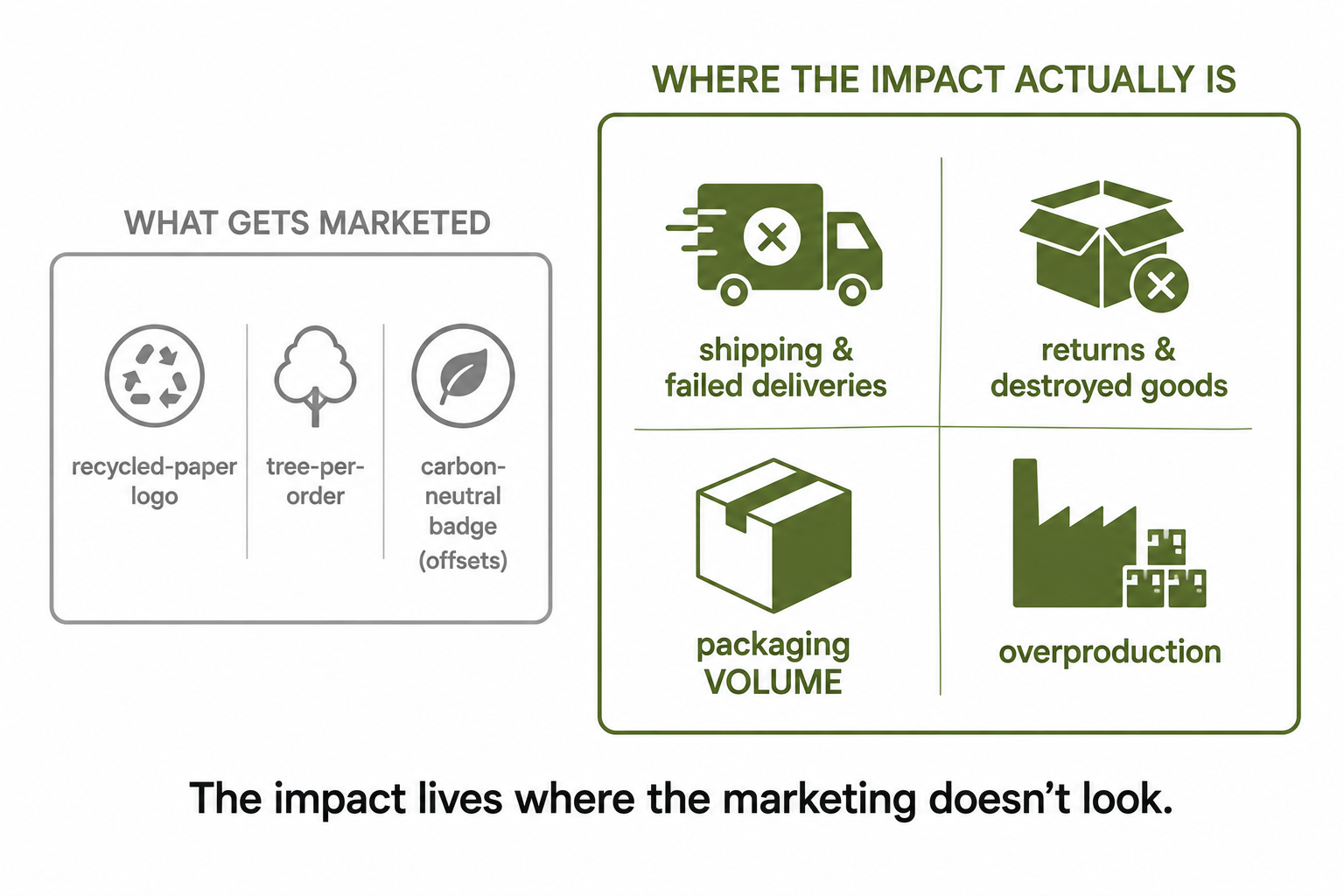
Most "sustainable e-commerce" is marketing. A recycled-paper logo, a tree-planting badge, a carbon-neutral sticker bought through offsets, while the real environmental impact, shipping, returns, packaging volume, and overproduction, goes untouched. Real sustainability isn't a green badge or an offset checkbox; it's operational decisions that reduce actual impact, and most of that impact sits in unglamorous, unmarketable places. The honest version often aligns with good operations and lower costs. The marketable version is mostly optics.
This opens the Sustainability & Ethical E-Commerce pillar, and it's the cornerstone the cluster links up to: packaging as the most visible sustainability decision you make, and returns as an environmental problem, not just a cost.
The green badge problem
Walk through most "sustainable" e-commerce and a pattern appears: a recycled-paper aesthetic, a "we plant a tree per order" line, a carbon-neutral badge purchased through offsets. Meanwhile, the same store ships a single small item in an oversized box, absorbs a large return rate, and overproduces stock that won't sell. The marketing is green. The operation isn't.
Sustainability has quietly become a brand layer rather than an operational reality, a set of claims applied on top of business-as-usual. And the gap between the claim and the operation is exactly where the problem lives, because the claims are visible and cheap, while the things that actually matter are invisible and require real operational work. The badge is easy. The substance is hard. So most stores buy the badge.
Where the impact actually is
The real environmental footprint of e-commerce isn't where the badges are. It's concentrated in four unglamorous places:
- Shipping, especially fast or expedited delivery, and failed deliveries that have to be re-attempted.
- Returns, with their reverse logistics and the frequently-discarded goods that never get resold.
- Packaging volume, the oversized boxes and excess void-fill that waste both material and shipping space.
- Overproduction, making stock that doesn't sell and ultimately gets liquidated or dumped.
None of these photograph well. None make a nice badge. All of them dwarf the environmental value of planting a tree per order. The uncomfortable truth is that the impact lives precisely where the marketing doesn't look, which is why marketing-led sustainability reliably misses it.
Real sustainability is operational, not decorative
Here's the reframe. Genuine impact reduction comes from operational decisions, not decorative ones: right-sizing packaging, reducing the return rate through better information, cutting failed deliveries, not overproducing, consolidating shipments. It's unglamorous, technical, and mostly invisible to the customer.
And there's an almost perfect inverse relationship worth noticing: the more marketable a sustainability move is, the less it usually does, and the more it actually does, the harder it is to market. The tree-planting badge is maximally visible and minimally impactful. Right-sizing your packaging is maximally impactful and almost invisible. So a store optimising for appearing sustainable and a store optimising for being sustainable end up doing almost entirely different things. The decorative version photographs well and changes little. The operational version changes a lot and photographs like a logistics spreadsheet.
The honest version often pays for itself
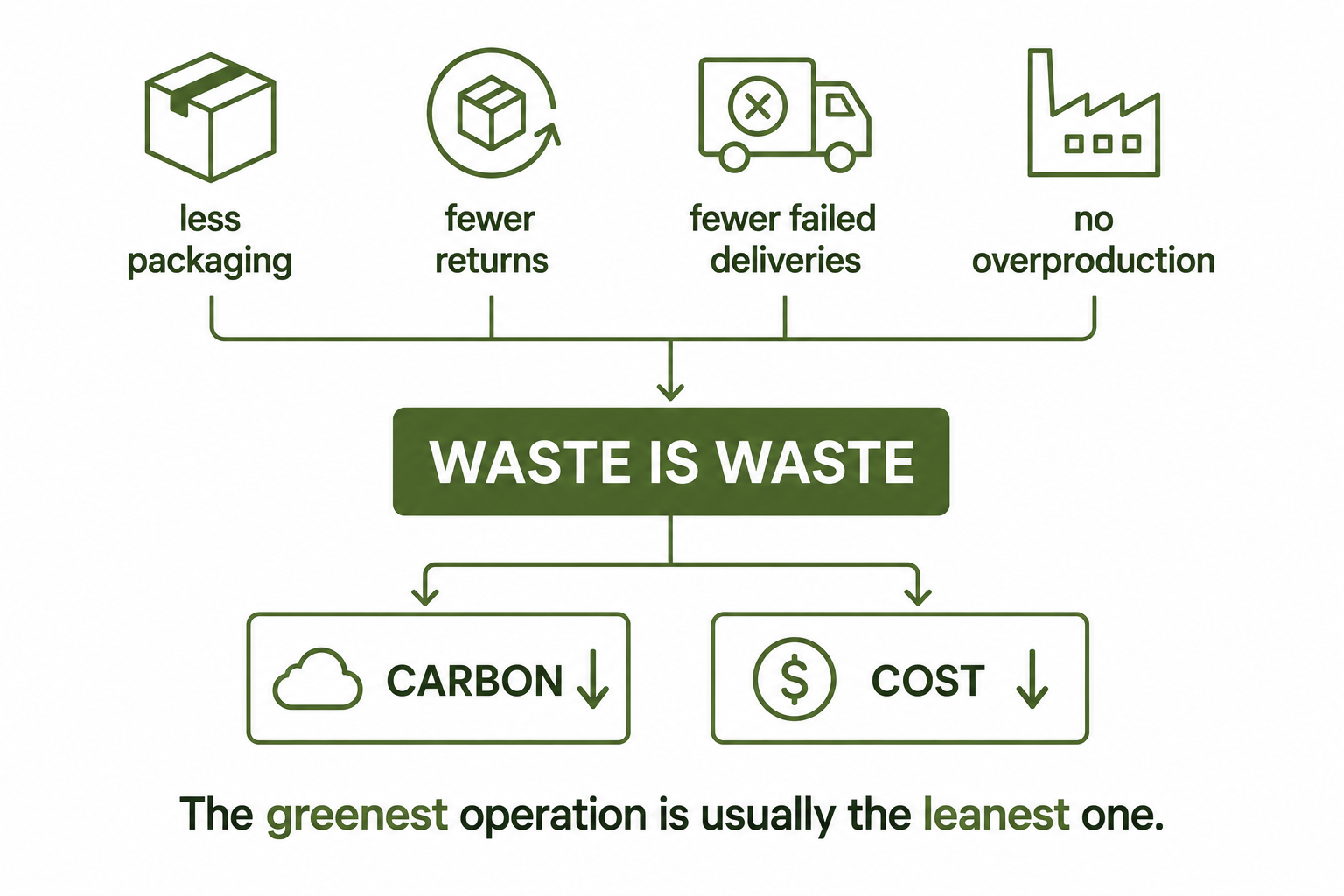
This is the point that turns sustainability from a preachy cost into a practical decision: most genuine sustainability moves also save money. It's the same green-equals-lean logic that runs through good operations.
- Less packaging means lower material cost and more parcels per shipment.
- Fewer returns means a large cost saving, because returns are expensive to process.
- Fewer failed deliveries means less re-shipping.
- Not overproducing means less dead stock to liquidate.
The greenest operational choices are frequently the same as the leanest ones, which means for a large share of real sustainability work, you don't have to choose between sustainable and profitable, they point the same direction. That's not a coincidence; waste is waste whether you measure it in carbon or in euros, and reducing it usually shows up on both ledgers. This is the opposite of the badge, which costs money and does little. The operational work saves money and does a lot.
Greenwashing is now a brand risk, not a win
For a long time, green marketing was a cheap brand win, slap on an "eco-friendly" label and benefit from the halo. That's changing. Customers and regulators increasingly see through green claims that aren't backed by substance. Vague "eco-friendly" language, offset-based "carbon neutral" badges, and tree-planting gestures are losing credibility, and the broader direction of regulation is tightening on unsubstantiated green claims. (That's a general direction, not legal advice, check the specifics for your market.)
So faking sustainability is shifting from a cheap win to a real risk. Over-claim, get caught, and the reputational damage outweighs whatever the badge was worth. The honest move, do real things, claim them modestly and specifically, is now also the safer one. The incentives have flipped: the substance is becoming not just the ethical choice but the commercially prudent one.
What honest sustainability claims look like
If you do the real work, claim it the way you'd claim anything trustworthy, the same honesty principle that runs through the whole hub:
- Specific, not vague. "We switched to right-sized boxes and cut packaging volume" beats "eco-friendly packaging." The specific claim is verifiable; the vague one is the smell of greenwashing.
- About what you changed, not what you offset. Reducing your own impact is stronger and more honest than paying someone else to notionally cancel it out.
- Modest, not maximal. Claim what you actually did. Under-claiming and over-delivering builds trust; the reverse destroys it.
And one honest limit: not every sustainability cost aligns with a saving. Some genuinely cost more, truly recyclable materials, slower lower-carbon shipping, and that's a real business trade-off, not a free win. Don't pretend it's all free. Be honest that some of it is a cost you choose to bear, and let customers who value it decide accordingly.
What this comes down to
Real sustainability in e-commerce is mostly operational and mostly invisible: right-sized packaging, fewer returns, fewer failed deliveries, less overproduction. The happy accident is that most of it also saves money, because the greenest operation is usually the leanest one. The green badge bought with offsets does little, and increasingly it costs trust rather than building it.
So skip the gesture and do the unglamorous work. Claim only what you actually did, specifically and modestly, and let the rare genuine trade-offs be honest choices you make out loud. Sustainability that's real is an operations project, and a profitable one more often than not. Sustainability that's marketing is a liability waiting to be noticed.
A few common questions
Isn't most "sustainable e-commerce" just marketing? A lot of it is. The common pattern is a recycled-paper aesthetic, a tree-per-order line, and a carbon-neutral badge bought through offsets, applied on top of an operation that ships small items in oversized boxes, absorbs a large return rate, and overproduces. The marketing is green; the operation isn't. That happens because the claims are visible and cheap while the things that actually matter are invisible and require real operational work. Genuine sustainability is operational, not decorative, and the more marketable a green move is, the less it usually does.
Where is the real environmental impact in e-commerce? In four unglamorous places that don't make good badges: shipping (especially expedited and failed deliveries), returns (the reverse logistics plus the goods that get discarded rather than resold), packaging volume (oversized boxes and excess void-fill), and overproduction (stock that doesn't sell and gets dumped). All of these dwarf the environmental value of planting a tree per order, and all of them sit precisely where marketing-led sustainability doesn't look, which is why it reliably misses them.
Does being more sustainable cost more? Often it's the opposite. Most genuine sustainability moves also save money, because waste is waste whether you measure it in carbon or euros: less packaging lowers material and shipping cost, fewer returns save expensive processing, fewer failed deliveries mean less re-shipping, and not overproducing means less dead stock. For a large share of the work you don't have to choose between sustainable and profitable. The honest limit is that some things genuinely cost more, truly recyclable materials, slower low-carbon shipping, and those are real trade-offs to make openly, not free wins to pretend about.
Is greenwashing still worth it as marketing? Increasingly not. Customers and regulators are seeing through green claims that aren't backed by substance, vague "eco-friendly" labels and offset-based badges are losing credibility, and regulation is broadly tightening on unsubstantiated claims (a general direction, not legal advice). So faking sustainability is shifting from a cheap brand win to a real reputational risk: over-claim, get caught, and the damage outweighs the badge. Doing real things and claiming them specifically and modestly is now both the honest choice and the commercially safer one.
You should also read:
Returns Are an Environmental Problem, Not Just a Cost
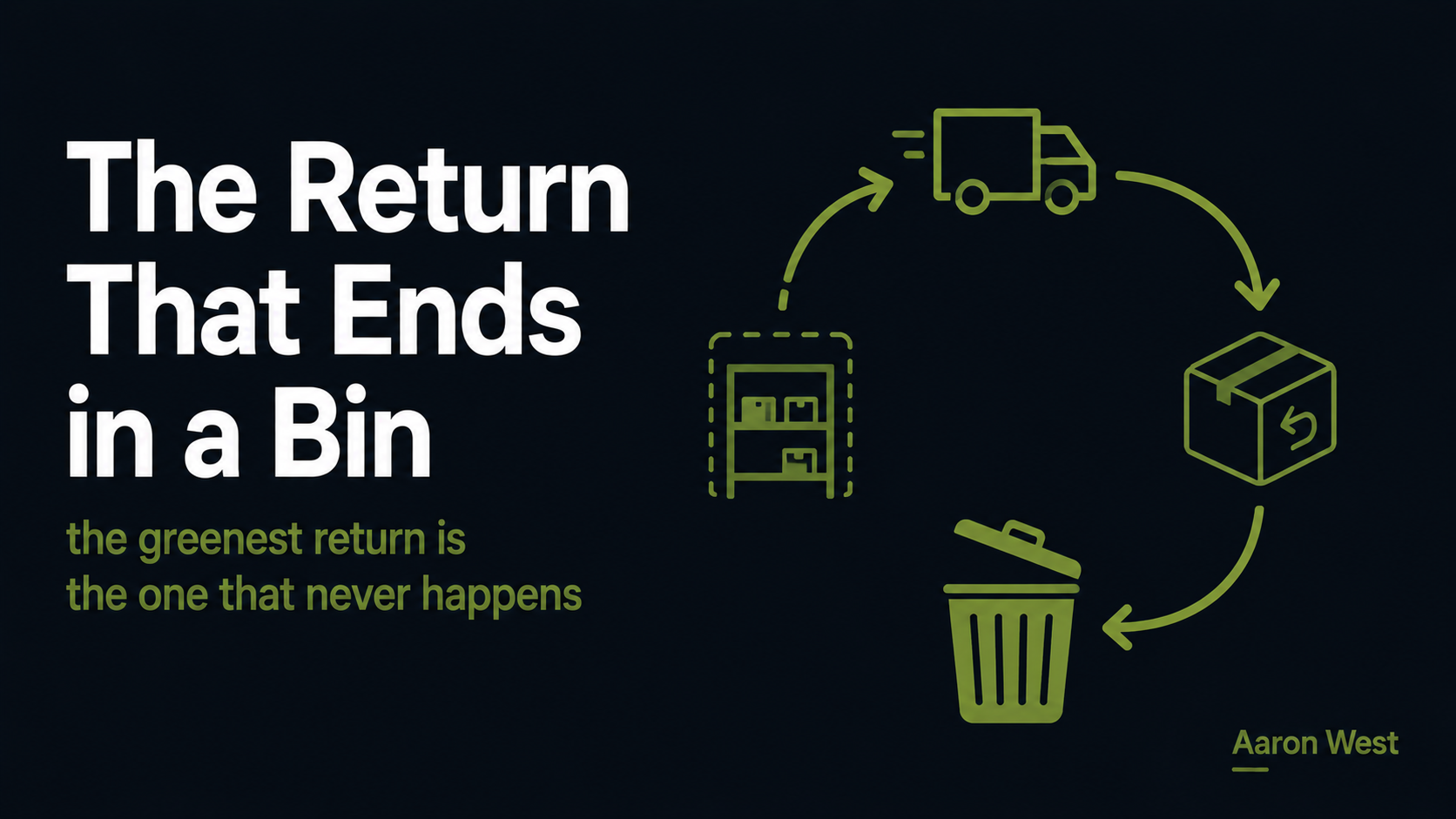
Returns are usually counted as a financial cost, but they're also one of the biggest hidden environmental impacts in e-commerce: the wasted outbound journey, the return journey, and the uncomfortable reality that a meaningful share of returned goods are never resold, they're discarded because re-processing…
Continue reading...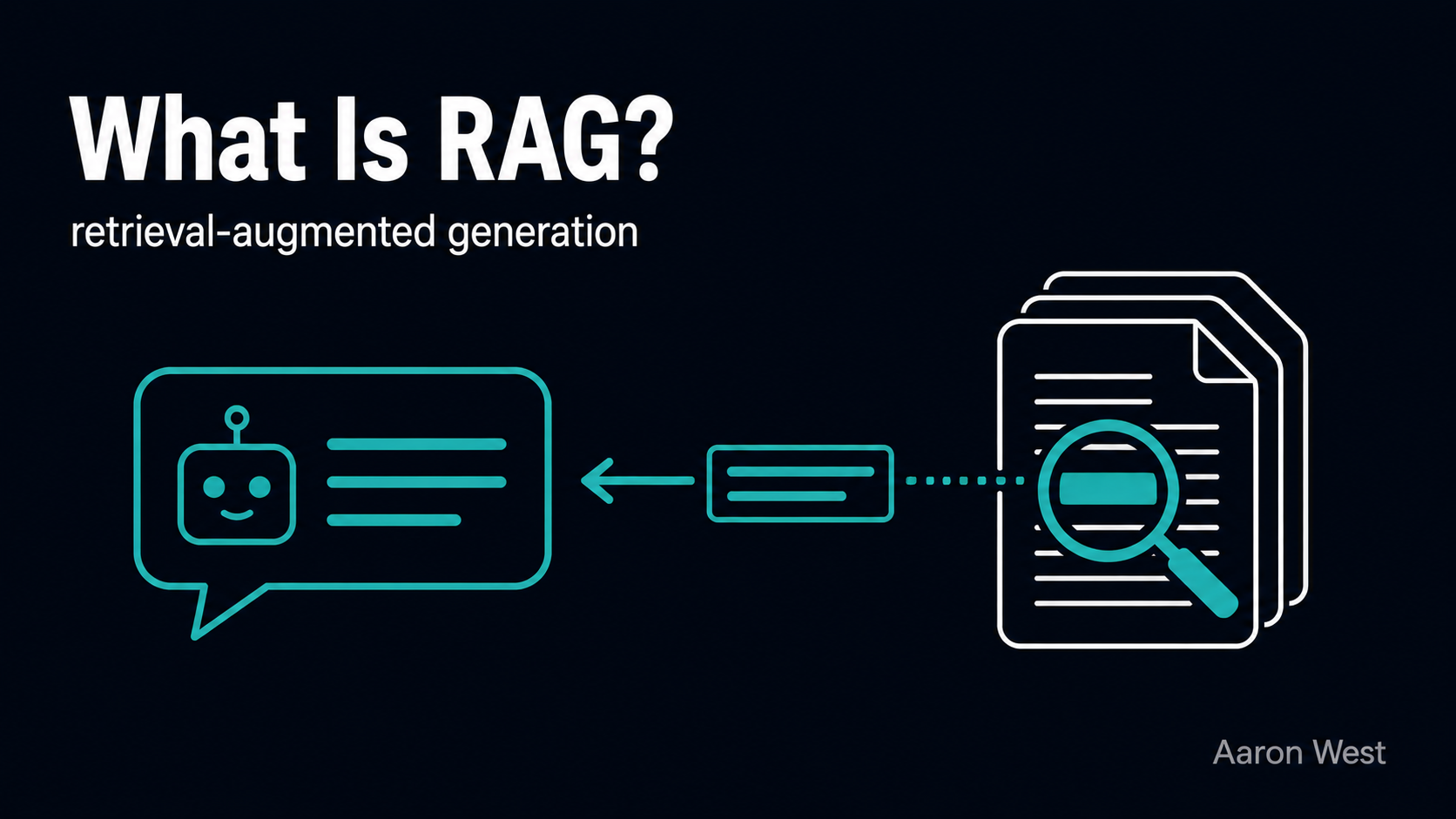
What Is RAG (Retrieval-Augmented Generation), and Why Everyone Is Using It
RAG, retrieval-augmented generation, is a way of making an AI model answer from a specific, trusted set of documents instead of relying only on what it absorbed during training. Before the model writes its answer, the system goes and fetches the most relevant material from…
Continue reading...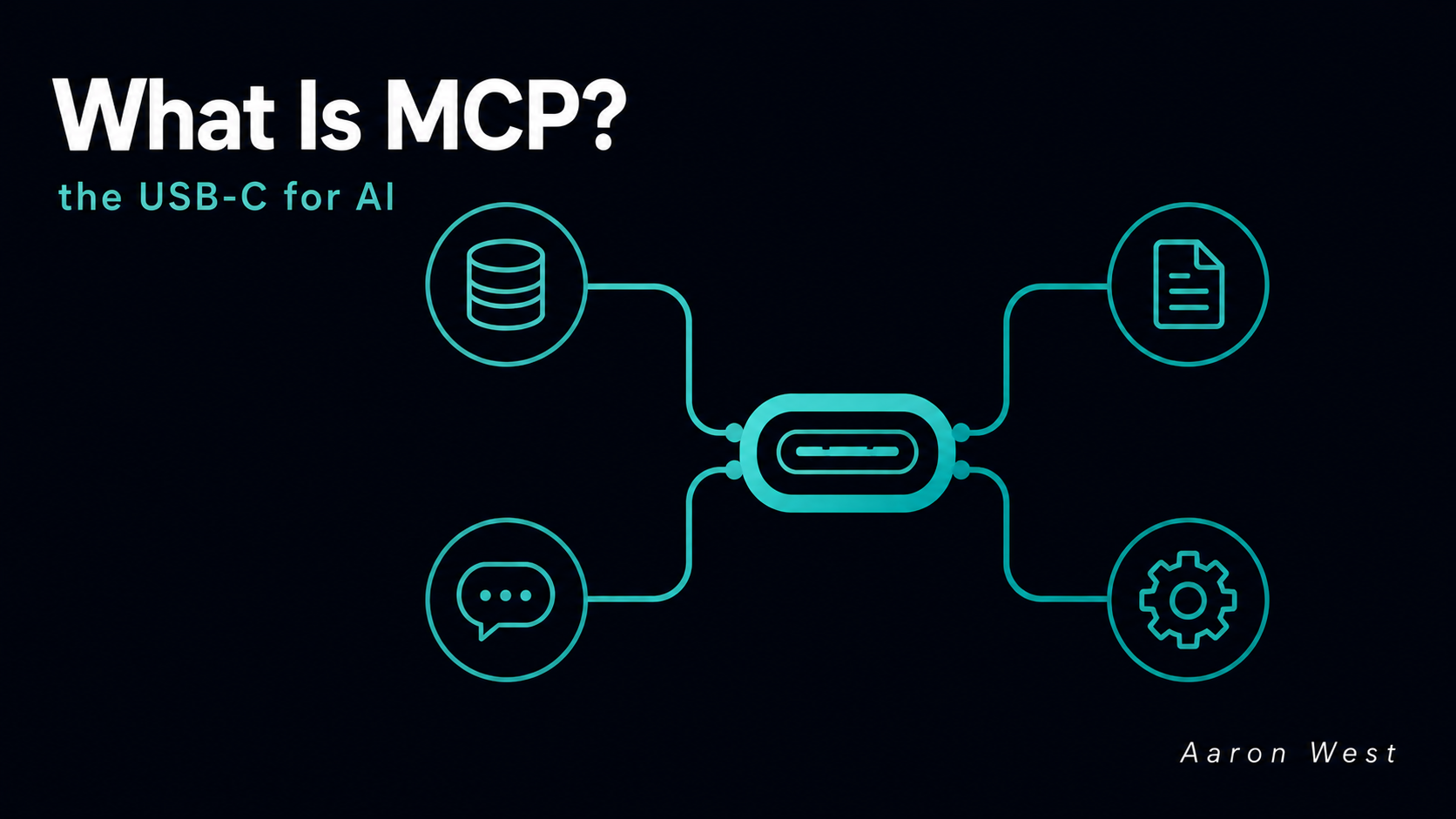
What Is MCP (Model Context Protocol), and Why It Matters
MCP, the Model Context Protocol, is an open standard that gives AI models a single, consistent way to connect to external tools and data. Instead of building a custom integration for every combination of AI model and service, you build one MCP connection and any…
Continue reading...