Packaging Is the Most Visible Sustainability Decision You Make


Table of Contents
Packaging is the one sustainability decision every customer physically holds in their hands, which makes it your most visible environmental signal and the easiest place to get caught greenwashing. And the biggest real win usually isn't the material, it's the volume: shipping a small item in an oversized box wastes material, wastes shipping space and fuel, and visibly signals waste. Right-sizing packaging is the rare move that's greener, cheaper, and better UX all at once.
This is a core of the Sustainability & Ethical E-Commerce pillar, under the cornerstone on what actually matters versus what's just marketing. Packaging is where that cornerstone's gap between claim and reality gets exposed fastest, because it's the part of your operation the customer literally holds.
The package is the proof
Every other sustainability claim you make is abstract. The customer reads "carbon neutral" or "eco-friendly" on a page and either believes it or doesn't. Packaging is different. It's the one sustainability decision that arrives at the customer's door and gets unwrapped in their hands, which makes it proof, for or against everything else you claimed.
A genuinely minimal, right-sized, sensible package quietly backs up your words. A tiny item rattling around in a huge box stuffed with plastic air pillows loudly contradicts every "eco-friendly" line on your site, and the customer notices, because they're the one who has to break it all down and bin it. Packaging is where sustainability marketing meets physical reality, and physical reality wins the argument every time.
Volume beats material
Here's the lever most stores miss. The packaging-sustainability conversation fixates on material, is it recyclable, is it compostable, is it made from recycled content. Material matters. But the bigger and more common lever is size.
An oversized box wastes on three fronts at once. It wastes the packaging material itself (more cardboard than needed). It wastes shipping volume, you're literally paying to ship air, fitting fewer parcels per truck, which means more trips and more fuel per item. And it usually wastes void-fill, all that paper or plastic stuffed in to stop the item rattling around in space it never needed. Right-sizing, matching the box to what's actually in it, attacks all three at once. For most stores, there's more environmental gain available in fixing their box sizes than in switching their material, and it's the lever they're least likely to be pulling.
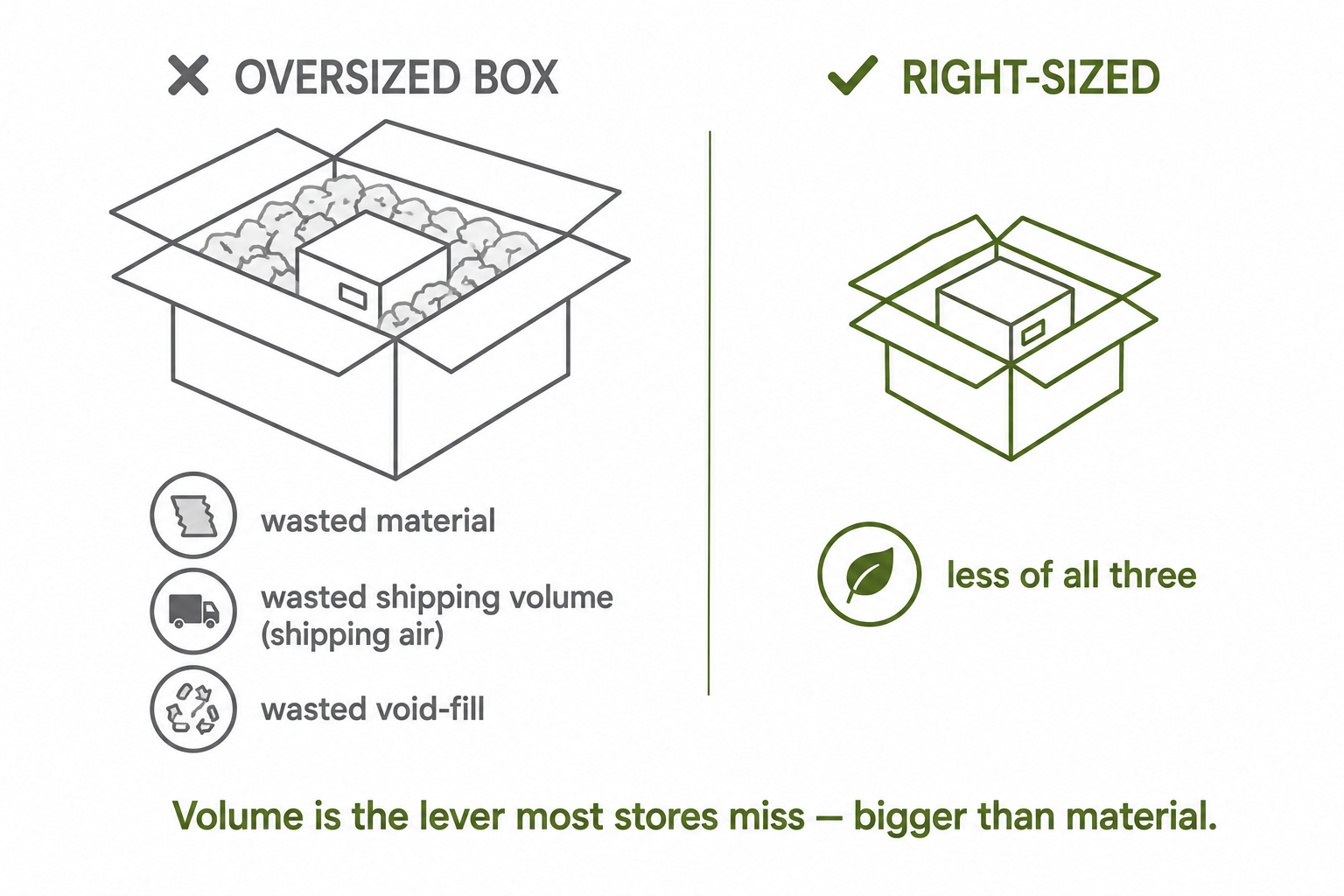
The rare triple win
Right-sizing is worth singling out because it's that unusual thing: a decision that's greener and cheaper and better UX, all at the same time. The cornerstone's green-equals-lean logic shows up here in its clearest form:
- Greener: less material, less shipping volume and fuel, less void-fill to produce and dispose of.
- Cheaper: lower material cost, more parcels per shipment, and often a lower shipping cost, since carriers price partly on dimensional weight (the space a parcel takes, not just its mass), so a smaller box can literally cost less to ship.
- Better UX: customers actively dislike the giant-box-tiny-item experience. It reads as wasteful and a little careless, the opposite of the considered impression you want to make.
Very few decisions line up all three. Most sustainability moves cost something somewhere. This one mostly doesn't, which is exactly why it's the first place to look and the last place to leave unfixed.
The unboxing tension
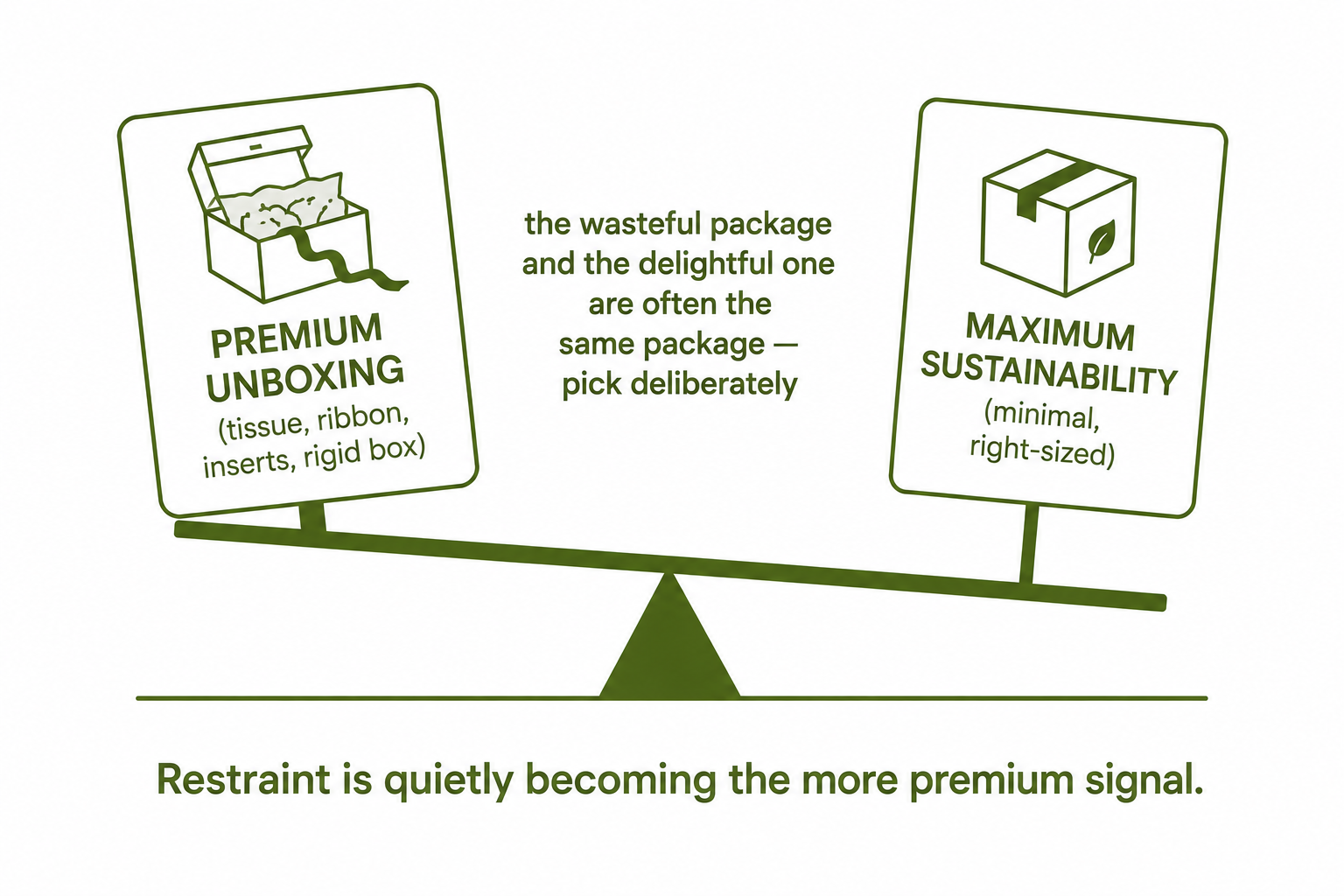
Now the honest conflict, because pretending it doesn't exist is its own small greenwashing. The "premium unboxing experience" trend, the elaborate box, the tissue paper, the ribbon, the printed insert, the magnetic-close lid built for an Instagram moment, is usually in direct conflict with sustainability. The wasteful package and the delightful package are very often the same package.
You can have a considered, branded, pleasant unboxing, or you can maximise sustainability, but you can't fully max both, and claiming you do is a quiet lie. So pick deliberately. A pleasant unboxing is a legitimate brand choice; just don't dress the extra material up as eco-friendly. And know which way the wind is blowing: for a growing segment of customers, "premium means more stuff" is starting to read as "wasteful," and the elaborate unboxing is slowly shifting from a flex to a faux pas. Restraint is quietly becoming the more premium signal.
Material, done honestly
Material still matters, just claim it precisely, the same specificity rule from the cornerstone. Call something "recyclable" only if it's actually recyclable in the customer's real waste stream, not technically-recyclable-in-a-facility-that-doesn't-exist-near-them, a lot of "recyclable" packaging isn't, in practice. State recycled content as the actual share rather than a vague "made with recycled materials." Avoid the soft "eco" language that means nothing and signals greenwashing to anyone paying attention. The precise claim is verifiable and trustworthy; the vague one is a liability.
And because packaging is physical, it's where customers catch the gap between claim and reality fastest. Over-claim on the site and then ship a wasteful box, and you've actively damaged trust at the exact moment of delivery, the high point of the customer relationship. Under-claim and ship a sensible box, and the package quietly does your credibility a favour. Let the packaging be the proof, not the contradiction.
What this comes down to
Packaging is the sustainability decision your customer actually holds, which makes it where your green claims get proven or exposed. The biggest lever is usually volume, not material, right-size the box and you cut waste, cut cost, and improve the experience in a single move, which is about as close to a free win as sustainability ever offers. Resist the wasteful "premium unboxing" reflex, claim your materials precisely, and let the package back up your words instead of contradicting them.
The oversized box is the most common, most visible, most pointless waste in e-commerce, and it persists mostly because right-sizing takes a bit of operational effort that's easy to defer. But it's the lowest-hanging fruit there is. The box in the customer's hands says more about your sustainability than any badge on your site, so make sure it's saying the right thing.
A few common questions
What's the biggest sustainability lever in packaging? Usually volume, not material. The conversation fixates on whether packaging is recyclable or compostable, but the bigger and more common lever is size. An oversized box wastes three things at once: the extra material itself, shipping volume (you're paying to ship air, fitting fewer parcels per truck), and void-fill stuffed in to stop the item rattling. Right-sizing the box to its contents attacks all three. For most stores there's more environmental gain in fixing box sizes than in switching material, and it's the lever they're least likely to be pulling.
Why is right-sizing packaging worth prioritising? Because it's the rare decision that's greener, cheaper, and better UX all at once. Greener: less material, shipping volume, and void-fill. Cheaper: lower material cost, more parcels per shipment, and often lower shipping cost since carriers price partly on dimensional weight, the space a parcel takes, so a smaller box can literally cost less to ship. Better UX: customers dislike the giant-box-tiny-item experience, which reads as wasteful and careless. Very few sustainability moves line up all three; most cost something somewhere. This one mostly doesn't.
Can I have a premium unboxing experience and be sustainable? Not fully both. The elaborate unboxing, tissue, ribbon, inserts, rigid magnetic-close boxes, is usually in direct conflict with sustainability, because the wasteful package and the delightful one are often the same package. A pleasant, branded unboxing is a legitimate brand choice; just don't dress the extra material up as eco-friendly, which is its own quiet greenwashing. Pick deliberately. And note the trend: for a growing segment, "premium means more stuff" is starting to read as "wasteful," so restraint is becoming the more premium signal.
How should I claim my packaging is sustainable? Precisely. Call something recyclable only if it's actually recyclable in the customer's real waste stream, not just technically in a facility that doesn't exist near them, since a lot of "recyclable" packaging isn't in practice. State recycled content as the actual share, not a vague "made with recycled materials," and avoid soft "eco" language that means nothing. Because packaging is physical, customers catch the gap between claim and reality fastest here, so over-claiming and then shipping a wasteful box damages trust at the moment of delivery. Let the package be the proof, not the contradiction.
You should also read:
Payment Friction Is the Last Gate, and the Most Absurd Place to Lose a Sale
The most absurd way to lose a customer is at the very last step, when someone has chosen the product, accepted the price, filled in their details, reached for their wallet, and then cannot pay the way they want to. Every other lost sale is…
Continue reading...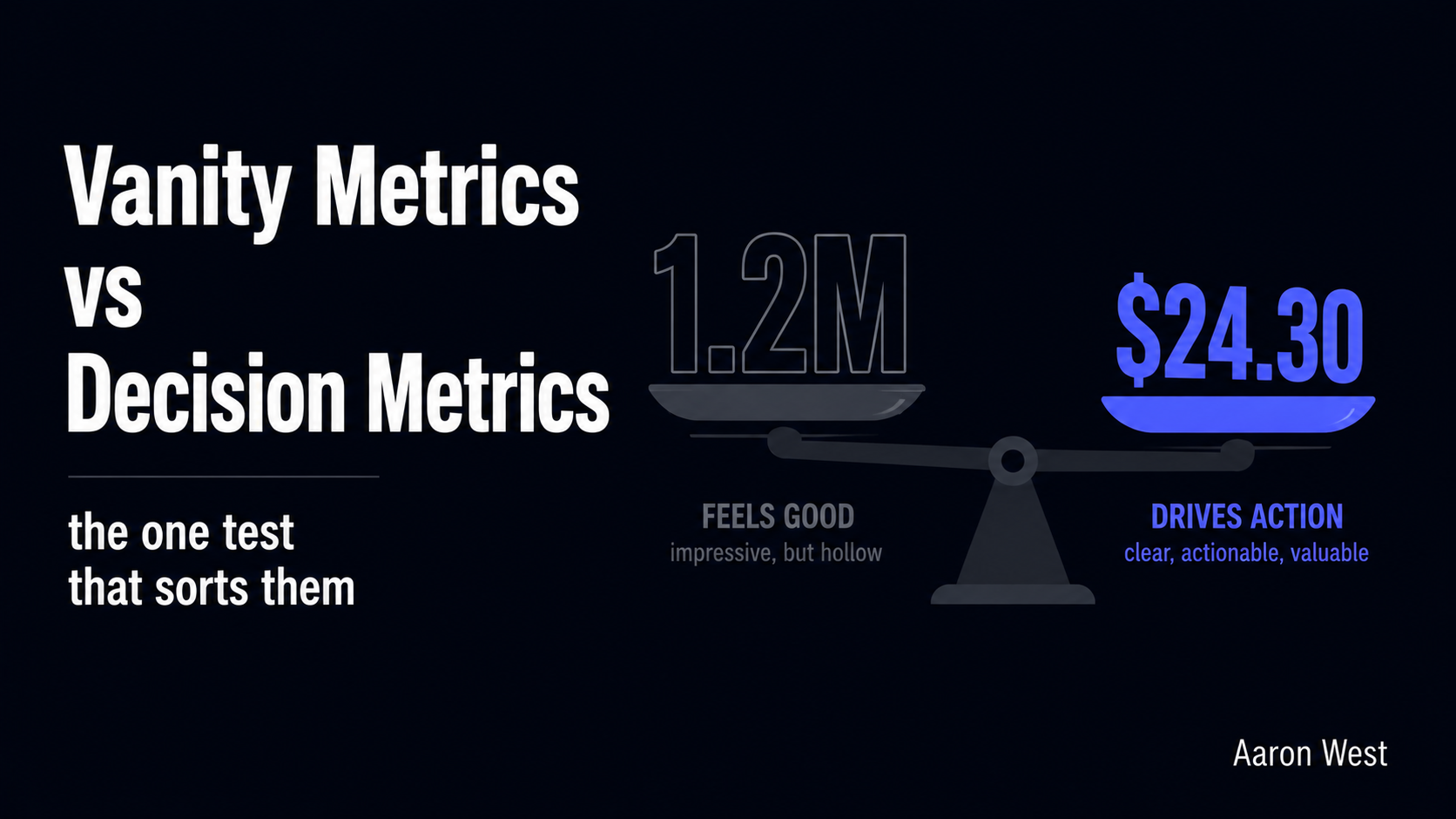
Vanity Metrics vs Decision Metrics
A vanity metric is any number that makes you feel good without telling you what to do. A decision metric is a number that, when it moves, changes your next action. That is the entire distinction, and it is worth more than any list of…
Continue reading...
UTMs and Campaign Parameters: The Discipline Most Teams Skip
A UTM parameter is a small tag added to the end of a link that tells your analytics where a visitor came from, and the difference between a team that uses them with discipline and one that does not is the difference between knowing which…
Continue reading...