Cashback, Loyalty, and the Overlap Where Money Quietly Leaks

Table of Contents
Cashback sits in a strange place in how you run a store, because it shows up in two completely different parts of the business that rarely talk to each other. In the affiliate channel, cashback sites are publishers, third parties who send you customers and give those customers a slice of money back, funded by the commission you pay. In retention, cashback is a loyalty mechanic you might run yourself, your own money back to your own customers. Same word, same basic mechanism, two entirely different pillars of your operation. And because most teams manage the affiliate channel and the retention programme in separate rooms, the place where these two cashbacks overlap is exactly where money quietly leaks. This piece is where the affiliate and CRM sides of cashback meet, the bridge the loyalty piece promised.
This sits under CRM is not software, it's a discipline. I will separate the two things called cashback, place cashback honestly within the rented-versus-owned loyalty framework, and then get to the part that actually costs money: the overlap between third-party cashback publishers and your own retained customers, where you can end up paying twice for the same loyalty. Plain language, and a point most stores never connect because the two pillars live on different teams.
Two different things called cashback
Start by separating them, because the confusion begins with the shared name:
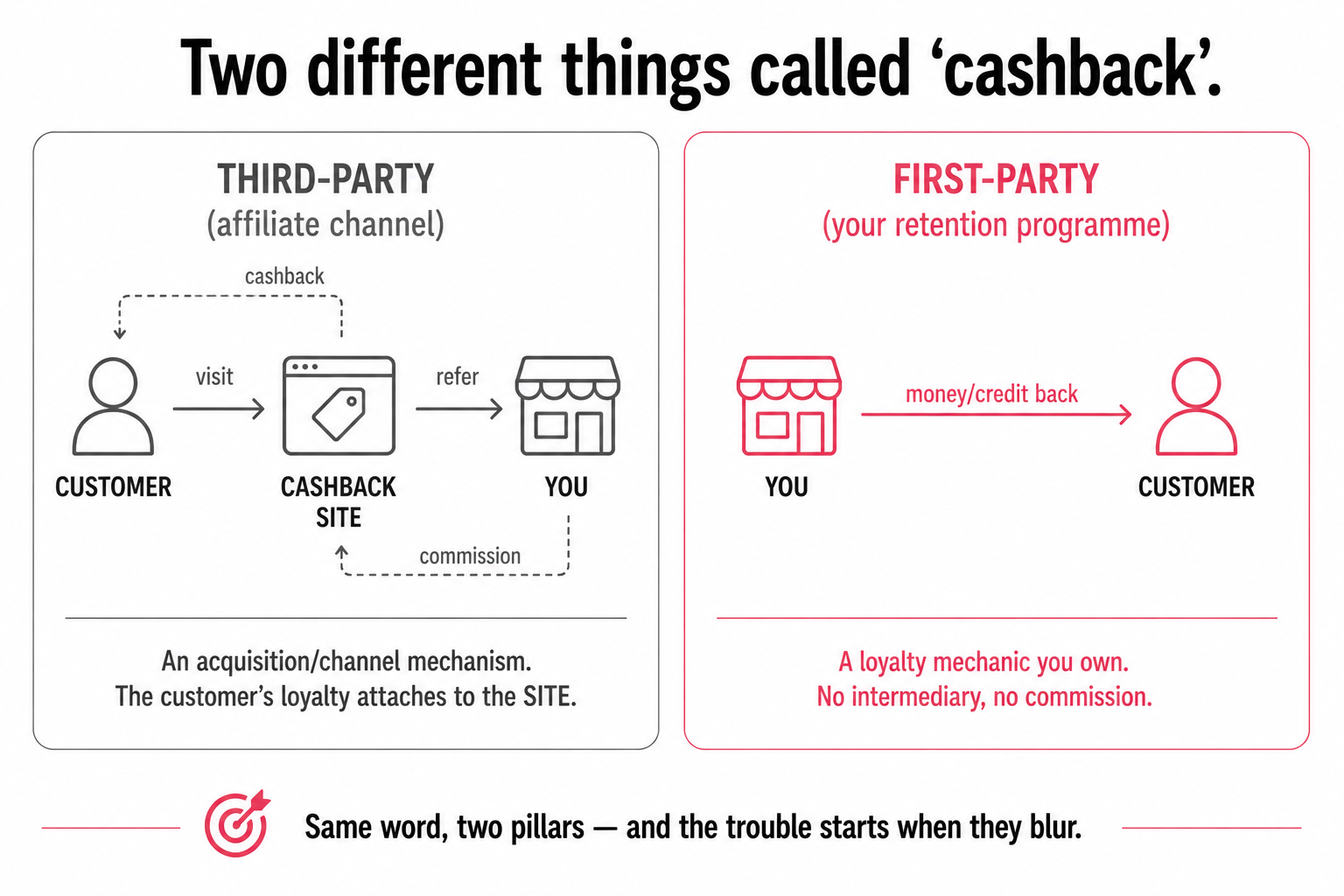
- Third-party cashback (the affiliate channel). A cashback website, an independent publisher, lets shoppers click through to you and get a portion of their spend back. The customer earns the cashback from the site, and you fund it by paying the site a commission through your affiliate programme. This is an acquisition and channel mechanism, and it belongs to the affiliate publisher mix. The customer's loyalty, such as it is, attaches to the cashback site, not to you, because the site is where the reward lives.
- First-party cashback (your retention programme). You give your own customers credit or money back directly, as a mechanic of your own loyalty programme. No third party, no commission, just you rewarding repeat purchase with money back.
These look similar and behave very differently, because in the first case you are paying an intermediary to influence a purchase, and in the second you are rewarding a relationship you already own. Keeping them straight is the whole point of this piece, because the trouble starts precisely when they blur together.
Cashback is the most rented loyalty there is
Now place cashback honestly inside the rented-versus-owned framework. Cashback, in either form, is the most purely transactional reward that exists. It is literally money back, which makes it the cleanest possible version of "loyal to the saving, not to you." If a points scheme is a deferred discount, cashback is barely even deferred, it is just a discount the customer collects after the fact and can spend anywhere. By the logic of the loyalty piece, this makes cashback the very epitome of rented loyalty: it works precisely as long as the money keeps coming, and the loyalty it generates is to the cash, not the brand.
That is not a reason to dismiss it, because there is an honest case for cashback that the framework actually supports. Customers genuinely prefer it. Cashback is tangible, clear, and flexible in a way points and complicated tiers are not, you know exactly what you are getting, in real money, to use however you like. That clarity makes it genuinely effective at driving repeat behaviour. So the honest position is the same one the loyalty piece reached: cashback is a legitimate tool, as long as you are clear-eyed about what you are buying with it. You are buying repeat transactions, not preference. It can encourage a customer to come back, but it is not building the kind of owned loyalty that survives a competitor offering more cash. Use it knowing that, and use it as one mechanic among several, not as the whole relationship.
The overlap that costs real money
Here is the part most stores never connect, and it is where the affiliate channel and the retention programme quietly work against each other. Picture a store that does two sensible-sounding things at once: it runs an affiliate programme that includes cashback publishers, and it has a base of loyal, retained customers who already buy regularly. Each is reasonable on its own. Together, without coordination, they create a leak.
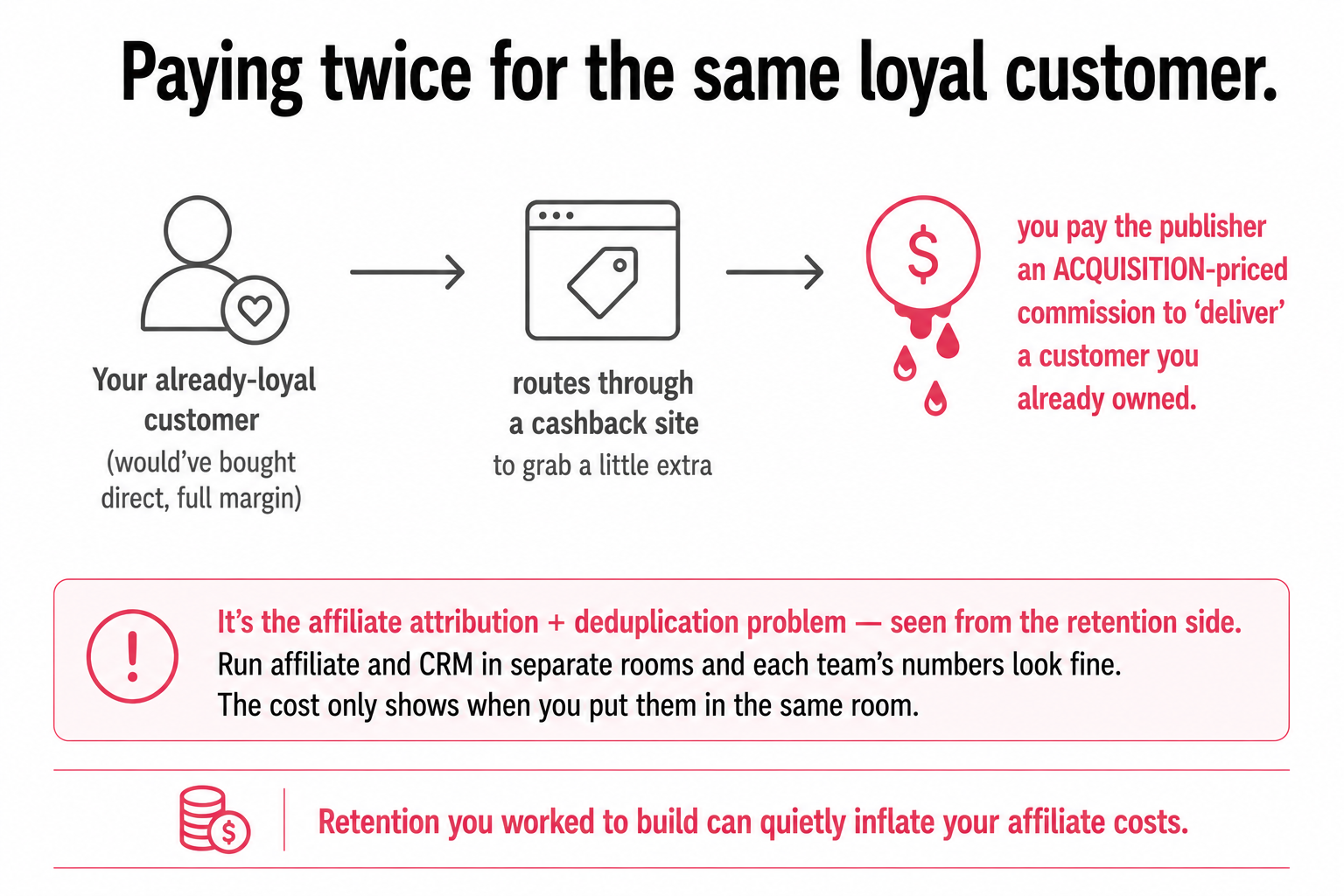
Think about who actually uses cashback sites. Disproportionately, it is exactly your most engaged, value-conscious, already loyal customers, the ones who were going to buy from you anyway and who have learned that routing through a cashback site nets them a little extra on the way. So a customer you already own, who would have come to you directly and bought at full margin, instead clicks through a cashback publisher first. Now you pay that publisher an acquisition-priced commission to "deliver" a customer who was never lost, who you had already retained through your own efforts. You have paid, a second time and at acquisition rates, for loyalty you already owned. The retention you worked to build quietly inflates your affiliate costs, because your loyal customers are funnelling themselves through a paid channel to claim a reward, and the affiliate system, left undisciplined, happily takes credit for the sale.
This is not a new problem. It is the attribution and deduplication problem from the affiliate pillar, seen from the retention side. The affiliate pillar talks about not paying commission for sales the channel did not genuinely originate. The retention pillar is where you discover which sales those are: the repeat purchases of customers you already retained. Solving it requires the two pillars to talk, attribution rules that recognise an already-loyal repeat customer rather than crediting the last cashback click, and a deliberate decision about whether you even want cashback publishers competing for customers you have already won. Run affiliate and CRM in separate rooms and you will never see the leak, because each team's numbers look fine in isolation. The cost only appears when you put them in the same room.
Treat the overlap as the seam it is
Pull it together and cashback turns out to be a seam between two pillars of your store, and seams are where things leak if nobody is minding them. Treated well, cashback is a perfectly legitimate transactional tool: customers value its clarity, it can drive incremental repeat purchases, and it has an honest place in the mix as long as you remember it rents rather than owns loyalty. Treated carelessly, it does two quiet kinds of damage, it gets confused with a plain discount and erodes margin with no loyalty payoff, and it lets your affiliate channel charge you acquisition prices for the loyal customers your retention programme already secured.
So the discipline is the same one that runs through this whole pillar and the affiliate one: know what you are actually buying, and make sure your channels are not working against each other behind your back. Decide deliberately whether cashback belongs in your retention mix and what job it is doing there. And reconcile the affiliate channel with your retained base, through honest attribution and deduplication, so you are not paying twice for the same customer. Cashback is where the affiliate and CRM sides of your business overlap. The whole trick is to manage that overlap on purpose, rather than discovering it on your margin report.
A few common questions
Does cashback build customer loyalty? It drives repeat behaviour, but it builds the rented kind of loyalty, not the owned kind. Cashback is the most purely transactional reward there is, literally money back, which makes it the cleanest possible version of "loyal to the saving, not to you." It works precisely as long as the money keeps coming, and the loyalty attaches to the cash rather than the brand. There's an honest case for it, customers genuinely prefer cashback because it's tangible, clear, and flexible, so it's effective at encouraging repeat purchases. Just be clear-eyed that you're buying transactions, not preference, and use it as one mechanic among several rather than as the whole relationship.
What's the difference between affiliate cashback and a cashback loyalty programme? They share a name and a mechanism but belong to different parts of your business. Third-party (affiliate) cashback is when an independent cashback website gives shoppers money back and you fund it by paying that site a commission, it's an acquisition and channel mechanism, and the customer's loyalty attaches to the site, not to you. First-party cashback is when you give your own customers credit or money back directly as a mechanic of your own loyalty programme, with no intermediary and no commission. The first pays an intermediary to influence a purchase; the second rewards a relationship you already own. Confusing them is where the trouble starts.
Can running affiliate cashback and a loyalty programme cost me money? Yes, through an overlap most stores never connect. Cashback sites are used disproportionately by your most engaged, already-loyal customers, the ones who'd have bought from you anyway and have learned that routing through a cashback site nets them a little extra. So a customer you already owned clicks through a cashback publisher first, and you end up paying that publisher an acquisition-priced commission to "deliver" a customer who was never lost. You pay twice, at acquisition rates, for loyalty you already built. It's the affiliate attribution and deduplication problem seen from the retention side, and you only catch it when you look at the affiliate channel and your retained base together.
How do I stop paying twice for loyal customers who use cashback sites? Make the affiliate channel and your retention programme talk to each other. That means attribution rules that recognise an already-loyal repeat customer rather than automatically crediting the last cashback click, deduplication so the channel isn't paid for sales it didn't genuinely originate, and a deliberate decision about whether you even want cashback publishers competing for customers you've already won. Run affiliate and CRM in separate rooms and each team's numbers look fine in isolation; the cost only appears when you put them in the same room and reconcile them on purpose.
You should also read:
Retail Media and Amazon Ads: Advertising Where People Are Already Buying
Retail media is advertising placed on a retailer's own digital shelf, right where people are already shopping and ready to buy. Its strength is obvious: you reach shoppers at the moment of purchase, with the retailer's real purchase data behind both the targeting and the…
Continue reading...
The Thank-You Page: Where Conversion Ends and Retention Begins
The moment right after someone buys from you is the single highest-trust, highest-goodwill moment you will ever get with that person. They have just said yes. They have handed over their card, their email, their address. Their guard is down and their momentum is forward.
Continue reading...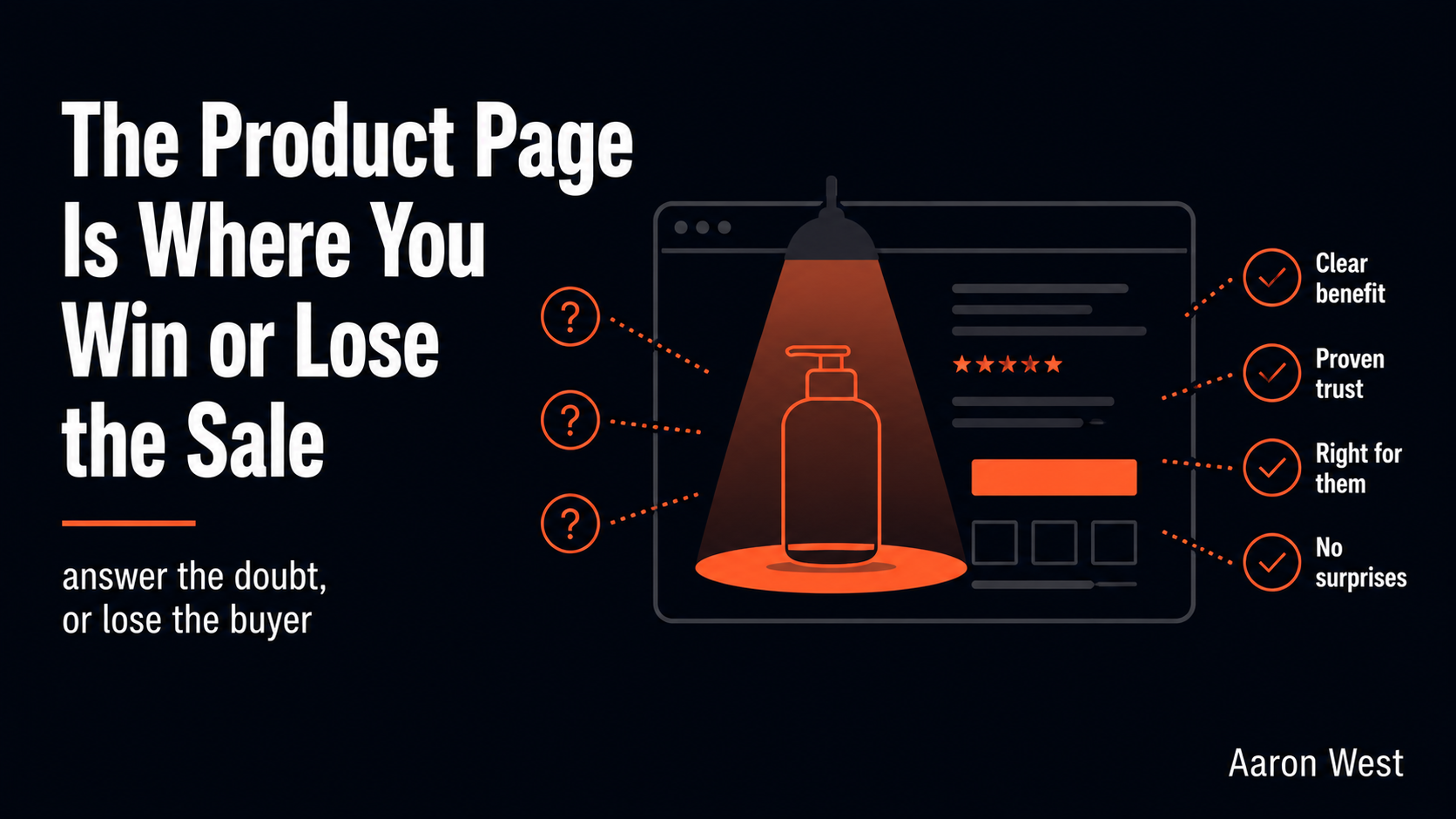
The Product Page Is Where You Win or Lose the Sale
The product page is where the buying decision actually gets made, which makes it the most important page on your store, and the one most stores treat as an afterthought. Everything before it, the ads, the homepage, the category listings, only does one job: deliver…
Continue reading...