Cross-Device Tracking and Its Limits

Table of Contents
You browse for headphones on your phone during your commute, read reviews on your laptop at work, and finally buy on your tablet that evening. To you, that is one shopping journey. To your analytics, with nothing connecting those devices, it looks like three completely different people who happened to be interested in the same product. Cross-device tracking is the attempt to recognise that those three "people" are one customer, and it matters because without it, your attribution is built on a fiction. The honest catch, and the reason this piece exists: cross-device tracking is genuinely hard, increasingly limited, and for most stores never fully solved. Knowing its limits is more useful than pretending you have closed the gap.
This is the piece in the performance marketing pillar about the problem underneath a lot of attribution trouble: customer journeys span devices, but tracking mostly does not follow. I will explain why device fragmentation breaks your data, the two fundamentally different ways to connect devices and what each can and cannot do, and the realistic conclusion, which is not a tidy fix but a clear-eyed understanding of a permanent blind spot and how to shrink it. Plain language, no false promises.
Why fragmentation breaks your data
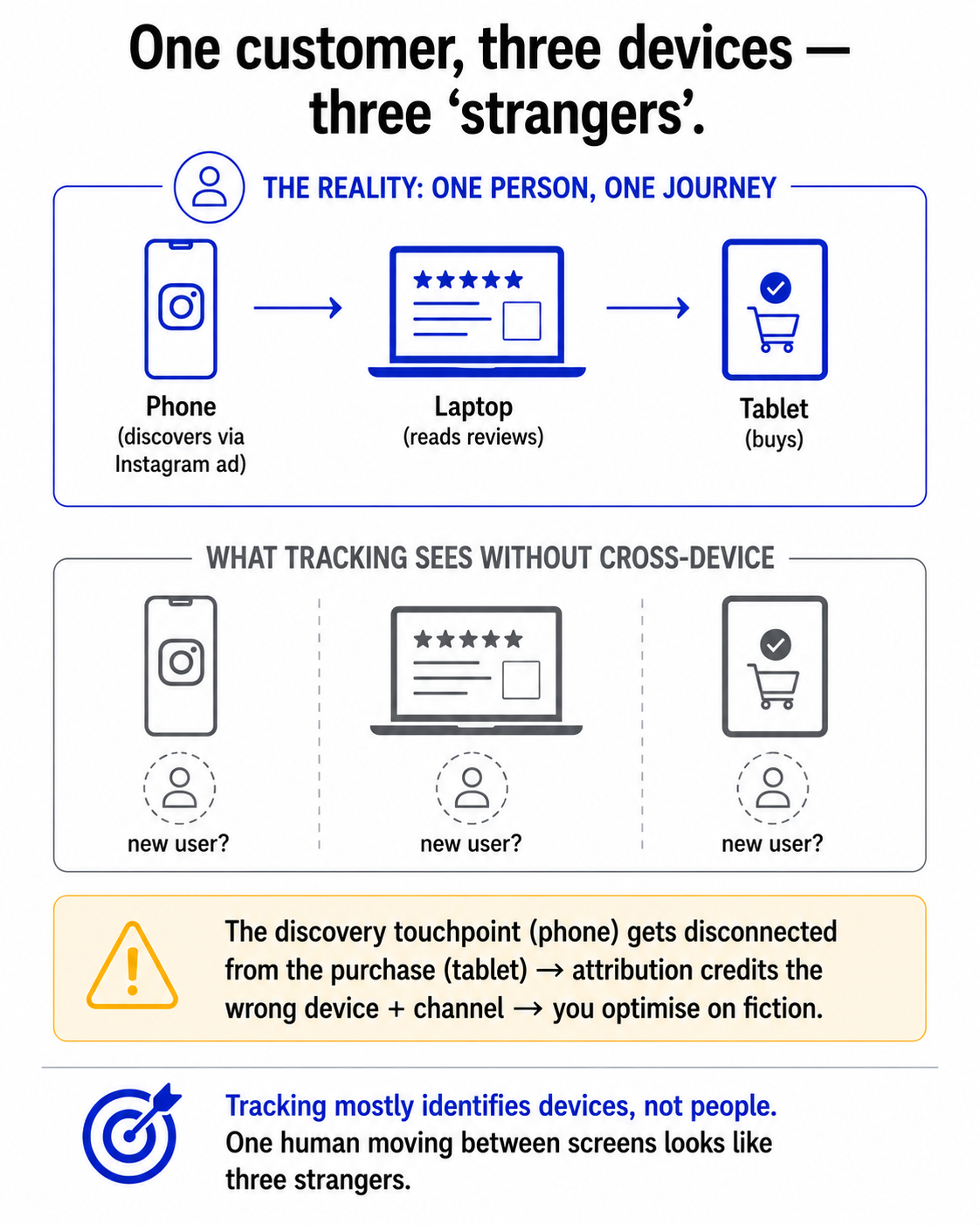
The core problem is simple to state and hard to solve: people use multiple devices, and most tracking identifies devices, not people. A cookie lives in one browser on one device. A phone, a laptop, and a tablet each carry their own separate cookies, their own identifiers, their own browsing history. So when one human moves between them, the tracking sees three unconnected strangers.
The consequence is not a minor data-quality footnote. It distorts everything downstream. The phone that started the journey (the discovery touchpoint) gets disconnected from the tablet that finished it (the purchase), so your attribution credits the wrong device and the wrong channel. The awareness work that genuinely brought the customer in looks like it led nowhere, because the sale shows up as a separate, channel-less "new user" on a different device. You end up, as one way of putting it goes, optimising your campaigns based on fiction, rewarding the channels that happen to be present on the buying device and starving the ones that did the early work on another screen.
And fragmentation is getting worse, not better. People do not just own more devices, they switch between them constantly within a single buying decision, and connected TVs, tablets, and other screens keep multiplying. The gap between how customers actually behave (one person, many screens, one journey) and how tracking sees them (many devices, many strangers, fragmented journeys) is widening. Which is exactly why understanding the connecting methods, and their limits, matters.
The two ways to connect devices
There are two fundamentally different methods for linking devices to the same person, and understanding the difference is the whole point, because each has a hard limit that the other does not.
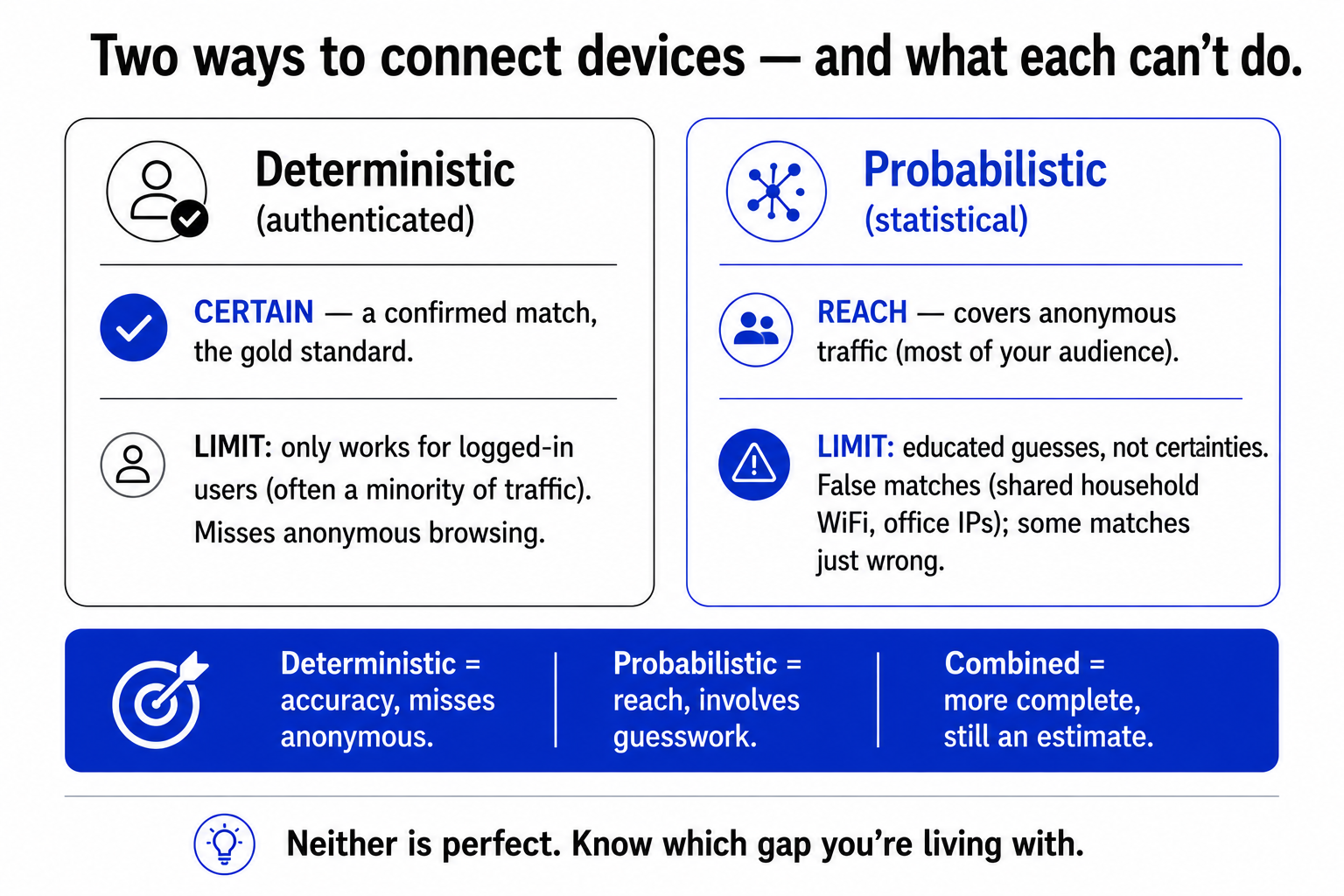
Deterministic matching uses authenticated data, a login, an email address, an account, to link devices with certainty. When a customer logs into your site on their phone and again on their laptop, you know it is the same person, because they identified themselves both times. This is the gold standard for accuracy: it is not a guess, it is a confirmed match. The limitation is equally clear and it is a big one: it only works for logged-in users. If someone browses without signing in, which is most casual shopping, you have no authenticated identifier to match on, and deterministic tracking sees nothing to connect. For many sites, authenticated sessions are a minority of total traffic, so deterministic matching gives you certainty about a relatively small, logged-in slice of your audience and nothing about the rest.
Probabilistic matching fills that gap using statistical inference. Instead of a confirmed identifier, it looks at signals, IP address, device type, operating system, behaviour patterns, timing, and estimates the likelihood that two devices belong to the same person. Its strength is coverage: it can connect anonymous, never-logged-in traffic, which is most of your audience, dramatically expanding how much of the journey you can see. Its weakness is built into the word "probabilistic": these are educated guesses, not certainties. Two people in the same household sharing one WiFi network can be wrongly merged into one. An office where dozens of staff share an external IP can produce false matches. Device fingerprints shift when browsers update. Some percentage of the matches will simply be wrong, and you usually cannot tell which.
So the trade-off is stark and unavoidable: deterministic gives you accuracy but misses anonymous users; probabilistic gives you reach but involves guesswork. Neither is complete on its own, which is why serious setups combine them, deterministic as the reliable foundation for logged-in users, probabilistic layered on to extend coverage across the anonymous majority. Even combined, it is an estimate, not a perfect picture.
The realistic conclusion
Here is where I part company with most guides on this topic, which tend to end on "and with the right platform you can achieve a complete unified view." You usually cannot, and chasing that completeness is often a poor use of money. The realistic position for most e-commerce businesses is this: cross-device tracking will always be partial, the gap is structural, and the right response is to shrink it where it is cheap to shrink and to know the blind spot everywhere else.
The cheapest, most durable way to shrink it is the same answer that runs through this whole pillar: first-party data. Every reason you give a customer to log in, create an account, join a loyalty programme, subscribe, turns an anonymous, unconnectable session into an authenticated one you can match deterministically across their devices. You are not buying a clever tracking technology; you are building a relationship that happens to make measurement more accurate as a by-product. Combined with server-side collection for cleaner data, that is the resilient foundation, and it is the same foundation that survives the cookieless shift and the privacy restrictions that are making device-level tracking harder every year anyway.
And then the discipline, the bit that actually protects your decisions: know the limit and account for it. When you look at a customer journey or an attribution report, remember that a chunk of cross-device behaviour is invisible or estimated, that your logged-out traffic is fragmented, and that some of your "new users" are returning customers on a second device. That awareness changes how you read the data, you stop treating the fragmented picture as the whole truth, and you weight your confidence accordingly. The goal was never perfect cross-device tracking, which is not available to most businesses and never will be. The goal is to understand customers well enough to make good decisions, and that is served far better by building genuine first-party relationships and reading your imperfect data honestly than by spending heavily to chase a unified view you will never quite reach. The fragmentation is real. The humility about it is the actual skill.
A few common questions
What is cross-device tracking? Cross-device tracking is the practice of recognising that multiple devices, a phone, a laptop, a tablet, are being used by the same person, so you can measure a complete customer journey instead of seeing it as several unconnected strangers. Without it, someone who discovers you on their phone, researches on their laptop, and buys on their tablet looks like three separate users, which misattributes conversions and distorts your understanding of which channels actually work.
What's the difference between deterministic and probabilistic tracking? Deterministic matching uses authenticated data (a login, email, or account) to link devices with certainty, it's a confirmed match, the most accurate method, but it only works for logged-in users, who are often a minority of traffic. Probabilistic matching uses statistical inference from signals like IP address, device type, and behaviour to estimate which devices belong to the same person, it covers anonymous traffic (most of your audience) but the matches are educated guesses, not certainties, and false matches happen (for example, people sharing a household WiFi network). Serious setups combine both: deterministic as the reliable base, probabilistic to extend reach.
Why is cross-device tracking so hard? Because most tracking identifies devices, not people. Each device carries its own separate cookies and identifiers, so one human moving between a phone, laptop, and tablet appears as three unconnected users. Connecting them requires either authentication (which most casual shoppers don't do) or statistical guessing (which is imperfect). On top of that, privacy restrictions, third-party cookie limits, and mobile OS changes keep making device-level tracking less reliable, while people own and switch between more devices than ever.
Can I fully solve cross-device tracking? Realistically, no, and for most e-commerce businesses, chasing a complete unified view is a poor use of money. The gap is structural. The practical approach is to shrink it cheaply by encouraging first-party relationships (logins, accounts, loyalty programmes turn anonymous sessions into matchable authenticated ones) combined with server-side data collection, and then to read your data knowing a chunk of cross-device behaviour is estimated or invisible. Understanding the blind spot and weighting your confidence accordingly protects your decisions far better than pretending the gap is closed.
You should also read:
Conversion Tracking, End to End
Conversion tracking is the system that connects a marketing action to the result it produced, so that when someone clicks your ad and later buys, you can actually say "that sale came from that ad." Without it, you are spending money and guessing. With it,…
Continue reading...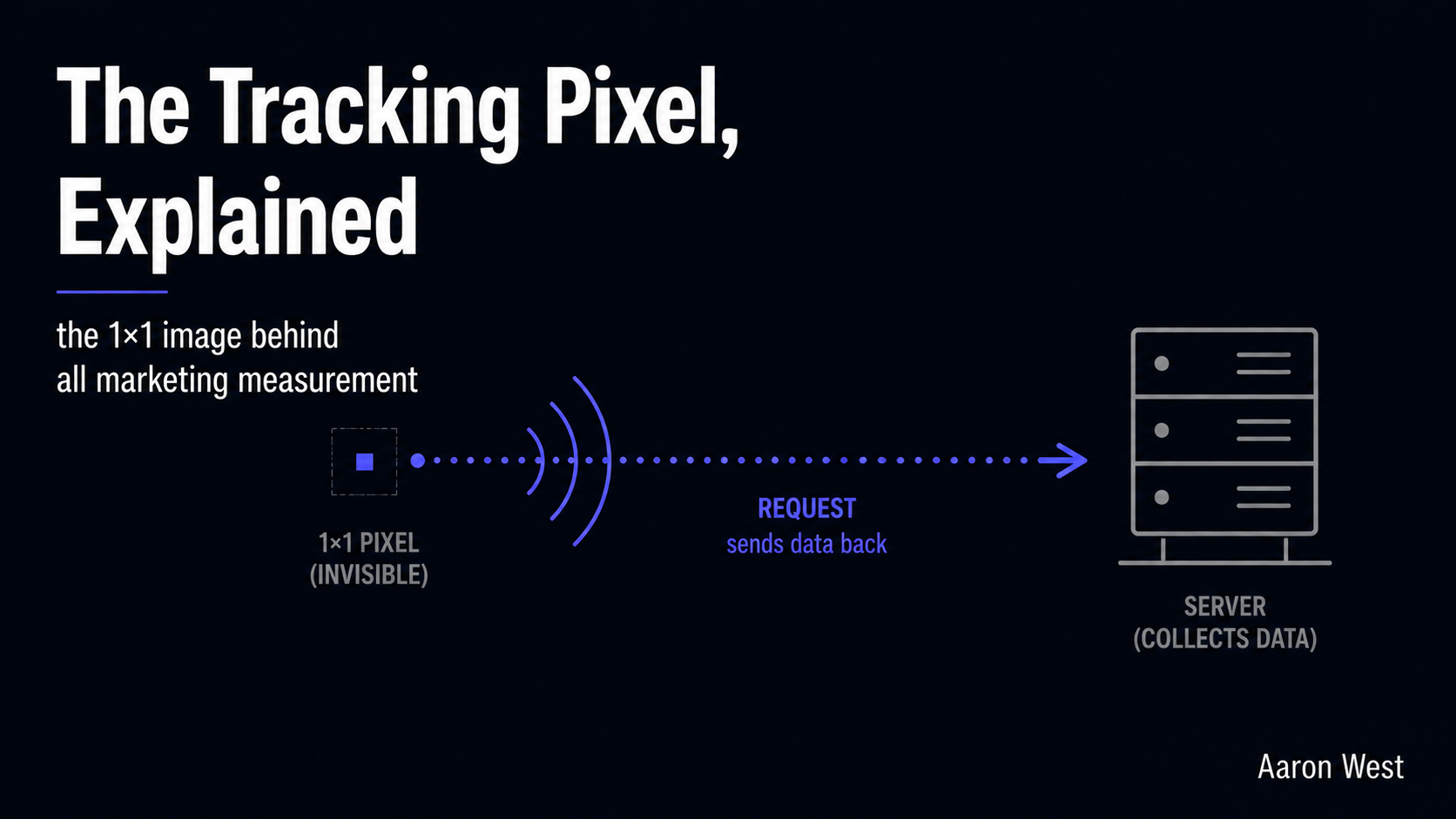
The Tracking Pixel, Explained
A tracking pixel is a tiny, invisible image, usually a single transparent dot one pixel wide, hidden in the code of a web page, email, or ad, and its only job is to quietly report back when something happens. When the page loads, the pixel…
Continue reading...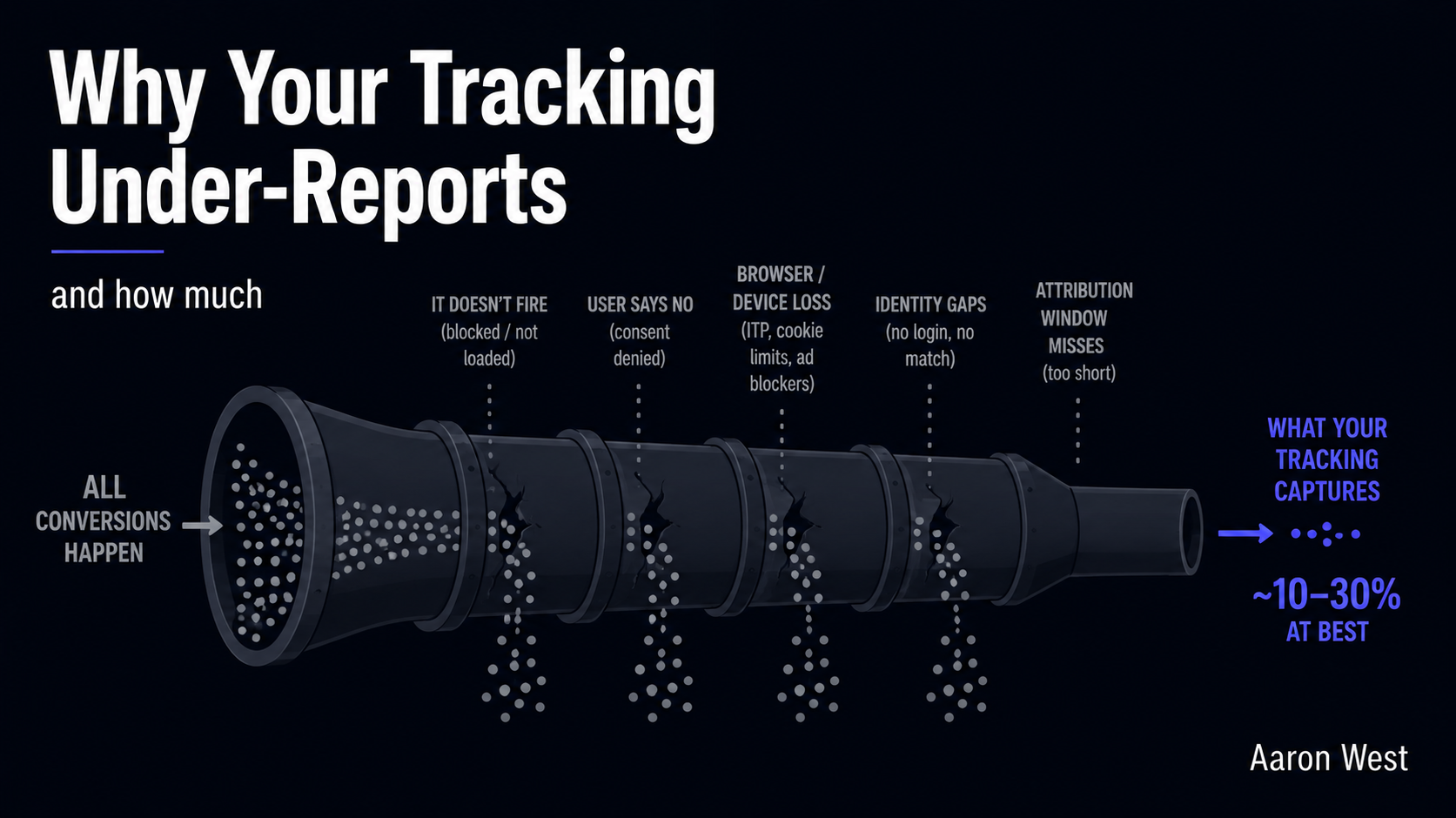
Why Your Tracking Under-Reports (and How Much)
Your analytics is almost certainly showing you fewer conversions than actually happened, and the gap is bigger than most marketers think. Where the deduplication problem makes your platforms claim more sales than you made, the under-reporting problem is the mirror image: a large slice of…
Continue reading...