The E-Commerce Tech Stack, Explained for Non-Engineers: PIM, OMS, ERP, CDP

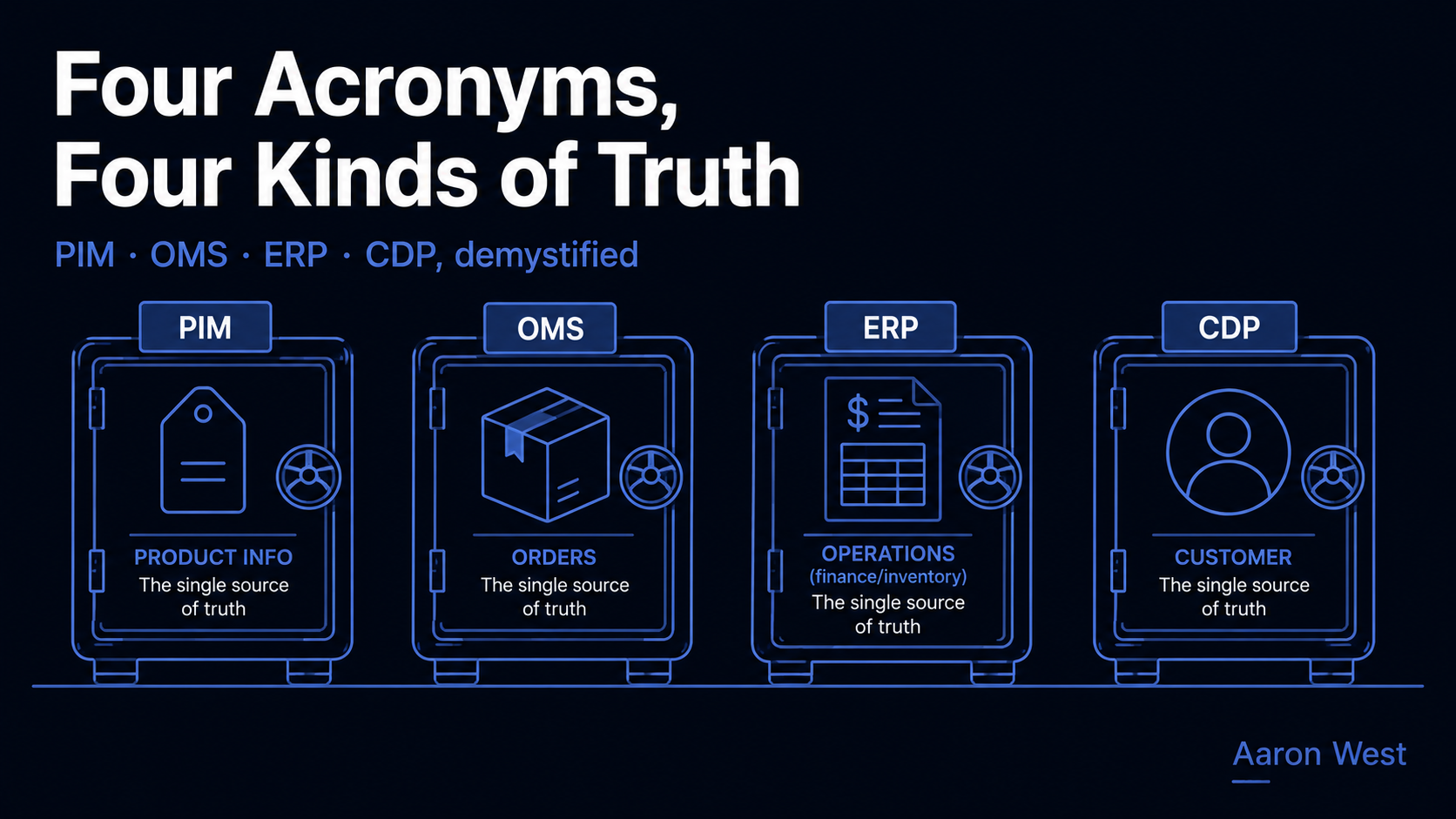
Table of Contents
Behind every e-commerce store of any size sits a stack of systems with intimidating acronyms, PIM, OMS, ERP, CDP, and each one is far simpler than its name suggests. They are just the four places your business keeps its four kinds of truth: your product information, your orders, your operations, and your customers. Understanding what each actually does is the difference between buying the systems you genuinely need and being sold the ones you don't.
This is a core of the Platforms & Tech Stack cluster. The acronyms do a lot of gatekeeping. Let's remove it.
Why a non-engineer needs to know this
When you start out, your store platform does almost everything: it holds the products, takes the orders, tracks a bit of customer data. But as you grow, the platform's built-in version of each job starts to strain, and vendors appear offering specialised systems to take over. You will, eventually, be pitched all four of these acronyms, usually with the implication that a "real" or "serious" business already has them.
Knowing what each system actually does lets you tell a genuine need from a sales pitch. You don't need to operate these systems yourself. You need to understand them well enough to know which problem each one solves, so that when someone says you've "outgrown" your setup, you can check whether that's true or just a path to a sale.
PIM: the truth about your products
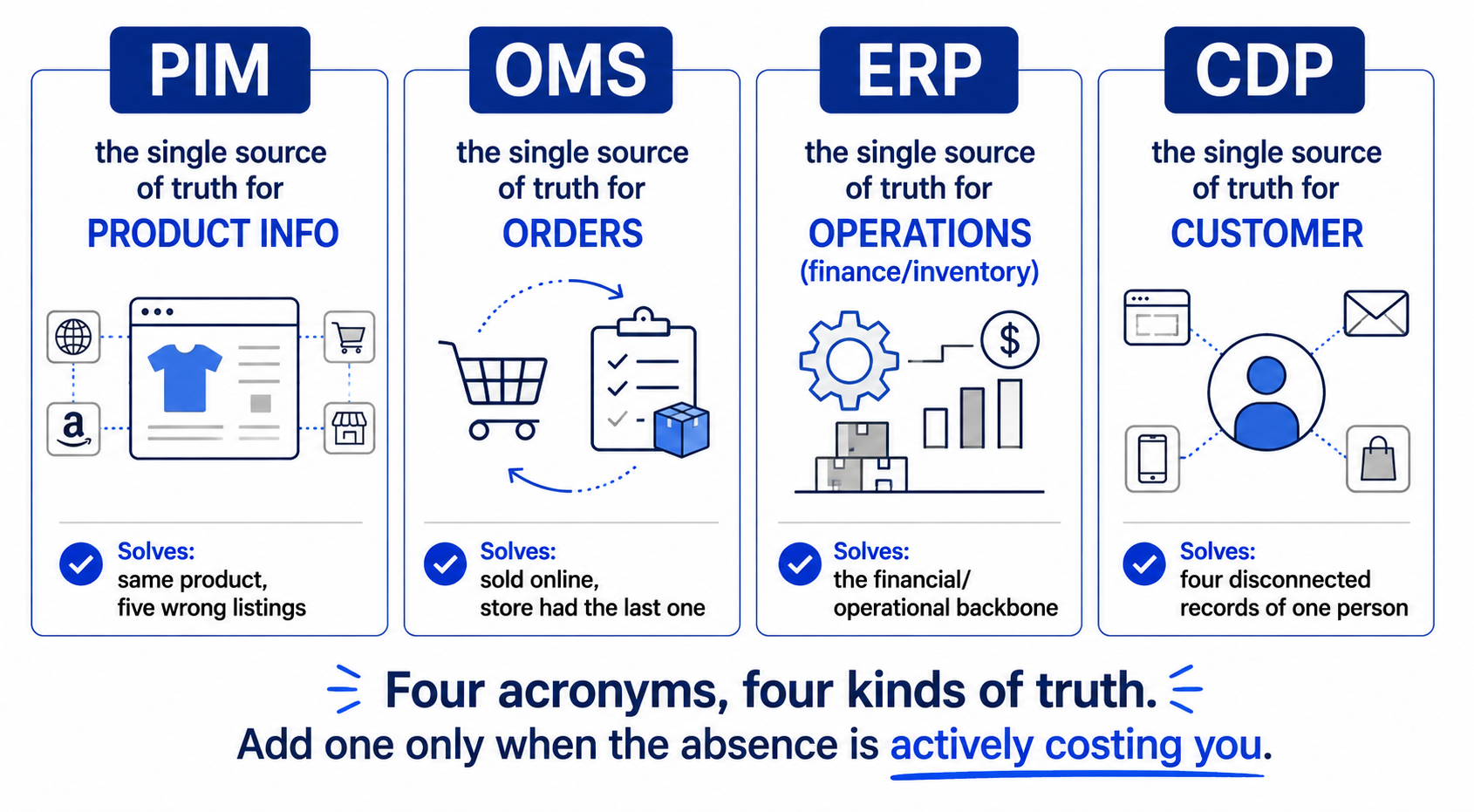
A PIM (Product Information Management) system is the single source of truth for your product data, the descriptions, attributes, images, specifications, everything that describes what you sell. Instead of product information living in five places (the store, a spreadsheet, the marketplace listing, the supplier's file), it lives in one, and feeds out to every channel from there.
The problem it solves is the one every multi-channel store eventually hits: the same product listed five different ways across five places, all slightly wrong, because nobody can keep them in sync by hand. A PIM makes the product data consistent everywhere because there's one master copy. It's the same "clean data is the foundation" principle, given a system. You need one when you have many products across many channels and keeping them aligned by hand has become a job nobody can do well.
OMS: the truth about your orders
An OMS (Order Management System) is the single source of truth for orders, where an order is in its lifecycle, which location or warehouse should fulfil it, how it's routed, and its status, across every channel you sell on.
The problem it solves is the cross-channel one: "we sold it online, but the shop floor had the last unit," or an order that falls between systems because the website and the warehouse don't share a view. An OMS sits above the channels and keeps one truthful picture of every order and the stock behind it. It's the operational half of what makes omnichannel actually work. You need one when you're selling across multiple channels or locations and fulfilment has grown too complex for the store platform to manage alone.
ERP: the truth about your operation
An ERP (Enterprise Resource Planning) system is the operational backbone of the whole business, finance, inventory, procurement, accounting, the core operational data that runs the company behind the storefront. It's the oldest, heaviest, and usually most expensive system in the stack, and it predates e-commerce entirely; plenty of businesses had an ERP long before they had a website.
Because it holds the financial and operational truth, the ERP is often the system the others integrate with, the store, the PIM, and the OMS all need to agree with the ERP about stock, costs, and money. You need one (or you already have one) when you've reached genuine operational scale, where finance, inventory, and procurement are too interconnected to run on separate tools. For a smaller store, a full ERP is usually overkill and a serious expense.
CDP: the truth about your customer
A CDP (Customer Data Platform) is the single source of truth for the customer, it unifies data from every touchpoint (the website, the app, email, support, purchases) into one complete profile per person, usually to power marketing and personalisation.
The problem it solves is the one behind most clumsy marketing: four disconnected records of the same person, so you treat a loyal repeat customer like a stranger, or email someone an offer for something they just bought. A CDP assembles the scattered fragments into one view, which is the single customer view that omnichannel and serious CRM both depend on. You need one when you're doing genuinely data-driven marketing across multiple channels and the fragmented customer picture has become the thing holding it back.
The pattern underneath all four
Once you see it, the acronyms collapse into one simple idea: each system is the single source of truth for one kind of data. PIM for product, OMS for orders, ERP for operations, CDP for customers. That's the whole map. Everything else is detail.
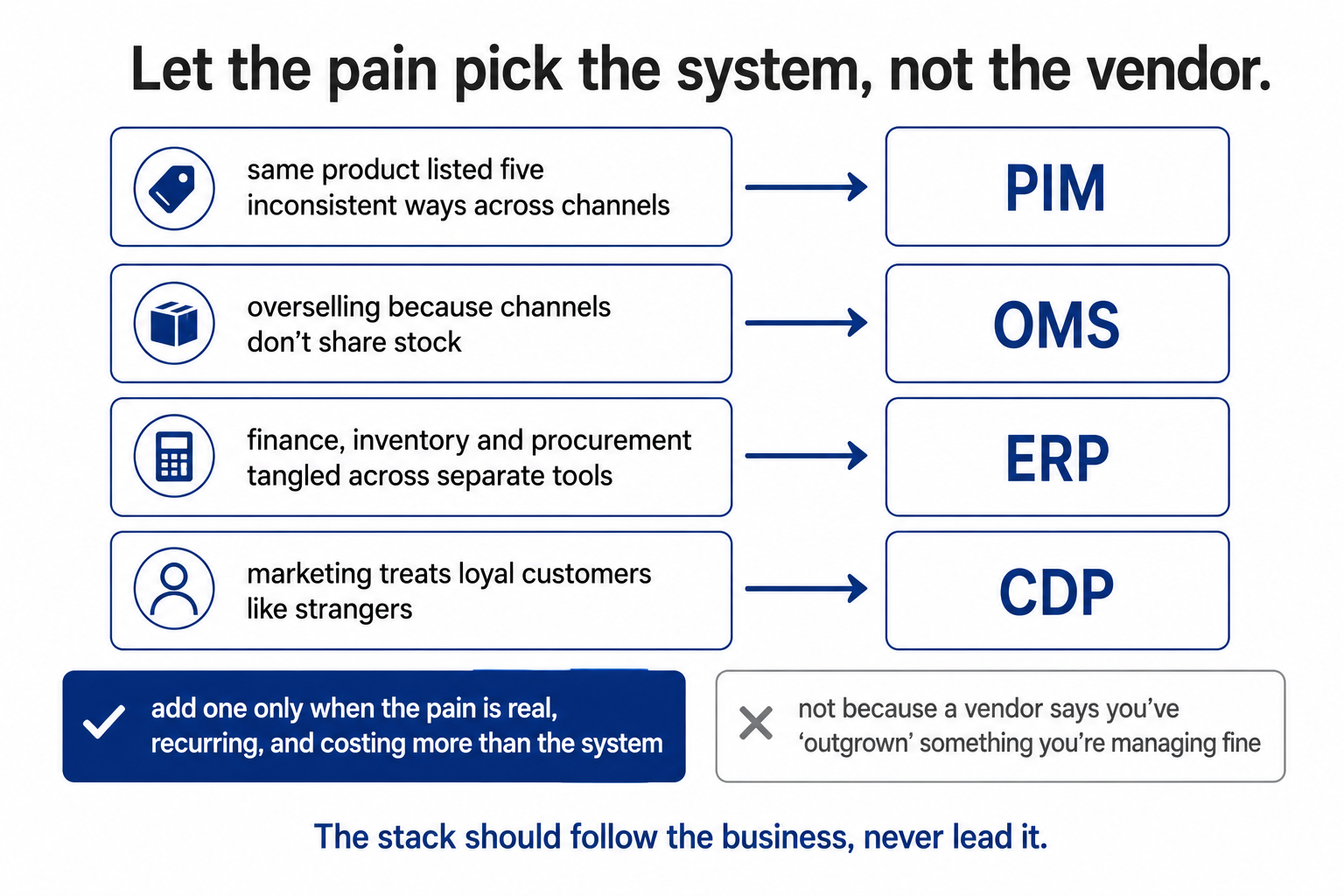
And the practical consequence is just as simple: you do not need all four to start, and most stores shouldn't rush to buy any of them. You add a system when the simpler version, a spreadsheet, or the capability built into your store platform, genuinely stops coping, not when a vendor announces you've "outgrown" something you're actually still managing fine. The trigger is real, recurring pain, not the feeling that a serious business ought to have more systems.
The honest caution
These systems are expensive and integration-heavy. Each one is not just a licence fee but a project, connecting it to everything else, migrating data in, training people, and maintaining it. That cost is worth paying when the absence is actively hurting you, and a waste when it isn't. Many smaller and mid-sized stores run perfectly well on their platform's built-in product, order, and customer features for years, and bolt on a specialised system only when one specific kind of truth has clearly become too big for the built-in tool.
So resist buying a PIM, OMS, ERP, or CDP because it sounds professional or because a competitor has one. Buy it when the pain it removes is real, recurring, and costing you more than the system will.
What this comes down to
The intimidating stack is really just four kinds of truth: your products (PIM), your orders (OMS), your operations (ERP), and your customers (CDP). Understand that map and you can tell exactly which system solves a problem you actually have, and which one a vendor is hoping you'll feel you need.
The stack should follow the business, never lead it. Add a source of truth when the business genuinely outgrows the simpler tool, and not a moment before. Knowing the four acronyms is how you stay the one deciding that, instead of the one being sold it.
A few common questions
What do PIM, OMS, ERP, and CDP actually mean? They're the four systems that hold your business's four kinds of truth. PIM (Product Information Management) is the single source of truth for product data, fed out to every channel. OMS (Order Management System) is the single source of truth for orders and the stock behind them across channels. ERP (Enterprise Resource Planning) is the operational backbone, finance, inventory, procurement, accounting. CDP (Customer Data Platform) is the single source of truth for the customer, unifying every touchpoint into one profile. Each is simpler than its acronym: one system, one kind of truth.
Do I need all of these systems? No, and most stores shouldn't rush to buy any of them. Your store platform handles versions of all four jobs when you start. You add a specialised system only when the built-in version or a spreadsheet genuinely stops coping, when keeping product data aligned by hand has become impossible (PIM), fulfilment across channels is too complex (OMS), operations are too interconnected to run on separate tools (ERP), or fragmented customer data is holding back your marketing (CDP). The trigger is real recurring pain, not the feeling that a serious business needs more systems.
Which system should I add first? Whichever solves the kind of pain you're actually feeling. If the same product is listed five inconsistent ways across channels, that's a PIM problem. If you're overselling because channels don't share stock, that's an OMS problem. If finance, inventory, and procurement are tangled across disconnected tools, that points to ERP. If your marketing treats loyal customers like strangers because their data is scattered, that's a CDP problem. Let the symptom choose the system, not the vendor.
Are these systems worth the cost? Each one is a project, not just a licence: integration, data migration, training, and maintenance. That cost is worth paying when the absence is actively hurting you and a waste when it isn't. Many smaller and mid-sized stores run fine on their platform's built-in features for years and add a specialised system only when one kind of truth has clearly outgrown the built-in tool. Buy when the pain is real and recurring, not because it sounds professional.
You should also read:
The E-Commerce Platform Decision, Honestly: How to Actually Choose
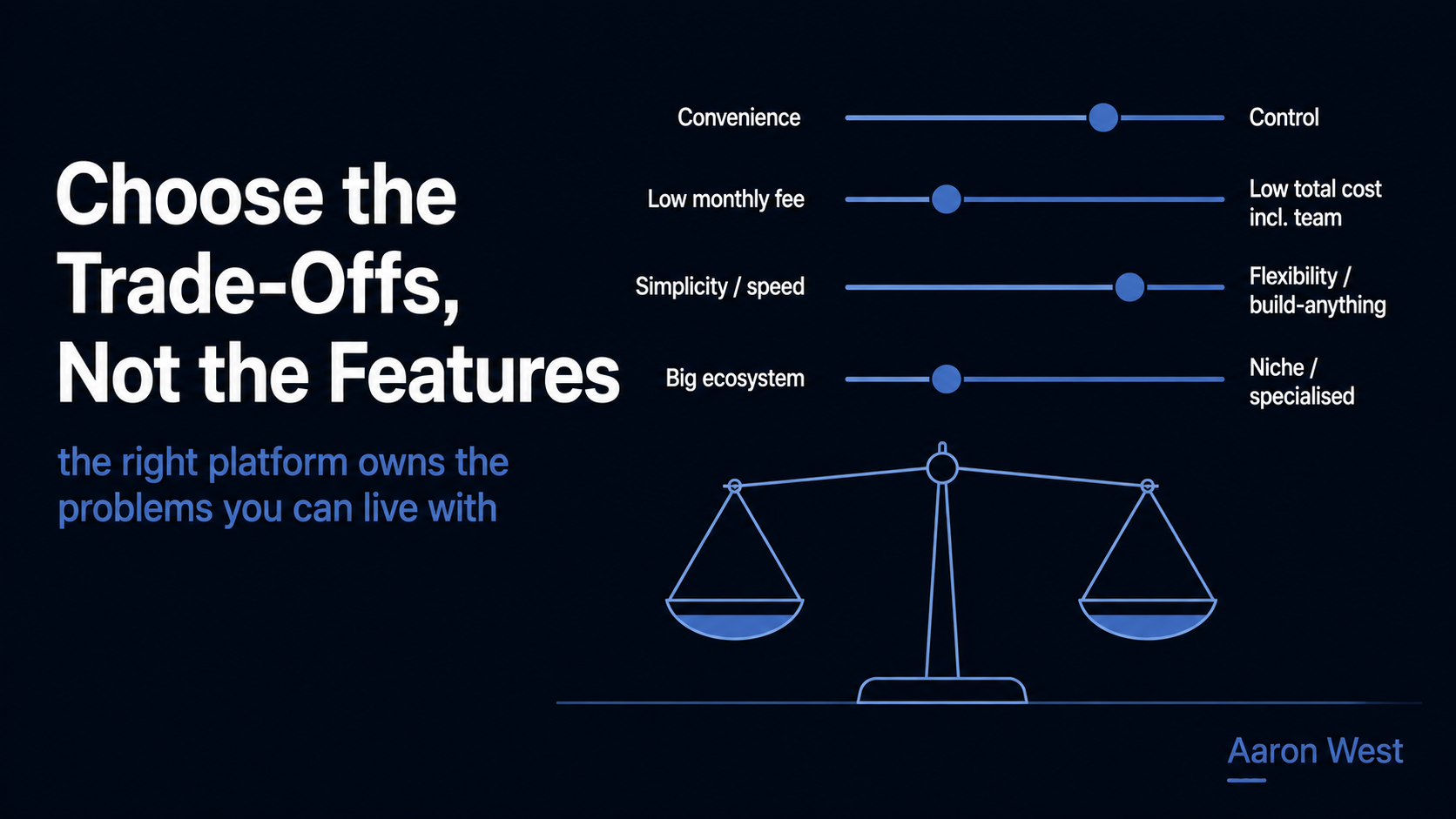
Choosing an e-commerce platform is a decision about which problems you want to own, not which feature list is longest. The right platform is the one whose trade-offs match your actual constraints, your team, your budget, your need for control, your speed, not the one…
Continue reading...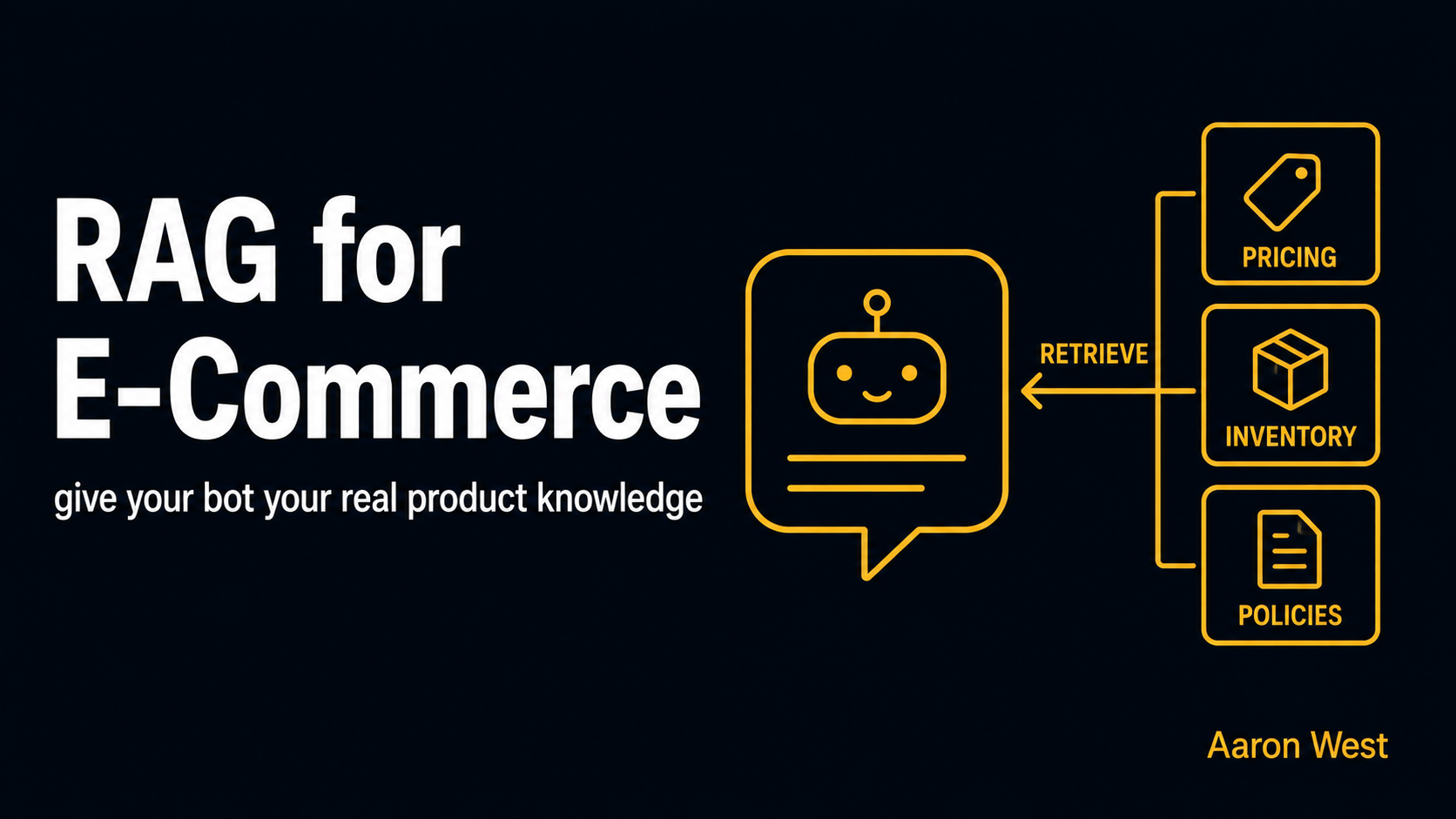
RAG Explained for E-Commerce: Giving a Bot Your Product Knowledge Without Retraining It
If you want an AI assistant that actually knows your store, your real products, your current prices, your live stock, your specific return policy, the technique you need is RAG, retrieval-augmented generation. It connects the AI to your live business data so it answers from…
Continue reading...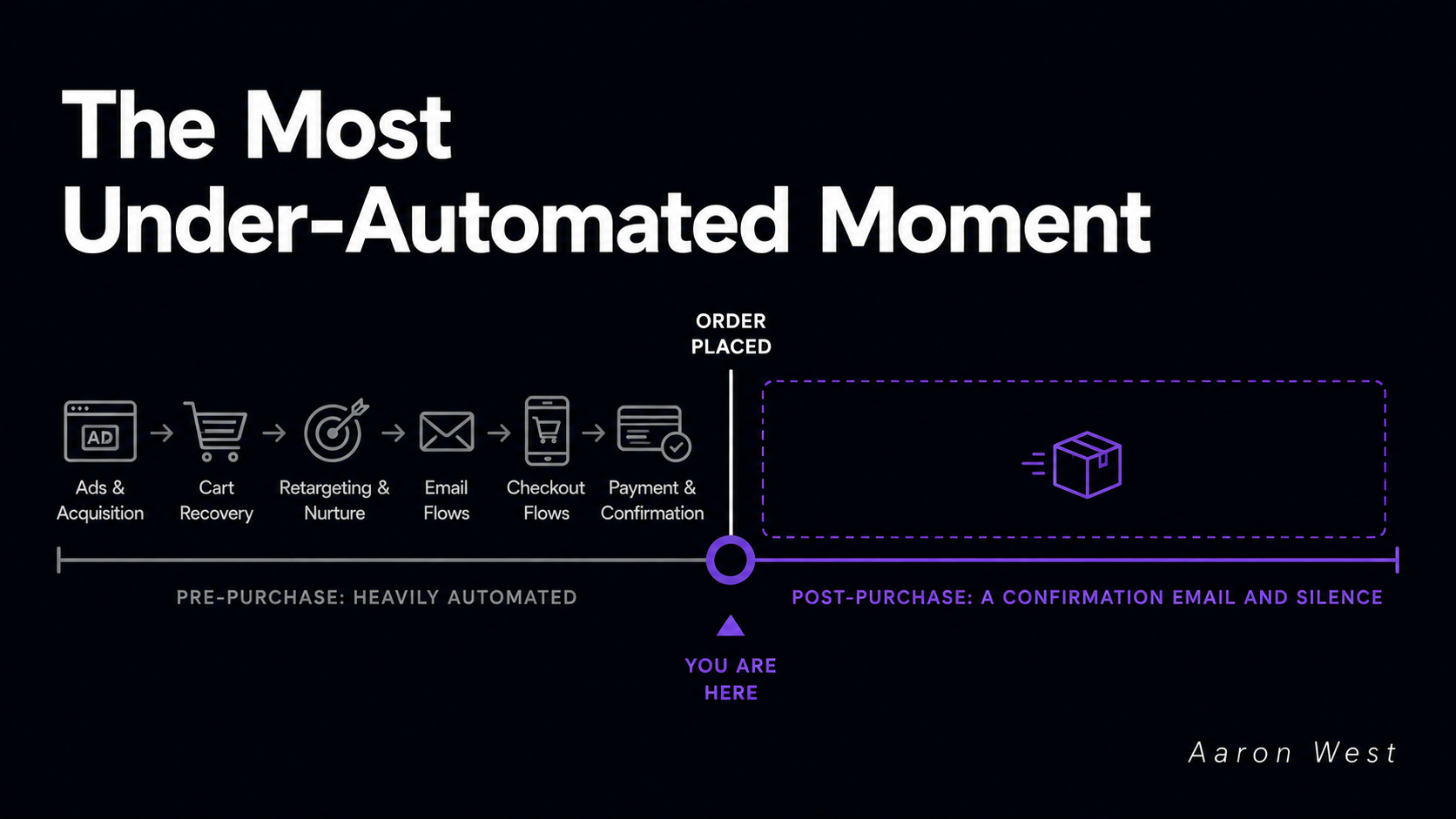
Post-Purchase Is the Most Under-Automated Moment in E-Commerce
Almost every store pours its automation budget into the moment before the sale and abandons the customer the moment after it. Cart recovery, retargeting, checkout nudges, all heavily automated. Then the order goes through, and the experience falls off a cliff into a generic "thanks…
Continue reading...