What Omnichannel Actually Requires (and What It Doesn't)

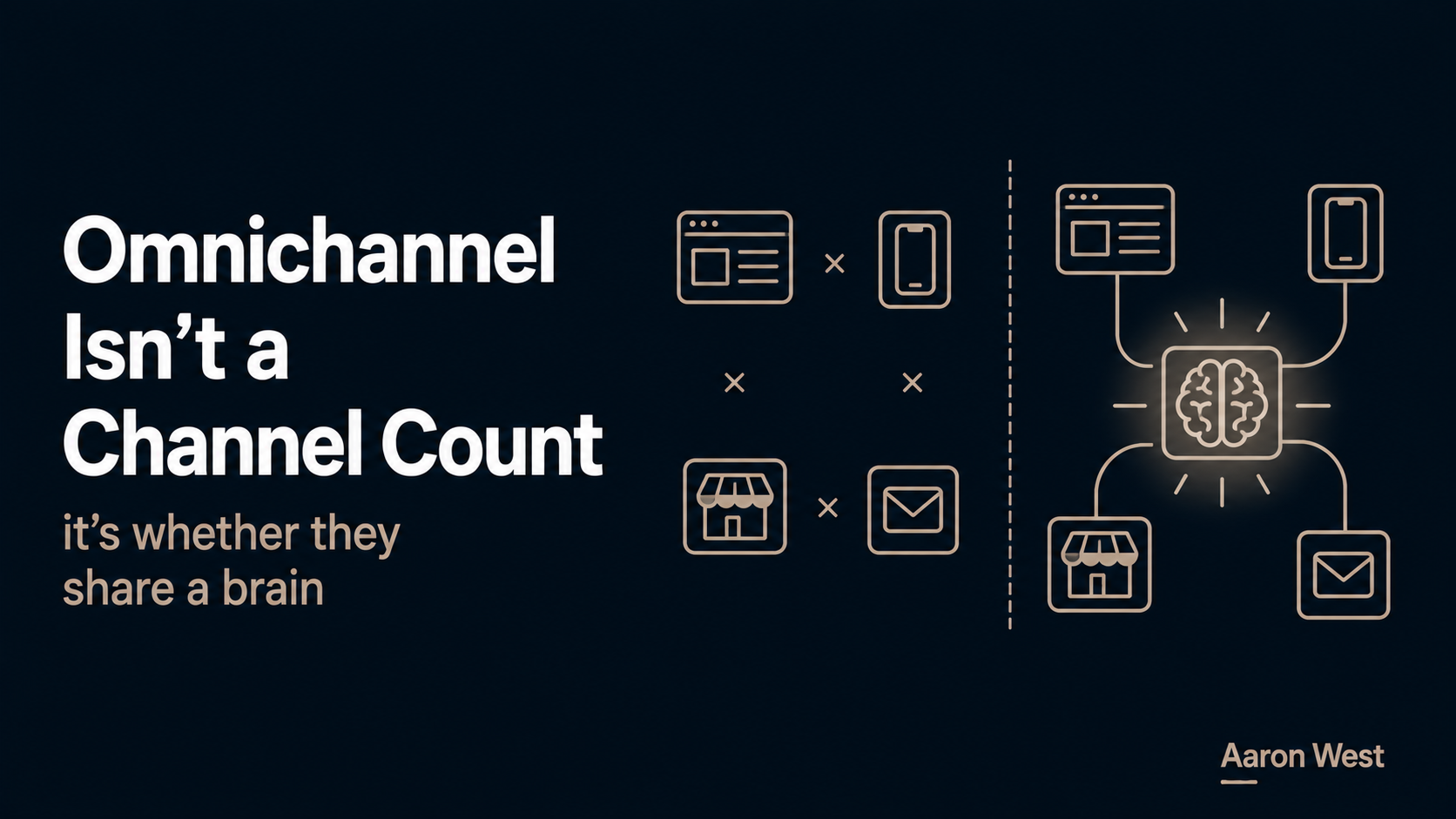
Table of Contents
Omnichannel means a customer experiences your brand as one continuous relationship across every channel, website, app, store, email, support, rather than a set of disconnected silos that don't know about each other. It requires one shared view of the customer and the inventory underneath all those channels. That shared foundation, not the number of channels, is the hard part and the whole point.
This is a reference piece in the E-Commerce Foundations cluster. "Omnichannel" is one of the most misused words in retail, usually meaning "we're on lots of channels," which is something else entirely.
Multichannel vs omnichannel: the distinction that matters
These get used interchangeably and they shouldn't be.
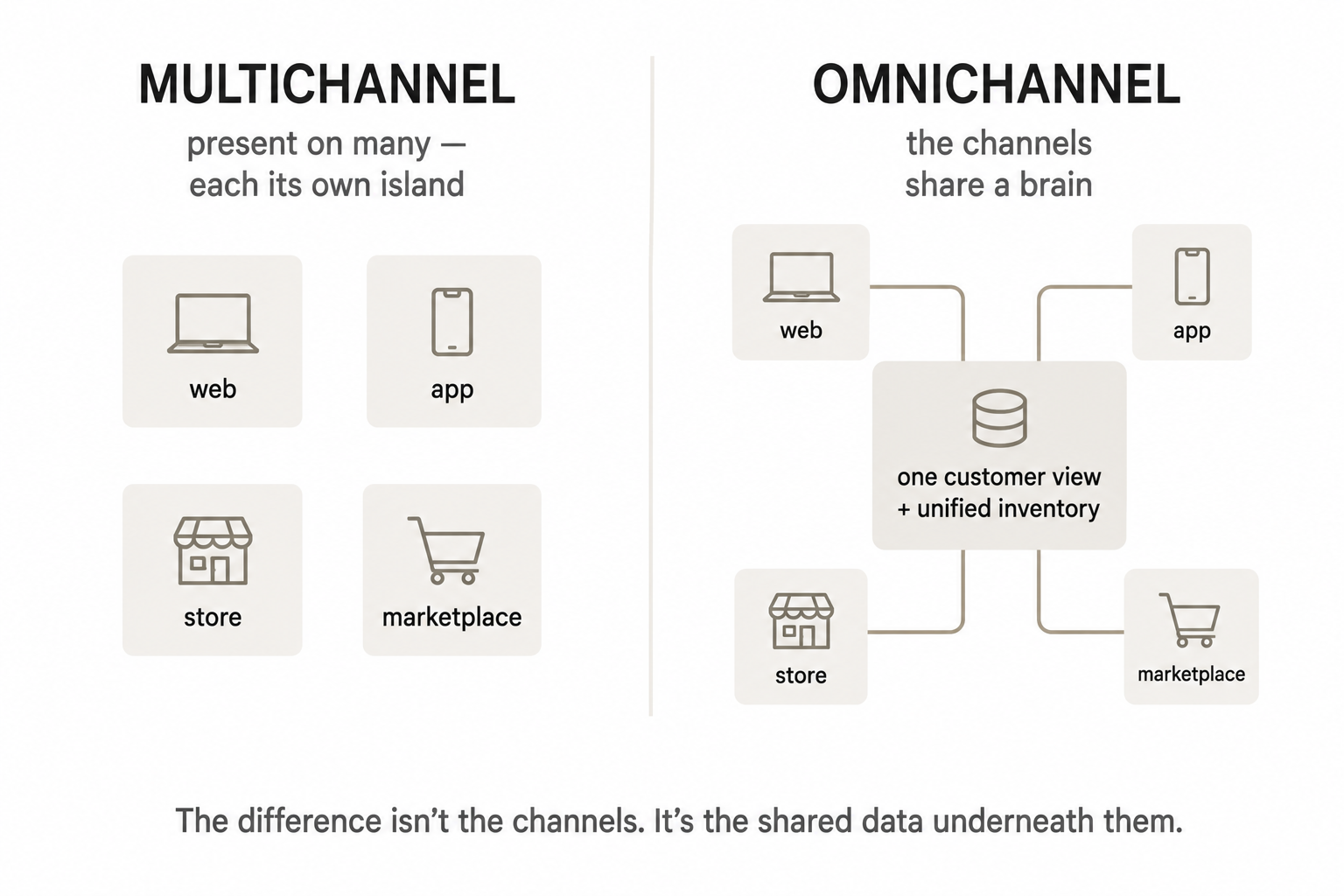
Multichannel means you're present on many channels, each operating independently. You have a website, an app, a store, a marketplace listing, and none of them know what the others are doing. The website doesn't know you browsed in the app this morning. The store doesn't know your online order history. Each channel is its own island.
Omnichannel means those channels share data, so the experience is continuous. You start a cart on your phone and finish it on your laptop and it's the same cart. You buy online and return in store and the system recognises both. You contact support and they can see your whole history across every touchpoint. The channels share a brain.
Being on many channels is multichannel. Being on channels that know about each other is omnichannel. Most "omnichannel strategies" are really multichannel with a more impressive word attached, and the gap between the two is exactly the work most people skip.
What it actually requires
Here's the unglamorous truth the word hides: omnichannel isn't about adding more channels. It's about building the shared foundations underneath the channels you already have. Two things, specifically:
- A single customer view. One profile that follows the customer across every touchpoint, so the app, the website, the store, and support are all looking at the same person and the same history, not four disconnected records.
- Unified inventory and order data. Every channel sees the same stock levels and the same order state in real time, so an item isn't "available" online while it's actually sold out in the warehouse, and a return started in store shows up against the online order.
Without those two foundations, "omnichannel" is theatre, a set of channels wearing a costume. The requirement is integration, not presence. That's why it's hard: you're connecting systems that often weren't built to talk to each other, and that plumbing is far less glamorous than launching another channel.
What it does not require
Now the de-hype, because this is where most budgets get wasted. You do not need to be on every channel to be omnichannel. Omnichannel is about continuity, not coverage.
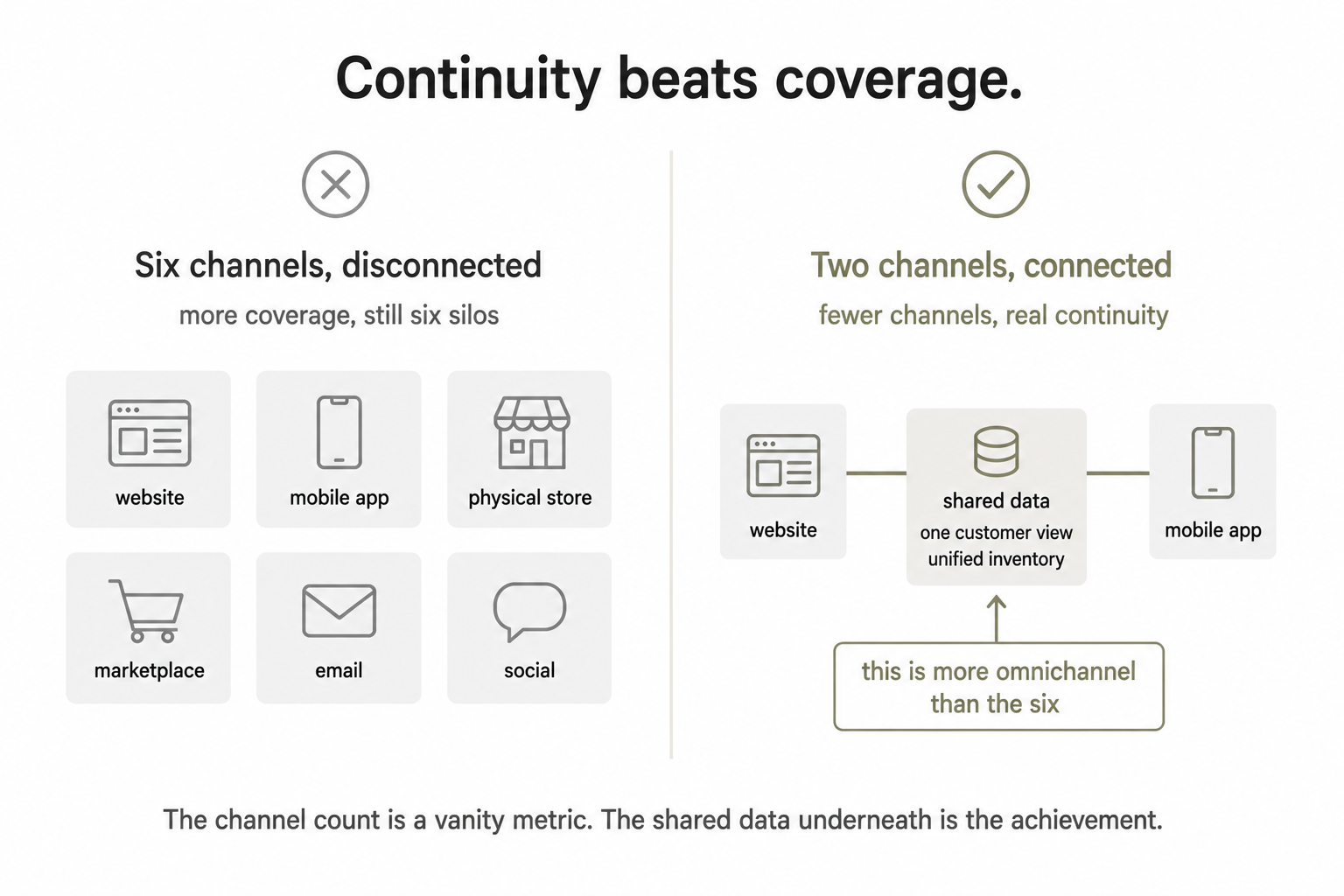
A store on two channels that genuinely share a brain is more omnichannel than a store on six channels that don't. Chasing channel count, "we need to be on TikTok Shop and the marketplace and have an app and a kiosk", while the channels you already have still can't see each other, is the common and expensive mistake. You end up with more silos, not fewer, and call it progress.
The number of channels is a vanity metric. The integration underneath is the actual achievement. Fewer, connected channels beat more, disconnected ones every time.
Where it earns its keep
The payoff for all that integration work shows up in a specific set of moments customers genuinely value, the "buy online, do something in store" cases:
- Click-and-collect, order online, pick up in store. (More on this in the fulfilment cluster.)
- Buy online, return in store, the convenience that removes a real friction from online buying.
- Check store stock online, see whether the item is actually on the shelf near you before making the trip.
Every one of these is impossible without the shared inventory and customer view. They're not features you can bolt on; they fall out naturally once the foundation exists. That's the reward for doing the unglamorous integration work: experiences competitors without the foundation simply cannot offer.
The honest limit
Full omnichannel integration is genuinely hard and expensive, because connecting systems that weren't designed to share data is real, ongoing engineering work. And not every business needs the full version. A pure-online store with no physical presence needs far less omnichannel machinery than a retailer running stores, a warehouse, and a website that all have to agree on stock and customer history.
So match the ambition to the customer journeys you actually have. If your customers never cross from online to a physical store because you don't have one, you don't need buy-online-return-in-store, you need your web, app, and email to share a customer view, and that's a smaller, achievable goal. Don't build a cross-channel cathedral for journeys your customers never take.
What this comes down to
Omnichannel isn't a channel-count contest. It's a continuity promise, that whoever the customer is and wherever they show up, the relationship picks up where it left off. And that promise is only ever as good as the shared data underneath it. No shared customer view and unified inventory, no omnichannel, however many channels you're on.
So stop counting channels and start connecting them. Be on fewer channels that know about each other, not more that don't. The brand that feels seamless to the customer is the one whose systems quietly agree behind the scenes.
A few common questions
What's the difference between multichannel and omnichannel? Multichannel means you're present on many channels that each operate independently, the website doesn't know what you did in the app, the store doesn't know your online history. Omnichannel means those channels share data so the experience is continuous: the same cart across devices, buy-online-return-in-store, support that sees your whole history. Being on many channels is multichannel; being on channels that know about each other is omnichannel. Most "omnichannel strategies" are really multichannel with a nicer word.
What does omnichannel actually require? Two shared foundations underneath the channels: a single customer view (one profile following the customer across every touchpoint) and unified inventory and order data (every channel seeing the same stock and order state in real time). Without those, omnichannel is theatre. The requirement is integration, not presence, which is why it's hard: you're connecting systems that often weren't built to talk to each other, and that plumbing is far less glamorous than launching another channel.
Do I need to be on every channel to be omnichannel? No, and believing you do is the expensive mistake. Omnichannel is about continuity, not coverage. A store on two channels that genuinely share data is more omnichannel than one on six that don't. Chasing channel count while your existing channels still can't see each other just creates more silos. The number of channels is a vanity metric; the integration underneath is the real achievement.
Does every business need full omnichannel? No. Full integration is hard and expensive because it means connecting systems that weren't designed to share data, and a pure-online store with no physical presence needs far less of it than a retailer running stores, a warehouse, and a website that must all agree on stock and customer history. Match the ambition to the journeys your customers actually take, if they never cross from online to a store you don't have, you need a shared customer view across web, app, and email, not a cross-channel cathedral.
You should also read:
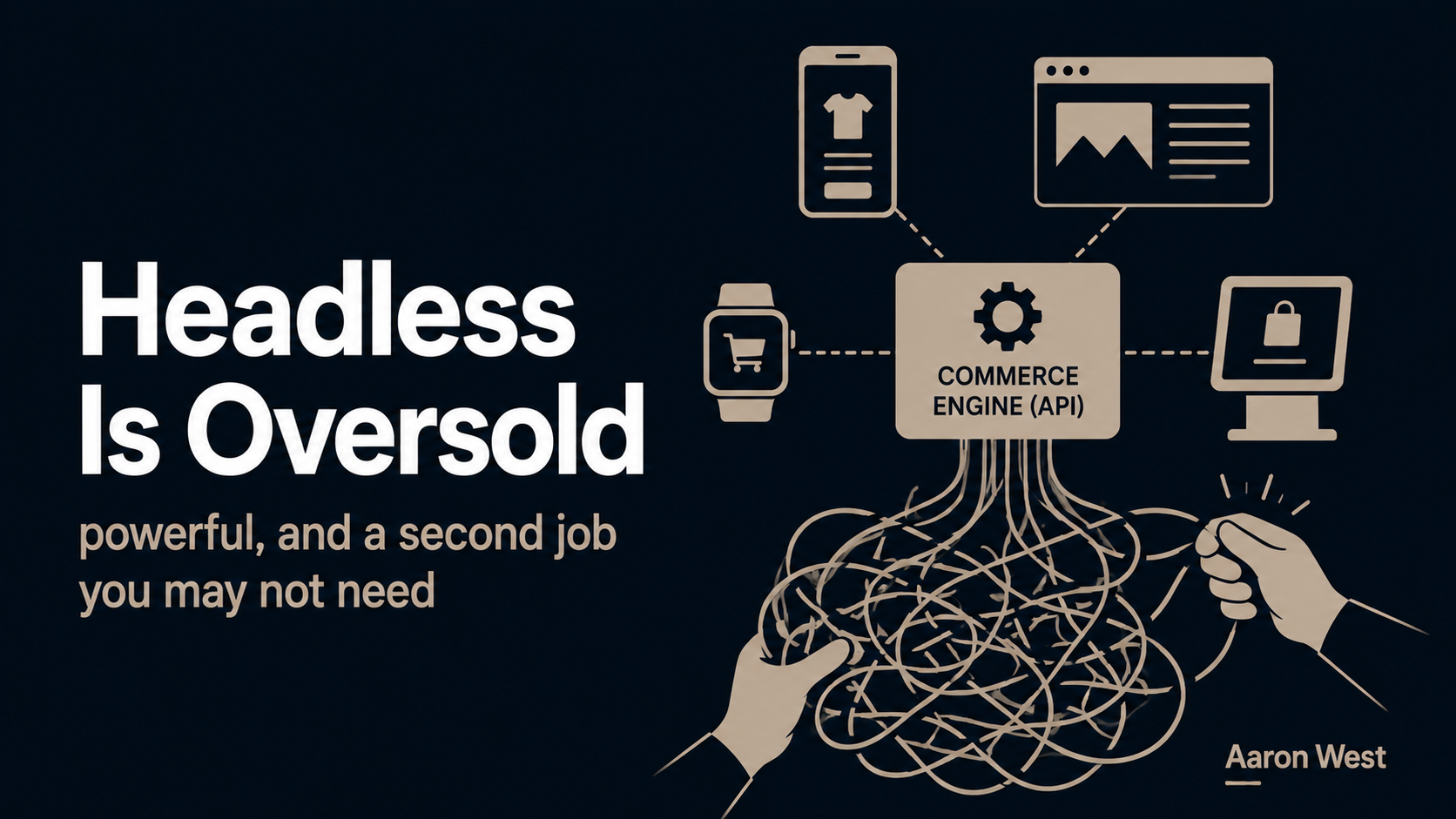
What Is Headless Commerce, and Why It's Oversold for Most Stores
Headless commerce means splitting your store's front end (what the customer sees) from its back end (the engine that handles products, carts, and orders), so the two talk through an API instead of being one bundled system. It buys real flexibility. And for most stores,…
Continue reading...
Everything I Know About Building Chatbots That Actually Work
The hard part of building a chatbot was never the technology. I learned this in 2019, building a natural-language chatbot from scratch for a large hotel group, across dozens of locations and several languages, back when "conversational AI" was a research term and not a…
Continue reading...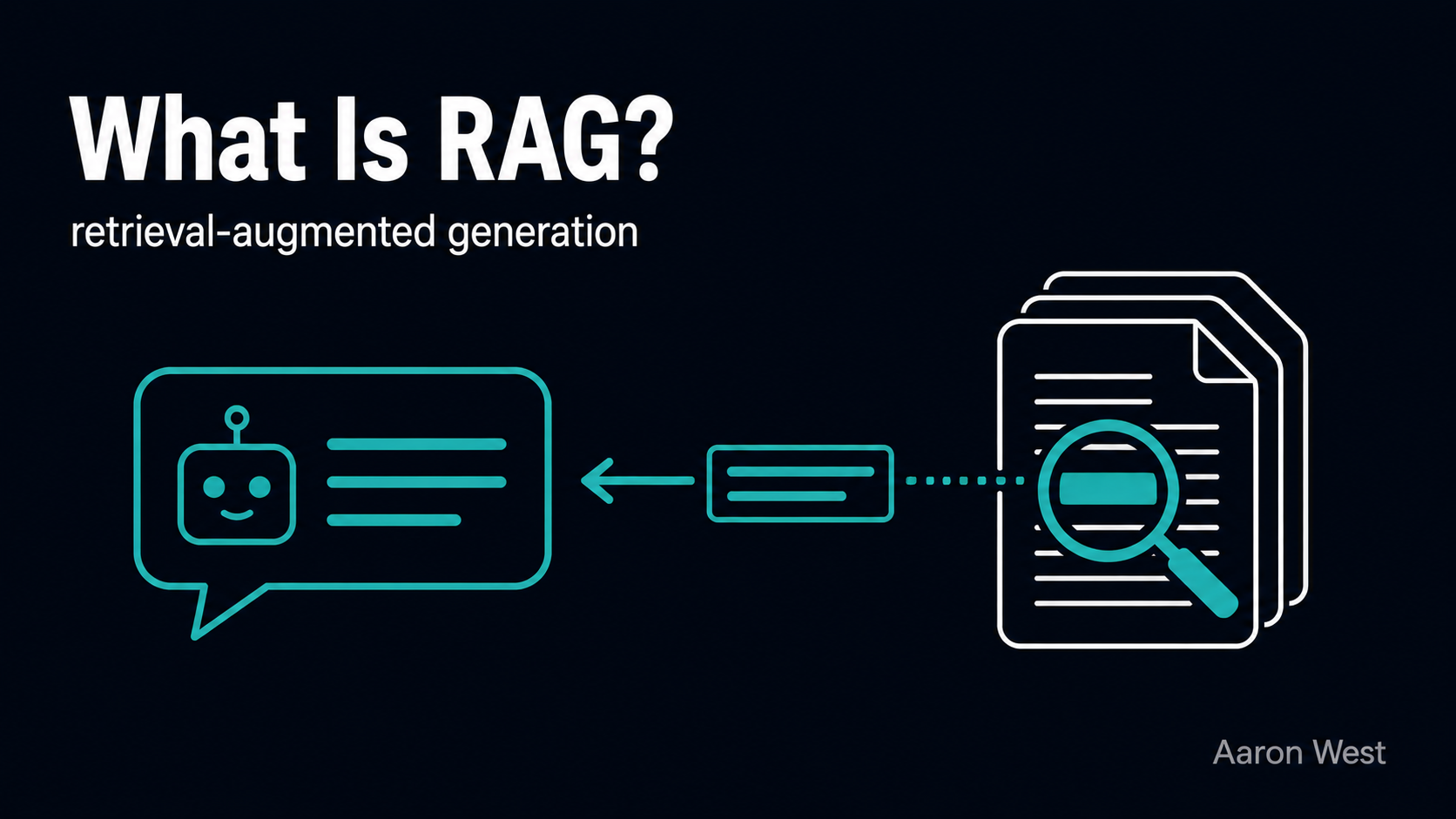
What Is RAG (Retrieval-Augmented Generation), and Why Everyone Is Using It
RAG, retrieval-augmented generation, is a way of making an AI model answer from a specific, trusted set of documents instead of relying only on what it absorbed during training. Before the model writes its answer, the system goes and fetches the most relevant material from…
Continue reading...