CDN, Edge, Cache: The Three Concepts Behind a Fast Global Store

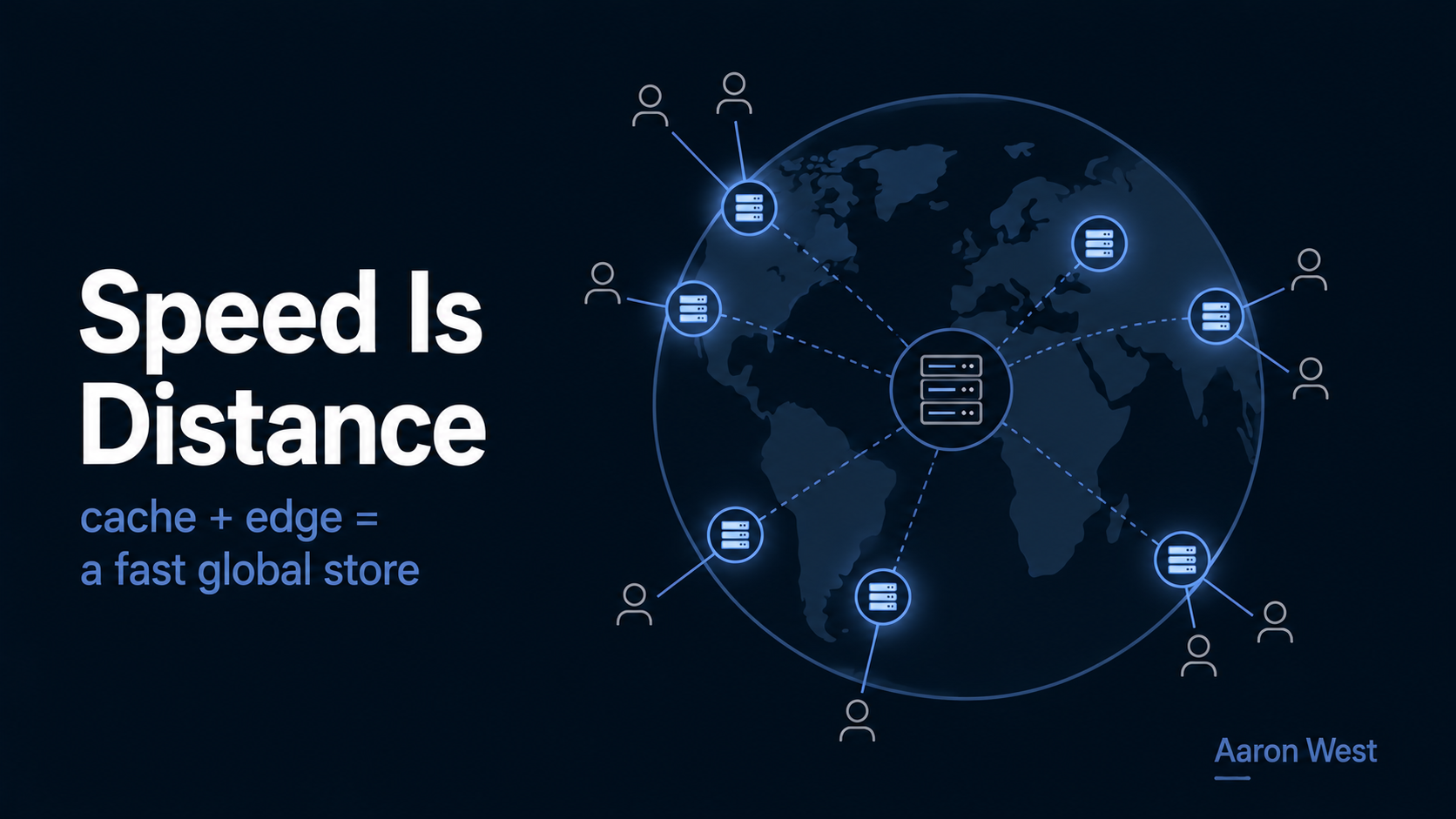
Table of Contents
A CDN (content delivery network) makes your store fast for everyone, everywhere, by keeping copies of your content on servers physically close to your customers, so the data travels a short distance instead of crossing the planet. The three ideas behind it, the cache, the edge, and the CDN itself, are simpler than they sound, and together they explain why a well-built global store feels fast no matter where you open it.
This is a reference piece in the Cloud & Infrastructure cluster, written for the non-engineer who keeps seeing these words and nodding along. By the end you'll actually understand them.
The core idea: distance is latency
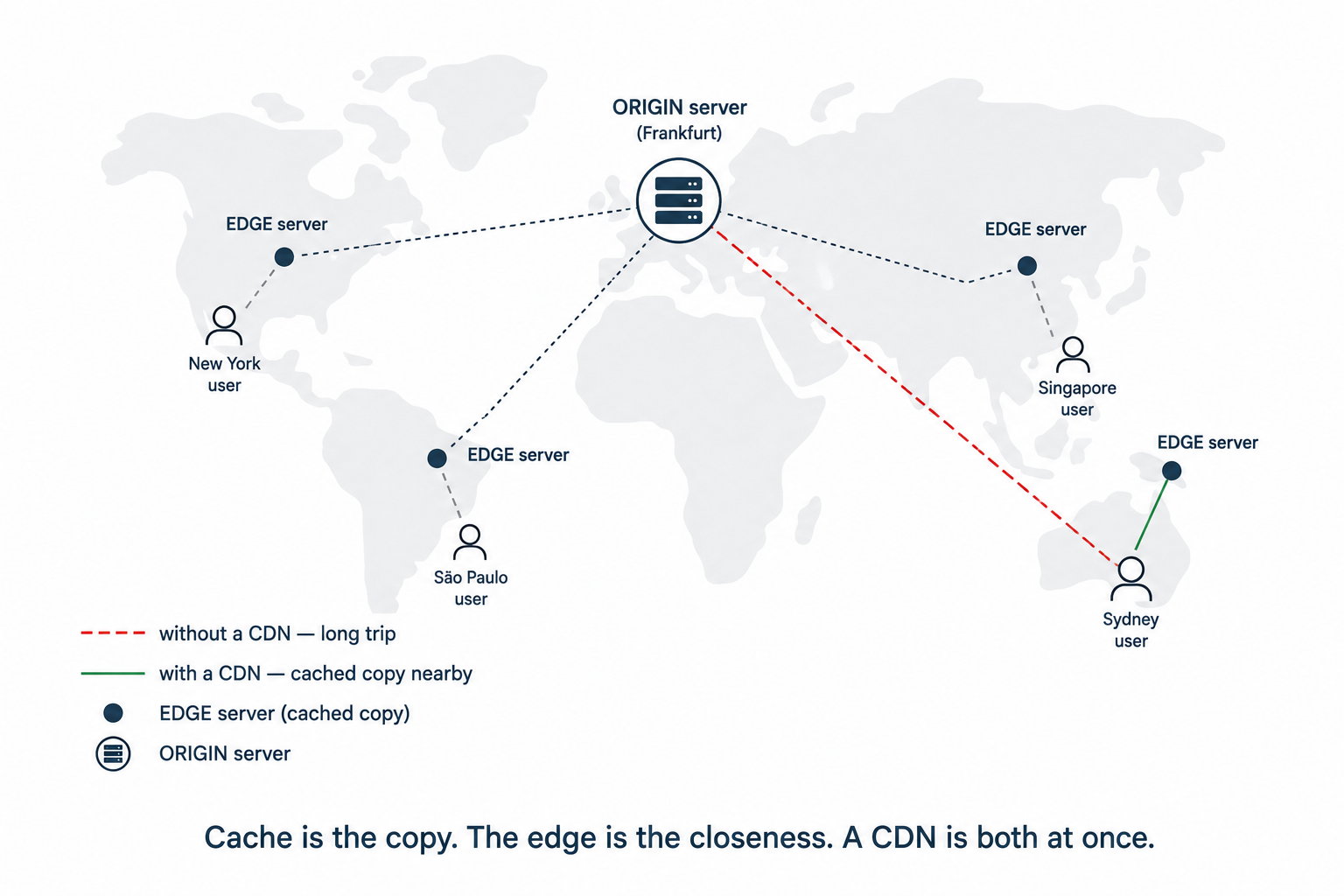
Start with the thing nobody says out loud. Data travels at a finite speed. When a shopper in Sydney loads a store whose server lives in Frankfurt, every request makes a round trip across the planet and back, and that journey takes real time the shopper feels as the page hanging for a beat before it appears.
This is latency, the delay caused by distance, and it's why a site that feels instant at home can feel sluggish on the other side of the world. The site isn't badly built. The data just has too far to travel. Most "slow website" problems are, underneath, "the data had too far to travel" problems. Once you see speed as a distance question, the fix becomes obvious: get the content closer to the customer. The three concepts below are just three parts of doing exactly that.
Cache: keep a copy of the answer
A cache is a saved copy of something, kept close, so you don't have to fetch or rebuild the original every time. That's the whole idea.
Your browser caches images from sites you visit, so the second time you load a page it doesn't re-download everything, it reuses the copies it already has. A server caches a built page, so it doesn't have to reassemble it from scratch for every single visitor. In both cases the principle is the same: doing work once and reusing the result is faster than doing it again. Cache is just "keep a copy of the answer so you don't redo the work." It shows up everywhere in computing, and it's half of what makes a CDN fast.
The edge: servers close to the customer
"The edge" sounds mysterious and isn't. It's the network of servers spread out around the world, positioned geographically close to where users actually are, the outer edge of the network, nearest the customer, as opposed to the central origin server where your store actually lives.
Serving something "from the edge" just means serving it from a server near the person asking, instead of from the one distant origin. If your origin is in Frankfurt but there's an edge server near Sydney, the Sydney shopper can be served from down the road instead of from across the planet. The edge is closeness, expressed as infrastructure.
The CDN: cache plus edge, together
Now the two ideas combine. A CDN is a network of edge servers all over the world, each holding a cached copy of your content. That's it. Cached copies, at the edge, close to everyone.
When a shopper in Sydney loads your store, the CDN serves your images and pages from a nearby edge server holding a recent copy, not from Frankfurt. Short distance, fast site. A shopper in Berlin gets served from an edge server near them. Everyone, everywhere, is served from somewhere close, so everyone gets a fast experience regardless of where your origin server happens to live. The CDN is how a single store, hosted in one place, manages to feel local to the entire world at once.
What this means for an e-commerce store
This isn't abstract infrastructure trivia. It directly shapes three things you care about:
- Heavy content loads fast everywhere. Product images, usually the heaviest part of a page, are served from the edge, so they appear quickly for an international shopper, not just a local one.
- Your store survives traffic spikes. When a campaign or a sudden rush sends a wave of visitors, the edge servers absorb the load that would otherwise overwhelm your single origin. The CDN is a shock absorber as much as a speed boost.
- International customers get local speed. A shopper abroad gets the same fast experience as one next door, which matters enormously if you sell across borders. Speed is conversion, and a slow site for half your customers is lost sales for half your customers.
If you sell to more than one region, a CDN isn't a nice-to-have. It's most of how you deliver a fast experience to all of them at once.
The one gotcha: cache invalidation
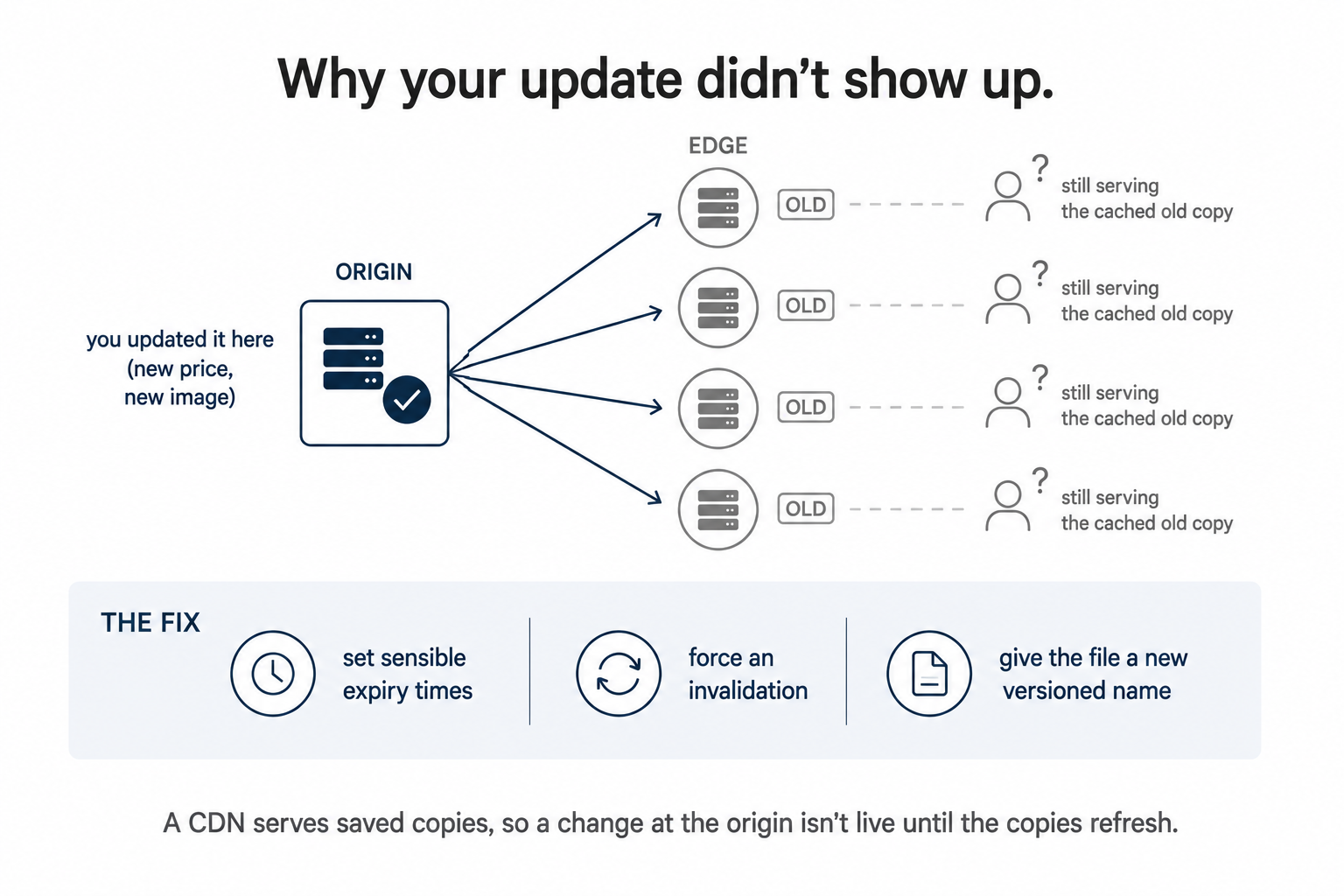
There's a catch worth knowing, because it will bite you eventually. Caching means serving a saved copy, which is great for speed and awkward the moment you change something. Update a price or swap a product image, and the cached copies sitting on edge servers around the world can keep serving the old version until they expire or you explicitly force a refresh. This is cache invalidation, and it's the source of the classic, maddening "I updated it but the site still shows the old one" problem.
The practical fixes are simple once you know to expect it: set sensible expiry times so copies refresh on their own, force an invalidation when you push an urgent change, or give changed files a new name (a versioned filename) so the CDN treats them as new content and fetches them fresh. The point is just to know the trap exists, so a stale price or a wrong image doesn't blindside you the first time.
What this comes down to
A fast global store isn't magic and it isn't luck. It's copies of your content kept close to the people asking for them. Cache is the copy. The edge is the closeness. A CDN is both at once, a worldwide net of nearby cached copies, so that no customer, wherever they are, has to wait for data to cross the planet.
Distance is the enemy of speed. Proximity is the fix. The CDN is just the most effective way anyone has found to put your store close to everyone at the same time.
A few common questions
What is a CDN, simply? A content delivery network: a network of servers spread around the world, each holding a cached copy of your content, so customers are served from a server physically near them instead of from your one central origin server. The result is that your store loads fast for everyone, everywhere, because the data travels a short distance instead of crossing the planet. It's cached copies, kept at the edge, close to everyone.
What's the difference between the edge and the origin? The origin is the single central server where your store actually lives. The edge is the network of servers positioned close to users around the world, the outer edge of the network, nearest the customer. Serving "from the edge" means serving from a server near the person asking rather than from the distant origin, which is what makes a globally hosted store feel local everywhere.
What is caching? Keeping a saved copy of something close by so you don't have to fetch or rebuild the original every time. Your browser caches images so it doesn't re-download them; a server caches a page so it doesn't reassemble it for every visitor; a CDN caches your content on edge servers worldwide. The principle is always the same: do the work once and reuse the result, because reusing a copy is far faster than redoing the work.
Why does my site still show the old image after I updated it? Cache invalidation. Because a CDN serves saved copies, the old version can keep being served from edge servers until those copies expire or you force a refresh. It's the classic "I changed it but it still shows the old one" problem. Fix it by setting sensible expiry times, forcing an invalidation for urgent changes, or giving the changed file a new versioned name so the CDN treats it as new content and fetches it fresh.
You should also read:
Where Online Stores Lose the Sale
Most online stores spend almost all their energy trying to get more people to show up, and almost none on the fact that the overwhelming majority of the people who already showed up leave without buying. This is backwards. You have, sitting in your analytics…
Continue reading...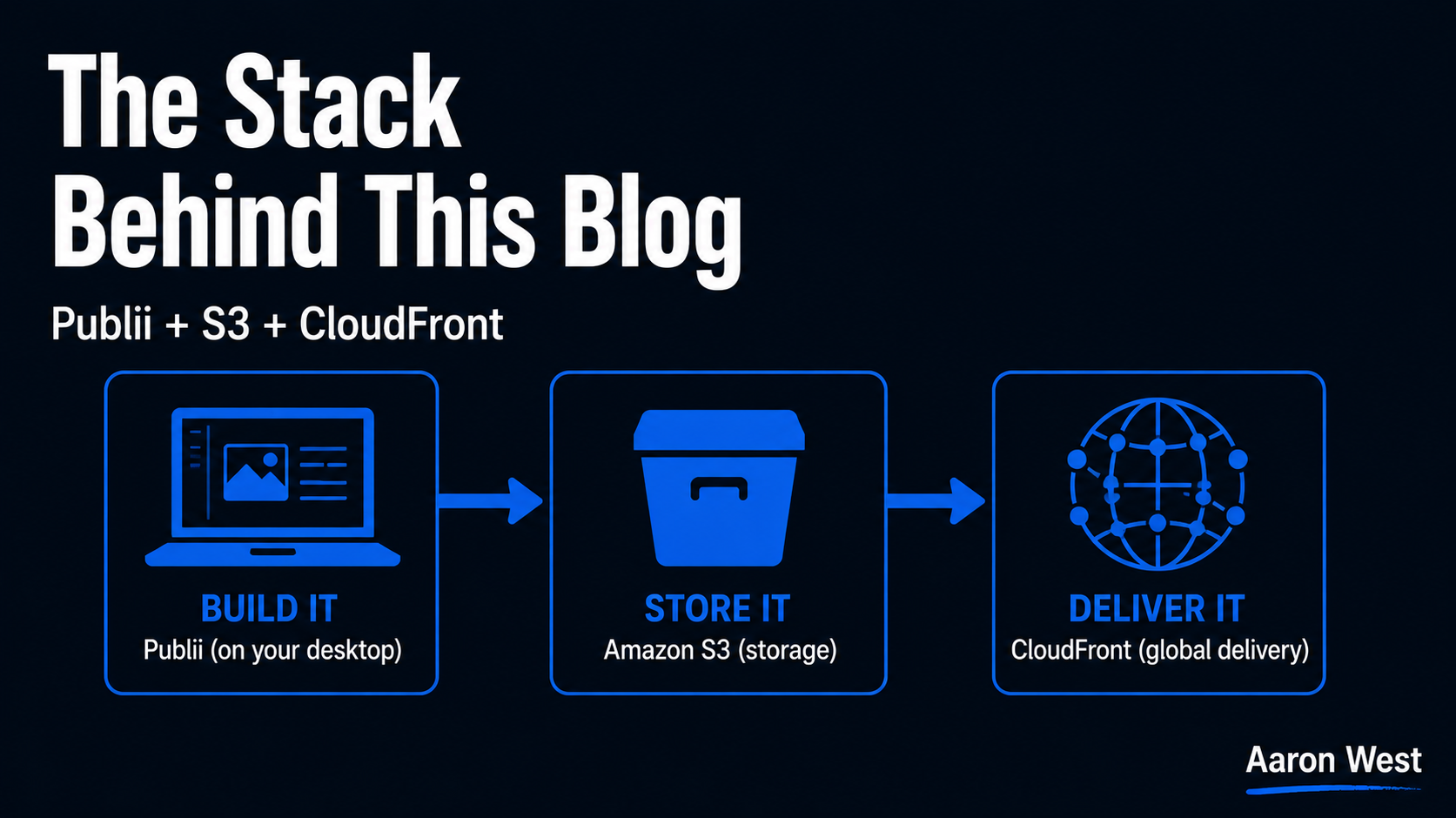
The Static-Site Stack Behind This Blog: Publii, S3, and CloudFront
This blog has no database, no web server running around the clock, and nothing on it that can really be "hacked" in the usual sense. It is a set of plain HTML files, built on my own laptop, stored in AWS, and delivered fast to…
Continue reading...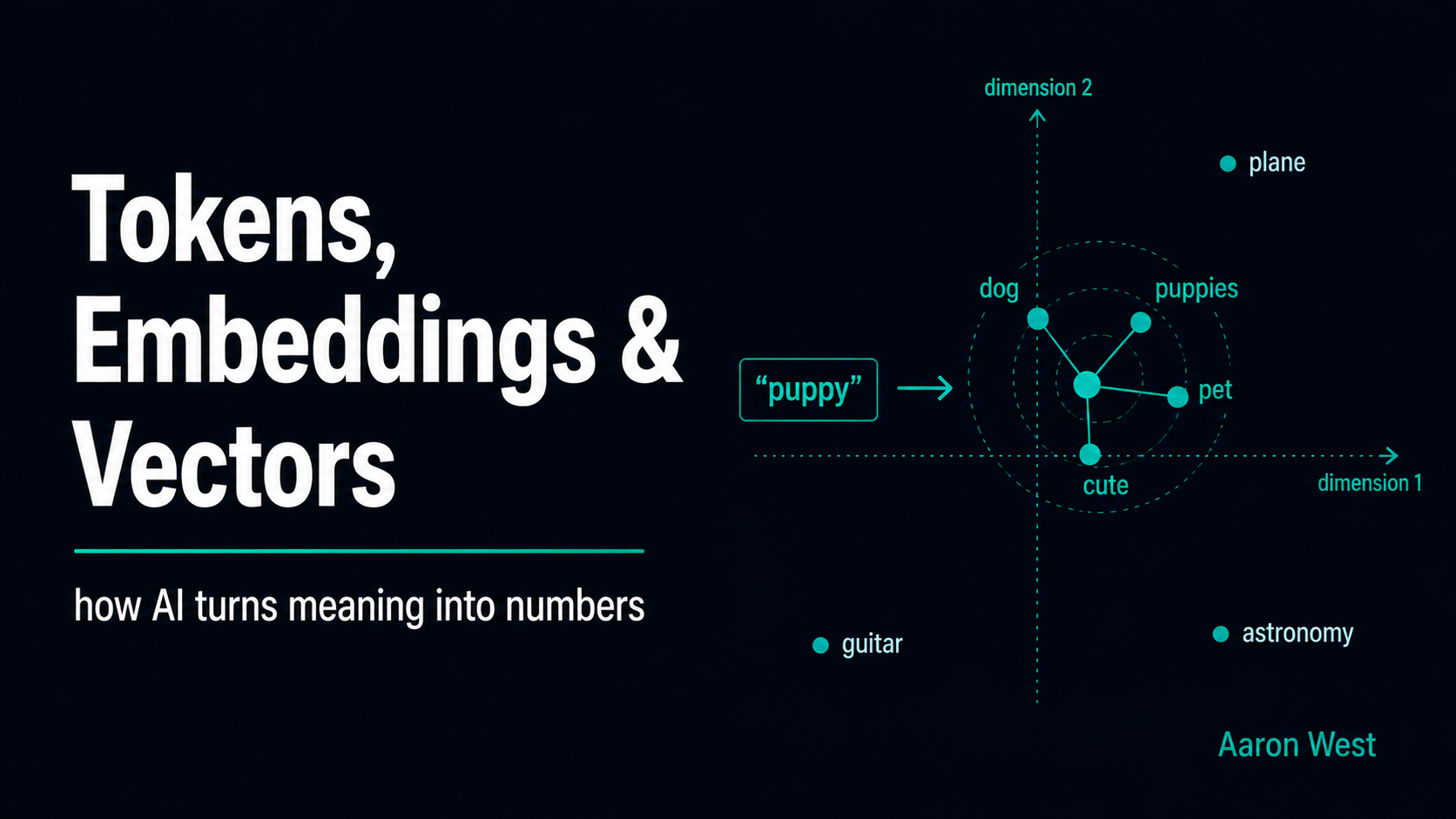
Tokens, Embeddings and Vectors: The Three Ideas Under Modern AI
If you want to understand how an AI model turns your words into something a machine can actually work with, three ideas do almost all of the explaining: tokens, embeddings, and vectors. In one chain: an AI breaks your text into tokens (small chunks), then…
Continue reading...