The E-Commerce Platform Decision, Honestly: How to Actually Choose

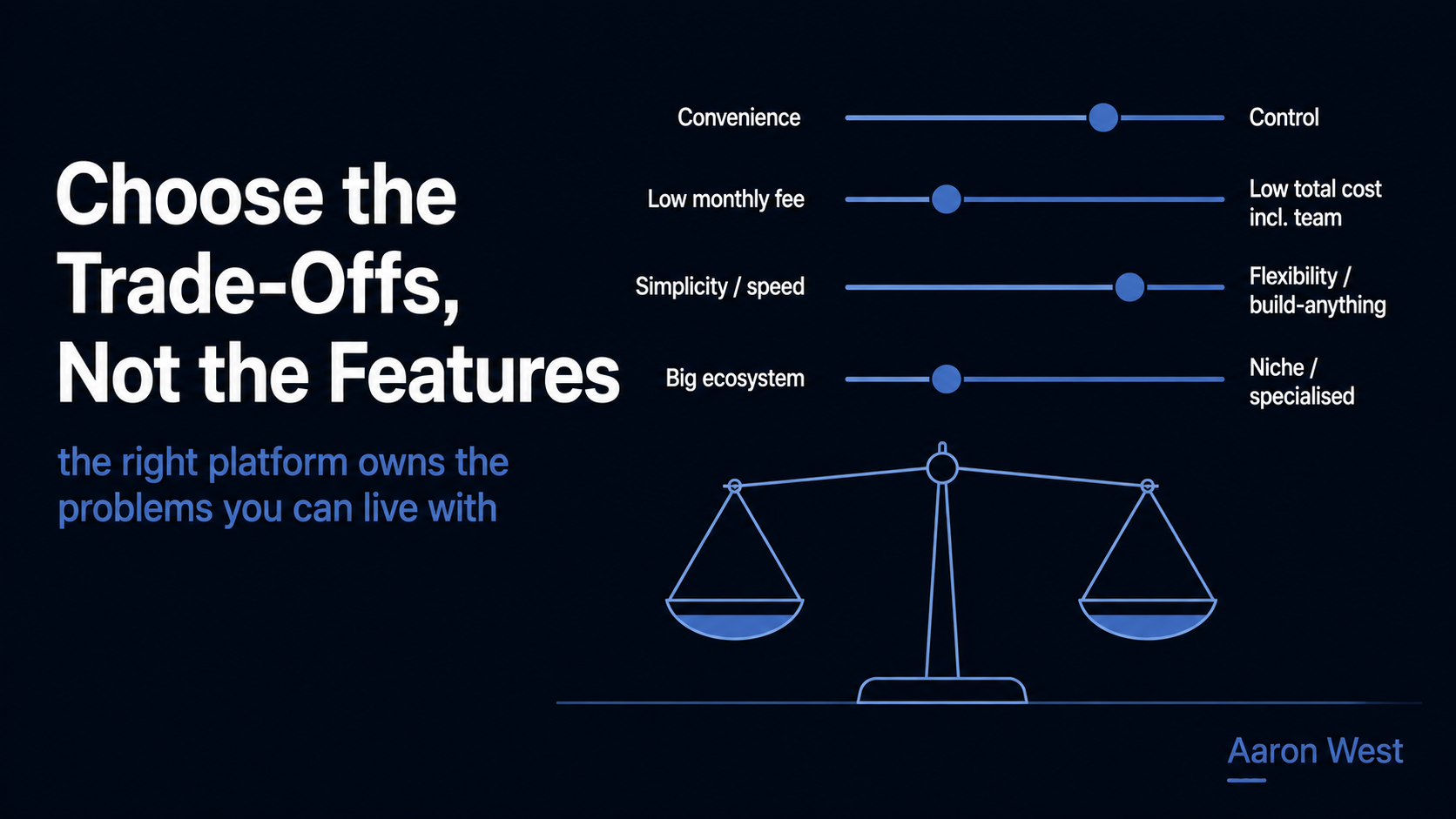
Table of Contents
Choosing an e-commerce platform is a decision about which problems you want to own, not which feature list is longest. The right platform is the one whose trade-offs match your actual constraints, your team, your budget, your need for control, your speed, not the one with the most impressive demo. Almost all platform regret comes from the same place: choosing on features, and meeting the trade-offs only after you've committed.
This is the cornerstone of the Platforms & Tech Stack cluster. It's deliberately not a "best platform in 2026" list, because that list is mostly noise. The decision that actually matters is the one underneath every comparison: which set of trade-offs can you live with for the next few years.
The mistake almost everyone makes
People choose a platform the way they'd buy a car on horsepower alone: they line up the feature lists, count the checkmarks, and pick the longest one. The problem is that every serious platform demos beautifully, and feature parity across the field is high. The headline capabilities, catalog, checkout, payments, discounts, are table stakes that almost everyone has. So comparing feature lists tells you almost nothing, because the lists barely differ.
What actually differs, and what you'll live with daily, are the trade-offs the demo doesn't show: who's responsible when something breaks, what it really costs to run once you include the people, how much you can change versus how fast you can move, and what happens when you outgrow the easy path. Those don't fit on a comparison chart, which is exactly why they get ignored until they're your problem.
The axes that actually decide it
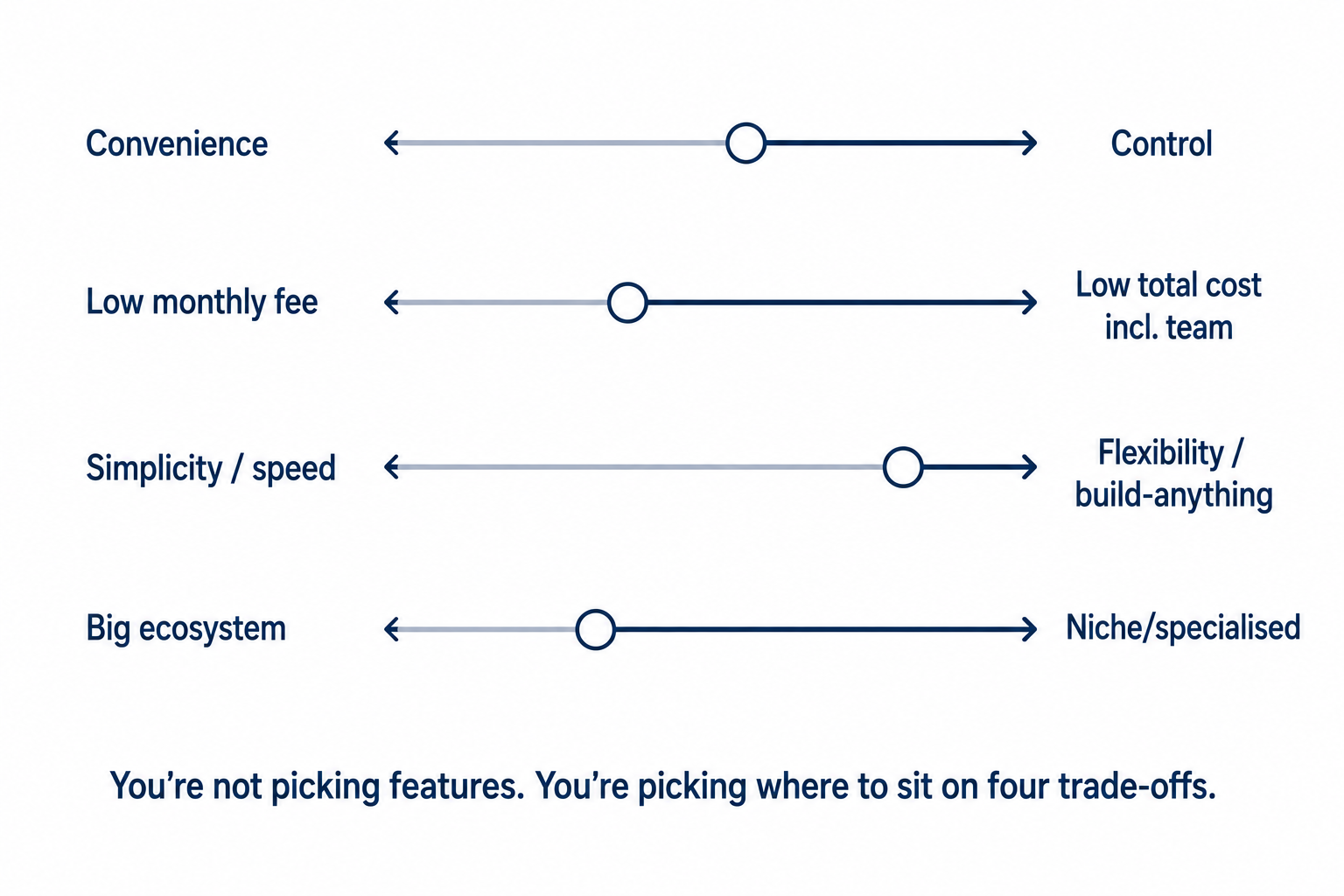
Strip away the features and a platform choice comes down to four trade-offs. Get clear on where you stand on each and the decision mostly makes itself.
Control versus convenience. A fully hosted platform handles the hosting, the updates, the security patches, so you don't have to, in exchange for living inside its rules. A self-managed setup gives you control over everything, and the responsibility for everything. More control always means more to own.
The real shape of the cost. A subscription platform has a clear monthly fee and hides the cost of the constraints. A self-hosted or custom setup may have no licence fee and a large, permanent cost in the people needed to run it. The true cost of a platform always includes the team or agency required to keep it healthy, and that line is the one most budgets forget.
Flexibility versus simplicity. Some platforms let you build almost anything, which is powerful and slow. Others are fast precisely because they constrain you, the guardrails that frustrate an ambitious team are the same guardrails that let a small team move quickly. Neither is better; they suit different situations.
The ecosystem. A platform is also its surrounding world: the apps, integrations, and the pool of developers who know it. A technically excellent platform with a thin ecosystem can be harder to live with than a less elegant one everybody can support.
The categories, honestly
There's no need to name products to understand the landscape, because the meaningful differences are between categories, not brands within them.
- Hosted (SaaS) platforms. You rent a managed system. Fast to launch, the vendor handles the plumbing, you pay a recurring fee and accept the platform's limits. The default right answer for a large share of stores.
- Open-source / self-hosted. You run the software yourself. No licence fee, full control, and the full burden of hosting, security, and maintenance. Right when control matters more than convenience and you have the capability to back it up.
- Enterprise / composable. Maximum power and flexibility, at maximum cost and complexity. Right at real scale with real teams, overkill and a money pit below that.
- The static / headless end. Maximum control and speed, with the most technical ownership, you assemble and maintain the pieces yourself. (See headless commerce for when this trade is worth it, and when it isn't.)
The skill isn't knowing which category is "best." It's matching the category to your business honestly, before you ever start comparing two named tools inside it.
The questions that point you to the answer
Before looking at a single product, answer these honestly, because they decide the category for you:
- How much technical capability do you actually have, in-house or through an agency? This is the biggest single factor, and the one people are most optimistic about.
- How much do you need to customise versus use out of the box? Be honest about whether your "unique requirements" are genuinely unique or just unexamined habits.
- What's the real budget, including the people and the maintenance, not just the subscription?
- How fast do you need to move? A constrained platform that launches in weeks can beat a flexible one that takes a year.
- What's your scale and trajectory? Build for where you'll realistically be in three years, not just where you are this month.
Honest answers narrow the field faster than any feature comparison, because they tell you which trade-offs you can actually afford.
The cost nobody prices in: switching later
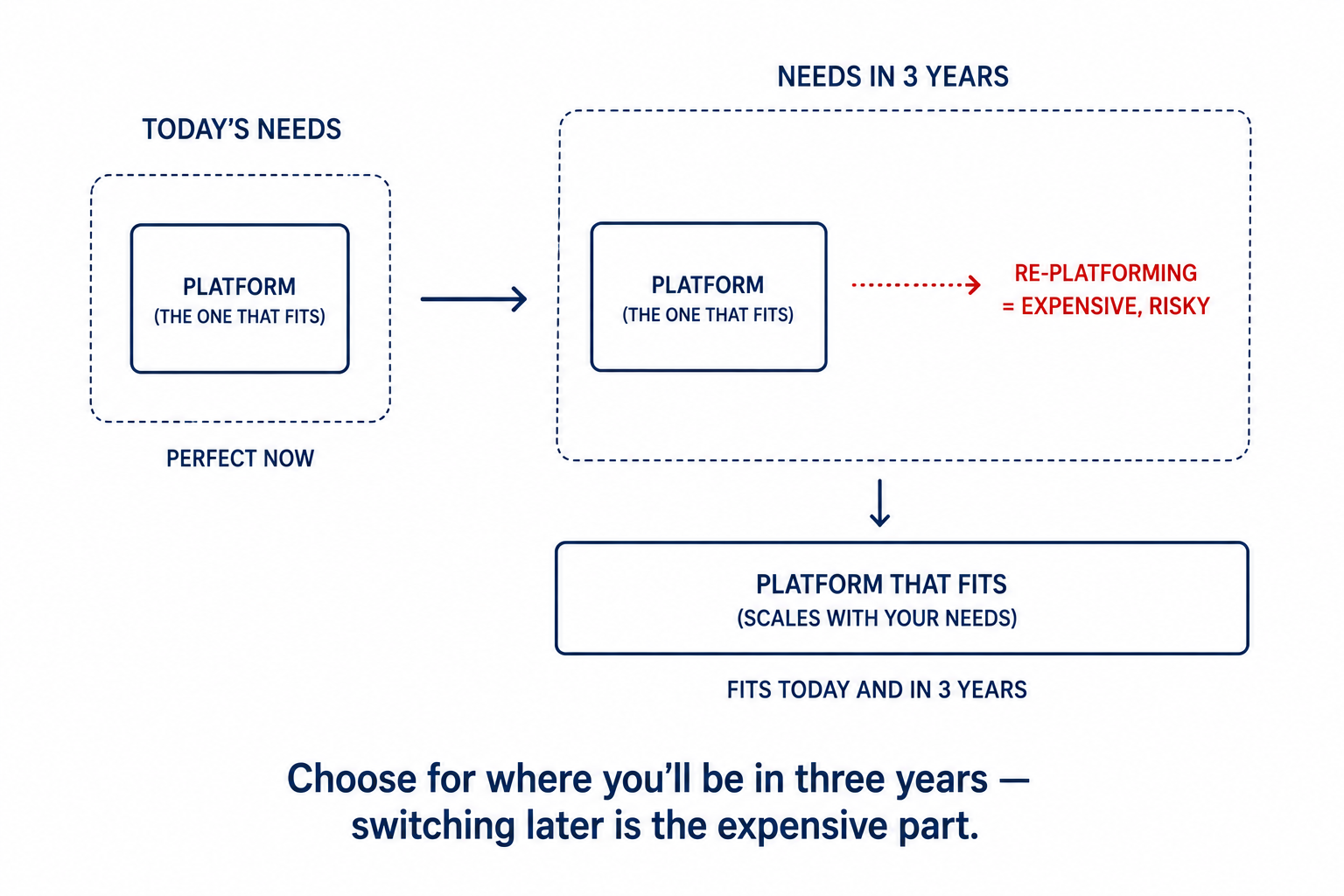
Here's the part that makes this decision weightier than it looks: platforms have lock-in. Moving to a new one later, re-platforming, is one of the most expensive and risky projects in e-commerce. You migrate data, rebuild the front end, risk your hard-won SEO, and retrain your team. It's a project that can swallow a quarter and dent your traffic for months if done badly.
So the platform decision isn't really a "now" decision, it's a multi-year commitment with an exit cost. That's the argument for choosing against your three-year trajectory, not today's snapshot. The platform that's perfect for today's tiny catalog and painful for next year's bigger one is a worse choice than the one that's slightly more than you need now and still fits when you've grown.
The honest meta-point
There is no best e-commerce platform. There's only best-for-your-constraints. The same platform that's a perfect fit for one business is an expensive mistake for another with different capability, budget, and ambition. Anyone who tells you one platform is universally the best is, without exception, selling that platform, whether they're a vendor, an agency with a specialty, or a creator with an affiliate link.
I'll show my own hand: this blog runs on a static stack, a static-site builder on AWS, precisely because that trade, more control and speed in exchange for owning the technical pieces, fits what I need from it. That's not advice to copy. It's the logic, applied honestly to one situation. The logic is the transferable part; the answer is always local.
What this comes down to
The platform decision isn't "which one is best." It's "which set of trade-offs can I live with for the next few years." Control or convenience, low fee or low total cost, flexibility or speed, big ecosystem or specialised fit, you're choosing which problems you want to own, and you'll own them for longer than you think.
So stop counting features. Get honest about your capability, your budget, your need to customise, and where you're heading. Choose the trade-offs you can live with, and you'll choose the right platform without ever needing someone else's "best of" list.
A few common questions
How do I choose an e-commerce platform? Decide which trade-offs you can live with, not which feature list is longest. Feature parity across serious platforms is high, so the lists barely differentiate them. What differs is the trade-offs: control versus convenience, the true cost (including the team to run it), flexibility versus speed, and the ecosystem around the platform. Answer honestly how much technical capability, budget, customisation need, speed, and scale you have, and those answers point you to the right category before you compare any named products.
What are the main types of e-commerce platform? Four categories, by trade-off rather than brand: hosted SaaS (managed for you, fast to launch, recurring fee, the vendor's limits); open-source / self-hosted (full control and no licence fee, but you own hosting, security, and maintenance); enterprise / composable (maximum power and complexity, right only at real scale); and the static / headless end (maximum control and speed, maximum technical ownership). The skill is matching the category to your business honestly before comparing products within it.
Is there a single best e-commerce platform? No. There's only best-for-your-constraints. The platform that perfectly fits one business is an expensive mistake for another with different capability, budget, and ambition. Anyone claiming one platform is universally best is selling it, whether a vendor, a specialist agency, or a creator with an affiliate link.
Why does the platform choice matter so much if I can switch later? Because switching later (re-platforming) is one of the most expensive and risky projects in e-commerce, you migrate data, rebuild the front end, risk your SEO, and retrain your team. That lock-in means the decision is really a multi-year commitment with a costly exit, so choose for where you'll realistically be in three years, not just today.
You should also read:
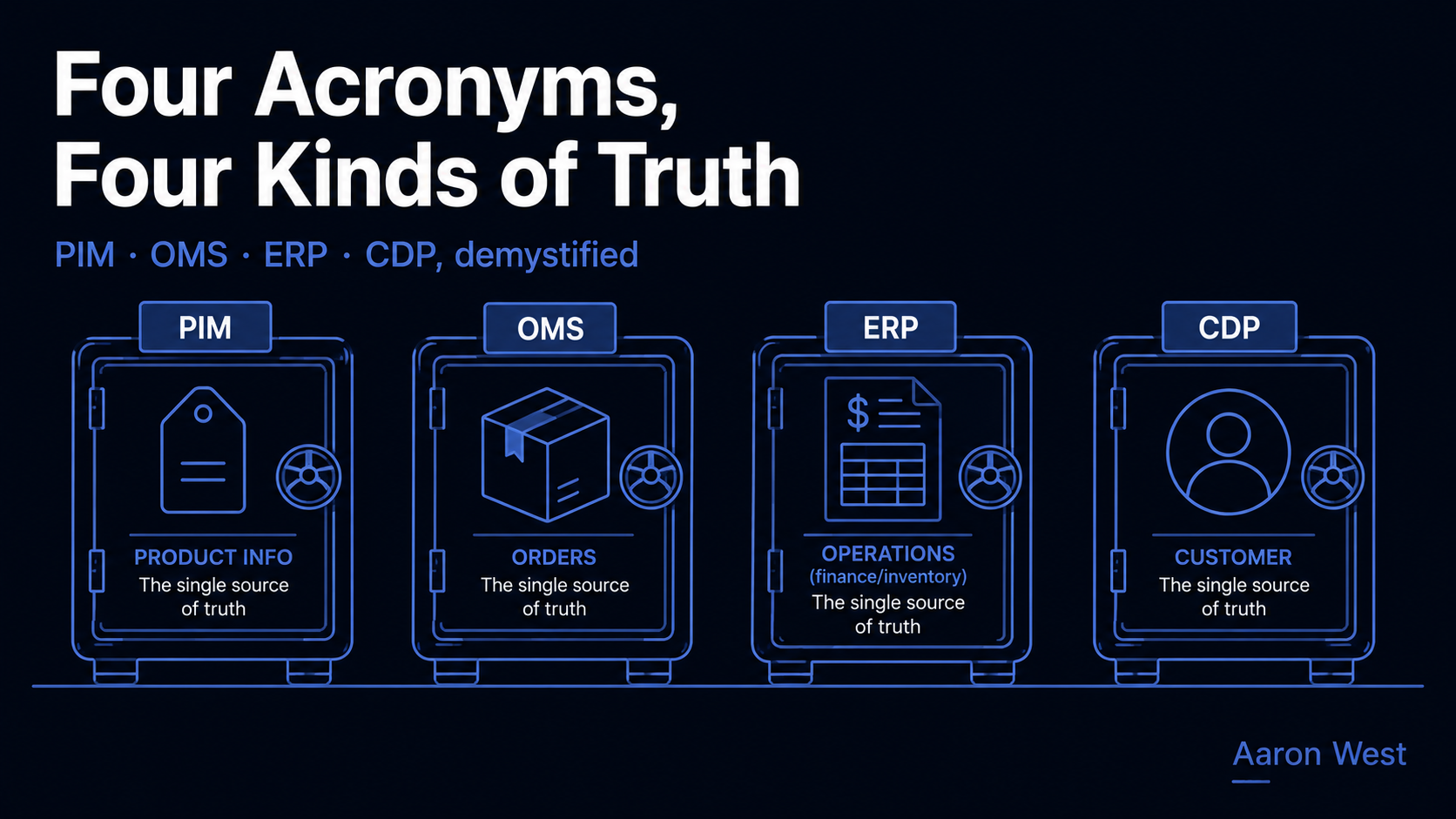
The E-Commerce Tech Stack, Explained for Non-Engineers: PIM, OMS, ERP, CDP
Behind every e-commerce store of any size sits a stack of systems with intimidating acronyms, PIM, OMS, ERP, CDP, and each one is far simpler than its name suggests. They are just the four places your business keeps its four kinds of truth: your product…
Continue reading...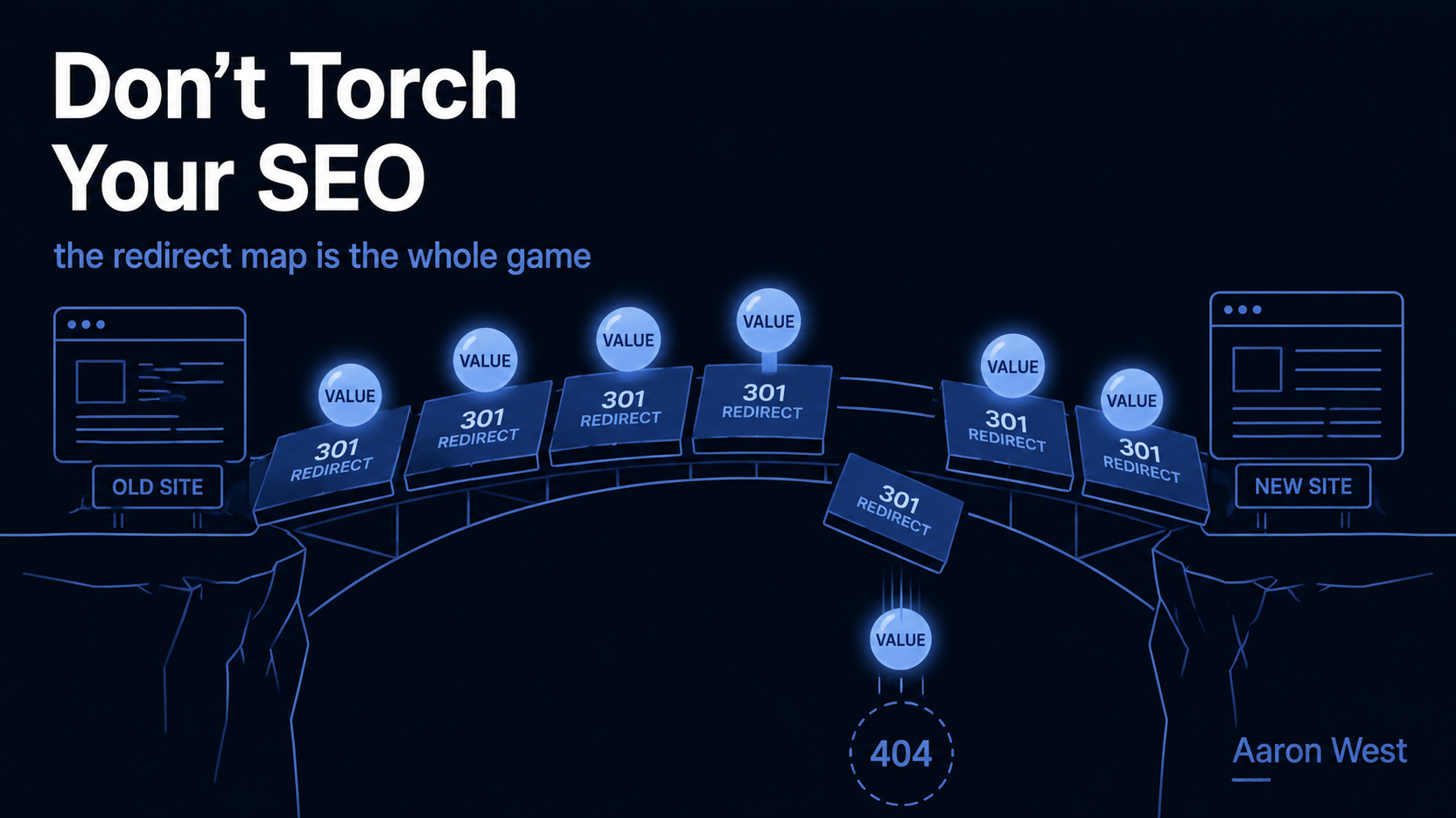
Re-Platforming Without Torching Your SEO and Your Sanity
Re-platforming, moving your store onto a new platform, is one of the riskiest projects in e-commerce, and the damage almost always shows up in the same place: the SEO you spent years building, gone overnight because the URLs changed and nothing told search engines where…
Continue reading...
Everything I Know About Building Chatbots That Actually Work
The hard part of building a chatbot was never the technology. I learned this in 2019, building a natural-language chatbot from scratch for a large hotel group, across dozens of locations and several languages, back when "conversational AI" was a research term and not a…
Continue reading...